Exhibition | From the Tagus to the Tiber
Now on view at the National Library of Portugal:
From Tagus to Tiber: Portuguese Musicians and Artists in Rome in the 18th Century
Do Tejo ao Tibre: músicos e artistas portugueses em Roma no século XVIII
Biblioteca Nacional de Portugal, Lisbon, 28 February — 31 May 2019
Curated by Cristina Fernandes and Pilar Diez del Corral

Alegoria à Academia Real da História, de Vieira Lusitano (1699–1783) / F. V. Lusitanus invenit et f. ; acabado ao buril por P. de Rochefort, 1735 (Lisbon: Biblioteca Nacional de Portugal, E. 4847 P.).
O fascinante processo de assimilação e adaptação de modelos artísticos e musicais italianos pela corte de Lisboa ao longo do século XVIII é um dos fenómenos mais relevantes a nível cultural do Portugal setecentista, com repercussões que se estendem à maior parte do território. Através das obras conservadas na BNP, esta exposição, comissariada por Cristina Fernandes (INET-md, NOVA FCSH) e Pilar Diez del Corral (UNED – Universidad Nacional de Educación a Distancia, Madrid), pretende dar a conhecer ao grande público como se produziu essa frutífera associação criativa entre o país mais ocidental da Europa e a península itálica, coração do Mediterrâneo, colocando em evidência olhares transversais sobre a música e as artes visuais, dois campos frequentemente abordados de forma separada mas que percorreram caminhos comuns.
A partir do século XVI, Roma começou a atrair artistas de todos os campos, desejosos de aprender a partir do legado das suas ruínas e dos mestres modernos que a converteram no centro artístico da Europa. Ao mesmo tempo, viajantes procedentes num primeiro momento dos países do Norte também chegavam a Roma com o mesmo afã de aprendizagem, tanto no plano mundano como cultural, dando origem ao fenómeno do Gran Tour, que teria a sua eclosão nos séculos XVIII e XIX.
Portugal teve no século XVIII uma idade de ouro graças às fabulosas encomendas artísticas e musicais de D. João V, o Rei Magnânimo. Ainda que o terramoto de 1755 tenha eclipsado uma grande parte do legado arquitetónico e artístico da primeira metade do século, para além da catástrofe humana que causou, a magnificência e o cosmopolitismo de Lisboa deixaram marcas que prevaleceram como sinais identitários nas décadas seguintes. O conjunto das peças expostas pretende mostrar desde a perspetiva da viagem e do intercâmbio artístico e musical como as relações entre Portugal e Itália, centradas num fluxo contínuo de pessoas, livros, partituras e obras de arte criaram uma riquíssima via de comunicação entre Roma e Lisboa.
Estão igualmente programadas várias visitas guiadas, seguidas de momentos musicais. Na inauguração (28 de fevereiro, às 18h00), o agrupamento Cappella dei Signori, dirigido por Ricardo Bernardes, interpreta obras de Giovanni Giorgi e João Rodrigues Esteves. A 19 de março, realiza-se uma visita guiada às 18h00, seguida de um recital de cravo, por Fernando Miguel Jalôto, assinalando os 300 anos da chegada a Lisboa de Domenico Scarlatti. Em data a anunciar brevemente, apresenta-se uma nova visita e um programa centrado na música de Francisco António de Almeida, com interpretação dos Músicos do Tejo, dirigidos por Marcos Magalhães e Marta Araújo.
Estão igualmente programadas várias visitas guiadas, seguidas de momentos musicais. Na inauguração (28 de fevereiro, às 18h00), o agrupamento Cappella dei Signori, dirigido por Ricardo Bernardes, interpreta obras de Giovanni Giorgi e João Rodrigues Esteves. A 19 de março, realiza-se uma visita guiada às 18h00, seguida de um recital de cravo, por Fernando Miguel Jalôto, assinalando os 300 anos da chegada a Lisboa de Domenico Scarlatti. Em data a anunciar brevemente, apresenta-se uma nova visita e um programa centrado na música de Francisco António de Almeida, com interpretação dos Músicos do Tejo, dirigidos por Marcos Magalhães e Marta Araújo.
Decorre também na BNP, a 28 e 29 de março de 2019, o congresso internacional Roma e Lisboa no século XVIII: música, artes visuais e transferências culturais, organizado pelo grupo «Estudos Históricos e Culturais em Música» do INET-md (NOVA FCSH) e pelo departamento de História de Arte da UNED (Madrid).
Exhibition | Engraving for the King
Now on view at the Louvre:
Engraving for the King: The Historical Collections of the Louvre Chalcographie
Graver pour le roi: Collection de la Chalcographie du Louvre
Musée du Louvre, Paris, 21 February — 20 May 2019
Curated by Jean-Gérald Castex
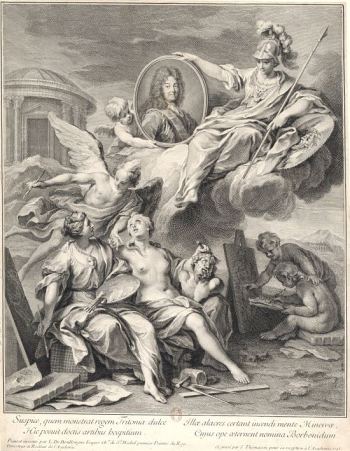
Henri-Simon Thomassin after Louis de Boulogne, ‘Louis XIV Protecting the Arts’, 1728 (Paris: Musée du Louvre).
Founded in 1797 under the Directory, the Louvre Chalcographie holds over 14,000 engraved copperplates, used to make prints, and has the mission of disseminating the image of the museum’s masterpieces through the art of engraving. This institution, which is part of the Musée du Louvre, arose from the merging of three collections of engraved plates, established from the second half of the 18th century: the Cabinet du Roi, including nearly 1,000 plates commissioned by Colbert to illustrate the greatness of Louis XIV’s reign; the Menus-Plaisirs collections, which spread the image of great court ceremonies and public festivities of the 18th century; and the Royal Academy of Painting and Sculpture’s collection, comprising pieces submitted by engravers upon their admission, and engraved plates acquired by the institution in the second half of the 18th century to develop its editorial collection.
This exhibition presents preparatory drawings, engraved copperplates, and prints made from them. It aims to trace the history of the three royal collections that each contributed in their own way to the dissemination of the king’s image. It also showcases the copperplates which, regarded until recently as mere tools for printing, are at the core of an engraver’s profession.
Exhibition | Showpiece from the Palmwood Wreck
I’m posting this seventeenth-century exhibition, showcasing what may be a late sixteenth-century cup, to draw attention to the Museum Kaap Skil more generally; Texel, located some 50 miles north of Amsterdam, was a crucial anchorage, particularly for large VOC vessels. Visiting the Vasa Museum in Stockholm a few years ago (many of you have been there) helped me grasp just how much ‘material culture’ was taken up by ships in the early modern period. Inventory lists—indeed, even seascapes crowded with ships—now come to life for me in a way that they didn’t previously. On the grounds of the Kaap Skil museum, there’s also a working windmill used to process grain: the Traanroeier, which dates to 1727 (originally located on the Weer, at the intersection with the Traanroeyer ditch, it was moved to Texel in 1902). –CH
Now on view at Museum Kaap Skil, from the press release:
Diving in Details: Showpiece from the Palmwood Wreck
Museum Kaap Skil, Texel, Netherlands, 9 March — 9 September 2019

Gilt silver cup, likely made in Neurenberg around the end of the 16th century; it was recovered in 2016 from the Palmwood wreck.
An exceptional object from the Palmwood wreck [palmhout, or boxwood] can be seen for the next six months at Museum Kaap Skil—in Oudeschild on the island of Texel. A gilt silver cup, expertly restored after almost four centuries on the sea bottom, is being displayed in the exhibit Diving in Details. Expert Jan Beekhuizen, known from the television program Kunst & Kitsch (Art & Fake), notes that it is “exceptional, if not unique, that such a find surfaces from a ship wreck.”
A specially designed showcase allows the viewer to observe the gilt cup from all sides. Details can be seen and enlarged on a touchscreen. The cup is decorated with driven flower patterns and mascarons, ornaments representing faces. The cup was unveiled at the Rijksmuseum on March 7 by deputy Jack van der Hoek and museum manager Corina Hordijk, together with the presentation of a report on the Palmwood wreck collection.
The discovery of the Palmwood wreck by divers from Texel and the unusually rich finds surfaced from this wreck created a worldwide sensation in 2016. The lovely silk dress and other luxury garments and personal belongings from the wreck made it clear that the cargo being transported by the ship belonged to very wealthy, perhaps even royal people. Even the gilt silver cup fits this picture. Only the richest could afford such an object.
 The wreck of the ship and almost four centuries lying in the sea bottom have taken their toll: the cup surfaced partially flattened and broken into three parts. In addition, there were dark corrosive bumps on the surface. Experts from the restoration workshop Restaura have carefully removed the deposits, reattached the loose parts, and restored the cup to its original shape. The war god Mars, standing on the lid of the cup, has lost his shield, but otherwise the cup is more or less whole.
The exhibition Diving in Details also features a 17th-century painting depicting such a cup, showing how such objects were used to display wealth. The Palmwood wreck was once a heavily armed fluyt (‘straatvaarder’), destined for trade in the Mediterranean. The ship sank in the 17th century on the Roads of Texel. It is still unknown who the owner of the ship and the cargo was.
Documentation of the recovered objects has just been published; from the Museum Kaap Skil:
Arent D. Vos et al., edited by Birgit van den Hoven and Iris Toussaint, Wereldvondsten uit een Hollands schip: Basisrapportage BZN17/Palmhoutwrak (Haarlem: Provincie Noord-Holland, 2019), 443 pages, ISBN: 978-9492428134, €20.
◊ ◊ ◊ ◊ ◊
More information about the discovery of the ship—including its mistaken association in 2016 with a ship that was in 1642 part of a royal British fleet—comes from Jessamyn Hatcher, “Treasure Island: The Extraordinary Finds of an Amateur Diving Club in Holland,” The New Yorker (19 September 2017). Hatcher quotes “Arent Vos, a marine archeologist who specializes in the Texel Roads, [who] estimates that up to a thousand ships wrecked off the island’s coast between 1500 and 1800.”
Also see, Tracy Robey, “Global Cargo,” Archaeology (May/June 2018), where the Palmwood Wreck (Burgzand Noord 17) is described as “the richest cargo of seventeenth-century luxury goods ever found underwater,” owing to its “stunning collection of silk garments and velvet textiles, leather book covers, and pottery.”
2019 Walter Muir Whitehill Prize in Early American History
From the prize announcement:
2019 Walter Muir Whitehill Prize in Early American History
Awarded by The Colonial Society of Massachusetts
Essays due by 15 January 2020
 This prize of $2500, established in memory of Walter Muir Whitehill, for many years Editor of Publications for the Colonial Society and the moving force behind the organization, will be awarded for a distinguished essay on early American history (up to 1825), not previously published. The Society hopes that the prize may be awarded annually.
A committee of eminent historians will review the essays. Their decision in all cases will be final. By arrangement with the editors of The New England Quarterly, the Society will have the winning essay published in an appropriate issue of the journal.
Essays are now being accepted for consideration. All manuscripts submitted for the 2019 prize must be postmarked no later than January 15, 2020. The Society expects to announce the winning candidate in the spring of 2020.
Entries submitted for consideration should be addressed to:
Whitehill Prize Committee
c/o The New England Quarterly
Department of History
University of Massachusetts, Boston
100 Morrissey Blvd.
Boston, MA 02125
Additional information, including prize specifications and a list of past winners, is available here»
Journal of the History of Collections, March 2019
The eighteenth century in the Journal of the History of Collections:
Journal of the History of Collections 31 (March 2019)
A R T I C L E S
 • Lisa Beaven and Karen Lloyd, “Cardinal Paluzzo Paluzzi degli Albertoni Altieri and His Collection in the Palazzo Altieri: The Evidence of the 1698 Death Inventory, Part II,” pp. 1–16. “This article is the second part of a study of the collection of Cardinal Paluzzo Altieri (1623–1698) based on the evidence of his 1698 death inventory. Part I considered his paintings collection, housed on the first piano nobile of the palace. This study moves to the second piano nobile apartment and considers a broader range of material objects, including sculpture, tapestry, devotional objects, and naturalia, some of which (such as the American import, chocolate) reflect the globalization of the early modern world” (from the abstract).
• Noam Sienna, “‘Remarkable Objects of the Three . . . Main Religions’: Judaica in Early Modern European Collections,” pp. 17–29. “The diverse collections of early modern Europe, housed in cabinets of curiosities and Kunstkammern, attempted to capture the wonder of the world through specimens of nature, classical and other artefacts, scientific instruments, works of art, and rare and curious objects from around the world. While it is known that they included objects of ethnographic interest from the New World, Africa, and Asia, the place of Judaica in these collections remains largely unknown and unexplored. This article presents an analysis of the collection and display of Jewish objects in Europe from the sixteenth to the eighteenth centuries” (from the abstract).
• Renata Schellenberg, “The Literary Legacy of the Düsseldorfer Gemäldegalerie,” pp. 31–40. “This article explores a range of literary responses to the Düsseldorf picture gallery in the eighteenth century. It examines in particular the ways in which written accounts of experiencing the Düsseldorf collection reveal the contemporary understanding of its works of art and their modes of display. It investigates the ways in which texts bear witness not just to the art in the collection but also to the social interactions informing their representation to readers” (from the abstract).
• Sileas Wood, “‘After the Very Rare Original’: Artist and Antiquary the Revd John Brand,” pp. 41–52. “During the closing years of the eighteenth century, minister and antiquary the Revd John Brand (1744–1806) undertook an extraordinary project of creating facsimile drawn copies of rare prints, with which to illustrate James Granger’s Biographical History of England. Between 1790 and 1800 Brand personally created over 400 drawn copies of portrait prints which can be identified through his own annotations, a manuscript catalogue, and the catalogue of his posthumous sale. This paper will examine Brand’s surviving works, his processes and the ways in which his drawings were shaped by his status as an antiquary, amateur artist, and print collector” (from the abstract).
• Roberto González Ramos, “Treasures and Collections in the Colegio Mayor de San Ildefonso and University of Alcalá: Trophies, ‘Spolia Sancta’ and Museum,” pp. 111–30. “The Colegio Mayor de San Ildefonso and University of Alcalá was an important cultural institution in the Hispanic world of the early modern era. Founded by Cardinal Ximénez de Cisneros (1436–1517), it assembled an important group of symbolic objects, amongst them trophies, relics, images and mirabilia. The beatification of the founder led not only to a corresponding increase in the numbers of those objects, seen as relics, but also to their display in particular places, with the creation of a number of proto-museums. With the coming of the Enlightenment, a number of veritable museums were formed, with consequent changes in the values attributed to the symbolic items. From that time until the creation in 1836 of the University of Madrid, by making use of the assets and professorships of the University of Alcalá, the remaining symbolic objects were considered primarily as illustrating the history of the institution” (from the abstract).
• Marc Fecker, “Sir Philip Sassoon at 25 Park Lane: The Collection of an Early Twentieth-Century Connoisseur and Aesthete,” pp. 151–70. “Sir Philip Sassoon (1888–1939) housed the largest and most valuable part of his collection in his lavish Park Lane residence in London. It was demolished in the early 1960s and the collection is now dispersed. This paper reconstructs the collection at Park Lane, which consisted predominantly of French eighteenth-century fine and decorative art, as well as English eighteenth-century portraiture and works by contemporary artists, many of which were commissioned by Sassoon. It explores how he moulded the collection he inherited from his parents and his maternal grandparents, Gustave and Cécile de Rothschild, to his own taste, and to his own time, while continuing the Rothschild tradition” (from the abstract).
• Dora Thornton, “Baron Ferdinand Rothschild’s Sense of Family Origins and the Waddesdon Bequest in the British Museum,” pp. 181–98. “Baron Ferdinand Rothschild (1839–1898) is usually remembered for Waddesdon Manor in Buckinghamshire and for the Waddesdon Bequest, his splendid gift of Renaissance treasures to the British Museum, recently reinterpreted in a new gallery. The author analyses Baron Ferdinand’s unpublished reminiscences, revealing his interest in the history and mythology of the Rothschilds as a Frankfurt Jewish banking dynasty. The status and significance of Judaica in the Waddesdon Bequest and other family collections is also explored within the context of nineteenth-century collecting, the development of the art market and an emerging sense of a Jewish European history and identity” (from the abstract).
R E V I E W S
• Peter Mason, Review of Elizabeth Horodowich and Lia Markey, eds, The New World in Early Modern Italy, 1492–1750 (Cambridge University Press, 2017), p. 199.
• Barbara Furlotti, Review of Adriano Amendola, Ritratti di bronzo: Il Medagliere Orsini dei Musei Capitolini di Roma (De Luca Editore d’Arte, 2017), p. 200. “By offering the first catalogue of the Medagliere Orsini, now preserved at the Musei Capitolini in Rome, this lavishly-illustrated volume enriches our knowledge of this prestigious noble clan from an original perspective. The first part of the book features three essays . . . The first essay reconstructs the complex history of the Orsini collection of ancient coins and modern medals between the death of the last Duke of Bracciano, Flavio Orsini (1620–1698), and the acquisition of what was left of the collection by the Municipio di Roma in 1902. The second essay focuses on the collecting interests of some members of the Orsini family [during the sixteenth and seventeenth centuries]. . . The third essay, which is based on a large corpus of unpublished documents, offers interesting insights on Paolo Giordano II’s patronage and on the celebrative medals commissioned by Pope Benedict XIII Orsini (1649–1730). . . The catalogue of the Medagliere Orsini occupies the second part of the book. It includes fifty-two entries dedicated to medals, and seventeen entries for plaquettes and seals” (199).
• Eloisa Dodero, Review of Klauss Fittschen and Johannes Bergemann, eds., Katalog der Skulpturen der Sammlung Wallmoden (Biering & Brinkmann, 2015), pp. 204–05. “The Wallmoden statues are still beautifully displayed in the Institute of Archaeology at Göttingen and the new catalogue . . . is an appropriate fulfilment of almost forty years of research on one of the oldest assemblages of ancient sculptures in Germany and an exceptional testimony of the eighteenth-century reception of ancient art. The collection, which formerly included also paintings, gems, books, drawings, plaster casts and copies after the Antique, was formed in the second half of the eighteenth century by General Johann Ludwig von Wallmoden (1736–1811), later Reichsgraf (Imperial Count) von Wallmoden-Gimborn, an illegitimate son of King George II of Great Britain” (204).
• Stephen Harris, Review of Sarah Easterby-Smith, Cultivating Commerce: Cultures of Botany in Britain and France, 1760–1815 (Cambridge University Press, 2017), pp. 206–07.
• Arthur MacGregor, Review of Margot Finn and Kate Smith, eds., The East India Company at Home, 1757–1857 (UCL Press, 2018), pp. 207–08.
Carlo Orsi-Trinity Fine Art at TEFAF 2019
From the press release:
Carlo Orsi-Trinity Fine Art at TEFAF
Maastricht, 16–24 March 2019
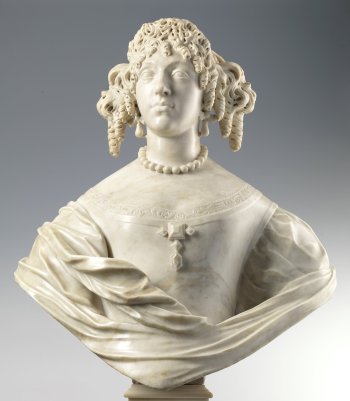
Giovanni Battista Foggini, Portrait of Marguerite Louise d’Orléans, 1687, marble, 77 cm.
This 1687 marble portrait bust portrays Marguerite Louise of Orléans, wife of Cosimo III de’ Medici, the enfant terrible of the Medici dynasty. A free-spirited woman, Marguerite Louise, although she bore Cosimo three heirs, never submitted emotionally to the marriage, came to despise her husband, his family and the Court in Florence, and made Cosimo’s life miserable. Eventually she obtained a separation, returned to France, and lived as she pleased, bringing even her cousin King Louis XIV to despair at her outrageous behaviour.
The marble bust is offered by Carlo Orsi-Trinity Fine Art, at TEFAF Maastricht with several fresh discoveries: previously unpublished documents clarifying that it was commissioned by the Medici; that it is a fully autograph work by Giovanni Battista Foggini (1652–1725), a contention borne out by specific payments made to the sculptor; and that it was carved at an earlier date than formerly suggested.
It is a one of a series of eight masterful busts that celebrates the family of Ferdinando II of Florence, including his Cardinal brothers and his son Cosimo and the future Grand Duchess Marguerite. This is the last bust from the group to remain on the market, as all of the others are now with European and American public collections, including the Louvre, the Metropolitan Museum of Art, and the Victoria & Albert Museum.
Regarding its commission and original location, the bust is mentioned along with the other pieces in the group in inventories of the Villa di Lappeggi, the country residence of Cardinal Francesco Maria de’ Medici, brother to Ferdinand II, immediately after his death in 1711. Research by Carlo Orsi-Trinity Fine Art has found the record of payments to the artist Foggini, showing that the busts were executed between August 1681 and 15 December 1687. The final bust to be delivered was that of Marguerite, who by then had been living back in France for 12 years. Its likeness was probably taken by Foggini from existing images of the Grand Duchess already in the family collections; in fact it is highly likely to be a carved version of a now lost portrait of Marguerite Louise by court portraitist Justus Sustermans, known to us thanks to an engraving by Adriaen Haelwegh.
The group dates to a time when Foggini was heavy influenced by Bernini, the artist previously believed to be the author of these pieces. Among the notable owners of the present bust is the famous 19th-century collector and dealer Stefano Bardini, whose clients included Isabella Gardner Stewart and John Pierpont Morgan. Most recently the bust became the prized possession of Alessandro Contini Bonaccossi, whose collection is now a public museum in Florence. The bust will be offered at TEFAF Maastricht by Carlo Orsi-Trinity Fine Art for an asking price in the region of €3,000,000.
Note (added 23 March 2019) — A second press release (available via Art Daily) notes the sale of the bust: “Carlo Orsi confirmed the sale to a new private European client for a seven-figure sum after it received substantial interest from collectors and museums world-wide.”
◊ ◊ ◊ ◊ ◊
From TEFAF:
TEFAF Maastricht to Host Highlights from Staatliche Kunstsammlungen Dresden ahead of Museum Openings Later This Year
TEFAF will host 23 highlights from both the Paraderäume (State Apartments) of Dresden’s Residenzschloss (Royal Palace) and the Semperbau (Semper Building), home to the Gemäldegalerie (Old Masters Picture Gallery) and Skulpturensammlung (Sculpture Collection) all of which form part of the Staatliche Kunstsammlungen Dresden (Dresden State Art Collections), in the loan exhibition hosted within TEFAF Paper at TEFAF Maastricht 2019. The exhibition will be a prelude to both the opening of the Paraderäume in September 2019 and the reopening of the Semperbau in December 2019 . . .
More information is available here»
Exhibition | Panorama: London’s Lost View
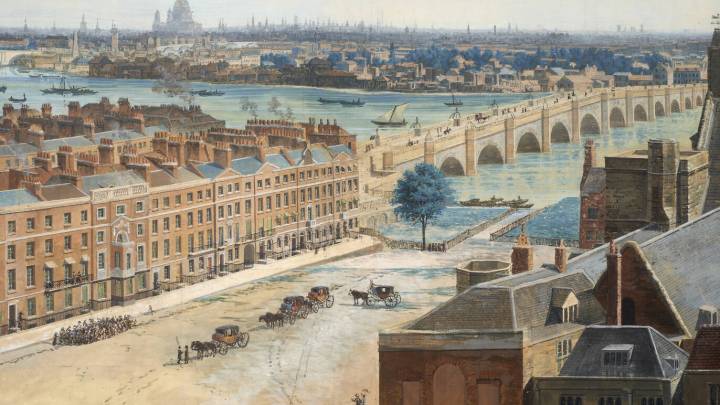
Pierre Prévost, A Panoramic View of London from the Tower of St. Margaret’s Church, Westminster, detail, ca. 1815
(Museum of London)
◊ ◊ ◊ ◊ ◊
From Time Out London:
Panorama: London’s Lost View
Museum of London, Smithfield, 15 March — 30 September 2019
In 1815, French artist Pierre Prévost climbed the tower of St Margaret’s Church in Westminster and started sketching. His specialty was panoramas—epically long landscape paintings, displayed in a rotunda to show a 360-degree view—and this time he was painting London. Prevost’s 100-foot panorama of the capital was exhibited in Paris, and then lost. But the 20-foot painting he made as a dry run survived. It was bought last year by the Museum of London for £250,000 and is on public display from March to September 2019. Prévost’s painting will be mounted flat on the floor, letting visitors walk its length to check out the skyline of Regency London. You’ll see the old Palace of Westminster (destroyed in a fire 19 years later), the original Westminster Bridge, St Paul’s, horse-drawn carriages in Parliament Square, and even cows grazing in St James’s Park.
The catalogue entry from the Sotheby’s Sale (4 July 2018) is available here»
The press release for the acquisition (11 July 2018) is available here»
The press release for the exhibition is available here»
Exhibition | Slavery, Culture, and Collecting
From the Museum of London:
Slavery, Culture, and Collecting
Museum of London Docklands, 15 September 2018 — 15 September 2019
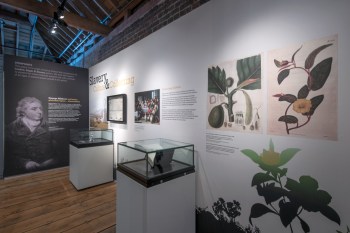 The latest display in the London, Sugar and Slavery gallery at the Museum of London Docklands highlights the connection to slavery of some of Britain’s oldest cultural organisations. Slavery, Culture, and Collecting follows slave owner and art collector George Hibbert (1757–1837), a prominent member of a large subsection of British society which derived its wealth directly from the slave economy. These figures were often active philanthropists, and are commemorated in memorials for their associations with charitable causes, while their connections to slavery are invisible even today. Hibbert was instrumental in building the West India Docks which now house the Museum of London Docklands. This connection positions the museum as an important place to think about the relationship between slavery and cultural heritage.
The wealth generated by slavery was used to create cultural institutions such as museums, universities, art galleries and charities. Advocates of slavery would then use culture in their arguments for the continuing use of enslaved labour, on the grounds that Africans needed the ‘civilising influence’ of Europe. The display contains a short film, as well as objects from the collection to encourage further debate around this challenging issue.
Slavery, Culture, and Collecting is delivered with the support of the Antislavery Usable Past project at the University of Nottingham.
More information about the display is available here»
Lecture | Charles Peterson on Africana Identity in Curatorial Spaces
From the Bard Graduate Center:
Charles F. Peterson, The Colored Museum: Notes on Africana Identity, Power, and Culture in Curatorial Spaces
Bard Graduate Center, New York, 9 April 2019
Charles F. Peterson will present at the Museum Conversations Seminar on Tuesday, April 9, at 6 pm. His talk is entitled “The Colored Museum: Notes on Africana Identity, Power, and Culture in Curatorial Spaces.” Peterson will examine the use of the museum space in the 2018 film Black Panther (Dir. Ryan Coogler), the 2018 documentary on author Toni Morrison’s 2006 curation in The Louvre, The Foreigner’s Home (Dirs. Rian Brown, Jonathan Demme, and Geoff Pingree), and that same year’s music video release by Beyoncé and Jay-Z, “Apeshit.” These performances will be read as (African) Diasporic and intertextual interventions in hegemonic curatorial spaces, revealing the seen and unseen, hidden and obvious messages of identity, power, and culture therein.
Charles F. Peterson, a native of Gary, Indiana, earned a BA in Philosophy from Morehouse College (1992). He earned his MA and PhD in Philosophy, Interpretation and Culture from Binghamton University (1995, 2000). He has taught at Florida International University, Temple University, and The College of Wooster, and is presently Associate Professor of Africana Studies at Oberlin College. He is a co-editor of De-Colonizing the Academy: African Diaspora Studies (African World Press, 2003), and author of DuBois, Fanon, Cabral: The Margins of Elite Anti-Colonial Leadership (Lexington Books, 2007). He has published in the fields of Africana Philosophy, Africana Political Theory, and Aesthetics. He teaches courses in Africana Philosophy, Africana American Politics, Black Nationalism, and Marxism.
Conference | Art Institutions and Race in the Atlantic World
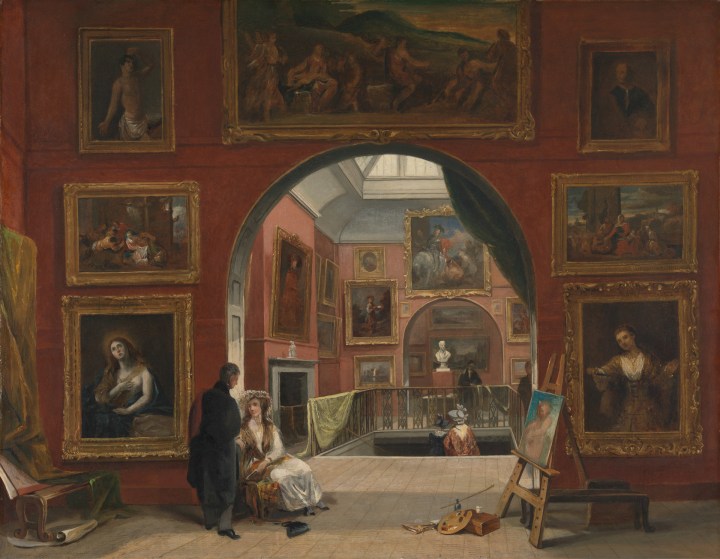
Alfred Joseph Woolmer, Interior of the British Institution (Old Master Exhibition, Summer 1832), 1833, Oil on canvas (New Haven: Yale Center for British Art, Paul Mellon Collection).
◊ ◊ ◊ ◊ ◊
From The Courtauld:
Art Institutions and Race in the Atlantic World, 1750–1850
The Centre for American Art at The Courtauld Institute of Art, London 24–25 May 2019
Organized by Nika Elder and Catherine Roach
The long eighteenth century gave rise to a host of art institutions throughout the Atlantic world, including the Royal Academy of Arts in London, the Academia de San Carlos in Mexico City, and the Academia Imperial de Belas Artes in Rio de Janeiro. Vibrant markets for paintings, sculpture, decorative arts, and prints developed alongside and beyond these established institutions, creating networks of cross-cultural exchange that mirrored the economic ties among Great Britain, Africa, the Caribbean, and the Americas during this period. These cultural developments were inextricably linked with the profits and the cultural logics of colonialism and slavery. Building on important recent work on the visual culture of slavery and abolition, this conference examines the reciprocal relationship between the fine arts and racial ideologies during the apogee and decline of the transatlantic slave trade. The talks will consider sites of artistic production from throughout the Atlantic world, including Brazil, Britain, Jamaica, Massachusetts, and Mexico, and cover a wide variety of topics, including museum collections, artists’ models, the hierarchy of genres, print culture, and exhibitions of images and human beings. In sum, this two-day gathering examines how theories of race informed the production, circulation, collection, and display of art, and how those processes in turn solidified and promulgated understandings of race.
Booking information is available here»
F R I D A Y , 2 4 M A Y 2 0 1 9
10:00 Opening remarks
10:30 Panel 1
• Ray Hernández-Durán (Associate Professor of Early Modern Ibero-American Colonial Arts and Architecture, University of New Mexico), From Novohispanic Castas to Mexican Citizens: Colonialism, Race, and the Academy of San Carlos in Mexico City
• Geoffrey Quilley (Professor of Art History, University of Sussex), India in the City: The Ambiguous Place of East India House and the India Museum
11:45 Coffee
12:00 Panel 2
• Esther Chadwick (Lecturer in Early Modern Art History, The Courtauld Institute of Art), ‘This she looking black, this Molly dressed thing of a man’: Mai and Thayendanegea at the Royal Academy in 1776
• Sadiah Qureshi (Senior Lecturer in Modern History, University of Birmingham), ‘A Peep at the Natives’: Exhibitions, Empire, and the Natural History of Race in Nineteenth-Century Britain
1:15 Lunch
3:00 Event for the Speakers: British Museum Print Study
S A T U R D A Y , 2 5 M A Y 2 0 1 9
10:00 Panel 3
• Nika Elder (Assistant Professor of Art History, American University), Fugitive Pigments: Painting and Race in the British Atlantic
• Cheryl Finley (Associate Professor of Art History, Cornell University), Mapping the Slave Trade
11:15 Coffee
11:30 Panel 4
• Rachel Grace Newman (A.W. Mellon Postdoctoral Fellow, Center for Advanced Study in the Visual Arts), Framing the Plantation: The Plantocracy, Artists, and Image Production of the Early Nineteenth Century
• Sarah Thomas (Lecturer in Museum Studies and History of Art, Birkbeck College, University of London), Slavery, Patronage and the Love of Art: Slave-ownership and the Politics of Collecting in Early Nineteenth-Century Britain
12:45 Lunch
1:45 Panel 5
• Catherine Roach (Associate Professor of Art History, Virginia Commonwealth University), Hybrid Exhibits: Race, Empire, and Genre at the British Institution in 1806
• Nicholas Robbins (Doctoral Candidate, History of Art, Yale University), Constable’s Whiteness
3:00 Coffee
3:15 Panel 6
• Caitlin Beach (Assistant Professor of Art History, Fordham University), Ira Aldridge and the Performed Persona
• Daryle Williams (Associate Professor of History and Associate Dean for Faculty Affairs, College of Arts and Humanities, University of Maryland), The Brazilian Imperial Academy of Fine Arts and the Transatlantic Slave Trade
4:30 Closing Discussion










 Enfilade
leave a comment