In Memoriam | Giles Waterfield (1949–2016)
From Giles’s website:
Giles Waterfield
(24 July 1949 – 5 November 2016)
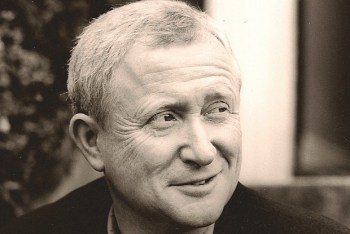 It is with very great sadness that we announce the death of Giles Waterfield, curator, novelist (his novel The Long Afternoon won the McKitterick Prize in 2001), and belletrist. He was Director of the Dulwich Picture Gallery from 1979 to 1996 and was Director of Royal Collection Studies (organised on behalf of Royal Collection Trust by the Attingham Trust) and Associate Lecturer at the Courtauld Institute of Art in addition to lecturing at the University of Notre Dame, London and Arcadia University.
Javier Pes’s obituary for The Art Newspaper is available here»
Thomas Marks’s tribute for Apollo Magazine is available here»
Anna Somers Cocks’s obituary for The Guardian is available here»
Condolences may be offered here»
Note (added 27 November 2016) — There will be a Service of Thanksgiving for Giles on Wednesday, 11th January 2017 at 3pm at St Martin-in-the-Fields, Trafalgar Square, London. All are very welcome.
Attingham Offerings for 2017

Giovanni Paolo Panini, Modern Rome, 1757, 172 × 233 cm
(New York: The Metropolitan Museum of Art, 52.63.2)
◊ ◊ ◊ ◊ ◊
Along with Attingham’s regular course offerings, next year’s study programme will be based in Italy. More information and application forms are available at Attingham’s website. Applicants from the U.S. may contact Cynthia Drayton, admin@americanfriendsofattingham.org. Applicants from outside the U.S. may contact Rita Grudzień, rita.grudzien@attinghamtrust.org.
The 66th Attingham Summer School, 29 June — 16 July 2017
Applications due by 27 January 2017
Directed by David Adshead and Elizabeth Jamieson, and accompanied by specialist tutors and lecturers, this intensive 18-day course will include visits to country houses houses in Sussex, Derbyshire, Nottinghamshire, and Oxfordshire. The Summer School will examine the country house in terms of architectural and social history, and the decorative arts.
Royal Collection Studies, 3–12 September 2017
Applications due by 12 February 2017
Run on behalf of Royal Collection Trust, this strenuous 10-day course is based near Windsor. The school will visit royal palaces in and around London with specialist tutors (many from the Royal Collection) and study the extensive patronage and collecting of the royal family from the Middle Ages onwards.
Attingham Study Programme: Palaces and Villas of Rome and Naples, 18–26 September 2017
Applications due by 12 February 2017
Conceived from the perspective of the British, European, and American travellers who visited Italy to experience antique, renaissance, and baroque Rome during the period c.1650–1950, this intensive Study Programme is in association with the British School at Rome. . . . The programme will consider palaces and villas with their collections in the light of papal patronage and focus upon some of the key Roman families and their influence upon their contemporaries. The choice of properties encompasses those that inspired travellers to collect sculpture, books, paintings and works of art, their taste inspired by the desire to furnish and sometimes rebuild their town and country houses back home. The course director is Andrew Moore.
The London House Course, 3–9 October 2017
Applications due by 12 April 2017
The programme studies the development of the London house from the Renaissance to the present. It combines numerous visits to houses—many of them private—with a series of lectures by leading authorities. Progressing chronologically and exploring all over London, the course takes members inside grand aristocratic buildings, smaller domestic houses, artists’ studios, and the garden suburb. Speakers include Neil Burton, Caroline Dakers, Joseph Friedman, Sarah Nichols, and Gavin Stamp. The course is directed by David Adshead.
◊ ◊ ◊ ◊ ◊
Note (added 28 January 2017) — The original posting did not include information on The London House Course.
New Book | Painting and Narrative in France
From Routledge:
Peter Cooke and Nina Lübbren, eds., Painting and Narrative in France, from Poussin to Gauguin (New York: Routledge, 2016), 218 pages, ISBN: 978-1472440105, $150.
 Before Modernism, narrative painting was one of the most acclaimed and challenging modes of picture-making in Western art; yet, by the early twentieth century storytelling had all but disappeared from ambitious art. France was a key player in both the dramatic rise and the controversial demise of narrative art. This is the first book to analyse French painting in relation to narrative, from Poussin in the early seventeenth to Gauguin in the late nineteenth century. Thirteen original essays shed light on key moments and aspects of narrative and French painting through the study of artists such as Nicolas Poussin, Charles Le Brun, Jacques-Louis David, Paul Delaroche, Gustave Moreau, and Paul Gauguin. Using a range of theoretical perspectives, the authors study key issues such as temporality, theatricality, word-and-image relations, the narrative function of inanimate objects, the role played by viewers, and the ways in which visual narrative has been bound up with history painting. The book offers a fresh look at familiar material, as well as studying some little-known works of art, and reveals the centrality and complexity of narrative in French painting over three centuries.
Peter Cooke is Senior Lecturer in French Studies at the University of Manchester. His most recent book is Gustave Moreau: History Painting, Spirituality and Symbolism.
Nina Lübbren is Art Historian and Principal Lecturer in Film Studies, and Deputy Head of Department of English, Communication, Film and Media, Anglia Ruskin University.
◊ ◊ ◊ ◊ ◊
C O N T E N T S
List of Figures
Notes on Contributors
Acknowledgements
Introduction: Narrativity and (French) Painting, Peter Cooke and Nina Lübbren
I. Ancien Régime
1 Units of Vision and Narrative Structures: Upon Reading Poussin’s Manna, Claudine Mitchell
2 Figures of Narration in the Context of a Painted Cycle: The North Bays of the Grande Galerie at Versailles, Marianne Cojannot-Le Blanc
3 The Crisis of Narration in Eighteenth-Century French History Painting, Susanna Caviglia
4 Obscure, Capricious, and Bizarre: Neoclassical Painting and the Choice of Subject, Mark Ledbury
II. Restoration and July Monarchy
5 Delacroix and ‘The Work of the Reader’, Beth S. Wright
6 Narrative and History in Léopold Robert’s Arrival of the Harvesters in the Pontine Marshes, Richard Wrigley
7 Narrative Strategies in Paul Delaroche’s Assassination of the Duc de Guise, Patricia Smyth
III. Second Empire and Third Republic
8 Eloquent Objects: Gérôme, Laurens, and the Art of Inanimate Narration, Nina Lubbren
9 Tyrannical Inopportunity: Gustave Moreau’s Anti-narrative Strategies, Scott C. Allan
10 Theatricality versus Anti-Theatricality: Narrative Techniques in French History Painting (1850−1900), Pierre Sérié
11 The Conflicted Status of Narrative in the Art of Paul Gauguin, Belinda Thomson
IV. Key Issues of Pictorial Narrative
12 Narrativity, Temporality and Allegorisation, from Poussin to Moreau, Peter Cooke
13 Towards a Study of Narration in Painting: The Early Modern Period, Étienne Jollet
Index
London’s Blue Plaques Turn 150

From English Heritage:
London’s famous blue plaques link the people of the past with the buildings of the present. Now run by English Heritage, the London blue plaques scheme is thought to be the oldest of its kind in the world and celebrates its 150th anniversary this year. Across the capital over 900 plaques, on buildings humble and grand, honour the notable men and women who have lived or worked in them.
The official blue plaques app is now available to download for free for iPhone and Android. Use the app to follow guided walks around Soho and Kensington, or explore all of the 900 plaques by finding ones nearby and searching for your favourite figures from history. From Sylvia Pankhurst’s former home in Chelsea to Jimi Hendrix’s flat in Mayfair, let English Heritage’s blue plaques guide you through the streets of London. Download the free app now from the Apple App Store for iPhone or the Google Play Store for Android.
◊ ◊ ◊ ◊ ◊
Frank and Sue Ashworth have been making the Blue Plaques from their home since 1986; for photos, see The Daily Mail (2 May 2016).
Katie Engelhart recently wrote about the Blue Plaques for The New York Times (10 November 2016).
Anna Marie Roos on a Portrait of Martin Folkes
From The Societies of Antiquaries of London:
Anna Marie Roos on a Portrait of Martin Folkes
Society of Antiquaries of London, Unlocking Our Collections, added 1 November 2016

Jonathan Richardson the Elder, Portrait of Martin Folkes, 1718, oil on canvas (Society of Antiquaries of London).
This is a portrait of Martin Folkes (1690–1754), the only person to have been President of both the Society of Antiquaries of London and of the Royal Society. What would being President of a society dedicated to the material past have to do with leading a society dedicated to science? In the 18th century, the ability to observe nature was thought to make scientists ideal to understand the empirical details of ancient artefacts and how they were created. Science and archaeology were seen as one, the Society of Antiquaries and the Royal Society had many common members and held their meetings on the same day, and Folkes tried to unite the two groups into one organisation. If he had succeeded, the humanities and sciences would perhaps be more united today. . . .
Anna Marie Roos is Reader at College of Arts, University of Lincoln.
The full essay, with a video and suggestions for further reading, is available here»
At Sotheby’s | Qianlong Emperor’s Musket Fetches $2.5million
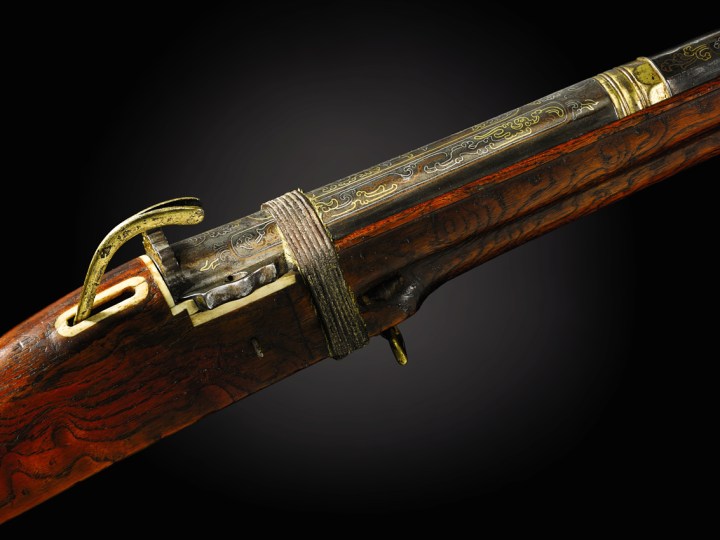
Imperial matchlock musket, made for the Qianlong Emperor (r. 1736–1795), Qing Dynasty. The gun bears the imperial reign mark on top of the barrel, and incised on the breech of the barrel are four Chinese characters that denote the gun’s ranking: te deng di yi (‘Supreme Grade, Number One’).
◊ ◊ ◊ ◊ ◊
Press release for Sotheby’s Sale L16215, Lot #1:
‘Supreme Grade, Number One’ Imperial Matchlock Musket
Sotheby’s, London, 9 November 2016
At Sotheby’s in London, the first Chinese firearm with an imperial reign mark ever to be offered at auction sold for £1,985,000 (US$2,461,400 / HK$19,198,920). The gun—a brilliantly designed and exquisitely crafted musket, produced in the imperial workshops—was created for the Qianlong Emperor of the Qing dynasty (r. 1736–1795), arguably the greatest collector and patron of the arts in Chinese history. Estimated at £1–1.5 million, the firearm ignited a ten-minute bidding battle, finally selling to an Asian private collector.
Robert Bradlow, Senior Director, Chinese Works of Art, Sotheby’s London, said: “This gun ranks as one of the most significant Chinese treasures ever to come to auction. Today’s result will be remembered alongside landmark sales of other extraordinary objects that epitomise the pinnacle of imperial craftsmanship during the Qing dynasty. Over the last 10 years we’ve seen the market for historical Chinese works of art go from strength to strength, with collectors drawn from across the globe and exceptional prices achieved whether the sale is staged in London, Hong Kong, or New York.”
The musket bears not only the imperial reign mark on top of the barrel, but in addition, incised on the breech of the barrel, are four Chinese characters that denote the gun’s peerless ranking—the exceptional grading te deng di yi, ‘Supreme Grade, Number One’. This grading makes it unique among the known extant guns from the imperial workshops and asserts its status as one of the most important firearms produced for the Qianlong Emperor.
The advent of Western firearm technology sparked the production of muskets in the imperial workshops, and this modern mode of weaponry had unquestionable advantages over the traditional bow and arrow for hunting. Using only the most luxurious materials, imperial muskets were created in very small numbers for the Qianlong Emperor. While the Emperor is unlikely ever to have held a gun in battle, he would regularly hunt with a musket.
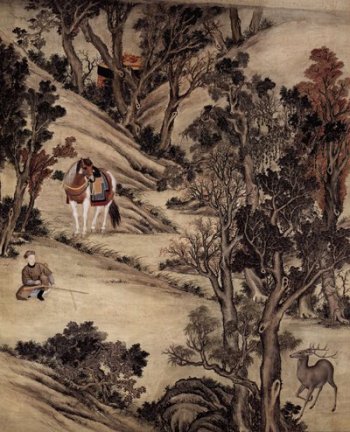
Anonymous court painter, The Qianlong Emperor Shooting Deer (Beijing: Palace Museum), from The Complete Collection of Treasures of the Palace Museum: Armaments and Military Provisions (Hong Kong, 2008), p. 205.
The Supreme Number One is closely related to six celebrated, named imperial Qianlong muskets in the collection of the Palace Museum, Beijing, which appear to correspond with seven muskets listed in the Qing work Collected Statutes of the Qing Dynasty with Illustrations. These guns were probably graded in the same way as the Supreme Number One, but of lower grade and/or number (‘Supreme Grade, Number Two’, ‘Top Grade, Number 2’).
Revered as one of the most powerful ‘Sons of Heaven’, the Qianlong Emperor (1711–1799) was the longest-lived and de-facto longest-reigning emperor in Chinese history (r. 1736–1795). In the 60th year of his reign (1795), the eighty-five year old Qianlong Emperor declared his abdication, lest he surpassed the 60-year reign of his grandfather, the Kangxi Emperor (r. 1662–1722). In a grand coronation ceremony the following year, his fifteenth son took position of emperor, though the Qianlong Emperor continued to rule China as the Qing dynasty’s only, and China’s last, Emperor Supreme.
◊ ◊ ◊ ◊ ◊
Note (added 11 November 2016) — The original version of this posting included a view looking down the barrel of the gun. Once the posting was published, I was struck by how threatening the photo could appear to some (myself included). The point of the posting was to highlight something of the collection (and market interest in the collection) of the Qianlong Emperor. I didn’t mean to make the world a more hostile place. It’s been a tough enough week without more guns pointed at anyone. It was a mistake, and I’m sorry. –CH
U of Michigan Graduate Symposium: All That Glitters
The day’s presentations include these eighteenth-century papers:
All That Glitters: Magnificence in Art, Architecture, and Visual Culture
2016 Graduate Symposium
University of Michigan Museum of Art, Ann Arbor, 12 November 2016
• Philippe L. B. Halbert (Yale University), ‘Our Colony Has Today Become Opulent’: Material Magnificence in the French Atlantic World, 1660–1789
• Emily Anderson (University of Southern California), Magnificent Macabre: The Engravings of the Anatomical Preparations of Frederik Ruysch
Acquisition Appeal | Thomas Lawrence’s Unfinished Portrait Wellington
An appeal from the NPG:
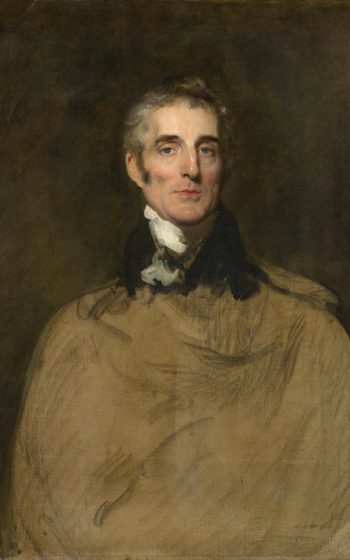
Sir Thomas Lawrence, Unfinished Portrait of Arthur Wellesley, 1st Duke of Wellington, 1829, oil on canvas, 94.3 × 74.3 cm (Private Collection).
The National Portrait Gallery has launched a public appeal to acquire Sir Thomas Lawrence’s unfinished final portrait of Arthur Wellesley, 1st Duke of Wellington, it was announced today, Thursday 3 November 2016. The portrait has been offered to the National Portrait Gallery for £1.3 million. The appeal was kick started today by a donation of £350,000 from the Art Fund, whose generous support means that alongside the Gallery’s own funds, £1 million of the total has already been raised. The Gallery has £300,000 to raise by spring 2017.
The Gallery has no other significant portrait of the Duke in its Collection, an omission of one of the most iconic and popular figures in British history. The Gallery has been seeking to secure such a portrait since it opened in 1856. This work is one of only two world-class portraits of Wellington ever likely to come up for sale. The leading artist of his age Sir Thomas Lawrence made eight portraits of Wellington and was the Duke’s definitive image maker.
Started in 1829, the year Wellington was appointed Lord Warden of the Cinque Ports and in which he fought a duel with Lord Winchilsea over the issue of Catholic emancipation, the unfinished portrait shows him in civilian dress with only his black collar and white stock visible. It was commissioned at the height of Wellington’s political career when he was Prime Minister. At the time he was closely involved in the legislation around catholic emancipation and deeply opposed to the reform of the House of Commons. Earlier in the decade he had been involved in the delicate negotiations between the Prince Regent and the Prince’s estranged wife, Queen Caroline. He also represented British interests at the Congress of Verona in 1822, one of a series of conferences on European affairs after the Napoleonic Wars.
The large oil-on-canvas portrait was commissioned a year after Wellington had become Tory Prime Minister by Sarah, Countess of Jersey, a leading political hostess and supporter of the Tories in the 1820s. Initially dedicating her social gatherings to the cause of the Whig party, in the late 1820s Lady Jersey switched her allegiance to the Tories, with Wellington becoming one of her favourites. She believed herself to be one of his confidantes, but he mistrusted her ability to keep a secret: earlier in life her loquacity had earned her the nickname ‘Silence’.
At Lawrence’s death in 1830 the portrait remained unfinished. But unlike many other clients, Lady Jersey refused to have it finished by a studio assistant. On hearing that the Duke of Wellington had fallen from power in 1830, Lady Jersey burst into tears in public. She reportedly ‘moved heaven and earth’ against the Reform Act 1832 which Wellington had also opposed.
Dr Nicholas Cullinan, Director of the National Portrait Gallery, London, says: “We have been searching for a portrait that can do justice to this iconic British hero since 1856. The lack of a suitable depiction of the Duke of Wellington has long been identified as the biggest gap in our collection. If we can raise the funds this remarkable painting by Sir Thomas Lawrence will be on permanent display and free for over two million visitors to enjoy each year.”
Dr Stephen Deuchar, Art Fund Director, says: “The National Portrait Gallery will make a fine home for this intensely compelling portrait of Wellington. We are pleased to have made a major grant towards its purchase, and hope the public will support the appeal to raise the remaining funds. This is a very important national acquisition.”
Dr Lucy Peltz, Senior Curator, 18th-Century Portraits and Head of Collections Displays (Tudor to Regency), National Portrait Gallery, London, says: “This is a compelling portrait of one of the most famous figures in early nineteenth-century Britain. Lawrence was a superlative portrait painter with the flair and talent to capture surface glamour and deeper currents. This unfinished portrait is shot with psychological insight.”
Dan Snow, historian, broadcaster and co-author of The Battle of Waterloo Experience, says: “The ‘Iron Duke’ is one of the towering figures of British history. He never lost a battle, reshaped Europe, and dominated Britain until his death. His career and legacy are intimately involved with the development of the United Kingdom. Now, more than 200 years after his most famous victory at the Battle of Waterloo it’s time we helped the National Portrait Gallery win the day.”
The painting was lent to the National Portrait Gallery’s exhibition Wellington: Triumphs, Politics and Passions staged in 2015 to mark the bicentenary year of the Battle of Waterloo. Prior to its loan to the Gallery from a private collection for a short period of display just before the exhibition opened, the portrait, which is in excellent condition, had not been on public view for any significant period since it was painted.
Fellowships | Lewis Walpole Library, 2017–18
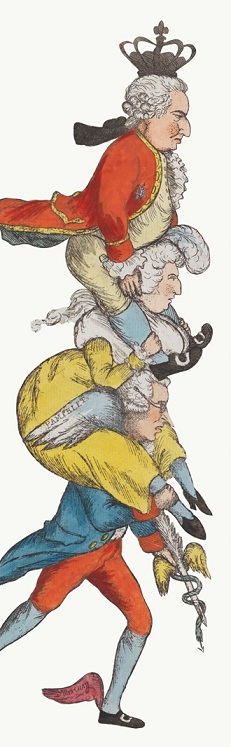 The Lewis Walpole Library, a department of Yale University Library, invites applications to its 2017–18 fellowship program:
Visiting Fellowships and Travel Grants
The Lewis Walpole Library, 2017–18
Applications due by 9 January 2017
Located in Farmington, Connecticut, the library offers short-term residential fellowships and travel grants to support research in the library’s rich collections of eighteenth century materials (mainly British), including important holdings of prints, drawings, manuscripts, rare books, and paintings. In addition, the library offers a joint fellowship award with the Beinecke Rare Book and Manuscript Library to support up to eight weeks of research in both collections. Scholars pursuing postdoctoral or advanced research, as well as doctoral candidates at work on a dissertation, are encouraged to apply.
Recipients are expected to be in residence at the library, to be free of other significant professional obligations during their stay, and to focus their research on the Lewis Walpole Library’s collections. Fellows also have access to additional resources at Yale, including those in the Sterling Memorial Library, the Beinecke Rare Book and Manuscript Library, and the Yale Center for British Art. Residential fellowships include the cost of travel to and from Farmington, accommodation for four weeks in an eighteenth-century house on the library’s campus, and a per diem living allowance. Travel grants cover transportation costs to and from Farmington for research trips of shorter duration and include on-site accommodation.
Application details and requirements are available here. The application deadline is January 9, 2017. Awards will be announced in March.
Exhibition | Bitter Sweet: Coffee, Tea, and Chocolate
Overlapping, at least partially, with The Edible Monument, this DIA exhibition explores luxury drinks:
Bitter|Sweet: Coffee, Tea, and Chocolate
Detroit Institute of Arts, 20 November 2016 — 5 March 2017
Curated by Yao-Fen You
The Detroit Institute of Arts presents Bitter|Sweet: Coffee, Tea & Chocolate, on view from November 20, 2016 to March 5, 2017. The introduction of coffee, tea, and chocolate to Europe, beginning in the late 16th century, profoundly changed drinking habits, tastes, and social customs, and spurred an insatiable demand for specialized vessels such as tea canisters, coffee cups, sugar bowls, and chocolate pots. The exhibition is organized by the Detroit Institute of Arts with support from the National Endowment for the Arts.

Pineapple Coffeepot, ca. 1750, creamware with colored glazes, Staffordshire, England (Detroit Institute of Arts).
The 68 works of art in Bitter|Sweet are mostly from the museum’s comprehensive holdings in pre-1850 European silver and ceramics. Highlights include three exquisitely decorated beverage services: a rare 24-piece set made by Germany’s Fürstenberg Porcelain Manufactory; a set once owned by Prince Louis, Duke of Nemours that illustrates the refinement of early 19th-century French Sèvres porcelain; and a Vienna Porcelain ensemble for two associated with Archduke Joseph of Austria. DIA paintings, prints, and sculpture related to the arrival and impact of the beverages in Europe help create new contexts and connections for objects from the permanent collection.
Other key works include Madame de Pompadour’s coffee grinder from the Musée du Louvre; a 1684 handwritten Spanish manuscript satirizing the vogue for chocolate from the Hispanic Society, New York; and an 18th-century German breakfast set containing chocolate beakers from the Clark Art Institute, Williamstown, Massachusetts. Diego Velázquez’s painting Infanta Maria Theresa from the Museum of Fine Arts Boston helps tell the story of the cocoa bean’s migration from the New World to the French royal court of Louis XIV via Spain.
Bitter|Sweet will be the first DIA exhibition to engage all five senses. In addition to the artworks, there will be videos about the preparation of coffee, tea, and chocolate as well as opportunities to touch, to hear, to smell, and even to taste. Such interactive components demonstrate the DIA’s commitment to engaging visitors in meaningful experiences with art.
“The exhibition is a very exciting venture for the DIA, with regards to the rich, complex story we’re telling and the innovative visitor-centered ways in which we are presenting it,” said Salvador Salort-Pons, DIA director. “While European art will be at center stage, the exhibition examines global interconnections from centuries ago that we hope will resonate with all visitors today. Just about everyone—regardless of culture or background—has a personal relationship with one or more of these beverages. I’m also excited about the ways the exhibition engages the permanent collection. Of course, I love that several of the loans in Bittersweet comment on Spain’s relationship to chocolate.”
Bitter|Sweet also touches on the human cost of procuring the raw materials to produce coffee, tea, and chocolate as well as the sugar used to alter the beverages’ bitter taste. Coffee was imported from Africa through the Middle East, tea from Asia, chocolate from the Americas, and sugar harvested by slaves on colonial plantations. To meet demand and keep prices down for the European market, merchants—such as the Dutch East India Company and the British East India Company—eventually found ways to cultivate tea and coffee bushes on foreign lands colonized under their rule.
◊ ◊ ◊ ◊ ◊
From Yale UP:
Yao-Fen You, with essays by Mimi Hellman and Hope Saska, Coffee, Tea, and Chocolate: Consuming the World (New Haven: Yale University Press, 2016), 142 pages, ISBN: 978-0300222500, $25.
 Coffee, tea, and chocolate were all the rage in Enlightenment Europe. These fashionable beverages profoundly shaped modes of sociability and patterns of consumption, yet none of the plants required for their preparation was native to the continent: coffee was imported from the Levant, tea from Asia, and chocolate from Mesoamerica. Their introduction to 17th-century Europe revolutionized drinking habits and social customs. It also spurred an insatiable demand for specialized vessels such as hot beverage services and tea canisters, coffee cups, and chocolate pots.
This beautiful book demonstrates how the paraphernalia associated with coffee, tea, and chocolate can eloquently evoke the culture of these new beverages and the material pleasures that surrounded them. Contributors address such topics as the politics of coffee consumption in 18th-century Germany; 18th-century visual satires on the European consumption of tea, coffee, and chocolate; and the design history of coffee pots in the United States between the colonial period and the present.
Yao-Fen You is associate curator of European sculpture and decorative arts at the Detroit Institute of Arts.










 Enfilade
leave a comment