Call for Applications | Getty Residential Grants, 2026–27
The Getty Research Institute is pleased to invite applications for 2026–27 residential grants for predocs, postdocs, and scholars. Applications are due by 1 October 2025 at 5pm PT.
Getty Scholars Program | Provenance
For the 2026–2027 year, the Getty Scholars Program invites innovative proposals for projects that explore provenance and adjacent research areas, including but not limited to the history of collecting, the study of the art market, and broader explorations around the ownership of art objects. Relevant to all periods and areas of art production, the scholar cohort will be invited to examine and critique the arena of provenance studies while also envisioning its future, situated between the practices and demands of source communities, art historians, museums, and the market. Digitization and databases, such as the Getty Provenance Index, have also opened up the interdisciplinary possibilities of provenance research and laid the ground for art restitution efforts and other forms of reparation. Applicants are invited to propose projects, either individual or collaborative, that reflect upon the ownership, transfer, and movement of art objects from all world regions and time periods.
For this year, the Getty Scholars Program aims to link scholars with Getty resources and researchers and foster a lively community around the study of provenance—an increasingly significant domain of art historical and curatorial practice that centers the histories of both objects and people. While in residence, scholars will have the opportunity to delve into the Getty Research Institute’s vast collections of rare materials that support provenance research and explore the newly remodeled Getty Provenance Index, which lays the ground for cutting-edge computational approaches to the field.
Please find the full call for applications and theme text on the Getty Scholars Program and Getty Pre- and Postdoctoral Fellowships webpages.
New Book | Coffee Nation
From Penn Press:
Michelle Craig McDonald, Coffee Nation: How One Commodity Transformed the Early United States (Philadelphia: University of Pennsylvania Press, 2025), 280 pages, ISBN: 978-1512827552, $45.
 Coffee is among the most common goods traded and consumed worldwide, and so omnipresent its popularity is often taken for granted. But even everyday habits have a history. When and why coffee become part of North American daily life is at the center of Coffee Nation. Using a wide range of archival, quantitative, and material evidence, Michelle Craig McDonald follows coffee from the slavery-based plantations of the Caribbean and South America, through the balance sheets of Atlantic world merchants, into the coffeehouses, stores, and homes of colonial North Americans, and ultimately to the growing import/export businesses of the early nineteenth-century United States that rebranded this exotic good as an American staple. The result is a sweeping history that explores how coffee shaped the lives of enslaved laborers and farmers, merchants and retailers, consumers and advertisers.
Coffee Nation also challenges traditional interpretations of the American Revolution, as coffee’s spectacular profitability in US markets and popularity on the new nation’s tables by the mid-nineteenth century was the antithesis of independence. From its beginnings as a colonial commodity in the early eighteenth century, coffee’s popularity soared to become a leading global economy by the 1830s. The United States dominated this growth, by importing ever-increasing amounts of the commodity for drinkers at home and developing a lucrative re-export trade to buyers overseas. But while income generated from coffee sales made up an expanding portion of US trade revenue, the market always depended on reliable access to a commodity that the nation could not grow for itself. By any measure, the coffee industry was a financial success story, but one that runs counter to the dominant narrative of national autonomy. Distribution, not production, lay at the heart of North America’s coffee business, and its profitability and expansion relied on securing and maintaining ties first with the Caribbean and then Latin America.
Michelle Craig McDonald is the Librarian/Director of the Library and Museum at the American Philosophical Society.
New Book | The Invention of Rum
Coming in October from Penn Press:
Jordan B. Smith, The Invention of Rum: Creating the Quintessential Atlantic Commodity (Philadelphia: University of Pennsylvania Press, 2025), 320 pages, ISBN: 978-1512828184, $40.
 Making and consuming rum created a new means of profit that transformed the Atlantic world.
It was strong. It was cheap. It was ubiquitous. Fermented and distilled from the refuse of sugar production, rum emerged in the seventeenth-century Caribbean as a new commodity. To conjure something desirable from waste, the makers, movers, and drinkers of rum arrived at its essential qualities through cross-cultural experimentation and exchange. Those profiting most from the sale of rum also relied on plantation slavery, devoured natural resources, and overlooked the physiological effects of overconsumption in their pursuit of profit. Focusing on the lived experiences of British colonists, Indigenous people, and enslaved Africans, The Invention of Rum shows how people engaged in making and consuming this commodity created a new means of profit that transformed the Atlantic world.
Jordan B. Smith guides readers from the fledgling sugar plantations and urban distilleries where new types of alcohol sprung forth to the ships, garrisons, trading posts, and refined tables where denizens of the Atlantic world devoured it. He depicts the enslaved laborers in the Caribbean as they experimented with fermentation, the Londoners caught up in the Gin Craze, the colonial distillers in North America, and the imperial officials and sailors connecting these places. This was a world flooded by rum. Based on extensive archival research in the Caribbean, North America, and Britain, The Invention of Rum narrates the seventeenth- and eighteenth-century history of one of the Atlantic world’s most ubiquitous products. Smith casts this everyday item as both a crucial example of negotiation between Europeans, Africans, and Americans and a harbinger of modernity, connecting rum’s early history to the current global market. The book reveals how individuals throughout the Atlantic world encountered—and helped to build—rapidly shifting societies and economies.
Jordan B. Smith is Associate Professor of History at Widener University.
Huntington Library Quarterly, Summer 2024 | Exhibitions in London
This special issue of HLQ arises from a conference held at the Huntington Library in September 2023:
Huntington Library Quarterly 87.2 (Summer 2024)
Paintings, Peepshows, and Porcupines: Exhibitions in London, 1763–1851
Edited by Jordan Bear and Catherine Roach
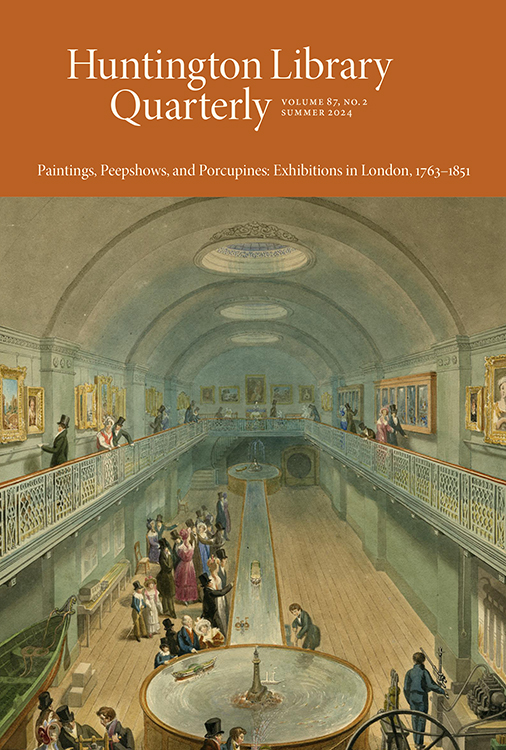 Dazzling variety characterized exhibitions in eighteenth- and nineteenth-century Britain: boxing matches, automata, contemporary art shows, panoramas, dog beauty contests, and menageries all contributed to a flourishing display culture. Despite their differences, these attractions shared both techniques for engaging audiences and widely reverberating themes. All of the essays in this volume work across multiple sites of display. By examining the varied terrain of exhibitions collectively, this issue illuminates cultural preoccupations of the time, including the multifarious impact of empire and the productively ambiguous boundaries between the cultural expressions that were deemed low and those that were deemed high.
c o n t e n t s
• Jordan Bear and Catherine Roach, “Introduction: Exhibitions in London, 1763–1851,” pp. 153–63.
• Adam Eaker, “The Art of Marring a Face: Exhibiting Boxers in Georgian London,” pp. 165–82.
• Nicholas Robbins, “The Circumference of the Subject: Figuring Race at Egyptian Hall,” pp. 183–205.
• Rosie Dias, “Making Space for Empire: India in Panoramas and Dioramas, 1830–1851,” pp. 207–31.
• Holly Shaffer, “Provisioners, Cooks, Coffeehouses, and Clubs: Exhibiting Taste in Calcutta and London in the Early Nineteenth Century,” pp. 233–54.
• Jordan Bear, “The Sea Serpent of Regent Street: On the Evidentiary Strategies of Nineteenth-Century Exhibitions,” pp. 255–71.
• Catherine Roach, “Dog Shows: Porcelain Pugs and Pre-Raphaelite Painters in Thomas Earl’s Art and Nature,” pp. 273–90.
• Alison FitzGerald, “Centers and Peripheries: Exhibiting London’s ‘Marvels’ in Britain’s ‘Second City’,” pp. 291–311.
• John Plunkett, “An Early Moving Picture Industry? Exhibition Networks and the Panorama, 1810–1850,” pp. 313–35.
Exhibition | In Vino Veritas, 1450–1800

Abraham Bosse, The Prodigal Son: Riotous Living, 1635, etching, platemark: 26 × 32.5 cm
(The Cleveland Museum of Art, 1929.560.2)
◊ ◊ ◊ ◊ ◊
Opening next month at The Cleveland Museum of Art:
In Vino Veritas (In Wine, Truth)
The Cleveland Museum of Art, 7 September 2025 — 11 January 2026
For millennia, wine has played a significant role not only in the human diet but also in cultural myths, rituals, and festivities. As a result, wine—its ingredients, making, drinking, and effects on the human body and mind—has been a constant muse for artistic creation. The exhibition In Vino Veritas (In Wine, Truth), a phrase coined by the Roman polymath Pliny the Elder, celebrates the presence and meaning of wine in prints, drawings, textiles, and objects made in Europe between 1450 and 1800. Drawn from the museum’s collection, more than 70 works by artists from throughout Europe explore wine’s myths, symbols, and stories. These images reveal how diverse cultures and religions ascribed meaning and transformational properties to the so-called nectar of the gods.

Marcantonio Raimondi, after Raphael, The Wine Press, ca. 1517–20, engraving, sheet: 18.6 × 14.7 cm (The Cleveland Museum of Art, 1922.479).
The ancient Greeks believed that the god Dionysus (in Rome, Bacchus) lived within wine: to drink wine was to partake of the god’s power. Fascinated by ancient culture, Italian Renaissance artists, such as Andrea Mantegna and Raphael, imagined scenes of boisterous festivals, or bacchanalia, along with the exploits of Bacchus and his coterie of satyrs, nymphs, and fauns. In Northern Europe, Pieter Bruegel the Elder, and later Jean-Honoré Fragonard, transformed bacchanalia into raucous peasant festivals and sensuous garden parties fueled by wine, at times tinged with moral judgment. Simultaneously, wine played a critical allegorical role in images made within the Judeo-Christian tradition. The Old Testament and Hebrew Bible traced wine’s invention to Noah. Numerous stories from these texts, portrayed by Lucas van Leyden and others, leveraged wine as an important plot element, with the ability to unify and enlighten, or to incapacitate and deceive. Many artists, such as Albrecht Dürer, used wine, grapes, and the vine to symbolize the Catholic rite of the Eucharist and its origin in Christ’s Last Supper. Throughout the exhibition, wine appears in scenes of devotion, harvest, celebration, music making, and transgression, signaling community cohesion as well as the pleasures—and hazards—of surrendering to one’s senses.
At Auction | La Malouinière du Bos: A French Passion
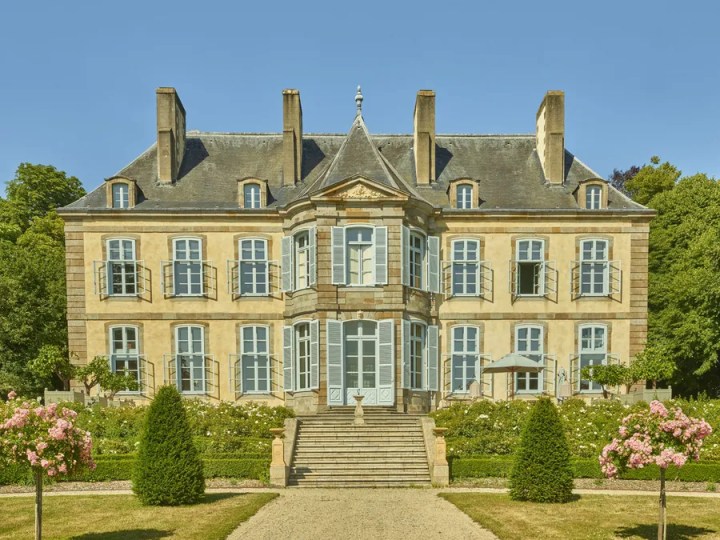
Attributed to the architect Bullet de Chamblain, La Malouinière du Bos, 1715–17, on the River Rance, near Saint-Malo.
◊ ◊ ◊ ◊ ◊
From the press release for the sale:
La Malouinière du Bos: Une Passion Française, Sale 6370
Artcurial, Paris, 23 September 2025, 2.30pm
On September 23rd, 2025, alongside FAB Paris, Artcurial will host the auction of the collection from La Malouinière du Bos, an elegant 18th-century residence nestled on the banks of the River Rance, near Saint-Malo. Around 280 lots—including Old Master paintings, sculptures, furniture, and silverware—reflect thirty years of discerning passion. For over thirty years, the current owners have carefully restored both the interior and exterior of the Malouinière, showcasing their refined taste and incorporating treasures mainly acquired at public auctions. This sale reflects their desire to undertake major renovation work, after which they look forward to breathing new life into the house, redecorating and refurnishing it with the same elegance and attention to detail.

Élisabeth Louise Vigée Le Brun, Allegory of Poetry, oil on canvas 80 × 65 cm. Estimate: €80,000–120,000.
Reflecting a marked appreciation for French artists of the 17th and 18th centuries, the Old Master paintings collection includes several exceptional works. Among them, an Allegory of Poetry by Élisabeth Louise Vigée Le Brun, destined for the 1774 Salon of the Académie de Saint-Luc, stands out for its delicate brushwork and luminous palette. The painting features a refined portrayal of a young woman, her graceful back subtly revealed as she gazes upward in a moment of inspiration. Equally striking is Une jeune espiègle painted by François-Hubert Drouais, exhibited at the 1771 Salon (no. 61). This tender evocation of the lightness of childhood was a theme cherished by 18th-century French painters from Antoine Watteau to Jean-Honoré Fragonard.
The fertile period of the early 17th century is represented by two remarkable paintings. An oil on canvas attributed to Paul La Tarte depicts a lively market scene, illustrating the influence of the Caravaggesque movement on painters from the Lorraine region. Meanwhile, a Magdalene with the Crucifix (French School, 17th century, workshop of Georges de La Tour) offers valuable insight into a lost original by Georges de La Tour and serves as an important stylistic milestone in the study of his series of Magdalene paintings.
Italian painting will also be prominently featured, with a large history painting by Andrea Casali depicting Moses Saved from the Water, and Madonna in busto by Sassoferrato. Among the works on paper, a charming portrait of Louise Vernet, born Pujol, delicately rendered in black chalk and watercolor by her father-in-law, Carle Vernet will also be offered for sale.
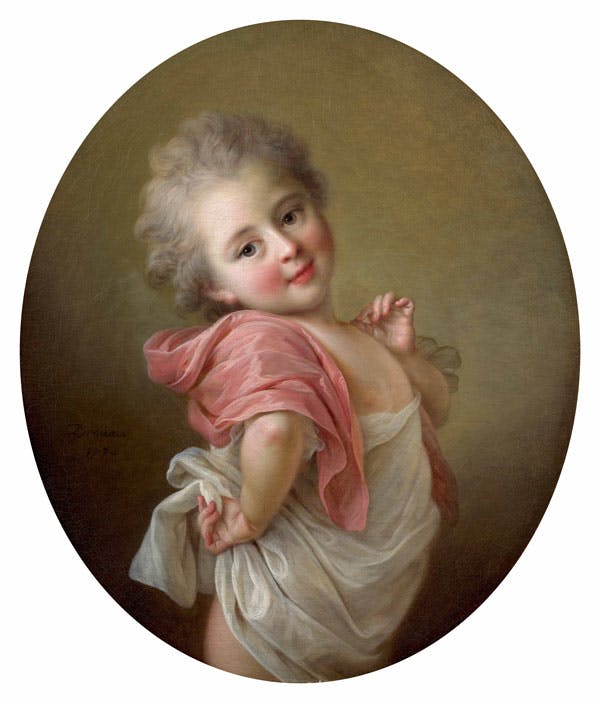
François-Hubert Drouais, La jeune espiègle, oil on canvas, oval format
54 × 46 cm. Estimate: €100,000–150,000
The selection of furniture reflects a sophisticated blend of the finest French craftsmanship of the 18th century and a distinct appreciation for English cabinetmaking of the same period. Noteworthy pieces include a set of four fauteuils à la reine stamped by Claude Chevigny, an elegant pair of monumental Louis XIV giltwood girandole chandeliers, and a restrained George III mechanical architect’s desk attributed to Gillows.
La Malouinière du Bos—built between 1715 and 1717, likely by architect Bullet de Chamblain for Pierre Le Fer de la Saudre and his wife, a member of the renowned Magon shipowners’ family—embodies all the defining features of the grand malouinières of the 18th century. Its classical façade, constructed in finely dressed Chausey granite, is marked by a harmonious and majestic symmetry, animated by a slightly projecting central pavilion. Noble and imposing, the residence overlooks a vast jardin à la française that unfolds toward a bend in the Rance River. All the essential elements of a traditional malouinière are fully preserved at Le Bos: an intact enclosing wall, a chapel, extensive outbuildings, and a landscaped park adorned with sculptures and architectural ornaments.
Built for the greatest shipowners of Saint-Malo, who amassed their fortunes through trade with the East and privateering wars, these pleasure residences served as austere yet majestic settings for their treasures. Jean Bart, Duguay-Trouin, and Surcouf conjure the romantic world of corsairs, where speed, cunning, and flair often triumphed over sheer firepower and heavy artillery. For three centuries, the scent of salt, the sun, and the wind have breathed life into Le Bos. The thunder of cannon fire is recalled by an early 19th-century naval gun brought back from the Far East, inscribed in Chinese characters with the evocative phrase ‘To Split the Mountain’. The clash of boarding and the ring of iron are revived through a group of ceremonial and boarding weapons, their mysterious past hinting at remote isles and marvelous forgotten treasures.
The esprit malouin, a spirit resolutely turned toward the open sea and the discovery of the world, is evoked through a selection of scientific instruments designed to measure space and time. Among them, a mid-19th-century English pair of globes, one terrestrial, the other celestial and a Scottish telescope by Thomas Morton from the same period. The memory of long voyages is suggested by a group of Chinese porcelain plates from the East India Company, as well as by striking imagery such as Eugène Isabey’s During the Storm (1849), where the air, saturated with iodine, conveys the unleashed fury of the elements. In gentle contrast, the painter Arthur David McCormick offers a full-length portrait of a serene sailor, reading a letter, perhaps a romantic one on the quay, moments before setting sail aboard the Invincible.
Exhibition
September 19, 20, and 22 | 11am–6pm
September 23 | 11am–2.30pm
Exhibition | Framed! European Picture Frames
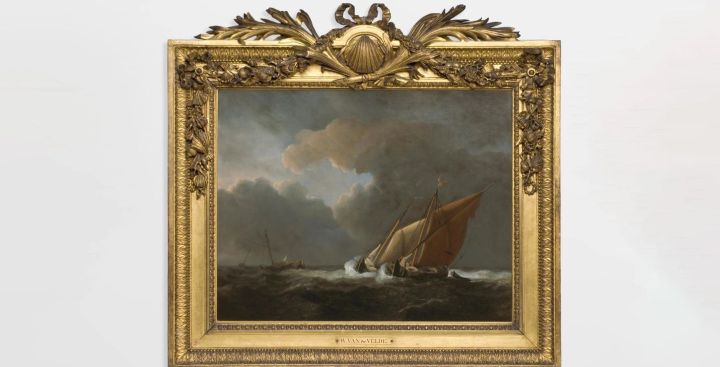
Willem van de Velde the Younger, Two Dutch Vessels Close-Hauled in a Strong Breeze, 1672, oil on canvas (Philadelphia Museum of Art, John G. Johnson Collection, 1917, Cat. 591).
◊ ◊ ◊ ◊ ◊
Now on view at the Philadelphia Museum of Art (Lynn Roberts includes a helpful interview at The Frame Blog with the show’s curator Tara Contractor and conservator Nicolette Absil) . . .
Framed! European Picture Frames from the Johnson Collection
Philadelphia Museum of Art, 21 December 2024 — November 2025
Curated by Tara Contractor
The installation highlights picture frames as works of art in their own right, exploring their shifting forms and functions from the altar-like frames of the Renaissance to the experimental, artist-designed frames of the late 1800s. It includes thirteen frames from the Johnson Collection, which, together, express the craftsmanship and variety of European frames through the centuries.
The Magazine of the Decorative Arts Trust, Summer 2025
The Decorative Arts Trust has shared select articles from the summer issue of their member magazine as online articles for all to enjoy. The following articles are related to the 18th century:
The Magazine of the Decorative Arts Trust, Summer 2025
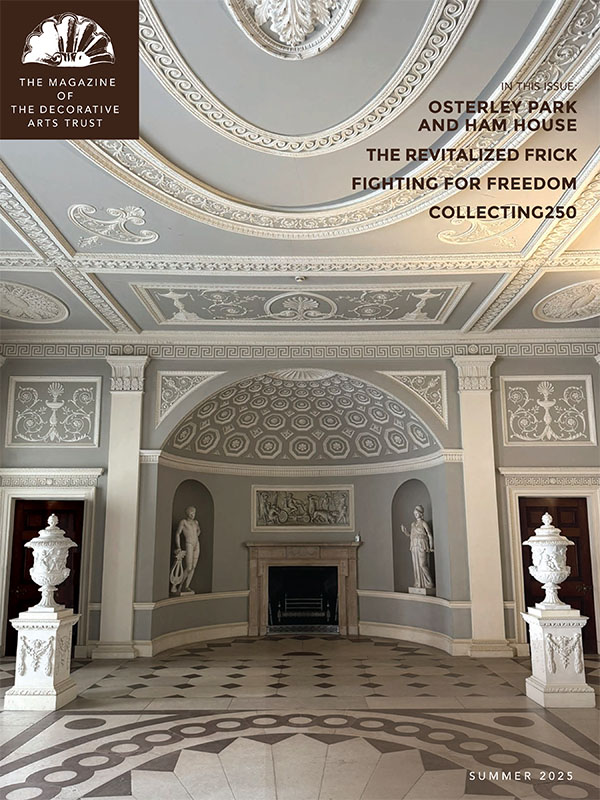 • “Time Travel in the Thames Valley: Ham House and Osterley Park” by Megan Wheeler Link»
• “Whose Revolution at the Concord Museum” by Reed Gochberg Link»
• “Fighting for Freedom: Black Craftspeople and the Pursuit of Independence” by William A. Strollo Link»
• “Decorative Arts Shine at the Reopened Frick” by Marie-Laure Buku Pongo Link»
• “A Room of Her Own: New Book Explores the Estrado” by Alexandra Frantischek Rodriguez-Jack Link»
• “Luster, Shimmer, and Polish: Transpacific Materialities in the Arts of Colonial Latin America” by Juliana Fagua Arias Link»
The printed Magazine of the Decorative Arts Trust is mailed to Trust members twice per year. Additional membership information is available here.
Pictured: The magazine cover depicts the Entrance Hall at Osterley Park showcasing Robert Adam’s signature Neoclassical style. The apsidal end features plasterwork by Joseph Rose and contains statues of Apollo and Minerva. The marble urns are attributed to Joseph Wilton. Decorative Arts Trust members visited the house during the Thames Valley Study Trip Abroad tours in May and June 2025.
Exhibition | Fighting for Freedom
Now on view at the DAR:
Fighting for Freedom: Black Craftspeople and the Pursuit of Independence
Daughters of the American Revolution Museum, Washington, DC, 25 March — 31 December 2025
Gibbes Museum of Art, Charleston, Summer 2026 — Spring 2027
Historic New Orleans Collection, Summer — Fall 2027
Tennessee State Museum, Nashville, Winter — Spring 2028
Museum of the Shenandoah Valley, Winchester, Summer — Fall 2028
 The Daughters of the American Revolution (DAR) Museum is proud to present the exhibition Fighting for Freedom: Black Craftspeople and the Pursuit of Independence, in collaboration with the Black Craftspeople Digital Archive. This exhibition seeks to embrace the stories of all those who pursued independence by centering on the lives and experiences of Black craftspeople and artisans from the 18th and 19th centuries. It highlights the creations, contributions, and legacies of African Americans as they fought for freedom from the earliest calls for American independence and beyond. Fighting for Freedom spans the war years of the Revolution through the present, as African Americans have sought to pursue agency and liberty through craft. The underpinning idea of African American craft as a catalyst for freedom-seeking displays itself in a host of ways in this exhibition, encompassing furniture, metals, ceramics, textiles, art, tools, and personal accessories.
The Founders’ cries for liberty from tyranny and oppression resonated with African Americans and were embraced by Black craftspeople, both free and enslaved. “The Founding Fathers, while enslaving tens of thousands of people, unintentionally created a ripple effect,” states exhibition co-curator and founder of the Black Craftspeople Digital Archive Dr. Tiffany Momon, “and we hope that visitors will see just how important those cries for liberty were to Black craftspeople and how they pursued it despite being marginalized.”
Fighting for Freedom features more than 50 objects from public and private lenders and includes objects made by both free and enslaved craftspeople. With artifacts from the 18th, 19th, and 21st centuries, this exhibition tells the stories of countless known and unnamed figures whose skills and commitment created not only objects but independence in many forms.
◊ ◊ ◊ ◊ ◊
From UNC Press:
Torren L. Gatson, Tiffany N. Momon, and William A. Strollo, eds., Fighting for Freedom: Black Craftspeople and the Pursuit of Independence (Chapel Hill: The University of North Carolina Press, 2025), 176 pages, ISBN: 978-1469686257, $35. Contributors include Lauren Applebaum, Robell Awake, Lydia Blackmore, Aleia M. Brown, R. Ruthie Dibble, Philippe L. B. Halbert, Jennifer Van Horn, Alexandra Alevizatos Kirtley, and Susan J. Rawles.
Delving into diverse narratives of creativity, resilience, and triumph in the quest for freedom, this book underscores the evolution of freedom through the lens of material culture—by exploring how the very concept of freedom was shaped and redefined by enslaved and free craftspeople who relentlessly fought for their rights and the recognition of their humanity. Featuring ten essays by leading historians, museum curators, and material culture scholars and more than seventy color photographs of Black artistry, including paintings, metalwork, woodwork, pottery, and furniture, this book vividly illustrates how Black men and women persistently sought tangible expressions of liberty which have endured as symbols of their creators’ legacies in the ongoing struggle for freedom.
New Book | The Painter’s Fire
From Harvard UP:
Zara Anishanslin, The Painter’s Fire: A Forgotten History of the Artists Who Championed the American Revolution (Cambridge: Harvard University Press, 2025), 400 pages, ISBN 978-0674290235, $33.
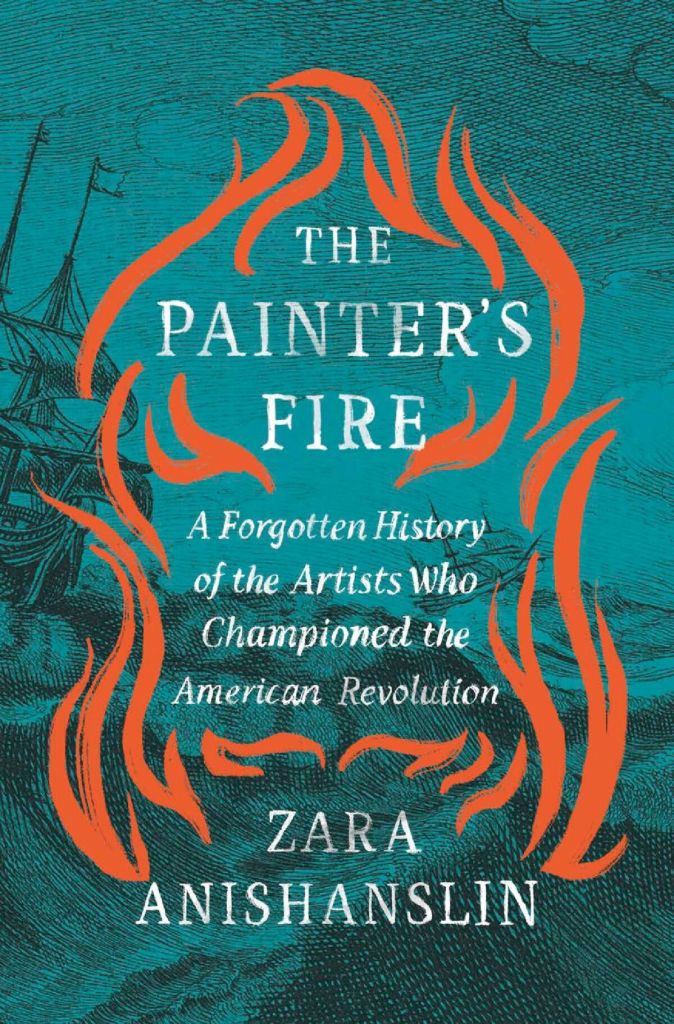 Told through the lives of three remarkable artists devoted to the pursuit of liberty, an illuminating new history of the ideals that fired the American Revolution.
The war that we now call the American Revolution was not only fought in the colonies with muskets and bayonets. On both sides of the Atlantic, artists armed with paint, canvas, and wax played an integral role in forging revolutionary ideals. Zara Anishanslin charts the intertwined lives of three such figures who dared to defy the British monarchy: Robert Edge Pine, Prince Demah, and Patience Wright. From London to Boston, from Jamaica to Paris, from Bath to Philadelphia, these largely forgotten patriots boldly risked their reputations and their lives to declare independence.
Mostly excluded from formal political or military power, these artists and their circles fired salvos against the king on the walls of the Royal Academy as well as on the battlefields of North America. They used their talents to inspire rebellion, define American patriotism, and fashion a new political culture, often alongside more familiar revolutionary figures such as Benjamin Franklin and Phillis Wheatley. Pine, an award-winning British artist rumored to be of African descent, infused massive history paintings with politics and eventually emigrated to the young United States. Demah, the first identifiable enslaved portrait painter in America, was Pine’s pupil in London before self-emancipating and enlisting to fight for the Patriot cause. And Wright, a Long Island–born wax sculptor who became a sensation in London, loudly advocated for revolution while acting as an informal patriot spy.
Illuminating a transatlantic and cosmopolitan world of revolutionary fervor, The Painter’s Fire reveals an extraordinary cohort whose experiences testify to both the promise and the limits of liberty in the founding era.
Zara Anishanslin is Associate Professor of History and Art History at the University of Delaware. She is the author of the award-winning Portrait of a Woman in Silk: Hidden Histories of the British Atlantic World and has served as a historical consultant for the Philadelphia Museum of Art as well as Hamilton: The Exhibition.










 Enfilade
leave a comment