Call for Papers | Women at the Court of France
From the Call for Papers:
Femmes à la cour de France. Statuts et fonctions (Moyen Âge – XIXe siècle)
Institut d’études avancées, Paris, 8–9 October 2015
Proposals due by 31 January 2015
Colloque international organisé par Cour de France.fr avec le soutien de l’Institut Émilie du Châtelet, l’Université américaine de Paris et l’Institut d’études avancées de Paris.
Ce colloque international, pluridisciplinaire et transchronologique a pour objet le statut et les fonctions des femmes de la cour de France : les dames des suites d’honneur, les épouses des grands officiers et ministres, les officiers féminins des maisons royales, les marchandes et autres femmes qui ont séjourné de manière régulière ou irrégulière à la cour. Ce sont ainsi des femmes au service de la famille royale, installées dans les différents degrés de la hiérarchie curiale, que nous proposons d’étudier. Car si les reines et princesses ont bénéficié d’une attention soutenue tout au long des siècles et ont fait l’objet de nombreuses études, la recherche au sujet des femmes qui séjournent avec elles à la cour présente encore de nombreuses lacunes.
Nous proposons d’étudier l’évolution de leur présence à la cour et les fonctions qu’elles y occupaient ainsi que l’impact de leur présence sur les structures et la vie quotidienne de l’entourage royal. Les engagements des femmes, leurs objectifs, leurs stratégies et leur marge de manœuvre, constituent un autre volet de la thématique, comme leur rôle dans la gestion des intérêts familiaux et des carrières curiales ainsi que leur mécénat architectural, artistique et culturel. Nous nous interrogeons aussi sur la représentation et l’imaginaire qui s’attache aux femmes de la cour dans la littérature et l’historiographie. Enfin, des études comparatives concernant d’autres cours européennes permettent d’élargir la perspective et de cerner la particularité de leur situation à la cour de France.
Les propositions de contribution peuvent s’inscrire dans quatre thématiques :
Structures, charges et fonctions
Des enquêtes sur l’évolution de la présence féminine à la cour et la forme que prit cette présence sont au cœur de ce premier volet. L’évolution des maisons féminines de la cour et des charges occupées par des femmes n’est connue que partiellement, comme les responsabilités et les privilèges attachés aux charges féminines. Des études à ces sujets permettront de mieux comprendre la structure curiale et la place des femmes dans celle-ci.
À côté des charges officielles ont existé des « fonctions officieuses » qui n’ont laissé que peu de traces dans les archives de l’administration royale. On trouve à la cour aussi des femmes qui ne sont pas intégrées dans les maisons royales, mais qui y séjournent fréquemment ou de manière quasi permanente (épouses d’officiers et de domestiques, marchandes, prostituées…). Leurs conditions de vie et la règlementation royale à leur sujet font partie des thématiques abordées dans ce premier volet.
Alliances, réseaux et cérémonial
L’intégration des femmes à la cour va souvent de pair avec un engagement en faveur de leur famille, leur clientèle, leur « parti » (qu’il soit religieux ou politique) et leur pays d’origine. On les trouve à toute époque aussi parmi les mécontents, les opposants à la politique royale, qui établissent parfois leur quartier général dans une des maisons féminines de la cour.
Notre intérêt porte prioritairement sur la manière dont les femmes profitèrent des opportunités offertes par la cour et les résistances ou obstacles auxquels elles pouvaient se heurter. Les mariages dont la cour était le théâtre font partie de ce volet ; il s’agit d’un terrain particulièrement fertile pour étudier l’exogamie de l’aristocratie et ses effets, des mariages internationaux qui dominent au plus haut niveau aux « mésalliances », qui ont laissé de nombreuses traces dans les écrits des contemporains.
Étroitement lié à la question des mariages est le sujet du rang des femmes dans la société curiale dont la définition varie d’une époque à l’autre et qui a un impact important sur l’étiquette et le cérémonial. Des études récentes ont renouvelé la recherche dans ce domaine et ont démontré que, loin d’être un détail pittoresque de la vie curiale, les rituels du quotidien servent à organiser et à faire fonctionner l’État monarchique. En suivant cette approche, nous souhaitons donner une place importante aux enquêtes qui concernent la place des femmes dans le cérémonial de cour et son évolution.
Art, religion et culture matérielle
La question du mécénat artistique et architectural des femmes de la cour constitue un autre volet des sujets abordés, comme la question des espaces occupés par elles et le décor qui les caractérise. Le mécénat des femmes a laissé de nombreuses traces dans les châteaux et palais, leur participation à l’organisation de festivités et de passe-temps divers (jeux, musique, chasse, danse, théâtre, académies …) une riche documentation. Des études à ce sujet font partie de ce volet, comme des enquêtes qui concernent l’engagement religieux des femmes, non seulement en ce qui concerne le mécénat, la charité et la fondation d’établissements religieux, mais aussi en ce qui concerne leur engagement au sein de courants spirituels plus ou moins contestataires. Ce volet peut concerner également le rôle de la religion dans l’éducation des jeunes femmes à la cour.
Les femmes de la cour interviennent aussi dans la culture matérielle du quotidien. En témoignent les marchandes et fournisseuses de la cour, dont certaines comme Rose Bertin ont suscité un vif intérêt. La cour en tant que moteur économique et centre de consommation et de production a également fait l’objet de recherches ; moins connue est la place que les femmes de l’entourage royal ont prise dans ce domaine.
Historiographie, représentation et mise en perspective
Dès le XVe siècle, des ambassadeurs et visiteurs étrangers soulignent qu’aucune cour européenne n’accorde autant de libertés aux femmes que celle de France : liberté de parole et de comportement. Mais est-ce que cette observation reflète la réalité ou s’agit-il d’une idée préconçue, inscrite dans le registre des stéréotypes nationaux ? Des études présentant la situation des femmes dans d’autres cours européennes peuvent apporter des éclairages à ce sujet, comme les caractéristiques de ce discours et le contexte social et culturel dans lequel il émerge et évolue.
Les femmes de la cour ont laissé de nombreux témoignages écrits sur la vie curiale. Cette production très hétéroclite comprend des lais, des romans, de la poésie, des mémoires et des correspondances, voire même des ouvrages critiques et des pamphlets. Leurs œuvres rejoignent le vaste corpus des écrits sur la cour émanant d’historiens et de contemporains qui, entre critique et vénération, ont dressé un portrait très contrasté des femmes de l’entourage royal. L’historiographie de la cour et la place des femmes dans celle-ci ainsi que la vision donnée par elles-mêmes présentent encore de nombreuses zones d’ombre qu’il est possible d’éclairer dans le cadre de ce colloque.
Les propositions de communications
Nous vous prions de nous faire parvenir un dossier de 2 à 3 pages qui présente la thématique de votre intervention (avec quelques informations sur les archives/sources utilisées) et une courte présentation de vous-même avant le 31 janvier 2015 à :
zumkolk@cour-de-france.fr
kathleen.wilson-chevalier@wanadoo.fr
Comité scientifique
Fanny Cosandey, maître de conférences en histoire moderne, EHESS, CRH-LaDéHiS
Jean-François Dubost, professeur d’histoire moderne, université Paris Est Créteil Val-de-Marne
Sheila ffolliott, professeur émérite en histoire de l’art, George Mason University, ancienne présidente de la Sixteenth Century Society, trustee du Medici Archive Project
Murielle Gaude-Ferragu, maître de conférences en histoire médiévale, Université Paris 13
Henriette Goldwyn, professeur de littérature, université de New York
Katrin Keller, enseignant-chercheur en histoire moderne, université de Vienne
Jacques Paviot, professeur d’histoire médiévale, université Paris Est Créteil-Val de Marne
Mary Sheriff, professeur d’histoire de l’art moderne, université de North Carolina
Organisateurs
Kathleen Wilson-Chevalier, professeur, The American University of Paris / Cour de France.fr
Caroline zum Kolk, chargée de mission, Institut d’études avancées de Paris / Cour de France.fr Pauline Ferrier, doctorante, université Paris-Sorbonne (Centre Roland Mousnier, UMR 8596) / Cour de France.fr
Flavie Leroux, doctorante, EHESS / Cour de France.fr
Fellowships | Getty Research Institute, 2015–16
Getty Research Institute, 2015–2016: Art and Materiality
Applications due by 3 November 2014
 The Getty Research Institute invites proposals for the 2015–2016 academic year residential grants and fellowships. The Getty Research Institute theme, “Art and Materiality,” aims to explore how the art object and its materiality have enhanced the study of art history. Scholars, working with conservators and scientists, are gaining insight into the process of art making from raw material to finished object, as well as the strategic deployment of materials both for their aesthetic qualities and for their power to signify. The Getty Research Institute seeks proposals from scholars and fellows on these and other issues related to the materiality of art.
Detailed application guidelines are available online.
More information about the theme is available here.
Fellowships | Winterthur Research Fellowships, 2015–16
Winterthur Research Fellowship Program, 2015–16
Wilmington, Delaware; applications due by 15 January 2015
Winterthur, a public museum, library, and garden supporting the advanced study of American art, culture, and history, announces its Research Fellowship Program for 2015–16. Winterthur offers an extensive program of short- and long-term residential fellowships open to academic, independent, and museum scholars, including advanced graduate students, to support research in material culture, architecture, decorative arts, design, consumer culture, garden and landscape studies, Shaker studies, travel and tourism, the Atlantic World, childhood, literary culture, and many other areas of social and cultural history. Fellowships include 4–9 month NEH fellowships, 1–2 semester dissertation fellowships, and short-term fellowships, which are normally one month.
Fellows have full access to the library collections, including more than 87,000 volumes and one-half million manuscripts and images, searchable online. Resources for the 17th to the early 20th centuries include period trade catalogues, auction and exhibition catalogues, an extensive reference photograph collection of decorative arts, printed books, and ephemera. Fellows may conduct object-based research in the museum’s collections, which include 90,000 artifacts and works of art made or used in the British American colonies or United States to 1860, with a strong emphasis on domestic life. Winterthur also supports a program of scholarly publications, including Winterthur Portfolio: A Journal of American Material Culture.
Fellows may reside in a furnished stone farmhouse on the Winterthur grounds and participate in the lively scholarly community at Winterthur, the nearby Hagley Museum and Library, the University of Delaware, and other area museums. Fellowship applications are due January 15, 2015. For more details and to apply, visit winterthur.org/fellowship or e-mail Rosemary Krill at rkrill@winterthur.org.
New Book | Style and Satire: Fashion in Print, 1777–1927
From Artbooks.com:
Catherine Flood and Sarah Grant, Style and Satire: Fashion in Print, 1777–1927 (London: V&A Publishing, 2014), 80 pages, ISBN: 978-1851778034, £13 / $20.
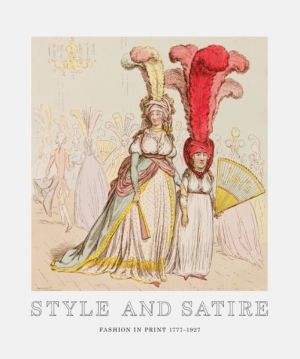 From the sky-high coiffures of Marie Antoinette to Victorian hoop skirts, from the sheer gowns of Pride and Prejudice era to the flat-chested 1920s flapper, Style and Satire tells the story of European fashion and its most extreme trends through lavish fashion plates and the glorious satirical prints they inspired.
Beautifully printed, hand-colored fashion plates first appeared in magazines and for sale individually in the late 18th century. At the same time (and often by the same artists), satirical prints gloried in the absurdities of fashion, presenting an alternative, often humorously exaggerated, vision of the fashionable ideal. Both forms were a product of the same print market, and both documented modern life. Lavishly illustrated, Style and Satire presents a witty and original history of fashion trends.
Catherine Flood is a prints curator, and Sarah Grant is a curator in the Word and Image Department of the V&A.
A digital preview is available here»
New Book | Wallpaper in Ireland, 1700–1900
As noted in Wallpaper News, Issue #5 (September 2014), an occasional newsletter edited by Robert Kelly, Churchill House Press has recently published this book by David Skinner, with proceeds benefitting the Irish Georgian Society:
David Skinner, Wallpaper in Ireland, 1700–1900 (Churchill House Press, 2014), 216 pages, ISBN: 978-0955024672, €45 / £35.
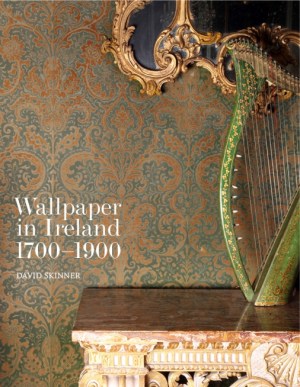 This lavishly illustrated book is the first devoted to the subject of the manufacture and use of wallpaper in Ireland. Drawing on his extensive experience both as a maker and a researcher of historic wallpapers, David Skinner has compiled a detailed survey of the patterns used to decorate Irish houses from the early eighteenth century until the demise of the Irish ‘paper-staining’ trade at the close of the nineteenth century. Journals, letters, invoices and newspaper advertisements are among the sources explored to chart the history of wallpaper in Ireland, the role of emigrant Irish artisans in developing wallpaper manufacture in France and North America, the tax on wallpaper, and the trade in smuggled wallpaper between Ireland and Victorian England.
The book will provide an invaluable guide to researchers, architects and those involved in the study of historic interiors. Many of the rooms illustrated are published here for the first time, and include little-known examples of the sumptuous wallpapers imported from China and France, set alongside the
products of native ‘paper-stainers’.
Robert O’Byrne provides a brief review in The Irish Times
(5 July 2014).
Exhibition | Wallpaper from the Deutschen Tapetenmuseums
As noted in Wallpaper News, Issue #5 (September 2014), an occasional newsletter edited by Robert Kelly:
Wandlust: Schaufenster Deutsches Tapetenmuseum
Westpavillon der Orangerie, Kassel 17 July 2014 — 28 June 2015
Mit der Ausstellung Wandlust lädt das Deutsche Tapetenmuseum zu einem Gang durch die Geschmacksgeschichte ein. Aus der international beachteten Sammlung wird eine Auswahl an Papiertapeten und Musterbüchern vom Rokoko bis zu aktuellen Trends gezeigt und mit zeitgenössischem Mobiliar kombiniert. Neben Meisterleistungen des 18. und 19. Jahrhunderts aus Frankreich, wie einer Arabesken- und Panoramatapete, wird auch Kassel mit einem Biedermeierdekor aus der einstigen Arnold’schen Tapetenfabrik und einem Exemplar der 1972 von Niki de Saint Phalle für die documenta 5 entworfenen Künstlertapete „Nana“ als traditionsreicher Tapeten- und Documenta-Standort gewürdigt.
Die Veränderungen oder sogar Wiederholungen der Motive im Laufe der Geschichte können in der Schau gut nachvollzogen werden. Klassische Muster des 18. und 19. Jahrhunderts sind ebenso vertreten wie die charakteristischen zarttonigen Dessins der Fifties oder die psychedelischen Farben der Seventies. Abschließend hat der Besucher Gelegenheit, in aktuellen Musterbüchern zu blättern. Diese eröffnen ihm neben modernen Kreationen auch facettenreiche „Retro“-Trends, deren historische Vorbilder in der Ausstellung aufgespürt werden können. Dabei können Wiederaufnahmen der Geschmacksgeschichte entdeckt werden, die vielleicht an die eigene Wohnvergangenheit erinnern.
New Book | Material Goods, Moving Hands
From Manchester University Press:
Kate Smith, Material Goods, Moving Hands: Perceiving Production in England, 1700–1830 (Manchester: Manchester University Press, 2014), 208 pages, ISBN: 978-0719090677, £70 / $105.
 In eighteenth-century Britain, greater numbers of people entered the marketplace and bought objects in ever-greater quantities. As consumers rather than producers, how did their understandings of manufacturing processes and the material world change?
Material Goods, Moving Hands combines material culture and visual culture approaches to explore the different ways in which manufacturers and retailers presented production to consumers during the eighteenth century. It shows how new relationships with production processes encouraged consumers, retailers, designers, manufacturers and workers to develop conflicting understandings of production. Objects then were not just markers of fashion and taste, they acted as important conduits through which people living in Georgian Britain could examine and discuss their material world and the processes and knowledge that rendered it.
Kate Smith was a Research Fellow on The East India Company at Home, 1757–1857, a 3-year Leverhulme Trust-funded research project based in the Department of History at the University of Warwick (2011–12) and University College London (2012–14).
She is now Lecturer in Eighteenth-Century History at the
University of Birmingham.
◊ ◊ ◊ ◊ ◊
C O N T E N T S
Introduction
1. New ways of looking
2. Visual access to production
3. Listening in to the manufacturing world
4. Picturing production and embodying knowledge
Conclusion
Bibliography
Index
New Book | Art, Artisans, and Apprentices
From Oxbow Books:
James Ayres, Art, Artisans, and Apprentices: Apprentice Painters and Sculptors in the Early Modern British Tradition (Oxford: Oxbow Books, 2014), 536 pages, ISBN: 978-1782977421, £35.
 Before the foundation of academies of art in London in 1768 and Philadelphia in 1805, most individuals who were to emerge as artists trained in workshops of varying degrees of relevance. Easel painters began their careers apprenticed to carriage, house, sign, or ship painters, whilst a few were placed with those who made pictures. Sculptors emerged from a training as ornamental plasterers or carvers. Of the many other trades in a position to offer an appropriate background were ‘limning’, staining, engraving, surveying, chasing, and die-sinking. In addition, plumbers gained the right to use oil painting and, for plasterers, the application of distemper was an extension of their trade. Central to the theme of this book is the notion that, for those who were to become either painters or sculptors, a training in a trade met their practical needs. This ‘training’ was of an altogether different nature to an ‘education’ in an art school. In the past, prospective artists were offered, by means of apprenticeships, an empirical rather than a theoretical understanding of their ultimate vocation.
James Ayres provides a lively account of the inter-relationship between art and trade in the late 17th to early 19th centuries, in both Britain and North America. He demonstrates with numerous, illustrated examples, the many cross-overs in the ‘art and mystery’ of artistic training, and, to modern eyes, the sometimes incongruous relationships between the various trades that contributed to the blossoming of many artistic careers, including some of the most illustrious names of the ‘long 18th century’.
More information is available here»
◊ ◊ ◊ ◊ ◊
C O N T E N T S
Acknowledgements
Introduction
I. Crafts, Trades, Artisans, and Guilds
1. Art and mystery
2. The guilds and livery companies
3. Guild regulation and training
4. Indentured apprenticeships
5. The craft trades and the visual arts
II. Painters
6. The art of picture craft
7. The materials of painters
8. Painter stainers
9. The painters: mechanic and liberal
10. Easel painting
11. The trade of painting in oil: House and decorative painting, Sign painting and making, Coach painting, Marine painting
12. Size painting: Stained hangings, Stained transparencies, Scene painting for the theatre, The plasterers
13. Limning and watercolour painting
III. Sculptors, Carvers, and Related Trades
14. Sculpture
15. Modelling and casting in plaster: Modelling in clay, Casting in plaster
16. The pointing machine
17. Carving: Woodcarving, Stone and marble carving
18. Metalwork and related trades: The foundry, Chasers and chasing, Die-sinking and seal-cutting
IV. Academies of Art and the Foundations of Artistic Professions
19. The origin and function of academies of art
20. Conclusion
Appendices
I. Indenture of 1788: Isaac Dell
II. Advertisement for a Stationer and Picture Dealer, c. 1750–1759
III. Samuel Wale (?–d. 1786) as sign painter
IV. Charles Catton (1728–1798) ‘The Prince of Coach Painters’
V. John Baker RA (1736–1771), coach painter
VI. Luke (Marmaduke) Cradock (1660–1717) the ‘Ornamental Painter’
VII. Sign painting in Colonial and early Federal America
VIII. Prices of house painters’ work of 1799
IX. Stained hangings: early seventeenth and eighteenth century
X. A sampling of individual painters or sculptors who left the English Provinces for Apprenticeships in London, Westminster, or Southwark
XI. Some of the many woodcarvers who later worked in stone and marble
XII. The construction of an armature in John Flaxman’s studio
XIII. Prices in 1797 for ship-carving on Royal Navy vessels in relationship to tonnage
XIV. Price list for lead statuary
XV. Some members of the St Martin’s Lane Academy
XVI. Proposed accommodation and prospectus for the Royal Academy Schools
XVII. Part of Gustav Waagen’S (1794–1868) evidence before the Select Committee of the House of Commons in 1834, on the value of Academies of Art
Glossary
Bibliography
Index
New Book | Art and Migration: Netherlandish Artists on the Move
From Brill:
Frits Scholten, Joanna Woodall and Dulcia Meijers, eds., Art and Migration: Netherlandish Artists on the Move, 1400–1750 (Brill, 2014), 384 pages, ISBN: 978-9004270534, €120 / $154. [Netherlands Yearbook for History of Art / Nederlands Kunsthistorisch Jaarboek 63 (2013)]
 Since the Middle Ages artists from the Low Countries were known to be fond of travelling, as Guicciardini in his Descrittione di tutti i Paesi Bassi (Antwerp, 1567) and Karel van Mander in his 1604 Schilderboeck, already noticed. Much more mobile than their colleagues from other European countries, many Netherlandish artists spread all over Europe; a remarkable number among them achieved great fame as court artists, as the careers of Claus Sluter in Burgundy, Anthonis Mor in Spain, Bartholomeus Spranger or Adriaen de Vries in Prague, Giambologna and Jacob Bijlevelt in Florence demonstrate. Moreover, they exerted considerable influence on the artistic production of their time. Nevertheless, most of them sank into oblivion soon after they died. Dutch art history neglected them for a long time as they did not fit into the traditional canon of the Low Countries; nor were they adopted by the art histories of their new homelands. This new NKJ volume is an
attempt to change this.
C O N T E N T S
1. Frits Scholten and Joanna Woodall, Introduction
2. Filip Vermeylen, Greener pastures? Capturing artists’ migrations during the Dutch Revolt
3. Hope Walker, Netherlandish immigrant painters and the Dutch reformed church of London, Austin Friars, 1560–1580
4. Arjan de Koomen, ‘Una cosa non meno maravigliosa che honorata’: The expansion of Netherlandish sculptors in sixteenth-century Europe
5. Franciszek Skibiński, Early-modern Netherlandish sculptors in Danzig and East-Central Europe: A study in dissemination through interrelation and workshop practice
6. Aleksandra Lipińska, Eastern outpost: The sculptors Herman Van Hutte and Hendrik Horst in Lviv, c. 1560–1610
7. Gert Jan van der Sman and Bouk Wierda, Wisselend succes: De loopbanen van Nederlandse en Vlaamse kunstenaars in Florence, 1450–1600
8. Marije Osnabrugge , From itinerant to immigrant artist: Aert Mytens in Naples
9. Abigail D. Newman, Juan de la Corte in Madrid: ‘branding’ Flanders abroad
10. Judith Noorman, A fugitive’s success story: Jacob van Loo in Paris, 1661–1670
11. Isabella di Lenardo, Carlo Helman, merchant, patron and collector, and the role of family ties in the Antwerp–Venice migrant network
12. Saskia Cohen-Willner, Between painter and painter stands a tall mountain: Van Mander’s Italian Lives as a source for instructing artists in the ‘deelen der consten’
Exhibition | Habsburg Splendor
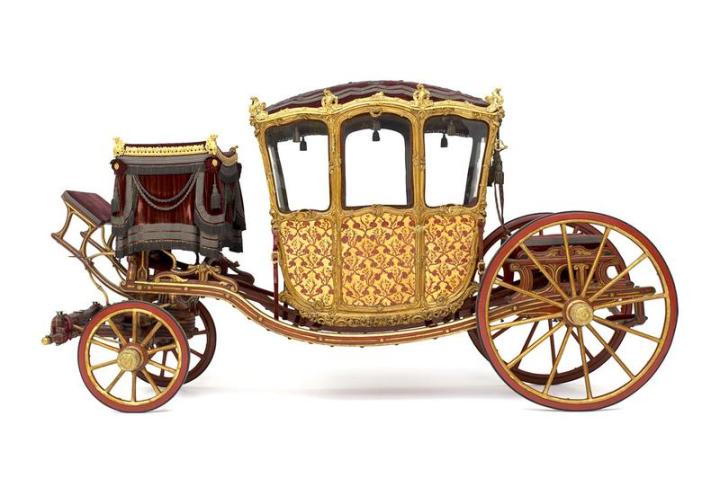
The Prince’s Dress Carriage, ca. 1750–55
(Vienna: Kunsthistorisches Museum)
◊ ◊ ◊ ◊ ◊
It’s still too early to get a good sense of what’s included from the eighteenth century, but we’re sure to hear lots more about the exhibition in the coming months, particularly if you live anywhere near Minneapolis, Houston, or Atlanta. It really should be an extraordinary show. –CH
Press release (18 April 2014) from the MFAH:
Habsburg Splendor: Masterpieces from Vienna’s Imperial Collections
Minneapolis Institute of Arts, 15 February — 10 May 2015
Museum of Fine Arts, Houston, 14 June — 13 September 2015
High Museum of Art, Atlanta, 18 October 2015 — 17 January 2016
Curated by Monica Kurzel-Runtscheiner
In 2015, a major American collaboration will bring masterworks amassed by one of the longest-reigning European dynasties to the United States. Habsburg Splendor: Masterpieces from Vienna’s Imperial Collections showcases masterpieces and rare objects from the collection of the Habsburg Dynasty—the emperors of the Holy Roman Empire and other powerful rulers who commissioned extraordinary artworks now in the collection of the Kunsthistorisches Museum in Vienna. The exhibition, largely composed of works that have never traveled outside of Austria, will be on view at the Minneapolis Institute of Arts (MIA); the Museum of Fine Arts, Houston (MFAH); and the High Museum of Art, Atlanta.
Debuting in Minneapolis in February 2015 before traveling to Houston and Atlanta, Habsburg Splendor: Masterpieces from Vienna’s Imperial Collections explores the dramatic rise and fall of the Habsburgs’ global empire, from their political ascendance in the late Middle Ages to the height of their power in the 16th and 17th centuries, the expansion of the dynasty in the 18th and 19th centuries to its end in 1918 with the conclusion of World War I. The 93 artworks and artifacts that tell the story include arms and armor, sculpture, Greek and Roman antiquities, court costumes, carriages, decorative-art objects, and paintings by such masters as Correggio, Giorgione, Rubens, Tintoretto, Titian, and Velázquez. Key masterpieces that have never before traveled to the United States include:
• The Crowning with Thorns (c. 1602/04) by Caravaggio
• A portrait of Jane Seymour (1536), Queen of England and third wife to Henry VIII, by Hans Holbein the Younger
• Jupiter and Io (c. 1530/32) by Correggio . . . .
Habsburg Splendor: Masterpieces from Vienna’s Imperial Collections chronicles the Habsburgs’ story in three chapters, each featuring a three-dimensional “tableau”—a display of objects from the Habsburgs’ opulent court ceremonies—as context for the other works on view.
D A W N O F T H E D Y N A S T Y
The first section features objects commissioned or collected by the Habsburgs from the 13th through the 16th centuries. In this late medieval/early Renaissance period, Habsburg rulers staged elaborate commemorative celebrations to demonstrate power and to establish their legitimacy to rule, a tradition that flourished during the reigns of Maximilian I and his heirs. Works from this era—including sabres and armor, tapestries, Roman cameos and large-scale paintings—illustrate the significance of war and patronage in expanding Habsburg influence and prestige.
Tableau: Suits of armor displayed on horseback, and jousting weapons from a royal tournament.
Highlights include:
• Armor of Emperor Maximilian I (c. 1492) made by Lorenz Helmschmid
• Bronze bust of Emperor Charles V (c. 1555) by Leone Leoni
• A rock crystal goblet made for Emperor Frederick III (1400–1450)
G O L D E N A G E
The second and largest section of the exhibition highlights the apex of Habsburg rule, the Baroque Age of the 17th and 18th centuries. The dynasty used religion, works of art and court festivities to propagate its self-image and claim to rule during this politically tumultuous time. Paintings by Europe’s leading artists demonstrate the wealth and taste of the Habsburg rulers, while crucifixes wrought in precious metals and gems, as well as sumptuous ecclesiastical vestments, reflect the emperor’s role as defender of the Catholic faith.
Tableau: A procession featuring a Baroque ceremonial carriage and sleigh, with carvings by master craftsman Balthasar Ferdinand Moll.
Highlights include:
• An ivory tankard (1642) by Hans Jacob Bachmann
• Infanta Maria Teresa (1652–53), a portrait of the daughter of Philip IV of Spain and eventual wife of Louis XIV of France, by Velázquez
• An alchemical medal (1677), illustrated with portraits in relief of the Habsburgs, by Johann Permann
T W I L I G H T O F T H E E M P I R E
The exhibition concludes with works from the early 19th century, when the fall of the Holy Roman Empire gave rise to the hereditary Austrian Empire—a transition from the ancien régime to a modern state in which merit determined distinction and advancement. Franz Joseph, who would reign longer than any previous Habsburg, saw the growth of nationalism and ultimately ruled over a dual monarchy of Austria-Hungary. As heir to the Habsburg legacy—and in the spirit of public education and enrichment—he founded the Kunsthistorisches Museum in 1891. Reflecting the modernization of the Habsburg administration, the exhibition ends with a spectacular display of official court uniforms and dresses.
Tableau: Uniforms and women’s gowns from the court of Franz Joseph.
Highlights include:
• Campaign uniform of Franz Joseph (1907)
• A velvet dress made for Empress Elisabeth (c. 1860/65)
• An evening gown made for Princess Kinsky (c. 1905)
• Ceremonial dress of Crown Prince Otto for the Hungarian Coronation (1916)
The exhibition is curated by Dr. Monica Kurzel-Runtscheiner, director of the Imperial Carriage Museum, Vienna. The hosting curator at the Minneapolis Institute of Arts is Kaywin Feldman, director. At the Museum of Fine Arts, Houston, the lead hosting curator is Dr. David Bomford, director of conservation; his curatorial team comprises Dr. Helga Aurisch, curator, European art, and Christine Gervais, associate curator, decorative arts and Rienzi. At the High Museum of Art, the hosting curator is Dr. David A. Brenneman, director of collections and exhibitions and Frances B. Bunzl Family Curator of European art.
A full-color catalogue is being published by the Museum of Fine Arts, Houston, with essays by Dr. Monica Kurzel-Runtscheiner, director of the Imperial Carriage Museum, Vienna; Dr. Franz Pichorner, deputy director, Kunsthistorisches Museum, Vienna; and Dr. Stefan Krause, curator of arms and armor, Kunsthistorisches Museum. Additionally, a virtual exhibition of additional pieces will be viewable online, deepening the visitor experience and providing further opportunities for the public to engage with the art and its history.
A Brief History of the Habsburgs
The noble House of Habsburg rose to prominence in the late Middle Ages through strategic marriages, political alliances and conquest. In 1273, count Rudolph IV gained control of Germany as King of the Romans, and Habsburg domains continued to grow leading up to Pope Nicholas V’s coronation of Frederick III as Holy Roman Emperor in 1452. Under Frederick’s son Maximilian I and his successor, Charles V, the Habsburgs achieved world-power status, assuming the title of emperor without papal consent and enfolding Spain and Burgundy into the Habsburg-controlled territories. The dynasty split into Spanish and Austrian branches shortly thereafter, and in the 17th and 18th centuries the male lines died out, resulting in the loss of Spain.
In 1740, Maria Theresa—the sole female Habsburg ruler, who reigned for a remarkable 40 years—seized control of the Austrian line to become the final ruler of the House of Habsburg. The early 19th century witnessed the final demise of the Holy Roman Empire and the establishment of the main Habsburg line’s successors: the House of Habsburg-Lorraine. A hundred years later, in 1916, Emperor Charles I inherited a dual Austro-Hungarian monarchy upon the death of longtime Emperor Franz Joseph. More than 600 years of Habsburg sovereignty came to an end in 1918 with the close of World War I.
◊ ◊ ◊ ◊ ◊
Scheduled for February publication with distribution by Yale UP:
Monica Kurzel-Runtscheiner, Franz Pichorner, and Stefan Krause, Habsburg Splendor: Masterpieces from Vienna’s Imperial Collections (New Haven: Yale University Press, 2015), 296 pages, ISBN: 978-0300210866, $60.
This beautiful book tells the fascinating story of the Habsburg dynasty, which ruled most of central Europe, Spain, Belgium, and parts of Italy for nearly six hundred years, from the 15th through the 20th century. Charles V (1500–1558) once remarked that the sun never set on the Habsburg Empire, and for most of its history, Vienna served as its capital. The Habsburgs were acclaimed collectors and generous patrons of the arts. Franz Joseph I (1830–1916), the penultimate emperor of the dynasty, created the Kunsthistorisches Museum in Vienna to house the artistic treasures of the empire. Today, this museum possesses one of the most renowned collections in the world of Western art. An extraordinarily wide-ranging survey of the Habsburgs’ collections, this volume features classical Greek and Roman works, medieval arms and armor, tapestries, early modern painting and craftwork, ceremonial gilded carriages, and opulent costumes. Together, they reveal the splendor and the spectacle of the Habsburg court.
Copyright © artdaily.org
Copyright © artdaily.org
Copyright © artdaily.org
“Habsburg Splendor: Masterpieces from Vienna’s Imperial Collections” showcases masterpieces and rare object










 Enfilade
leave a comment