Research Grant | The Andrew Wyld Research Support Grant
From The Paul Mellon Centre:
The Andrew Wyld Research Grant for the Study of Works on Paper
Applications due by 15 September 2014
The Paul Mellon Centre for Studies in British Art is delighted to announce that it will administer a new category of award from September 2014 on behalf of the Andrew Wyld Fund.
Andrew Wyld was a well-known and much respected London art dealer, specialising in eighteenth and nineteenth-century British watercolours. After his death in 2011, a group of friends and family decided to set up a fund in his memory; its aim is to enable students to do exactly as he did, namely to look at, and judge, works of art on paper for themselves. Andrew Wyld Research Support Grants of up to £2,000 will be offered annually to gradute, doctoral and undergraduate students (undertaking dissertation research) working in the field of British works of art on paper of the eighteenth and nineteenth centuries. Grants may be used towards expenses incurred in visiting prints and drawings collections, galleries, museums, sale rooms and other institutions for the purpose of studying British works of art on paper.
More information is available here and at The Paul Mellon Centre.
Reviewed | Judith Bonner on ‘The Coast and the Sea’
Linda S. Ferber, The Coast and the Sea: Marine and Maritime Art in America (New York and London: New-York Historical Society in association with D. Giles Limited, 2014), 104 pages, ISBN 978-1907804311, $30 / £20.
Reviewed for Enfilade by Judith H. Bonner
 The New-York Historical Society, that city’s oldest museum, is celebrating its recent reopening after its lengthy renovation with a traveling exhibition and accompanying catalogue by Linda S. Ferber.1 The exhibition features more than 60 artworks and artifacts, primarily paintings, including portraits, genre scenes, and marine and maritime scenes. Overall, the images document the development of the New York area with its harbor and its close relationship with the Atlantic Ocean, the great maritime highway for trade and immigration.
Works selected for the exhibition have their origins in the eighteenth century, beginning in 1728 and ending in 1904. Maritime-related artifacts include a vintage spyglass, scrimshaw, snuff boxes, and an 1816 silver presentation soup tureen commemorating acts of bravery during the War of 1812. The provenance of each artwork documents the development of the New-York Historical Society, as well as the city’s art collectors, their tastes, and their interests.
The exhibition features work by artists whose names are familiar, as well as those who are unfamiliar. The painters include Thomas Birch, Thomas Buttersworth, Carlton Theodore Chapman, Thomas Cole, Jasper Francis Cropsey, Julian Oliver Davidson, Mauritz Frederick Hendrick De Haas, James Guy Evans, Robert Havell Jr., John Frederick Kensett, Rembrandt Peale, Francis Augustus Silva, and John Vanderlyn.
Several artists had nautical experience that informed their art in subject, rigging, and construction of the vessels. Buttersworth served in the British navy, while De Haas held an artist’s commission in the Dutch navy. James Guy Evans possibly served in the American navy. Chapman ran away to sea as a teenager; and Davidson sailed the globe, making sketches that provided visual sources for many years. Evident in these artists’ works is their understanding of the action of waves and atmospheric effects over the seas at different times of the day or season.
The marine subjects include frigates engaged in famous sea battles, working vessels and bustling port scenes, marine recreation scenes, portraits of heroic sea captains, and pioneering merchants. Marine scenes focus on recreation, shipwrecks, disasters, and military encounters, particularly those in the War of 1812 and Civil War. The exhibition spreads its reach down the East Coast, swinging farther south to the Battle of Mobile Bay in the Gulf of Mexico and the Battle of Port Hudson up the Mississippi River about 100 miles above New Orleans.
Portraitists range from eighteenth-century painter John Wollaston to early nineteenth-century painters John Vanderlyn and Rembrandt Peale, the latter of whom executed a portrait of naval hero Commodore Stephen Decatur in dress uniform and set against a dramatic stormy sky. Wollaston’s circa-1750 portrait of wealthy colonial merchant-shipbuilder Captain John Waddell, who owned a fleet of ships, sets the stage for the succession of ships’ portraits seen throughout the catalogue. Early portraits include personages having distinguished careers or an association with maritime enterprises. The sitter is often shown near an open window through which one views a conventionalized seascape or harbor scene with masted vessels. Other sitters are shown with maps, globes, compass, a spyglass, or other maritime instruments.
The catalogue is well researched and documented with a select bibliography. Explanations of the marine scenes are succinct yet vivid; the prose is fluid and often poetic. Ferber distinguishes between marine scenes—which focus on the pure seascape, its coast and environs—and maritime paintings. The latter, Ferber explains, emphasize human activity and other enterprises on shore or at sea. Her knowledge of nautical terminology and national history is evident throughout. She traces visual conventions from their development in seventeenth-century Holland, their passage into the British school of marine painting, and subsequent introduction into English colonies in the New World.
Ferber consistently places artworks within a broader historical context and, when appropriate, within a cultural narrative. Brief biographical sketches of artists trace their artistic development within the maritime tradition. Ferber discusses allegorical themes in paintings, as well as the effect that nostalgic longing for historically simpler times had upon the proliferation and re-creation of popular scenes celebrating heroic national victories and spirited naval encounters.
The book invites readers to the repeated examination of the images, some of which, like those illustrating the America’s Cup, are iconic. Truly memorable is a painting by Howard Pyle, A Privateersman Ashore (1893), shown in historically correct clothing and accouterments. The privateer stands near the Battery and Castle Clinton at the time of the War of 1812, posed and preening, with smoke from his cigar curling upward from the corner of his mouth as townspeople in the distance look toward him with disdain. The latter is a comment about the disapprobation citizens held for such freebooters, who preyed upon British ships.
Closing this maritime jaunt through history are two paintings. The first, by Andrew Meyer, shows President Grover Cleveland reviewing a naval parade in New York Harbor as the setting for opening ceremonies of Chicago’s Columbian Exposition in 1893, with the Statue of Liberty clearly visible, as though she also stands in review of the parade. Lastly, in 1904 Chapman portrays the Great East River Bridge (now Brooklyn Bridge) over the East River, celebrating New York’s location on the rim of the Atlantic, the gateway to America.
1. Venues for exhibition include: The Society of the Four Arts, Palm Beach, Florida (25 January — 9 March 2014); The Baker Museum of Art, Naples, Florida (19 April — 6 July 2014); Portland Museum of Art, Portland, Maine (January — May 2015); The Mattatuck Museum, Waterbury, Connecticut (6 June — 13 September 2015); and The New York State Museum, Albany, New York (24 October 2015 — 22 February 2016).
◊ ◊ ◊ ◊ ◊
Judith H. Bonner is Senior Curator and Curator of Art at The Historic New Orleans Collection.
Call for Panels, Papers, and Posters | ISECS 2015, Rotterdam
From the Call for Papers:
14th International Congress for Eighteenth-Century Studies (ISECS 2015)
Rotterdam, 26–31 July 2015
Proposals due by 1 September 2014 (Panel Sessions) / 12 January 2015 (Individual Papers and Posters)
The Congress of the International Society for Eighteenth-Century Studies (ISECS) is the world’s largest meeting of specialists on all aspects of the eighteenth century, and takes place every four years. Recent ISECS conferences have been held in Dublin (1999), Los Angeles (2003), Montpellier (2007) and Graz (2011). The 14th ISECS Congress will be organized in Rotterdam, the Netherlands, from 26 to 31 July 2015. It is organized by the Dutch-Belgian Society of Eighteenth-Century Studies (DBSECS – Werkgroep 18e Eeuw) and is hosted by the Erasmus University Rotterdam on Campus Woudestein. We can welcome more than one thousand participants.
The theme of the 14th ISECS Congress is Opening Markets: Trade and Commerce in the 18th Century. The program will include theme-related keynote lectures and sessions, as well as panels and round tables on all topics related to the long eighteenth century (1670–1830). The conference will also facilitate poster presentations. We are looking forward to inspiring lectures, debates and presentations on the conference theme and on all issues regarding the Age of Enlightenment and Sensibility.
Online registration is now open for:
• Submission of proposals for panel sessions and round table sessions. The online Call for Panels is open from February 2014 until September 1, 2014.
• Submission of proposals for individual papers or poster presentations. The online Call for individual Papers & Posters is open from June 2014 until January 12, 2015.
• Pre-registration: You can e-mail the organizers (info@isecs2015.com) a request for pre-registration. By pre-registering, you subscribe to a newsletter that will keep you regularly informed about the organization of the ISECS 2015 Congress, including planned sessions, round tables and other meetings. The online Registration for the ISECS 2015 Congress will open from September 1, 2014 until April 30, 2015.
Don’t hesitate to distribute this call among interested colleagues and networks! If you have any questions in the meantime, please contact the local host committee via info@isecs2015.com or visit the conference website. ISECS 2015 is open to all persons interested in topics and issues having to do with the long eighteenth century and the Age of Enlightenment. Membership of an ISECS constituent or affiliated organization is not necessary for registration. The online Registration for the Early Career Eighteenth-Century Scholar Seminar will open in September 2014.
◊ ◊ ◊ ◊ ◊
Instructions for Panel Session Submissions
Proposals due by 1 September 2014
The ISECS 2015 Committee invites those interested to organize thematic meetings in the program of the Conference to submit proposals for panel sessions and round tables. The submission of proposals for panels will be open until September 1, 2014. Panel organizers are requested to complete the online form. Organizers are asked to supply information about the theme of the proposed panel and the panel members along with an abstract of their contribution to the panel meeting. Panels have a duration of one and a half hours, and should consist of 3–4 speakers (depending on the amount of discussion time the panel organizer wants to provide). It is also possible to submit a panel suggestion without concrete panelists or partly filled with panelists. In the coming months, we will present a list with panels accepting proposals on our website. Open panels will also be promoted through our newsletter.
◊ ◊ ◊ ◊ ◊
Instructions for Individual Paper Proposals
Proposals due by 12 January 2015
The submission of proposals for papers is open until January 12, 2015. Participants in the ISECS 2015 Congress can submit one proposal for an individual paper. In the menu available through the website, you will find a dropdown box with submitted panels that are open for paper submissions. Here, you can indicate which panel your paper could be part of. Paper proposals are reviewed by the scientific committee and by the panel organizers. The ISECS 2015 Scientific Committee is responsible for organizing the panels in which the papers and posters will be presented. Only registered participants can present individual papers and posters. Participants who intend to submit more than one paper proposal are requested to contact the organizers of the ISECS 2015 Conference (info@isecs2015.com).
◊ ◊ ◊ ◊ ◊
Instructions for Poster Proposals
Proposals due by 12 January 2015
Are you involved in an interesting project or in an area of work that you would like to discuss with or show to other Conference attendees? Why not present your work in the ISECS Poster Sessions? Your topic could be described on a printed poster or by photographs, graphics and pieces of text that you attach to the presentation panel. Posters in both English and French are welcome. Presenters of posters will be expected to be present on Tuesday, Wednesday and Thursday, 28–30 July, in order to explain their posters and to hand out any leaflets, or other information materials they have available for viewers. Each presenter can therefore only present one poster. Any organization that submits more than one application should indicate a priority to their submissions.
It is important that applicants describe how they intend to illustrate the project in the poster format. The poster has to be an experience in itself for the one who looks at it and should show awareness of the poster format. Special consideration will be given to ensure that a variety of topics and geographical/cultural range will be represented. The deadline is January 12, 2015. After the deadline, applications will no longer be accepted.
A jury representing the ISECS Organizing Committee will review all submissions and at the Conference they will select the winner of the ISECS Poster Award 2015 based on the criteria below. The topic of the poster should:
• Look lively, interesting and/or inspiring
• Lend itself to a poster session and not be too abstract
• Present new ideas
• Be clearly explained
• Not duplicate another poster, nor have the same presenter as another poster
• A presenter must be present during the poster session to explain the poster to viewers
• Have a relationship to the theme of the 2015 ISECS Conference
• Describe a project that is ongoing or near completion rather than one not yet started
For useful tips and tricks on how to design a poster, see this guide by Aimee Roundtree.
Exhibition | Christophe-Paul de Robien and the Age of Libertinism
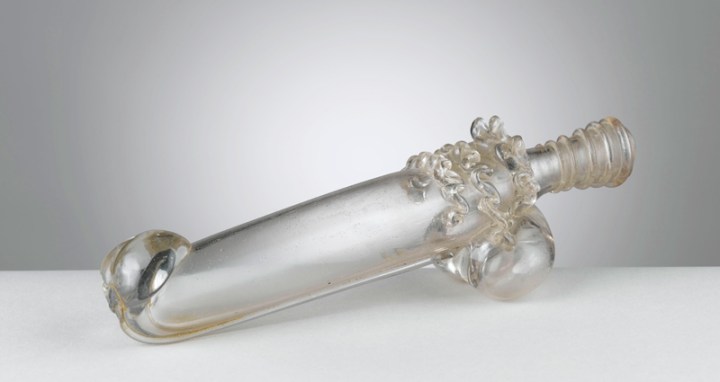
Phallus of blown glass.
From the Musée des Beaux-Arts de Rennes:
Cabinet de Curiosités: Le Temps des Libertinages
Musée des Beaux-Arts de Rennes, 13 June 2014 — 4 January 2015
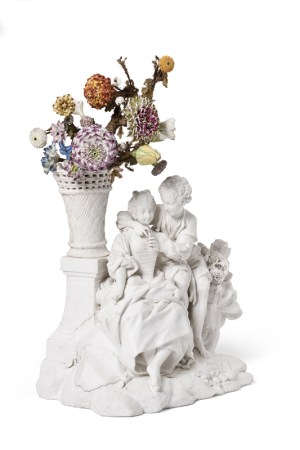
Vincennes Porcelain Manufactory, Le Flûteur
(The Flute Lesson), ca. 1752–53
(Paris: Musée National de la Céramique de Sèvres)
Christophe-Paul de Robien (1698–1756) possédait dans son cabinet douze objets érotiques dont certains qualifiés d’obscènes dans les inventaires. Il s’agit là de peu de chose pour en faire un érotomane, mais c’est plus que ce que possédait Caylus ou Calvet à la même époque.
Cette exposition accompagnant la réouverture du cabinet de curiosités tentera de remettre dans son contexte les objets érotiques de Robien à partir d’autres objets qui lui sont contemporains : des raretés venues de Guimet, du Louvre et des Arts décoratifs délimiteront les contours d’un érotisme longtemps occulté parmi les collections d’amateurs que la seconde moitié du XVIIIème polarisera entre bon gout et vulgarité.
◊ ◊ ◊ ◊ ◊
Sandra Dufils provides a summary here»
Jean-Baptiste Gandon provides a summary here»
Information on Christophe-Paul de Robien’s collection generally is available here»
And finally, the museum’s website provides this impressively extensive bibliography on eroticism, sexuality, and libertinism
(as a PDF File).
New Book | The Self-Portrait: A Cultural History
From Thames & Hudson:
James Hall, The Self-Portrait: A Cultural History (London: Thames & Hudson, 2014), 288 pages, ISBN 978-0500239100, £25.
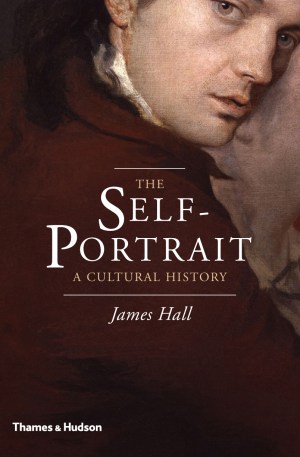 In this broad cultural survey, art historian and critic James Hall brilliantly maps the history of self-portraiture, from the earliest myths of Narcissus to the prolific self-image-making of contemporary artists.
His intelligent and vivid account shows how artists’ depictions of themselves have been part of a continuing tradition that reaches back for centuries. Along the way he reveals the importance of the medieval ‘mirror craze’; the explosion of the genre during the Renaissance; the confessional self-portraits of Titian and Michelangelo; the role of biography for serial self-portraitists such as Courbet and van Gogh; themes of sex and genius in works by Munch, Bonnard and Modersohn-Becker; and the latest developments of the genre in the era of globalization.
The full range of self-portraits is covered here, from comic and caricature self-portraits to ‘invented’ or imaginary ones, as well as key collections of self-portraiture such as that of the Medici in Florence. Throughout, Hall asks why—and when—artists have chosen to make self-portraits, and looks deeply into the worlds and mindsets of the artists who have created them.
Comprehensive and beautifully illustrated, the book features the work of a wide range of artists including Alberti, Caravaggio, Courbet, Dürer, Emin, Gauguin, Giotto, Goya, Kahlo, Koons, Magritte, Mantegna, Picasso, Raphael, Rembrandt and Warhol. Offering a rich and lively history, The Self-Portrait is an essential read for all those interested in this most enduringly popular and humane of art forms.
James Hall is an art critic and historian whose previous books include The World as Sculpture: The Changing Status of Sculpture from the Renaissance to the Present Day; Michelangelo and the Reinvention of the Human Body; Coffee with Michelangelo; and The Sinister Side: How Left-Right Symbolism Shaped Western Art.
Exhibition | Figures of Empire: Slavery and Portraiture
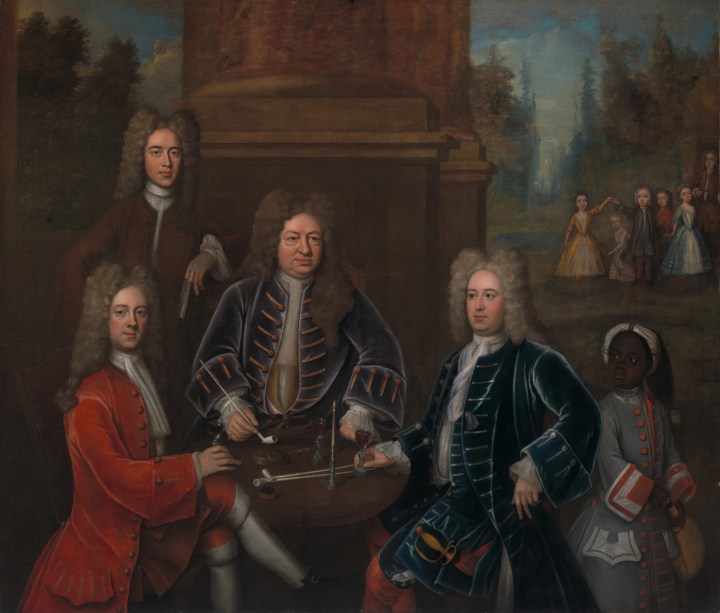
Artist unknown, Elihu Yale, the 2nd Duke of Devonshire, Lord James Cavendish, Mr. Tunstal, and an Enslaved Servant, ca. 1708, oil on canvas (New Haven: Yale Center for British Art, Gift of the 11th Duke of Devonshire)
◊ ◊ ◊ ◊ ◊
Press release from the YCBA:
Figures of Empire: Slavery and Portraiture in Eighteenth-Century Atlantic Britain
Yale Center for British Art, New Haven, 2 October 2014 — 14 December 2014
Curated by Esther Chadwick, Meredith Gamer, and Cyra Levenson
This October, the Yale Center for British Art will shed new
light on representations of slavery in Britain through more than sixty paintings, sculptures, prints, drawings, and decorative objects. Figures of Empire: Slavery and Portraiture in Eighteenth-Century Atlantic Britain will examine the ways in which portraiture reflected the perceptions, attitudes, and contradictions of slavery at the time.

Sir Joshua Reynolds, Charles Stanhope, 3rd Earl of Harrington, 1782 (New Haven: Yale Center for British Art)
The rise of the British Empire during the eighteenth century, fueled by enslaved labor on plantations in the Caribbean and the mainland of North America, contributed to a period of economic and cultural growth. It also brought unprecedented numbers of Africans and people of African descent, both enslaved and free, to Britain. Figures of Empire explores the impact of these developments on the most popular artistic genre of the time: the portrait.
In eighteenth-century Britain, portraits were a principal means of self- representation. Sitters conveyed information about themselves in a variety of ways—through clothing, setting, props, and, often, in relation to subordinate figures, such as servants or slaves. In many cases, these figures were modeled after life; however, in the eighteenth century, they were rarely regarded as subjects in their own right. By contrast, this exhibition challenges us to consider all of the figures depicted within a given portrait as individuals with histories and as ‘figures of empire’—as people whose lives were shaped by British imperialism and the institution of transatlantic slavery. Figures of Empire asks us to think again about what exactly a portrait is and how the answer to this question might change over time.
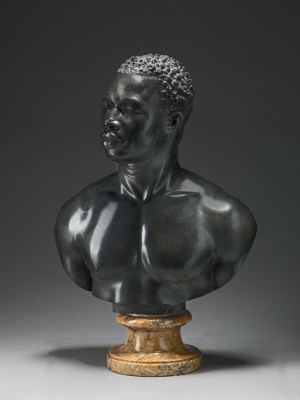
Studio of Francis Harwood, Bust of a Man, ca. 1758, black limestone on yellow marble socle (New Haven: Yale Center for British Art, Paul Mellon Collection)
The exhibition opens with a selection of early eighteenth-century portraits, maps, and sculptures that trace Britain’s expanding commercial empire and engagement with the institution of transatlantic slavery. Anchoring this display is an important and rarely exhibited group portrait that includes Elihu Yale, the founding benefactor of Yale University, along with an enslaved servant. The next section focuses on the role and representation of slavery in a number of mid-century portraits and conversation pieces, including William Hogarth’s Portrait of a Family (ca. 1735) and Francis Harwood’s remarkable sculpted Bust of a Man (1758). The exhibition continues with an exploration of imagery produced within the context of abolitionism later in the century, examining the particular impact of the antislavery movement on the practice of Britain’s leading portraitist, Sir Joshua Reynolds. Finally, the exhibition concludes by highlighting a number of cases in which portraiture became a means for some of African birth and descent who crossed the Atlantic aboard slave ships to forge new identities as both black and British.
The exhibition presents the portraits and their historical context through a wide range of media and art forms. Selected primarily from the Center’s holdings, the display also will be enriched by loans from other Yale collections, and from the National Gallery of Canada, Ottawa.
Figures of Empire takes its place in a new body of scholarship and critical engagement with the legacy of slavery, including the recent high-profile films Twelve Years a Slave (2013) and Belle (2014). It also expands upon conversations begun by prior scholarly publications and exhibitions at the Center, most significantly Art and Emancipation in Jamaica: Isaac Mendes Belisario and his Worlds (2007). While Art and Emancipation focused on slavery in British colonial Jamaica, this exhibition will turn its sights to Britain.
The exhibition includes a series of interviews with academic and curatorial scholars, as well as artists, to help place the works of art in a contemporary context. The interviews will be presented as part of an interactive presentation, accessible in the exhibition and on the Center’s website. In addition, a series of related programs, including lectures, exhibitions, a conference, and a film screening, is taking place across Yale University. Highlights include a pendant exhibition entitled Prospects of Empire: Slavery and Ecology in Atlantic Britain at the Lewis Walpole Library, and a major international conference planned in partnership with The Gilder Lehrman Center for the Study of Slavery, Resistance, and Abolition, entitled Visualizing Slavery and British Culture in the Eighteenth Century.
Figures of Empire has been organized by the Center and curated by Esther Chadwick and Meredith Gamer, PhD candidates in the history of art at Yale University, and Cyra Levenson, Associate Curator of Education at the Yale Center for British Art.
◊ ◊ ◊ ◊ ◊
Figures of Empire: Opening Panel Discussion
Yale Center for British Art, New Haven, 8 October 2014, 5:30
A conversation with Tim Barringer, Paul Mellon Professor of the History of Art, Yale University; Kobena Mercer, Professor, History of Art and African American Studies, Yale University; and Titus Kaphar, artist.
Exhibition | Prospects of Empire: Slavery and Ecology

H. Cock, after prints included in Captain John Gabriel Stedman, Narrative of a Five Years Expedition against the Revolted
Negroes of Surinam, from the year 1772 to 1777, elucidating the history of that country and describing its productions
(London, 1796). Left: after William Blake, The Skinning of the Aboma Snake, shot by Capt. Stedman. Right: after Benedetti,
Indian Female of the Arrowauka Nation. Though originally appearing in separate volumes of Stedman, the two images
were here printed together.
◊ ◊ ◊ ◊ ◊
From The Lewis Walpole Library:
Prospects of Empire: Slavery and Ecology in Eighteenth-Century Atlantic Britain
The Lewis Walpole Library, Farmington, 20 October 2014 — 27 March 2015
Curated by Hazel Carby and Heather Vermeulen
Prospects of Empire: Slavery and Ecology in Eighteenth-Century Atlantic Britain will explore the notion of empire’s ‘prospects’—its gaze upon bodies and landscapes, its speculations and desires, its endeavors to capitalize upon seized land and labor, as well as its failures to manage enslaved persons and unruly colonial ecologies. It will read latent anxieties in the management of bodies and borders, both in the colonies and in the metropole, and will examine the forces that empire mustered in efforts to quell and contain various threats to its regimes of power and knowledge. In addition to the focus on eighteenth-century material, the exhibition will feature a selection of four lithographs from Joscelyn Gardner’s series Creole Portraits III: Bringing down the Flowers (2009–11), a recent joint acquisition by the Yale Center for British Art and the Yale University Art Gallery. Gardner’s work mines the eighteenth-century Jamaica archive of white English immigrant and overseer Thomas Thistlewood, whose plantation ledger book will be on loan from the Beinecke.
A pendant exhibition, Figures of Empire: Slavery and Portraiture, will be on display at the Yale Center for British Art from 2 October until 14 December 2014.
Eighteenth-Century Encounters: Lövstabruk, Sweden

by Michael Yonan
In traveling through the forested plains of eastern Sweden, one encounters a Nordic rural idyll. Abundantly verdant, dotted with charming red houses, and home to the occasional moose, it is a region seemingly far removed from the bustle of Stockholm or the university culture of nearby Uppsala. The presence of scattered Viking runestones in the landscape only adds to the feeling of having traveled far from the modern world. Yet as one enters the front gates of Lövstabruk, a beautifully preserved eighteenth-century mining estate, it becomes apparent this was in its time no remote backwater but that, instead, it kept in touch with the most current continental developments in the sciences and arts.
Truthfully, the realization didn’t come entirely as a surprise when I visited Lövstabruk in May. Virtually every Swedish dix-huitièmiste speaks of the town with great affection, and many conveyed the belief that one finds there something very Swedish indeed. That interested me greatly, since one of Sweden’s more remarkable eighteenth-century qualities was its cosmpolitanism, its participation in cultural developments we associate mostly with other places. The best known to art historians is the Swedish connection to France. Yet that’s just the beginning of a much larger history of Swedish cultural exchange, of which Lövstabruk is a prime example.
To understand this place, one needs to be familiar with the Swedish institution of the bruk. The word has no exact English equivalent; it can mean forge, mine, or mill. In Sweden the bruk was a major impetus for small-scale civic development based on Sweden’s immensely rich mineral and metal deposits. The largest of the nation’s many mines was the Great Falun Mine (Stora Kopparberg), which operated for a millennium and at its peak supplied Europe with two-thirds of its copper. Lövstabruk was an ironworks that processed ore from the nearby mine at Dannemora. Interestingly, the region’s miners were a mixture of native Swedes and émigré Walloons who relocated to work in the industry. One can find in Sweden today the legacy of mass Walloon migration in the occasional French or French-sounding name.
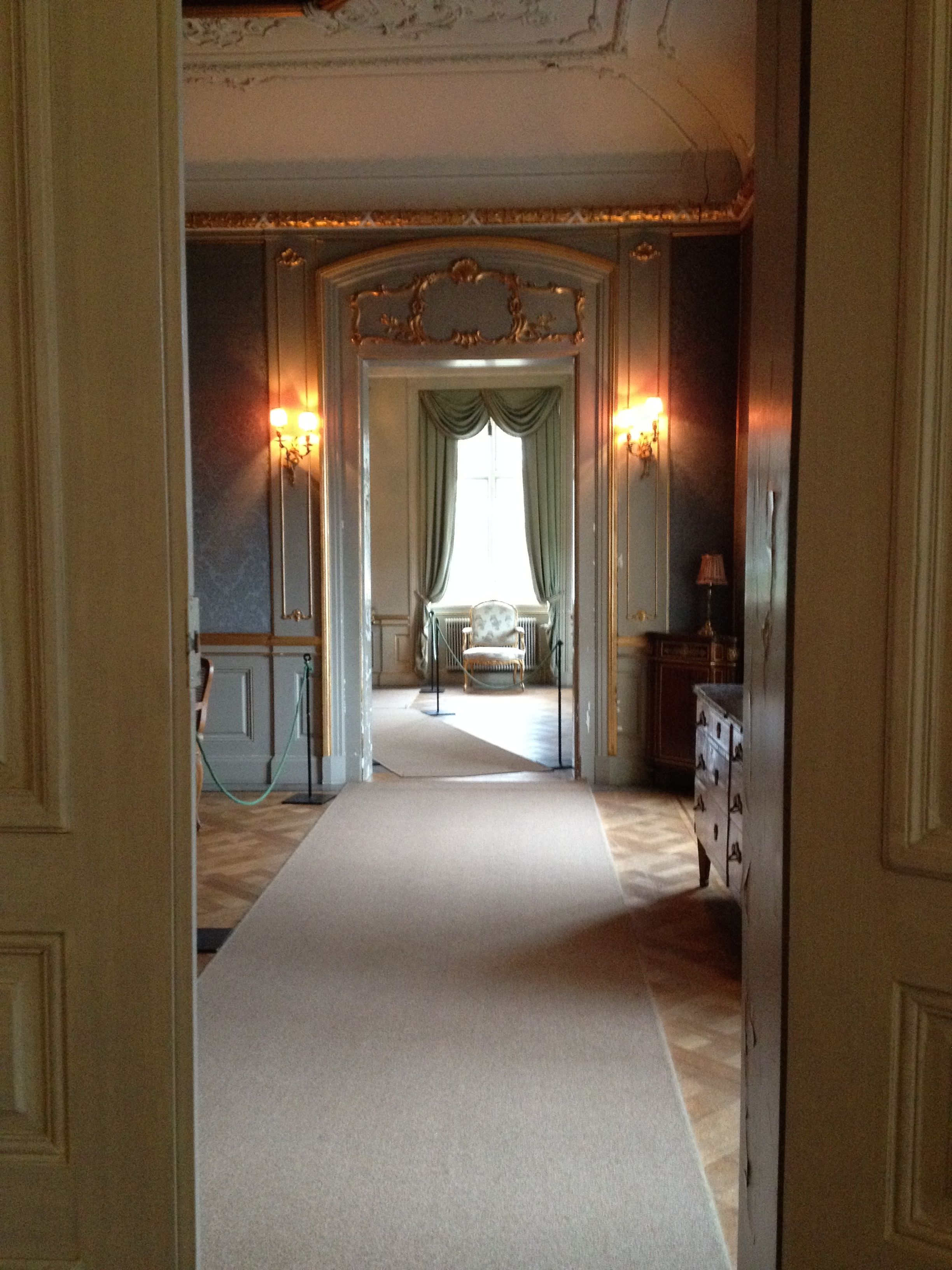 For art historians, Lövstabruk is most interesting because of its material legacy. The nobles overseeing the estate originated in the Netherlands, and it was they who expanded Lövstabruk’s footprint after a 1719 fire. Notable among them was Charles de Geer (1720–1778), who began collecting books and natural specimens for the library at Lövsta. De Geer published a comprehensive multivolume study of insects—modeled after Réaumur and Linnaeus—and oversaw an extensive building campaign that resulted in many of Lövstabruk’s architectural glories. The manor house contains a series of rococo rooms hung with dozens of beautiful eighteenth-century portraits. The musical culture at Lövstabruk was also world-class; the de Geers collected musical scores from Amsterdam and Paris for use in local concerts. But the jewel of Lövstabruk is unquestionably the library, designed by Swedish architect Jean-Eric Rehn (1717–1793). Housed in a separate little building immediately overlooking the central waterway and garden, the library gives the impression of having been left untouched since 1780. It
perfectly evokes the nobleman–scholar–entrepreneur ideal so
cherished during the Enlightenment.
 Postal deliveries to this little Swedish town must have been incredible indeed, containing as they did drawings by Watteau and Boucher, scores by Handel and Vivaldi, and the latest volumes of Diderot and d’Alembert’s Encyclopédie. I spotted Mme de Graffigny’s Lettres d’une péruvienne and books by Montesquieu and Rousseau on the library’s shelves. This give-and-take between such a distinctively local institution, the bruk, and the larger international culture is what makes Lövstabruk so distinctive. Recently, historian Göran Rydén has described Lövstabruk as an architectural metaphor for eighteenth-century Sweden as a whole: “a local community reaching out to a much wider global setting,” as well as “a place consuming commodities from other global places.”1 That interaction between the local and the global produces a “provincial cosmpolitanism,” to use Rydén’s term, the effects of which shaped the formation of Swedish society. To a visitor like me, it seems correct to claim that Lövstabruk was a microcosm of the eighteenth-century world.
1. Göran Rydén, “Provincial Cosmopolitanism: An Introduction,” in Sweden in the Eighteenth-Century World, ed. Göran Rydén (Farnham: Ashgate, 2013), p. 5.
◊ ◊ ◊ ◊ ◊
Michael Yonan is the president of HECAA and author of Empress Maria Theresa and the Politics of Habsburg Imperial Art (Penn State Press, 2011). From January to June 2014 he was research fellow at the Swedish Collegium for Advanced Study, Uppsala.
Call for Papers | SCSECS 2015 Session, Devices for Making Art
Paper, Paints, Crayons and Camera Obscura: Devices for Making Art in the Eighteenth Century
Session at the Annual Meeting of the South Central Society for Eighteenth-Century Studies
Marriott Grand, Point Clear, Alabama, 26–28 February 2015
Proposals due by 15 September 2014
Chair: Christina K. Lindeman, clindeman@southalabama.edu
While the focus of art historical study has concentrated on the finished portrait, painting, and print, this panel seeks papers that explore the historical, social and cultural context of the devices, implements, and things that made art in the eighteenth century. Possible paper topics include: new technologies that produced art products; trade and market of materials; art treatises or literary accounts on using devices. Interdisciplinary papers are welcome.
More information about the conference is available from the SCSECS newsletter, available as a PDF file here»
Also see the SCSECS website.
Exhibition | William Blake: Apprentice and Master
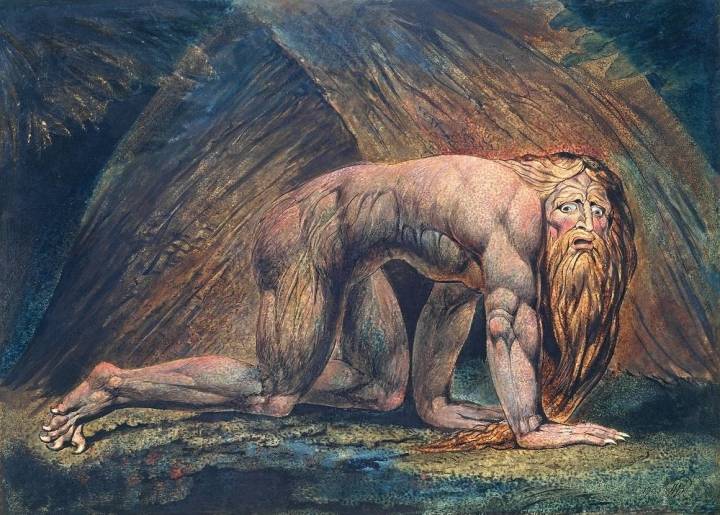
William Blake, Nebuchadnezzar, ca. 1795–1805, colour print,
ink, and watercolour on paper, 54.3 x 72.5 cm (London: Tate)
◊ ◊ ◊ ◊ ◊
From the Ashmolean:
William Blake: Apprentice and Master
Ashmolean, Oxford, 4 December 2014 — 1 March 2015
Curated by Michael Phillips and Colin Harrison
This major exhibition focuses on the extraordinary life and work of William Blake (1757–1827), printmaker, painter and revolutionary poet of the prophetic books. It examines his formation as an artist, apprenticeship as an engraver, and his maturity during the 1790s when he was at the height of his powers as both an artist and revolutionary poet. We also explore his influence on the young artist-printmakers who gathered around him in the last years of his life, including Samuel Palmer, George Richmond and Edward Calvert.
One of the most popular English artists, William Blake is still one of the least understood. His radical politics were reflected in his extraordinary technical innovations, especially in the field of printmaking and the illuminated book. This exhibition brings together more than 90 of Blake’s most celebrated works and offers new insights into his remarkable originality and influence.
At a young age William Blake showed artistic promise and, at the age of 15, was apprenticed to James Basire, the official engraver to the Society of Antiquaries. Under Basire’s tutelage, Blake was sent out to study London’s gothic churches and, most particularly, the monuments and decorations in Westminster Abbey—an experience which was to prove formative for his later style and imagery. The first section of the exhibition looks at Blake’s early work, exemplifying his already unorthodox approach.
After studying at the Antique School of the Royal Academy, Blake opened a print shop with his former apprentice colleague, James Parker, and from this point he began to associate with the leading writers and intellectuals of radical politics such as Mary Wollstonecraft and Thomas Paine, who gathered at the house of publisher, Joseph Johnson. Blake was soon producing prints of startling originality, which anticipate by nearly a century the monotypes made by artists such as Edgar Degas from the 1880s onwards. The exhibition examines Blake’s technical innovations in the creation of his illuminated books, which brought a new sophistication to colour printing. Among the works on display are several of the most extraordinary illuminated books, including The Marriage of Heaven and Hell, and a complete set of the plates from Europe: A Prophecy, together with some of the finest separate plates, among them Nebuchadnezzar and Newton.
Apprentice and Master will also look at Blake’s later career when, encouraged by his friendship with the young artist, John Linnell, he developed an interest in the great artist-printmakers of the Renaissance such as Albrecht Dürer and Lucas van Leyden. It was Linnell who commissioned the last of Blake’s great series of watercolours, the illustrations to the Book of Job and to Dante. It was these works, and above all the small woodcut illustrations to Virgil’s Pastorals, which inspired the young artists Samuel Palmer, George Richmond, and Edward Calvert, known as the Ancients. During the last three years of his life, they visited Blake and his wife in their two-room flat off the Strand. This exhibition juxtaposes many of the works the Ancients would have seen on these visits, with their own early works. Among the most notable are Palmer’s greatest creations, the six sepia drawings of 1825; and Calvert’s exquisite woodcuts of the late 1820s.
William Blake: Apprentice and Master has been curated by Dr Michael Phillips (Centre for Eighteenth Century Studies, University of York) and Mr Colin Harrison (Senior Curator of European Art, Ashmolean Museum).
Michael Phillips is currently writing a biography of William Blake in Lambeth during the anti-Jacobin Terror in Britain, entitled Blake and the Terror. His edition in facsimile of Blake’s The Marriage of Heaven and Hell was published by the Bodleian Library and the University of Chicago Press in 2011. He was guest curator of the William Blake Exhibition that opened in Paris at the Petit Palais from 1 April to 28 June 2009 and editor of the catalogue. He was also guest curator of the major Blake exhibition at Tate Britain and the Metropolitan Museum of Art, New York, 2000–2001, and is currently guest curator of the Blake exhibition opening in December 2014 in the new galleries of the Ashmolean Museum of the University of Oxford, William Blake: Apprentice & Master, where Blake’s printmaking studio at No. 13 Hercules Buildings, Lambeth, will be recreated.
◊ ◊ ◊ ◊ ◊
Michael Phillips, William Blake: Apprentice and Master (Oxford: Ashmolean Museum, 2015), 200 pages, ISBN: 978-1854442888, £21 / $40.










leave a comment