At Auction | Stubbs’s Tygers at Play (Two Leopard Cubs)

George Stubbs, Tygers at Play, 40 by 50 inches, c.1770–75 (est. £4–6 million)
Press release (27 March 2014) from Sotheby’s:
Tygers at Play, one of George Stubbs’s most celebrated works, is to lead Sotheby’s London Evening Sale of Old Master and British Paintings on 9 July 2014. Painted circa 1770–75, this masterful depiction of two leopard cubs ranks among Stubbs’s most popular subjects, reproduced in numerous prints. The painting itself, however, has rarely been seen in public, having been exhibited only four times since its original appearance at the Royal Academy of Arts in London. Testament to the artist’s exceptional eye for capturing the animal form, this admirably preserved work boasts impeccable provenance, having been sold only once since it was commissioned from the English painter. It remained in the possession of a single family until 1962, when it was acquired by the present owners. Coming from a distinguished British aristocratic collection, Tygers at Play will be offered with an estimate of £4–6 million.
Talking about the sale of the painting, Julian Gascoigne, Specialist, British Paintings at Sotheby’s commented: “Major big cat compositions by Stubbs very rarely appear at auction. Having only passed through two careful owners since it was painted, this work is in perfect condition, down to the delicate whiskers of the leopards, which is exceptionally rare for a work of this date. Never has the art market been so global and the universal beauty of Stubbs’s animals appeals today to an ever-growing array of collectors across the world. We therefore very much look forward to exhibiting this extraordinary work in Hong Kong, Moscow, New York, and London in the three months leading up to the sale.”
Of Stubbs’s four paintings of leopards, Tygers at Play is by far the most ambitious and dramatic. This rare example of the artist’s understanding of animal anatomy is also illustrative of his preoccupation with wild and exotic animals from the late 1760s and 1770s, which resulted in some of Stubbs’s greatest paintings, including his famous Lion and Horse series (a theme which emanated from his encounter with classical antiquity in Rome in 1754), as well as his famous paintings of an Indian Rhinoceros (c.1790/91, Hunterian Museum, Royal college of Surgeons), a Zebra presented to Queen Charlotte in 1762 (Paul Mellon Collection, Yale Centre for British Art, New Haven), and his portrait of The Kongouro from New Holland, recently acquired by the National Maritime Museum, Greenwich.
The seemingly incorrect title, Tygers at Play, which was used by Stubbs in the Royal Academy exhibition in 1776 and in the lettering for the engraving in 1780, seems curiously old fashioned given the artist’s studious and observant depiction of what are quite clearly leopards. A possible explanation would be that before circa 1750 the word tiger, or tyger was used as the generic term for all striped or spotted members of the cat family that were not lions.
Stubbs’s fascination with exotic animals was partly a symptom of the rise of menageries in mid-18th century London, stocked with wild beast brought back from Africa and India by men like Warren Hastings, and the contemporary fascination with exotic specimens from far off lands, which was fuelled by expeditionary voyages such as Captain Cook’s journey to the South Pacific in 1766 and his subsequent discovery of Australia in 1770.
Worldwide Exhibitions
Hong Kong Convention Centre: 3–7 April 2014
Moscow, New Manege Exhibition Hall: 25–27 April 2014
Sotheby’s New York: 31 May – 4 June 2014
Sotheby’s London: Early July 2014
Lecture | Nina Dubin on Painting ‘The Papered Century’
From The Newberry:
Nina Dubin | Love, Trust, Risk: Painting ‘The Papered Century’
The Newberry Library, Chicago, 19 April 2014
The eighteenth-century vogue for pictures of women perusing love letters not only marked the age’s affection for epistolarity, it also emblematized the “papered century,” named for the period’s unprecedented proliferation of monetary notes and credit instruments. Dwelling upon the fragility of paper promises, epistolary pictures vivify the precariousness of trust and the romanticization of risk on the eve of modernity.
Saturday, April 19, 2:00–4:00pm
The Newberry Library Eighteenth-Century seminar is designed to foster research and inquiry across the scholarly disciplines in eighteenth-century studies. It aims to provide a methodologically diverse forum for work that engages our ongoing discussions and debates along this historical and critical terrain. Attendance at all events is free and open to the public but in order to receive the pre-circulated paper, participants must register online in advance via this link. A reception follows each presentation. It is also the custom of the seminar to gather at a restaurant in the Newberry neighborhood to continue our conversation. If you would like to join us for dinner after any session, please email Lisa Freeman at lfreeman@uic.edu.
Timothy Campbell, University of Chicago
Lisa A. Freeman, University of Illinois at Chicago
John Shanahan, DePaul University
Helen Thompson, Northwestern University
Additions to The Art World in Britain 1660 to 1735
Richard Stephens, the editor for The Art World in Britain 1660 to 1735, and his team continue to expand what is already an extraordinary resource. From the most recent update (25 March 2014). . .

◊ ◊ ◊ ◊ ◊
11,000 auction records have been published, bringing the total now online to 87,000 lots. Here are the main additions:
Three great collections
The library of Edward, 2nd Earl of Oxford (1689-1741) was ‘the most choice and magnificent that were ever collected in this Kingdom’. His bound prints and illustrated books were sold by his widow in 1746 over 22 nights. The sale catalogue is the longest & most detailed of its kind from this period, by some way.
The South Sea Bubble triggered one of the greatest picture sales of the early 18th century, when the heavily-indebted Henry, 1st Duke of Portland (1682-1726) sold his paintings in 1722. One copy of the catalogue survives, in the Frick library. Its manuscript annotations, which list every buyer and price fetched, provide an invaluable snapshot of the major collectors and dealers of that moment.
The collection of old master drawings belonging to the Roman connoisseur Padre Resta was “the finest without doubt in Europe” according to John Talman. Resta sold almost 4000 sheets to the Whig Lord Chancellor, Baron Somers (1651-1716), which were auctioned in London in 1717.
Sales of artists, architects & a composer
Auction catalogues offer a window onto the careers, households and intellectual worlds of the vendors. In this update are the posthumous catalogues of architects Nicholas Hawksmoor (1740), William Kent (1749), Sir Christopher Wren (1749), and Leonard Wooddeson (1733); the painters John Robinson (1746), Louis Goupy (1748), Thomas Morland (1748), Joseph Vanhaecken (1751) and John Ellys (1760); the engraver John Dunstall (1693); and the composer George Frederick Handel (1760).
Auctioneer’s copies
The Frick’s Portland annotations are probably based on information from the auctioneer’s office, given their completeness & the fact that the prices include the post-sale fee (by contrast, the Houlditch transcript of the Portland sale gives the hammer price only). Another catalogue published now – the heavily-annotated catalogue of the 1719 sale of the contents of the Duke of Ormonde’s London house – appears to be the only auctioneer’s working copy surviving from any sale before the foundation of Christie’s.
This update of sale catalogues has been funded very generously by Lowell Libson Ltd. The editor is also very grateful to Ashley Baynton-Williams, Shana Fung, Peter Moore, Kate Papworth, William Schupbach and Jacob Simon for their contributions of data, images and corrections.
A full list of sources published is available here»
New Book | The Profession of Sculpture in the Paris ‘Académie’
SVEC 2014.02 from the Voltaire Foundation:
Tomas Macsotay, The Profession of Sculpture in the Paris ‘Académie’, SVEC (Oxford: Oxford University Studies in the Enlightenment, 2014), 360 pages, ISBN-13: 978-0729410793, £70 / €84 / $116.
 The profession of sculpture was transformed during the eighteenth century as the creation and appreciation of art became increasingly associated with social interaction. Central to this transformation was the esteemed yet controversial body, the Académie royale de peinture et de sculpture. In this richly illustrated book, Tomas Macsotay focuses on the sculptor’s life at the Académie, analysing the protocols that dictated the production of academic art. Arguing that these procedures were modelled on the artist’s study journey to Rome, Macsotay discusses the close links between working practices introduced at the Académie and new notions of academic community and personal sensibility. He explores the bodily form of the morceau de réception on which the election of new members depended, and how this shaped the development of academic ideas and practices. Macsotay also reconsiders the early revolutionary years, where outside events exacerbated tensions between personal autonomy and institutional authority.
The Profession of Sculpture in the Paris Académie underscores the moral and aesthetic divide separating modern interpretations of sculpture based on notions of the individual artistic persona, and eighteenth-century notions of sociable production. The result is a book which takes sculpture outside the national arena, and re-focuses attention on its more subjective role, a narrative of intimate life in a modern world.
Tomas Macsotay is a research fellow at the Universitat Autònoma, Barcelona. He is currently researching the visual culture of Spanish academies and sculpture in transnational Rome, and has previously published articles on the history of eighteenth-century French, Dutch, and British art. Macsotay’s 2008 thesis The Human Figure as Method: Study, Sculpture and Sculptors in the Académie Royale de Peinture et de Sculpture (1720–1765) was awarded the 2009 Prix Marianne Roland Michel.
C O N T E N T S
Introduction
1. The impossible originality of Falconet’s Milon
2. Sculptors’ morceaux between style and method
3. From shop floor to academic gallery
4. Guidance and autonomy: the role of Rome
5. Vleughels’s drawing sculptors
6. The order of figures: inert and moving
Epilogue. Of lions and cats: sociability and sculpture
Bibliography
Index
Macsotay offers a peak at the book’s argument with this posting at the Voltaire Foundation’s blog, “Sculptors in the Paris Académie’s mould, and how to (mis)understand them,” (17 February 2014).
March 2014 Issue of RIHA Journal
The latest issue of RIHA Journal, the open access journal of the International Association of Research Institutes in the History of Art (RIHA), addresses the theme “When Art History Meets Design History.” Here are the eighteenth-century offerings:
Katie Scott, “Persuasion: Nicolas Pineau’s Designs on the Social,” RIHA Journal (March 2014).
This essay offers a Latourian account of the wood sculptor Nicolas Pineau’s design process via a reading of Jean-François Bastide’s [1758] novella La petite maison. It argues that the conventional form assumed by his drawings or ‘inscriptions’—the indications of scale, the delineation of options, the signatures and marginal notes—can be read as traces of seduction that helped ‘translate’ potential patrons to a taste for Rococo. The essay further suggests that the activation of the taste at the point of commission was kept alive in the designs executed by the bi-modal asymmetry that is characteristic of the goût pittoresque because its exercise was considered a mark of refinement.
Matthew Craske, “Model Making and Anti-Competitive Practices in the Late Eighteenth-Century London Sculpture Trade,” RIHA Journal (March 2014).
This article concerns the generation of anti-competitive practices, and the associated discontents, that rose to the fore in the London sculpture trade in the late eighteenth century (1770–1799). It charts the business strategies and technical procedures of the most economically successful practitioners, whose workshops had some of the characteristics of manufactories, and whose critics accused them of conducting a “monopoly” trade. Small-scale practitioners lost out in the competition for great public contracts on account of their design processes and their inability to represent any manifestation of “establishment.” A combination of three factors increased the gap between a handful of powerful “manufacturers” and the rest of the trade: the foundation of the Royal Academy, shifts in the ways designs were evaluated, and a growing number of very lucrative contracts for public sculpture. I conclude that such were the discontents within the London trade that by the 1790s, there was a marked tendency for practitioners who were not manufacturers to be attracted to democratic political movements, to the Wilkite call for liberty and the rise of civic radicalism in the merchant population of London.
Anne Puetz, “Drawing from Fancy: The Intersection of Art and Design in Mid-Eighteenth-Century London,” RIHA Journal (March 2014).
This paper attempts to bring the world of mid-eighteenth-century British design into fruitful conversation with contemporary art theory and practice. Taking the neighbourhood and milieu of the St Martin’s Lane area in London as a starting point, I investigate connections between British “rococo” design and William Hogarth’s Analysis of Beauty in terms of shared formal values and contemporary implications of “modernity.” I argue for a mutual indebtedness rather than “art” directing “design.”
Symposium | The Disciplined Past: The Study of the Middle East
While I’m not sure how much eighteenth-century content to expect from the papers, the issues of periodization and the implications of how we connect (or disconnect) historical periods strike me as crucial eighteenth-century problems with present-day stakes for exploring a global eighteenth century. -CH
From Harvard’s Mahindra Humanities Center:

The Disciplined Past: Critical Reflections on the Study of the Middle East
Mahindra Humanities Center, Harvard University, 4–5 April 2014
Registration due by 3 April 2014
Organized by Mirjam Brusius
The symposium aims to reassess the study and the representation of the Middle East in scholarship and museums today. Studying the Middle East in the current Western academic and museological discourse entails encountering a history of dichotomies and contradictions. A manifest example, both physically and metaphorically, is provided by a visit to some art museums in the Western world: while, for example, art from ancient Mesopotamia—which occupied the same space as much of modern day Iraq, Syria and Iran—is often presented in direct proximity to objects deeply embedded in the Western canon, such as Classical Greek sculpture, objects from the very same region that derive from after the coming of Islam are often separated from their more ancient geographical counterparts, for instance in Islamic Art departments.
The epistemological consequence has been denounced before: this type of taxonomy creates a narrative of the Middle East that suggests a period of decline from the seventh century A.D. onwards, while prevailing European narratives link their historical present to mythical beginnings in the Middle East via the notions of a classical Graeco-Roman Antiquity. These canonical ideas have been shaped in Western European readings and injected into notions of progress and decline, into the organization of historical time, and scholarly disciplines themselves. They do so with restricted notions of key concepts in history of science, such as ‘origin’ and ‘discovery’, which only account for a single and teleological narrative rather than for dynamic flows of exchange between spaces and a plurality of accounts. What counts as canonical in Western traditions and what is subject to alienation is thus a temporal rather than geographical dichotomy.
The recent restructuring of some museum spaces reflects discomfort with this status quo, though not always in favour of a more even and unifying approach. The ‘ethnologization’ of Islam still pushes the Middle East to the margins, while the ‘religionization’ of the Middle East often does the same in academic contexts. Often they also run the risk of presenting an alternative orientalist trope: that of the ‘eternal, unchanging East’. Even though critical voices have critiqued these legacies of formerly colonial structures in recent decades, the ancient Near East and the modern Middle East remain neatly separated from another. Archaeology as a mediating discipline connecting the present with the past is both a perpetrator and victim of this discourse but its role in this discourse has not yet been fully explored in spite (or because) of its political power.
Finally, the naming of university departments throughout the world tells a story of its own: How religious does the Middle East have to be in order to be studied as the “science of Islam” (Islamwissenschaft)? How universal to be simply “oriental”? How ancient does the Near East have to be in order to be “Near”? How ancient Western Asia in order to be “Western”? How modern the Middle East, in order to be in the “Middle”? How much in the middle does the East have to be in order to be “modern”? The symposium seeks to bring historians of the modern Middle East, scholars of the ancient Near East, Egypt and Western Asia, archaeologists, anthropologists, historians of science and of archaeology, as well as historians of Islamic and Western art in dialogue with one another to assess the current states of affair.
◊ ◊ ◊ ◊ ◊
F R I D A Y , 4 A P R I L 2 0 1 4
2.00 Introduction, Mirjam Brusius (Harvard University)
2.30 Heritage and Museums
• Alexander Nagel (Smithonian Institution): The Order of Things According to Washington DC: Reading Middle Eastern Materials in the Smithsonian Institution
• Ian Straughn (Brown University): On Heritage Crusades and other Cultural Rescue Missions in the Middle East
• Melania Savino (KHI Florenz): Ancient Near Eastern Antiquities in the Italian Museums: Travels, Collections, Displays
4.30 In discussion: Section participants with Irene Winter (commentator, Harvard University) and Eleanor Robson (University College London)
S A T U R D A Y , 5 A P R I L 2 0 1 4
9.00 Ruptures and Turning Points
• Avinoam Shalem (Columbia University): Troubling Monochronic Time: Revisiting the Myth of the ‘Origin’ of Islamic art
• Katharine Park (Harvard University): Teaching and Writing across Regional Boundaries: A History of Arabic and Latin Science
10.00 Coffee break
10.30 In discussion: Section participants with Roy Mottahedeh and Chad Kia (Harvard University)
12.00 Lunch break
1.00 Empire and Knowledge
• Erin Hyde Nolan (Boston University): Ottomans Abroad: The Translation and Circulation of Nineteenth-Century Portrait Photography from Istanbul to Europe and the United States
• Daniela Helbig (University of Sydney): Whose Wonderland? Aviation and Aerial Archaeology in Syria and Lebanon under the French Mandate
2.00 In discussion: Section participants with Marwa Elshakry (commentator, Columbia University) and Adam Mestyan (Harvard University).
Exhibition | Neapolitan Drawings
As noted at ArtDaily (25 March 2014) . . .
Dessins Napolitain / Neapolitan Drawings
Marty de Cambiaire, Paris, 25 March — 10 April 2014
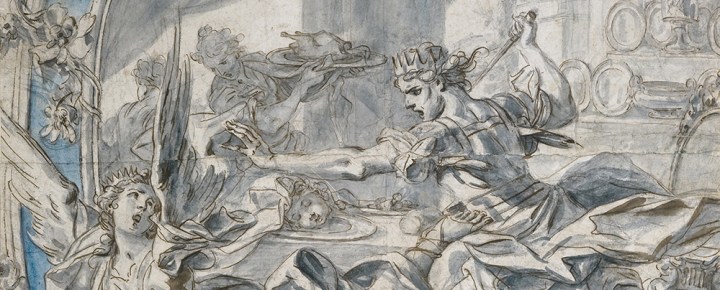
Filippo Falciatore (actif à Naples 1718–1768),
Térée pourchassant Procné et Philomèle
◊ ◊ ◊ ◊ ◊
Marty de Cambiaire’s seventh show takes place in their offices, located on 16 place Vendôme, from 25 March to 4 April 2014. It focuses on a group of forty Neapolitan and Sicilian drawings dating from the 16th to the 18th century. A bilingual exhibition catalogue has been published, similar to their previous catalogues (which can be downloaded from their website). Given the scarcity of the literature on the subject, this publication provides fresh scholarship on a field still relatively unknown to the public as well as connoisseurs. There are very few Neapolitan drawings in public collections. They are equally rare far on the market. Therefore several years were required to build up a coherent group intended to illustrate 350 years of graphic production in Naples and Sicily. The ultimate goal of this venture, quite unprecedented in the old master drawing market, is to make a significant scientific contribution to the field.
Neapolitan drawing has long been a neglected research area. A few sporadic shows—some of which quite recent—have confirmed art historians’ strong interest in an area which remains largely unexplored. There is thus ample room for fascinating discoveries. The Neapolitan school (which includes the Sicilian school) is largely underrepresented in museums. Nor is it clearly identified as a distinct school, especially in comparison with other Italian schools such as the Florentine, Bolognese, Roman or Venetian ones. The Neapolitan school gives us the opportunity to examine draughtsmanship in its various aspects as an active practice, apprehended as a working method and not just as an intellectual concept destined to confer a social status to artists. Consequently their intention is to showcase the specificities of the Neapolitan school, through a group of 40 drawings dating between 1550 and 1800.
The prime concern in gathering them has been to focus on quality, condition and scholarly interest. It turned out to be a challenging venture given the traditional scarcity of Neapolitan drawings on the market. The gallery has decided to bring together artists such as Giordano and Solimena, already well-researched and known from the public, with other artists whose names are not so familiar but who were essential in the genesis of this school. It seemed equally important to illustrate the diversity of: the techniques used; the subjects illustrated; and the purpose of these drawings, which could be preparatory studies either for religious altarpieces or for decorative compositions, for book frontispieces or decorative pieces, or even intended as works of art per se.
The show explores successive periods in the Neapolitan and Sicilian graphic production. The earliest sheet presented is by a rare and precious artist, Leonardo Castellano (circa 1544–1588). This is complemented by two other 16th-century drawings by Francesco Curia (1538–1610), while Belisario Corenzio (circa 1558–1646) takes us into the 17th century. There big names such as Luca Giordano, Matia Preti and Salvator Rosa feature, alongside with lesser-known artists who deserve a reappraisal, including Cesare and Francesco Fracanzano, Battistello Carraciolo. and Aniello Falcone. Francesco Solimena and his pupils, Francesco De Mura, Francesco Celebrano, Giacopo Cestaro, Lorenzo de Caro and Campora are represented with several sheets which demonstrate how profoundly the master renewed the field of decorative painting. Solimena also revived the creative process itself, passing down to his pupils a method on which they firmly grounded their approach and developed their own talent. The final drawing in the collection’s chronology is a large sheet by Giuseppe Camarrano, a neoclassical artist rarely seen on the market. It illustrates the evolution of Neapolitan art towards a more European neo-classical taste.
One of the key criteria in the selection process was the condition of each drawing. However it is important to bear in mind that Neapolitan artists viewed their drawings not only as a mental projection but also as a hands-on device: assembled and pasted together, some sheets were thus pricked for transfer, while others bear the marks of working life in the studio. This show presents a varied and representative overview of the Neapolitan school. New attributions will be put forward, which will shed new light on certain artists. The gallery is thus hoping to provide a panorama of a rich, distinct graphic field.
Symposium | In Circulation: John Singleton Copley and Benjamin West
Reminder that this webinar event starts tomorrow (Friday) at 11:15am (Eastern Daylight Time) . . .
In Circulation: John Singleton Copley and Benjamin West in England, France, and America
The Paul Mellon Centre, London, 28 March 2014
This symposium and webinar explores aspects of the work and careers of the American-born artists Benjamin West and John Singleton Copley, focusing in particular on the ways in which they engaged with the exhibition and print cultures of their day, particularly in Britain, but also in France and America. The program relates to the international loan exhibition American Adversaries: West and Copley in a Transatlantic World, which was on display at the Museum of Fine Arts, Houston (MFAH), from October 6, 2013 through January 20, 2014.
The Yale Center for British Art is live streaming this daylong conference, which is also available for free on the MFAH website, shortly before the program begins. Join the conversation on Twitter using the handle @PaulMellonCentr. Hosted in London by the Paul Mellon Centre for Studies in British Art, the symposium is made possible through support from the Terra Foundation for American Art.
More information, including the schedule (according to GMT), is available here»
Call for Papers | The Long Eighteenth Century (Down Under)
From the Sydney Intellectual History Network:
‘Ideas and Enlightenment’, The Long Eighteenth Century (Down Under)
David Nichol Smith Seminar in Eighteenth-Century Studies XV
The University of Sydney, 10–13 December 2014
Proposals due by 15 June 2014
The Sydney Intellectual History Network and ‘Putting Periodisation to Use’ Research Group at the University of Sydney invite you to the Fifteenth David Nichol Smith Seminar (DNS), with the theme ‘Ideas and Enlightenment’. Inaugurated and supported by the National Library of Australia, the DNS conference is the leading forum for eighteenth-century studies in Australasia. It brings together scholars from across the region and internationally who work on the long eighteenth century (1688–1815) in a range of disciplines, including history, literature, art and architectural history, philosophy, the history of science, musicology, anthropology, archaeology and studies of material culture. We welcome proposals for papers or panels on the following topics, as well as proposals for subjects that fall outside of these broad themes:
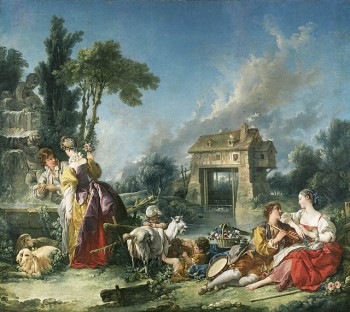
François Boucher, The Fountain of Love, 1748, 116 x 133 inches
(Los Angeles: Getty Museum, 71.PA.37)
• Making Ideas Visible
• Biography and the History of Individual Life
• Economic Ideas in Social and Political Contexts
• Global Sensibilities
• National Identity and Cosmopolitanism
• Antiquaries and Alternative Versions of the Classical Tradition
• Periodisation and the Question of Period Styles
• ‘Enlightenment’ and the Pacific
• Spectacle, Sociability and Pleasure
• Genres of Enlightenment
• Science, Technology and Medicine
• Borders and Empire
• Historiography of the Enlightenment
• Post-Enlightenment Trajectories in Literature and Art
We welcome proposals for 20-minute papers. Proposals consist of a 250-word abstract and 2-page cv, sent via email as a pdf attachment to sihn.dns@sydney.edu.au. Further details are available at the Sydney Intellectual History Network website, where accommodation and keynotes will be posted soon. If you have questions about the conference, please contact the organizing committee at sihn.dns@sydney.edu.au. Deadline for submissions: 15 June 2014.
DNS XV Organizing Committee: Dr Jennifer Ferng, Prof Mark Ledbury, Prof Jennifer Milam and Dr Nicola Parsons
◊ ◊ ◊ ◊ ◊
Added 4 April 2014:
Post Graduate Travel Grants
The 15th David Nichol Smith Seminar organizing committee is pleased to announce that they will be able to offer a limited number of travel grants to expand postgraduate participation in the 2014 ‘Ideas and Enlightenment’ conference. These are provided through generous funding contributions from the Faculty of Arts and Social Sciences, the Putting Periodisation to Use Group, and the Sydney Intellectual History Network at the University of Sydney. These scholarships are part of an extended postgraduate program at DNS XV, which will be supported by the newly formed DNS Graduate Caucus. We anticipate that the program will include paired mentoring between junior and senior colleagues at the conference and a professional development workshop. Those awarded scholarships travel grants would be expected to be actively involved in this program.
Conditions
Travel grants (up to a maximum amount of $2000) will be awarded as reimbursement of travel expenses. Funds may be used for transportation to and from the conference and accommodation only, not for meals). Partial grants may be offered. Recipients must attend the full conference and present a paper at the David Nichol Smith Seminar XV at the University of Sydney. Costs incurred, up to the amount granted, will be reimbursed upon presentation of receipts. In certain cases, fares or other expenses may be paid directly by the DNS XV organizing committee through the office of the Sydney Intellectual History Network. Applications from international and Australian postgraduate students are invited.
Eligibility
The recipient must be actively engaged in full- or part-time doctoral study in eighteenth-century studies, in any field, at a recognised university.
Applications should include
• A completed application form
• A copy of their DNS proposal for a 20 minute paper (250-word paper proposal and 2-page CV)
These materials must be sent as a single pdf document and attached to an email sent to the attention of the organising committee at: sihn.dns@sydney.edu.au. Inquiries about the scholarships should also be directed to members of the committee through this email. Application forms are available to download from the on the conference webpages. Closing date: 15 June 2014
◊ ◊ ◊ ◊ ◊
Please note the confirmation of these keynote speakers (added 16 May 2014). . .
Keynote Speakers
John Dixon Hunt (University of Pennsylvania)
Sophia Rosenfeld (University of Virginia)
Michael McKeon (Rutgers University)
Erika Naginski (Harvard University)
New Book | Transporting Visions
From the University of California Press:
Jennifer L. Roberts, Transporting Visions: The Movement of Images in Early America (Los Angeles: University of California Press, 2014), 240 pages, ISBN: 978-0520251847, $60 / £42.
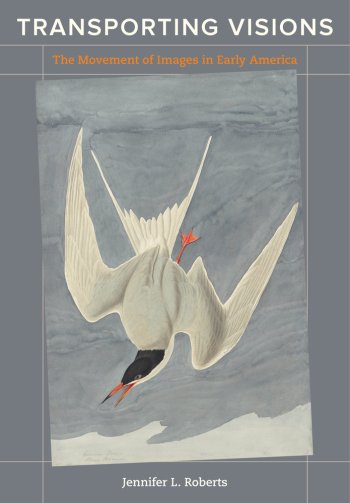 Transporting Visions follows pictures as they traveled through and over the swamps, forests, towns, oceans, and rivers of British America and the United States between 1760 and 1860. Taking seriously the complications involved in moving pictures through the physical world—the sheer bulk and weight of canvases, the delays inherent in long-distance reception, the perpetual threat to the stability and mnemonic capacity of images, the uneasy mingling of artworks with other kinds of things in transit–Jennifer L. Roberts forges a model for a material history of visual communication in early America. Focusing on paintings and prints by John Singleton Copley, John James Audubon, and Asher B. Durand—which were designed with mobility in mind—Roberts shows how an analysis of such imagery opens new perspectives on the most fundamental problems of early American commodity circulation, geographic expansion, and social cohesion.
Jennifer L. Roberts is Elizabeth Cary Agassiz Professor of the Humanities at Harvard University. She teaches American art from the colonial period to the present, with particular focus on issues of landscape, expedition, material culture theory, and the history of science. Her book Mirror-Travels: Robert Smithson and History was published in 2004 by Yale University Press.
C O N T E N T S
Acknowledgments
Introduction: Long-Distance Pictures
1. Dilemmas of Delivery in Copley’s Atlantic
2. Audubon’s Burden: Materiality and Transmission in The Birds of America
3. Gathering Moss: Asher B. Durand and the Deceleration of Landscape
Epilogue: Material Visual Culture
Notes
Selected Bibliography
List of Illustrations
Index










 Enfilade
leave a comment