Lecture | Laura Auricchio on Lafayette’s Legacies
From the Sydney Intellectual History Network (SIHN) at the University of Sydney:
Laura Auricchio | Hero and Villain: Lafayette’s Legacies
University of Sydney, 12 November 2013
Tuesday, 12 November 2013, 6:00 pm, New Law School Foyer
 Americans have long hailed the Marquis de Lafayette (1757–1834) as an extraordinarily admirable figure—a wealthy French nobleman who, at the age of 19, volunteered to fight in the War of Independence and prodded his king to support the rebel cause. But in France, Lafayette is seen by partisans on both the left and the right as an opportunist, a misguided dreamer, even a traitor. In her talk, Auricchio will consider how Lafayette, a man who lived by a principle that he called “moderation,” could have garnered such disparate reputations. While part of the answer lies in the very different roles that he played and decisions that he made in the French and American revolutions, this talk focuses on the importance of visual, material, and print cultures in shaping and sustaining Lafayette’s divided legacies.
Laura Auricchio is Associate Professor of Art History and Dean of the School of Undergraduate Studies at The New School in New York. She has published widely on French and American visual culture in the Age of Revolution and on topics in twentieth-century American art. Her next book, The Marquis, a visually informed biography of the Marquis de Lafayette, French hero of the American Revolution, will be published by Alfred A. Knopf in 2014.
This event is co-sponsored by Sydney Ideas and the Sydney Intellectual History Network (SIHN@Sydney). For further information about SIHN@Sydney, please contact Jennifer Milam, Professor of Art History and Eighteenth-Century Studies (jennifer.milam@sydney.edu.au).
Conference | The Enlightenment and Philosophical Anthropology
From the Sydney Intellectual History Network at the University of Sydney:
The Enlightenment and the Development of Philosophical Anthropology
University of Sydney, 4–6 November 2013
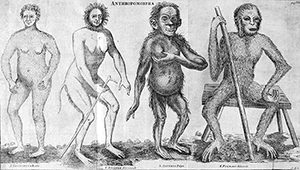 The conference focuses on the development of various forms of anthropology in the second half of the eighteenth century, with a special focus on philosophical anthropology, as a distinct discipline that competed with metaphysics, both in scope and aim.
The birth of philosophical anthropology in the mid-eighteenth century and its development well into the nineteenth signaled a fundamental shift – not only did it emphasise the historical character of thought, but it also sought to understand the human being in context, whether biological, cultural-historical, literary or psychological. For this reason, Odo Marquard has termed it one of the “three great epochal shifts” (alongside aesthetics and the philosophy of history) in the history of modern Europe.
The main focus will be on the way in which various forms of anthropology, philosophical (Germany) but also medical (France) both contributed to and challenged the notion of “Enlightenment” in Europe. That the European Enlightenment was a contested ground is well known; however, the fact that anthropology played a fundamental role in its orientation remains an understudied topic.
Many of the papers will focus on the role that Johann Gottfried Herder played in the development of philosophical anthropology, and in examining the debate between him and his former teacher, Immanuel Kant, this conference will be one of the first to address the ways in which philosophical anthropology developed in relation to the larger project of Enlightenment in Europe.
◊ ◊ ◊ ◊ ◊
P R O G R A M
Monday, 4 November
Peter Anstey (Sydney), The Enlightenment natural history of man
Charles Wolfe (Ghent), ‘Whoever takes man as an object of study must expect to have man as an enemy’: The tension between naturalism and anthropocentrism in La Mettrie and Diderot
Jennifer Milam (Sydney), Doggie Style: Rococo Representations of Interspecies Sensuality and the Pursuit of Volupté
Stephen Gaukroger (Sydney), The demise of anthropological medicine: the challenges of experimental medicine and Mesmerism
Ofer Gal (Sydney), Anthropology vs. metaphysics: Hobbes and Spinoza on the passions
Tuesday, 5 November
Daniela Helbig (Sydney), Self-positing: experimental subjects in Kant’s thought and in scientific practice
Nigel DeSouza (Ottawa), Between Leibniz and Kant: the philosophical foundations of Herder’s anthropology
Anik Waldow (Sydney), Natural history and the formation of the human being: Kant and Herder on active forces
Dalia Nassar (Sydney), Kant and Herder on analogy
Stefanie Buchenau (Paris), Herder: From comparative anatomy to philosophical anthropology
Wednesday, 6 November
John Zammito (Rice), The Animal-Human Boundary and Anthropology: Herder between Reimarus and Tetens
Kristin Gjesdal (Temple), Hermeneutics and Anthropology in Herder’s Early Thought
Gabriel Watts (Sydney), Herder’s theological anthropology
Marion Heinz (Siegen), Cultural theory in Kant and Herder
Michael Forster (Bonn), Herder’s anthropology and human rights
Conference Report | HECAA Session at UAAC
Christina Smylitopoulos (University of Guelph) reports that the first Canadian HECAA panel at UAAC last weekend in Banff went splendidly. Five speakers presented exceptional papers, and the discussions were rich and exciting—all framed by sublime mountains!
◊ ◊ ◊ ◊ ◊
Paul Holmquist, “Tying the Seductive Powers of Art to the Innate Rights of Man: The Architect as Legislator in the Ideal City of Chaux”
This paper examines the correlation between the Architect of Claude-Nicolas Ledoux’s ideal city of Chaux as set out in his L’Architecture…(1804) and the enigmatic figure of the Legislator in Jean-Jacques Rousseau’s On the Social Contract (1762). I argue that Ledoux’s Architect acts analogously to the Legislator in aspiring to shape the moeurs or customary views, practices and ways of life of a people by adapting them to natural law in new institutions and architectural programs. The Architect, like the Legislator, must also rely upon persuasion rather than coercion for the efficacy of his new institutions, and make the good of the ‘legislation’ publicly appear in the expressive program of architecture parlante. This analysis will show that as such Ledoux’s architectural theory and vision for Chaux addressed key philosophical questions posed by Rousseau concerning the foundation of society in terms of nature, reason, sentiment, and the imagination.
Alena Robin, “Being a Painter in Mexico City in 1735: Voices from the Archives”
In February 1735, Felipe Chacón, master painter and guilder in Mexico City, addressed the Royal Mint to recover his dues for the work he had been doing in different parts of the building. The document preserved in the National Archives in Mexico City is rich in descriptions of the now lost building. What could have been a simple monetary transaction did not, however, end there. The officers of the Mint contracted José de Ibarra and Nicolás Enríquez, also master painters, to evaluate Felipe Chacón’s work. Not satisfied with the first evaluation, the officers requested a second one. José de Ibarra and Nicolás Enríquez are painters that hold a significant place in the historiography of New Spanish painting. The name of Felipe Chacón is however unknown to this pictorial tradition. It is worth examining these documents to pause on what could mean being a painter in Mexico City in the eighteenth century.
Elizabeth Ranieri, “Trionfo della Fede sull’Eresia ad Opera dei Domenicani (1709) by Francesco Solimena: The Baroque Fresco as Medium for Epideictic Discourse”
Francesco Solimena’s sacristy fresco Trionfo della Fede sull’Eresia ad Opera dei Domenicani (1709) in the Neapolitan Church of San Domenico Maggiore follows the classical model of epideictic discourse by praising the virtues and the achievements of its Dominican patrons and audience. Solimena’s fresco is about the efforts of the Dominican order to educate the common people in order to eliminate heretical thought and behavior. The work was commissioned by the Dominican order for a Dominican audience; the patron-viewers of the fresco all have the same sex, educational level, religious affiliation, interests, and values. The virtues that are depicted in the fresco are Faith, Obedience, Poverty, Chastity, and Wisdom, all of which are valued by the Dominican order. The primary purpose of the fresco is to celebrate the virtues and achievements of the Dominicans, particularly the order’s historical and figurative triumph over heresy through the use of “faith” and “works.”
Diana Cheng, “Lord Chesterfield’s Boudoir: A Room without the Sulks”
The boudoir, as the early eighteenth-century writer Laurent Bordelon opined, was an apt description of the room where a married woman indulged in her dark, unreasonable moods. While the original intent of the nomenclature was to denigrate the undutiful wife, the boudoir was, on the contrary, a place without the sulks from the perspective of the inhabitant. Philip Dormer Stanhope, the 4th Earl of Chesterfield (1694–1773), for one, considered his gilded arabesque boudoir at Chesterfield House the gayest room in England. The paper is a case study of this English aristocrat’s boudoir, highlighting its functional and decorative similarities and differences from a lady’s boudoir. It argues that the meaning and usage of the eighteenth-century boudoir, while seemingly varied depending on gender and class, was rooted in the desire of its inhabitant to re-stake the boundaries of social inter-dependencies and duties.
Ji Eun You, “Bringing the Revolution Home: Printed Fabric during the French Revolution, 1789–1795”
Between 1789 and 1795, the manufactories at Jouy-en-Josas and Nantes produced a small group of cotton fabrics printed with narrative and allegorical scenes of the French Revolution for interior furnishing. This paper explores the interpretive possibilities of these designs, with attention to the highly variable viewing experience that was contingent upon tactile interaction with the material through cutting, draping, and display. Simultaneously embracing and evading contemporary politics, the multiple viewings offered by the printed fabrics represent the period when radical political discourse compelled luxury decorative arts to renegotiate their places in French visual culture. My visual analysis of printed fabrics is joined to an investigation into the discursive and material context for luxury interior furnishings during the French Revolution. In doing so, I propose a way of rethinking the aesthetic experience of the French Revolution through decorative arts.
The Wellcome Library Open Access Fund
With the move toward open access gaining more momentum, even as questions regarding who funds the access remain, this is a particularly interesting example from the Wellcome Library:
◊ ◊ ◊ ◊ ◊
The Wellcome Library is a free resource and is open to anyone who wants to use our collections. We know that lots of our users publish the outcome of their Library research. We want to encourage and support this research, and to ensure that it can be read and enjoyed by as many people as possible.
The Wellcome Trust has a long-standing commitment to Open Access, and provides funding to grant-holders to help them make their research accessible. We’re extending this principle to users of the Wellcome Library in a new scheme aimed at independent scholars, as well as students and university-based researchers who don’t have funding to cover the costs of open-access publishing.
The new Wellcome Library Open Access Fund is (and will always be) entirely voluntary – it’s up to library users whether they want to take advantage of it. We will pay the costs associated with open-access publishing for peer-reviewed journal articles, scholarly monographs or book chapters aimed at academic audiences. To qualify, you’ll need to have made substantial use of our collections; to have had your research accepted for publication; and to be ineligible for open-access funding from any other source.
In the Fall 2013 Issue of ‘Konsthistorisk Tidskrift’
Konsthistorisk Tidskrift / Journal of Art History 82 (Fall 2013)
A special issue of Konsthistorisk Tidskrift / Journal of Art History, guest edited by Peter McNeil (Faculty of Design, Architecture and Building University of Technology Sydney, Australia and Centre for Fashion Studies, Stockholm University) and Patrik Steorn (Centre for Fashion Studies, Stockholm University), addresses the theme of “Fashion and Print Culture: Translation and Transformation.”
From the editorial:
Print itself is both a materiality as well as a vehicle of representation. How did the meaning of various forms of fashion-related prints change as they were circulated in new contexts? What was the relationship of ‘fashion words’ and images? What were the mechanisms through which print – as newsprint, almanac, trade-card, respectful or satirical image – supported or undermined the spread of fashions, from ‘head-piece’ to ‘borders’? A pluralistic perspective is needed to better understand the transmission of ideas about fashion in print as well as in practice – and their interrelationship for the new readers and viewers of the period from the renaissance to the eighteenth century. This theme issue of Konsthistorisk tidskrift publishes some of the findings related to the Humanities in the European Research Area (HERA)/European Science Foundation funded project ‘Fashioning the Early Modern: Innovation and Creativity in Europe, 1500–1800’ (FEM) and the portfolio ‘Print Culture and Fashion Products’ managed therein by Peter McNeil and Patrik Steorn. HERA FEM was a three-year major funded project conducted from 2010 to 2013.
C O N T E N T S
· Peter McNeil and Patrik Steorn, The Medium of Print and the Rise of Fashion in the West, pp. 135–56.
· Chia-hua Yeh, From Classical to Chic: Reconsidering the Prints from Varie acconciature di teste usate da nobilissime dame in diverse città d’Italia by Giovanni Guerra, c. 1589, pp. 157–68.
· Lena Dahrén, Printed Pattern Books for Early Modern Bobbin-made Borders and Edgings, pp. 169–90.
· Cecilia Candréus, The Use of Printed Designs in Seventeenth-Century Embroidery: Layers of Transfer and Interpretation, pp. 191–204.
· Mark de Vitis, Sartorial Transgression as Socio-political Collaboration: Madame and the Hunt, pp. 205–18.
· Patrik Steorn, Migrating Motifs and Productive Instabilities: Images of Fashion in Eighteenth-Century Swedish Print Culture, pp. 219–34.
· Carolina Brown, Portraits en savoyarde and the Shepherdess of the Alps: Portraits, Prints, Literature, and Fashion in Eighteenth-Century Sweden, pp. 235–51.
· Arlene Leis, Displaying Art and Fashion: Ladies’ Pocket-Book Imagery in the Paper Collections of Sarah Sophia Banks, pp. 252–71.
· Audrey Millet, Dessiner La Mode En Régime De Fabrique: L’imitation Au Cœur Du Processus Créatif, pp. 272–86.
The Burlington Magazine, October 2013
The eighteenth century in The Burlington:
The Burlington Magazine 155 (October 2013)
 A R T I C L E S
• Simon Lee, “A Newly Discovered Portrait of Napoleon by Jacques-Louis David,” pp. 687–92.
Discusses the various versions of David’s portrait of the emperor, including a previously unknown example.
R E V I E W S
• François Marandet, Review of Karen Chastagnol, Nicolas Colombel, 1644–1717 (Editions Nicolas Chaudun, 2012), p. 711.
Painting in France at the end of Louis XIV’s reign has for many years been regarded as the precursor of the Rococo era. Charles de La Fosse’s aimables figures anticipate Antoine Watteau’s world of the fêtes galantes, who himself was the precursor of the peintre des grâces François Boucher. One of the merits of the exhibition devoted to Nicolas Colombel recently at the Musées des Beaux-Arts, Rouen (closed 24th February), was to demonstrate that the story of history painting c. 1700 was much more complex. Karen Chastagnol, curator of the exhibition, rightly insists on the direct link between early eighteenth-century French artists and the art of Poussin: as well as François Verdier, René-Antoine Houasse and Daniel Sarrabat, to which could be added the names of Sébastien II Leclerc of Henri de Favanne. . .
• Willibald Sauerländer, Review of Guilhem Scherf and Séverine Darroussat, Jean-Jacques Rousseau et son image sculptée, 1778–1798 (Paris: Varia, 2012), pp. 711–12.
The iconography of the grands hommes des Lumières has become a fashionable topic. In 1994 Guilhem Scherf wrote an important essay on the iconographie sculptée of Voltaire; now he has added a substantial text on Jean-Jacques Rousseau et la Révolution: Les avatars d’une representation sculptée. . .
• Robin Middleton, Review of John Martin Robinson, James Wyatt, 1746–1813: Architect to George II (London: The Paul Mellon Centre for Studies in British Art, 2012), pp. 712–13.
The range and diversity of James Wyatt’s designing, the sheer number of buildings with which he was involved (the Catalogue of Works lists 283 sites) makes any attempt to chart his career a task of the utmost difficulty. Anthony Dale’s pioneering but nonetheless solid account of Wyatt’s career is, however, quite overtaken by John Martin Robinson’s new book. Dates and attributions are sharpened. The nature of the ordnance work is fully revealed — all quite decent. But the most significant revelations are contained in the chapter on Wyatt’s activity as an industrial and furniture designer. . .
• Ann Massing, Review of Noémie Etienne, La Restauration des peintures à Paris, 1750–1815: Pratiques et discours sur la matérialité des œuvres d’art (Rennes: Presses Universitaires de Rennes, 2012), p. 713.
The period before and after the French Revolution in Paris was one of enormous change and, due to the French centralised administration, the French National Archives and the AMN (Archives des musées nationaux) are a fertile source of information for one of the most interesting periods of the history of painting restoration — when the King’s painters became professional art restorers. Noémie Etienne’s book contributes much to our knowledge of this fascinating period. Her archival research encompasses not only the rich resources in Paris, but also those in Rome, Venice, Madrid, Antwerp and Brussels. Her approach is mainly based on eighteenth- and nineteenth-century written sources, and the wealth of information she has culled is presented not as a chronological series of events but by theme. . .
• Shearer West, Review of Marcia Pointon, Portrayal and the Search for Identity (London: Reaktion, 2013), p. 714.
Marcia Pointon has a distinguished record of scholarly publication about portraiture, since Hanging the Head (1993) revolutionised and enlivened a historiography that had somewhat fallen in the doldrums. There are few historians of British art who have not been inspired by her nimble imagination, unexpected visual analysis and deep intellectual engagement with her textual and visual sources past and present. Her latest collection of essays on portraiture will not disappoint her admirers, although the more dazzling parts of her analysis are intertwined with sections that have the flavour of a work in progress . . .
• Rüdiger Joppien, Review of Olivier Lefeuvre, Philippe-Jacques de Loutherbourg (Paris: Athena, 2012), pp. 714–15.
. . . The catalogue raisonné is of exceptional value, and lies at the very heart of the book, . . . [which] gives a splendid account of Loutherbourg’s career as a painter, as well as a thoroughly documented, reliable idea of his artistic output. That this monograph could be published so fully and handsomely is due to the assistance of the Athena publishing house. Its appearance coincided with the retrospective exhibition devoted to the artist at the Musée de Beaux-Arts in Strausbourg (17th November 2012 to 18th February 2013), which the author organized. Both the book and the exhibition are indicative of the esteem in which France still holds the artist, even though he worked less than ten years in Paris and almost forty years in London.
David Adjmi’s Marie Antoinette

Photo by Pavel Antonov
◊ ◊ ◊ ◊ ◊
In the October 28 issue of The New Yorker (“Wigstock,” pp. 70-72), Hilton Als reviews Marie Antoinette, written by David Adjmi, directed by Rebecca Taichman, and featuring Marin Ireland in the queen’s role (at New York’s SoHo Rep, 9 October — 24 November).
That the piece amounts to a kind of collaboration between Adjmi and Ireland–she writes in space with her body as Adjmi’s words fill the stage–is one of the production’s unexpected pleasures; in our generally director-driven theatre, it’s fascinating to watch a great actress assume the mantle of muse and run with it. . .
Right off we know that Adjmi’s Marie isn’t Marie; her language isn’t in the tradition of stage royals, particularly as imagined by American actors performing the “classics.” Rather we’re in something more modern . . . Adjmi’s brilliance is to use trashy vernacular speech to allude to the way history trashes us. . .
The full review (along with lots more) is available as a PDF file at the SoHo Rep website.
Exhibition | Soufflot: An Architect of the Enlightenment
From the press release:
Soufflot: Un architecte dans la lumière
Panthéon, Paris, 11 September — 24 November 2013
Curated by Alexandre Gady
 Le troisième centenaire de la naissance de Jacques-Germain Soufflot (1713–1780), que le Ministère de la Culture a inscrit parmi les célébrations nationa les 2013, est l’occasion pour le Centre des monuments nationaux (CMN) de revenir sur cet architecte majeur des Lumières, dont le chef d’œuvre, Sainte-Geneviève, devenu le Panthéon, est un des monuments emblématiques du réseau du CMN.
Alors qu’une grande campagne de restauration est en cours au Panthéon, Alexandre Gady, commissaire de l’exposition y présente Jacques-Germain Soufflot et ses ambitions créatrices en combinant rigueur scientifique et accessibilité pour un large public. Cette figure majeure de l’architecture française du XVIIIe siècle est ainsi remise en lumière, en montrant la richesse de son œuvre, qui ne se limite pas au Panthéon. L’exposition suit un double parti, chronologique mais surtout thématique, afin d’éclairer la création de l’architecte et ses enjeux intellectuels.
Près de 150 œuvres sont présentées: peintures, sculptures, dessins, gravures, livres anciens, objets d’art, maquettes, provenant de grandes institutions françaises, ainsi que de particuliers : outre le CMN lui-même, citons les musées du Louvre, du château de Versailles, le Musée Carnavalet, les Archives nationales, la Bibliothèque nationale de France, le musée Gadagne de Lyon, le musée archéologique de Rouen…
Le Panthéon est enfin lui-même mis en scène, depuis la maquette de Rondelet jusqu’à la tombe de Soufflot dans la crypte, pour parachever la visite et sa démonstration.
Additional information is available here»
The Getty Announces Gift of Rare Botanical Books
Press release (23 October 2013) from The Getty:

From Johann Christoph Volkamer, Nürnbergische Hesperides (Nuremberg, 1708). The Getty Research Institute, 2885-927, donated by Tania Norris.
The Getty Research Institute (GRI) announced today the acquisition of The Tania Norris Collection of Rare Botanical Books, a gift from collector Tania Norris. Assembled over the last 30 years by Ms. Norris through individual acquisitions from booksellers in the US, Europe, and Australia, the collection consists of 41 rare books that provide unparalleled insight into the contributions of natural science to visual culture in Europe from the sixteenth through the nineteenth centuries.
Highlights of the collection include Crispin Van de Passe’s Hortus Floridus (1614), apparently the first illustrated book to apply the microscopy of magnifying lenses to botanical illustration; and Johann Christoph Volkamer’s Nürnbergische Hesperides (1708), documenting both the introduction of Italian citrus culture to Germany, and the revolution in urban planning which ensued from the parks designed for their cultivation and irrigation. Also found in the collection is a copy of Maria Sibylla Merian’s Derde en laatste deel der Rupsen Begin (1717), the first book to depict insect metamorphosis, reputedly hand-colored by her daughter.
“The Getty Research Institute is deeply honored to receive the donation of the Tania Norris Collection of Rare Botanical Books from one of the founding members of our GRI Council. This gift promises to open novel paths to explore the complex historical intersections between science and art,” said Marcia Reed chief curator at the Getty Research Institute. “Tania’s passionate interests and her collecting instincts have created a very generous gift which has also served to raise the profile of an important subject with strong relevance for researchers who use our special collections.”
David Brafman, curator of rare books at the GRI, said “The Norris Collection offers inestimable rewards for scholars researching global botanical trade and the ensuing stimulus of cultural exchange to the trend of collecting curiosities spawned in Renaissance and Baroque European culture. Other books in the collection document the codependent progress of technologies in the history of medicine, pharmacology, and the color and textile industries from the sixteenth to nineteenth centuries. No less important are the opportunities to study the complex artistic relationship between physiognomy and ‘naturalism’ in visual representation, as well as developments in urban planning and landscape architecture. Ms. Norris’ generous donation enhances significantly GRI’s existing collections in such subjects and promises to transform the way art historians examine the past in the future.”
In particular, the unique hand-colored copy of Maria Sibylla Merian’s Der Rupsen Begin (Birth of the Butterfly) from the Norris Collection will find a companion in the GRI vaults: Merian’s stunning Metamorphosis of the Insects of Surinam (1719), the self-published book which documented the watercolors, drawings, and scientific studies she executed and conducted while exploring the wildlife of the South American jungles. The GRI copy was featured prominently in the Getty Museum’s exhibition, Merian and Daughters, which celebrated the extraordinary pioneering contributions of the artist-naturalist, the first European woman to travel to America expressly for artistic purposes.
The Norris Collection will also prove an invaluable complement for research in landscape- and still-life painting, as well as mention the insights it will provide to conservators and conservation scientists about recipes and global trade in color-pigments and other preparations in the decorative arts.
In addition to being a founding member of the Getty Research Institute Collections Council, Ms. Norris also serves on the J. Paul Getty Museum Disegno Drawing Council and Paintings Conservation Council.
“It was one of the proudest moments of my life when the Getty Research Institute accepted my books for their library. I never collected expecting anyone else to think my books of interest, “ said Ms. Norris. “But now at the GRI, anyone can view them; some have been or will soon be in exhibitions and programs. More importantly, they will be preserved for generations to come. You don’t need much money, just passion to collect, and you just never know what treasures you may have.”
Much of the collection has been on deposit at the GRI and available to researchers; the remaining materials will be cataloged and available by the end of year
New Book | Slavery and the British Country House
From English Heritage, with free download (admirably!) available:
Madge Dresser and Andrew Hann, eds., Slavery and the British Country House (English Heritage, 2013), 180 pages, ISBN: 978-1848020641, £50. Available for free download at English Heritage»
 The British country house has long been regarded as the jewel in the nation’s heritage crown. But the country house is also an expression of wealth and power, and as scholars reconsider the nation’s colonial past, new questions are being posed about these great houses and their links to Atlantic slavery.
This book, authored by a range of academics and heritage professionals, grew out of a 2009 conference on Slavery and the British Country House: Mapping the Current Research organised by English Heritage in partnership with the University of the West of England, the National Trust and the Economic History Society. It asks what links might be established between the wealth derived from slavery and the British country house and what implications such links should have for the way such properties are represented to the public today.
Lavishly illustrated and based on the latest scholarship, this wide-ranging and innovative volume provides in-depth examinations of individual houses, regional studies and critical reconsiderations of existing heritage sites, including two studies specially commissioned by English Heritage and one sponsored by the National Trust.
In order to improve access to this research, a complete copy of the text is free to download from English Heritage.
◊ ◊ ◊ ◊ ◊
C O N T E N T S
Foreword
List of contributors
Acknowledgements
Notes on measurements
Introduction
1. Nicholas Draper, Slave ownership and the British country house: the records of the Slave Compensation Commission as evidence
2. Madge Dresser, Slavery and West Country houses
3. Jane Longmore, Rural retreats: Liverpool slave traders and their country houses
4. Roger H. Leech, Lodges, garden houses and villas: the urban periphery in the early modern Atlantic world
5. Simon D. Smith, Slavery’s heritage footprint: links between British country houses and St Vincent, 1814–34
6. Nuala Zahedieh, An open elite? Colonial commerce, the country house and the case of Sir Gilbert Heathcote and Normanton Hall
7. Sheryllynne Haggerty and Susanne Seymour, Property, power and authority: the implicit and explicit slavery connections of Bolsover Castle and Brodsworth Hall in the 18th century
8. Laurence Brown, Atlantic slavery and classical culture at Marble Hill and Northington Grange
9. Victoria Perry, Slavery and the sublime: the Atlantic trade, landscape aesthetics and tourism
10. Natalie Zacek, West Indian echoes: Dodington House, the Codrington family and the Caribbean heritage
11. Caroline Bressey, Contesting the political legacy of slavery in England’s country houses: a case study of Kenwood House and Osborne House
12. Cliff Pereira, Representing the East and West India links to the British country house: the London borough of Bexley and the wider heritage picture
13. Rob Mitchell and Shawn Sobers, Reinterpretation: the representation of perspectives on slave trade history using creative media
Notes
Index










 Enfilade
leave a comment