Christopher Gibbs and a Remarkable Georgian Sofa
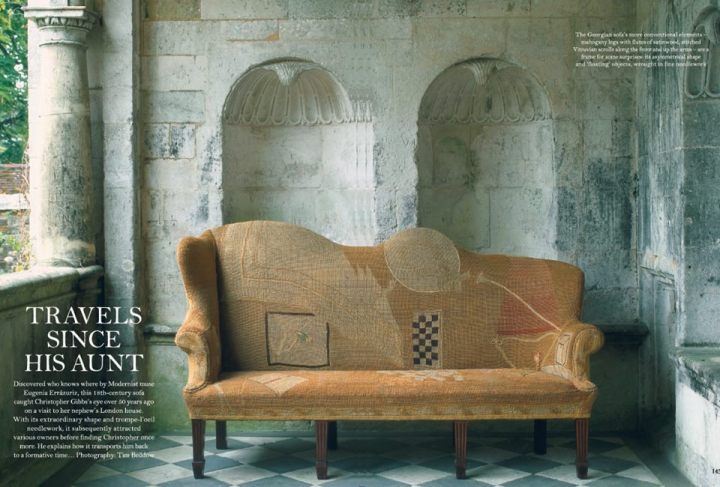
With its trompe-l’oeil needlework, this sofa is extraordinary (items depicted include a gameboard and cards, a box, a basket of yarn, a bird on a branch, and a bag). The one-page essay in The World of Interiors by the antiques dealer Christopher Gibbs, accompanied by stunning photographs, underscores just how compelling an object can be as a subject. -CH
◊ ◊ ◊ ◊ ◊
Christopher Gibbs, “Travels Since His Aunt,” The World of Interiors (June 2013): 144-49.
Discovered who knows where by Modernist muse Eugenia Errázuriz, this 18th-century sofa caught Christopher Gibbs’ eye over 50 years ago on a visit to her London home. With its extraordinary shape and trompe-l’oeil needlework, it subsequently attracted various owners before finding Christopher once more [via the antique dealer Edward Hurst]. Gibbs explains how it transports him back to a formative time, in the June issue of The World of Interiors. Photography: Tim Beddow.
Fellowship | Culture, Art, and Society in the Times of Juvarra
From the call for applications:
Fondazione 1563 Fellowship | Culture, Art, and Society in the Times of Juvarra
Applications due by 31 July 2013
 Fondazione 1563 per l’Arte e la Cultura, an Operating Body of Compagnia di San Paolo, pursues among its statutory objectives “the implementation of research and advanced education activities in humanities.” The Foundation is entrusted with the management and the promotion of the Historical Archives of Compagnia di San Paolo and the development of studies on the Age and the Culture of Baroque, in order to encourage research in humanities and to facilitate the access of young scholars to
academic and cultural institutions.
The fellowships intend to promote studies on Baroque literary, philosophical, musical, theater, artistic and architectural culture and on the political, social, and technical-scientific history of the Age of Baroque, also from a comparative international perspective. Research proposals for the 2013-14 call will need to pertain to the following theme: “Culture, art and society in the times of Juvarra.”
The career of Filippo Juvarra (1678-1736) is marked by two cultural experiences that he contributed to in terms of shapes, images, suggestions and models. On the one hand was Rome in the early 18th century and the inner circle of Cardinal Ottoboni, who was open to the reforms put forward by the Academy of Arcadia and who promoted the renewed primacy of the artist championed by the “Accademia di San Luca” in line with a reflection on the complexity of Baroque tradition. On the other hand there was Vittorio Amedeo II and his request to Juvarra to be part of a plan to create and consolidate a modern State, a project that would reflect in contemporary politics and society, as well as literature, philosophy, music, theater, architecture and the visual arts.
The call is open to researchers born on or after 1st January 1975 holding a University or master’s degree from an Italian University or equivalent from foreign Universities. Priority will be given to applicants holding a Ph.D. or equivalent from Italian or foreign universities. The fellowship will refer to the following fields of study: social history, political history, economic history, history of science and technology, history of literature, history of philosophy, history of music, history of theater, art history, history of architecture. . .
More information is available here»
New Book | Funerary Sculpture in St Patrick’s Cathedral, Armagh
From the author’s website:
James Stevens Curl, Funerary Monuments and Memorials in St Patrick’s Cathedral, Armagh (Whitstable: Historical Publications, 2013), 164 pages, ISBN: 978-1905286492, £40 (hardcover) / ISBN: 978-1905286485, £20 (softcover) — ordering information is available here»
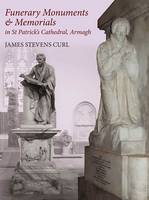 The funerary monuments and memorials in the Church of Ireland (Anglican) Cathedral Church of St Patrick, Armagh, include fine works by celebrated sculptors including Bacon, Chantrey, Farrell, Marochetti, Nollekens, Roubiliac, Rysbrack, and others, yet are not widely known.
Professor Stevens Curl’s comprehensively illustrated book describes and shows all of them, as well as giving details of the artists and their subjects, thereby filling an unaccountable gap in the literature. It is published in two versions; a hardback, limited edition of only 250 numbered signed copies with dust-jacket at £40, and a softback edition at £20 per copy.
James Stevens Curl has held Chairs in Architectural History at two Universities. He is Professor of Architecture at the School of Architecture and Design, University of Ulster. He read for his Doctorate at University College London, and in 1991-2 and 2002 was Visiting Fellow at Peterhouse, University of Cambridge.
New Book | Les Biscuits de Porcelaine de Paris
Available from Artbooks.com:
Régine de Plinval de Guillebon, Les Biscuits de porcelaine de Paris : XVIIIe-XIXe siècles (Dijon: Faton, 2012), 331 pages, ISBN: 978-2878441628, 68€ / $125.
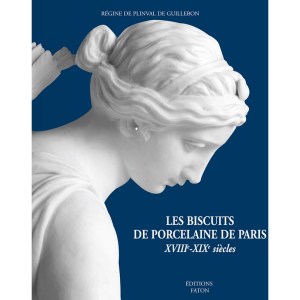 Aux biscuits de porcelaine de Paris sont souvent associés de grands noms de porcelainiers, tels Guérhard, Dihl, Gille jeune, Desprez et Nast. Pendules spectaculaires, statues gigantesques, ou bustes à taille humaine, ces figures ou groupes en porcelaine non émaillée sont pourtant assez méconnus ; on les imagine blancs, mais ils peuvent être bleus, noirs, polychromes ou dorés. Le biscuit parisien est de tout son temps très prisé par des amateurs aussi prestigieux que George Washington et le prince-régent d’Angleterre.
Après une présentation des origines de la porcelaine et des techniques de fabrication, Régine de Plinval de Guillebon nous entraîne au cœur de la vie mouvementée de 31 manufactures des XVIIIe et XIXe siècles, s’intéressant de près au travail des ouvriers, des artistes et des investisseurs, ainsi qu’au contexte économique général. Une analyse approfondie des formes, des couleurs, ainsi que de l’association du biscuit avec le bronze, l’orfèvrerie et le cristal, permet d’envisager l’évolution du style des biscuits, dont deux cents illustrent cet ouvrage. Un catalogue raisonné des manufactures parisiennes vient compléter cette remarquable étude.
Exhibition | Master Drawings
From The Ashmolean:
Master Drawings
The Ashmolean Museum, Oxford, 25 May — 18 August 2013
Curated by Christopher Brown, Jon Whiteley, and Catherine Whistler

Thomas Gainsborough, Study of a Woman, seen from the back, chalk and stump on paper, 1760-70 (Oxford: Ashmolean Museum)
The Ashmolean announces one of its major summer exhibitions, Master Drawings, as part of the celebrations to mark the founding of the Museum in 1683. The exhibition, drawn from one of the world’s greatest collections of works on paper, will display a selection of the Ashmolean’s treasures of western art including works by Michelangelo and Raphael; Dürer and the artists of the Northern Renaissance; through the centuries to Rubens and Rembrandt; Turner, Degas and Pissarro; up to Gwen John and David Hockney.
Master Drawings will survey seventy-two drawings of all types: figure studies, composition sketches, landscapes and portraits. Many are working drawings; others were made as works of art in their own right. Michelangelo will be represented by a study for the Sistine ceiling, drawn with the robust energy of youth, along with two profoundly poetic works drawn for friends, and a late, contemplative image of the Virgin and the risen Christ. Raphael will be represented by a series of studies ranging from one of his earliest works – a figure of the kneeling Magdalen delicately outlined in silverpoint – to one his last studies, the powerful and famous image of the hands and the heads of two apostles, drawn shortly before his death in 1520.
The history of landscape drawing will be explored from its beginnings with Dürer’s View of the Cembra Valley made in 1494; to watercolour sketches made by JMW Turner from opposite ends of his career. The seventeenth century will be represented in drawings by Rembrandt and Rubens; Guercino; and Claude Lorrain. The story will continue through the following centuries with studies by several of Europe’s greatest draughtsmen: Watteau, Boucher, Fragonard, Tiepolo, Goya, Ingres, Degas and Cézanne.
A full list of artists included is available here»
◊ ◊ ◊ ◊ ◊
From ACC Distribution:
Jon Whiteley and Catherine Whistler, Master Drawings: Michelangelo to Moore (Oxford: Ashmolean Museum, 2013), 160 pages, ISBN: 978-1854442789, £20.
 The collection of drawings in the Ashmolean is one of the greatest treasures of the University of Oxford. It began spectacularly in 1843 when a group of drawings by Raphael and Michelangelo that had previously belonged to the portrait painter, Sir Thomas Lawrence, was bought by subscription. Lawrence’s collection was one of the greatest collections of Old Master drawings ever assembled and its dispersal was much regretted. The Raphaels and Michelangelos, however, were the jewels in its crown. Following their arrival in Oxford, their fame attracted a number of gifts and bequests of drawings and watercolours by Dürer, Claude Lorraine, Brueghel, J. M. W Turner, Henry Moore and many others.
This is a story not only of Old Masters but of benefactors – Francis Douce, Chambers Hall, John Ruskin and their successors – whose different tastes account for the variety of the drawings in the modern Print Room. It is a story also of the curators who bought them. In particular, it is the story of Sir Karl Parker who arrived at the museum in 1934 and left a collection when he retired in 1962 that comprehensively covered the history of the art of drawing in Europe from its origins to the present day. The exhibition, Master Drawings: Michelangelo to Moore, celebrates this history. It includes many of the finest drawings in Oxford, representing the work of many different artists: Raphael and Michelangelo; Dürer and the artists of the Northern Renaissance; Guercino and Rubens; Boucher and Tiepolo; German Romantics; J. M. W. Turner; Degas and Pissarro; the artists of the Ballets Russes; British twentieth-century artists from Gwen John to Hockney; and much else.
Jon Whiteley is a Senior Assistant Keeper in the Department of Western Art, specialising in paintings, drawings and musical instruments.
Catherine Whistler is a Senior Assistant Keeper in the Department of Western Art, specialising in Italian and Spanish paintings and drawings.
Christopher Brown Announces Retirement Plans
Press release (June 2013) from the Ashmolean:
 The Ashmolean has announced that Professor Brown will retire from his post as Director of the Ashmolean on 30 September 2014 after serving in that position for sixteen years. Following a sabbatical year, he will take up a position as a Research Professor in the University for three years until 2018. His work will be on Van Dyck and Rembrandt with the latter to be the focus of an exhibition in the Ashmolean in 2016. He took up the post of Director of the Ashmolean Museum in 1998 and the years of his Directorship have transformed the museum. Visitor figures have risen from 100,000 to over a million during these years. The museum will launch a campaign to create The Professor Christopher Brown Fund which will be used to establish curatorial fellowships at the Ashmolean. The process of finding Professor Brown’s successor will now begin so that his successor will be available to take up the position when he steps down.
Bernard Taylor, Chairman of the Visitors of the Ashmolean has said: “Christopher’s tenure as Director has involved huge positive development for the Ashmolean and he has overseen change on a grand scale with the implementation of architect the late Rick Mather’s wonderful design to transform the museum’s building. Visitor numbers have increased four fold since the opening of the remodelled building, the museum’s scholarly programme has been reemphasised and an ambitious temporary exhibition programme launched. Christopher has been tireless in successfully seeking financial support for the Ashmolean on an international scale. I am delighted that following his retirement, he will remain in Oxford doing his research.” (more…)
Conference | The Eighteenth-Century Gothick
From the symposium website:
Eighteenth-Century Gothick Symposium
University of Oxford, 7 August 2013
 The Gothick Revival in eighteenth-century Britain is a multi-faceted phenomenon, simultaneously liminal and mainstream, historical and modern, whimsical and serious. This international and interdisciplinary symposium is supported by the Georgian Group and the University of Oxford, and comes thirty years after the landmark Gothick conference held by the Georgian Group at the Victoria and Albert Museum, London. It will bring together current high-quality research by scholars and students on the revival and explore its many dimensions.
Conference registration is now open. Further details can be found on the symposium’s website.
◊ ◊ ◊ ◊ ◊
Oleksandr Golozubov, Laughter and Evil in the English Pre-Romanticism
Alice Labourg, The Pictorial Gothic in Ann Radcliffe’s Novels: From Decorative Details to Picturesque Tableaux
Jenny McAuley, English Literature and the Eighteenth-Century Gothic Revival: The Example of Ann Radcliffe
Thomas Willette, Horace Walpole’s Gothick Cellini
Cathryn Spence, King Alfred’s Hall, Cirencester
Oliver Cox, Back in the Summer of ’69 — Alfred’s Castle and Alfred’s Tower
Ruth Musielak, Gothic and Classical: Gothic Ornaments at Marino, Co Dublin
Peter N. Lindfield, Dicky Bateman, Shobdon Church and Kentian Gothic: The Great Mystery
Jonathan Kewley, Eighteenth-Century Gothick in the Regency: The Career of Thomas Brine
Jean-Marie Guillouët, Pursuing Historiographical Myths during the Eighteenth Century: English and Irish Art Historians and the Late Gothic Architecture in the Iberian Peninsula
Dustin Frazier, Samuel Pegge: A Reassessment
James Marsden, Thomas Leland, Gothic Novelist, Gothic Historian and Classical Educator
Philip Aspin, Enlightened Reactionaries? Gothic Revival thought in late Georgian England
Art Market | The Age of Elegance at Ely House
From Mallett:
The Age of Elegance: Treasures from the Eighteenth-Century Town House
Mallett, Ely House, London, 18 June — 20 July 2013
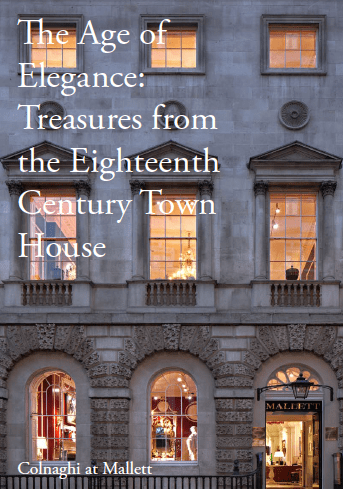 We are delighted to announce a special collaboration between Mallett and the world-renowned Old Masters dealer, Colnaghi. The exhibition will show the importance of the 18th-century town house as a site of display for the finest paintings and furniture. Set in the London showrooms of Mallett, the magnificent former palace of the Bishop of Ely built in 1770 to the designs of Sir Robert Taylor, this special event will show a series of rooms hung and decorated to recreate the splendours of a bygone era.
In the 18th century, the first in the hierarchy of rooms would have been the Saloon, containing the finest gilt furniture and hung with what Lord Chesterfield termed “capital pictures.” Among the works to be displayed in the Saloon of Ely House are Giovanni Antonio Pellegrini’s Sophinsba and Susannah and the Elders, which relate to an important series painted for nearby Burlington House. Still lifes will be featured in the dining room, while the Cabinet will be hung with smaller-scale pictures from the Northern Schools. The entrance hall will be dominated by an equestrian portrait by Louis Rolland Trinquesse, painted for presentation by the sitter Charles Grant to his
kinsman Sir James Grant.

Attributed to Sefferin Nelson (1739-97), after designs by Henry Holland, Giltwood Trophy, ca. 1795
Mallett will present a number of important pieces, including a pair of magnificent commodes, made by Mayhew and Ince for the home of Robert Birch in Donabate, Co. Dublin, and impaled with his coat of arms. Amongst other highlights will be a magnificent pair of giltwood settees in the manner of Thomas Chippendale, a set of twelve armchairs made by François Hervé and supplied to George John 2nd Earl Spencer in 1791, and a giltwood wall trophy attributed to Sefferin Nelson (1739-97) after designs by Henry Holland. This trophy was one of a series made for Carlton House, the former residence of George IV when Prince of Wales.
Carlton House will also be the subject of a special lecture given to accompany the exhibition by Desmond Shawe-Taylor, Surveyor of the Queen’s Pictures, on Sunday 30th June (please contact us for details).
The exhibition brochure is available here»
Enfilade Turns Four! Buy an Art Book!
To celebrate Enfilade’s fourth birthday (22 June), I’m encouraging readers to participate in the second annual Buy-an-Art-Book Day! This year I’m happy to announce a special, one-day discount from Ashgate. Many thanks for the kind support. — Craig Hanson

 At Ashgate or Lund Humphries, use the promotion code 287Y for a 20% discount on Saturday, June 22. The offer should work internationally, though please bear in mind U.S. timezones.
New Book | Architecture and Statecraft: Charles of Bourbon’s Naples
From Penn State University Press:
Robin L. Thomas, Architecture and Statecraft: Charles of Bourbon’s Naples, 1734–1759 (University Park: Penn State University Press, 2013), 248 pages, ISBN: 978-0271056395, $90.
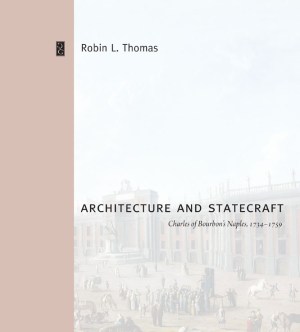 The eighteenth century was a golden age of public building. Governments constructed theaters, museums, hospices, asylums, and marketplaces to forge a new type of city, one that is recognizably modern. Yet the dawn of this urban development remains obscure. In Architecture and Statecraft, Robin Thomas seeks to explain the origins of the modern capital by examining one of the earliest of these transformed cities. In 1737 King Charles Bourbon of Spain embarked upon the most extensive architectural and urban program of the entire century. A comprehensive study of these Neapolitan buildings does not exist, and thus Caroline contributions to this new type of city remain undervalued. This book fills an important gap in the scholarship and connects Charles’s urban improvements to his consolidation of the monarchy. By intertwining architecture and sovereignty, Thomas provides a framework for understanding
how politics created the eighteenth-century capital.
Robin L. Thomas is Assistant Professor of Art History at The
Pennsylvania State University. (more…)










 Enfilade
leave a comment