Conference | 3D Scanning and Documentation
My hunch is that art historians whose work often overlaps with archaeology are more inclined to envision the future of the field as making important use of three-dimensional scanning technologies (with Representing Re-Formation, a three-year project producing digital reconstructions of some of the best Tudor monuments, serving as a fine example). Perhaps, however, we all should. Jack Hinton of the Philadelphia Museum of Art will be speaking at the upcoming Cambridge conference on Houdon’s Portraits of Benjamin Franklin. An abstract is available at the conference website. -CH
◊ ◊ ◊ ◊ ◊
3D Scanning and Documentation: Three Dimensional Artefacts from the Past, for the Future
St Catharine’s College, Cambridge, 10-11 December 2012
Registration due by 4 December 2012
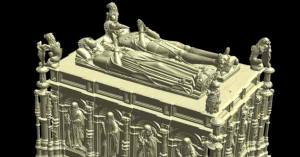 This timely symposium at St Catharine’s College, Cambridge, draws together scientists, art historians, conservators, historians and archaeologists, to discuss current and future developments in 3D scanning across many different fields, advances in scanning techniques and equipment, approaches to interdisciplinary research and the provision of 3D images and models on the web. A round table on day 2 will discuss key priorities for the future.
The conference has been convened by the art-historian Phillip Lindley, who directs one of the innovative Science and Heritage Programme projects, co-funded by the AHRC and EPSRC (heritagescience.ac.uk). Speakers will include David Arnold, Mike Howe, Anna Thirion, Laura Bartolome Riviras, Annemarie La Pensee, Marcos Rodrigues, Andrew Wilson, Stephen Gray, George Fraser, and others.
Five fully subsidised places are available for students, covering all accommodation and meals etc. Applications must be made to the Conference Organiser, Dr Phillip Lindley pgl1@le.ac.uk by Friday, 30 November. Funded students will be asked to write blogs on the conference.
◊ ◊ ◊ ◊ ◊
M O N D A Y , 1 0 D E C E M B E R
3D scanning and its uses in Art History and Archaeology
10.00 Registration and Coffee
11.00 Welcome
11.30 Phillip Lindley (University of Leicester), ‘Representing Re-Formation: The Search for Objectivity’
12.30 Lunch
1.30 Anna Thirion (Université Montpellier 3), ‘Proposal for a Digital Reconstruction of the Romanesque “Tribune” of Saint-Michel-de-Cuxa (France): Methodological Considerations’
2.15 Laura Bartolomé Roviras (Universitat Politècnica de Catalunya), ‘The Romanesque Portals of Santa Maria de Ripoll, Santiago de Compostela and Sant Pere de Rodes: From Modelling to Reconstruction’
3.00 Annemarie La Pensée (National Museums Liverpool), ‘The Non-Contact 3D Laser Scanning of Cultural Artefacts and Its Applications at Conservation Technologies, National Museums Liverpool’
3.45 Tea
4.00 Marcos A. Rodrigues (Sheffield Hallam University), ‘3D Scanning of Highly Reflective Surfaces: Issues on Scanning the Museums Sheffield Metalwork Collection’
4.45 George Fraser (University of Leicester), ‘Scanning in Space and Time’
5.30 Jack Hinton (Philadelphia Museum of Art), ‘Measuring Genius: 3D Scanning and Jean-Antoine Houdon’s Portraits of Benjamin Franklin’
7.00 Dinner
T U E S D A Y , 1 1 D E C E M B E R
Wider 3D scanning and digitisation projects
9.00 Mike Howe (British Geological Survey), ‘Laser Scanning 563 Million Years of Evolution: The JISC GB/3D Type Fossils Online Project’
9.45 Andrew S. Wilson (University of Bradford), ‘3D Bones: Digital Documentation of Skeletal Remains’
10.30 Paul Bryan (English Heritage), ‘Scanning the Stones’
11.00 Coffee
11.45 David Arnold (University of Brighton), ‘3D Documentation: Current Practice and Future Potential’
12.30 Lunch
1.45 Doug Pritchard (CyArk Europe Director), ‘The Scottish Ten Project: Laser Survey, 3D Visualisation and International Diplomacy’
2.30 Stephen Gray (University of Bristol), ‘The Challenges of Using Digital 3D Tools and Methodologies across Different Research Disciplines’
3.15 Tea and Round Table Discussion
Abstracts for the papers are available at the conference website.
Conference | Yorkshire Tourism in the Eighteenth Century
From York’s Centre for Eighteenth Century Studies:
Yorkshire Tourism in the Eighteenth Century
University of York, King’s Manor, 8 December 2012

J.M.W. Turner, Bolton Abbey, Yorkshire, on the Wharfe
ca. 1798, watercolour on paper
◊ ◊ ◊ ◊ ◊
Travel for pleasure or health in Britain and Ireland first became widely available to the affluent middling classes in the eighteenth century. For much of the period 1700-1830, Britain was at war with at least one of its continental neighbours; possibilities for European travel were severely restricted, and tourism within Britain and Ireland flourished. What did this newly accessible and eagerly grasped freedom to roam mean to the domestic tourist; how did the pictorial and/ or textual representation of journeys or sites shape their sense of themselves or of the country in the crucial period of its transition to becoming a modern and united kingdom?
The workshop is a follow-up to last year’s successful event, The Grand Tour in Britain and Ireland. Each speaker will consider an image or series of images, a short text or extracts from a longer piece, and offer a brief exploration of the possibilities of this material before opening the floor to discussion.
P R O G R A M M E
• Ann-Marie Akehurst (York), ‘Broken Stones, Decayed Buildings, and Old Rubbish’: Genealogy of Place, Imagination, and Identity in Early Modern York(shire)’
• John Bonehill (Glasgow), ‘Fairfaxiana: J.M.W Turner at Farnley’
• Oliver Cox (Oxford), ‘Back in the Summer of (17)69: Domestic Tourism and the Yorkshire Petition’
• Mary Fairclough (York), ‘Infidel Missionaries: Robert Taylor and Richard Carlile in Leeds’
• Harriet Guest (York), ‘A Trip to Scarborough’
• David Higgins (Leeds), ‘The Wordworths Visit Yorkshire’
• Emma Major (York), ‘Sibyl, Yorkshire, and the Two Nations’
The registration fee for the day is £12 (£5 for students and unwaged). To register, please email cmb14@york.ac.uk.
Call for Papers | Connected Histories of Empire
Connected Histories of Empire
University of Bristol, Centre for the Study of Colonial & Postcolonial Societies, 15-16 July 2013
Proposals due by 14 January 2013
Over the last two decades, scholars have begun to characterise the British Empire as a complex patchwork of interacting and dynamic agencies, rather than as a homogenous monolith. As a result, the traditional spatial framework based on a stable division between the metropole and the periphery seems increasingly outmoded. Instead, historians, literary critics, scholars of globalisation, and philosophers have been writing about the webs, networks, and circuits in which people, objects, and ideas moved. This conference will interrogate the idea of an empire of connections, considering the possibilities opened up by thinking in terms of global interaction, as well as the challenges of incorporating the myriad interconnections of empire into coherent historical narratives.
The conference is the culmination of a year of events at the University of Bristol which have focused particularly on the memorialisation and commemoration of the British Empire. As scholars have begun to uncover the intricately woven interconnections of empire, a central concern of the conference will be to consider how this might influence how empire has been, and is, remembered and memorialised in Britain and elsewhere.We would like to invite proposals for papers and panels that speak to the following broad themes:
· Commemoration and memorialisation of different imperial sites, events and phenomena
· Links between imperial port-cities/global cities
· Flows of people, goods (physical and cultural), and cash
· The movement, preservation and display of imperial artefacts and archives
· Imperial networks and imperial careering
· Imperial audiences and public spheres
· Links between global history and imperial history
We would like to encourage broad discussion of connections and comparisons between different modern empires: proposals need not be restricted to the history of the British empire. We would also welcome papers from a range of academic disciplines. To apply, please send a 250-word abstract to the organisers at connectedhistoriesofempire@yahoo.co.uk by 14 January 2013.
Conference Organisers
History: Emily Baughan, Robert Bickers, Peter Coates, Tim Cole, Simon Potter, Jonathan Saha, and Rob Skinner
Hispanic, Portuguese and Latin American Studies: Matthew Brown and Joanna Crow
English: John Lee
Archaeology and Anthropology: Mark Horton
Exhibition | Laurent Pécheux: A French Painter in Italy
Exhibition press release from the Musée des Beaux-Arts de Dole:
Laurent Pécheux: A French Painter in the Italian Enlightenment
Musée des Beaux-Arts de Dole, 27 June — 30 September 2012
Musée des Beaux-Arts de Chambéry, 24 October 2012 — 20 January 2013
Curated by Sylvain Laveissière with Sylvie de Vesvrotte and Anne Dary
 Rome au XVIIIe siècle : foyer artistique fécond où l’Europe entière vient s’instruire, admirer, mais aussi créer. L’Antique, exhumé, restauré, collectionné, est l’objet d’approches nouvelles avec Piranèse, défenseur de la création étrusque et romaine, et Winckelmann, théoricien du « beau idéal » dans l’art grec. Les deux peintres les plus en vue sont l’allemand Anton Raphaël Mengs (1728-1779), et Pompeo Batoni (1708-1787), le portraitiste obligé des jeunes lords accomplissant leur « Grand Tour » d’Europe. Arrivé de Lyon à Rome en 1753, Laurent Pécheux est d’emblée en contact étroit avec ces deux maîtres éminents : Mengs qui le conseille, et Batoni avec lequel il sera associé pour certaines commandes. Il s’affirme comme l’un des représentants les plus accomplis de la peinture d’histoire romaine, au moment
où s’élabore ce qu’on devait plus tard nommer le Néoclassicisme.
Carrière exceptionnellement riche que la sienne. Après avoir travaillé vers 1757 pour un lord écossais, puis pour des couvents et des particuliers de Lyon, sa ville natale, il est reçu à la prestigieuse Académie romaine de Saint-Luc en 1762. Il est bientôt appelé à Parme en 1765 pour y portraiturer avec succès la future reine d’Espagne, et les plus grandes familles romaines lui confient les plafonds de leurs palais urbains (Borghèse, Barberini). Il travaille pour des amateurs français, pour le grand-maître de l’ordre de Malte, le pape Pie VI, ainsi que la Grande Catherine. En 1777, il quitte Rome pour Turin, où le roi de Piémont-Sardaigne, Victor Amédée III, l’a choisi comme premier peintre et directeur d’une Académie tombée en léthargie. Son activité de peintre de cour, qui lui vaut de décorer le palais royal de Turin, ne l’empêche pas d’assurer de prestigieuses commandes privées, tel le plafond de la salle du Gladiateur à la Villa Borghèse à Rome, dont la décoration est la plus fameuse entreprise picturale de l’époque.
Il n’a suscité jusqu’à présent aucune exposition monographique. Les villes de Dole et Chambéry possèdent un ensemble remarquable de ses oeuvres. A Dole se trouve un cycle de douze tableaux sur la vie du Christ commandé pour la collégiale et récemment restauré, dont huit esquisses sont conservées au musée des Beaux-Arts. L’exposition présente 115 oeuvres, prêtées par des collections publiques et privées françaises ainsi qu’italiennes, et sera accompagnée d’une importante monographie. Celle-ci étudie, au-delà des oeuvres exposées, l’ensemble de la production de cet artiste aux dons multiples, l’un des derniers de sa stature qui restaient à découvrir.
◊ ◊ ◊ ◊ ◊
From Dessin Original books:
Catalogue: Sylvain Laveissière, Sylvie de Vesvrotte, Vittorio Natale, Bénédicte Gaulard, Laurent Pécheux (1729-1821): Un peintre français dans l’Italie des Lumières (Silvana, 2012), 192 pages, ISBN: 978-8836623174, 28€.
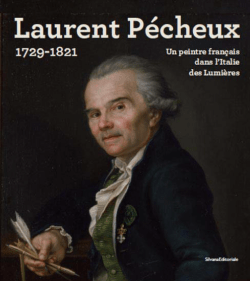 Publié à l’occasion de l’exposition des musées des Beaux-Arts de Dole et de Chambéry, cet ouvrage est le premier, depuis l’étude de Luigi Bollea parue en 1942, à être consacré à ce peintre, dont l’importance commence seulement à être reconnue.
D’origine Lyonnaise, Laurent Pécheux effectue l’ensemble de sa carrière en Italie, à Rome, puis à Turin, où il devient peintre officiel du roi de Piémont-Sardaigne. Sa carrière fut exceptionnellement riche : après avoir travaillé vers 1755 pour des clients lyonnais ou écossais, il est reçu à l’Académie romaine de Saint-Luc en 1762. Il est bientôt appelé à Parme en 1765 pour y portraiturer avec succès la future reine d’Espagne et les plus grandes familles romaines lui confient les plafonds de leurs palais. Il travaille également pour des amateurs français. En 1777, il quitte Rome pour Turin, où le roi de Piémont-Sardaigne l’a choisi comme premier peintre. Son activité de peintre de cour, qui lui vaut de décorer le palais royal de Turin, ne l’empêche pas d’assurer de prestigieuses commandes privées (par exemple : plafond de la salle du Gladiateur à la villa Borghèse, le plus fameux ensemble décoratif de Rome à l’époque ; suite de douze grands tableaux de la Vie du Christ pour la collégiale de Dole, auxquels une restauration exemplaire vient de rendre leur éclat et plusieurs chefsd’oeuvre conservés à Chambéry : Mort d’Epaminondas, Vénus, Narcisse, etc.). Cet ouvrage étudie, au-delà des oeuvres exposées, l’ensemble de la production de cet artiste aux dons multiples, l’un des derniers de sa stature qui restaient à découvrir.
◊ ◊ ◊ ◊ ◊
Didier Rykner reviewed the exhibition for The Art Tribune (21 August 2012) . . .
An artist from Lyon who spent most of his career in Italy, first Rome then Turin where he became official painter to the King of Piemonte-Sardegna, Laurent Pécheux is however not very well known outside of the restricted circle of art historians. The first retrospective highlighting his oeuvre, organized by the Musée des Beaux-Arts in Dole, which will then travel to Chambéry, now reveals a first rate artist, a pioneer of European Neo-Classicism though he maintained, in certain works, a Baroque spirit or even, if we adopt the term now used for some paintings corresponding to the second half of the 19th century, “Neo-Baroque” . . .
The full review (in English or French) is available here»
Seminars and Lunches at The Paul Mellon Centre
Research Events at The Paul Mellon Centre for Studies in British Art
London, Spring 2013
The spring of 2013 will see the launch of an exciting new programme of research events at the Centre.
The first of a seasonal series of five, fortnightly research seminars will be given by distinguished historians of British art and architecture. These research seminars, which will take place on Wednesday evenings, are intended to showcase original and stimulating research in all areas of British art and architectural history. They will take the form of hour-long talks, followed by questions and drinks, and are geared to scholars, curators, conservators, art-trade professionals and research students working on the history of British art. We are pleased to announce that the papers given in this first series of research seminars will be delivered by members of The Paul Mellon Centre’s Advisory Council.
The spring programme of events will also include a series of five research lunches, geared to doctoral students and junior scholars working on the history of British art and architecture. These research lunches, which will normally take place on alternate Fridays, are intended to be informal events in which individual doctoral students and scholars will talk for half-an-hour about their projects, and engage in animated discussion with their peers. A sandwich lunch will be provided by the Centre on these occasions. We hope that this series, which we look forward to maintaining in the summer and autumn, will help foster a sense of community amongst PhD students and junior colleagues working in the field, and bring researchers from a wide range of institutions together in a collegial and friendly atmosphere.
In order to help us plan for these events, it is essential that all of those who intend coming to individual research seminars and research lunches email the Centre’s Events Co-ordinator, Ella Fleming, on efleming@paul-mellon-centre.ac.uk, at least two days in advance.
◊ ◊ ◊ ◊ ◊
Research Seminars, Wednesdays, 5.30-8.00
January 9 — Mark Hallett (The Paul Mellon Centre for Studies in British Art), ‘Point Counter Point: Sir Joshua Reynolds, Female Portraiture and the Great Room at Somerset House’
January 23 — Christine Stevenson (Courtauld Institute of Art), ‘Architectural Husbandry: ‘Rough Materialls’ and Tough Clients in Eighteenth-Century Britain’
February 6 — Caroline Arscott (Courtauld Institute of Art), ‘Colour as Lure and as Provocation: William Morris’s Tapestry, The Woodpecker’
February 20 — Michael Hatt (University of Warwick), ‘Edward Carpenter and the Domestic Interior’
March 6 — Paul Binski (University of Cambridge), ‘The Heroic Age of Gothic and the Metaphors of Modernism’
◊ ◊ ◊ ◊ ◊
Research Lunches, Fridays, 12.30-2.00
January 18 — Jonny Yarker (University of Cambridge), ‘Learning the Business of Painting in Early Eighteenth-Century Britain: The Example of Hamlet Winstanley’
February 1 — Esther Chadwick (Yale University), ‘Experiments in Liberty: Barry’s Phoenix of 1776’
February 15 — Cicely Robinson (University of York), ‘Reading Reconstructions: The National Gallery of Naval Art c.1839’
March 1 — Emily Mann (Courtauld Institute of Art), ‘Empire Builder: Christian Lilly in the Atlantic World 1688-1738’
March 8 — Carly Collier (University of Warwick), ‘Rediscovering Fresco Painting in Nineteenth-Century Britain’
Happy Thanksgiving
On this Thanksgiving Holiday (at least a holiday for Americans), I thought readers might enjoy a bit of history of the turkey in North America. Bonny Wolf recently reported on wild turkeys at National Public Radio for Weekend Edition Sunday (11 November 2012). The final sentences stood out for me:
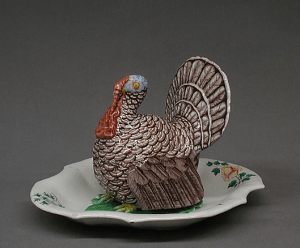
Tureen with Cover in the form of a Turkey, Florsheim Factory, Germany, ca. 1750, Tin-enameled earthenware, 6 x 10 inches (NY: Metropolitan Museum of Art)
Oddly, the ancestors of most supermarket turkeys are from Mexico. The Spanish took them to Europe in the 1500s, and the birds became popular all over the continent. When English settlers came to America, they brought turkeys back to the New World. Those are the turkeys that were developed into today’s commercial varieties, completing the turkey’s roundtrip.
The linked source for the claim comes from a 2010 article, “Ancient Mitochondrial DNA Analysis Reveals Complexity of Indigenous North American Turkey Domestication,” published in the Proceedings of the National Academy of Sciences of the United States of America. Fascinating. Global eighteenth-century indeed.
◊ ◊ ◊ ◊ ◊
I’m in no position to vouch for the scholarly credibility of the following article, but it’s also interesting. James Earl and Mary C. Kennamer and Ron Brenneman provide a “History of the Wild Turkey in North America,” for the NWTF Wildlife Bulletin (yes, of course, there’s a National Wild Turkey Federation) . . .
The Europeans were familiar with guinea fowl, and peafowl, but then their explorers found a New World bird similar to, but not exactly like, what they were used to seeing. Those early explorers often wrote of finding guinea and peafowl–type birds. Their descriptions though were later determined to be of a new bird soon known as the wild turkey. Even Linnaeus, who proposed the scientific name Meleagris gallopavo in 1758, used names reminiscent of the earlier confusion. The genus name Meleagris means “guinea fowl,” from the ancient Greco–Romans. The species name gallopavo is Latin for “peafowl” of Asia (gallus for cock and pavo for chickenlike). Linnaeus’ descriptions, however, seem to be based primarily on the domestic turkey imported to the U.S. by Europeans. He also described a Mexican subspecies from a specimen taken at Mirador, Veracruz, but which is probably extinct today. . .
Happy Thanksgiving!
-CH
New Title | Henry Raeburn: Context, Reception, and Reputation
From Edinburgh University Press:
Viccy Coltman and Stephen Lloyd, eds., Henry Raeburn: Context, Reception and Reputation (Edinburgh: Edinburgh University Press, 2012), 352 pages, hardback, ISBN: 978-0748654840, £90 ($145) / paperback, ISBN: 9780748654833, £30 ($50).
The first illustrated scholarly work devoted to the reception and reputation of Edinburgh’s premier Enlightenment portrait painter.
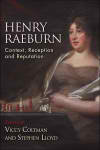 Sir Henry Raeburn (1756-1823) is especially well known in Scotland as the portrait painter of members of the Scottish Enlightenment. However, outside Scotland, the artist rarely makes more than a fleeting appearance in survey books about portraiture. Ten international scholars recover Raeburn from his artistic isolation by looking at his local and international reception and reputation, both in his lifetime and posthumously. It focuses as much on Edinburgh and Scotland as on metropolitan markets and cosmopolitan contexts. Previously unpublished archival material is brought to light for the first time, especially from the Innes of Stow papers and the archives of the dukes of Hamilton.
Birmingham Acquires Reynolds’s Portrait of Dr. John Ash
Press release from the Birmingham Museum & Art Gallery (2 October 2012) . . .

Sir Joshua Reynolds, Portrait of Dr John Ash, 1788 (Birmingham Museum & Art Gallery)
Director Ann Sumner today announces that Birmingham Museums has been successful in raising funds to acquire Sir Joshua Reynolds’ iconic portrait of Dr John Ash. The magnificent work, currently owned by Queen Elizabeth Birmingham Hospitals Charity, has been on loan to Birmingham Museum & Art Gallery since 1993. This acquisition secures the painting for the city, ensuring that future generations can continue to enjoy the masterpiece.
The portrait of Dr Ash by the celebrated eighteenth-century portrait painter Reynolds is valued at £900,000 but the Queen Elizabeth Birmingham Hospitals Charity has generously agreed to reduce this to £875,000 to enable Birmingham Museums to successfully complete the acquisition. Professor Sumner comments, “”We are delighted to announce that Birmingham Museums will be acquiring this significant work. The portrait is one of Reynolds’ late, great works, and its combined historic and artistic qualities make it one of the most important cultural icons of the city of Birmingham. The acquisition comes at a particularly opportune time for the city, and will be presented as part of a larger celebration of portraiture from Birmingham’s collections in 2013.”
Councillor Ian Ward, deputy leader of Birmingham City Council said: “This painting has real importance for the city’s heritage, and I’m delighted that Birmingham Museums have raised the necessary funds in addition to the lottery fund grant. I would like to thank everyone who played a part in securing this wonderful painting which the people of Birmingham – and visitors to our city – will be able to enjoy and appreciate.”
Birmingham Museums Trust was awarded a grant of £675,000 from the Heritage Lottery Fund and £100,000 from The Art Fund to support the acquisition. The Museums Trust has successfully raised a further £100,000 through grants from organisations including the Museum Development Trust, Public Picture Gallery Fund, the Friends of Birmingham Museum & Art Gallery, William A Cadbury Trust and John Feeney Trust.
Although Birmingham Museums Trusts has successfully raised the money to acquire the portrait, the public appeal will continue in order to raise the funds to undertake minor conservation works to the painting, not least having it reglazed with non-reflective glass so visitors can better appreciate the Reynolds’ masterpiece.
John Ash (1723–98) was an eminent physician who built up a successful medical practice from his house in Temple Row in Birmingham. Ash was a co-founder of the Birmingham General Hospital, and the portrait commissioned by the governors of the Hospital in honour of his services to the people of Birmingham. The first installment of 100 guineas (half payment) was paid to Reynolds by George Birch on behalf of the governors in April 1788. The eleven sittings with Ash are recorded in the artist’s pocket book between 28th April and 7th July the same year.
Billet-Doux from Nelson to Emma Hamilton Exceeds Estimates
Last week a letter sent from Lord Nelson to Lady Emma Hamilton during their affair sold for £20,000 — well above its estimate of £6,000-£8,000. The pre-sale press release from Bonhams (1 November 2012) . . .
Bonhams: Books, Maps, Manuscripts, and Photographs (Auction 20139)
London, 13 November 2012
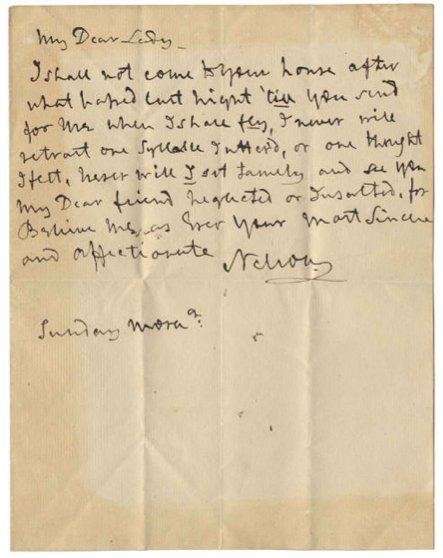 A lasting piece of evidence of the affair between Nelson and Lady Emma Hamilton is for sale with Bonhams in Knightsbridge, on 13th November. In the letter Nelson documents the turbulent love life between himself and his mistress, referring to a disagreement from the previous evening. He takes care to note his devotion to her and vows to defend her integrity amidst the scandal. At the time the letter has been roughly dated, Emma had given birth to their child and their affair was public. Despite Nelson’s wife’s demands, he refused to relinquish Emma as his mistress and eventually he left his wife. In the nineteenth century this was an unthinkable social affront and he aggravated the scandal further by choosing to live with Emma and their daughter upon his return from sea.
During the scandal Nelson urged Emma to destroy the letters sent between them, as he largely did. Emma, however, chose to keep her letters which were eventually published in 1814 contributing to her eventual downfall. Plagued by politics and social disgrace, their affair lasted only six years before Nelson’s death in 1805. After this tragic event, Emma was catapulted into a downward spiral and this letter is a delicate reminder of their love at the height of its devotion and is a rare living testament to their affair.
In June this year a marble chimneypiece from Lord Nelson and Lady Hamilton’s home sold for £25,000 at New Bond Street, and this note is a further glimpse into the private world behind the public façade of one of Britain’s great naval leaders.
◊ ◊ ◊ ◊ ◊
Post-sale press release from Bonhams (14 November 2012) . . .

Bonhams Auction 20139, 13 November 2012
A letter sent from Lord Nelson to Lady Emma Hamilton during their affair sold for twice its estimate today of £6,000-£8,000 for £20,000 at Knightsbridge in the Books, Maps and Manuscripts sale.
In the letter, dated c.1801, Nelson documents his turbulent love life with his mistress, referring to a disagreement from the previous evening. He outlines his devotion to her and vows to defend her integrity amidst the scandal of their affair. After Nelson’s death in 1805, Emma was at the mercy of society’s judgment without his protection and this letter is a rare living testament to their affair.
The top lot for the sale was a first edition of Charles Darwin’s The Origin of the Species (1859) which doubled its estimate of £15,000- £20,000 to sell for £45,650. As one of the most influential publications of the 19th century, this work marked a crucial turning point in modern science and this edition is a veritable collector’s item.
Darwin’s publication was followed closely by a first edition of Izaak Walton’s The Compleat Angler (1653). This work sold for £37,250 and is a very good copy of the most famous work in angling literature. The work is a unique celebration of angling and reflects Walton’s own desires to live a contemplative life.
Postdoctoral Fellowship in ‘Spatial Art History’
ARTL@S Postdoctoral Fellowship in ‘Spatial Art History’
École normale supérieure, Paris, 1 September 2013 — 31 August 2015
Applications due by 7 January 2013
The École normale supérieure (Paris), the LabEx TransferS, and ARTL@S (a digital humanities project sponsored by the Agence Nationale pour la Recherche) are pleased to announce a two-year postdoctoral position in the field of Spatial Art History. The postdoctoral fellow will participate in the activities of ARTL@S (www.artlas.ens.fr) while developing an independent research project pertaining to related questions in this field. Through his or her involvement within the international and transdisciplinary ARTL@S team, the fellow will acquire valuable experience, gain expertise, and develop his or her academic network, thereby increasing potential career prospects within the international academic community.
Qualifications
The successful candidate will have a PhD in art history or in a related field (i.e. History, Geography, Sociology, etc…), received no earlier than 2008, and will specialize in issues related to geography of art, global art history, or cultural heritage in a transnational perspective. He or she may work on any region or period between the 18th and the 21st centuries; however, preference will be given to non-Western European and non-North-American projects, and/or world-art historical or global art-historical projects. Candidates are invited to propose research projects that can benefit from the tools ARTL@S has developed (quantitative and serial analysis, databases, geographical information systems (GIS), digital cartography). The right candidate will also demonstrate a keen interest in digital humanities, especially in databases and cartography.
While previous experience in these fields, along with web development and GIS, is not a prerequisite, basic knowledge and a willingness to acquire expertise in those areas is essential. The postdoctoral fellow will indeed have to work with the ARTL@S’ database, GIS interface and website.
Likewise, fluency in French is not required, but some basic knowledge and a commitment to learn French and become fluent while living in Paris is. Intensive courses can be taken by the successful candidate at École normale supérieure for free. (more…)










 Enfilade
2 comments