Postdoctoral Fellowship | Interacting with Print Research Group
From The Interacting with Print Research Group:
Postdoctoral Fellowship: Interacting with Print Research Group
McGill University and the University of Montreal, 2013-14
Applications due by 19 November 2012
The Interacting with Print Research Group at McGill University and the University of Montreal is seeking a postdoctoral fellow with interests in developing digital humanities methodologies for studying the print culture of eighteenth- and nineteenth-century Europe. Candidates may specialize in history, art history, literature or a related discipline, and should have their doctorate in hand by the start date. The ideal candidate has experience in both information design and computer programming; expertise in data visualization, text mining, and designing digital tools is especially desirable. A working knowledge of French is an asset.
Interacting with Print researches how print media interact with other media within a larger communicative ecology. One of our primary concerns is how digital interfaces will reorient an extant print-cultural heritage. The postdoctoral fellow will be an integral member of the team, developing his or her own research and working with team members to develop their projects.
Review of applications will begin on 19 November 2012 and continue until the position is filled. For further information, contact interactingwithprint@mcgill.ca. To apply, send cover letter, CV, and names of three referees to Prof Tom Mole at interactingwithprint@mcgill.ca
Rijks Studio Offers 125,000 Images Free of Copyright
After years of hearing that museums couldn’t provide high resolution reproductions of works in their collections because people might make t-shirts with them, we now learn that the Rijkmuseum is inviting us to do precisely that . . . and more. -CH
◊ ◊ ◊ ◊ ◊
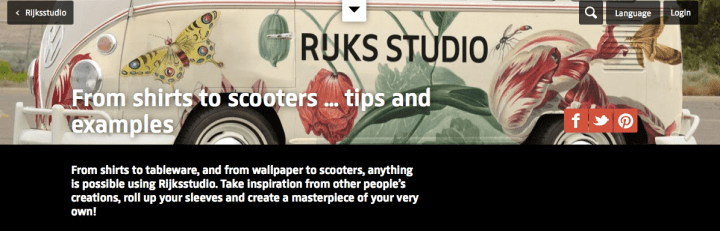
As a prelude to its reopening 13 April 2013, one of the world’s leading museums, the Rijksmuseum in Amsterdam, will launch Rijks Studio, a ground-breaking new online presentation of 125,000 works in its collection. Rijks Studio invites members of the public to create their own masterpieces by downloading images of artworks or details of artworks in the collection and using them in a creative way. The ultra high-resolution images of works, both famous and less well-known, can be freely downloaded, zoomed in on, shared, added to personal ‘studios’, or manipulated copyright-free. Users can have prints made of entire works of art or details from them. Other suggestions for the use of images include creating material to upholster furniture or wallpaper, or to decorate a car or an iPad cover for example.
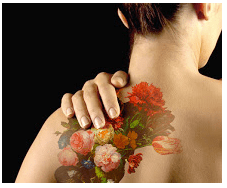 To celebrate this digital milestone, the Rijksmuseum is asking leading international artists, designers and architects to become pioneers of Rijks Studio by selecting one work from the collection and using it creatively to create a new artwork. These will be released in the run up to the reopening of the museum. The first work to be unveiled, by Droog Design, is a tattoo inspired by a flower painting in the collection called Still-Life with Flowers by Jan Davidszn. de Heem and Rachel Ruysch from the 17th century.
Taco Dibbits, Director of Collections, said: “The Rijksmuseum is a museum for and of everyone, and with the launch of Rijks Studio we are excited to share the extensive collection with art lovers around the world using the latest digital technology. We created Rijks Studio based on the belief that the collection of the Rijksmuseum belongs to us all. The collection inspires, we want to unleash the artist in everyone.”
Conference | Art and Its Afterlives
Conference program from The Courtauld:
Fourth Early Modern Symposium: Art and Its Afterlives
The Courtauld Institute of Art, London, 17 November 2012
Organised by Laura Sanders and Francesca Whitlum-Cooper
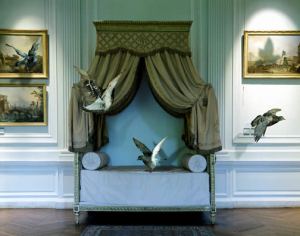
Karen Knorr, The Green Bedroom of Louis XVI. © Eric Franck Fine Art
Art and Its Afterlives aims to address the ways in which the work of art continues to resonate after its creation. While much art history takes as its focus the initial facture of the work of art, this one-day symposium explores what happens to early modern art after the moment of its making. How did early modern works continue to be created in their display, preservation, and reception from the moment of their creation on? Papers will examine how art is shaped by its afterlives – whether these collect, curate, cut up, cut out, copy or correct it – and the ways in which art both persists and changes through time as a material object, a field of generative meaning, and a subject of debate and interpretation.
The question of afterlife is an pertinent topic for art history in general, where the work of art is uniquely tied to a particular assemblage of materials which inevitably change with time, rendering fraught questions of preservation, the presence or possibility of copies, the idea of original state, and how a work of art is staged for a viewer. Less material but no less concrete, the interactions between the work and the viewer, and between the work and the its assumed referent are not stable but open to change. The question of afterlife is particularly relevant for the early modern period, when emergent art markets and cultures of collection allowed not only the circulation of artworks, but also their appropriation and adaptation. Taking as its point of departure Bourdieu’s encouragement to investigate ‘not only the material production of the work but also the production of the value of the work’, this symposium privileges the afterlives of art and the alternative histories they present. Art and Its Afterlives is the fourth symposium of The Courtauld’s Early Modern Department.
Book online or send a cheque made payable to ‘Courtauld Institute of Art’ to: Research Forum Events Co-ordinator, Research Forum, The Courtauld Institute of Art, Somerset House, Strand, London WC2R 0RN, stating the event title: Art and Its Afterlives. For further information, email ResearchForumEvents@courtauld.ac.uk
◊ ◊ ◊ ◊ ◊
P R O G R A M M E
9.00 Registration
9.30 Introduction – Laura Sanders and Francesca Whitlum-Cooper (The Courtauld Institute of Art)
9.40 Session 1: Finding the Original
• Stephanie Knöll (Heinrich-Heine-Universität Düsseldorf): Holbein’s Images of Death and the Construction of Authorship and Authenticity in Nineteenth Century Art Historical Discussions
• Antonia Putzger (Technische Universität, Berlin): What (or Who) Makes an Original? Maximilian I of Bavaria as Collector and Creator of German Renaissance Art
• Gabriella Szalay (Columbia University, New York): Wipe It With a Damp Cloth! Restoring Early Netherlandish Paintings
11.00 Coffee/Tea
11.30 Session 2: Contexts of Reception
• Christina Ferando (Columbia University, New York): From Altarpiece to Masterpiece: Titian’s ‘Long Unnoticed’ Assumption of the Virgin
• Giulia Weston (The Courtauld Institute of Art): Salvator Rosa’s British Afterlives
• Edward Houle (McGill University, Montreal): The Petits Appartements at Versailles and the Vicissitudes of Heritage
• Owen Hopkins (Royal Academy of Arts): Hawksmoor in the Twentieth Century
13.10 Lunch
14.10 Session 3: Appropriation and Re-making
• Jason Nguyen (Harvard University, Boston): Translation, Illustration, and Transmutation: Authorship and Authority in Claude Perrault’s Les dix livres d’architecture de Vitruve (1673)
• Amy Concannon (Tate Britain, London): Cut, Paste, and Copy: Hubert Robert, François Boucher and the Culture of Appropriation Amongst French Artists in the Eighteenth Century
• Heike Zech (Victoria and Albert Museum, London): From Sacred to Profane? The Afterlife of a Seventeenth Century Augsburg Masterpiece
• Sian Bowen (Northumbria University, Newcastle): Capturing the Ephemeral: Materiality and Transience Through Drawing Practice
15.50 Coffee/Tea
16.20 Session 4: Display and Preservation
• Anna Bortolozzi (National Museum, Stockholm): Notes from the Underground: The Afterlife of Old St. Peter’s in the Vatican Grottos and Other Stories
• Noémie Etienne (Barnard College, New York): From the Wall to the Museum: Material and Symbolic Transformations of Paintings in Paris in the Eighteenth Century
• Ronit Milano (Ben-Gurion University, Israel): On Trojan Dogs and Long-Lasting Artistic Quarrels: The Case of Jeff Koons in Versailles
17.45 Reception
Call for Papers | Death: The Cultural Meaning of the End of Life
From LUCAS:
Death: The Cultural Meaning of the End of Life (LUCAS Graduate Conference)
Leiden University Centre for the Arts in Society, 24–25 January 2013
Proposals due by 15 November 2012
Keynote Speakers: Joanna Woodall (Courtauld Institute of Art) and Rosi Braidotti (University of Utrecht)
Death is a defining factor in the explorations of our subjectivity, art, history, politics, and many other aspects of our social interactions and perceptions of the world. In the modern age, conceptions of death have continued to shift and evolve, yet our perceptions are still fueled by an instinctive fear of the end of life.
In recent decades, we have rebelled against the threat of death by inventing new technologies and medicines that have drastically increased our life expectancy—diseases and disabilities are gradually disappearing. Some believe that one day we will completely conquer the aging process, and ultimately death. Life can now be seen as a new form of commodity, a material object that we can trade, sell, or buy.
Despite our attempts to shut-out death or overcome its inevitability, the end of life has remained a visible and unavoidable aspect of our society. From antiquity to the present day, perceptions of death have been represented through various different mediums: visual culture, art, literature, music, historical writing, cinema, religious symbols, national anniversaries, and public expressions of mourning.
This conference aims to explore how death has been represented and conceptualized, from classical antiquity to the modern age, and the extent to which our perceptions and understandings of death have changed (or remained the same) over time. The wide scope of this theme reflects the historical range of LUCAS’s (previously called LUICD) three research programs (Classics and Classical Civilization, Medieval and Early Modern Studies and Modern and Contemporary Studies), as well as the intercontinental and interdisciplinary focus of many of the institute’s research projects. (more…)
Conference | Global Commodities Conference
The early registration deadline has been extended until Monday, 5 November. From Warwick:
◊ ◊ ◊ ◊ ◊
Global Commodities: The Material Culture of Early Modern Connections, 1400-1800
Global History and Culture Centre, University of Warwick, 12-14 December 2012

Tilly Kettle (1734-1786), “Portrait of Two English Boys in Asian Clothing,” 1780s (Peabody Essex Museum)
Material culture created and was created by connections with ‘others’ in the era before the global exchange of people, political ideas and economic processes intensified through industrialization. The exchange of goods and the culture of commodities played central roles in forging enduring and transformative global connections.
This conference seeks to explore how our understanding of early modern global connections changes if we consider the role material culture played in shaping such connections. In what ways did material objects participate in the development of the multiple processes often referred to as ‘globalisation’? How did objects contribute to the construction of such notions as hybridism and cosmopolitanism? What was their role in trade and migration, gifts and diplomacy, encounters and conflict? What kind of geographies did they create in the early modern world? What was their cultural value vis-à-vis their economic value? In short, we seek to explore the ways in which commodities and connections intersected in the early modern world.
This conference wishes to bring together scholars with expertise across a range of disciplines and geographic areas that came into direct contact in the early modern period, by which we mean the world between ca. 1400 and 1800. Of course many areas of the humanities and social sciences have expanded their enquiries in disciplinary and spatial terms, but truly global and interdisciplinary approaches still have to rely heavily on dialogue and collaboration between scholars. We hope that this conference will present an opportunity to bring together scholars from very different geographical and disciplinary backgrounds, who all share an interest in exploring commodities in global contexts.
◊ ◊ ◊ ◊ ◊
W E D N E S D A Y , 1 2 D E C E M B E R 2 0 1 2
13.00 Registration
14.00 Welcome by Anne Gerritsen and Giorgio Riello (University of Warwick)
14.15 Plenary Lecture 1
Dana Leibsohn (Smith College), “Trans-Atlantic, Trans-Pacific: Oceanic Exchange and the Visual Cultures of Colonial Latin America.”
15.15 Coffee Break
15.45 Session 1 | Mixed Media
Chair: Glenn Adamson (V&A Museum)
• Christine Guth (Royal College of Art / V&A Museum), “Towards a Global History of Shagreen”
• Tim Stanley (V&A Museum), “Gloss Goes Global”
• Anna Wu (V&A Museum), “Chinese Painted Wallpaper: The Life-cycle of a Global Aesthetic”
15.45 Session 2 | Consuming Conflicts and Resistance in Iberian Empires
Chair: Bartolomé Yun-Casalilla (European University Institute, Italy and Universidad Pablo de Olavide, Spain)
• Bethany Aram (Universidad Pablo de Olavide), “The Fortunes of Caribbean Hides and Ginger, c. 1559-1650”
• Igor Pérez Tostado (Universidad Pablo de Olavide), “Attraction and Resistance: The Borderline Effects of New Atlantic Products on the Island of Hispaniola”
• Rebecca Earle (University of Warwick), “Indigenous Reactions to Old-world Foods from Rejection to Adoption”
17.30 Reception
T H U R S D A Y , 1 3 D E C E M B E R 2 0 1 2
9.00 Session 3 | Migration and Material Culture: Confronting East India Company Service
Chair: David Garrioch (Monash University, Australia)
• Helen Clifford (University of Warwick and University College London), “Objects, Movement and Concepts of Home in Eighteenth-Century England”
• Kate Smith (University College London), “Arranging Home and Understanding India in East India Company Households”
• Stephanie Barczewski (Clemson University), “Commodities, Collecting and Cosmopolitanism: Three Discourses of Empire in British Country Houses, 1750-1800”
• Ellen Filor (University College London), “Books as Global Objects: Reading Communities in India and Scotland”
9:00 Session 4 | Gifts, Luxuries and the Diplomacy of Material Exchange
Chair: Marta Ajmar (V&A Museum)
• Antonia Gatward Cevizli (Sotheby’s Institute of Art), “Portraits, Turbans and Cuirasses: Material Exchange between Mantua and the Ottomans in the 1490s”
• Corinne Thepaut-Cabasset (V&A Museum), “En Route: The Travels of Royal Gifts and Luxury Goods in the Seventeenth and Eighteenth Centuries”
• Claudia Swan (Northwestern University), “Birds of Paradise for the Sultan: The Exchange of Rarities in the Early Modern World”
• Michael Talbot (School of Oriental and African Studies, London), “The Culture of Diplomatic Gift-Exchange in Eighteenth-Century British-Ottoman Relations”
• Nuno Senos (CHAM, Universidade Nova de Lisboa), “The Empire in the Duke’s Palace. Portugal, c. 1563”
11.00 Coffee Break
11.30 Plenary Lecture 2
Michael North (University of Greifswald), “European and Chinese Art Objects in the Indian Ocean: Cross Cultural Connections”
12.30 Lunch
14.00 Session 5 | Immaterial Commodities: Exchanging Knowledge in English Networks Overseas, 1590-1650
• Edmond Smith (Magdalene College, University of Cambridge), “A Global Exchange: Trading Experience in the East India Company”
• John Gallagher (Emmanuel College, University of Cambridge), “Languages of Exchange: The Role of Communication in Establishing International Trade”
• Richard Blakemore (Selwyn College, University of Cambridge), “Ships and Seafaring: Understanding the Infrastructure of Maritime Trade”
14:00 Session 6 | Precious Commodities: Jade, Diamonds and Coral
• Yulian Wu (Stanford University), “Seeking Black Jade from China’s New Territory: Technology, Musical Instrument, and the Construction of Qing Empire in Eighteenth-Century China”
• Karin Hofmeester (International Institute of Social History, Amsterdam), “Diamonds and Global Connections in the Early Modern Period”
• Pippa Lacey (University of East Anglia), “The Coral Network: The Trade of Red Coral to the Qing Imperial Court in the Eighteenth Century”
15.30 Coffee Break
16.00 Session 7 | Bad Habits: Tobacco, Coffee and Sugar
Chair: Ghulam Nadri (Georgia State University and LSE)
• Matt Romaniello (University of Hawai‘i at Mānoa), “Influencing Habits of Consumption: Tobacco in the Russian Empire”
• Louise Carson (University of Nottingham), “Outlandish Confections’: Exoticism, Sugar and Power at the Court of Henry VIII”
• Christine Fertig and Ulrich Pfister (Universität Münster), “Coffee, Mind and Body: Stories of Globalization and Consumption: Hamburg in the Eighteenth Century”
• Urmi Engineer (Colby College, Waterville, ME), “Sugar Revisited: Sweetness and the Environment in the Early Modern World”
16.00 Session 8 | Rarities World Wide: Early Modern Objects between the Global and the Local
• Mariana Françozo (Leiden University), “The Case of Brazilian featherwork in Northern European Court Festivals”
• Anna Grasskamp (Leiden University), “Foreign Objects as In-Betweens: The Case of Coral in Ming Dynasty China and Renaissance Europe”
• Ching-fei Shih (National Taiwan University), “The African Ivory in the Qing Court and Canton”
• Ulrike Körber (University of Evora, Portugal), “A Special Production for the Portuguese, Involving Different Manufacturing Centres, and Even Asian Lacquer Coatings”
F R I D A Y , 1 4 D E C E M B E R 2 0 1 2
9.00 Session 9 | Material Encounters between Local and Global
Chair: Luca Molà (European University Institute, Italy)
• Paula Bessa (University of Minho, CITCEM/Portugal), “Eastern Algarve Parish Churches and the Empire”
• Kévin Le Doudic (University of South-Brittany / European University of Brittany), “Encounter Around the Object: French and Indian Consumers in the Eighteenth-Century Pondicherry”
• Nadia Fernandez-de-Pinedo (Universidad Autónoma de Madrid), “Dress, Eat and Show Off in the City: Consumption in Madrid, c. 1750”
9.00 Session 10 | Material and Artistic Exchange
Chair: Adam Clulow (Monash University, Australia)
• Natasha Eaton (University College London), “Art, Colour and the Mana of the Commodity in Britain and India”
• Christina Hellmich (de Young Museum, San Francisco), “ ‘… a Royal Robe…’ and its Journey from the Hands of a Unangan Seamstress to a Hawaiian King and a New England Sea Captain in the early Nineteenth Century
• Sabitha Thekke Prakkottuthody (University College London), “Globalizing the Souvenir: The Album as Commodity in Colonial India”
10.30 Coffee Break
11.00 Session 11 | Objects and Colonial Encounters in the Early Modern World
Chair: Christina Anderson (Oxford University)
• Susan Broomhall (University of Western Australia), “Beads, Mirrors and Tobacco Boxes for Giants, Gold and Water: The Dutch East India Company’s Aspirational Encounters with Indigenous Peoples in Australia”
• Jacqueline Van Gent (The University of Western Australia), “Cultural Geographies, Elite Consumption and the Swedish East India Company”
• Mårten Snickare (Stockholm University), “Displaying the Others: Non-European Objects at Skokloster Castle”
11.00 Session 12 | Tradesman’s Objects: Goods, Sailors and Traders
Chair: Karina Corrigan (Peabody Essex Museum)
• Eugénie Margoline-Plot (University of South-Britanny / European University of Brittany), “Appropriating a Part of Asia in Brittany: The Sailor of the French East India Company, a Middleman between Bretons and Asian Commodities in the Eighteenth Century”
• Caroline Mawer (Independent Scholar, London), “An Armenian Merchant and the Vasa Tapestries”
• Marieke Hendriksen (Leiden University), “Treasure Troves: Eighteenth-Century Ship’s Surgeons’ Medicine Chests”
12.15 Lunch
13.15 Session 13 | Global Objects from Enlightenment to Revolutions
• Ashli White (University of Miami), “The Material Culture of Counterrevolution in the Late Eighteenth-Century Atlantic”
• Kee Il Choi Jr (New York), “Father Amiot’s Cup, Henri-Léonard Bertin and Fashioning ‘Antiquity’ at Sèvres”
• Richard Flamein and Philippe Romanski (Université de Rouen), “‘Voltaire en son meuble’: Material Economics in the Age of Enlightenment”
13.15 Session 14 | Textiles, Trade and the Material Culture of Appearances
Chair: Evelyn Welch (Queen Mary College)
• Colette Establet (IREMAM, Aix en Provence), “Indian textile consumption in the Ottoman Empire at the End of the Seventeenth Century ”
• Suraiya Faroqhi (Bilgi University, Istanbul), “All over the Ottoman Central Provinces: The Acem Tüccarı in the Early Eighteenth Century”
• Kirsten Toftegaard (Designmuseum, Copenhagen), “Lost in Translation – A Chinese Interpretation of a European Motif”
14.45 Coffee Break
15.15 Plenary Lecture 3
Pamela Smith (Columbia University), “Itineraries of Matter and Knowledge in the Early Modern World”
16.15 Final Discussion
Chairs: Anne Gerritsen and Giorgio Riello
◊ ◊ ◊ ◊ ◊
If you have any further questions, please contact: Anne Gerritsen and Giorgio Riello at: ghcc.conferences@warwick.ac.uk
Organising Bodies and Sponsors
The Arts and Humanities Research Council
The AHRC ‘Global Commodities’ International Network
The Warwick Global History and Culture Centre
The ERC ‘Europe’s Asian Centuries’ Project
Adam Matthews Publishing
The Economic History Society
The University of Warwick
The Victoria & Albert Museum
Bilgi University, Istanbul
Peabody Essex Museum
New Title | Art & Visual Culture 1600–1850: Academy to Avant-Garde
From The Open University:
Emma Barker, ed., Art & Visual Culture 1600–1850: Academy to Avant-Garde (London: Tate Publishing, 2012), 384 pages, ISBN: 9781849760966, $32.
Part 1: City and Country
Part 2: New Worlds of Art
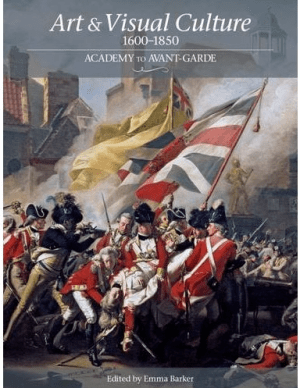 This investigates the art and visual culture of the period from roughly 1600 to 1850. This was the period in which a distinctly modern art world began to appear, with its own institutions and associated ideas about art and artists. The book assesses the significance and value of the labels traditionally used to define the art of this period, notably Baroque, Neo-classical and Romantic. In addition, it explores the ways in which art and visual culture were shaped by the ruling elites of different European countries, as well as considering the impact of socio-economic change and growing engagement with the world beyond Europe.
The first part addresses the period from around 1600 to about 1760. Rather than attempting a broad survey of artistic developments, this part of the book highlights the way in which the relationship between the country and the city helped to shape different cultures of visual representation in different national contexts. Material covered includes: the embodiment of religious power in the restructuring of Rome by Bernini; seventeenth-century Dutch painting and the thorny problem of realism; the development of urban London; and the new culture of British landscape parks.
The second part is concerned with the period from around 1760 to 1850. It explores some of the ways in which art and other visual forms responded to changing societies and contributed to the emergence of a recognisably modern world. It covers: the emergence of public exhibitions in Britain and France and the codification of genres and types of art; the representation of the body in Canova’s sculpture; the meeting of western travellers with Pacific islanders, as reflected in images; and the emergence of the Romantic ‘genius’.
Exhibition | Loutherbourg: Torments and Chimeras
From the Musée des Beaux-Arts in Strasbourg:
Philippe-Jacques de Loutherbourg: Torments and Chimeras
Musée des Beaux-Arts, Strasbourg, 17 November 2012 — 18 February 2013
Curated by Dominique Jacquot and Olivier Lefeuvre
 This exhibition in his native city marks the bicentenary of the death of the “Anglo-French” painter Philippe-Jacques de Loutherbourg. It will be the first retrospective of this artist in France and the only one since the exhibition which took place in London in 1973.
With more than a hundred works, both paintings and works on paper, from public and private collections in France, Britain and the United States, it aims to show all the facets of his art. In Paris, the artist was successful at a very early age, from 1763, and was acclaimed by Diderot, who regarded him as a prodigy. In 1771 he settled in London and adapted perfectly to the English environment. He became a member of the Royal Academy, had his portrait painted by Gainsborough and was acknowledged by his peers and the public alike as one of the most important painters of his time.
His private life was hectic. After working in Paris with the painter Casanova (the brother of the famous adventurer), he quickly fell out with him and, after a brief, stormy marriage, dropped everything to go and settle in London. There he gave up painting for a while, dispensing medical care by the “magical” laying on of hands, echoing the experiments of the famous Cagliostro, with whom he shared a brief friendship, and of Mesmer.
In London, Loutherbourg was in touch with the world of the theatre, the source of a fascinating aspect of his work. While he is known mainly for his pastorals and his landscapes, in which he at times depicts the perilous or sublime aspects of Nature, he was also a strikingly original historical painter, drawing his subjects from the Bible or from modern history, and his most memorable qualities are thus his versatility and great technical facility.
The approach of the exhibition is chronological, while keeping to certain thematic threads :
. Pastorals
. Shipwrecks
. Historical Painting (the Bible and Battles)
. English Landscapes
. Nature’s Perils
The artist’s graphic output is another of the revelations of this exhibition, which includes the considerable collection from the Strasbourg Prints and Drawings Cabinet.
An Alsatian by birth but with the talent of a European, Loutherbourg had the makings of a character from fiction. He embodied the Enlightenment while at the same time wholly prefiguring Romanticism.
Exhibition curators : Dominique Jacquot, Head Curator of the Strasbourg Fine Arts Museum, Olivier Lefeuvre, art historian.
Book Talk | Simon Werrett on Fireworks
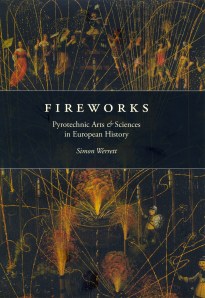 Simon Werrett, The History of Fireworks
Ealing Central Library, 8 November 2012
Simon Werrett will give talk on his book Fireworks: Pyrotechnic Arts and Science in European History at the Ealing Central Library on November 8, 2012 at 6:15pm. Enjoy a free glass of wine courtesy of Waterstones. Green Room, Ealing Central Library, Broadway Centre, Ealing W5 5JY. The event is free, but please book in advance at reading@ealing.gov.uk or in Ealing Waterstones.
New Title | Antiquarianism and Intellectual Life in Europe and China
From The University of Michigan Press:
Peter N. Miller and François Louis, eds., Antiquarianism and Intellectual Life in Europe and China, 1500-1800 (Ann Arbor: University of Michigan Press, 2012), 440 pages, ISBN: 978-0472118182, $65.
 This book is a project in comparative history, but along two distinct axes, one historical and the other historiographical. Its purpose is to constructively juxtapose the early modern European and Chinese approaches to historical study that have been called “antiquarian.” As an exercise in historical recovery, the essays in this volume amass new information about the range of antiquarian-type scholarship on the past, on nature, and on peoples undertaken at either end of the Eurasian landmass between 1500 and 1800. As a historiographical project, the book challenges the received—and often very much under conceptualized—use of the term “antiquarian” in both European and Chinese contexts. Readers will not only learn more about the range of European and Chinese scholarship on the past—and especially the material past—but they will also be able to integrate some of the historiographical observations and corrections into new ways of conceiving of the history of historical scholarship in Europe since the Renaissance, and to reflect on the impact of these European terms on Chinese approaches to the Chinese past. This comparison is a two-way street, with the European tradition clarified by knowledge of Chinese practices, and Chinese approaches better understood when placed alongside the European ones.
Peter N. Miller is Dean and Professor at the Bard Graduate Center. François Louis is Associate Professor at the Bard Graduate Center.
◊ ◊ ◊ ◊ ◊
This volume is the first to juxtapose the autochthonous traditions of antiquarianism of Early Modern Europe and Late Imperial China. Rather than asking only what the West might be able to learn about China, it self-consciously and quite successfully seeks to open up new perspectives on both sides of the comparison. It moreover breaks important ground in suggesting historically traceable links between evidential learning in China and European traditions of ‘Herodotean’ historiography. —Lothar von Falkenhausen, University of California, Los Angeles
This splendid collection of essays is at once a major addition to the literature on the history of scholarship in Western Europe, a burgeoning field in its own right, and a model effort at comparative cultural history . . . The collection as a whole sheds light on areas little known even to erudite scholars. —Anthony Grafton, Princeton University
Fellowship | Poulet Curatorial Fellowship at The Frick
From The Frick:
Anne L. Poulet Curatorial Fellowship 2013–15
The Frick Collection, New York
Applications due by 18 January 2013
The Frick Collection is an art museum consisting of more than 1,100 works of art from the thirteenth to the nineteenth century displayed in the intimate surroundings of the former home of Henry Clay Frick. The residence, with its furnishings and works of art, has been open to the public since 1935. It is considered one of the world’s most perfect museums; its sister research institution, the Frick Art Reference Library founded in 1920, is of equal distinction. The Library is an internationally recognized research library that serves as one of the world’s most complete resources for the study of Western art.
Position Summary
The Frick Collection is pleased to announce the availability of a two-year predoctoral fellowship for an outstanding doctoral candidate who wishes to pursue a curatorial career in an art museum. The fellowship will offer invaluable curatorial training and will provide the scholarly and financial resources required for completing the doctoral dissertation. Internationally renowned for its exceptional collection of Western European art from the early Renaissance through the end of the nineteenth century, The Frick Collection, complemented by the equally significant resources of the Frick Art Reference Library, offers a unique opportunity for object-based research. The fellowship is best suited to a student working on a dissertation that pertains to one of the major strengths of the Collection and Library.
The Anne L. Poulet Curatorial Fellow will have an opportunity to work with curatorial and educational staff on research for special exhibitions and on the permanent collection. Other curatorial training responsibilities include participation in the organization of the annual Symposium on the History of Art, a two-day event co-sponsored with the Institute of Fine Arts, New York University; the preparation, in coordination with a curator, of a focus exhibition around a work of art in the Collection; and participation in the daily administrative routines of a small museum. The Fellow will have a place of study, access to the collections and library, as well as introductions to New York City museums and libraries. Frick curators and conservation staff will be available for consultation on the dissertation. The Fellow will be expected to give a public lecture on his or her topic. The Fellow will divide his or her time between the completion of the dissertation and activities in the curatorial department.
Qualifications and Application Process
Applicants must be within the final two years of completing their dissertations. The Fellow will receive a stipend of $35,000 per year and a travel allowance. The term will begin in September 2013 and conclude in August 2015.
Applications must include the following materials:
· A cover letter explaining the applicant’s interest in the fellowship and his or her status in the Ph.D. program. The letter should include a home address, phone number, and email address
· An abstract, not to exceed three typed pages double-spaced, describing the applicant’s area of research
· A complete curriculum vitae of education, employment, honors, awards, and publications
· A copy of a published paper or a writing sample
· Three letters of recommendation (academic and professional)
Please submit application materials to pouletfellowship@frick.org. Letters of recommendation may be mailed directly to the address below. Please note that any additional materials sent by post must be submitted in triplicate to the following address:
Anne L. Poulet Curatorial Fellow Search
Office of the Chief Curator
The Frick Collection
1 East 70th Street
New York, NY 10021
The application deadline for the fellowship is January 18, 2013. Finalists will be interviewed. The Frick Collection plans to make the appointment in early April.
Benefits in Employment with The Frick Collection
The Anne L. Poulet fellow is considered a fulltime temporary employee for the duration of his/her fellowship and may access all benefits associated with fulltime employment status. Such as eligibility to participate in group life, health, and dental insurance plans. Employees contribute to the cost of their health insurance based on income level and the type of coverage they select. Other benefits include: short and long term disability insurance; employee contributed tax deferred annuity; flexible spending plans for health, dependent care and commuting costs; 13 paid holidays; and accrual of 12 vacation days the first year of employment (25 days second year). Additionally, The Frick Collection provides a dining service for all employees and volunteers.










 Enfilade
leave a comment