Call for Papers | The Louvre before the Louvre
From The Wallace Collection:
The Louvre before the Louvre: Artisans, Artists, Academies
The Wallace Collection, London, 5 July 2013
Proposals due by 15 January 2013

Pedestal clock, ca. 1712- 20. Attributed to André-Charles Boulle. Jacques-Augustin Thury, movement maker (Wallace Collection)
Now one of the world’s best-known museums, the Louvre was once a vast artistic and cultural centre of a different kind. The Louvre before the Louvre will delve into the fascinating but little known period of the Louvre’s history from 1643 to 1793, exploring the role this space played in the histories of art production and artistic sociability in early modern Paris.
Even before Louis XIV moved the Court from the Louvre to Versailles in 1682, the Louvre had already become the centre of artistic, creative, and intellectual energy in Paris. Artists and artisans of all trades – from watch-makers to history painters – were given lodgings and studio space in the same wings and corridors that accommodated cultural organs like the Menus Plaisirs du Roi (responsible for state festivities and spectacles), the royal printing press, and the royal academies (Painting and Sculpture, Architecture, Inscriptions, Science, and the Académie Française). As the palace expanded over the next two centuries, the Louvre complex (the building and surrounding streets) came to be dominated by this growing community of artists, artisans, men of letters, and their aristocratic patrons, inhabiting this space and living out their daily lives together.
The Louvre before the Louvre will reconstruct and re-evaluate this space of artistic sociability. As dust billowed and paint dripped in artists’ studios, theoretical debates were thrashed out in the academies, and groundbreaking technologies were designed in artisans’ workshops, the Louvre became a fertile ground for collaboration, the results of which are evident in many objects (e.g. by Boulle, Oppenordt, Oeben, Boucher, Oudry, Girardon, Coysevox, to name a few) now in the Wallace Collection where this conference will take place.
Seeking a more intimate understanding of the artistic and intellectual ‘neighbourhood’ of the Louvre and its effect on art and design in the period, we invite papers that explore the Louvre’s rich history, art, material objects, spaces, and social interactions during the 17th and 18th centuries. Suggested topics may include but are not limited to:
• Artistic and intellectual circles — The workings of the Royal Academies and their academicians
• Living in the Louvre — Artists’ logements/studios; social order and daily life; professional/social interactions; individual and collaborative practice
• Form and function of Louvre spaces — Key sites: Galerie d’Apollon, Salon Carré, Grande Galerie, theatres, chapels, etc.
• Patronage networks — Patrons and collectors in the Louvre
• Decoration and display — Furnishing and decoration by Louvre inhabitants; displays of collections; exhibitions
• Louvre experiences — Written and visual descriptions of life in the Louvre
• Finding boundaries — Where did the artistic communities of the Louvre begin and end? How did one ‘belong’ to the Louvre community? What did it mean to do so?
Please send proposals of no more than 300 words to amelia.f.jackson@gmail.com (Queen Mary University of London) and hannah.williams@hoa.ox.ac.uk (University of Oxford) by 15 January 2012.
Call for Papers | Imagined Worlds: Worldmaking in Arts and Literature
From the conference website:
Imagined Worlds: Worldmaking in Arts and Literature
University of Helsinki, Finland, 21-23 August 2013
Proposals due by 30 January 2013
The conference Imagined Worlds will focus on the imagined worlds created by artistic and literary works. To think of such works in terms of ‘worlds’ (or the mental representations they create in the minds of their audience) means concentrating on the representational dimensions of art and literature. The idea of worldmaking opens new perspectives in the study of art forms and their genres. It was formulated in philosophical terms by Nelson Goodman in Ways of Worldmaking (1978). His approach encompassed a broad spectrum of worldmaking across all art forms, sciences and cultural discourses and emphasized the idea that we create worlds on the basis of already existing ones. Worlds are built from the world(s) of our experience and cultural models or from already existing imagined worlds through various types of transformations.
Recent studies in cognitive narratology where questions related to how readers build up story worlds have opened a new field of study which can also function as a starting point for broader visions of the cultural imagining of worlds: ‘mapping words onto worlds’ to make sense of textual worlds can be more broadly understood as mapping signs onto worlds. Like texts, art and images do not merely mirror the world but also investigate ways of worldmaking.
Worldmaking also relates to the ideas of the works of art and literature we embrace. Asking the question ‘When is art?’ permits one to see different anachronisms and the messy temporalities of images. How an object or event functions as a work of art can explain how it may contribute to a vision and to the making of a world. (more…)
Conference | The Interior at European Courts
From the conference program (PDF). Also see the website: interior-unibe.ch.
Im Spiegel der Dinge – Objektkultur und Interieur an den Höfen Europas
Institut für Kunstgeschichte Universität Bern, 16 November 2012
Leitung: Birgitt Borkopp-Restle
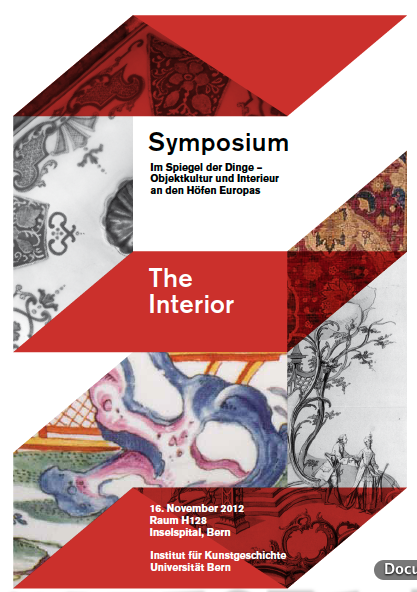 Höfische Feste und Zeremonien der Frühen Neuzeit ereigneten sich in Räumen, die oft eigens für den gegebenen Anlass eingerichtet wurden. Die Konfiguration solcher Interieurs unterlag zumeist den Regeln des geltenden Zeremoniells; immer musste sie dem Repräsentationsanspruch eines fürstlichen Hauses, gelegentlich auch politischen Interessen oder Absichten Rechnung tragen. Das Symposium untersucht die Objekte, die als Konstituenten höfischer Interieurs zugleich komplexe Botschaften vermittelten – als Bildmedien konnten sie Geschichte vergegenwärtigen, durch ihre Materialität Rang und Reichtum sichtbar machen; sie konnten Tradition oder Innovation betonen und schliesslich auch dem Interesse an fernen Ländern Ausdruck geben.
◊ ◊ ◊ ◊ ◊
8:30 Willkommen (Kaffee)
9:00 Begrüssung: Christine Göttler (Universität Bern) / Einführung: Birgitt Borkopp-Restle, Universität Bern
Teil I
Moderation: Birgitt Borkopp-Restle
9:30 Michael Yonan (University of Missouri, Columbia/MO)
Keynote: Asian Objects and Interiors at the Habsburg Imperial Court under Empress Maria Theresia
10:30 Kaffeepause
11:00 Birgit Franke – Barbara Welzel (Technische Universität Dortmund)
Ereignis-Interieurs am Hof der Herzöge von Burgund
12:00 Hanns Hubach (Universität Zürich)
Empörende Bildteppiche – oder: Von der Kunst provokativer Diplomatie
13:00 Mittagspause
Teil II
Moderation: Christine Göttler
14:00 Ariane Koller (Universität Bern)
Objektwelten – Kartographie der Machtentfaltung am Hof des Kurfürsten Johann Georg I. von Sachsen
15:00 Alumni et Amici laden zum Afternoon Tea
15:45 Daniela Antonin (Hetjens-Museum Düsseldorf)
Zeremoniell und Porzellanbesitz am kurbayerischen Hof im 18. Jahrhundert
16:45 Birgitt Borkopp-Restle (Universität Bern)
Carpettes of sylke to ley upon the table – Oriental Carpets in European Court Ceremonies
17:45 Abschlussdiskussion
Exhibition | Drawings from the Osiris Donation at Malmaison
From the Château de Malmaison:
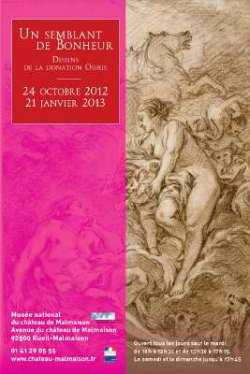
Un Semblant de Bonheur: Dessins de la Donation Osiris
Musée National du Château de Malmaison, Rueil-Malmaison, 24 October 2012 — 21 January 2013
Curated by Céline Meunier and Alain Pougetoux
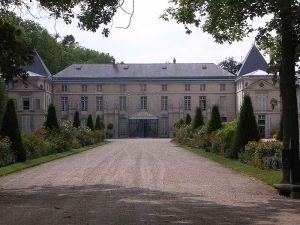
Château de Malmaison (Wikimedia Commons)
This exhibition presents, for the first time together, all the [47] drawings of Daniel Iffla, called ‘Osiris’, who donated Malmaison to the French State in 1906. This unique collection contains drawings from the 16th, 17th, 18th and 19th centuries, from Dutch, Flemish, Italian and French masters. Among the most famous you will find Aelbert Cuyp and Frans van Mieris, Francesco Guardi, Giambattista Tiepolo and Giulio Romano, Jacques Callot and François Boucher… But also some of Osiris’s contemporaris as the Orientalist artist Alexandre Bida or the animalier Antoine-Louis Barye. Several techniques are represented among them, as you will see with the delicate watercolors of Eugène Lami, illustrator of Alfred de
Musset’s poems.
◊ ◊ ◊ ◊ ◊
The more complete, French description:
 En 1906 Daniel Iffla dit Osiris, après avoir offert en 1903 le château de Malmaison à l’Etat, lui fait don de sa collection personnelle d’œuvres d’art, à charge pour celui-ci de l’exposer dans un pavillon à son nom. Après la réouverture en 2011 du pavillon consacré à la présentation de cette collection (200 peintures, sculptures, meubles et objets d’art) le musée a souhaité mettre en valeur l’ensemble des dessins dont la trop grande fragilité ne permet pas une présentation permanente dans cet espace.
Ces quarante-sept dessins et aquarelles, font ainsi l’objet d’une exposition exceptionnelle qui va permettre de les présenter au public tous réunis pour la première fois. Une part importante d’entre eux appartient aux XVIIème et XVIIIème siècles. Parmi ces dessins anciens on rencontre des maîtres hollandais et flamands comme Hendrick de Clerck, Aelbert Cuyp ou Frans van Mieris, des artistes italiens comme Francesco Guardi et Giambattista Tiepolo, ou Giulio Romano, mais aussi des français tel Jacques Callot, et surtout une magnifique série de quatre dessins de
François Boucher. (more…)
Fellowships | Winterthur Fellowship Program, 2013–14
Winterthur Museum, Garden & Library Fellowship Program, 2013–14
Applications due by 15 January 2013
Winterthur Museum, Garden & Library is pleased to announce its Research Fellowship Program for 2013–14. Winterthur offers an extensive program of short- and long-term fellowships open to academic, independent, and museum scholars, including advanced graduate students, to support research in material culture, architecture, decorative arts, design, consumer culture, garden and landscape studies, Shaker studies, travel and tourism, the Atlantic World, childhood, literary culture, and many other areas of social and cultural history.
Fellowships include 4–9 month NEH fellowships, 1–2 semester dissertation fellowships, and 1–2 month short-term fellowships. Fellows have access to library collections of more than 87,000 volumes and one-half million manuscripts and images. Resources for the 17th to the early 20th centuries include period trade catalogues, auction and exhibition catalogues, an extensive reference photograph collection of decorative arts, printed books, and ephemera, searchable online at winterthur.org. Fellows may also conduct research in the museum’s collections, which include 90,000 artifacts and works of art made or used in the colonies or young U.S. republic to 1860. Fellowship applications are due January 15, 2013. For more details and to apply, visit the Winterthur website or e-mail Rosemary Krill at rkrill@winterthur.org.
Exhibition | Benjamin West: General Wolfe and the Art of Empire
From UMMA:
Benjamin West: General Wolfe and the Art of Empire
University of Michigan Museum of Art, Ann Arbor, 22 September 2012 — 13 January 2013
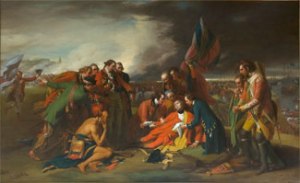
Benjamin West, The Death of General Wolfe, 1776 (William L. Clements Library, University of Michigan)
How is it that an American painter came to define the British Empire? Benjamin West’s iconic painting The Death of General Wolfe (1776) depicts the death of James Wolfe, the British commander at the 1759 Battle of Quebec, one of Great Britain’s most famous military victories, during what in this country is known as the French and Indian War. In conflating a momentous contemporary event with the genre of large-scale history painting, West flouted the conventions of academic painting and the work became one of the most celebrated paintings in Britain. The artist went on to produce six versions of the painting, one of which belongs to the William L. Clements Library at the University of Michigan. Through approximately 40 works, from Michigan, Canadian, and British collections, this ambitious and thematically focused exhibition will include the Clements canvas as well as other depictions of James Wolfe and his death on the battlefield. A fully illustrated catalogue published by the Museum as part of its UMMA Books series accompanies the exhibition.
Exhibition | Discovering Eighteenth-Century British America
From UMMA:
Discovering Eighteenth-Century British America: The William L. Clements Library Collection
University of Michigan Museum of Art, Ann Arbor, 22 September 2012 — 13 January 2013
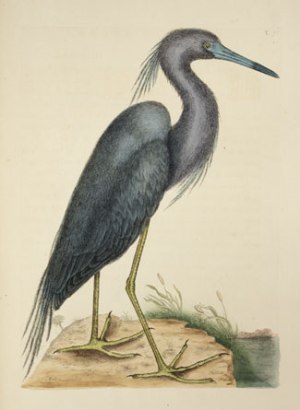
Mark Catesby, The Natural History of Carolina, Florida, and the Bahama Islands, 1731-43, hand-colored engravings (William L. Clements Library, 16791)
This significant exhibition provides glimpses of British America in the 1700s and is designed to complement the Museum’s concurrent exhibition Benjamin West: General Wolfe and the Art of Empire, which features the Clements collection’s major painting The Death of General Wolfe. William L. Clements assembled an outstanding array of primary sources on North America dating between 1492 and 1800, with a heavy emphasis on early European exploration and discovery and the eighteenth-century wars for control of the continent. The exhibition features a mix of rare items from Mr. Clements’s original donation and pieces the Library has acquired since 1923 to complement and enhance its strength in eighteenth-century American history.
This exhibition is part of the UM Collections Collaborations series, co-organized by and presented at UMMA and designed to showcase the renowned and diverse collections at the University of Michigan. The UM Collections Collaborations series is generously supported by the Andrew W. Mellon Foundation.
Display | The Geometry of War: Fortification Plans
From the University of Michigan:
The Geometry of War: Fortification Plans from Eighteenth-Century America
William L. Clements Library, University of Michigan, 15 October 2012 — 15 February 2013
 The eighteenth century was a time of intensive military activity in Europe and in the Americas. Much of this centered on fortified towns or positions. The period from the 1680s to the French Revolution has been called the “classic century of military engineering,” a time when earlier forms of artillery fortifications were perfected and frequently tested in battle.
Designing, constructing, and recording fortifications was the job of the military engineer. He followed well-tested principles of design, based on geometry, to construct fortified places. These were recorded in detailed plans, many of surprising beauty and complexity. The Clements Library is rich in examples, manuscript and printed, and offers a sample illustrating the science of fortification in eighteenth-century America.
Conference | The Cultural History of Cartography
From the conference website:
The Cultural History of Cartography
University of Michigan, Ann Arbor, 25-26 October 2012
This two-day interdisciplinary symposium on the cultural history of cartography intends to facilitate discussion among scholars of history, art history, literary criticism, area studies, and architecture and urban planning. To develop comparative modes of inquiry, each panel will address specific concerns across geographical spaces and temporal periods. Topics include the relations of mapmaking, map reception, and map use to perception, fantasy, temporality, indigeneity, travel, migration, the slave trade, colonialism, citizenship, costume books, and poetry and drama. The symposium is free and open to the public.
◊ ◊ ◊ ◊ ◊
T H U R S D A Y , 2 5 O C T O B E R
Palmer Commons, Forum Hall
9:00 Welcome
Valerie Traub, Karl Longstreth, Brian Dunnigan, and Kevin Graffagnino
9:15 Travel, Commerce, Tourism
Chair: Scotti Parrish
• Jordana Dym: “‘A Prick’d Line’: Route Maps and Travel Accounts, 1600-1930”
• Laura Williamson Ambrose: “Moved to Travel: Dislocation and Domestic Mobility in Anna Trapnel’s Report and Plea”
• Jyotsna Singh:“Cartographies of the Guinea Coast and the Early Modern Slave Trade”
• James Akerman: “Rivers, Roads, and Rails: Travelers and Maps in the Early United States”
11:15 Break
11:30 Technologies
Chair: Mary Pedley
• Stephanie Leitch: “Us and Them: Vespucci’s Triangle and the Geometry of Difference”
• Lydia Soo: “Early Modern Maps of London”
12:30 Lunch
1:30 The History of Cartography Project
Chair: Karl Longstreth
• Mary Pedley
• Matthew Edney
2:00 Difference, Similarity, Classification
Chair: Ellen Poteet
• Marjorie Rubright: “The Il-logic of Location: Getting Lost in Early Modern Atlases”
• Susan Schulten: “Mapping the Population in the Aftermath of the American Civil War”
• Martha Jones: “Race, Space, and Citizenship in Antebellum Detroit: Rethinking the Power of Maps”
3:30 Break
3:45 Ornamentation
Chair: Betsy Sears
• Kathryn Will: “Mapping the Heraldic Field”
• Ann Rosalind Jones: “Allegories of the Continents in Sixteenth-Century Costume Books”
F R I D A Y , 2 6 O C T O B E R
University of Michigan Museum of Art, Helmut Stern Auditorium
10:00 Welcome
Valerie Traub and Karl Longstreth
10:15 Maps, Theater, and the Literary
Chair: Valerie Traub
• Gavin Hollis: “‘Bed Work, Mappery, Closet War’: Shakespearean Anti-Cartography”
• Julia Carlson: “Poetry, Print Culture, and the Making of the ‘Lake-District’”
• Jonathan Zwicker: “Stage and Spectacle in an Age of Maps: Kabuki and the Cartographic Imagination in Nineteenth-Century Japan”
11:45 Relocate to 1014 Tisch Hall for panel and lunch
12:00 Mapping the Americas
Chair: Michael Witgen
• Neil Safier: “Fugitive Landscapes in Deep Time: Mapping Indigenous Migrations in Amazonia”
• Jon Parmenter: “The Spatial Reconnaissance of Iroquoia, 1600-1775: Who Knew What, and When Did they Know It?”
• Martin Brückner: “Cartography and the Gigantic: Wall Maps, Aesthetics, and Technology in Nineteenth-Century America”
2:00 Relocate to Art Museum
2:30 Perception, Fantasy, Time
Chair: Celeste Brusati
• Gottfried Hagen: “Time and Narrative in Ottoman Maps”
• Bronwen Wilson: “Insular Navigations”
• Tom Conley: “The Baroque Hydrographer”
• Anne Herrmann: “‘Naive Geography’: Aleksandra Mir’s ‘Switzerland and Other Islands’”
Exhibition | Guglielmo Du Tillot and the Enlightenment
From the University of Parma:
Guglielmo Du Tillot Regista delle Arti nell’Età dei Lumi
Palazzo Bossi Bocchiarma, Parma, 28 October 2012 — 27 January 2013
Curated by Gianfranco Fiaccadori, Alessandro Malinverni, and Carlo Mambriani
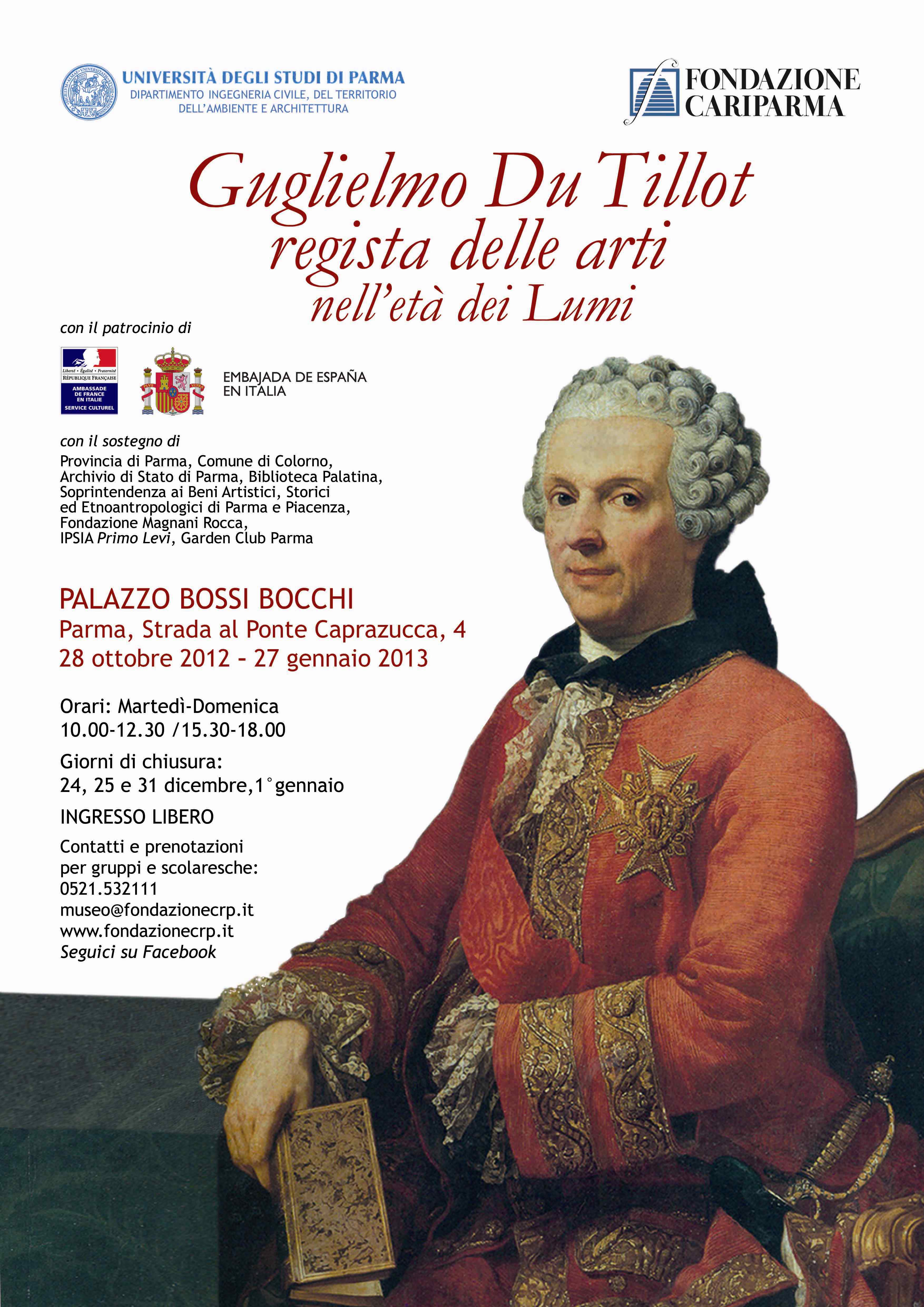 La mostra Guglielmo Du Tillot, regista delle arti nell’età dei Lumi si terrà a Palazzo Bossi Bocchi dal 28 ottobre 2012 al 27 gennaio 2013 (inaugurazione sabato 27 ottobre ore 18,00). L’esposizione, che si fregia del patrocinio delle ambasciate di Francia e di Spagna in Italia, è stata realizzata in collaborazione con Biblioteca Palatina di Parma, Soprintendenza per i Beni Storici Artistici ed Etnoantropologici di Parma e Piacenza, Archivio di Stato di Parma e IPSIA “Primo Levi” di Parma; l’obiettivo è di raccontare a un vasto pubblico l’impatto culturale e artistico della figura di Du Tillot, Intendente della Real Casa inizialmente e Primo ministro in seguito. Attraverso un ricco panorama di opere, talvolta inedite, di pittura, scultura, architettura, incisione, numismatica e arti decorative, nonché di preziosi volumi conservati nei fondi antichi della Biblioteca Palatina e della Biblioteca di Busseto, verrà illustrata la riforma artistica e culturale che permise al piccolo stato borbonico di emergere in Italia e in Europa come non era accaduto nemmeno sotto la dinastia farnesiana, facendo di Parma l’«Atene d’Italia».
Il percorso della mostra – ideata e curata da Gianfranco Fiaccadori e Alessandro Malinverni (Università di Milano) e Carlo Mambriani (Università di Parma) – si articola in due sezioni: la prima, preceduta da un inquadramento biografico del protagonista, è incentrata sulla trasformazione di Parma in «Atene d’Italia»: il ruolo del ministro, di Annetta Malaspina e della loro cerchia; le nozze dei principi come eventi di propaganda artistica e dinastica; l’istituzione dell’Accademia e l’appoggio fornito ai suoi artisti; il rinnovo delle residenze, delle manifatture e del tessuto urbano. La seconda sezione è dedicata alla committenza privata di Du Tillot a Parma e a Parigi, durante il breve esilio: l’allestimento delle sue residenze, gli acquisti di libri e di opere d’arte, gli artisti prediletti.
Tra i numerosi artisti presenti in mostra, oltre all’architetto Ennemond Alexandre Petitot, fedele collaboratore del ministro, e ai vincitori dei concorsi accademici degli anni Sessanta, si segnalano i protagonisti della ritrattistica settecentesca parmense, come Giuseppe Baldrighi e Pietro Melchiorre Ferrari, ed europea, del rango di Jean-Marc Nattier, Anton Raphael Mengs, Laurent Pecheux e Louis-Michel Van Loo.










 Enfilade
leave a comment