Call for Papers | 2013 Anglo-Italian Conference
Fourth Anglo-Italian Conference on Eighteenth-Century Studies
University of Tuscia, Viterbo, 5-7 September 2013
Proposals due by 30 December 2012
Following the success of the first three Anglo-Italian Conferences, in York in 2006 and 2011 and in Capri, Italy in 2009 the Italian Society for Eighteenth-Century Studies and the British Society for Eighteenth-Century Studies are proud to announce the fourth in this series of conferences. The focus of the 2013 Conference will be “Comparing Eighteenth-Century British and Italian Narratives.” Possible topics may include, but are not strictly limited to:
• origins of the novel
• functions of historiographies
• narrative/s of history and narrative/s of fiction
• ideologies and cultural systems
• poetics and forms
• printers, readers and book dissemination
• translations and cultural transfers
Proposals are invited for 20-minute papers. Abstracts of no more than 200 words should be sent by email to all the following: Frank O’Gorman fog17@btinternet.com, Rosamaria Loretelli loretell@unina.it, and Francesca Saggini fsaggini@unitus.it. Papers are acceptable in either Italian or English. Please include your position, name of your home institution and a working email address for contacts. The costs of the conference, including lunches, coffee break, etc. are expected to be in the region of €40. A fee waiver may be arranged for early career research scholars (e.g. self-financing Ph.D. students). The deadline for abstracts is 30 December 2012. Acceptance will be communicated by 31 January 2013. Delegates not offering papers will be warmly welcome to attend the conference.
Accommodation
Viterbo is an enchanting medieval town about 60 km north of Rome. There is plentiful accommodation in Viterbo and the surrounding areas at all levels and prices from spa resorts, to 4-star hotels, to quaint medieval B&Bs. Consequently, delegates will be expected to provide their own accommodation. However, advice and listings may be provided by Francesca Saggini fsaggini@unitus.it or by the Conference Graduate Staff, Adriana Micheli adriana.84@hotmail.it or adriana_micheli@alice.it and Fabio Ciambella fv762006@yahoo.it
Transport
The nearest airports are Leonardo da Vinci Airport in Fiumicino (all flights, including international) and Giovanni Battista Pastine Airport in Ciampino (mostly low-cost companies, including Ryanair). Both of these airports are located just outside Rome. Viterbo is a town north of Rome, easily accessible by train from most train stations in Rome as well as by coach. Alternatively, Viterbo can be reached by trains stopping at Orte station (about 25 km from Viterbo). Thence transfers can be arranged either by local train or even by taxi (this latter solution is favourable in case of taxi sharing). Delegates can contact Francesca Saggini or the Conference Graduate Staff for further information. By car, the nearest exit is ORTE, on the A1 Milan-Naples Motorway.
For further information, contact Frank O’Gorman fog17@btinternet.com or Francesca Saggini fsaggini@unitus.it.
Exhibition | Fables and Magic: The Guidobono Brothers
From Cultura Italia:
Fables and Magic: The Guidobono Brothers, Painters of the Baroque
Palazzo Madama, Turin, 29 May — 2 September 2012
Curated by Mary Newcome Schleier, Giovanni Romano, and Gelsomina Spione
 From 29 May to 2 September, Palazzo Madama in Turin hosts Fables and Magic: The Guidobono Brothers, Painters of the Baroque, an exhibition focusing on the life and work of the two artists, Bartolomeo and Domenico Guidobono, best known for decorating the ceiling of Palazzo Madama, along with an extensive series of paintings on canvas held in the most prestigious European and American museums.
The Savona-born painters Bartolomeo and Domenico Guidobono were not well-known in Piedmont. Nevertheless, between the end of the 17th century and the beginning of the 18th, they were entrusted with several important commissions in Turin. Following in the footsteps of their father, the painter and ceramic artist Giovanni Antonio, who drew a salary from Victor Amadeus II, the two brothers introduced to Turin the light and festive decorative style typical of Genoese residences, with its emphasis on light effects and elements drawn from nature. Both lived in Turin twice, more precisely between 1685 and 1690, and again from 1702 to 1726, when they painted the frescoes decorating the vault ceiling of the apartments of the second Madama Reale, Marie Jeanne of Savoy.
Their work is illustrated by paintings, drawings, and engravings that highlight their meticulous approach to depicting the details of their subjects, which ranged from mythology to Biblical stories, sacred subjects, still lifes, and magic scenes. Flowers, fruits, birds, animals, objects, and details of still lifes are painted with a refined, light touch and ooze seductive mystery.
The exhibition is arranged chronologically and begins with the work of the older of the two brothers, Bartolomeo Guidobono (Savona 1654 – Turin 1709). During his first sojourn in Turin, he painted the frescoes of the presbytery of the Casanova abbey near Carmagnola and a painting for Palazzo Madama, which was originally located in the former apartments of the Madama Reale and is now lost. During his second sojourn, from 1702 to 1709, Bartolomeo decorated both the residences of the Savoy court and church altars in Turin and the Duchy of Savoy. It is in this context that his Genoese-inspired decorations were made, such as those of the convent of San Francesco da Paola and the Pilone cupola, the ceiling in the hall currently known as the Madama Felicita apartment in Palazzo Reale, which are featured in the exhibition thanks to video images.
Domenico’s style began to emerge more forcefully after his brother’s death in 1709. The artist, who maintained a close relationship with the Madama Reale Maria Giovanna Battista, became the undisputed protagonist of the decorations of the halls on the first floor of Palazzo Madama, known as the Guidobono halls – the Madama Reale’s Chamber, the Chinese Cabinet, and the Southern Veranda – which were decorated on the orders of the Duchess orders between 1708 ad 1721. Domenico Guidobono was active in Turin and the rest of the Duchy until the ascent of Filippo Juvara, who eventually marginalized him and caused him to return to Genoa and subsequently to Naples, where he died in 1746. The exhibition delves into the life and work of Domenico Guidobono through recently discovered documents and artwork. The history of his art can be traced thanks to a dowry inventory put together by his daughter Maria Beatrice in 1720, which lists the works from her father’s Turin workshop. Today, most of these works are held in foreign museums, including the Louvre in Paris and the Metropolitan Museum in New York City.
The exhibition is enhanced by works by Genoese masters and other artists who were crucial influences on the Guidobono brothers, such as Domenico Piola, Gregorio De Ferrari, and Daniel Seyter. There is also a selection of engravings by Rembrandt and Castiglione, the stylistic points of reference underlying Genoese painting, followed by a section on project planning with preparatory sketches by Piola and De Ferrari from the Cabinet of Drawings and Paintings in Genoa’s Palazzo Rosso.
◊ ◊ ◊ ◊ ◊
From Artbooks.com:
Catalogue: Clelia Arnaldi di Balme, Giovanni Romano, Mary Newcome Schleier, and Gelsomina Spione, Favole e Magie: I Guidobono, Pittori del Barocco (Milano: Silvana, 2012), 128 pages, ISBN: 9788836623952, $33.
Ai fratelli Bartolomeo e Domenico Guidobono, attivi tra la fine del Seicento e l’inizio del Settecento in Liguria e in Piemonte, è dedicato questo volume, che offre una retrospettiva completa e aggiornata sulla loro carriera di pittori, costellata di successi in vita, ma poco considerata dalla critica nei secoli successivi. I due fratelli, originari di Savona, hanno lasciato il segno della loro ispirazione più alta nei soffitti di Palazzo Madama a Torino, ma si deve a loro anche una vasta produzione di quadri da cavalletto, ora in gran parte dispersa in musei e collezioni private d’Europa e d’America. Giunti a Torino a seguito del padre – pittore e ceramista stipendiato da Vittorio Amedeo II –, introducono in Piemonte i caratteri leggeri e festosi della grande decorazione barocca genovese, che trae i suoi spunti dall’osservazione della natura e dallo studio degli effetti della luce. Favole mitologiche, storie bibliche e soggetti sacri, nature morte e scene di magia si accompagnano alla descrizione precisa di fiori, frutti, uccelli, animali, oggetti e brani di natura morta, con esiti di raffinata leggerezza e talvolta di seducente mistero. Il volume, che nel ricostruire la loro attività permette di fare il punto sulla fortuna critica e sugli studi svolti intorno ai due pittori, presenta, accanto alle opere dei Guidobono, anche quelle di altri artisti che rappresentarono un punto di riferimento per la loro formazione, come Domenico Piola, Gregorio De Ferrari e Daniel Seyter. Il volume è completato da una bibliografia.
Exhibition | John Clerk of Eldin (1728-1812)
From Edinburgh’s City Art Centre:
John Clerk of Eldin (1728-1812)
Edinburgh City Art Centre, 3 November 2012 — 3 February 2013
Curated by Geoffrey Bertram
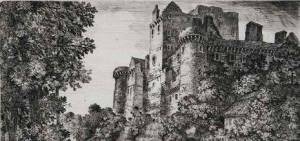
John Clerk of Eldin, Craigmillar Castle from the South-East, detail
John Clerk of Eldin is well known to historians of 18th-century British art, and he is often included in exhibitions and publications relating to the work of other 18th-century figures, namely Robert Adam, the architect, and of Paul Sandby, the well respected English painter and printmaker. In addition, his geological drawings are highly valued by geologists as the illustrations provided for Dr James Hutton’s seminal 1790s publication ‘A Theory of the Earth’. However Clerk’s etchings have never received a major overview, which the exhibition aims to redress. This anniversary year provides a perfect opportunity to highlight the prints of this remarkable man.
The exhibition is being organised and curated by Geoffrey Bertram. The main part of the exhibition is being lent by the Clerk family, supplemented with additional etchings to be borrowed from the National Gallery of Scotland. The etchings presented will range from some of the earliest efforts to those finest, with some related drawings that show his working method. These will be supplemented by sketchbooks, geological drawings and copies of the 1855 compendium of etchings published by the Bannatyne Club, Edinburgh, as well as other items relating to his life and work.
For more information, see the exhibition website»
◊ ◊ ◊ ◊ ◊
Catalogue: Geoffrey Bertram et al, The Etchings of John Clerk of Eldin (Enterprise Editions, 2012), 180 pages, ISBN 9780957190405, £35.
Published to commemorate the 200th anniversary of Clerk’s death, the book catalogues all of Clerk’s etchings and examines his etching technique and the influences on his style. It also includes essays by Iain Gordon Brown “John Clerk of Eldin and ‘The Virtuoso Genius of the Family'” and Duncan Macmillan “Scottish Printmakers in the Eighteenth Century.” Copies are available from Bertram Enterprises, 1 Knutscroft Lane, Thurloxton, Somerset TA2 8RL email: geoffrey@clerkofeldin.com
Reviewed | Dubin’s ‘Futures and Ruins’
Recently added to caa.reviews:
Nina L. Dubin, Futures and Ruins: Eighteenth-Century Paris and the Art of Hubert Robert (Los Angeles: Getty Research Institute, 2010), 210 pages, ISBN: 9781606060230, $50.
Reviewed by Frédérique Baumgartner, Mellon Postdoctoral Fellow, Columbia University; posted 27 July 2012.
In an article entitled “Les musées ne sont pas à vendre” (“Museums Are Not For Sale”) published on December 12, 2006, in the daily French paper ‘Le Monde’, the art historians Françoise Cachin, Jean Clair, and Roland Recht strongly denounced the increasing commercialization of the national patrimony, epitomized by the Louvre’s plan to rent out part of its collection to a branch established in Abu Dhabi. The authors warned the French administration against the incoherence of its cultural policy: claiming to protect the nation’s artistic treasures, while at the same time using those treasures as commodities.
The controversy over the Louvre Abu Dhabi is one of the many contemporary resonances that Nina Dubin’s book, ‘Futures and Ruins: Eighteenth-Century Paris and the Art of Hubert Robert’, holds for its reader. A meticulously researched study examining Robert’s paintings of Parisian ruins in light of the new financial interests and related economic and cultural risks that defined the city’s urban and patrimonial policies in the 1770s–1790s, ‘Futures and Ruins’ will prompt readers to consider the origins of the economic and cultural precariousness of today’s world. As such, the book is both historically stimulating and morally engaging.
At the center of ‘Futures and Ruins’ lies the following historical claim: in the course of the eighteenth century, Paris, in the grip of the forces of early capitalism, became the terrain of intense real estate speculation. It was enabled by the introduction of paper money in 1716, as the greater capacity for circulation of paper money precipitated transactions and engendered prospects of hastily accumulated wealth. At the same time, the reliance of the real estate market on the expansion of credit raised the specter of bankruptcy. As Dubin underscores, in agreement with the historian Michael Sonenscher, the nature of credit was characterized by “the ease with which it enabled economic prosperity, while at the same time catalyzing the potential for expansive debt” (Michael Sonenscher, ‘Before the Deluge: Public Debt, Inequality, and the Intellectual Origins of the French Revolution‘, Princeton: Princeton University Press, 2007, 91).
These economic phenomena, Dubin argues, found their aesthetic counterpart in pictures of ruins—a genre in which Robert (1733–1808), received as Peintre d’architecture at the Royal Academy of Painting and Sculpture in 1776, excelled. . .
The full review is available here» (CAA membership required)
Call for Applications | Getty 2013-14: Connecting Seas
From the Getty:
Getty Scholars Program — Connecting Seas: Cultural and Artistic Exchange
Getty Research Institute, Los Angeles, 2013-14
Applications due by 1 November 2012
 Water has long been a significant means for the movement of goods and people. Sophisticated networks, at a variety of scales, were established in antiquity around the Mediterranean and the Black Seas, and later in the Atlantic, Indian, and Pacific Oceans. Together with sporadic and accidental encounters, these networks fostered commerce in raw materials and finished objects, along with the exchange of ideas and cultural concepts. Far from being barriers, seas and oceans were vital links connecting cultures. The 2013–2014 academic year at the Getty Research Institute and Getty Villa will be devoted to exploring the art-historical impact of maritime transport.
How has the desire for specific commodities from overseas shaped social, political, and religious institutions? How has the introduction of foreign materials and ideas transformed local artistic traditions, and what novel forms and practices have developed from trade and other exchanges, both systematic and informal? What role do the objects born of these interactions have in enhancing cultural understandings or perpetuating misunderstandings? How has the rapidly accelerating pace of exchange in recent years influenced cross-cultural developments? The goal of this research theme is to explore how bodies of water have served, and continue to facilitate, a rich and complex interchange in the visual arts.
The Getty Research Institute and the Getty Villa invite proposals focusing on artistic exchange and the transmission of knowledge across bodies of water from ancient times to the present day. Scholars actively engaged in studying the role of artists, patrons, priests, merchants, and explorers in oceanic exchange are encouraged to apply, and projects focusing on the Pacific are particularly welcome.
Recent Reviews Posted at BSECS
Recent reviews at BSECS:
A Will of Their Own: Judith Sargent Murray and Women of Achievement in the Early Republic
Location: National Portrait Gallery, Washington, DC
Event Date: August 2012
Reviewed By: Linda Troost, Washington & Jefferson College
A pantheon presenting the female face of the Early American Republic.
Playing, Learning, Flirting: Printed Board Games from Eighteenth-Century France
Location: Waddesdon Manor, Aylesbury
Event Date: July 2012
Reviewed By: Jennifer Thorp, New College, Oxford
The long eighteenth century, as told via the revealing medium of the board game.
Pieces of Wedgwood
Location: State Library of New South Wales, Sydney
Event Date: July 2012
Reviewed By: Mark de Vitis, University of Sydney & National Art School, Sydney
A compact but illuminating reminder of Wedgwood’s Australian connection.
Physionotraces: galerie de portraits, de la Révolution à l’Empire
Location: Musée des Arts Décoratifs, Paris
Event Date: July 2012
Reviewed By: Dr Kate Grandjouan, The Courtauld Institute of Art
A diminutive yet potent display tracing the development of a revolutionary form of portraiture.
The English Prize: The Capture of the Westmorland
Location: The Ashmolean Museum, Oxford
Event Date: June 2012
Reviewed By: Carly Collier, University of Warwick
This exciting exhibition about a defining event in Grand Tour history delivers the treasures of thorough archival research.
Jane Austen’s Bookshop – An Exhibition
Location: Chawton House Library, Alton, Hampshire
Event Date: June 2012
Reviewed By: Judyta Frodyma, University of Oxford
Chawton House charms with an exhibition that brings the thriving network of eighteenth-century regional print culture back to life.
The Comte de Vaudreuil: Courtier and Collector
Location: National Gallery, London
Event Date: June 2012
Reviewed By: Francesca Whitlum-Cooper, The Courtauld Institute of Art
A tiny exhibition with big potential, offering an innovative glimpse into eighteenth-century collecting practices.
New Title | Transculturation in British Art, 1770–1930
From Ashgate:
Julie F. Codell, ed., Transculturation in British Art, 1770–1930 (Aldershot: Ashgate, 2012), 314 pages, ISBN: 9781409409779, $120.
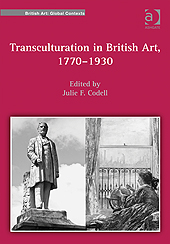 Examining colonial art through the lens of transculturation, the essays in this collection assess painting, sculpture, photography, illustration and architecture from 1770 to 1930 to map these art works’ complex and unresolved meanings illuminated by the concept of transculturation. Authors explore works in which transculturation itself was being defined, formed, negotiated, and represented in the British Empire and in countries subject to British influence (the Congo Free State, Japan, Turkey) through cross-cultural encounters of two kinds: works created in the colonies subject over time to colonial and to postcolonial spectators’ receptions, and copies or multiples of works that traveled across space located in several colonies or between a colony and the metropole, thus subject to multiple cultural interpretations.
Essays in Transculturation in British Art, 1770–1930 argue that, due to art’s fundamental nature as spatial, art can illuminate imperial transculturation sites of border cultures and contact zones that go far beyond hybridities of national cultural traditions or conventions. Transcultural works generate new cultural and imperial values. Authors posit that visual culture can suggest nuances and implications for transculturation, a word used in many other humanities and social science disciplines, to give this word a visual dimension.
Exhibition | Significant Objects: The Spell of Still Life
From the Norton Simon:
Significant Objects: The Spell of Still Life
Norton Simon Museum, Pasadena, 20 July 2012 — 21 January 2013
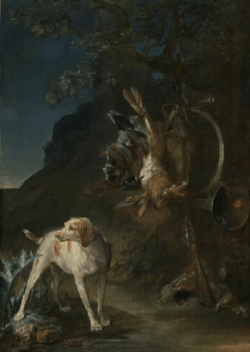
Jean-Baptiste Siméon Chardin, Dog and Game, 1730 (Norton Simon Museum)
The classical definition of a still life—a work of art depicting inanimate, typically commonplace objects that are either natural (food, flowers or game) or man-made (glasses, books, vases and other collectibles)—conveys little about the rich associations inherent to this genre. In the academic tradition of Western art, still life occupied the lowest position in the hierarchy of the arts, which recognized history painting, portraiture and landscape painting as superior. It was disparaged critically and theoretically as mere copying that lacked artistic imagination and placed no intellectual demands on the viewer. Significant Objects: The Spell of Still Life posits that nothing could be further from the truth for this category of art, which hovers between mimesis and symbolism, and in which artistic skill and fantasy are tantamount to its success. Drawing on the spectacular resources of the Norton Simon collections, the exhibition explores the wealth of aesthetic and conceptual artistic strategies that challenge the shortsighted view of still life as simply an art of imitation. It also underscores why the still life continues to be an important vehicle of expression.
Significant Objects examines the genre from four perspectives designed to tease out the import of the still life, to identify the rich associational value of time, place or circumstance, and to encourage meaningful encounters with the objects.
The first section, Depiction & Desire, looks at the still life as a barometer of wonder and of the impulse to collect and display. Exacting portrayals of individual flowers or cubist abstractions that seize on the sensual elements of color, texture and weight are illustrative of the passion to capture, document and celebrate material pleasures and possessions through the counterfeit of the visual image. Virtuosity considers the exercise of skill and the mastery of technique as a means to create illusion and objects of imaginative, complex beauty. Still lifes rendered in oil, pastel, wood and various printing processes invite scrutiny as to how artists make the difficult look easy and where the boundaries lie between technical expertise and artistry. Decoding the Still Life approaches these arrangements as coded with meaning and allegory. From the popular and moralizing symbols embedded in 17th-century fruit and flower paintings to the political and personal meanings insinuated by 19th- and 20th-century artists, these implied secrets bring a mysterious resonance to the compositions and underscore their capacity to communicate intellectual insights. Finally, Still Life off the Table takes a liberal view of the genre, looking at radical variations that can be considered still-life related. Abstractions, assemblage and the deconstruction of the tabletop arrangement show how the genre stretches beyond the conventions of its historically conservative nature and yet is malleable enough to remain a vital instrument for provocative, contemporary innovations.
Still life occupies a special place in the Norton Simon Museum, with singular examples in a variety of media, including paintings, prints and photographs. Mr. Simon acquired his first still life in 1955. From that moment on, the genre maintained his attention much as any other he pursued, if it met his criteria for quality, rarity and beauty. Though cautious about revealing his favorite objects in the collection, Simon admitted a deep fondness for Paul Cézanne’s Tulips in a Vase, 1888–90, which is presented in the exhibition. Also included are stellar examples by the genre’s greatest practitioners: Jan Brueghel, Rembrandt and Francisco de Zurbarán, from the 17th century; Jean-Baptiste Siméon Chardin, Gustave Courbet, Henri Fantin-Latour and Vincent van Gogh, from the 18th and 19th centuries; and Pablo Picasso, Richard Diebenkorn, Imogen Cunningham, Edward Weston and George Herms, from the 20th century.
Internship | NPG in London
As noted at BARS:
Internship at the National Portrait Gallery, London
Applications due by 12 August 2012
The National Portrait Gallery is seeking to appoint an intern for six months with a proven interest in portraiture to gain experience in general curatorial work and research across a number of projects. The main focus of the internship will be on the 18th-Century Collections but an interest in the portraiture of other periods is desirable. Tasks may include answering public enquiries, scoping out ideas for the annual redisplay of Regency miniatures, research towards a forthcoming display on World War Two and the RAF at Beningbrough Hall, Yorkshire and research support towards an academic study of portrait print collecting and extra-illustration in eighteenth-century Britain. As a large part of the internship will involve research in libraries and archives in London, it would be an advantage to have completed an MA or be engaged in a programme of PhD study. The intern will be supervised by the 18th Century Curator and Assistant Curator, 18th Century.
Hours: 1 day (8 hours) per week for six months to be agreed with the curator
Travel Expenses: Travel costs of up to ten pounds (£10) per week can be claimed
Ideally we would like candidates to be available for a 6-month period.
Qualifications and Experience
• Good general knowledge of British art history and/or history
• A proven interest in the eighteenth century and a reasonable understanding of portraiture as a genre
• The internship would ideally suit those candidates who have completed an Art History or History MA or are engaged in a programme of PhD study who have an interest in pursuing museum work
Skills and Attributes
• Ideal candidates will need to have a flexible approach and be prepared to contribute to a number of different projects
• Candidates will also need to be able to demonstrate a careful approach and attention to detail
• Excellent written English is an essential requirement
Please send your CV and a covering letter either by e-mailing: curatorialoffice@npg.org.uk or by writing to: Emily Burns, Curatorial Office, National Portrait Gallery, 2 St Martin’s Place, London WC2H 0HE. Closing date for returned applications: 9.00am Monday, 13 August 2012. Interviews will take place in the week beginning 20 August 2012.
New Title and Exhibition | New York Rising
From ACC Distribution:
Valerie Paley, New York Rising: New York and the Founding of the United States (London: Scala Publishers, 2012), 64 pages, ISBN: 9781857597769, $10.
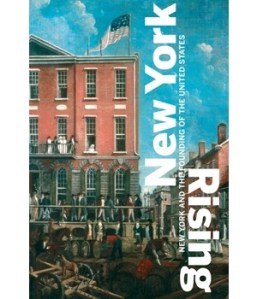 Published in conjunction with the opening of the New-York Historical Society’s newly installed permanent gallery, New York Rising: New York and the Founding of the United States seeks to capture this nascent moment in America’s history. Featuring paintings, sculpture, historical documents and other fascinating artefacts, this fully illustrated book details important moments in both the history of New York and of the United States. These include the occupation of New York by the British Army during the Revolutionary War; the city’s role as marketplace and centre of commerce; the inauguration of George Washington as first President of the United States; the politically-charged duel fought by Alexander Hamilton and Aaron Burr; and the establishment of the New-York Historical Society. Associations are made between the paintings and the objects in the exhibition that set in context these events and the individuals who shaped and were shaped by
them.
Valerie Paley is Historian for Special Projects at the New-York Historical Society.
◊ ◊ ◊ ◊ ◊










 Enfilade
leave a comment