In the March 2012 Issue of ‘French History’
 Selections from the current issue of French History:
Julian Wright and Penny Roberts, “Editors’ Note,” French History 26 (March 2012).
This issue allows us to mark a number of points about the continuing importance of the study of the French Revolution. Without having planned it as a special issue, it so happened that we have been able to publish together a number of important new studies of the French Revolutionary decade and its historiography. . .
◊ ◊ ◊ ◊ ◊
Claire Trévien, “Le monde à l’envers: The Carnivalesque in Prints of the Construction of the Fête de la Fédération of 1790,” French History 26 (March 2012).
Abstract: This article explores representations of the carnivalesque during the construction of the Fête de la Fédération of 1790. Bakhtin’s assertion that the carnival is always separate from official festivities is exemplified by this spontaneous manifestation which was shunned by officials and disregarded appropriate class and gender roles. This article focuses on the pictorial depiction of this unique event and discusses how a study of its iconography also reflects the suppression of the carnivalesque in early revolutionary Paris.
◊ ◊ ◊ ◊ ◊
David Gilks, “Art and Politics during the ‘First’ Directory: Artists’ Petitions and the Quarrel over the Confiscation of Works of Art from Italy in 1796,” French History 26 (March 2012).
Abstract: This article examines the place of artists’ petitions in the quarrel over confiscating works of art. It argues that the dispute provided opportunities for its participants to advance a series of distinct agendas that reflected political and professional concerns rather than judgements about the art in question. By tracing the earliest stages of the quarrel and radically reinterpreting Quatremère’s crucial contribution—his Letters on the Plan to Abduct the Monuments of Italy—as part of his reactionary politics, the article clarifies the meaning of the ensuing artists’ petitions. It argues that while Quatremère duped ‘insider’ artists into supporting the Papist cause by signing his petition questioning the confiscations, the artists themselves instead signed as a means to re-assert their status and right to patronage. The vituperative responses to his petition included a counter-petition supporting art confiscations; it was signed by ‘outsider’ artists, reluctant to let their more famous co-professionals monopolize the debate at their expense.
Exhibition | Women of Achievement in the Early American Republic
From the exhibition website:
A Will of Their Own: Judith Sargent Murray and Women of Achievement in the Early Republic
Smithsonian National Portrait Gallery, Washington, D.C., 20 April — 13 September 2012
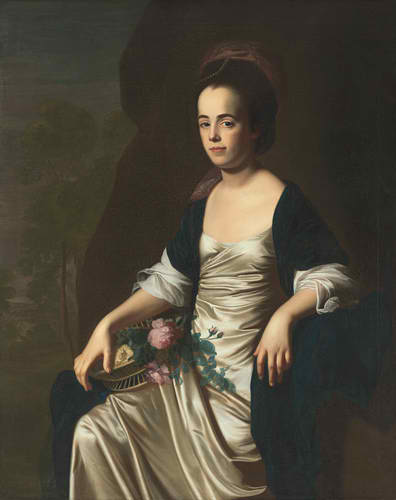
John Singleton Copley, "Judith Sargent Murray,"
1770–72 (Terra Foundation for American Art)
At the time of the American Revolution with Great Britain, women did not share the same status or rights as men. They could not vote or hold political office, enjoyed few property rights, were not equal in marriage, and had limited access to educational opportunities. As the debate about liberty and the rights of men took center stage during the Revolution, some women began to question their position in American society. Whereas many believed that women’s primary responsibility was to raise their children to be productive, moral citizens, some women began to argue for certain legal and economic rights and to pursue various professional careers. The Revolution created new opportunities for women to do work outside the home and to voice their opinions and concerns in public. Given the racial and class divisions that existed during the period, however, not all women were permitted to step forward in this manner. The eight women who are highlighted here did not produce a collective movement for women’s rights, but they were important in sowing the seeds for future progress. While the nature of their achievements differed, each demonstrated through their work that women possessed a will
of their own.
New Title | Quatremère de Quincy’s ‘Letters to Miranda and Canova’
From The Getty:
Antoine Quatremère de Quincy, introduction by Dominique Poulot, translation by Chris Miller and David Gilks, Letters to Miranda and Canova on the Abduction of Antiquities from Rome and Athens (Los Angeles: Getty Publications, 2012), 208 pages, ISBN: 9781606060995, $50.
 In the 1790s and early 1800s, the art world experienced two big events: First came the military confiscation of masterpieces from Italy and northern Europe in order to build a universal museum in Paris’s Louvre. Then famous marble sculptures were prised from the Parthenon and sent to London. These events provoked reactions ranging from enthusiastic applause to enraged condemnation.
The French art critic, architectural theoretician, and political conservative Quatremère de Quincy was at the center of the European debates. In his pamphlet Letters to Miranda, he condemns the revolutionary hubris of putting “Rome in Paris” and urges the return of the works. In the Letters to Canova, however, Quatremère celebrates the British Museum for making the Parthenon sculptures accessible. Quatremère’s writing was highly controversial in its time. This book offers the first English translation of the two series of letters, as well as a new critical introduction.
Antoine Quatremère de Quincy (1755–1849) was a French archaeologist, architectural theoretician, arts administrator, and influential writer. Dominique Poulot is professor of the history of art at the Université Paris 1 Panthéon-Sorbonne. Chris Miller is a translator specializing in the fine arts. David Gilks is a Leverhulme Early Career Fellow at Queen Mary, University of London.
New Title | ‘The Goldfish in the Chandelier’
From The Getty:
Casie Kesterson with illustrations by Gary Hovland, The Goldfish in the Chandelier (Los Angeles: Getty Publications, 2012), 32 pages, ISBN 9781606060940, $18.
 A different kind of adventure story, The Goldfish in the Chandelier takes place just outside of Paris in the early 1800s. Uncle Henri is stuck. He has been commissioned to design a chandelier for a great house in Paris, but he can’t figure out what form it will take. His young nephew, Louis Alexandre, comes to the rescue with some dazzling ideas—inspired by Alexander the Great and the first hot-air balloon flights over Paris—that surprise them both. Together, they use a lot of imagination to create something that never existed before—something new, unexpected, and very beautiful.
This delightful story was inspired by the Gérard-Jean Galle chandelier, one of the most popular pieces in the J. Paul Getty Museum’s impressive collection of French decorative arts. An information page about the chandelier is included in the back of the book. For children ages 7 to 10.

Gérard-Jean Galle, ca. 1818 (Los Angeles: The J. Paul Getty Museum)
Formerly on staff at the Getty Research Institute, Casie Kesterson currently is a consultant specializing in matters relating to the history of collecting art. Gary Hovland’s illustrations have appeared in such nationally and internationally known publications as the New Yorker, the Wall Street Journal, and the New York Times. His illustrations for If the Walls Could Talk: Family Life at the White House (Simon & Schuster, 2004) won a Toy Portfolio Platinum Book Award in 2005.
Autumn Exhibition in Venice | Francesco Guardi
From the Correr:
Francesco Guardi, 1712-1793
Museo Correr, Venice, 28 September 2012 — 6 January 2013
Curated by Alberto Craievich and Filippo Pedrocco

Francesco Gurdi, The Parlour of the Nuns at San Zaccaria
ca. 1750 (Venice: Ca’ Rezzonico), Photo: Wikimedia Commons
◊ ◊ ◊ ◊ ◊
In the third centenary of the birth of Francesco Guardi, the last great landscape artist of the 18th century, the monographic exhibition promoted by the Fondazione dei Musei Civici di Venezia aims to highlight his complex artistic production, from the lesser-known figure paintings of his youth to the ‘interior scenes’, concluding with the splendid views of Venice and his fabulous capriccios, painted in his maturity and old age. The exhibition at the Museo Correr will illustrate the various phases in Guardi’s development thanks to a series of major loans of works never before made to Venice.
It is known that Francesco Guardi’s training took place within a modest family workshop in which everyone was a painter, from his father, Domenico, to his brothers, Nicolò and Antonio. None of them in life was able to attain a certain degree of prosperity, let alone success. After his death in 1793, Francesco Guardi was forgotten. His rediscovery is the merit of 20th-century criticism, and attained a high point in the fine exhibition curated by Pietro Zampetti, held in Palazzo Grassi in 1965.
The first part of the exhibition will focus on the production of works of a prevalently everyday life subject inspired by genre painting of costume painting, one dominated by Pietro Longhi. The exhibition will present two masterpieces from this period: The Ridotto and The Parlour of the Nuns at San Zaccaria, now in Ca’ Rezzonico. A little later, Francesco Guardi began his production of the views, capriccios and fantastic landscapes that underpin his fame today. It is not certain when exactly he began working as a landscape painter; perhaps it was around 1755, when the painter was over 40 years old and had a less than exhilarating career as a figure painter behind him. His first works echoed the compositions of Canaletto and Marieschi, with fluid, controlled brushstrokes, still a long way from the bubbling, shorthand manner that would make him famous. But his unique style does already emerge in some of these works from the first period, including in the St. Mark’s Square belonging to the National Gallery in London, in which the figures, painted by frothy little impastos of colour, reveal a lively chromatic touch. His period of greatest success was between the 1760s and 1770s and it was in this period that he painted the 12 canvases of the Ducal celebrations adapted from Canaletto’s own models and engraved by Giambattista Brustolon. Guardi based his paintings, today in the Louvre, on these prints; the result is truly astonishing and reveals the artist’s transfiguring, fantastic skill.
The picture showing the Bucentaur at San Nicolò on the Lido is exemplary: although faithful to its model, it creates an image of unmatched appeal. The gondolas and Bucentaur used for special occasions seem to shimmer on the water; a myriad of reflections sparkle on the slightly choppy sea, while tiny figures resembling Oriental ideograms bustle in the vessels. In 1782, Guardi was commissioned to paint four pictures to commemorate the visit of Pope Pius VI to Venice. For the 70-year-old artist, here at last was an official commission, and it was followed by the celebratory paintings of the incognito visit to Venice of the Russian archdukes, who travelled under the name of the Counts of the Nort
Over time, his highly personal style became increasingly free and allusive; the proportions between the various elements were freely modified, the perspective framework became elastic and was deformed, losing all association with reality. And finally, the figures became simply splashes of colour, a rapid white scribble or black dot traced out with a trembling movement.
Apart from a number of airy capriccios, he also painted some splendid pictures of villas half-hidden in the green Veneto countryside, and alongside traditional views of Venice he added others of the lagoon, broadening the horizons of 18th-century Venetian landscape and dissolving it in wide stretches of water and sky.
The exhibition will present a total of over 100 paintings and drawings from leading Italian and foreign institutions, including the Musée du Louvre in Paris, the Metropolitan Museum of Art of New York, the National Gallery of Washington, the National Gallery in London, the Gemäldegalerie in Berlin, the Alte Pinakothek of Munich, the Gulbenkian Foundation of Lisbon, the Hermitage of Saint Petersburg, the Fine Art Museum of Boston, the Accademia Carrara in Bergamo and the Poldi Pezzoli of Milan. The exhibition can boast an academic committee formed of the leading international scholars of 18th-century Venetian painting, and will be accompanied by a comprehensive, well-illustrated catalogue edited by Alberto Craievich and Filippo Pedrocco, and published by Skira, containing the latest studies concerning the artist.
Curators: Alberto Craievich and Filippo Pedrocco
Academic Committee: Giuseppe Pavanello, Charles Beddington, Catherine Whistler, Keith Cristiansen, Stephane Loire, Andrew Robison, Irina Artemieva, Lino Moretti
Scientific Director: Gabriella Belli
◊ ◊ ◊ ◊ ◊
Catalogue: Alberto Craievich and Filippo Pedrocco, eds., Francesco Guardi, 1712-1793 (Milan: Skira, 2012), ISBN: 9788857214818, $90. Available October 2012
Visiting Fellowship | Urban Cultural History at UMass Boston
Short-Term Visiting Fellowship
The Research Center for Urban Cultural History at the University of Massachusetts Boston, Spring 2013
Applications due by 1 September 2012
The Research Center for Urban Cultural History at the University of Massachusetts Boston is offering a 3-4 week short-term visiting fellowship for Spring 2013. The RCUCH Flaherty Visiting Fellow will pursue a research project pertaining to urban cultural history; the project must be interdisciplinary, and be focused on the cultural history of cities, urban life, urban networks, urban materials or urban experience. We define urban cultural history broadly; projects treating pre-urban sites as well as contemporary situations fall within the fellowship’s parameters. During the fellowship period the Fellow is required to offer a Faculty Lecture for the RCUCH on work-in-progress related to the research project, and to provide a talk for a graduate seminar or student group where this can be arranged; other than these lectures, and the research project itself, the Fellow will also have numerous opportunities to attend on-campus lectures and symposia, and to take advantage of lectures, exhibits, and other events in Boston and its environs, The RCUCH invites applications, giving preference to scholars at associate professor rank or above. (more…)
Exhibition | Hubert Robert: Les Jardins du Temps
From The National Museum of Western Art:
Hubert Robert: Les Jardins du Temps
The National Museum of Western Art, Tokyo, 6 March — 20 May 2012
Fukuoka Museum of Art, Fukuoka, 19 June — 29 July 2012
Shizuoka Municipal Museum of Art, Shizuoka, 9 August — 30 September 2012
Curated by Hélène Moulin-Stanislas and Megumi Jingaoka
 In 18th-century Europe, enthralled by the discoveries at the sites of Pompeii and Herculaneum, Hubert Robert (1733-1808) was a French landscape painter became known later by the nickname Robert des ruines (Robert of the Ruins), for his many works on these ancient sites. During his studies in Italy, Robert depicted fascinating landscapes that incorporated ancient motifs enhanced by his own fanciful imagination. His images brought to life the architecture and sculpture of ancient times, contrasting with the scenes of trees, flowing streams and the lively everyday world of ordinary people. These images developed in an age newly fascinated with antiquity. Robert’s arts with their uniquely lyrical expression attracted a great number of people, inspiring dreams of the flow of time, nature and the power of the arts.
The painter of these fantastic scenes was also the creator of numerous famous landscape-style garden designs, under his title of Designer of the Royal Gardens. Robert’s placement of ancient architectural forms and man-made waterfalls and grottoes amidst actual scenery adds all the more fascination to his works. This exhibition focuses on about 80 drawings in red chalk, selected from the world-renowned Robert Collection of the Musée de Valence, as it introduces Japanese audiences to Robert’s oeuvre, dating from his earliest production to his final years. Works by Robert’s teachers and colleagues, including Piranesi and Fragonard, from other collections round out the display of approximately 130 oil paintings, drawings, prints and furnishings. The natural and the man-made, fiction and fact, and the jumbled memories of happiness and imaginary futures, all present the secrets of Arcadia, as created in the midst of this artist’s paintings and gardens.
◊ ◊ ◊ ◊ ◊
Addition information is available at the Art Media Agency; the complete exhibition checklist (as a PDF file) is available here (in both English and Japanese).
Exhibition | The Prisons by Giovanni Battista Piranesi
From The National Museum of Western Art:
The Prisons by Giovanni Battista Piranesi
The National Museum of Western Art, Tokyo, 6 March — 20 May 2012

Giovanni Battista Piranesi, "The Prisons (Le Carceri," Round Tower 2nd edition, 1st Publication: 1761 G.1987-425 (Tokyo)
Giovanni Battista Piranesi was a major 18th-century Italian print artist. The Prisons [Carceri d’invenzione], a series of prints, are amongst his most famous works. Amidst the rise of Romanticism at the beginning of the 19th century, this series stimulated the imaginations of a number of writers. In the intervening decades and centuries, this series has continued to exert an influence in architecture, literature and film, as well as fine art. As indicated by its title, this series presents various views of prisons. But these images are not depictions of actual prisons; rather they are images of a fantastic, imaginary world. Giant pillars, beams, chains and torture implements, along with prisoners, are depicted amongst bold compositions made up of powerful lines. The NMWA collection includes a set of the first state of the Prisons, along with the second state, which involved considerable reworking of the first, plus two additional prints. The second state was made by Piranesi in 1761, the year in which he established his own printing studio, and is characterized by its stronger light-dark contrast and its more dramatic impression. Piranesi sought the full expressive range of the print in this series, at times going so far as to use his own finger and
the palm of his hand to achieve desired results.
This exhibition presents approximately 30 works from both the first and second states, allowing visitors a chance to compare the two states and the changes in Piranesi’s conception of the prints. We hope that you will enjoy these many prints with their powerful impact.
◊ ◊ ◊ ◊ ◊
The exhibition checklist (as a PDF) is available here (in Japanese and English).
Digital Resources | History Working Papers Project & The Hellfire Club
Following up on yesterday’s postings on the digital humanities, I include two examples of how the web might be used for sharing original, in-progress research, both from Jason M. Kelly. It seems to me that they raise interesting questions related to process, transparency, and audience. As I regularly suggest to my students, I don’t think we yet know what the web is really for; the web experience of the 2020s will surely look quite different from that of 2012. My own expectations have changed substantially since the 90s, when the web seemed pretty terrific because it meant I didn’t have to make space in a small Chicago apartment for a phonebook and Yellow Pages! I would have simply had no way to comprehend the likes of Twitter or Pinterest. In the world of web analytics — a world in which web-users are, above all, consumers — I think there’s probably more at stake with the scholarly potential of the digital realm than we might like to acknowledge, whatever that future might hold. -CH
◊ ◊ ◊ ◊ ◊
History Working Papers Project: Open Peer Review for the Humanities
The creators of the History Working Papers Project are Jason M. Kelly and Tim Hitchcock. HWPP has one goal. To develop an open source platform that allows for continuous revision, review, and evaluation from the earliest draft of an academic conference presentation and article, through publication and beyond. It is designed to bring the process of exposing one’s work at a conference, and revising it for peer review publication, in to the digital age.
HWPP is an online space for scholars to share works-in-progress with their peers. After uploading a conference paper, essay, or article manuscript to the HWPP website, authors can invite others to read their work and make comments in the margins. As more people respond, writers get more feedback. But, unlike traditional comments done on paper, HWPP allows commenters and authors to interact with each other. They can read each other’s marginalia and engage in dialogue about it. In fact, entire threaded discussions can take place in the margins. Here’s what it looks like:
◊ ◊ ◊ ◊ ◊
Secrets of the Hellfire Club
The Hellfire Club, or, more appropriately, the Monks of Medmenham Abbey, was an association that met in Buckinghamshire between the 1740s and the 1760s. Controversy and mystery surrounds the group and has defined the histories written about them. Stories of sex, witchcraft, satanism, and spirits define the popular memory of the club. Misinformation abounds and has led to many misconceptions about the organization and its members. As part of my research on the history of eighteenth-century clubs and societies, I have studied the group and had a chance to access the surviving public and private manuscripts. This site is devoted to exposing the history of Monks of Medmenham Abbey. It will reveal new facts about the group while putting its activities into the context of its age. Using the surviving fragments of their activities, rare books, and even the odd film or television episode, this site tells a centuries-long tale of secret societies, ghost stories, illicit activities, rumor, and gossip.
New Title | ‘Debates in the Digital Humanities’
My sense is that Art History is by and large (and yes I’m generalizing), a few steps behind other disciplines in terms of the digital humanities (in contrast, for instance, to the large umbrella of eighteenth-century studies). One might explain the lag (if I’m even correct in characterizing it as such) in terms of the differences between texts and images. I suspect, however, that the limitations of working with large numbers of images in terms of searches and quantification will soon begin to recede. -CH
◊ ◊ ◊ ◊ ◊
From the U of Minnesota Press:
Matthew K. Gold, ed., Debates in the Digital Humanities (Minneapolis: University of Minnesota Press, 2012), 532 pages, ISBN 9780816677955 ($35) / ISBN 9780816677948 ($105).
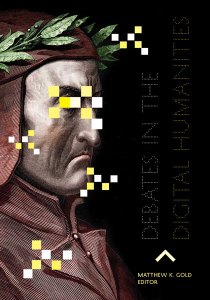 Debates in the Digital Humanities brings together leading figures in the field to explore its theories, methods, and practices and to clarify its multiple possibilities and tensions. Together, the essays—which will be published later as an ongoing, open-access website—suggest that the digital humanities is uniquely positioned to contribute to the revival of the humanities and academic life.
Encompassing new technologies, research methods, and opportunities for collaborative scholarship and open-source peer review, as well as innovative ways of sharing knowledge and teaching, the digital humanities promises to transform the liberal arts—and perhaps the university itself. Indeed, at a time when many academic institutions are facing austerity budgets, digital humanities programs have been able to hire new faculty, establish new centers and initiatives, and attract multimillion-dollar grants.
Clearly the digital humanities has reached a significant moment in its brief history. But what sort of moment is it? Debates in the Digital Humanities brings together leading figures in the field to explore its theories, methods, and practices and to clarify its multiple possibilities and tensions. From defining what a digital humanist is and determining whether the field has (or needs) theoretical grounding, to discussions of coding as scholarship and trends in data-driven research, this cutting-edge volume delineates the current state of the digital humanities and envisions potential futures and challenges. At the same time, several essays aim pointed critiques at the field for its lack of attention to race, gender, class, and sexuality; the inadequate level of diversity among its practitioners; its absence of political commitment; and its preference for research over teaching.
Together, the essays in Debates in the Digital Humanities—which will be published both as a printed book and later as an ongoing, open-access website—suggest that the digital humanities is uniquely positioned to contribute to the revival of the humanities and academic life.










 Enfilade
leave a comment