Anne Poulet, Director of The Frick, Announces Retirement
Press release from The Frick Collection:
Anne Poulet to Retire in September 2011

Director Anne L. Poulet (Photo: Christine A. Butler)
Margot Bogert, Chairman of The Frick Collection, announces that Director Anne L. Poulet will retire in the fall of 2011, following a remarkable tenure. “The Board of Trustees is deeply indebted to Anne Poulet for her leadership of The Frick Collection and accepts her retirement with enormous regret. Having served the institution with great distinction, commitment, and wisdom, Anne leaves the Frick—both the museum and the library—with a brilliant and multi-faceted legacy and a glowing and solid future. Principal among the long list of achievements associated with her leadership is a strong program of critically acclaimed exhibitions and publications, which provided visitors with new perspectives on artists and media represented in the collection and, in many cases, those complementary to it. Anne made remarkable acquisitions, by both purchase and gift, while maintaining an unwavering focus on the care and interpretation of the Frick’s existing holdings. Building on the strengths of the collection, she added staffing critical to the curatorial, conservation, education, and publications functions, most notably, creating an endowed position for the Frick’s first curator of decorative arts. Anne has directed a sensitive, systematic refurbishment of the 1914 mansion’s galleries and public spaces, a progression of initiatives that has often been cited as a model for museum custodianship. In the coming year, this work continues with the enclosure of the Fifth Avenue portico to create the first new gallery space added to the building in over thirty years. Under Anne Poulet, the Frick Art Reference Library has proactively pursued digitization and collection-sharing initiatives. The library’s mission to serve scholars has been enhanced by the continued development of its holdings and by the initiation of the ground-breaking creation of the Center for the History of Collecting in America. Finally, the overall health of The Frick Collection has been fortified by Anne’s successful fundraising program, through which she has fostered many avenues for support during challenging economic times. These include the formation of the Director’s Circle and a roster of fundraising events ranked highly on philanthropic and social calendars. With our supporters’ confidence in the future of the Frick at an all-time high, we owe Anne Poulet a huge debt of gratitude, knowing that as we move forward in the next year with the search for her successor, the institution is well-poised to make this transition and continue on a smooth and uncompromisingly productive path.” (more…)
Call for Papers: Performing Art Historical Research
Performing Research: Art History Not For Publication
Courtauld Institute, London, 6 May 2011
Proposals due by 10 January 2011
This conference seeks to explore the clarity, diversity, and freedom that can come from presenting art historical research directly to an audience, as opposed to through traditional publishing routes in books or academic journals. Shifting away from more static forms of analysis encouraged by the inevitable limitations of print-based media, the conference will investigate and exploit the evolving technologies at the disposal of researchers. It will give an opportunity for scholars at all stages of their careers to experiment with dynamic, alternative methods of communicating research, allowing and encouraging the format of papers to both reflect and directly comment upon the subject presented.
Building on seminar workshops on Art History and TV, Art History and Radio, and Art History and the Internet, the group invites abstracts for short 15 minute papers from all areas of the discipline. In each case the art historical research presented should be further elucidated through a novel and alternative presentation method, be it visual, aural, or action-based. Joint papers or collaborations between art historians, or between art historians and practitioners from other disciplines (especially the visual arts) are welcome and encouraged. In keeping with this ethos conference recordings will be archived in an open online forum. Possible papers: (more…)
Newly Installed Galleries at Nuremberg
The newly installed galleries of the Germanischen Nationalmuseums in Nuremberg opened this past spring. A catalogue with 39 essays is now available from artbooks.com. From the museum’s website:
Renaissance, Barock, Aufklärung: Kunst und Kultur vom 16. bis zum 18. Jahrhundert
Germanischen Nationalmuseums, Nuremberg — The new galleries opened in March 2010
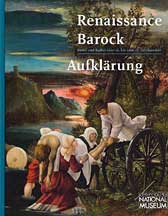
ISBN: 9783936688474 ($95)
Die neue Schausammlung lädt zu einem kulturhistorischen Gang durch drei Jahrhunderte ein. Er führt von der Entdeckung der neuen Welt um 1500 bis zur Entwicklung eines neuen Menschenbildes im 18. Jahrhundert. Rund tausend Objekte in 33 thematisch ausgerichteten Räumen erschließen zentrale Aspekte der Kunst- und Kulturgeschichte des 16. bis 18. Jahrhunderts im deutschen Sprachraum. Zu sehen sind neben Gemälden und Skulpturen auch Glasgemälde, Textilien, Kunsthandwerk, Schmuck, Medaillen, Möbel und Musikinstrumente sowie zwei historische Zimmer aus Nürnberger Bürgerhäusern der Renaissance. Meisterwerke von Albrecht Dürer, Peter Vischer, Rembrandt oder Franz Xaver Messerschmidt erscheinen in ihrem kulturgeschichtlichen Kontext. Im Dialog der Künste werden Themen wie Sammeln und Repräsentieren, Antikenrezeption und Naturstudium lebendig, wie auch die Wechselwirkung von Kunst und Glauben
sowie das sich wandelnde Bild vom Menschen.
Symposium: Arts of Spanish America and Early Global Trade
From the Denver Art Museum:
At the Crossroads: The Arts of Spanish America and Early Global Trade, 1492–1850
Mayer Center for Pre-Columbian and Spanish Colonial Art, Denver Art Museum, 12-13 November 2010
 During the era of early global trade instigated by the voyages of Columbus, Spanish America served as a crossroads for trade between Europe and Asia. Trade goods were exchanged between all areas and inspired artists to appropriate motifs, styles, and techniques previously unknown to them. The impact of trade on the arts of all regions and the transmission of objects and ideas between Spanish America, North America, Europe, and Asia will be included.
◊ ◊ ◊ ◊ ◊
S P E A K E R S
Karina Corrigan (Peabody-Essex Museum – Salem, MA), Chinese Export Silver to the Americas
Claire Farago & James Cordova (University of Colorado – Boulder), Casta Painting and Self-Fashioning Artists in New Spain
Dana Leibsohn (Smith College – Northampton, MA), Made in China / Made in Mexico
Jaime Mariazza F. (Universidad de San Marcos – Lima, Peru), Royal Funerary Rites in 17th-Century Lima: The Catafalque of Margaret of Austria
Maria Bonta de la Pezuela (Sotheby’s – New York), The Perils of Porcelain: Chinese Export Porcelain in the Mexican Colonial Market
Donna Pierce (Denver Art Museum), Asian Trade Goods in Colonial New Mexico
Sara Ryu (Yale University – New Haven), Transatlantic Icons of Conquest: Cristos de caña in New Spain and the Canary Islands
William Sargent (Peabody-Essex Museum – Salem, MA), Asian Ceramics in New England
Suzanne Stratton-Pruitt (Independent Scholar – New York), From Spain to Peru: Paintings by the Dozen
Charlene Villasenor Black (University of California – Los Angeles), Saints’ Cults and Conversion in the Global Hispanic World
National Research Council Releases Rankings for Ph.D. Programs
As David Glenn reports for The Chronicle of Higher Education (28 September 2010) . . .
Now it can be told. The American doctoral program with the longest median time-to-degree is the music program at Washington University in St. Louis: 16.3 years. That’s just one of a quarter million data points that appear in the National Research Council’s new report on doctoral education in the United States, which was finally unveiled Tuesday afternoon after years of delay. (The Chronicle has published an interactive tool that allows readers to compare doctoral programs across 21 variables.) The NRC’s new ranking system will draw the most immediate attention. It is far more complex than the method the agency used in its 1982 and 1995 doctoral-education reports. . .
The full article is available here. Useful discussion of the Art History rankings appear at The Art History Newsletter: here, here, here, and here.
Call for Sessions and Papers: Urban History
Urban History Group Annual Conference: Leisure, Pleasure, and the Urban Spectacle
Robinson College, University of Cambridge, 31 March — 1 April 2011
Proposals for Sessions and Papers due by 29 October 2010
This conference theme broadly explores the pursuit of pleasure in the context of the history of towns and cities. The conference organisers are interested in investigating the significance of specifically urban forms of pleasure and leisure for understanding the historical dynamics of social, economic and cultural relationships. Towns and cities have historically offered an array of pleasures to cater for ever larger concentrations of people. The types of leisure activities available to urban populations have never remained static; indeed, changing social and economic conditions have transformed popular leisure patterns over time as well as across urban space. The pursuit of pleasure, both licit and illicit, has adapted with the changing relationship between work and leisure. As working hours became increasingly rigid during the eighteenth and nineteenth centuries, so too did leisure time. The lack of free time was further exacerbated by growing pressures on land use. Thus, the pursuit of pleasure was increasingly set aside for specific buildings (inns, brothels, theatres, music halls and, more recently, fitness centres) or clearly delineated spaces (botanical gardens, public parks, public walks, gated communities and even the internet) where access could, in theory, be carefully managed. Cities, seaside towns and holiday resorts were also developed to specifically cater for a variety of tastes and pleasures. Once it was recognised that there was money to be made out of the pursuit of pleasure, cities became intertwined with the business of leisure and began to market themselves as centres of tourism, heritage and culture. Some issues that the conference seeks to consider include: (more…)
Reattribution Points to Romney
Press release from the Dallas Museum of Art (8 September 2010) . . .

George Romeny, "Young Man with a Flute," ca. 1760s (Dallas Museum of Art) -- previously attributed to the American painter, Ralph Earl.
The Dallas Museum of Art announces the reattribution of the painting, Young Man with a Flute, to the artist George Romney. The work of art has been in the Museum’s collections for nearly 25 years and entered it in 1987 as part of a bequest of Mrs. Sheridan Thompson. At the time of the painting’s acquisition, the artist was unknown but the painting was thought to be by the American colonial era portrait painter Ralph Earl.
Then in 2000 on a visit to the Museum, British art dealer Phillip Mould suggested that the painting might be the oeuvre of English painter George Romney (1734–1802) but was not able to provide further evidence to the DMA. Ten years later, and soon after his arrival at the DMA from the Louvre, Olivier Meslay, Senior Curator of European and American Art and The Barbara Thomas Lemmon Curator of European Art, viewed the painting in the art storage area, learned of Mould’s earlier suspicion, and wanted to know more. He showed the work of art to another visiting expert, Piers Davies, Specialist of Old Master Paintings with Christie’s, New York. Davies, like Mould a decade earlier, immediately noted the likeness of Young Man with a Flute to the style of similar portraits by Romney from around the same time period, 1760–1770.
Meslay then contacted the internationally renowned Romney expert Alex Kidson, Consultant Curator with the National Museums Liverpool. Kidson analyzed the painting and determined the painter to be George Romney, a key figure in 18th-century British art. Romney was a contemporary of Sir Joshua Reynolds and Thomas Gainsborough and after Reynolds’ death in 1792 Romney became the most famous portrait painter in England. . . .
Mrs. Sheridan Thompson purchased Young Man with a Flute in 1961 from Hirschl & Adler Galleries in New York. Prior to that, the gallery had purchased the painting from a gentleman in 1960 who resided in London. It is unknown when the painting was wrongly attributed to Ralph Earl, but Earl did study in London for a number of years and focused in portrait paintings.
Call for Papers: Orientalism in Europe up to 1700
The conference ends where HECAA begins, but this early phase of Orientalism may still be relevant for dixhuitièmistes thinking about the topic. This is, incidentally, the first time I’ve ever seen the following in a CFP: send “a brief cv or a reference to your personal website.” For more information, see the conference website:
The Dialectics of Orientalism in Early Modern Europe, 1492-1700
University of Illinois, Urbana-Champaign, 7-8 October 2011
Proposals due by 15 November 2010
In early modern Europe, discourses on and images of the Orient and Islam are inextricably tied to the rise of national consciousness and the formation of a European identity as several Western states were striving for imperial supremacy. The goal of this international and interdisciplinary conference is to explore the dialectical function of early modern Orientalism for the creation of different notions of a collective self: national, European, and/or imperial.
We invite proposals for contributions that analyze the multiple uses of an imaginary Islam and Orient and compare at least two national orientalist discourses and/or the intersection of nation-building and the invention of Europeanness catalyzed through these discourses. Beyond being simplifications, what role do stereotypes play in the complex and often contradictory rhetorical dynamics that served to articulate, implement and promote both internal policies and supranational endeavors of imperial supremacy? To whom are these stereotypical representations addressed and through what media? In what instances does the creation of a fictive homogeneous nation lead to the conceptual “islamization” of minority groups? Is there a competition among European nation-states for the hegemony in the representation of the Oriental, and in which ways does it feed into a transnational rivalry for imperial power? What does the comparison of different national accounts of Orientalism reveal about the supposed homogeneity of the stereotypical Muslim? (more…)
American Friends of the Warburg Institute
In regards to the uncertain future of the Warburg Library, Mary Garrard offers the following information (posted on the caah listserv) . . .
There exists a group called the American Friends of the Warburg Institute (AFWI), which solicits and accepts contributions to support the Warburg Library. On September 28, their board voted to help substantially defray the costs of legal procedures to keep the Warburg Institute from being subsumed into the general London University Library system. Those interested in joining the AFWI and/or contributing to this effort are encouraged to contact Carla Lord at carlalord@aol.com or 212-757-2774.
Betsy Ross Exhibition at Winterthur
From the Winterthur website:
Betsy Ross: The Life behind the Legend
Winterthur Museum, Delaware, 2 October 2010 — 2 January 2011

(Henry Holt & Co., 2010) $30, ISBN: 978-0-8050-8297-5
Both iconic and controversial, Betsy Ross is one of the best known figures of the American Revolutionary era—and also the least understood. The story of Betsy Ross and the making of the first American flag was introduced to public audiences by her grandson William Canby in 1870, at a talk before the Historical Society of Pennsylvania. The legend that grew cast Betsy as a simple seamstress honored by an unexpected chance to contribute to the independence movement. But the real Elizabeth Griscom Ross Ashburn Claypoole (1752–1836) would not have recognized the Betsy Ross of popular historical imagination.
Among the early flagmakers of the rebellion, Ross also fabricated cartridge cases for American soldiers and was among the most important professional flagmakers of the new republic. She labored for more than five decades as an upholsterer, crafting chair cases and covers and curtains and blinds as well as fabricating thousands of yards of fringe and tassels.
Co-curated by Marla Miller (University of Massachusetts) and Winterthur’s Linda Eaton and Katie Knowles, this exhibition reveals the life and work of this celebrated flagmaker and upholsterer and looks at how the legend began.










 Enfilade
leave a comment