New Title: Eighteenth-Century Royal Monuments
Charlotte Chastel-Rousseau, ed., Reading the Royal Monument in Eighteenth-Century Europe (Aldershot: Ashgate, 2011), 232 pages, ISBN: 9780754655756, $99.95.
 Reading the Royal Monument in Eighteenth-Century Europe is the first in-depth study of the major role played by royal monuments in the public space of expanding cities across eighteenth-century Europe. Using the royal public statues as the basis for its examination of modern European cities, the book considers the development of urban landscapes from the creation of capital cities to the last embers of the Ancien Régime and at how the royal politics of the arts affected the cityscapes of the time. The focus of the book thereby intersects across a spectrum of disciplines, including the social and architectural history of cities, the politics of urban planning, the history of monumental sculpture, and the material culture of the eighteenth century.
- Charlotte Chastel-Rousseau, Introduction
- Etienne Jollet, The king and others: multiple figures in French royal monuments of the modern era
- Daniel Rabreau, Statues of Louis XV: illustrating the monarch’s character in public squares whilst renewing urban art
- Godehard Janzing, ‘Levez-vous, citoyens!’ Military reforms and the fate of the pedestal slaves in 18th-century France
- Miguel Figueira de Faria, 6 June, the king’s birthday present: an insight into the history of royal monuments in Portugal at the end of the ancien régime
- Basile Baudez, The monument to Peter the Great by Falconet: a place royale by the Neva?
- Johan Cederlund, Two royal monuments in Stockholm
- David Bindman, King of the new republic: Houdon’s equestrian monument to George Washington
- Alexander Grönert, Independence in the imperial realm: political iconography and urbanism in 18th-century Palermo
- Charlotte Chastel-Rousseau, Originals or replicas? Royal equestrian monuments in 18th-century Great Britain and Ireland,
- Philip McEvansoneya, Royal monuments and civic ritual in 18th-century Dublin
Charlotte Chastel-Rousseau received a PhD in history of art from the Université Paris I- Panthéon- Sorbonne on “Royal monuments and public space in Great-Britain and Ireland, 1714-1820” in 2005. After ten years spent in England, in Oxford, London, and Leeds, she now lives in Paris and works in the Musée du Louvre for the art-historical programmes in the auditorium. She has mainly written on eighteenth-century British and French monumental sculpture and town-planning and is currently particularly interested in the circulation of artistic models and ideas in a European cultural space from the Renaissance to the eighteenth century.
‘Paris: Life & Luxury’ Opens at the Getty
The Getty exhibition on life in an eighteenth-century Parisian townhouse opens next week. The image list is available here. Programming includes the following, as noted in the Press Kit:
Paris: Life & Luxury
J. Paul Getty Museum, Los Angeles, 26 April — 7 August 2011
Museum of Fine Arts, Houston, 18 September — 10 December 2011
Curated by Charissa Bremer-David with Peter Björn Kerber
 Evoking the elegant, prosperous world of Rococo Paris, this major, international loan exhibition brings to life activities that took place inside a Parisian town house over the course of a typical day—from dressing and letter writing to dining, music, and other evening entertainments. Paris: Life and Luxury unites prime examples of the extraordinary creative virtuosity of the period’s great artists and craftsmen, including furniture, fashion, silver, paintings, sculpture, musical instruments, clocks, and books. Rarely shown together, these objects literally and figuratively open up, allowing their functions and the parts they played in the fine art of eighteenth-century Parisian living to be understood by contemporary visitors.
L E C T U R E S
Blogging, Now and Then (250 Years Ago)
Thursday, April 28, 7:00 pm
Long before the Internet, Europeans exchanged information in ways that anticipated blogging. The key element of their information system was the anecdote, a term that meant nearly the opposite then from what it means today. Robert Darnton (Carl H. Pforzheimer University Professor and Director of the Harvard University Library at Harvard University) explains how anecdotes became a staple in the daily diet of news consumed by readers in 18th-century France and England.
Street Songs and Sedition in 18th-Century Paris: A Cabaret-Lecture
Saturday, April 30, 7:30 pm
In 18th-century Paris, most information traveled through oral systems of communication, and the most powerful means of transmission was song. Parisians composed new verses to old tunes nearly every day. The songs provided a running commentary on current events. In this presentation, Parisian cabaret artist Hélène Delavault sings historical songs and, with Robert Darnton (Carl H. Pforzheimer University Professor and Director of the Harvard University Library, Harvard University), explains their complex meanings.
Representing Interiors in French 18th-Century Portraits
Sunday, May 22, 3:00 pm
Xavier Salmon, Director of Patrimony and the Collections at the Château of Fontainebleau, explores the development and significance of domestic portraiture in 18th-century France. During this period, painters were careful to provide indications of the profession or social standing of their sitters, and the genre developed to showcase the subjects in domestic settings.
C O U R S E S
Life and Luxury in 18th-Century Paris
Saturday, July 16, 10:30 am—3:30 pm
Join this focused course exploring the domestic activities of the 18th-century French elite. Educators Noelle Valentino and Christine Spier, together with one of the exhibition’s curators, examine how decorative arts relate to the daily rituals of the period. Course fee: $35; $25 students.
Culinary Workshop: Taste of Paris
Thursday, June 16, 10:30 am – 2:00 pm; repeats June 17
Travel to an 18th century Parisian town house in the exhibition Paris: Life and Luxury and discover the prevailing culinary and artistic tastes of the prosperous world of Rococo Paris. Then prepare and enjoy a class meal inspired by period foods and recipes. Course fee $75. Open to 20 participants.
A R T I S T – A T – W O R K – D E M O N S T R A T I O N
Paris Fashion
Sunday, May 1, 15, & 29, and June 5 & 19, 1:00—3:00 pm
Join historic costume designer Maxwell Barr as he explores fashion in the prosperous world of 18th-century Paris. Barr demonstrates the extraordinary craftsmanship and virtuosity of the textiles and designs used to create period clothing. (more…)
Eighteenth-Century Easter Bunny at Winterthur
From ArtDaily:
Eighteenth-Century Drawing of an Easter Rabbit
Winterthur Museum, 21 April — 8 May 2011

Attributed to Johann Conrad Gilbert, "Easter Rabbit," second half of the eighteenth century (Winterthur Museum)
Winterthur Museum recently acquired one of the earliest known American depictions of the Easter Bunny, which was sold at Pook & Pook auction house in Downingtown, Pennsylvania. Together with the Christmas tree, the custom of the Easter rabbit and colored eggs was brought to America by immigrants from southwestern Germany in the 1700s, and has become a favorite American tradition. This delightful image is attributed to schoolmaster Johann Conrad Gilbert (1734–1812), who emigrated from Germany in 1757 and ultimately settled in Berks County, Pennsylvania. He likely made the drawing as a gift for one of his students. A similar drawing, also attributed to Gilbert, is in the collection of
Colonial Williamsburg.
These drawings are examples of a Pennsylvania German tradition of decorated manuscripts known as fraktur, which include birth and baptismal certificates, family records, writing samples, and bookplates. Lisa Minardi, a fraktur expert and assistant curator of the museum’s current exhibition, Paint, Pattern & People: Furniture of Southeastern Pennsylvania, 1725–1850, notes, “The Easter rabbit drawing is one of the rarest of all fraktur, with only two examples known, and is a major addition to Winterthur ’s collection.” “This important acquisition allows Winterthur to document the Germanic beginnings of a beloved American tradition,” adds J. Thomas Savage, Winterthur ’s director of museum affairs.
The full article at ArtDaily is available here»
Furniture Exhibition at Winterthur: ‘Paint, Pattern, and People’
Press release from Winterthur:
Paint, Pattern & People: Furniture of Southeastern Pennsylvania, 1725-1850
Winterthur, 2 April 2011 — 8 January 2012
Curated by Wendy Cooper and Lisa Minardi

ISBN: 9780912724690, $55
This landmark exhibition explores the colorful furniture of southeastern Pennsylvania along with the people who made, owned, inherited, and collected it. Featuring nearly 200 objects—including furniture, fraktur, needlework, and paintings—the show focuses on the culture and creativity of the area’s English- and German-speaking inhabitants. Paint, Pattern & People sheds new light on southeastern Pennsylvania’s highly distinctive local expressions of furniture and presents important objects for which the maker or family history is known. This well-documented furniture provides a new context to understand the objects as fully as possible and place them within specific locations. Although the exhibition is about furniture, it is not about dovetails and glue blocks but rather the people of the region who are the threads from which the story is woven. Thus the furniture in Paint, Pattern & People is the vehicle that transports us into the lives of our ancestors and leads to a greater understanding of our rich cultural heritage.
Due to William Penn’s policy of religious tolerance that attracted people of various faiths and ethnic backgrounds, Pennsylvania was the most culturally diverse of the thirteen colonies. Through the study of objects produced by this great mixed multitude, the extraordinary vibrance and variety of the region’s furniture comes into focus. Ethnicity, religious affiliation, personal taste, socioeconomic status, and the skill of the craftsman all influenced local forms, ornamentation, and construction. (more…)
Exhibition: ‘Picturing the Senses in European Art’
From the MFAH:
Picturing the Senses in European Art
The Museum of Fine Arts Houston, 10 April — 17 July 2011

Sebastiano Ceccarini, "Portrait of the Young Princes Marescotti of Parrano," 1745
Picturing the Senses in European Art, organized by the Sarah Campbell Blaffer Foundation, explores artists’ interest in evoking the five senses through both allegorical and realistic associations. The exhibition of 16th-, 17th- and 18th-century paintings and works on paper is drawn largely from the permanent collections of the Blaffer Foundation and the MFAH, and offers an opportunity to see some significant works that are not often on display while viewing others in a fresh context.
The theme of Picturing the Senses is simple and accessible, yet rooted in classical philosophy and art-historical tradition. “Picturing the Senses includes and reaches beyond the traditional scenes and cycles of the senses,” says Leslie Scattone, assistant curator of the Blaffer Foundation, “and covers a variety of subjects that evoke one or more of the senses. While all of the works are mediated through the sense of sight, many appeal to multiple senses, and the discovery of these can be an intriguing process.”
The five senses as a theme in art first emerged in the medieval period, when they were often associated with vice. During the 16th century, the senses began being treated as independent subjects, usually as allegories. A shift to more naturalistic depictions took place in the 17th century, paralleling intellectual developments of the time. (more…)
Study Day near Paris: Vauban’s Influence on Military Architecture
From Le Blog de APAHAU:
L’Influence de Vauban dans le Monde
Citadelle d’Arras, 7 July 2011
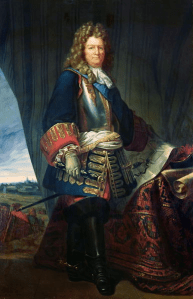 Vauban n’a jamais publié un traité de la fortification, considérant que, d’une part, « l’art de fortifier ne consistait pas dans des règles et des systèmes mais uniquement dans le bon sens et l’expérience », et d’autre part que, tombée entre les mains des puissances étrangères, une telle publication pourrait être utilisée contre la France. Il accepte cependant, à la demande de Louis XIV, de rédiger deux manuscrits sur l’attaque et la défense des places pour l’instruction du duc de Bourgogne, petit-fils du roi Soleil. Ces deux écrits, achevés en 1704 et 1706, seront imprimés aux Pays-Bas dès 1737. A partir de 1680, la réputation de Vauban en France est telle que ses contemporains commencent à mentionner les apports de Vauban dans les traités de la fortification, soit en les actualisant pour y inclure les innovations apportées par lui, soit en éditant des traités en prétendant livrer les méthodes de Vauban. Dans le monde entier on retrouve des fortifications bastionnées supposées être influencées par la méthode de Vauban, de par leur forme, ou parce que des ingénieurs de l’Europe occidentale ont contribué à leur construction. Cependant, lorsqu’on étudie ces sites de plus près, il s’avère que la filiation n’est pas toujours évidente à établir.
La journée d’étude aura pour objectifs :
1. de déterminer plus précisément par quelles voies l’influence a pu se faire,
2. d’identifier les sites ou secteurs géographiques où l’influence de Vauban est réelle,
3. de préciser quels sont exactement les aspects attribuables à Vauban.
Une première analyse de l’influence de Vauban dans le monde sur l’art de fortifier concernera la façon dont ces traités ont été utilisés à l’étranger. La seconde approche est celle de l’analyse architecturale et technique: quelles formes et quelles méthodes de construction, utilisées au-delà des frontières françaises jusqu’au milieu du XIXe siècle, peuvent être attribuées au grand ingénieur ?
Conference: Britain’s Soldiers, 1750-1815
From the conference website:

Britain’s Soldiers, 1750-1815
University of Leeds, 7-8 July 2011
Registration is now open for the two-day international conference on Britain’s relationship with its soldiers in the eighteenth century. It brings together an exciting range of over 20 papers into a series of panels, and covers social, cultural, and military history. The presentations cover all aspects of the men from the United Kingdom who served in the military and British attitudes towards them. From the identities and experience to the relationship between soldiers, culture and society. Sessions include:
- Soldiers and society
- Discipline and disorder
- Soldiers in art
- Identity and the experience of others
- Sources for studying soldiers
There will also be key note lectures from Professor Stephen Conway and Dr Stephen Brumwell.
Exhibition: London’s Lost Museums at the Hunterian
Press release from the Hunterian:
London’s Lost Museums: Nature and Medicine on Show
Hunterian Museum at the Royal College of Surgeons, London, 1 March — 2 July 2011
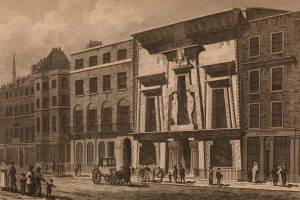
William Bullock's Egyptian Hall
London’s Lost Museums: Nature and Medicine on Show celebrates early natural history and anatomical collections once displayed in the capital, now ‘lost’ due to neglect, dispersal or destruction. With manuscripts, illustrations and specimens, the exhibition brings to life the contents, purpose and fate of seven historic collections and paints a portrait of curators and museum practices of the last 350 years. The exhibition also provides an opportunity to see fascinating objects such as a rare illustrated catalogue, Museum Regales’ Societis from 1681, a mummified foot believed to be from the Royal Society’s Repository, and hear about the devastating bomb damage inflicted upon the Hunterian Museum during
the Second World War.
As noted by Sarah Pearson, Curator at the Hunterian Museum, “Displays of natural history and anatomy have been popular in London since the 17th century and were curated for various reasons, some enhanced social and professional credentials while others were created to inspire wonder or to educate. Whatever their purpose, precious remains of collections forgotten, dispersed or damaged have found their way into today’s museums, including the Hunterian Museum, and so centuries on are still helping to explain the world of nature and medicine.”
The seven ‘lost’ natural history and anatomy museums featured in the exhibition are:
1. The Royal Society’s Repository – 17th to 18th century
2. Sir Hans Sloane’s Museum – 17th to 18th century
3. Sir Ashton Lever’s Holophusikon and the Museum Leverianum – 18th to 19th century
4. William Bullock’s Egyptian Hall – early 19th century
5. Joshua Brookes’ museum of anatomy and natural history – 18th to 19th century
6. John Heaviside’s anatomy museum – 18th to 19th century
7. The original College Museum at the Royal College of Surgeons – 19th to 20th century
◊ ◊ ◊ ◊ ◊
London’s Lost Museums Study Day
Hunterian Museum at the Royal College of Surgeons, London, 21 May 2011
For those inspired by the exhibition London’s Lost Museums, this study day offers the opportunity to learn more about museums that did not survive the test of time. Engage with the material and manuscript remnants of forgotten collections and tour the exhibition with its curators. Featuring speakers from across the heritage sector:
* Sam Alberti (Royal College of Surgeons) on lost medical museums
* Alan Bates (University College London) on lost anatomy shows
* Caroline Cornish (Royal Holloway) on Kew’s lost museums
* Stuart Eagles on the lost art museum at Ancoats
* Tim Knox (Sir John Soane’s Museum) on a lost architectural museum
* Frances Larson (Durham University) on Wellcome’s lost collection
* Chris Plumb (University of Manchester) on lost animal displays
£45/£35 concessions (MGHG members; College members, fellows and affiliates, full-time students). Includes refreshments and lunch. Bookings: 020 7869 6560. More information is available here»
St Paul’s in HD — Just Like Being There?
This panoramic view of St. Paul’s in London is extraordinary. I’ve excerpted below the marketing copy from the company’s website. Quite apart from the quality of the image, it’s interesting to see this latest installation in the rhetoric of the real: it’s “just like actually being there” along with requisite exclamation marks!!! Click on the photo to view the interior images. From Spherical Images:
 A London-based virtual tour company, Spherical Images provide HD quality virtual tours by photographing your venue using ground breaking technology – allowing you to bring your venue to the customer with unparalleled impact and quality. . . .
SPHERICAL IMAGES HD VIRTUAL TOURS BRING YOUR VENUE TO THE CUSTOMER IN UNRIVALLED DETAIL
They won’t just get an impression of your Venue, they will see what it is actually like to be there. This means they can plan an event and see the true potential and beauty of your Venue. Our Virtual Tours are shot using cutting edge photography techniques such as High Dynamic Range (HDR) and exposure blending to give you a full screen HD experience that is just like actually being there! Virtual Tours are becoming an essential tool for showing Venues online. Make your website convert by showing customers what you have.
ST PAUL’S CATHEDRAL 15.5 GIGA PIXEL PANORAMA (GIGAPAN)
One of the largest indoor photographs ever taken: 2,400 images stitched together to make a 15.5 Giga Pixel panorama. It took 3.5 hours to shoot – during which time the cathedral had completely filled up with tourists – hence the ‘half people’, floating heads etc! . . .
Reviewed: ‘Gem Engraving in Britain from Antiquity to the Present’
Recently published by Apollo Magazine:
Julia Kagan, Gem Engraving in Britain from Antiquity to the Present (Oxford: Archaeopress, 2010), ISBN 9781407305578, £80 / $160.
Reviewed by Diana Scarisbrick; posted 1 April 2011.
Neglected for years, the study of English glyptics has recently taken on a new lease of life. Following the publication of Professor Sir John Boardman’s ‘The Marlborough Gems’ (2009) and of his catalogue, co-authored by Kirsten Aschengreen Piacenti, of the collection of HM Queen Elizabeth II, it is now the turn of Julia Kagan. Here, she tells the whole story, from its roots in the mid-1st- century-BC Roman invasion up to modern times, bringing together in chronological sequence the many artists, patrons, collectors and scholars involved. Her narrative is easy to read, fully illustrated, with every statement supported by a reference, helpfully inserted into the text and not relegated to the back of the book. . . .
The full review is available here»










 Enfilade
leave a comment