Exhibition | The Art of Golf: The Story of Scotland’s National Sport
Press release (11 July 2014) for the current exhibition:
The Art of Golf: The Story of Scotland’s National Sport
The Scottish National Gallery, Edinburgh, 12 July — 26 October 2014

David Allan, William Inglis (ca. 1712–1792), Surgeon and Captain of the Honourable Company of Edinburgh Golfers (Scottish National Gallery)
The Scottish National Gallery is delighted to take part in the sporting celebrations taking place this summer in Scotland with The Art of Golf: The Story of Scotland’s National Sport. The exhibition will overlap with two important events: the Commonwealth Games, Glasgow (23 July–3 August) and the Ryder Cup, Gleneagles (23–28 September), the biennial competition played between teams of professional golfers representing the United States and Europe. The Art of Golf explores golf as a subject of fascination for artists from the seventeenth century to the present day, with a particular emphasis on the emergence of the sport in Scotland.
The Art of Golf will bring together around 60 paintings and photographs—as well as a selection of historic golfing equipment—with works by artists such as Rembrandt van Rijn (1606–1669), Sir Henry Raeburn (1756–1823), Hendrick Avercamp (1585–1634) and Paul Sandby (1731–1809) illustrating the origins of the game. Other highlights will include Sir John Lavery’s (1846–1951) beautiful 1920s paintings of the golf course at North Berwick, a coastal resort 25 miles east of Edinburgh, and colourful railway posters for popular destinations such as Gleneagles, which illustrate the boom in golfing tourism in the inter-war years. Stunning images of golf courses from Brora to the Isle of Harris by contemporary photographer Glyn Satterly and spectacular aerial shots by artist and aviator Patricia Macdonald will bring the exhibition up to present day. Generous loans from a number of famous Scottish golf clubs, the British Golf Museum in St Andrews and private collectors have been secured for this exhibition.
The centrepiece of the show will be the greatest golfing painting in the world, Charles Lees’s 1847 masterpiece The Golfers. This commemorates a match played on the Old Course at the Royal and Ancient Golf Club, St Andrews, by Sir David Baird and Sir Ralph Anstruther, against Major Hugh Lyon Playfair and John Campbell of Saddell. It represents a veritable ‘who’s who’ of Scottish golf at that time and was famously reproduced in a fine engraving which sold in great quantities. Lees (1800–80) made use of photography, at a time when it was in its infancy, to help him design the painting’s overall composition. The image in question, taken by photography pioneers D O Hill & Robert Adamson, will be included in the show and Lees’s preparatory drawings and oil sketches will also be displayed alongside the finished painting to offer visitors further insight into the creation of this great work. Impressions of The Golfers are now in many of the greatest golf clubhouses around the world. The painting is jointly owned by the National Galleries of Scotland and the Royal and Ancient Golf Club of St Andrews.

David Allan, The Prize of the Silver Golf: Officer Carrying a Decorated Golf Club, Two Soldiers with Drums behind Him, ca. 1785 (Scottish National Gallery)
Golf has been played in Scotland since at least the fifteenth century. Whilst its origins are obscure, it is undoubtedly close to the Netherlandish game of ‘colf’, which was played over rough ground or on frozen waterways, and involved hitting a ball to a target stick fixed in the ground or the ice. ‘Colvers’ playing on the frozen canals are seen in Dutch seventeenth-century paintings which form the earliest part of the show. In Scotland the game is often played over ‘links’ courses, originally rough common ground where the land meets the sea. The majority of Scotland’s famous old courses, such as St Andrews or North Berwick, are links courses. In Edinburgh, the early links courses of Bruntsfield, Leith and Musselburgh are shown in works by Sandby and Raeburn.
Michael Clarke, Director of the Scottish National Gallery, said: “This show is designed to be fun and to bring together two publics, lovers of art and lovers of golf. Where better to do this than in this world-class gallery, with its great Old master and Scottish paintings, which is situated in Scotland’s beautiful capital city of Edinburgh, and through which so many golfers pass on their way to our internationally renowned courses.”
◊ ◊ ◊ ◊ ◊
From ACC Distribution:
Michael Clarke and Kenneth McConkey, The Art of Golf (Woodbridge: Antique Collectors Club, 2014), 72 pages, ISBN: 978-1906270674, £13.
 The Art of Golf illustrates how the noble game has been depicted in European art from the seventeenth century to the present day. This fascinating story is told by images in a variety of media, from paintings and prints to photographs and posters. The centrepiece is Charles Lees’s The Golfers, 1847, which depicts a match played on the Old Course at St Andrews in 1847, and is one greatest golfing painting in the world. In his essay Michael Clarke, director of the Scottish National Gallery, outlines the story behind the development of the game, while art historian Kenneth McConkey discusses the series of paintings of golf at North Berwick made by Sir John Lavery in the years following the Great War.
Michael Clarke is Director of the Scottish National Gallery in Edinburgh. He has published widely, including books on English watercolours, the landscape painter Camille Corot, and his second, revised edition of The Oxford Concise Dictionary of Art Terms was published in 2010. Most recently he co-curated the international exhibition Impressionist Gardens (2010–11) and wrote the exhibition catalogue of French Drawings in the Scottish National Gallery (2011). Kenneth McConkey is Professor of Art History and Dean of the Faculty of Arts and Design, the University of Northumbria at Newcastle. He has written extensively about late Victorian and Edwardian painting.
◊ ◊ ◊ ◊ ◊
The politics of gender, golf, and Scottish identity will soon go to the polls. On September 18 (the same day, Scots vote to stay or secede from Britain), members of the Royal and Ancient Golf Club (roughly 2500 men) will vote on the question of whether women may be admitted. As reported by The New York Times, for Louise Richardson, the principal of the University of St. Andrews, the discriminatory policy is also a “workplace hurdle.” Karen Crouse’s article, “In St. Andrews, a Heavy Knock on a Neighbor’s Door: First Female President of University of St. Andrews Fights for Admittance at Royal and Ancient Golf Club,” appeared in the paper on 11 July 2014.
Update (added 22 September 2014) — As Crouse reports in The New York Times (18 September 2014). . .
The Royal and Ancient Golf Club voted overwhelmingly to admit its first female members. . . . Peter Dawson, the secretary of the club, announced the results of a postal balloting of the club’s 2,400 male members, many of whom were on site in matching blue jackets and patterned blue ties. About three-quarters of the members participated in the voting, he said, with 85 percent of them opting to accept women. . .
Call for Essays | Art History and Disability Studies
From H-ArtHist:
Edited Volume: Art History and Disability Studies
Proposals due by 15 September 2014
Contributions are sought for an interdisciplinary collection of essays on art history and disability studies for an edited volume to be published by Ashgate Publishing Co., as part of the series Interdisciplinary Disability Studies. Art history has not been as influenced by disability studies as have other disciplines of the humanities. Art historians have analyzed images by and about disabled people without integrating disability studies scholarship, while many disability studies scholars refer to images, but do not necessarily incorporate art historical research and methodology. This edited volume centers on interdisciplinary art history and disability studies scholarship.
Papers may address issues such as the following:
• Specific representations of disability throughout art history, including works by disabled and nondisabled artists
• Portraits of disabled individuals throughout history, with visible and/or invisible impairments
• Scientific, anthropological, and vernacular images of disability and how they have influenced fine art
• Representations that display disability and eroticization
• Performance in the forms of artworks and in the everyday lives of disabled individuals
• Theories and implications of looking/staring versus gazing in disability studies and in art history
• Examples of visual art that represent and/or challenge stereotypes of disability
Submissions due by September 15, 2014. All submissions must represent previously unpublished work. Please send an abstract of no more than 300 words and a CV to Ann Millett-Gallant (amillett@nc.rr.com) and Elizabeth Howie (ehowie@coastal.edu). Selected authors will be notified by October 15, 2014 and will contribute a full length essay of approximately 6000 words by April 1, 2015. All chapters will be reviewed by the editors before submission to the publisher and will be subject to an additional external review.
New Book | The Gods Want Blood
A new English translation of the 1912 novel, published last year and recently released in paperback from Alma Classics:
Anatole France, The Gods Want Blood, translated by Douglas Parmée (Richmond, Alma Classics, 2013), 256 pages, ISBN: 978-1847493194, $15.
 Set in Paris during the years of the Reign of Terror, The Gods Want Blood centres on the rise to power of the Jacobin sympathizer Évariste Gamelin, a young painter who becomes a juror on a local Revolutionary tribunal. Caught up in the bloodthirsty madness surrounding him, he helps to dispense cruel justice in the name of his ideals, while at the same time succumbing to his own petty instincts of revenge when he jealously pursues a rival for the affections of his lover Élodie.
Benefiting from Anatole France’s meticulous historical research, this fascinating and timeless novel sheds light on a complex world of rival factions and institutions of state terror and vividly portrays the lives and psyches of ordinary people who are complicit in acts of public barbarity.
◊ ◊ ◊ ◊ ◊
From The TLS Blog:
Adrian Tahourdin, “Anatole France and Proust,” The TLS Blog (19 September 2013).
A new translation of Anatole France’s novel Les Dieux ont soif is being published next month by Alma Classics, as The Gods Want Blood. First published in 1912, the book is set during the Terror of 1793–4 and features, fleetingly, both Marat and Robespierre. As its translator Douglas Parmée writes in his introduction, the novel has contemporary resonance: its main character, the mediocre painter (pupil of Jacques-Louis David) and revolutionary fanatic Évariste Gamelin “would surely make a first-rate suicide bomber.” France did his research thoroughly, with the result that his novel, in Parmée’s words, “bears throughout the stamp of historical authenticity.” . . .
The full posting is available here»
New Book | How to Ruin a Queen
From John Murray (a publishing house with its own eighteenth-century history: founded in 1768, the company remained under the Murray family’s control until 2002). . .
Jonathan Beckman, How to Ruin a Queen: Marie Antoinette and the Diamond Necklace Affair (John Murray, 2014), 400 pages, ISBN: 978-1848549982.
 A tale of greed, lust, deceit, theft on an extraordinary scale, charlatanry, kidnapping, assassination and escape from prison.
On 5 September 1785, a trial began in Paris that would divide the country, captivate Europe and send the French monarchy tumbling down the slope towards the Revolution. Cardinal Louis de Rohan, scion of one of the most ancient and distinguished families in France, stood accused of forging Marie Antoinette’s signature to fraudulently obtain the most expensive piece of jewellery in Europe—a 2,400-carat necklace worth 1.6 million francs. Where were the diamonds now? Was Rohan entirely innocent? Was, for that matter, the queen? What was the role of the charismatic magus, the comte de Cagliostro, who was rumoured to be two-thousand-years old and capable of transforming metal into gold?
This is a tale of political machinations and extravagance on an enormous scale; of kidnappings, prison breaks and assassination attempts; of hapless French police disguised as colliers, reams of lesbian pornography and a duel fought with poisoned pigs. It is a detective story, a courtroom drama, a tragicomic farce, and a study of credulity and self-deception in the Age of Enlightenment.
Jonathan Beckman is senior editor of Literary Review. He has degrees in English from the University of Cambridge and Intellectual and Cultural History from Queen Mary, University of London. In 2010, he won the Royal Society of Literature Jerwood Award for Non-Fiction.
New Book | Donatien Alphonse Francois de Sade
From Assouline:
Jean-Pascal Hesse, Donatien Alphonse Francois de Sade (Paris: Assouline, 2014), 192 pages, ISBN: 978-1614282020, $75.
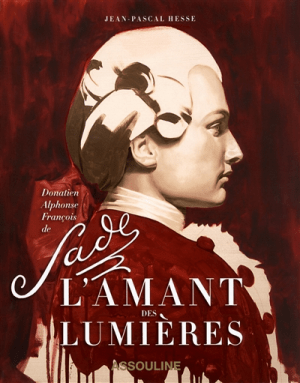 Man of letters, philosopher, and politician, the Marquis de Sade is one of the most controversial figures since the eighteenth century, but recently psychology, theater, cinema, and literary criticism have shed new light on his life and works. Lacoste Castle in the South of France, one of the properties of the Sade family, became the refuge of the Marquis between periods of incarceration. Thanks to the Sade family opening its archives for the first time, historian Jean-Pascal Hesse examines Sade’s story through previously unpublished documents and imagery and walks in the Marquis’ footsteps in his beloved château.
Originally from the region of Lacoste, historian Jean-Pascal Hesse is the author of a number of books, including Pierre Cardin: 60 Years of Innovation (2010), Maxim’s: Mirror of Parisian Life (2011), and The Palais Bulles (2012), all in close collaboration with Pierre Cardin and published by Assouline. He also serves on the Paris city council, and directs cultural events for the mayor of the 16th arrondissement.
Call for Papers | Dr Richard Mead: Physician, Philanthropist, Collector
From The Foundling Museum:
Dr Richard Mead: Physician, Philanthropist, Collector
The Foundling Museum, London, 20 October 2014
Proposals due by 15 August 2014

Allan Ramsay, Dr Richard Mead, 1747
(London: The Foundling Museum)
We invite proposals for papers for this cross-disciplinary one day conference hosted by the Foundling Museum. The conference is running in conjunction with the Museum’s autumn exhibition The Generous Georgian: Dr Richard Mead, which runs from 26 September 2014 to 4 January 2015. The exhibition, supported by the Wellcome Trust, the City of London and Verita, will consider the life, work and collections of Richard Mead (1673–1754), one of the founding governors of the Foundling Hospital.
Proposals on a variety of subjects relating to Mead and his context are welcome, including but not limited to the themes of the exhibition: his medical practice, his collecting and connoisseurship and his charitable activities. Proposals from early career professionals and works in progress are welcome.
All enquiries regarding the conference should be addressed to stephanie@foundlingmuseum.org.uk. Please e-mail proposals (approximately 200 words) to stephanie@ foundlingmuseum.org.uk by 15 August, 2014 with a brief biography (no more than 200 words). Some assistance with travel may be available; please indicate your needs when you send in your proposal.
Speakers will include:
Ludmilla Jordanova, Professor of History and Visual Culture at
the University of Durham and advisor to the exhibition
Stephanie Chapman, The Foundling Museum Curator
Conference | Textile Spaces: Silk in 18th-Century Courtly Interiors
From H-ArtHist:
Textile Spaces: Silk in 18th-Century Courtly Interiors /
Textile Räume: Seide im höfischen Interieur des 18. Jahrhunderts
Potsdam, 17–20 September 2014
Registration due by 1 September 2014
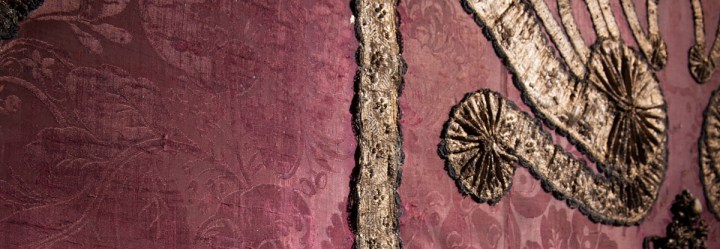
During the reign of Frederick II Berlin became a European centre of silk-production. Up to the present day the Prussian palaces give an impression of the high quality of decorative silks from the Berlin and Potsdam manufactures. On the occasion of the publication of the scholary catalogue about Prussian silks and textile decoration, the Prussian Palaces and Gardens Foundation Berlin-Brandenburg (SPSG) holds an international conference in Potsdam from September 17th to 20th. International speakers, including scholars, curators and conservators examine the importance of textile decoration and put the Prussian silks into a European context.
The conference is a co-operation with the Association of Conservators (Verband der Restauratoren). Guided tours through the New Palace at Sanssouci, the Orangery Palace and Cecilienhof Palace are on offer. If you wish to attend, please note that registration and advance payment are required. The fee includes guided tours, lunches and refreshments. Registration ends at September 1st.
◊ ◊ ◊ ◊ ◊
W E D N E S D A Y , 1 7 S E P T E M B E R 20 1 4
9:30 Introduction by Samuel Wittwer, Director of Palaces and Collections, Prussian Palaces and Gardens Foundation Berlin-Brandenburg (SPSG)
9:45 Susanne Evers (Potsdam), Berliner Seiden in den Schlössern Friedrichs II
10:10 Corinne Thépaut-Cabasset (Paris), Silk for Versailles, 1680s–1780s
10:35 Marzia Cataldi Gallo (Genua), Genoese Textiles for Interior Decoration
11:00 Discussion
11:25 Tea and coffee
11:50 Tatjana Lekhovich (St. Petersburg), Textile Decoration of the 18th Century in Russian Palaces: From National Traditions to Grand European Styles
12:15 Bo Vahlne (Stockholm), Velvet, Damask and Taffeta in the Swedish Royal Palaces during 18th Century
12:40 Discussion
13:00 Lunch
14:00 Sabine Schneider (Dresden), Das Paradeappartement Augusts des Starken von 1719 im Dresdner Residenzschloss – Textile Ausstattung und Zeremoniell
14:25 Margitta Hensel (Dresden), Überlegungen zur textilen Ausstattung der Appartements im Sächsischen Palais zu Warschau unter König August III
14:50 Lieselotte Hanzl-Wachter (Wien), “von roth und gelb geflamten Dafend” – Textilien aus Schloss Hof
15:15 Discussion
15:40 Tea and coffee
16:10 Anika Reineke (Zürich), Von der Tapisserie zum Damast. Bild- und Raumrezeption seidener Wandbespannungen im 18. Jahrhundert
16:35 Anna Jolly (Riggisberg), „en suite“ – Ausdrucksformen eines textilen Gestaltungskonzeptes
17:00 Discussion
19:00 Dinner
T H U R S D A Y , 1 8 S E P T E M B E R 2 0 1 4
8:30 Karin Thönnissen (Krefeld), A la mode – eine gewebte Chinoiserie als Wandbespannung
8:55 Sjoukje Colenbrander, (Amsterdam), Chinese Silks Imported to Europe
9:20 Friederike Wappenschmidt (Neuwied), Chinesische Tapeten aus Seide und Papier – Ästhetische Differenz, Materialbewertung und Rezeption
9:45 Discussion
10:10 Tea and coffee
10:40 Silke Kreibich (Berlin), Posamenten in den preußischen Schlössern – Entwicklung und Datierung der Muster des 18. Jahrhunderts
11:05 Viktoria Pisareva (Dresden), Posamenten in den spätbarocken Innenausstattungen Augusts des Starken (reg. 1694–1733)
11:30 Annabel Westman (Richmond), A Luxury Necessity: The Use of Trimmings on 18th-Century State Beds in Britain
11:55 Discussion
12:20 Lunch
13:30 Isa Fleischmann-Heck (Krefeld), Angebot und Nachfrage – Produktpalette und Angebotspolitik aufstrebender Seidenfirmen in den preußischen Provinzen am Niederrhein im 18. Jahrhundert
13:55 Jens Bartoll (Potsdam), Berliner Seiden – Naturwissenschaftliche Untersuchung der Farbstoffe und Pigmente
14:20 Christa Zitzmann (Potsdam), Entwicklungsstand der preußischen Seidenweberei nach Auswertung gewebetechnischer Analysen
14:45 Nadja Kuschel (Potsdam), Die goldenen Posamente aus dem Tressenzimmer von 1768. Restaurierung und Kopie
15:10 Discussion
15:35 Tea and coffee
17:30 Guided tour through the New Palace at Sanssouci
For the programme for Friday and Saturday (19–20 September), please consult the conference website.
Call for Papers | Ad Vivum?

As noted at The Early Modern Intelligencer (from the Birkbeck Early Modern Society) . . .
Ad Vivum?
The Courtauld Institute of Art, London, 21–22 November 2014
Proposals due by 15 August 2014
Organised by Joanna Woodall and Thomas Balfe
The term ad vivum and its cognates al vivo, au vif, nach dem Leben and naer het leven have been applied since the thirteenth century to depictions designated as from, to or after (the) life. This one and a half day event will explore the issues raised by this vocabulary in relation to visual materials produced and used in Europe before 1800, including portraiture, botanical, zoological, medical and topographical images, images of novel and newly discovered phenomena, and likenesses created through direct contact with the object being depicted, such as metal casts of animals.
It is has long been recognised that the designation ad vivum was not restricted to depictions made directly after the living model, and that its function was often to advertise the claim of an image to be a faithful likeness or a bearer of reliable information. Viewed as an assertion of accuracy or truth, ad vivum raises a number of fundamental questions about early modern epistemology—questions about the value and prestige of visual and/or physical contiguity between image and original, about the kinds of information which were thought important and dependably transmissible in material form, and about the roles of the artist in this transmission. The recent interest of historians of early modern art in how value and meaning are produced and reproduced by visual materials which do not conform to the definition of art as unique invention, and of historians of science and of art in the visualisation of knowledge, has placed the questions surrounding ad vivum at the centre of their common concerns.
This event will encourage conversation and interchange between different perspectives involving a wide range of participants working in different disciplines, from postgraduate students to established academics. It seeks to encourage dialogue and debate by devoting a portion of its time to sessions comprising short, 10-minute papers, which will allow a variety of ideas and areas of expertise to be drawn into the discussion.
Topics may include, but are not limited to:
• The role of images, including book illustrations, described as ad vivum in early modern natural history, geography, cosmography, medicine and other investigative disciplines
• The meanings of ad vivum in relation to sacred images, portraiture, landscape depiction, animal imagery, and other types of subject matter involving a claim to life-likeness
• The connections between ad vivum and indexical images: death masks; life casts; the moulage; auto-prints made from natural phenomena
• The connections between concepts of ad vivum and graphic media: the print matrix; imitation and reproduction in print; drawings, diagrams which claim to be ad vivum
• The concept of ad vivum in cabinets of curiosities, sets and series, other groupings and collections
• The application of the phrase ad vivum and its cognates to specific images, and usages and discussions of the terminology in early modern texts
• The use of ad vivum in relation to images of the marvellous and the incredible, including monsters and other prodigies of nature
We invite proposals for:
1) 20-minute papers
2) Short, 10-minute (maximum 1,000-word) papers which will address one example or theme, or make one argument persuasively.
Please send proposals of no more than 250 words by 15 August 2014 to joanna.woodall@courtauld.ac.uk and thomas.balfe@courtauld.ac.uk.
The Call for Papers as a PDF file is available here» (from the blog Origins of Science as a Visual Pursuit)
◊ ◊ ◊ ◊ ◊
Note (added 29 July 2014) — The original version of this posting included the original, published dates of November 20–21; those dates, however, have shifted slightly and are reflected above and in the new PDF file with the Call for Papers. The conference is now scheduled for 21–22 November 2014.
Call for Papers | Representing the Habsburg-Lorraine Dynasty
From H-ArtHist (which includes the CFP in German). . .
Representing the Habsburg-Lorraine Dynasty in Musical,
Visual Media, and Architecture, c. 1618–1918
Vienna, 8–10 June 2015
Proposals due by by 31 October 2014
This international conference will take place in Vienna from the 8th to the 10th of June 2015. It will be devoted to the new interdisciplinary research program ‘Representing Habsburg’—one of the main current research fields of the Institute for History of Art and Musicology (IKM) of the Austrian Academy of Sciences focusing on the history of fine arts and music in Austria and Central Europe in their general European context. We invite submissions of papers from all art-related disciplines (history of art, musicology, history, theatre history, cultural studies etc.) to the five panels described below.
Representing the Habsburg-Lorraine Dynasty
The IKM intends to build its new research priority by subjecting the visual and musical culture of the Central European Habsburgs to completely new and extensive scrutiny. In particular, it plans to cast new light on the paradigm of a specifically ‘Habsburg’ representation that research has all but disregarded until now. Hence it is important to judge, on a case by case basis, how representation functioned in the complex relationship between the addresser and the addressee, the sender and the receiver, and which decision-makers favoured which kinds of communication networks. The investigations should also include the estates and social groups (the nobility, the clergy, the guilds and the municipalities) which functioned as the principal addressees of Habsburg activities. Consequently, the new research priority will need to ask how social groups reacted to dynastic activities (e.g. entries into the city, the idolisation of rulers, monuments, imperial and municipal halls containing portraits of regents and sculptural decorations), and how specific forms of representation were expressed in this process.
I. Topics and Media of Representation
On the premise that Habsburg representation was a successful mode of balancing (outward) self-presentation and (inward-looking) self-interpretation, it can be asked whether visual arts and music (as well as theatre) shared similar topics (topoi) and narratives. Is a Habsburg ‘code of virtues’ bound to be considered a compulsory basis for all participating court arts, or are there other social practices or political interests responsible for establishing a canon of subjects (e.g. Christian iconography or Classical mythology)? Are disruptions discernible in the process of actualizing panegyrics through musical and artistic production? How do innovations interact with the traditional representation of potentates? In the light of the courtly arts’ preeminent aim of representing the dynasty or the state, may we perceive any media-specific differences?
II. Ceremonial Spaces and the ‘Public’
Since the early modern period, music, visual arts, architecture and panegyric literature have been used for the plurimedial definition and design of the ceremonial space. The strategies used will be examined in more detail in this section: Are there differences in defining ceremonial space for different kind of publics (public space, sacred space, court space)? The question of how the architectural site related to plurimedially generated ceremonial space is of particular importance. Does immovable architecture only set the boundaries of the ceremonial space, or does it—together with music—constitute this area? This refers to court architecture as well as to sacred and urban architecture. The latter could be examined particularly in the context of the ruler’s ‘adventus’.
III. Dynasty, State and Nation
What was the relationship between the ruling Habsburg dynasty and the concepts of state and/or nation from the 18th century until the collapse of the monarchy? Was a primarily dynastic representation superseded by a state representation and—in the course of time—even pushed aside by concepts of national representations? Taking into consideration a wide range of artistic, architectural and musical genres (including for example, in the case of architecture infrastructural buildings and urbanism, and in the case of music ‘popular’ genres like operettas) we are interested in the structural/institutional characteristics of this kind of political representation, in their impact and intricacies and their intended signifying functions. We also welcome contributions that focus on oppositional representations or exemplify ‘regional’ and/or ‘peripheral’ forms within the empire as well as on a global level (e. g. in relation to associated courts overseas).
IV. Church and Representation
The Counter-Reformation led to a ‘propaganda campaign’, also carried out in the fields of the arts, in which the struggle for the ‘true faith’ and the ‘Pietas Austriaca’ were declared to be the causa prima of the dynasty, also by means of the arts. A crucial issue is the importance of representing religion in general and the Pietas Austriaca in particular at the intersection of court, city and church. How did the Habsburgs utilize the cult for their personal representation? And in contrast, how did religious communities use the dynasty (and even their close relationship with the dynasty) for their own purposes? To what extent was the ‘Pietas Austriaca’ politically deployed as a mode of symbolic communication, and which topoi were used by the (court) arts? Did music and art occupy a specific position in religious rituals such as pilgrimages, processions or services at Stations of the Cross (Stationsgottesdienste), which served to represent the ruler?
V. Decision Makers
If we understand dynastic representation not as a centrally determined top-down strategy but rather as the result of a complex intertwining of particular action and reaction processes, the following questions have to be posed (concerning the monarch’s advisors and decision makers from the institutions involved): What groups (imperial/royal family, court institutions, antiquarians and so on) participated in decisions and why? Is it possible to read their intentions out of historic sources? Are there similarities or differences with strategies of other dynasties? Beyond that, case studies of non-courtly Habsburg representation can be of interest. Analyses of such works should illuminate the circumstances of dynastic representation in the Habsburg monarchy.
Conference language: German and English
Lectures: 20 minutes
Abstracts: max. 2000 characters, CV (max. 500 characters)
Contact:
Univ.-Doz. Dr. Werner Telesko
Österreichische Akademie der Wissenschaften / Austrian Academy of Sciences
Institut für kunst- und musikhistorische Forschungen (IKM), Direktor /
Institute for History of Art and Musicology (IKM), Director
Dr. Ignaz Seipel-Platz 2
A-1010 Wien
werner.telesko@oeaw.ac.at
New Book | The Cobbe Cabinet of Curiosities
From The Paul Mellon Centre and Yale UP:
Arthur MacGregor ed., The Cobbe Cabinet of Curiosities: An Anglo-Irish Country House Museum (London: The Paul Mellon Centre for British Studies, 2014), 480 pages, ISBN: 978-0300204353, $125 / £75.
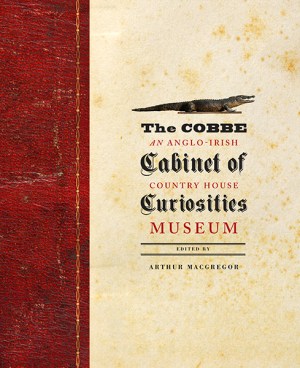 This lavishly produced volume presents a survey and analysis of a fascinating cabinet of curiosities established around 1750 by the Cobbe family in Ireland and added to over a period of 100 years. Although such collections were common in British country houses during the 18th and 19th centuries, the Cobbe museum, still largely intact and housed in its original cabinets, now forms a unique survivor of this type of private collection from the Age of Enlightenment.
A detailed catalogue of the objects and specimens is accompanied by beautiful, specially commissioned photographs that showcase the cabinet’s component elements. Reproductions of portraits from the extensive collection of the Cobbe family bring immediacy to the narrative by illustrating the personalities involved in the collection’s development. Scholars contribute commentary on the significance of the objects to their collectors; also included are essays outlining, among other topics, the place of the cabinet of curiosities in Enlightenment society and the history of the Cobbe family. Extracts from the extensive family archive place the collection in its social context.
Arthur MacGregor is a former senior assistant keeper in the Department of Antiquities at the Ashmolean Museum, Oxford.










 Enfilade
leave a comment