Exhibition | Jean-Etienne Liotard
On this summer at the Scottish National Gallery (more information to come in the spring). . .
Jean-Etienne Liotard
Scottish National Gallery, Edinburgh, 4 July — 13 September 2015
Royal Academy, London, 24 October 2015 — 31 January 2016
Curated by MaryAnne Stevens, William Hauptman, and Christopher Baker

Jean Étienne Liotard, Laura Tarsi, ‘A Grecian Lady’, watercolour and bodycolour on ivory, ca 1745–49 (Cambridge: Fitzwilliam Museum)
A stunning exhibition celebrating one of the greatest artists of the eighteenth century. The work of Jean- Étienne Liotard (1702–89) has been rarely exhibited, and this is the first time it will be comprehensively celebrated in Britain.
Liotard enjoyed a long career, and his finest portraits display an astonishing hyper-realism achieved through a combination of incredible, intense observation and remarkable technical skills. He excelled at the delicate art of pastel, but also drew, painted in oil, created enamels, and was a refined miniaturist and printmaker. His activity was prodigious: Liotard wrote a treatise on painting, was a collector, a dealer, a traveller and an artistic innovator. In the age of Mozart and Casanova, he was a key international figure whose achievement deserves to be better known. Highlights of this important show include famous portraits, startling self-portraits, and brilliant experiments with genre and still-life subjects from the end of his career.
◊ ◊ ◊ ◊ ◊
Update (added 5 July 2015) — From the press release:
The National Galleries of Scotland is delighted to announce a major exhibition in the summer of 2015 celebrating one of the greatest yet little- known artists of the eighteenth century. The work of Jean-Étienne Liotard (1702–1789) has rarely been exhibited and this is the first time it will be comprehensively celebrated in Britain. Liotard enjoyed a long career and his finest portraits display an astonishing hyper-realism achieved through a combination of incredible, intense observation and remarkable technical skills.
Liotard was one of the most sophisticated artists of eighteenth-century Europe; a brilliant, witty portraitist, he excelled at the delicate art of pastel, but also drew, painted in oil, created enamels and was a refined miniaturist and printmaker. According to his contemporary Horace Walpole “Truth prevailed in all his works.” In some respects he also displayed striking modernity as a highly accomplished self-publicist, formulating a powerful ‘eastern’ image of himself following his period in Constantinople, by wearing exotic clothes and growing a long beard, which became as much a focus of curiosity as his portraits. His activity was prodigious: Liotard wrote a treatise on painting, was a collector, a dealer, a traveller and an artistic innovator. In the age of Mozart and Casanova, he was a key international figure, whose achievement deserves to be better known.
Born in Geneva, he travelled extensively, working in Amsterdam, The Hague, Venice, Rome and Naples. He spent four years in Constantinople depicting foreign residents in the city and developed a fascination with near- eastern fashions and customs. His career also took him to the courts of Vienna, Paris and London, where he portrayed the families of Empress Maria Theresa, King Louis XV and Augusta, Princess of Wales, creating images of great candour and charm.
Christopher Baker, Director of the Scottish National Portrait Gallery, and one of the exhibition’s curators commented: “This exhibition will be a revelation to many visitors who are unfamiliar with Liotard’s dazzling achievement. He was undoubtedly one of the most remarkable and idiosyncratic artists of the eighteenth century, and his work and career are fascinating, as they touch on themes such a travel, orientalism, court art, fashion and technical experimentation.”
Liotard depicted a number of important British patrons, in addition to members of the Royal family, such as the actor David Garrick, and some of his key works remain in U.K. public and private collections. Highlights of the exhibition will also include a selection of his startling self-portraits and brilliant experiments with genre and still life subjects that date from late in his career.
◊ ◊ ◊ ◊ ◊
Christopher Baker, Duncan Bull, Marc Fehlmann, William Hauptman, Neil Jeffares, Aileen Ribeiro, MaryAnne Stevens, Jean-Etienne Liotard (London: Royal Academy Publications, 2015), 224 pages, ISBN: 978-1907533990, £35.
 Renowned during the eighteenth century for his exquisite portraits and works in pastel, not to mention his outlandish Orientalist outfits, Jean-Etienne Liotard (1702–1789) painted some of the most significant rulers and aristocrats in Europe, including the entire British Royal Family. A peripatetic artist who worked in the Near East as well as in major European capitals, Liotard was born in Geneva and studied in Paris, before travelling to Italy and then on to Constantinople, in the company of Lord Duncannon. While there he painted the local residents as well as the British community, and adopted the eccentric style of dress that, when he later visited London, saw him become known as ‘The Turk’. This volume, accompanying the first exhibition of his works to be shown in the United Kingdom, illuminates the career of this unique artist, showcasing a variety of his extraordinary works, including portraits, drawings
and enamels.
Christopher Baker is Director of the Scottish National Portrait Gallery.
Duncan Bull is Curator of Foreign Paintings at Rijksmuseum, Amsterdam.
Marc Fehlmann is Associate Professor of Archaeology and Art History at Eastern Mediterranean University, Northern Cyprus.
William Hauptman is an independent scholar.
Neil Jeffares is an art historian with a particular interest in eighteenth-century pastels.
Aileen Ribeiro is Emeritus Professor at the Courtauld Institute of Art.
Mary-Anne Stevens, an independent curator, worked as Director of Academic Affairs at the Royal Academy for 29 years.
◊ ◊ ◊ ◊ ◊
Note (added 17 January 2016) — Neil Jeffares has compiled an extensive errata for the catalogue, available at his website.
The British and Irish Studies Intelligencer
As a follow-up to yesterday’s posting of the call for papers for this year’s meeting in November of the North American Conference of British Studies, I would draw readers’ attention to The British and Irish Studies Intelligencer (BISI), a blog founded in the summer of 2014 under the auspices of the NACBS. While its reach extends well beyond the eighteenth century, for those of you working within the field of British Studies, there will be items of potential interest. A piece from last month, for instance, by Robin Eagles, “John Wilkes the Tourist: Travel in 18th-century England,” occasioned by the publication of Eagles’s edition of The Diaries of John Wilkes 1770–1797 (London Record Society, 2014), addresses not only Wilkes’s travels but underscores the usefulness of his diaries for eighteenth-century travel more generally thanks to the specificity of his notes.
As a member of BISI’s editorial board, I encourage you to have a look at the submissions page, and please feel free to contact me with questions or ideas for contributions. –CH
Editorial Board
Elaine Chalus, Bath Spa University
Craig Hanson, Calvin College
Jason M. Kelly, Indiana University-Purdue University Indianapolis
Isaac Land, Indiana State University
Bloggers
Caroline Boswell, University of Wisconsin, Green Bay
Stephen Jackson, University of Sioux Falls
Call for Papers | NACBS in Little Rock, 2015

Skyline of Little Rock, Arkansas, from the top of the River Market parking deck looking southwest, March 2005. Photo by Bruce Stracener, via Wikimedia Commons.
◊ ◊ ◊ ◊ ◊
From NACBS:
North American Conference of British Studies Annual Meeting
Little Rock, Arkansas, 13–15 November 2015
Proposals due by 3 March 2015
The NACBS (North American Conference on British Studies) and its Southern affiliate, the Southern Conference on British Studies, seek participation by scholars in all areas of British Studies for the 2015 meeting. We will meet in Little Rock, Arkansas, November 13–15, 2015 (in conjunction with the meeting of the Southern Historical Association). We solicit proposals for panels on Britain, the British Empire and the British world. Our interests range from the medieval to the modern. We welcome participation by scholars across the humanities and social sciences.
We invite panel proposals addressing selected themes, methodology, and pedagogy, as well as roundtable discussions of topical and thematic interest, including conversations among authors of recent books and reflections on landmark scholarship. We are particularly interested in submissions that have a broad chronological focus and/or interdisciplinary breadth. North American scholars, international scholars and Ph.D. students are all encouraged to submit proposals for consideration. Panels typically include three papers and a comment, and ideally a separate chair; roundtables customarily have four presentations, as well as a chair; proposals which only include papers will be less likely to succeed. We are not able to accommodate individual paper proposals; those with paper ideas may search for additional panelists on lists such as H-Albion or at venues such as the NACBS Facebook page. Applicants may also write to the Program Chair for suggestions (nacbsprogram@gmail.com).
In addition to the panels, this year we will be sponsoring a poster session. The posters will be exhibited throughout the conference, and there will be a scheduled time when presenters will be with their posters to allow for further discussion.
All scholars working in the field of British Studies are encouraged to apply for the 2015 conference. Panels that include both emerging and established scholars are encouraged; we welcome the participation of junior scholars and Ph.D. candidates beyond the qualifying stage. To foster intellectual interchange, we ask applicants to compose panels that feature participation from multiple institutions. No participant will be permitted to take part in more than one session.
More information is available here»
Call for Papers | Classical Influences on Georgian Stourhead
Thanks to Hélène Bremer for passing along this CFP:
Classical Influences on Georgian Stourhead
Stourhead, Wiltshire, 11–12 November 2015
Proposals due by 31 March 2015
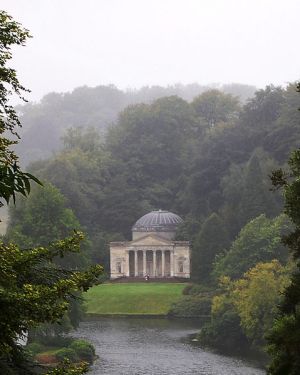
Pantheon at Stourhead, via Wikimedia Commons. Photo by Luke Gordon, 14 August 2007.
The gardens at Stourhead feature a number of elements influenced by the legacy of classical Rome. Henry Hoare, the owner of Stourhead from 1741 to 1783, travelled to Rome as part of his own Grand Tour and his chief architect, Henry Flitcroft, was part of Lord Burlington’s circle. On Day 1 of this event we will explore classical influences on the eighteenth-century English country garden. On Day 2 we will consider classical influences solely in the context of the garden and wider estate at Stourhead.
We invite papers on all aspects of classical influences on the eighteenth-century English garden and particularly the following topics:
• The influence of the Grand Tour on eighteenth-century English country gardens
• Visitor accounts of Stourhead and other eighteenth-century English country gardens
• Eighteenth-century English country garden designers
• The picturesque and the design and reception of the eighteenth-century English country garden
• Depiction of the eighteenth-century English country garden in the fine arts
• The country garden and publishing: newspapers, periodicals, guidebooks and journals
• Topographical poetry
• Theories of meaning in the eighteenth-century English country garden
• Relationships between houses, gardens and wider estates
• Lord Burlington and his circle
• The influence of classical Roman literature on the eighteenth-century English country garden
• Greek influences in eighteenth-century English country gardens
If you would like to present a paper, then please send a 300-word abstract to Dr. John Harrison at: jeh87@my.open.ac.uk by 31st March 2015.
Keynote Speakers
Roey Sweet, author of Cities and the Grand Tour: The British in Italy, 1690–1820 (University of Leicester); and Richard Wheeler, National Specialist in Garden History (National Trust)
Installation | A Voyage to South America

Unidentified artist, active in Cuzco, Peru, Our Lady of the Rosary of Chiquinquirá with Female Donor, late 17th/early 18th century (Carl and Marilynn Thoma Collection)
◊ ◊ ◊ ◊ ◊
From the AIC:
A Voyage to South America: Andean Art in the Spanish Empire
Art Institute of Chicago, 11 November 2014 — 21 February 2016
While the Art Institute has a long tradition of collecting and displaying works from the pre-Hispanic cultures of South America, this long-term installation offers the museum’s first presentation of work from the viceregal period. Fourteen paintings and related works on paper—including pieces from the collection of Chicagoans Marilynn and Carl Thoma never before displayed in a museum, as well as important loans from the Newberry Library and Denver Art Museum—introduce visitors to explorers, artists, and patrons who lived in the Spanish-governed Andes during the 17th, 18th, and 19th centuries.
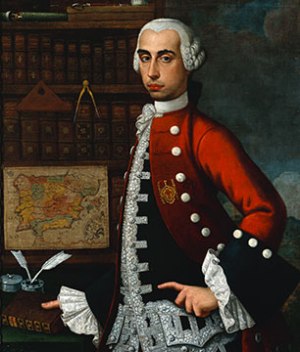
Unidentified artist, active in Spain, Portrait of Antonio de Ulloa y de la Torre-Guiral, 1768–70
(Carl and Marilynn Thoma Collection)
The metaphorical guide of this journey is Antonio de Ulloa (1716–95), a Spanish naval officer and cartographer who traveled to South America with a French scientific mission in the 1730s and 1740s. His portrait introduces the group of works assembled—paintings of identified sitters, signal works by important South American artists, and devotional paintings that include historical figures. Each work has its own direct link to individual biography and lived experience in the New World, offering a more personal look at the themes of exploration and discovery and bringing to life the culture and artistic production in South America as European conventions combined with indigenous traditions.
The installation is accompanied by a bilingual brochure as well as bilingual treatment of all object labels, wall texts, and audio guide stops. Select works have also been added to the museum’s ‘Closer’ app, featuring slide shows, videos, archival materials, and more for further insight into this unique period of cultural convergence.
At noon on 17 February 2015, Victoria Sancho Lobis, associate curator in the Department of Prints and Drawings, will discuss the exhibition.
◊ ◊ ◊ ◊ ◊
Chicago’s Newberry Library will host a symposium on Latin America in the Early Colonial Period on Saturday, 11 April 2015, exploring related material in the sixteenth and seventeenth centuries.
Rebecca Long Appointed Curator at the Art Institute of Chicago

◊ ◊ ◊ ◊ ◊
From the press release (9 January 2015) . . .
The Art Institute of Chicago announces the appointment of Rebecca Long as the Patrick G. and Shirley W. Ryan Associate Curator in the Department of Medieval to Modern European Painting and Sculpture. She will be responsible for Italian and Spanish painting and sculpture before 1750.
A specialist in the art of 16th- and 17th-century Spain and Italy, Long is currently Associate Curator of European Painting and Sculpture before 1800 at the Indianapolis Museum of Art. There she spearheaded work on the forthcoming catalogue of the museum’s Clowes Collection, offering the first scholarly and technical analysis of that important collection of masterworks of the Italian, Spanish, Netherlandish and German schools. She will assume her Art Institute duties on February 27, 2015.
“We are delighted to welcome Rebecca to the Art Institute,” said Sylvain Bellenger, Searle Chair and Curator, Medieval to Modern European Painting and Sculpture. “She is not just a scholar; she enjoys sharing her knowledge and passion to reveal the freshness in a work of art and to enlighten our diverse audiences, one of the museum’s key missions. Every Old Master was once a contemporary artist. Rebecca approaches the art of the Italian Renaissance with the aim of awakening for us the energy and immediacy the works held for the patrons and creators of their time.”
Long will be receiving her Ph.D. from New York University’s Institute of Fine Arts in early 2015, with a dissertation on Bartolomé Carducho and the role of Italian artists in the Spanish court during the Renaissance. She received her M.A. in art history and archaeology from New York University and her B.A. (magna cum laude), in the history of art and architecture as well as business administration, from the University of Pittsburgh. She has been awarded multiple prestigious fellowships, including those at the Metropolitan Museum of Art, the Villa La Pietra in Florence, and, most recently, the Harvard University Center for Italian Renaissance Studies at the Villa I Tatti, also in Florence. Long has actively presented her research at such venues as the National Gallery of Art’s Center for Advanced Studies in the Visual Arts and the annual conferences of the College Art Association, the Renaissance Society of America, and the Sixteenth Century Society. Forthcoming publications include the Catalogue of the Clowes Collection at the Indianapolis Museum of Art and essays in After Trent: Rethinking Art around 1600 and Sobre Vicente Carducho: Diálogos de la Pintura.
“I am thrilled to be joining the Art Institute,” said Long. “For a curator, the opportunity to work in a museum environment that combines a strong commitment to scholarship with an equal commitment to engaging visitors is a dream come true. I look forward to getting to work.”
Exhibition | The Critique of Reason: Romantic Art, 1760–1860

George Stubbs, A Lion Attacking a Horse, 96 x 131 inches (243.8 x 332.7 cm), 1762 (New Haven: Yale Center for British Art, Paul Mellon Collection B1977.14.71)
◊ ◊ ◊ ◊ ◊
From the YCBA:
The Critique of Reason: Romantic Art, 1760–1860
Yale University Art Gallery, New Haven, 6 March — 26 July 2015
Curated by Cassandra Albinson, Nina Amstutz, Elisabeth (Lisa) Hodermarsky, Paola D’Agostino, and Izabel Gass
The first major collaborative exhibition between the Yale University Art Gallery and the Yale Center for British Art, The Critique of Reason offers an unprecedented opportunity to bring together treasures of the Romantic art movement from the collections of both museums. The exhibition comprises more than three hundred paintings, sculptures, medals, watercolors, drawings, prints, and photographs by such iconic artists as William Blake, Théodore Géricault, Francisco de Goya, and J. M. W. Turner. This broad range of objects challenges the traditional notion of the Romantic artist as a brooding genius given to introversion and fantasy. Instead, the exhibition’s eight thematic sections juxtapose arresting works of art that reveal the Romantics as attentive explorers of their natural and cultural worlds as well as deeply invested in exploring the mysterious, the cataclysmic, and the spiritual. The richness and range of Yale’s Romantic holdings will be on display, presented afresh for a new generation of museumgoers.
The Critique of Reason: Romantic Art, 1760–1860 has been co-organized by the Yale Center for British Art and the Yale University Art Gallery. The curators are, at the Center, A. Cassandra Albinson, Curator of Paintings and Sculpture, and Nina Amstutz, Postdoctoral Research Associate, and, at the Gallery, Elisabeth (Lisa) Hodermarsky, Sutphin Family Senior Associate Curator of Prints and Drawings, and Paola D’Agostino, Nina and Lee Griggs Assistant Curator of European Art; and Izabel Gass, Graduate Research Assistant, is at the Center and Gallery. The exhibition has been made possible by the Art Gallery Exhibition and Publication Fund and the Robert Lehman, B.A. 1913, Endowment Fund, as well as by funds from the Yale Center for British Art Program Endowment.
◊ ◊ ◊ ◊ ◊
Note (added 30 March 2015) — In connection with the exhibition, Yale is hosting a two-day symposium, The Romantic Eye, 1760–1860 and Beyond, 17–18 April 2015. More information is available here»
Call for Papers | The Romantic Eye, 1760–1860 and Beyond
From the YCBA:
The Romantic Eye, 1760–1860 and Beyond
Yale University, New Haven, 17–18 April 2015
Proposals due by 2 February 2015
This symposium examines Romanticism as a shape-shifting cultural phenomenon that resists easy categorization. Focusing on the period from 1760 to 1860, the symposium embraces the amorphousness that has been ascribed to Romanticism historically by eschewing any limiting definition of it, seeking instead to explore the broad range of art and visual culture characterized as ‘Romantic’ during this hundred-year span. We are interested in what the Romantic ‘eye’ pursued and perceived, and how it set itself the task of recording those perceptions. In addition to interrogations of the relationship between the visual arts and Romanticism, we welcome papers on writers, composers, scientists, and philosophers whose projects engaged the visual. Papers also are sought for a special panel that will address the legacies of Romanticism in contemporary art.
This symposium coincides with a major collaborative exhibition organized by the Yale Center for British Art and the Yale University Art Gallery, The Critique of Reason: Romantic Art, 1760–1860, which opens March 6, 2015. The exhibition comprises more than three hundred paintings, sculptures, medals, watercolors, drawings, prints, and photographs by such iconic artists as William Blake, John Constable, Honoré Daumier, David d’Angers, Eugène Delacroix, Henry Fuseli, Théodore Géricault, Francisco de Goya, John Martin, and J. M. W. Turner. Talks that respond explicitly to works in the collections of the Yale Center for British Art or the Yale University Art Gallery are particularly encouraged, as are cross-disciplinary and comparative studies.
We are seeking presentations of thirty minutes in length. Graduate students and early career scholars are particularly encouraged to apply. Travel and accommodation costs will be covered by the organizers. Please e-mail abstracts of no more than three hundred words and a short CV or bio (no more than two pages) by February 2, 2015, to romanticism2015@gmail.com.
The symposium is co-sponsored by the Department of the History of Art at Yale University, the Yale Center for British Art, the Yale University Art Gallery, and the Yale Student Colloquia Fund.
Call for Papers | Echoes—Reflections: German Studies Conference
From the conference website:
Echoes—Reflections: German Studies Graduate Conference
Brown University, Providence, Rhode Island, 24–25 April 2015
Proposals due by 31 January 2015
Keynote Speaker: Professor Avital Ronell, New York University
Ich kann Dich noch sehn: ein Echo.
Ertastbar mit Fühl-
wörtern, am Abschieds-
grat. –Paul Celan, “Ich kann Dich noch sehen”
At the ridge of language, language resounds as an echo—an echo that is the other of and in language, resounding in repetitions and transformations, always already endangered to be forgotten in impending silence. Silence haunts the end of each line break, each seismic shift, in the first stanza of Celan’s poem “Ich kann Dich noch sehen” (1967), which addresses the echo as an aesthetic phenomenon at the outer limit of presence. The outer limit of presence marked by the echo is never one of merely sound or speech, but towards and for a lost presence that has ceased to be hearable as well as visible. Such an interrelation of voice and reflection is also central to Ovid’s classical rendition of the myth about the nymph Echo: she is forced to repeat the words of her vis-à-vis, while Narcissus, at the brim of a well, falls in love with his own image.
Since the 18th century, the evasive echo has been a point of reflection in German literature and philosophy. From Lessing to Herder and Kant, aesthetic re-flection attempted to correct, enrich, and complement ethical and political discourse, whether as a subjective faculty, Besinnung, or the counterpart of conceptual knowledge. Between loss and intensification, echoes of thought and language reverberate through Hegel’s speculative logic, the Romantics’ idea of art as a medium of reflection, Nietzsche’s Genealogy of Morals, and Adorno’s Aesthetic Theory. In the 20th century, during which concepts such as history and historical time were continuously challenged, the echo allowed for a rethinking of nonlinear and discontinuous forms of correspondence, interruption, and similarity. While Walter Benjamin emphasizes the translator’s task of perceiving the “echo of the original,” Heidegger, Celan, and others, in turn, take up the concern of how the pursuit of such an origin remains enmeshed in questions of historical specificity, politics, and rhetoric. (more…)
Call for Papers | Discovering Dalmatia
From H-ArtHist:
Discovering Dalmatia in 18th- and 19th-Century Travelogues, Pictures, and Photographs
Institute of Art History – Center Cvito Fiskovic in Split, Croatia, 21–23 May 2015
Proposals due by 28 February 2015
The idea of the Grand Tour, which began in the 17th century, gained extreme popularity throughout the 18th and 19th centuries. Although the Grand Tour originally focused on Rome, the exploration of the Ancient World, in which the origins of the Neoclassical period lay, its reach widened to further areas once part of the Roman Empire, among which Dalmatia held a prominent position. Drawings and literary works by travel writers-artists from that period are treasured in prestigious European museums and libraries and together constitute a priceless portion of the European cultural heritage.
There are two fundamental reasons why Dalmatia became a major destination of the European Grand Tour in the 18th and the 19th centuries: it presented a fountainhead of Ancient forms, knowledge of which helped in the quest for a universal language of architecture, and in addition it was almost an uncharted territory inspiring Enlightenment intellectuals to discover and get to know the world.
Ancient architecture presented the dominant cultural infrastructure of that period in Europe. The outline of the European Grand Tour embraces places which preserved the traces of those idealised times. However, travel writers also collected information of another kind; on the topography and customs, language and religion and in short a general representation of the area they wanted to come to know and write about.
The overall aim of the conference is to identify, problematise and integrate the issues related to the phenomenon of description of space, predominantly Dalmatian. This phenomenon was a formative factor in the development of European Neoclassicism and Romanticism in literature, the arts and architecture. Invited to the conference, accordingly, are art historians, literature comparatists, historians, architecture historians and theorists and experts from cognate disciplines to contribution to the research into the role of Dalmatia in the European Grand Tour in all its aspects.
The conference arises out of the research project Dalmatia: A Destination of European Grand Tour in the 18th and the 19th Century (2014–2017) of the Institute of Art History, under the aegis of the Croatian Science Foundation. Please visit our website to learn more about the project.
We welcome proposals for 20-minute papers. Proposals should consist of a 250-word abstract and 1-page CV, sent via email as a pdf attachment to asverko@ipu.hr by 28 February 2015. Notification of acceptance will be sent by 9 March 2015. If you have questions about the conference, please contact the organizing committee at asverko@ipu.hr.
Academic Committee
Josko Belamaric (Institute of Art History – Centre Cvito Fiskovic Split)
Cvijeta Pavlovic (University of Zagreb, Faculty of Humanities and Social Sciences)
Milan Pelc (Institute of Art History Zagreb)
John A. Pinto (Princeton University)
Ana Sverko (Institute of Art History – Centre Cvito Fiskovic Split)
Elke Katharina Wittich (Fresenius University of Applied Sciences, AMD Hamburg)
Organizing Committee
Josko Belamaric (Institute of Art History – Centre Cvito Fiskovic Split)
Cvijeta Pavlovic (University of Zagreb, Faculty of Humanities and Social Sciences)
Milan Pelc (Institute of Art History Zagreb)
Ana Sverko (Institute of Art History – Centre Cvito Fiskovic Split)
Important Information
• Registration fee is 50 euros.
• The registration fee includes: welcome reception on 20/05/2015 evening; conference material; lunches and refreshments during the scheduled breaks.
• Registration fee can be paid by bank transfer. The invoice of the participation fee will be sent to the participants by e-mail within 5 days of the notification of acceptance.
• The organizers could arrange accommodation for the participants.
• The organizers are not able to pay the travel expenses of the participants.
• Conference languages: English and French.
• The duration of a spoken contribution should not exceed 20 minutes. Contributions will be divided into sections according to topics. Each section will be followed by discussion.
• Selected papers will be published in the conference proceedings. Please send final written version by 31/08/2015.










 Enfilade
leave a comment