Acquisition Campaigns | Jacques Saly’s Cupid Testing One of His Arrows
From The Louvre:
Be a Patron of Love
Louvre Launches Campaign to Acquire
Jacques Saly’s Cupid Testing One of His Arrows
 In 1753, sculptor Jacques Saly signed and dated his masterpiece, the marble statue Cupid Testing One of His Arrows (L’Amour essayant une de ses flèches). The piece had been commissioned a year earlier by the Marquise de Pompadour, royal mistress of Louis XV, and was presented to the king in person on August 11, 1753, before being installed at the Salon de l’Académie at the Louvre to be shown to the public for one month.
Jacques Saly was made royal sculptor in 1750, when he became a member of the Royal Academy of Painting and Sculpture. Recommended by renowned sculptor Edme Bouchardon, Saly was called to Denmark in 1753 to work on the equestrian statue of Frederick V and help establish the Royal Danish Academy of Fine Arts in Copenhagen. He did not return to France until 1774, two years before his death.
Despite his short artistic career in France, Saly received a number of prestigious commissions. His masterpiece remains Cupid Testing One of His Arrows, which Madame de Pompadour presented in her three favorite residences: the Château de Crécy and the Château de Bellevue, on the outskirts of Paris, and the Hôtel d’Evreux, future site of the Palais de l’Elysée. Hidden from view in private collections for over two centuries, Saly’s sculpture of Cupid was revealed to the public in 2002 for the exhibition Madame de Pompadour and the Arts at the Château de Versailles. It was listed as a National Treasure by the French state in 2006.
A masterpiece of French art by its delicateness of composition and virtuosity of marblework, the statue is also outstanding for the pedestal that has remained with it since the beginning. It was executed by the great sculptor and ornamentalist Jacques Verberckt, who produced sumptuous wood paneling for the Château de Versailles and the Château de Fontainebleau, and who was also a friend of Saly’s. It is indeed quite remarkable that the two royal sculptors worked together on the same commission.
To execute this spectacular work of art, Saly gave of his best and applied all of his expertise. Its reappearance in France is an unhoped-for opportunity to shine light on the artist, a highly skilled sculptor who was sensitive to the art of his time.
The Société des Amis du Louvre has already provided half of the amount required for this major acquisition. In order for the exceptional work of art to enter the national collections, the Musée du Louvre is calling upon the generosity of the public to raise a minimum of €600,000 before February 14, 2016.
Exhibition | Following Hercules: The Story of Classical Art
◊ ◊ ◊ ◊ ◊
Press release (11 September 2015) from The Fitzwilliam:
Following Hercules: The Story of Classical Art
The Fitzwilliam Museum, Cambridge, 25 September — 6 December 2015
Curated by Caroline Vout
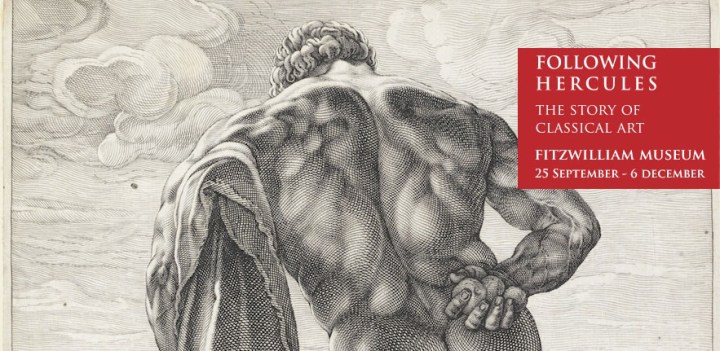
A colossal polystyrene statue of Hercules by contemporary artist Matt Darbyshire will be the star exhibit in a new exhibition at the Fitzwilliam Museum exploring the story of classical art. How did artefacts made in the Mediterranean millennia ago come to define western art? To show us how Greece and Rome’s gods and heroes came to inhabit post-antique painting and sculpture, the Fitzwilliam Museum has called upon one of them to act as a guide: Hercules.

Hercules and the Erymanthian Boar, ca. 1790, Wedgwood, Etruria, Staffordshire, Jasperware plaque, h. 212 mm (Cambridge: Fitzwilliam Museum)
Hercules is one of the best-loved ancient heroes. Known in antiquity for completing twelve tasks or ‘labours’ that confirmed his status as a god, Hercules is today tasked with one more—to tell the story of classical art. Hercules is brought to life by each of the forty objects on display (from exquisite gems and coins, Renaissance drawings and bronzes, to eighteenth-century paintings, and Matthew Darbyshire’s giant polystyrene statue…). Their interaction also reveals how classical art was born, and gives classical art on-going relevance.
The exhibition takes its lead from its star exhibit, a colossal sculpture by Cambridge-born artist Matthew Darbyshire. Darbyshire’s intervention is a version of the Farnese Hercules, a marble statue unearthed in Rome in 1546, but is made from sheets of polystyrene—classical art for a consumerist age. Up close, its cut, crisp polystyrene layers make it appear pixelated, but step back, and the statue comes into focus, shining like marble. Back in 1850, two years after the Founder’s Building opened to the public, the Fitzwilliam Museum exhibited another Farnese Hercules, a plaster version, now in Cambridge’s Museum of Classical Archaeology. Before being given to the Fitzwilliam, it stood in a private house in Battersea, where it moved London’s artists to tears. The Fitzwilliam Museum’s own collection is well equipped with prototypes and later versions of the Farnese Hercules: from a bronze statuette of the first century BCE, through Hendrick Goltzius’s sixteenth-century engraving of the Farnese statue’s rear view, Wedgwood’s white on blue cameo plaque, and William Blake’s illustration of the statue for Abraham Rees’s The Cyclopædia, or, Universal Dictionary of Arts, Sciences, and Literature. The Museum’s collection also provides competing images of Hercules—images of Hercules young, drunk, or dressed as a woman, in bronze, wood and painted porcelain. These give context to Darbyshire’s sculpture, underlining that classicism and modernism are not opposites. In the fast moving, digital age in which we live, we perhaps need tradition more than ever.
The exhibition is curated by Dr Caroline Vout, Reader in Classics in the University of Cambridge and Fellow of Christ’s College, and is part of her British-Academy funded research project entitled Classical Art: A Life History.
Caroline Vout, Following Hercules: The Story of Classical Art (Cambridge: The Fitzwilliam Museum, 2015), 48 pages, ISBN: 978-1910731024, £5.
◊ ◊ ◊ ◊ ◊
Note (added 2 December 2018) — The posting was updated to include information about the catalogue.
Exhibition | Cradled in Caricature
The exhibition is mounted in connection with Ronald Searle: ‘Obsessed with Drawing’. From the press release. . .
Cradled in Caricature: Visual Humour in Satirical Prints and Drawings
The Fitzwilliam Museum, Cambridge, 13 October 2015 — 31 January 2016
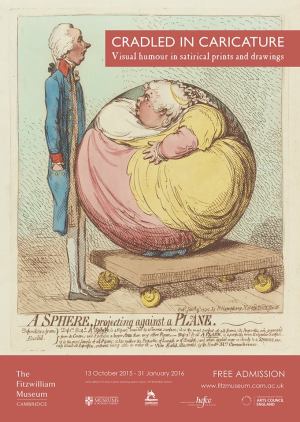 Cradled in Caricature: Visual Humour in Satirical Prints and Drawings looks at how artists, caricaturists and cartoonists from Hogarth to the present day create visual jokes to make their audiences laugh.
In [Ronald] Searle’s timeline of caricature, he highlighted the high and low points of its history. In the time of Hogarth, Gillray and Rowlandson he described caricature as ‘a vigorous weapon’, whereas he felt it had declined in the 19th century to ‘drawing-room gentility’. He was happy to be a part of its recovery during the 20th century, making the final point of his timeline Private Eye.
Making visual jokes is hard and not every artist has the skill. Gillray was sent designs by enthusiastic amateurs, which he would translate into print. Cradled in Caricature focuses on the techniques and tricks that worked, and which still have the power to amuse us today. These methods range from simple exaggeration of facial features, costumes and fashion fads; clever juxtapositions and contrasts of body types; absurd, nonsense comedy; physical, burlesque comedy; dark humour; bawdy humour; and more complicated word-play, with the interplay of word and image or ironic literary allusions. The works are drawn from the Fitzwilliam’s collection with key loans from Andrew Edmunds and Benjamin Lemer.
Renuka Reddy’s Search for Traditional Chintz Techniques
Writing for the the V&A’s blog for the museum’s fall exhibition The Fabric of India, Renuka Reddy, “a contemporary chintz-maker,” recounts “the story of her search for lost techniques, the challenges she’s faced as a designer-cum-maker, and how the V&A’s collection has inspired her work. Renuka’s studio, Red Tree, is based in Bengaluru.”
◊ ◊ ◊ ◊ ◊
“Guest Post: Renuka Reddy’s Adventures in Chintz,” V&A Blog (6 October 2015).
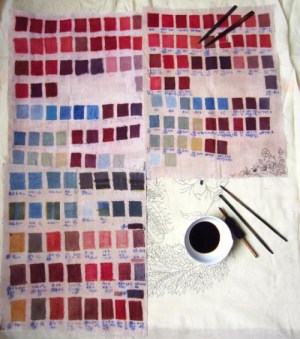
Color swatches. © RedTree Textile Studio
If only I could time travel…
It was nearly two years after its publication that I got my hands on the book Chintz: Indian Textiles for the West written by Rosemary Crill and published by the V&A. I vividly remember my response to the spectacular plates, the desire to make something so beautiful. Little did I know how this reaction would change my life in ways I could not imagine.
By chintz, I refer to hand-painted resist-and-mordant dyed cottons. I am particularly interested in the intricate resist work of chintz exported from India to the West between the seventeenth and the eighteenth century. This is where I draw my inspiration from.
My goal was to produce chintz, which at that time meant working with craftsmen. So I went in search of one in Machilipatnam and Srikalahasti, two historic towns in the state of Andhra Pradesh where kalamkari (literally ‘pen-work’)
is practiced today. . .
The full posting is available here»
New Book | Art in Britain 1660–1815
Scheduled for December publication from Yale UP:
David H. Solkin, Art in Britain 1660–1815 (London: Paul Mellon Centre for Studies in British Art, 2015), 378 pages, ISBN: 978-0300215564, $80.
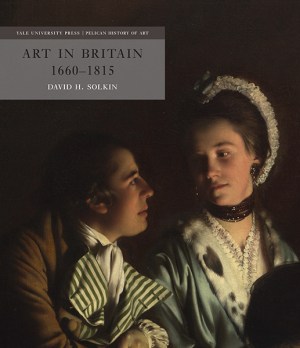 Art in Britain 1660–1815 presents the first social history of British art from the period known as the long 18th century, and offers a fresh and challenging look at the major developments in painting, drawing, and printmaking that took place during this period. It describes how an embryonic London art world metamorphosed into a flourishing community of native and immigrant practitioners, whose efforts ultimately led to the rise of a British School deemed worthy of comparison with its European counterparts. Within this larger narrative are authoritative accounts of the achievements of celebrated artists such as Peter Lely, William Hogarth, Thomas Gainsborough, and J.M.W. Turner. David H. Solkin has interwoven their stories and many others into a critical analysis of how visual culture reinforced, and on occasion challenged, established social hierarchies and prevailing notions of gender, class, and race as Britain entered the modern age. More than 300 artworks, accompanied by detailed analysis, beautifully illustrate how Britain’s transformation into the world’s foremost commercial and imperial power found expression in the visual arts, and how the arts shaped the nation in return.
David H. Solkin is Walter H. Annenberg Professor of the History of Art and Dean and Deputy Director of The Courtauld Institute of Art. His publications include Richard Wilson: The Landscape of Reaction (Tate Gallery, 1982), Painting for Money: The Visual Arts and the Public Sphere in Eighteenth-Century England (Yale University Press, 1993) and Painting out of the Ordinary: Modernity and the Art of Everyday Life in Early Nineteenth-Century Britain (Yale University Press, 2008); he is also the editor and co-author of Art on The Line: The Royal Academy Exhibitions at Somerset House 1780–1836 (Yale University Press, 2001) and Turner and the Masters (Tate, 2009).
ASECS 2016, Pittsburgh
2016 American Society for Eighteenth-Century Studies Conference
Pittsburgh, 30 March — 2 April 2016
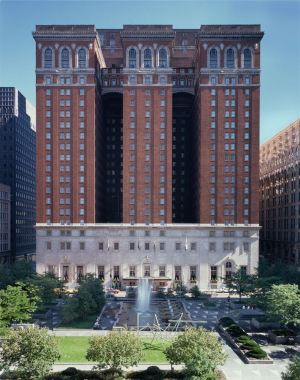 The 2016 ASECS conference takes place in Pittsburgh at the Omni William Penn. HECAA will be represented by the Anne Schroder New Scholars’ Session, chaired by Janet White and scheduled for Friday morning. Our annual luncheon and business meeting is also scheduled for Friday. A selection of additional panels is included below (of the 219 sessions scheduled, many others will, of course, interest HECAA members). For the full slate of offerings, see the program.
H E C A A E V E N T S
Anne Schroder New Scholars’ Session (Historians of Eighteenth-Century Art and Architecture)
Friday, 1 April, 8:00–9:30
Chair: Janet R. WHITE, University of Nevada, Las Vegas School of Architecture
1. Fanny BROCK, University of North Carolina Chapel Hill, “Drawing the Amateur: Draftsmanship and the Amateur in Eighteenth-Century France”
2. Daniella BERMAN, Institute of Fine Arts / New York University, “Creating French History: The Uses and Abuses of the Concours de l’An II”
3. Hannah Wirta KINNEY, Oxford University, “Con Fiducia: Commissioning Copies of Antiquities in Late-Medicean Florence”
4. Paul HOLMQUIST, McGill University, “L’harmonie tient tout dans un equilibre parfait: Re-enacting Origins in Claude Nicolas Ledoux’s Ideal City of Chaux”
◊ ◊ ◊ ◊ ◊
Historians of Eighteenth-Century Art and Architecture Luncheon
Friday, 1 April, 1:00–2:30
◊ ◊ ◊ ◊ ◊
O T H E R S E S S I O N S R E L A T E D T O T H E V I S U A L A R T S
T H U R S D A Y , 3 1 M A R C H 2 0 1 5
Picturing the News
Thursday, 31 March, 8:00–9:30
Chair: Leslie RITCHIE, Queen’s University
1. Rachael KING, University of California, Santa Barbara, “The Appearance of News in The London Gazette and The Tatler”
2. Darryl DOMINGO, University of Memphis, “‘To Catch the Reader’s Eye’: Seeing the Sights in Eighteenth-Century Newspaper Advertisements”
3. Laura ENGEL, Duquesne University: “Fashioning Faces: Portraits of Actresses, Princesses, and Queens in Late Eighteenth-Century Periodicals”
4. Jocelyn ANDERSON, The Cortauld Institute of Art, “‘Discovered in the Ruins’: British Newspaper Reports of Italian Antiquities”
◊ ◊ ◊ ◊ ◊
Freemasonry and the Arts
Thursday, 31 March, 8:00–9:30
Chair: Rebecca Dowd GEOFFROY-SCHWIDEN, University of North Texas
1. Bethany CENCER, State University of New York, Stony Brook,
“Masonic Harmony and Masculinity in the Music of the Noblemen and Gentlemen’s Catch Club, London 1761–1794”
2. Mary GREER, Independent Scholar, “The Secret Subscribers to C. P. E. Bach’s Oratorio Die Israeliten in der Wüste: The Masonic Connection”
3. Reva WOLF, State University of New York, New Paltz, “Goya’s Art and the Spirit of Freemasonry”
4. Nan WOLVERTON, American Antiquarian Society, “Masonic Ideologies and the Visual Arts: Paul Revere as Master Artisan and Grand Master”
◊ ◊ ◊ ◊ ◊
Oriental Networks: Culture, Commerce and Communication, 1662–1842
Thursday, 31 March, 9:45–11:15
Chair: Greg CLINGHAM, Bucknell University
1. Noriyuki HATTORI, University of Osaka, “Trafficking Spices, Silver, and Japan: Representations of the Amboina Massacre”
2. Chihyin HSIAO, University of Glasgow, “Affordable Luxury? Chinese Porcelain in the Inventories of the London Court of Orphans”
3. Madalina VERES, Central European University/Institute for Advanced Study, “The Habsburg Monarchy’s Contribution to the Global Enlightenment”
4. James WATT, University of York, “Charles Lamb and Networks of Empire”
◊ ◊ ◊ ◊ ◊
In the 1720s. . . (Roundtable)
Thursday, 31 March, 9:45–11:15
Chair: Regina JANES, Skidmore College
1. Maximillian NOVAK, University of California, Los Angeles, “Masquerade, Murder and Excess: Defoe’s Roxana in the 1720s”
2. Karen LIPSEDGE, Kingston University, “Men Made Homes, and Homes Made Men”
3. William E. RIVERS, University of South Carolina, “Nicholas Amhurst’s Writing as a Window on the Complex, Interconnected World of the 1720s”
4. Celestina SAVONIUS-WROTH, University of Illinois, Urbana-Champaign, “Jovial Devotion: Attacking and Defending Ritual and Popular Culture in the 1720s”
5. Malinda Gar SNOW, Georgia State University, “The Country House in Defoe’s Tour thro’ the Whole Island of Great Britain: Money Well Spent”
6. Anne Betty J. WEINSHENKER, Montclair State University, “Tombeaux des princes: A Unique Political-Cultural Painting Cycle”
7. Mattie BURKET, University of Wisconsin, Madison, “Predatory Lending: The South Sea Bubble and The Conscious Lovers”
8. Noel CHEVALIER, University of Regina, “‘Their Crimes conspir’d to make ’em Great’: Pirate Narratives and Political Morality in the 1720s”
◊ ◊ ◊ ◊ ◊
Violence and Death in Eighteenth-Century Visual Culture
Thursday, 31 March, 9:45–11:15
Chair: Amy FREUND, Southern Methodist University
1. Meredith GAMER, Yale University, “‘The Sheriff’s Picture Frame:’ Art and Execution in Eighteenth-Century Britain”
2. Catherine GIRARD, Columbia University, “Embedded Oudry: Drawing with Hunters”
3. Anne Nellis RICHTER, Independent Scholar, “‘This once elegant mansion’: Representing Revolutionary Violence in England in the 1790s”
4. Lela GRAYBILL, University of Utah, “Violence, Visibility, and the Neoclassical Idiom”
◊ ◊ ◊ ◊ ◊
Intersections of Digital and Public Humanities: New Media and New Audiences for (Roundtable)
Thursday, 31 March, 9:45–11:15
Chair: Jessica RICHARD, Wake Forest University
1. Martha F. BOWDEN, Kennesaw State University
2. Craig HANSON, Calvin College
3. Tonya-Marie HOWE, Marymount Univeristy
4. Emrys JONES, University of Greenwich
5. John O’BRIEN, University of Virginia
6. Alaina PINCUS, University of Illinois
7. Laura RUNGE-GORDON, University of South Florida
◊ ◊ ◊ ◊ ◊
Widows and Working Women: Making a Living without a Husband
Thursday, 31 March, 11:30–1:00
Chair: Amber LUDWIG, Honolulu Museum of Art
1. Jaclyn GELLER, Central Connecticut State University, “Widows, Spinsters, and Other Marriage Refugees: Satiric Utopianism in Sarah Scott’s Millennium Hall”
2. Evangeline VAN HOUTEN, University of Connecticut, “Charlotte Charke’s Perilous Play”
3. Christina LINDEMAN, University of South Alabama, “Collaboration as a Veil: The Widowed Anna Dorothea Therbusch”
4. Lois LEVEEN, Novelist, “Kitty Fisher Found It: Commodity Capitalism and the Creation of Celebrity in Eighteenth-Century England”
◊ ◊ ◊ ◊ ◊
The Objects of Performance
Thursday, 31 March, 11:30–1:00
Chair: Ashley BENDER, Texas Woman’s University
1. Kalissa HENDRICKSON, Arizona State University, “Indian Gowns in Comedies of Seduction”
2. Daniel GUSTAFSON, The City College of New York, City University of New York, “Corpsing Lothario”
3. Deirdre O’ROURKE, Independent scholar, “The Sculptures from Elkanah Settle’s The Empress of Morocco”
◊ ◊ ◊ ◊ ◊
Satirical Images: Between Sociability, Animosity, and Entertainment
Thursday, 31 March, 2:30–4:00
Chair: Kathryn DESPLANQUE, Duke University AND Jessica FRIPP, Texas Christian University
1. Pascal DUPUY, Université de Rouen, “The English Caricature and its Public: An Analytical Essay”
2. Dominic HARDY, Université du Québec à Montréal, “Recovered Laughter: An Inquiry into the Role of Women in the Authorship and Circulation of Caricature in Montréal, c. 1808–1811”
3. Allison M. STAGG, Technische Universität Berlin, “Friend or Foe? The Social Atmosphere for Political Caricatures in the Early Republic”
4. Andrew SCHULZ, The Pennsylvania State University, “Reading Between the (Etched) Lines: The Anonymous Manuscript Commentaries on Goya’s Caprichos”
◊ ◊ ◊ ◊ ◊
Framing the Eighteenth Century: Borders and Peripheries in Visual Culture
Thursday, 31 March, 2:30–4:00
Chairs: Blythe C. SOBOL, Institute of Fine Arts / New York University AND Daniella BERMAN, Institute of Fine Arts / New York University
1. Margot BERNSTEIN, Columbia University, “Inside Out: Crossing Thresholds and Blurring Boundaries with Eighteenth-Century Sedan Chairs”
2. Laurel PETERSON, Yale University, “Taking it All In: the Unity of Painting and Carving in the Country House Interior”
3. Agueda ITURBE-KENNEDY, Université Laval, Québec/ Université Pari IV, Paris, “Framing the Eighteenth-Century City: Jean-Gabriel Legendre’s Project”
◊ ◊ ◊ ◊ ◊
Inside the Artist’s Studio
Thursday, 31 March, 4:15–5:45
Chair: Heather MCPHERSON, University of Alabama at Birmingham
1. Wendy Wassyng ROWORTH, University of Rhode Island, “A Celebrity Artist’s Studio in Rome”
2. Francesca BOVE, University of East Anglia, Norwich, “The Modern Artist’s Studio: George Morland and the ‘curious scenery of his painting room’”
3. Sarah BAKKALI, University of Paris X Nanterre, “Friendship, Sociability, and the Art Market inside The Isabey Studio”
4. Susanne ANDERSON-RIEDEL, University of New Mexico, “Between Studio and Academy: Shifting Training Practices for Graphic Artists”
◊ ◊ ◊ ◊ ◊
Members’ Reception
Thursday, 31 March, 6:00–7:00, William Penn Ballroom
F R I D A Y , 1 A P R I L 2 0 1 5
Anne Schroder New Scholars’ Session
(Historians of Eighteenth-Century Art and Architecture)
Friday, 1 April, 8:00–9:30
Chair: Janet R. WHITE, University of Nevada, Las Vegas School of Architecture
1. Fanny BROCK, University of North Carolina Chapel Hill, “Drawing the Amateur: Draftsmanship and the Amateur in Eighteenth-Century France”
2. Daniella BERMAN, Institute of Fine Arts / New York University, “Creating French History: The Uses and Abuses of the Concours de l’An II”
3. Hannah Wirta KINNEY, Oxford University, “Con Fiducia: Commissioning Copies of Antiquities in Late-Medicean Florence”
4. Paul HOLMQUIST, McGill University, “L’harmonie tient tout dans un equilibre parfait: Re-enacting Origins in Claude Nicolas Ledoux’s Ideal City of Chaux”
◊ ◊ ◊ ◊ ◊
Empires of Print
Friday, 1 April, 8:00–9:30
Chair: Douglas FORDHAM, University of Virginia
1. Robbie RICHARDSON, University of Kent, “How Peter Williamson Became an Indian”
2. Holly SHAFFER, Dartmouth College, “Gods, Gold, and Antiquities: Edward Moor’s Narrative of the Anglo-Maratha Alliance Against Tipu Sultan of Mysore, 1790–1792”
3. Catriona KENNEDY, University of York, “Egypt Through Military Eyes: Illustrating the British Army’s 1801 Egyptian Campaign”
◊ ◊ ◊ ◊ ◊
Representing the Fragment
Friday, 1 April, 8:00–9:30
Chair: Olaf RECKTENWALD, McGill University
1. Jennifer DONNELLY, University of Pittsburgh, “‘Ces ombres immortelles’: Life and Death at the Musée des monuments français”
2. Rachel SCHNEIDER, Missouri University of Science and Technology, “Materializing the Literary Fragment”
3. Christopher Drew ARMSTRONG, University of Pittsburgh, “1700: Recasting Mediterranean Fragments in Global Context”
◊ ◊ ◊ ◊ ◊
Re-Framing the Picturesque
Friday, 1 April, 9:45–11:15
Chair: William C. SNYDER, St. Vincent College
1. Garland BEASLEY, University of Nevada, Las Vegas, “Observations Before the River Wye: The Rise of the Picturesque”
2. Peter C. MESSER, Mississippi State University, “Jeremy Belknap’s Picturesque Republic”
3. Tom HOTHEM, University of California, Merced, “Natural Fictions: Picturesque Aesthetics and the Eighteenth-Century Novel”
◊ ◊ ◊ ◊ ◊
‘The Delight of the Eye’: Eighteenth-Century Painting and/as Decoration – I
Friday, 1 April, 9:45–11:15
Chair: Yuriko JACKALL, National Gallery of Art AND Katherine BRION, Kalamazoo College
1. Aaron WILE, Harvard University, “Antoine Coypel’s Galerie d’Enée: Ancients, Moderns, and the Experience of Painting”
2. Susanna CAVIGLIA, University of Chicago, “Weighty Matters in Delightful Images: Rococo Painting and the Embodiment of a New Ideology”
3. Alden GORDON, Trinity College, “Painting and the Decorative Interior in France: The Innovations of the Marquis de Marigny for both Public and Private Patronage”
◊ ◊ ◊ ◊ ◊
ASECS / BSECS Plenary Lecture
Friday, 1 April, 9:45–11:15
Presiding: Heather MCPHERSON, University of Alabama, Birmingham
Shearer WEST, Sheffield University, “Selfiehood: Celebrity, Singularity and the Enlightenment”
◊ ◊ ◊ ◊ ◊
ASECS / BSECS Plenary Lecture Follow-up (Roundtable)
Friday, 1 April, 11:30–1:00
Chair: Michael YONAN, University of Missouri
1. Douglas FORDHAM, University of Virginia
2. Melissa HYDE, University of Florida
3. Kate JENSEN, Louisiana State University
4. Heather MCPHERSON, University of Alabama, Birmingham
5. Mary SHERIFF, University of North Carolina at Chapel Hill
Respondent: Shearer WEST, Sheffield University
◊ ◊ ◊ ◊ ◊
Disability Aesthetics: Tobin Sieber’s Legacy (Disability Studies Caucus)
Friday, 1 April, 11:30–1:00
Chairs: Stan BOOTH, University of Winchester AND Jason FARR, Texas A&M University, Corpus Christi
1. Abby COYKENDALL, Eastern Michigan University, “Unbecoming Aesthetics: Horace Walpole’s Castle of Otranto”
2. Jarred WIEHE, University of Connecticut, “Broken Bodies and English Taste: Samuel Foote and Disability Aesthetics”
3. Alden CAVANAUGH, Indiana State University, “Problem Skin: Greuze’s Portrait of Wille and Facial Disfigurement”
4. Tamar LEROY, University of Maryland, “Wartime and Crip Time in George Farquhar’s The Recruiting Officer”
◊ ◊ ◊ ◊ ◊
Sleeping through the long Eighteenth Century
Friday, 1 April, 11:30–1:00
Chair: Leah BENEDICT, University at Buffalo
1. Matt RIGILANO, University at Buffalo, “Extraordinary Sleepers and the Biopolitics of Early Modern Coma”
2. Jill CAMPBELL, Yale University, “‘Spare My Slumbers’: Sleep, Voice, and Memorialization in Eighteenth-Century Sculpture and Ekphrastic Verse”
3. Ana RUEDA,University of Kentucky, “Goya’s ‘Sleep of Reason’ and Other States of Somnolence”
4. Nicholas E. MILLER, Washington University in St. Louis, “‘My Long Sleep of Insensibility’: Corpse-Hopping and Consciousness in Robert Montgomery Bird’s Sheppard Lee”
◊ ◊ ◊ ◊ ◊
Historians of Eighteenth-Century Art and Architecture Luncheon
Friday, 1 April, 1:00–2:30
◊ ◊ ◊ ◊ ◊
Presidential Address, Awards Presentation, and ASECS Business Meeting
Friday, 1 April, 2:30–4:30
Presiding: Felicity NUSSBAUM, University of California, Los Angeles
Srinivas ARAVAMUDAN Duke University, “From Enlightenment to Anthropocene”
◊ ◊ ◊ ◊ ◊
‘The Delight of the Eye’: Eighteenth-Century Painting and/as Decoration – II
Friday, 1 April, 4:30–6:00
Chair: Yuriko JACKALL, National Gallery of Art AND Katherine BRION, Kalamazoo College
1. Jennifer GERMANN, Ithaca College, “The Status of the Decorative in the Portraits of Constance-Gabrielle-Magdeleine and Joseph Bonnier de la Mosson by Jean-Marc Nattier”
2. Edward STERRETT, The Getty Research Institute, “From Ornamental Print to Monumental Painting: The Elaboration of the Rococo in the Work of François Boucher”
3. Heidi STROBEL, University of Evansville, “‘A mere copier of nature can never produce anything great’: Mary Linwood, Sir Joshua Reynolds, and the Art of Making Copies”
S A T U R D A Y , 2 A P R I L 2 0 1 5
Tableaux Vivants: Life and/as Art
Saturday, 2 April, 8:00–9:30
Chairs: Noémie ETIENNE, Getty Research Institute AND Meredith MARTIN, New York University
1. Eugenia Zuroski JENKINS, McMaster University, “The Unstill Life of the Nautilus Cup”
2. Valérie KOBI, Bielefeld University, “Staging Life: The Preparation of Medical and Natural History Specimens in Eighteenth-Century Europe”
3. Charles KANG, Columbia University, “Re/constructive Surgery: Displaying the Bodily Interior in Late Eighteenth-Century France”
4. Amelia RAUSER, Franklin and Marshall College, “Whiteness: Modern Galateas”
◊ ◊ ◊ ◊ ◊
Music, Art, Literature (Society for Eighteenth-Century Music)
Saturday, 2 April, 9:45–11:15
Chair: Janet K. PAGE, University of Memphis
1. Kathryn Shanks LIBIN, Vassar College, “The ‘Music Room’ in a Bohemian Castle: Gabriele von Auersperg’s Souvenir de Senftenberg en 1814”
2. Elizabeth LIEBMAN, Independent Scholar, “The Bird Organ in Eighteenth-Century Art and Sound”
3. Lisa de ALWIS, University of Colorado, Boulder, “Famous and Forgotten Works that Influenced Viennese Theatrical Censorship”
◊ ◊ ◊ ◊ ◊
Portraiture Before 1750 – I
Saturday, 2 April, 9:45–11:15
Chair: Jennifer GERMANN, Ithaca College
1. Allison LEIGH, The Cooper Union for the Advancement of Science and Art, “Investing the Body: Russian Portraiture Before 1750”
2. Janine Yorimoto BOLDT, The College of William & Mary, “Boys in Livery: Picturing Slavery in English and Colonial American Portraiture”
3. Tara ZANARDI, Hunter College, “Tastemaker and Policy Shaper: Queen Isabel de Farnesio as Patron and Politician”
◊ ◊ ◊ ◊ ◊
Queer Lives? (Roundtable)
Saturday, 2 April, 9:45–11:15
Chair: George HAGGERTY, University of California, Riverside
1. Tom KING, Brandeis University, “Elizabeth Barry”
2. Ellen LEDOUX, Rutgers University, Camden, “Hannah Snell and Mary Jane Talbot”
3. Jason FARR, Texas A&M University, Corpus Christi, “William Hay”
4. Lisa MOORE, University of Texas at Austin, “Anna Seward”
5. Margaret WALLER, Pomona College, “Napoleon and La Mésangère”
6. Caroline GONDA, St. Catharine’s College, Cambridge, “Anne Damer”
◊ ◊ ◊ ◊ ◊
Rethinking the Academic Conference (Roundtable) (Women’s Caucus Professional Panel)
Saturday, 2 April, 9:45–11:15
Chair: Emily FRIEDMAN, Auburn University
1. Laura MILLER, University of West Georgia, “Removing Barriers to Junior Scholars at ASECS”
2. Emily M.N. KUGLER, Howard University, “Creating Resources and Scholarly Community: Examples from FemTechNet’s DOCC Summer Workshops and Disrupting DH”
3. Lauren HOLT, The Galloway School, “From Passive to Active: Participation beyond Q&A”
4. Rebecca SHAPIRO, City University of New York, “Closed Mouths do not Mean Closed Minds”
5. Susan LANSER, Brandeis University, “Fostering Intellectual Sociability”
◊ ◊ ◊ ◊ ◊
Clifford Lecture
Saturday, 2 April, 11:30–12:30
Presiding: Kathleen WILSON, State University of New York, Stony Brook
John BREWER California Institute of Technology, “Fire and Ice: Travel and the Natural Sublime in the Age of Enlightenment”
◊ ◊ ◊ ◊ ◊
Portraiture Before 1750 – II
Saturday, 2 April, 2:00–3:30
Chair: Jennifer GERMANN, Ithaca College
1. Liza OLIVER, Wellesley College, “The Portrait Between India and France”
2. Amy FREUND, Southern Methodist University, “Full Length, Four Legs: Early Eighteenth-Century Animal Portraiture”
3. Aurore CHÉRY, Université Jean Moulin/Lyon 3, “‘Being the Second One’: Were the Marriages of Marie Lezczynska and Marie-Josèphe de Saxe Second Hand Celebrations?”
◊ ◊ ◊ ◊ ◊
Felines and Philosophers
Saturday, 2 April, 3:45–5:15
Chair: Michael YONAN, University of Missouri
1. Tracey HUTCHINGS-GOETZ, Indiana University, “‘Catching the Cat’; or, Feeling the Feline in Enlightenment Sensualist Philosophy”
2. Adela RAMOS, Pacific Lutheran University, “‘This admirable machine’: Mousers, Mousetraps, and Species in William Guthrie’s The Life and Adventures of a Cat”
3. Karissa BUSHMAN, University of Alabama at Huntsville, “Ferocious to Friendly Felines in Goya’s Art”
◊ ◊ ◊ ◊ ◊
Food and Gender: Feeding the Eighteenth Century – II (Women’s Caucus Scholarly Panel)
Saturday, 2 April, 3:45–5:15
Chair: Lucinda COLE, University of Illinois Urbana-Champaign
1. Sarah Sylvester WILLIAMS, University of Missouri, Columbia, “Pigeon Pie or Peaches? Depictions of Food and Gender in Eighteenth-Century Paintings of Hunt Luncheons”
2. Leslie ARONSON, Saginaw Valley State University, “Women, Food, and the Threat Against Manhood: Consumption in the Expedition of Humphrey Clinker”
3. Corey GOERGEN, Emory University, “‘grotesque mixtures’: Feminine Intoxication in Edgeworth’s Belinda”
Dutch Royal Barge Returns to Het Scheepvaartmuseum

◊ ◊ ◊ ◊ ◊
Press release (14 October 2015) from Amsterdam’s National Maritime Museum:
After an eight-year absence, the Royal Barge will once again be on display at Het Scheepvaartmuseum. At a spectacular opening event on Wednesday evening, framed by the pipers and drummers of the Marine Corps, the Royal Barge was presented to more than 300 guests. Just one week before this event, the 200-year old barge and its new boathouse were transported across land and water. In the home port of Amsterdam, the doors will be opened to visitors every morning.
The director-general of Het Scheepvaartmuseum, Pauline Krikke, is overjoyed at the return of the crown jewel of the museum’s collection. “It is a momentous occasion to celebrate the return of the barge after such a long absence,” she says. “The Royal Barge is restored and seaworthy. The museum is incredibly grateful to all the people who helped to make this possible.”
The Royal Barge, also referred to as the ‘Golden Coach of the water’ (‘de gouden koets te water’), was given a thorough overhaul. With a donation of one million euros from the BankGiro Lottery, the Cultuur Lottery, and specialist input from AkzoNobel, this unique barge was completely renovated and restored to once again be admired in all its magnificence. Now, this public favourite has finally returned to Het Scheepvaartmuseum. With the new set-up in the boathouse, the beautiful golden ornaments are closer than ever before and can be admired in detail by the visitors.
The Royal Barge is a rowing barge that was built at the Navy shipyard in Rotterdam in 1816 for King William I. Since then, the Royal Barge has been used by the head of state for official events such as state visits, jubilees, naval reviews, and the launching of new ships. The barge marked its final voyage in 1962 with the silver wedding anniversary of Queen Juliana and Prince Bernhard, and was then retired from service.
The National Maritime Museum (Het Scheepvaartmuseum) tells the story of how the sea has defined Dutch culture. Visitors follow their own paths through twelve exciting and interactive exhibitions to discover 500 years of maritime history. Highlights of world-class collections are displayed in unforgettable exhibitions. A few of the exhibitions (like The Tale of the Whale and Life Onboard) are specially designed for families. The museum draws approximately 330,000 visitors per year, putting it among the top ten Amsterdam museums and making it a major attraction for both domestic and foreign tourism. Het Scheepvaartmuseum is located in ‘s Lands Zeemagazijn, an historic Golden Age building dating from 1656.
Exhibition | Le dauphin, l’artiste et le philosophe
Opening this week at the Château de Fontainebleau:
Le dauphin, l’artiste et le philosophe: Autour de l’Allégorie à la mort du dauphin de Lagrenée l’Aîné
Château de Fontainebleau, 17 October 2015 — 25 January 2016
Curated by Marine Kisiel
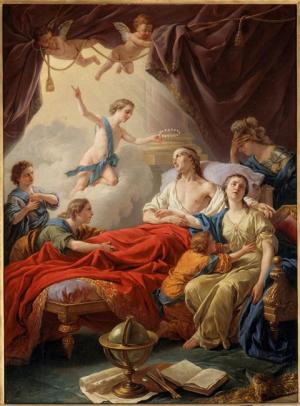
Louis Jean François Lagrenée, Le Dauphin mourant entouré de sa famille (Château de Fontainebleau)
Le château de Fontainebleau poursuit la mise en lumière de ses collections en consacrant, à l’automne 2015, une exposition à l’Allégorie à la mort du dauphin, une œuvre de Louis Lagrenée, dit l’Aîné.
Le 20 décembre 1765, Louis-Ferdinand, dauphin de France, s’éteint au château de Fontainebleau. Il est le fils de Louis XV et le père des futurs Louis XVI, Louis XVIII et Charles X. Le détail de sa vie ne nous est parvenu que par les représentations—livresques et artistiques—dont il a fait l’objet. Elles ont favorisé une reconstruction biographique posthume, souvent idéalisée, imprégnée par le contexte de l’opposition entre le parti dévot et les Encyclopédistes.
Exposée au Salon de 1767, l’Allégorie à la mort du dauphin participe de cette floraison artistique. Elle a suscité de nombreuses réactions, notamment celle de Diderot. D’abord critique acerbe du tableau, Diderot prend toutefois part, quelques année plus tard, à l’élaboration du mausolée d’un dauphin auquel tout semblait pourtant l’opposer.
En faisant converger les figures du dauphin, de Lagrenée et de Diderot, l’exposition se propose d’éclairer d’un jour nouveau cette allégorie, et d’examiner sa place dans les représentations de la mort et de l’immortalité que nous a léguées le siècle des Lumières.
L’exposition Le dauphin, l’artiste et le philosophe marque le 250e anniversaire de la mort du Dauphin Louis-Ferdinand et introduit une saison culturelle dédiée à Louis XV au château de Fontainebleau.
Additional information is available here»
Call for Papers | Serious Fun: Expressions of Play
From the Call for Papers:
Serious Fun: Expressions of Play in the History of Art and Architecture
The 32nd Annual Boston University Graduate Symposium on the History of Art and Architecture
Museum of Fine Arts, Boston, 26–27 February 2016
Proposals due by 21 November 2015
In all of its forms, play is a vital expressive force. Whether theatrical or athletic, rollicking or subversive, play has enacted a pivotal role in shaping cultural life. The 32nd Annual Boston University Graduate Student Symposium on the History of Art and Architecture invites submissions that consider aspects of play as form, content, process, and methodological framework.
Possible subjects include, but are not limited to:
• representations of play
• entertainment, games, and toys
• spaces of play, leisure, and recreation
• play as practice
• political control of play
• play as dissent or activism
• word play
• the naughty and the bawdy
• revelry and whimsy
• play and performance
• play as creative force
We welcome submissions from graduate students at all stages of their studies, working in any area or discipline. Please send an abstract (300 words or less), paper title, and a CV to the Symposium Coordinator, Catherine O’Reilly, at bugraduatesymposiumhaa@gmail.com. The deadline for submissions is Saturday, November 21, 2015. Selected speakers will be notified before January 1, 2016. Papers should be 20 minutes in length and will be followed by a question and answer session.
The Symposium will be held Friday, February 26 – Saturday, February 27, 2016, with a keynote lecture (TBD) on Friday evening at the Boston University Art Gallery at the Stone Gallery and graduate presentations on Saturday in the Riley Seminar Room of the Museum of Fine Arts, Boston.
This event is generously sponsored by The Boston University Center for the Humanities; the Boston University Department of History of Art & Architecture; the Museum of Fine Arts, Boston; the Boston University Graduate Student History of Art & Architecture Association; and the Boston University Art Gallery at the Stone Gallery.
MA in the Art Market and the History of Collecting, U of Buckingham
MA in the Art Market and the History of Collecting
The University of Buckingham
Full and partial scholarships available
A one-year MA offered by the University of Buckingham and the National Gallery in association with Waddesdon Manor (Rothschild Collections) investigates American and European art markets and cultures of collecting from the Renaissance to the present day. The course is taught by staff from the University of Buckingham, the National Gallery and Waddesdon Manor.
A unique feature of the course will be access to two of the greatest surviving art dealers’ archives: Agnew’s, acquired by the National Gallery in 2014, and Colnaghi’s, housed since February 2014 in the Windmill Hill Archive, Waddesdon Manor. It is the first MA in the UK to offer, under the guidance of experts, practical training on how to use, unlock and analyse these rich holdings.
Full and partial scholarships available generously funded by P & D Colnaghi & Co Ltd. Apply now for January 2016. For further information see the website or contact: Claire Prendergast, Claire.Prendergast@Buckingham.ac.uk or Jeremy Howard jeremy.howard@buckingham.ac.uk.










 Enfilade
leave a comment