Chistoph Vogtherr Named Director of the Hamburg Kunsthalle
From The Wallace (14 January 2016) . . .
Director, Dr Christoph Vogtherr, to leave the Wallace Collection
We at the Wallace are sad to hear about his departure, he has been an inspiration to his staff and we wish him well in his new role at Hamburger Kunsthalle.
 Dr Vogtherr joined the Wallace Collection as the Curator of Old Master Paintings and was appointed as Director in October 2011. During his tenure Dr Vogtherr has been responsible for the acclaimed refurbishment of the museum’s Great Gallery, seen visitor numbers increased by 20% and has established the museum as an international research centre for French seventeenth and eighteenth century art and European arms and armour.
Dr Vogtherr said: “It has been a great privilege to be part of the Wallace Collection team over the past nine years and its Director for the past five. I am proud to have been associated with such an outstanding collection and to have made a contribution to ensuring its enduring appeal for future generations. The refurbishment of the Great Gallery has been a once-in-a-lifetime project. The Hamburg Kunsthalle has played a crucial role in the history of the art museum and current museum practice, which explains the timing of this decision but I know I leave the Collection in good hands under the Chairmanship of António Horta-Osório, who I know will lead the Collection from strength to strength”.
António Horta Osório, the Chairman of the Wallace Collection, said: “We are very sorry to learn of Dr Vogtherr’s decision. We are immensely grateful to him for the very substantial contribution he has made to the Wallace Collection. He will leave the museum in a position of great strength artistically and intellectually.”
Dr Vogtherr will take up his post in Hamburg in October and the Wallace Collection will begin the search for a new Director in due course.
◊ ◊ ◊ ◊ ◊
From the Hamburg Kunsthalle (13 January 2016). . .
Dr. Christoph Martin Vogtherr wird Direktor der Hamburger Kunsthalle
Der Stiftungsrat der Hamburger Kunsthalle hat heute beschlossen, Dr. Christoph Martin Vogtherr die künstlerische und wissenschaftliche Leitung der Hamburger Kunsthalle zu übertragen. Vogtherr ist seit 2011 Direktor der Wallace Collection in London, einem der weltweit renommierten Museen für ältere, insbesondere französische Kunst. Er tritt zum 1. Oktober 2016 in der Hamburger Kunsthalle die Nachfolge von Prof. Dr. Hubertus Gaßner an, der in den Ruhestand geht.
Kultursenatorin Prof. Barabara Kisseler: „Mit Christoph Martin Vogtherr geben wir die Leitung der Hamburger Kunsthalle in die Hände eines ebenso erfahrenen wie innovativen Museumsdirektors. Vogtherr ist ein international anerkannter Kunsthistoriker. Als Direktor der Wallace Collection in London ist es ihm gelungen, mit neuen Sammlungspräsentationen und aktuellen Perspektiven ein neues Publikum für das Museum zu begeistern. Wir haben mit ihm eine Persönlichkeit gefunden, die dem Rang der Hamburger Kunsthalle gerecht wird und neue internationale Impulse setzen wird.“
Christoph Martin Vogtherr: „Die Hamburger Kunsthalle ist eines der herausragenden Kunstmuseen in Deutschland. Mit ihrer beeindruckenden und inspirierenden Tradition in der kunsthistorischen Arbeit und der Kunstvermittlung hat sie immer wieder die internationale Museumswelt geprägt und herausgefordert. Ich freue mich sehr über das große Vertrauen der Freien und Hansestadt Hamburg und möchte gemeinsam mit allen Mitarbeiterinnen und Mitarbeitern des Museums die künstlerische und gesellschaftliche Bedeutung der Kunsthalle weiter entwickeln.“
Christoph Martin Vogtherr ist seit 2011 Direktor der Wallace Collection in London. Seit 2007 war er dort zunächst als Kurator, später als Sammlungsleiter tätig. Von 2003 bis 2007 leitete er ein interdisziplinäres Forschungsprojekt der Getty Stiftung.
Seine derzeitige Wirkungsstätte, die Wallace Collection, ist eines von mehreren britischen Nationalmuseen und verfügt über eine hochkarätige Sammlung. Für Christoph Martin Vogtherr haben Museen eine wichtige Funktion als Teil der Zivilgesellschaft. Dabei ist es ihm ein besonderes Anliegen, ein junges und internationales Publikum durch innovative Vermittlungsangebote zu gewinnen.
Christoph Martin Vogtherr wurde 1965 in Uelzen geboren und studierte Kunstgeschichte, mittelalterliche Geschichte und klassische Archäologie in Berlin, Heidelberg und Cambridge. 1996 promovierte er an der Freien Universität Berlin mit einer Dissertation über die Gründung der Berliner Museen 1797-1835. Er verfügt über hervorragende internationale Beziehungen im anglo-amerikanischen Raum sowie in Frankreich. Seit 2014 ist er Mitglied im Wissenschaftsrat des Institut national d’histoire de l’art in Paris.
Call for Papers | Auricular Style: Frames
The Auricular Style of the seventeenth century regularly occasions evocations of subsequent Rococo designs (for better or worse, though even consideration of the latter might make for a useful contribution). . . The Rijksmuseum is planning an exhibition on the Auricular Style (kwabstijl) in 2018. From the conference website:
Auricular Style: Frames
The Wallace Collection, London, 5–6 October 2016
Proposals due by 29 January 2016
This two-day international conference will be the first dedicated to the Auricular Style, centring on one of its most significant manifestations, the picture frame. The conference aims to stimulate awareness and study of this important but neglected style by bringing together research in fine and decorative art histories. It will consider the origins and development of the style in different materials, together with its dissemination between European centres. The conference will explore how other areas of the decorative and applied arts fed into the creation of picture frames, and were in their turn nourished through the influence of these sculptural objects.
Fourteen speakers are anticipated, and currently include Karen Hearn (University College London), Jacob Simon (National Portrait Gallery), Hubert Baija (Rijksmuseum), Daniela Roberts (University of Würzburg), Allison Stielau (McGill University) and Ada de Wit (Radboud University / Wallace Collection). Displays to run simultaneously with the conference are planned with the Guildhall Art Gallery, and Ham House, London.
Relevant topics include, but are not limited to, connections between countries (Italy, France, Bohemia, the Netherlands, Britain, Germany and Scandinavia); the Van Vianens; Fontainebleau; the grotesque; ‘Medici’ frames; the influence of prints; Auricular settings; craftsmanship; the style’s decline and its revivals. Poster presentations exhibited during the conference will be edited with the papers and published, fully illustrated, for free download on The Frame Blog, which it is hoped will become a hub for future related research.
Enquiries and submissions (300–400 word abstracts as Word documents) to alabone.g@gmail.com. Registration free for speakers and poster contributors. Agreed travel and accommodation expenses reimbursed for speakers.
Convenors: Gerry Alabone (Tate / City and Guilds of London Art School) and Lynn Roberts (The Frame Blog) in association with the Institute of Conservation (Gilding and Decorative Surfaces Group).
Research Lunch | Geological Landscape in Britain

Drawings of minerals arranged in families according with the system of Professor Jameson, 1830–36
(Special Collections at Edinburgh University)
◊ ◊ ◊ ◊ ◊
From the Paul Mellon Centre:
Allison Ksiazkiewicz | Primitive Forms and Prospects: Geological
Landscape in Late Eighteenth- and Early Nineteenth-Century Britain
Paul Mellon Centre, London, 5 February 2016
During the late eighteenth and early nineteenth centuries, British mineralogists and geologists appropriated different forms of inquiry such as art and architecture to help them wrestle with the natural and artificial aspects that informed their scientific sensibilities. The relationship between humanity and Nature, as debated in philosophical and artistic circles, paralleled discussions in earth studies and the developing new science of geology. While aesthetic categories such as the picturesque enabled artists to negotiate and articulate attitudes towards Nature that emphasized harmony and balance, these same techniques in scientific depiction cultivated and supported a sense of empirical vision of geological landscapes.
The mineral collections of Sir Charles Greville (1749–1809), Sir John St Aubyn (1758–1839) and Sir Abraham Hume (1749–1838), and A Geological Map of England and Wales by George Bellas Greenough (1778–1855) will be used to explore issues of art and aesthetics in the making of mineralogical and geological knowledge. Greville, St Aubyn and Hume were each influential figures in artistic and scientific communities and commissioned the mineralogist and French émigré Comte de Bournon (1751–1825) to catalogue their respective mineral cabinets. As a student of crystallography, Bournon classified specimens according to basic crystallized shapes that functioned as universal primitive forms. Geologists motivated by mineralogical interpretations of the earth understood geo-landscape through the interpretation of these basic elements. The production of a coloured geological map of England and Wales was one of the first projects undertaken by the Geological Society of London. Greenough, founder and first President of the Society, supported chemical and mineralogical interpretations of earth structure, and used colour to represent the relative positions of strata while maintaining a ‘naturalistic’ palette in the depiction of formations on his map.
All are welcome! However, places are limited, so if you would like to attend please contact our Events Manager, Ella Fleming on events@paul-mellon-centre.ac.uk. This is a free event, and lunch is provided.
Friday, 5 Februay 2016, 12:30–2:00pm
Lecture Room, Paul Mellon Centre, 16 Bedford Square, London WC1B 3JA
Call for Papers | Human Kind: British and Australian Portraits
From The University of Melbourne:
Human Kind: Transforming Identity in British and Australian Portraits, 1700–1914
The University of Melbourne & National Gallery of Victoria, Melbourne, 8–11 September 2016
Proposals due by 12 February 2016
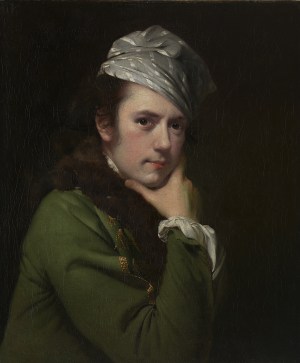
Joseph Wright of Derby, Self-portrait, 1765–68, oil on canvas (Melbourne: National Gallery of Victoria)
Inspired by the outstanding collection of the National Gallery of Victoria, this interdisciplinary conference will be the largest gathering of international and Australian scholars to focus on portraits. It will provide a unique opportunity to explore both British and Australian portraits through a dynamic interchange between academics and curators.
Papers are invited that focus on British or Australian portraits between 1700 and 1914, which can be interpreted as separate fields or as overlapping or comparative studies. The portraits may be in any public or private collection worldwide, but in particular in the National Gallery of Victoria. They may be in any medium, including painting, print, drawing, sculpture and photography.
The conference aims to be both informed and provocative and to provide a robust forum for new and contemporary perspectives. These will include:
• How portraits shape social values and invent new possibilities for defining ‘human kind’
• The importance of place and provenance in the interpretation of portraits
• How portraits form a bridge of self-interpretation between Britain and colonial society
• The bonding role of portraits, their exchange as gifts, as agents in friendship and social cohesion, as testament to empathy and kinship
• The interaction of portraits with other art forms and cultural media, including theatre, literature and music, photography and film
• The role of portraits as records of social exclusion, isolation and displacement
• Issues of authorship, attribution, restoration and the multiplication and copying of portraits.
Please email abstracts of no more than 250 words and a short CV to portrait-conference@unimelb.edu.au. Deadline for proposals is Friday, 12 February 2016.
Keynote Speakers
• Mark Hallett, Director of Studies, Paul Mellon Centre for Studies in British Art
• Martin Myrone, Lead Curator Pre-1800, Tate Gallery
• Kate Retford, Senior Lecturer, Department of History of Art, Birkbeck University of London
The Paul Mellon Centre for Studies in British Art has provided funding for graduate bursaries. Please direct your enquiries to portrait-conference@unimelb.edu.au.
Exhibition | Beyond Measure: Fashion and the Plus-Size* Woman
◊ ◊ ◊ ◊ ◊
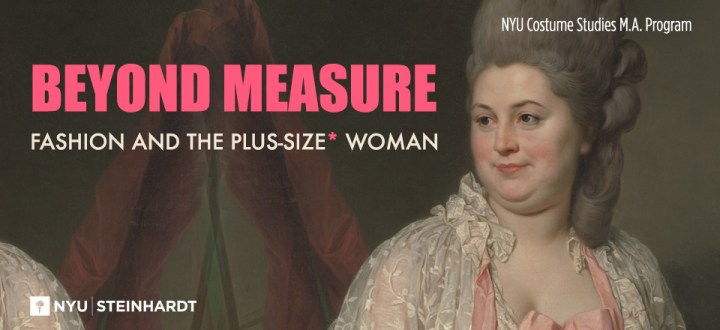
It’s not an eighteenth-century exhibition per se, though the starting point is Joseph Siffred Duplessis’s Portrait of Madame de Saint-Maurice (mention of which also opens Ruth La Ferla’s review of the exhibition for The New York Times) . . . From the exhibition website:
Beyond Measure: Fashion and the Plus-Size* Woman
80WSE, New York University, 13 January — 3 February 2016
Curated by Tracy Jenkins with Dévika Kanadé, Julie Smolinski, Lauren
Wilson, Meg Pierson, Mem Barnett, Shelly Tarter, and Ya’ara Keydar
The Masters of Arts Candidates in New York University’s Visual Culture: Costume Studies Program proudly present their annual exhibition entitled Beyond Measure: Fashion and the Plus-Size* Woman , on view at 80WSE, New York University Steinhardt School’s gallery space, from January 13th to February 3rd, 2016. The exhibition explores the shifting discourse surrounding the plus-size woman in relation to fashion and the body. Through a series of objects, the exhibit will examine the plus-size woman’s place within fashion and its defining entity—the fashion industry—from the perspectives of designers, manufacturers, the general public, and the individual women themselves.

Joseph Siffred Duplessis, Portrait of Madame de Saint-Maurice, 1776 (exhibited in Paris at the Salon of 1776), oil on canvas (New York: The Metropolitan Museum of Art)
As a complicated cultural construct itself, the very term ‘plus-size’ evokes a myriad of reactions, thus, “after careful consideration from the curators of the exhibit, the term ‘plus-size’ is used here for its association with fashion, the primary focus of this exhibition,” said curatorial director of the exhibit, Tracy Jenkins. The fashion industry has played an undeniable role in enabling the stigmatization of larger women’s bodies. Despite consumer needs, plus-size fashion has traditionally been given little sartorial energy. Yet women of all physiques have had to clothe themselves, and thus have stood somewhere in relation to the fashion system. The plus-size woman’s place within the history of the body and her space within the fashion industry is presented here through a diverse set of objects emphasizing her relationship to gender and body politics as well as cultural attitudes toward beauty and health.
These objects, among others, will include an early twentieth-century photograph of A Ticket to Nettie the Fat Girl, representing one of the earliest views of greater weight being equated with greater immorality, and the fetishization of the supposedly deviant body. In a series of advertisements from the mid-twentieth century, women considered undesirably skinny were encouraged to consume dietary supplements to add ‘sex-appealing curves’. Their younger counterparts from the same era who weighed ‘more than average’ were deemed ‘Chubbies’ by pattern companies, presented through the Simplicity Chubbie Pattern in this exhibit. It is not until the 1990s that the plus-size woman in fashion takes center stage when model and muse Stella Ellis took the fashion world into bold new territory as she strode the high fashion runways alongside ‘straight size’ models. Presented in the exhibit is a 1992 photograph of Ellis in bespoke Jean Paul Gaultier, representing her collaboration with the designer, and her photographer, who championed Ellis’s look. Attention will also be paid to the plus-size woman’s relationship with fashion in recent years. These objects will include images of plus-sized models using padding during photo shoots, which has drawn comparisons to the use of Photoshop to create unattainable ideals of beauty. Throughout this presentation of objects and media, ranging from historical to contemporary, this exhibition aims to present the plus-size woman taking her place as a woman of and in fashion.
Thursday, 28 January 2016, 5–9pm
To celebrate the opening of Beyond Measure: Fashion and the Plus-Size* Woman, the NYU M.A. Costume Studies Candidates will host a reception and panel discussion. The opening will be held at the gallery space at 80WSE where attendees are encouraged to explore the exhibit as well as meet with the curators. Starting at 7:00, a panel discussion will be held at NYU (location TBD). The event will include a keynote speech by Professor Leah Sweet, Parsons the New School for Design, and followed by a discussion with plus-size model and muse Stella Ellis, Eden Miller, the first plus-size designer to show at New York Fashion Week and Buzzfeed writer Kaye Toal. Please confirm attendance RSVP@beyondmeasurenyu.com.
In conjunction with Beyond Measure: Fashion and the Plus-Size* Woman, a mobile web app will be available to explore the exhibition beyond the walls of 80WSE. This will include supplemental multimedia material including videos, images, and discussions with the curators.
Beyond Measure: Fashion and the Plus-Size* Woman is organized by curatorial director Tracy Jenkins, a faculty member in NYU’s M.A. Costume Studies Program and by the co-curators: Dévika Kanadé, Julie Smolinski, Lauren Wilson, Meg Pierson, Mem Barnett, Shelly Tarter, and Ya’ara Keydar, Masters of Arts Candidates in New York University’s Visual Culture: Costume Studies Program.
Call for Papers | Hers & Hers: Women as Artists, Clients, and Consumers
Hers & Hers: Women as Artists, Clients, and Consumers
California State University, Sacramento, 16 April 2016
Proposals due by 22 February 2016 [revised, extended deadline]
Keynote speaker: Sheryl E. Reiss (President, Italian Art Society), ‘Noble Exemplars of Their Sex’: Tomb Monuments Commissioned for and by Women during the Italian Renaissance
The past three decades have seen an increased amount of scholarship about women who were artists and women who were either sponsors of art projects or purchasers of art objects between about 1500 and 1800. Publications and presentations have resulted in a greater awareness of the significant role played by women in the art market in the 18th century and earlier. For the 12th Annual Art History Symposium at California State University, Sacramento, we welcome proposals for 20-minute papers that provide new information and/or insights about women artists, clients, or consumers in the 16th, 17th, or 18th centuries.
Please send:
(1) A 300-word proposal
(2) A short biographical statement (one paragraph)
(3) Full contact information
Send all three items as e-mail attachments to ruth.hansen@csus.edu by February 22, 2016. Questions about the symposium may be addressed to Professor Catherine Turrill (turrillc@csus.edu).
Exhibition | Ships, Clocks & Stars: The Quest for Longitude

Working replicas of John Harrison’s three remarkable timekeepers (H1, H2, H3) are highlights of the Ships, Clocks & Stars exhibition at Mystic Seaport; pictured is a detail of H3. Photo by Andy Price/Mystic Seaport.
◊ ◊ ◊ ◊ ◊
Press release (20 August 2015) for the exhibition, which was earlier on display at the National Maritime Museum in Greenwich:
Ships, Clocks, and Stars: The Quest for Longitude
National Maritime Museum, Greenwich, 11 July 2014 — 4 January 2015
Mystic Seaport, Mystic, Connecticut, 19 September 2015 — 28 March 2016
Mystic Seaport proudly presents Ships, Clocks & Stars: The Quest for Longitude, on tour from England for a limited time only. The award-winning exhibition, produced by the National Maritime Museum in London and sponsored by United Technologies Corp., reveals the race to determine longitude at sea. Spurred on by the promise of rich rewards, astronomers, philosophers, and artisans—including John Harrison and his innovative timekeepers—finally solved one of the greatest technical challenges of the 18th century.
For centuries, longitude (east-west position) was a matter of life and death at sea. Ships that went off course had no way to rediscover their longitude. With no known location, they might smash into underwater obstacles or be forever lost at sea. For a maritime nation such as Britain, growing investment in long distance trade, outposts and settlements overseas made the ability to accurately determine a ship’s longitude increasingly important.
Ships, Clocks & Stars celebrates the 300th anniversary of the British Longitude Act of 1714, which offered a huge prize for any practical way to determine longitude at sea. The longitude problem was so difficult that—despite that incentive—it took five decades to solve it. Through the latest research and extraordinary, historic artifacts—many from the collection of the National Maritime Museum and never before displayed outside the UK—the exhibition tells the story of the clockmakers, astronomers, naval officers, and others who pursued the long ‘quest for longitude’ to ultimate success.
In recent years, John Harrison has been cast as the hero of the story, not least in Dava Sobel’s bestselling book Longitude: The True Story of a Lone Genius Who Solved the Greatest Scientific Problem of His Time. Ships, Clocks & Stars provides a new perspective on this famous tale. While John Harrison makes a good story and his marine sea-watch was vital to finally solving the problem of longitude, this was against a backdrop of almost unprecedented collaboration and investment. Famous names such as Galileo, Isaac Newton, James Cook, and William Bligh all feature in this fascinating and complex history. Crucially, it was Astronomer Royal Nevil Maskelyne’s observations and work on the Nautical Almanac at the Royal Observatory in Greenwich that demonstrated the complementary nature of astronomical and timekeeper methods. Combined, the two methods lead to the successful determination of longitude at sea and changed our understanding of the world.
“Mystic Seaport is very proud to bring Ships, Clocks & Stars to New England to tell this important story of scientific discovery, innovation, creativity, perseverance, and even adventure as different parties raced to find a solution,” said Steve White, president of Mystic Seaport. “This exhibit is more than the story of longitude: it is the story of human problem-solving, and it is as relevant today as it was in the eighteenth century.”
2015 Berger Prize for British Art History: James Barry’s Murals
Congratulations to Bill Pressly!
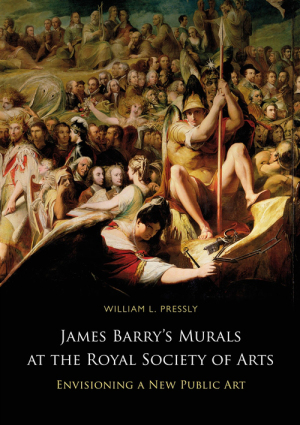 On December 7, William Pressly was awarded the 2015 William M. B. Berger Prize for British Art History for his book James Barry’s Murals at the Royal Society of Arts: Envisioning a New Public Art (Cork University Press). The book demonstrates that Barry’s RSA paintings contain a hidden meaning that has gone undetected for 230 years. The pictures offer in the heart of the London establishment a glorification of the Roman Catholic Church. The artist’s creation of a complex, mythic narrative establishes him as the mentor of William Blake, whose approach to art owes a profound debt to the Irishman’s example.
Other titles relevant to the eighteenth century on the short list included:
• Ruth Guilding, Owning the Past: Why the English collected Antique Sculpture, 1640–1840 (Yale University Press for the Paul Mellon Centre for Studies in British Art)
• Jane Munro, Silent Partners: Artist and Mannequin from Function to Fetish (Yale University Press in Association with the Fitzwilliam Museum, Cambridge)
• Malcolm Baker, The Marble Index: Roubiliac and Sculptural Portraiture in Eighteenth-Century Britain (Yale University Press for the Paul Mellon Centre for Studies in British Art)
The complete list, including the long list is available here»
Winterthur’s Online Collections Reaches 60,000 Entries
As noted recently at Art Daily:
In an effort that began ten years ago, Winterthur Museum, Garden & Library has accomplished a significant milestone: 60,000 objects in the Winterthur collection have been catalogued or re-catalogued and made available to the public through Winterthur’s Online Collections.
In late summer of 2005, Winterthur welcomed new collections management software, and more than 70 staff and volunteer cataloguers began the process of cataloguing or re-cataloguing the entire collection of nearly 90,000 objects. With the help of many grants, approximately 16,000 ceramics, 14,500 metals, 11,000 textiles and needlework 3,500 prints and maps, 3,200 glass objects, 3,000 pieces of furniture, as well as architectural elements, paintings, tools, toys and games, works on paper, and more have been catalogued. In addition, nearly 152,000 digital images have been added to Winterthur’s collection database.
“We are incredibly grateful to all of our cataloguers over the years, as well as to those agencies, organizations, and individuals who have contributed to this project. Creating our Online Collections has given the public and scholars important access to the Winterthur collection and the wealth of information it has to offer, and in doing so, the Museum has been able to engage new audiences with its collection,” said Linda Eaton, John L. & Marjorie P. McGraw Director of Collections & Senior Curator of Textiles.
The original grant that started this process was given by the Jane du Pont Lunger Residual Trust Fund, which also funded the purchase of digital photographic equipment. Several other grants from federal agencies, foundations, and generous private supporters have helped Winterthur reach this achievement. Four grants from the Institute of Museum and Library Services made possible cataloguing discrete parts of Winterthur’s diverse collections of decorative and fine arts. The textile collection, an important resource for historians internationally, was partially catalogued through two grants for furnishing textiles and printed textiles. Winterthur’s collection of tools used by artisans in trades ranging from carpentry to silversmithing to needlework is the focus of the most recent grant that will be completed June 2016. An additional grant from the National Endowment for the Arts scanned and photographed half of the maps and prints in the collection, which are now available online. A grant from The Coby Foundation catalogued quilts and other bed covers, while a grant from the Museum Loan Network was used to catalogue and photograph 100 pre-1800 English ceramics that were then made available for loan on the MLN website. The generosity of Leslie B. Durst has made it possible to catalogue and photograph the needlework collection.
The Getty Acquires 31 Pieces of French Decorative Arts
Press release (12 January 2016) from The Getty:

Wall Clock, with clock movement probably by Nicolas Thomas, ca. 1785; gilt bronze, enameled metal, glass, 49.5 x 55.9 cm (Los Angeles: The J. Paul Getty Museum)
The J. Paul Getty Museum today announced the acquisition of an important collection of eighteenth-century French decorative arts assembled by Dr. Horace Wood (Woody) Brock, one of the world’s foremost economists. The acquisition is a combined gift and purchase. The thirty-one works of art include seven clocks; six gilt-bronze mounted porcelain, feldspar and porphyry objects; five works in gilt bronze including a pair of candelabra, two sets of firedogs, and two sets of decorative vases; a carved gilt-wood console table; a porcelain inkstand; and a leather portrait medallion of Louis XIV. The collection substantially enhances the Getty Museum’s extraordinary holdings of French decorative arts, renowned as one of the most important outside France.
“These exquisite objects constitute the most significant acquisition of French decorative arts made by the Museum in many years,” said Timothy Potts, director of the J. Paul Getty Museum. “Produced in the sophisticated artistic culture of eighteenth-century Paris, these extraordinary works epitomize the skill and artistry that made the French court and aristocratic life the epitome of elegant extravagance, and the envy of collectors throughout Europe. We are deeply grateful to Dr. Brock for his generosity in enriching our collection with this important gift and purchase.”

Mantel Clock, ca. 1789. Clock case attributed to Pierre-Philippe Thomire; clock movement by Charles-Guillaume Manière; patinated bronze, gilt bronze, enameled metal, glass, white marble, griotte marble, 55.2 × 64.5 × 19.1 cm (Los Angeles: The J. Paul Getty Museum, Los Angeles)
Dr. Brock has been collecting French and English decorative arts and Old Master drawings for the last thirty years. He began lending decorative arts objects to the Getty Museum in 1997 and made several long-term loans through 2008. Since being lent to the Getty, these objects have been on continuous display in the European decorative arts galleries in the South Pavilion Plaza Level at the Getty Center.
“The objects collected by Dr. Brock are sumptuous and refined pieces of the highest quality that have significantly enriched the French Decorative Arts galleries since the opening of the Getty Center in 1997,” said Anne-Lise Desmas, curator and department head of Sculpture and of Decorative Arts. “They have become key components in the Museum’s recreation of French eighteenth-century interiors and have played an essential role in our visitors’ experience and understanding of this critical period of European art.”
The newly-acquired works were created as luxury objects that would have decorated the lavishly furnished residences of the French aristocracy and bourgeoisie. Many, such as the clocks, candelabra, and the inkstand, were made for practical use, but their sophisticated design and rare materials were also meant to demonstrate the wealth, prestige, and refined taste of their owners. The objects represent the full range of decorative styles practiced during the eighteenth century, from the grandeur and opulence of late Baroque and Régence, through the intimate brilliance of the Rococo, to the severe restraint of the Neoclassical.
Highlights of the collection include a pair of gilt-bronze candelabra (2015.60.1) attributed to the prominent Baroque cabinetmaker André-Charles Boulle, called during his lifetime “the most skillful artisan in Paris.” Two early Rococo lidded jars (2015.70) include exotic motifs from the Far East; porcelain and hardstones were avidly collected and prominently displayed, mounted with gilt bronze to highlight the beauty and rarity of porphyry and feldspar.
A passionate collector of decorative arts, Dr. Brock knows the Getty Museum’s outstanding collection intimately. Consequently, he has given works that fit exceptionally well in the context of the Museum. For example, the extraordinary gilt-bronze wall clock in the form of a winged clock face (2015.67) adds an important model not currently represented in the collection and the imposing Neoclassical mantel clock with Vestal Virgins (2015.64) attributed to Pierre-Philippe Thomire joins a significant group of objects from early in that artist’s career already belonging to the Museum.
Most of the donations have been made in honor of Theodore Dell, an important scholar who catalogued the French furniture and gilt bronzes at The Frick Collection in New York. Dell was a consultant to Gillian Wilson, former Getty Museum curator of decorative arts, and helped Dr. Brock in the formation of his collection. Dell assembled an important library of sales catalogues, journals, magazines, books, and museum catalogues, all focused on French decorative arts, which he donated to the Bard Graduate Center Library in 2012. Other objects have been donated to the Getty in honor of Gillian Wilson as well as knowledgeable dealers in decorative arts such as Leon Dalva, Will Iselin, Pascal Izarn, Laurent and Olivier Kraemer, and Martin Zimet; and, in memory of Frank Berendt, Philippe Kraemer, and François Léage.
“The J. Paul Getty Museum contains a superb collection of the decorative arts of eighteenth-century France, a period in which the quality of design and craftsman ship arguably reached its historical zenith. My hope is that the objects I have collected will permanently enhance this already remarkable collection,” says Dr. Horace Wood Brock.
Dr. Horace Brock earned his B.A., M.B.A., and M.S. in Mathematics from Harvard University, and his M.A. and Ph.D. from Princeton University (Mathematical Economics and Political Philosophy). He is the former president and founder of Strategic Economic Decisions (SED), Inc., and specializes in applications of the modern economics of uncertainty to forecasting and risk assessment in the international economy and its asset markets. He has developed a new theory of rational beliefs that disputes the classical theory of efficient markets and is the author of American Gridlock: Why the Right and the Left Are Both Wrong — Commonsense 101 Solution to the Economic Crises (Wiley: 2012).










 Enfilade
leave a comment