Call for Papers | Towards a Cultural History of the Decorator
From H-ArtHist:
Towards a Cultural History of the Decorator, 18th–20th Centuries
Institut national d’histoire de l’art, Paris, 7–8 October 2016
Proposals due by 1 April 2016
Organized by the Institut National d’Histoire de l’Art and Les Arts Décoratifs, this symposium will propose a reevaluation of the traditional history of Western styles from the late 18th to the late 20th century by examining the figure of the interior decorator. While the historiography has mostly focused on the logical chain of formal and technical innovations and the notion of avant-garde, this symposium will highlight the socio-economical context in which the work of the decorator was rooted. This approach sheds new light on the visual culture of certain generations or social groups at a specific moment in time. It also helps shape the definition of notions such as the collective gaze (oeil collectif) or visual tolerance, still under-studied, and provides clues to understanding the alternation of over-furnishing and soberness. This approach may also explain the numerous variations regarding, for example, the intensity of colour and light, or the occupation of space.
To contribute to this cultural history of the interior decorator, this symposium will give priority to trans-historical and interdisciplinary proposals over monographic approaches. Proposals which fit into one of the themes detailed below will retain our attention:
1. Identity of the Decorator
The decorator is generally associated with the figure of the architect in the 18th century, with the upholsterer in the 19th century, and the ensemblier in the 20th century. This session’s aim is to analyze and perhaps reconsider these categories.
2. Spaces
This will be the opportunity to think about the complex relationship between the decorator and the various spaces in which s/he works (public/private space, scenography, etc.).
3. Diffusion of the Work of the Decorator
This session will examine the numerous means available for the decorator to diffuse and promote his/her work. From pattern books to magazines, how have these media brought to light the decorator’s work? To which extent can the descriptions found in literature inform his/her work?
4. Fashion-Maker or Follower?
If the work of the decorator seems to epitomize the tastes of a class or a social category at a specific moment in history, the relationships between the decorator and the patron needs to be further examined in order to evaluate their respective role and responsibility in the
creation and diffusion of a trend.
The papers will be given either in French or English. Proposals in French or English, about 2000 characters (including spaces) should be sent by April 1st 2016 to the following persons:
• philippe.thiebaut@inha.fr
• etienne.tornier@inha.fr
• sebastien.quequet@lesartsdecoratifs.fr
New Book | Antonio Bonazza e la scultura veneta del Settecento
Essays resulting from a study day held in October of 2013 in conjunction with the exhibition on Antonio Bonazza (1698–1763) were published last year by Scripta and are now available from Michael Shamansky (the exhibition was L’anima della pietra: Antonio Bonazza scultore del Settecento, on view at the Museo Diocesano di Padova, 2 May — 31 October 2013).
Carlo Cavalli and Andrew Nante, eds., Antonio Bonazza e la scultura veneta del Settecento: Atti della Giornata di studi, Padova, Museo Diocesano – Venerdì 25 Ottobre 2013 (Verona: Scripta, 2015), 208 pages, ISBN: 978-8898877416, $33.
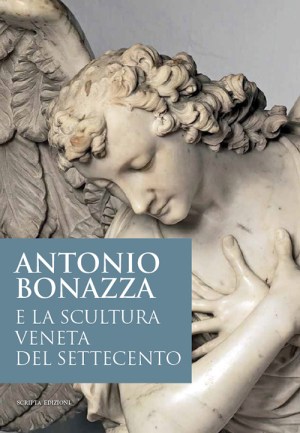 Antonio Bonazza è esponente di spicco di una delle più operose famigliedi scultori del Settecento veneto: insieme al padre Giovanni eai fratelli Francesco e Tommaso ha lavorato in moltissime chiese diPadova e del territorio, oltre che nei giardini delle ville di campagna dinobili famiglie veneziane.Le sue opere si collocano spesso ben al di sopra del livello di quelle deisuoi contemporanei, e raggiungono esiti di eleganza e leggerezza tra ipiù alti della scultura veneta del Settecento.La giornata di studi, organizzata dal Museo Diocesano di Padova inoccasione dei 250 anni dalla morte dell’artista (12 gennaio 1763), è stata occasione per aggiornare il catalogo delle opere, precisare la cronologia, mettere a fuoco la personalità umana e artistica di Antonio e i suoi rapporti con quella del padre Giovanni e dei fratelli Francesco e Tommaso, indagare modelli e fonti visive ed esplorare le relazioni tra la sua arte e quella dei suoi contemporanei.
◊ ◊ ◊ ◊ ◊
I N D I C E
• Anrea Nante, ‘L’anima nella pietra’. Ricerca e valorizzazione per la scultura del Settecento veneto
• Simone Guerriero, Giovanni e Antonio Bonazza, eredità e invenzione
• Damir Tulić, Le opere dei Bonazza sulla costa orientale dell’Adriatico
• Paolo Goi, Sui Bonazza in Friuli Venezia Giulia
• Monica De Vincenti, Antonio Bonazza e l’ingresso della ‘scultura di costume’ nel giardino della villa veneta
• Massimo De Grassi, Tra suggestioni antiquarie e cinquecentismi: fonti visive di Antonio Bonazza
• Denis Ton, I Bonazza e la pittura veneta: interazioni e scambi
• Egidio Arlango e Monica Pregnolato, L’altare dell’Addolorata nella chiesa padovana dei Servi: lettura tecnica e materica di una ‘straordinaria invenzione’
New Appointment for Margaret Michniewicz
Margaret Michniewicz Appointed Visual Arts Acquisition
Editor at Bloomsbury
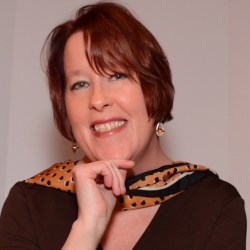 Having worked at Ashgate Publishing since 2011, Margaret Michniewicz recently joined Bloomsbury’s New York office as Visual Arts Acquisition Editor. In addition to welcoming proposals for book projects, she is currently focused on launching new series and invites inquiries and ideas from prospective series editors. Open to a wide array of subject matter, including interdisciplinary approaches and work addressing issues of gender and race, Michniewicz will be commissioning projects in art history and visual culture from the eighteenth century onward.
Kevin Ohe, US Academic Publishing Director at Bloomsbury, underscores the possibilities that lie ahead: “Bloomsbury is thrilled to welcome Margaret Michniewicz to our Editorial team. She brings with her deep experience working with a cohort of tremendous authors. She’ll help us add strength to our already robust publishing program in the visual arts, and we’re looking forward to working with the authors she’ll bring to our list and the new series she’ll create.”
The long list of books she edited at Ashgate includes Materializing Gender in Eighteenth-Century Europe edited by Jennifer Germann and Heidi Strobel; Mariette and the Science of the Connoisseur in Eighteenth-Century Europe by Kristel Smentek; and Académie Royale: A History in Portraits by Hannah Williams. Proposals for edited collections will still be welcome, and Bloomsbury has the capacity to offer both hardback and paperback editions.
In April, Michniewicz will be attending the Association of Art Historians conference in Edinburgh and is currently making appointments for meetings with prospective authors and editors. You can reach her by email at Margaret.michniewicz@bloomsbury.com and follow her on Twitter at BburyViaAshg8.
With her characteristic enthusiasm, Michniewicz comments on her new position: “As an art historian myself, I feel the stars have aligned: I have this opportunity to continue the work I love by developing Bloomsbury’s new research monographs program in art history and visual culture, expanding upon Bloomsbury’s already vibrant visual arts publishing. This is very good news for all art historians!”
Exhibition | Picturing Prestige: New York Portraits, 1700–1860

From left to right: John Trumball, Portrait of Alexander Hamilton, ca. 1804–08 (Museum of the City of New York, 72.31.3); Nicholas Biddle Kittell, Portrait of Mr. and Mrs. Charles Henry Augustus Carter, ca. 1845 (Museum of the City of New York, 62.234.12); and George Peter Alexander Healy, Portrait of Caroline Slidell Perry Belmont (Mrs. August Belmont, Sr.), ca. 1855 (Museum of the City of New York, 51.317).
◊ ◊ ◊ ◊ ◊
Press release for the exhibition now on view at MCNY:
Picturing Prestige: New York Portraits, 1700–1860
Museum of the City of New York, 5 February — 18 November 2016
Curated by Bruce Weber
The Museum of the City of New York presents Picturing Prestige: New York Portraits, 1700–1860, an ensemble of iconic New Yorkers presented by intricate and elegant portraits, which were commissioned as status symbols and painted by the very best artists a young nation had to offer. The exhibition opened to the public on Friday, February 5, 2016.
Visitors can see familiar figures, such as the renowned John Trumbull portrait of Alexander Hamilton that inspired the image on our ten-dollar bill, and can also come face-to-face with New Yorkers like Richard Varick, of Varick Street in Greenwich Village, and the Brooks family, of Brooks Brothers fame, whose names are part of the city’s fabric but whose stories remain untold to a broad audience. This unique exhibition draws from the City Museum’s permanent collection to reveal the evolution of a dynamic city through its leading merchants, politicians and patrons, as well as the development of portraiture itself, one of New York’s oldest visual art forms.
“New York City’s distinctive character and unique personality have always come from its citizens,” said Whitney Donhauser, Ronay Menschel Director of the Museum of the City of New York. “This exhibition explores over 150 years of city life through the lives of many of history’s most celebrated New Yorkers, offering visitors an intensely engaging and deeply personal interaction with the past.”
Picturing Prestige relies on the people who shaped New York City in its formative years to tell the story of how the city grew from its colonial foundations through the Revolutionary War and blossomed into a mercantile powerhouse in the mid-19th century. The namesakes of Varick and McDougal Streets in Greenwich Village are brought to life by centuries-old paintings of Richard Varick and Alexander McDougall. Brooks Brothers is a household name in present-day America, and Picturing Prestige will display the early Brooks family in the light they wished to be shown in their own time.
The exhibition is also a study in the art of portraiture and New York City’s place as an artistic hub, showcasing over 40 oil paintings to go along with a dozen miniatures—small portraits kept as keepsakes, which were the original version of family wallet photos. The show is organized in three sections that demonstrate not only the growth and transformation of the city itself, but also the changing nature of portraiture as an art form, the city’s emergence as an artistic center, and the ways in which the city’s elite viewed itself over time:
• Colonial Foundations, 1700–1775
• Young Nationhood, 1777–1815
• The City Rises, 1815–1860
The scope of the exhibition, curated by Bruce Weber, City Museum Curator of Paintings and Sculpture, is made possible by the wealth of the City Museum’s permanent collection, offering portraits of iconic New Yorkers as painted by the leading artists of their respective generations. The artists themselves reveal nearly as much history as their subjects do, from the Duyckinck family demonstrating that the best painters in America in the 17th century were not from America, to John Singleton Copley personifying the rise of fine art in this country over one hundred years later.
“The portraits in this exhibition are works of art in and of themselves, but they are also windows into the lives and times of legendary New Yorkers,” added Weber. “In thinking about who commissioned these paintings and the artists who brought their subjects to life, we can tell the story of a city emerging from the throes of revolution to lead a young nation towards its rightful place at the vanguard of the artistic world. Today, New York City’s role as a cultural center is undisputed. Picturing Prestige helps explain how we got there.”
The conservation of many of the works and their related frames featured in Picturing Prestige: New York Portraits, 1700–1860 was made possible by a grant from the National Endowment for the Arts, as was digital photography and cataloguing of many of the paintings.

◊ ◊ ◊ ◊ ◊
From MCNY:
Hamilton and Friends: Portraiture in Early New York
Museum of the City of New York, Thursday, 11 February 2016, 6:30 pm
Alexander Hamilton was a man of many faces: politician, economist, revolutionary—and rumored philanderer. After he was killed in a duel with Aaron Burr in 1804, Hamilton’s widow, Elizabeth Schuyler Hamilton, worked tirelessly to defend her husband’s reputation. Today we are familiar with likenesses of Alexander Hamilton—including one that is on the ten dollar bill. This panel will explore how portraiture served in the decades after the American Revolution as a critical tool in shaping and canonizing the public image of leaders and notables. Join us for a conversation about how the Hamiltons and other members of the colonial New York elite commissioned portraits to use both as status symbols and a means to craft their public image. This program delves into the themes of our exhibition Picturing Prestige: New York Portraits, 1700–1860.
• William H. Gerdts, Professor Emeritus of Art History, CUNY Graduate Center
• David Jaffee, Professor and Head of New Media Research, Bard Graduate Center
• Elizabeth Mankin Kornhauser, Alice Pratt Brown Curator of American Paintings and Sculpture, The Metropolitan Museum of Art
• Brett Palfreyman, Assistant Professor, History Department, Wagner College
• Bruce Weber (moderator), Museum’s Curator of Picturing Prestige: New York Portraits, 1700–1860
Exhibition | Jean-Baptiste Huet: The Pleasure of Nature
From the Musée Cognacq-Jay:
Jean-Baptiste Huet, le plaisir de la nature
Musée Cognacq-Jay, Paris, 6 February — 5 June 2016
Curated by Benjamin Couilleaux
 Although he belonged to an important line of 18th-century artists, Jean-Baptiste Huet (1745–1811) has never before been the subject of a monographic exhibition. The Cognacq-Jay Museum will pay tribute to his alluring talent through a selection of paintings and graphic works. Jean-Baptiste Huet, who spent the majority of his career in Paris, was first trained in his family environment. He then received instruction from the animal painter Charles Dagomer and encouragement from Jean-Baptiste Le Prince, a talented student of Boucher. Benefitting from these influences, Huet developed a naturalistic and graceful style. He excelled in works of pastoral scenery depicting tales of the tender romances of shepherds, painted rustic landscapes with poetic notes and depicted the animal world with frankness and sympathy. He was admitted to the Académie in 1769, had regular exhibitions at the Paris Salon and was entrusted with decorative cycles. Huet’s art met with great success in various mediums. In 1783, Oberkampf, founder of the royal manufacture of Jouy-en-Josas, requested his services in creating printed patterns. His early creations were light, still in the Rococo style, then later gave way to straighter and more orderly shapes in the wake of Neoclassicism. Even up to his very last expressions, Huet’s work constitutes a tremendous tribute to the beauty of nature, with aspects of both reverie and fascination.
The dossier de presse de l’exposition is available as a PDF file here»
Benjamin Couilleaux, Jean-Baptiste Huet, le plaisir de la nature (Paris Musées, 2016), 176 pages, ISBN: 978-2759603145, 30€.
New Book | Art, Animals and Politics: Knowsley and the Earls of Derby
Distributed by The University of Chicago Press:
Stephen Lloyd, ed., Art, Animals and Politics: Knowsley and the Earls of Derby (Unicorn Press, 2015), 366 pages, ISBN: 978-1910065822, £60.
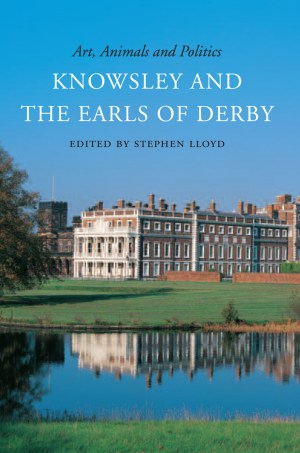 Thomas, Lord Stanley, was created Earl of Derby in 1485 after the Battle of Bosworth Field. Since that time the Stanleys—a great Lancastrian family, whose seat, Knowsley Hall, is near Liverpool—have been significant in the life of the nation as patrons and collectors, sportsmen and politicians. These absorbing essays by a distinguished cast of contributors led by historian David Starkey, writing about the political significance of Lady Margaret Beaufort, the first Countess of Derby, and broadcaster Sir David Attenborough, on Edward Lear’s zoological watercolours (many of which were done at Knowsley), cover key facets of the family’s diverse achievements
Stephen Lloyd is Curator of the Derby Collection at Knowsley Hall, with responsibility for the art collections, the celebrated natural history library and the family archive. In 2013, he organised a major conference at Knowsley, bringing together historians, art historians and natural historians to celebrate the wide-ranging achievements of the Stanley family and to raise the research profile of their legacy.
◊ ◊ ◊ ◊ ◊
Power, Play and Performance, c. 1450–1830
David Starkey, Elspeth Graham, Gill Perry
Patronage and Collecting, c. 1720–1735
Richard Stephens, Jonathan Yarker, Xanthe Brooke
Animals and Edward Lear, c. 1830–1890
David Attenborough, Clemency Fisher, Colin Harrison
Politics and Foreign Affairs, c. 1820–1900
Geoffrey Hicks, Angus Hawkins, Bendor Grosvenor, Jennifer Davey
New Appointment for Erika Gaffney
Erika Gaffney Appointed Senior Acquisitions Editor in Early Modern Studies for MIP and Arc Medieval Press
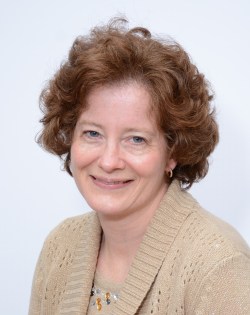 Medieval Institute Publications (MIP) and Arc Medieval Press, together with its partner, Amsterdam University Press (AUP), are delighted to announce the appointment of Erika Gaffney as Senior Acquisitions Editor in Early Modern Studies. Gaffney established her reputation as an acquisitions editor at Ashgate, where she worked for more than 20 years.
A sample of books on which she worked includes Melissa Hyde and Jennifer Milam, eds., Women, Art and the Politics of Identity in Eighteenth-Century Europe (2003); Daniel Guernsey, The Artist and the State, 1777–1855: The Politics of Universal History in British and French Painting (2007); Carole Paul, The Borghese Collections and the Display of Art in the Age of the Grand Tour (2008); Dorinda Evans, Gilbert Stuart and the Impact of Manic Depression (2013); and Gauvin Alexander Bailey, The Spiritual Rococo (2014).
In terms of future acquisitions, her interests for the early modern period will continue to include eighteenth-century European history and culture through the lens of art history and visual culture. Scholars wishing to renew their working relationship with Erika or new scholars interested in submitting not-yet-contracted volumes (or new series) should email her at erika.gaffney@arc-humanities.org to ask for a Proposal Form.
The Fitzwilliam Turns 200, with Exhibition and Book to Celebrate
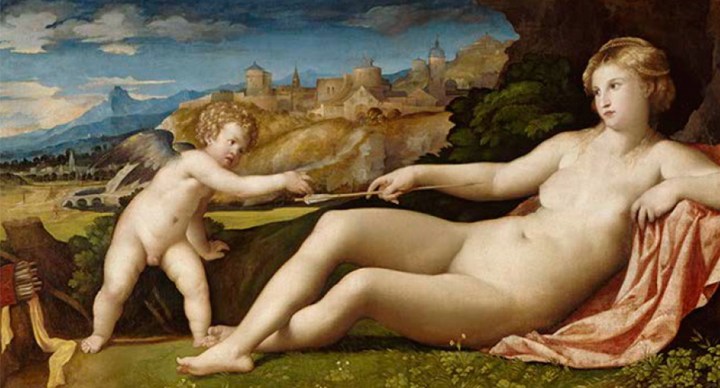
Palma Vecchio, Venus and Cupid, 1523–24 (Cambridge: The Fitzwilliam Museum). The painting was purchased by Lord Fitzwilliam from the London sale of the Duc d’Orléans collection in 1798. He first saw the collection at the Palais Royale during his visits to Paris.
◊ ◊ ◊ ◊ ◊
Press release from The Fitzwilliam:
Today (Thursday, 4 February 2016) one of the great collections of art in the UK celebrates its bicentenary. 200 years to the day of his death, the Fitzwilliam Museum has revealed previously unknown details of the life of its mysterious founder, Richard 7th Viscount Fitzwilliam of Merrion. Research for a new book has shown how his beloved library may have contributed to his death, and how his passion for music led him to the love of his life: a French dancer with whom he had two children, Fitz and Billy.
The Fitzwilliam Museum: A History is written by Lucilla Burn, Assistant Director for Collections at the Fitzwilliam. The book explores the full 200 year story of the Museum and the first chapter focuses on the founder. She comments: “Lord Fitzwilliam’s life has been described as ‘deeply obscure’. Many men of his class and period, who sought neither fame nor notoriety, nor wrote copious letters or diaries, do not leave a conspicuous record. But by going through the archives and letters that relate to him, for the first time we can paint a fuller picture of his history, including aspects of his life that have previously been unknown, even to staff here at the Fitzwilliam.”
Lord Fitzwilliam died on the 4th of February 1816, and founded the Fitzwilliam Museum through the bequest to the University of Cambridge of his splendid collection of art, books and manuscripts, along with £100,000 to build the Museum. This generous gift began the story of one of the finest museums in Britain, which now houses over half a million artworks and antiquities. Other than his close connection to Cambridge and his love of art and books, a motivation for Fitzwilliam’s bequest may have been his lack of legitimate heirs. The new details of his mistress help to explain why he never married.

Joseph Wright, The Hon. Richard Fitzwilliam, 7th Viscount Fitzwilliam of Merrion, 1764 (Cambridge: The Fitzwilliam Museum)
In 1761 Richard Fitzwilliam entered Trinity Hall, Cambridge, and in 1763 his Latin ode, ‘Ad Pacem’, was published in a volume of loyal addresses to George III printed by the University of Cambridge. He made a strong impression on his tutor, the fiercely ambitious Samuel Hallifax, who commissioned Joseph Wright of Derby to paint a fine portrait of Fitzwilliam on his graduation with an MA degree in 1764. Fitzwilliam’s studies continued after Cambridge; he travelled widely on the continent, perfecting his harpsichord technique in Paris with Jacques Duphly, an eminent composer, teacher and performer. A number of Fitzwilliam’s own harpsichord compositions have survived, indicating he was a gifted musician.
But from 1784 he was also drawn to Paris by his passionate attachment to Marie Anne Bernard, a dancer at the Opéra whose stage name was Zacharie. With Zacharie, Fitzwilliam fathered three children, two of whom survived infancy—little boys known to their parents as ‘Fitz’ and ‘Billy’. How the love affair ended is unknown, but its fate was clouded, if not doomed, by the French Revolution. We do not know what happened to Zacharie after her last surviving letter, written to Lord Fitzwilliam late in December 1790. Her health was poor, so it is possible that she died in France. However, the elder son, Fitz (Henry Fitzwilliam Bernard), his wife Frances, and their daughter Catherine were living in Richmond with Lord Fitzwilliam at the time of the latter’s death in 1816. It is not known what happened to Billy.
At the age of seventy, early in August 1815, Lord Fitzwilliam fell from a ladder in his library and broke his knee. This accident may have contributed to his death the following spring, and on 18 August that year Fitzwilliam drew up his last will and testament. Over the course of his life he had travelled extensively in Europe. By the time of his death he had amassed around 144 paintings (including masterpieces by Titian, Veronese, and Palma Vecchio), 300 carefully ordered albums of Old Master prints, and a magnificent library containing illuminated manuscripts, musical autographs by Europe’s greatest composers, and 10,000 fine printed books.
His estates were left to his cousin’s son, George Augustus Herbert, eleventh Earl of Pembroke and eighth Earl of Montgomery. But he also carefully provided for his relatives and dearest friends. The family of Fitzwilliam’s illegitimate son, Henry Fitzwilliam Bernard (‘Fitz’)—including Fitz’s wife and daughter—received annuities for life totalling £2,100 a year. On Fitzwilliam’s motivation for leaving all his works of art to the University, he wrote: “And I do hereby declare that the bequests so by me made to the said Chancellor Masters and Scholars of the said University are so made to them for the purpose of promoting the Increase of Learning and the other great objects of that Noble Foundation.”
Director of the Fitzwilliam Museum, Tim Knox commented: “The gift Viscount Fitzwilliam left to the nation was one of the most important of his age. This was the period when public museums were just beginning to emerge. Being a connoisseur of art, books and music, our founder saw the importance of public collections for the benefit of all. But we are also lucky that his life circumstances enabled him to do so—had there been a legitimate heir, he might not have been able to give with such liberality. From the records we have discovered, he appears to have been as generous as he was learned: he arranged music concerts to raise funds for charity and helped many people escaping the bloodiest moments of the French Revolution. We are delighted to commemorate our founder in our bicentenary year.”
◊ ◊ ◊ ◊ ◊
Celebrating the First 200 Years: The Fitzwilliam Museum, 1816–2016
The Fitzwilliam Museum, Cambridge, 4 February — 30 December 2016
Running throughout 2016, this exhibition will explore the Fitzwilliam’s past, present and future. A timeline of the first 200 years will introduce key themes and characters, while displays of objects will show how the collections have developed over two centuries. The exhibition runs alongside a new book The Fitzwilliam Museum: A History. For the very first time, this will tell the full 200 year story of the Museum. The triumphs and challenges of successive Directors, the changing nature of the Museum’s relationship with its parent University, and its dogged survival through the two World Wars. It will also shed light on the colourful, but previously little-known, personal life of Viscount Fitzwilliam himself.
◊ ◊ ◊ ◊ ◊
Lucilla Burn, The Fitzwilliam Museum: A History (London: Philip Wilson Publishers, 2016), 224 pages, ISBN: 978-1781300343, £25.
 The Fitzwilliam Museum: A History traces the full story from the Museum’s origins in the 1816 bequest of Richard, 7th Viscount Fitzwilliam of Merrion, up to the present day. It sets the Fitzwilliam’s individual story against the larger context of the growth and development of museums and galleries in the UK and further afield. The text and illustrations draw primarily on the rich and largely unpublished archives of the Fitzwilliam Museum, including the Syndicate Minutes, the reports of University debates published in the Cambridge University Reporter from 1870 onwards, compilations of earlier nineteenth-century documents, architectural plans and drawings, newspaper reports, letters, diaries, exhibition catalogues, photographs and other miscellaneous documents. With this material a substantial proportion of the narrative is told through contemporary voices, not least those of the Museum’s thirteen directors to date, each one a strong and influential character.
Starting with the obscure life of the 7th Viscount and concluding with a portrait of the Museum today, the narrative explores not just the Fitzwilliam’s own establishment and development, but also such wider issues as the changing purpose and character of museums and collections over the last 200 years, and in particular the role of the university museum. Many of the illustrations appear in the book for the first time, and include views of the galleries over the centuries as well as portraits of members of staff.
Conference | Chinese Wallpaper: Trade, Technique and Taste
From the conference website:
Chinese Wallpaper: Trade, Technique and Taste
Coutts & Co / V & A, London, 7–8 April 2016

Detail of the painted wallpaper in the Chinese Bedroom, Belton House. ©National Trust Images/Martin Trelawny
A conference on the subject of Chinese wallpaper will take place in London on 7 and 8 April 2016, with an optional excursion to Brighton on 9 April. The event is being organised jointly by the National Trust and the Victoria and Albert Museum, with generous support from Coutts & Co and the Royal College of Art.
Chinese wallpaper is a product that is finely balanced between east and west, art and design, trade and taste. It has been an important component of western interiors for about 250 years, but it has sometimes been taken for granted, literally fading into the background. However, over the last few decades the conservation of Chinese wallpapers has developed considerably. It is now also the subject of increasing scholarly interest. Traditional-style hand-made Chinese wallpaper is still being produced today and is now also in demand in China itself.
The aim of this conference is to stimulate the momentum of the research into Chinese wallpaper and to capture some of the recent findings. The papers to be presented will include European, American and Chinese perspectives and will look at Chinese wallpaper as art, as design, as cross-cultural exchange, as commodity and as material object.
The first day of the conference will be hosted by Coutts at their premises in the Strand—still containing the Chinese wallpaper acquired by banker Thomas Coutts in the late eighteenth century. The second day will be held at the Victoria and Albert Museum and will include the viewing of actual Chinese export wallpapers from the museum’s collection—the largest in the world, but much of it not normally on display. On 9 April there will be an optional excursion to the Royal Pavilion in Brighton, where Chinese wallpaper formed an important component of the Prince Regent’s decorative vision.
◊ ◊ ◊ ◊ ◊
T H U R S D A Y , 7 A P R I L 2 0 1 6
Coutts & Co.
9:00 Registration and coffee
9:30 Welcome
9:40 Introduction by Margot Finn, Chair in Modern British History, University College London
9:50 Session A
• Emile de Bruijn, ‘Chinese Wallpaper: a Global Product’
• Helen Clifford, ‘From Canton via Custom House to the Country House: Chinese Wallpaper in Transit and the Role of the East India Company, 1750–1850’
• Ming Wilson, ‘Chinese Paper as Commodity’
11:05 Coffee
11:25 Session B
• Xiaoming Wang, ‘Chinese Woodblock New Year Prints and Paintings Used as Wallpaper in Europe in the Eighteenth Century’
• Friederike Wappenschmidt, ‘”Talking Chinese”? Exotic Wall Coverings in German and Austrian Castles’
• Max Tillmann, ‘Chinese Wallpapers and Sensual Exoticism at the Badenburg, Munich’
12:40 Lunch
13:30 Session C
• David Skinner, ‘Using and Marketing “Indian Pictures” in Mid-Eighteenth-Century Dublin’
• Clare Taylor, ‘“A Large Assortment of Curious India Paper”: the Eighteenth-Century English Market for Chinese Wallpaper’
• Patrick Conner, ‘Chinese Wallpaper and Cantonese Export Painting: The Strathallan ‘Drummond’ Wallpaper (Peabody Essex Museum)’
14:45 Tea
15:05 Session D
• Anna Wu, ‘The Chinese Wallpapers at Coutts & Co., London: Mobilising Images of Chinese Life and Industry’
• Sarah Cheang, ‘Red, Black and Gold, and as Glossy as Possible: Modernism, Orientalism, Fashion and Wallpaper’
• Lizzie Deshayes, title TBC [Chinese wallpaper today as produced by Fromental]
• Dominic Evans-Freke, title TBC [Chinese wallpaper today as produced by De Gournay]
F R I D A Y , 8 A P R I L 2 0 1 6
Victoria and Albert Museum
10:00 Registration and coffee
10:25 Welcome by Anna Jackson, Keeper, Asian Department, Victoria and Albert Museum
10:30 Session E
• Andrew Bush, ‘Early Full-Height Block-Printed Chinese Wallpapers in the United Kingdom’
• Thomas Brain, ‘Observations made during the Conservation Treatment of Chinese Landscape Wallpaper at Oud Amelisweerd’
• T. K. McClintock, ‘Chinese Export Wallcoverings: their Conservation as Western and Asian Works’
11:45 Coffee
12:05 Session F
• Allyson McDermott, ‘The Conservation of Chinese Wallpapers’
• Pauline Webber, ‘The Conservation and restoration of Chinese Wallpapers: an Overview’
13:10 Lunch
14:00 Viewing Sessions
Four sessions for viewing Chinese wallpapers (with change-overs)
17:10 Drinks
S A T U R D A Y , 9 A P R I L 20 1 6
Royal Pavilion, Brighton
Optional excursion, travel under own steam, meeting at Royal Pavilion entrance at 11:30, where you will be met by curator Alexandra Loske and paper conservator Amy Junker-Heslip.
Abstracts and speakers’ biographies are available here»
Booking information is available here»
Colloquium | Le théâtre et la peinture dans les discours Académiques
From the colloquium programme:
La Vraisemblance ou les enjeux de la représentation: Le théâtre
et la peinture dans les discours Académiques, 1630–1730
Deutsches Forum Für Kunstgeschichte Paris, Hôtel Lully, 9–11 February 2016
Organized by Markus Castor and Kirsten Dickhaut
Epouser son père ; recevoir de la nourriture directement tombée du ciel ou encore vaincre un dragon… Ces récits mythographiques sont-ils encore aujourd’hui les vecteurs d’une quelconque vraisemblance ? Tous les exemples mentionnés – qu’il s’agisse du Cid de Corneille, du tableau de Poussin, du Saint-Michel de Raphaël ou de la tragédie de Médée de Pierre Corneille mise en musique par Marc-Antoine Charpentier semblent aujourd’hui en être totalement dépourvus. Déjà au XVIIe et au XVIIIe siècles, s’imposait la nécessité d’en rappeler les enjeux. La Querelle du Cid, qui agite les débats de l’Académie Française, a des répercussions au sein de l’Académie royale de peinture et de sculpture comme en témoigne ses conférences. Ces sujets doivent faire dorénavant l’objet d’une introduction préalable vis-à-vis du spectateur afin d’établir les supports cognitifs de cette vraisemblance. La vraisemblance constitue – conformément à la poétique aristotélicienne – l’ensemble des moyens rhétoriques qui permettent de représenter de manière crédible un évènement ou une action. Durant l’âge classique, l’exigence de vraisemblance ne prônait déjà plus une stricte application de ces codes. Au cours du XVIIe et du XVIIIe siècle, l’usage normatif de la vraisemblance ne se justifie pas non plus pleinement par le questionnement interprétatif du sujet. Seuls les sujets d’histoire religieuse échappent à cette révision comme en attestent les conférences académiques.
Cette journée d’étude interrogera les stratégies de relecture critique des œuvres théâtrales et artistiques à travers la réception des discours académiques. Ce sera l’occasion d’évaluer l’impact de certaines thèses jésuites et jansénistes sur les modes de représentation rhétoriques de la vraisemblance. Si au cours du XVIIe et du XVIIIe siècles, les normes de la vraisemblance prévalent à celles de la vérité en ce qui concerne les sujets d’histoire religieuse et mythologique, c’est parce qu’elles sont normalisées par un répertoire rhétorique et visuel intelligible par le public. Le principe de fonder ces normes d’après une appréciation rationnelle des faits et de leur déroulement est une conception qui se popularise progressivement tout au long de l’époque moderne. Au cours du XVIIIe siècle, s’opère un basculement entre deux types de vraisemblance: le premier se fonde sur la rhétorique et rejoint l’interprétation sensualiste des dispositifs scéniques et artistiques ; le second s’impose progressivement durant la seconde moitié du XVIIIe siècle et s’inscrit dans l’élaboration d’une perception rationaliste et mathématique de la représentation, pour aboutir à une projection abstraite de l’univers. La question épistémologique de la représentation est en fait la base de la discussion sur la qualité de toute vraisemblance. Dès la seconde moitié du XVIIe siècle, l’Académie royale de peinture et de sculpture à Paris revendique expressément la dimension intellectuelle de sa pratique des arts. Elle s’inspire des modèles des académies littéraires italiennes dans le but de se distinguer du corporatisme des fabriques artistiques. Cette démonstration s’exerce exclusivement par le biais du genre historique et l’élaboration d’une pédagogie de l’art fondée sur la conceptualisation des modèles artistiques. . . .
◊ ◊ ◊ ◊ ◊
M A R D I , 9 F É V R I E R 2 0 1 6
17:00 Jacqueline Lichtenstein, Université Paris-Sorbonne, Le peintre a-t-il comme le poète, le droit de tout oser? Vérité et vraisemblance dans les conférences académiques
Apéritif
M E R C R E D I , 1 0 F É V R I E R 2 0 1 6
9:00 Présidence de séance: Kirsten Dickhaut et Markus Castor
• Joachim Küpper, Freie Universität Berlin, Le concept de la vraisemblance chez Aristote
• Andreas Kablitz, Universität zu Köln, À propos de la transformation du concept aristotélicien de la vraisemblance dans la poétologie du XVIIe siècle
• Hannah Williams, Queen Mary University of London, Entre théâtre et académie : l’art religieux dans les églises parisiennes
Pause midi
14:00 Présidence de Séance: Markus Castor et Kirsten Dickhaut
• Florence Ferran, Université de Cergy-Pontoise, La Vraisemblance du théâtre
• Anne-Elisabeth Spica, Université de Metz, Paradoxes et points aveugles du paragone
• Élodie Ripoll, Université Koblenz-Landau, Rougir sur la scène classique. Enjeux scéniques et théoriques
• Christophe Henry, Académie de Versailles, Manières, plasticité, analogies: La vraisemblance académique à l’épreuve des scories ataviques et culturelles
• Kirsten Dickhaut, Université Koblenz-Landau, La vraisemblance merveilleuse – une catégorie chère à Corneille et aux Académiciens
J E U D I , 1 1 F É V R I E R 2 0 1 6
9:00 Présidence de Séance: Élodie Ripoll et Kirsten Dickhaut
• Susanne Friede, Alpen-Adria Universität Klagenfurt, Les règles de la vraisemblance et du genre : L’art de la représentation dans quelques comédies de Corneille
• Emmanuelle Hénin, Université de Reims, Vraisemblance et illusion : un discours en trompe-l’œil
• Laëtitia Pierre, Université Panthéon-Sorbonne, Tullia ou la violence représentée, 1667–1735
• Markus A. Castor, DFK Paris, La volonté n’est pas toujours la maîtresse de nos productions – La vraisemblance dans le discours académique et dans la pratique artistique, 1667–1740
Pause midi
13:30 Présidence de Séance: Laëtitia Pierre et Élodie Ripoll
• Lauren Cannady, Clark-Institute, Mass., La question de la vraisemblance dans la peinture selon l’abbé Dubos : une reprise de Roger de Piles ?
• Alain Viala, University of Oxford, Il faut bien des bergers, pour la vraisemblance : de Molière à Watteau
• Theodora Psychoyou, Université Paris-Sorbonne, « Représenter en musique » et « bruit poétique » : de quelques paradoxes de la vraisemblance musicale










 Enfilade
leave a comment