Call for Papers | British Art and the Global
From the Call for Papers:
British Art and the Global
University of California, Berkeley, 17–18 September 2018
Organized by Imogen Hart and David Peters Corbett
Proposals due by 15 April 2018
What is the role of art history in the Brexit era? In the wake of the UK’s decision to leave the European Union, the history of Britain’s relationships with the rest of the world takes on renewed significance. This conference explores how art history today can shed light on the history of Britain’s interaction with other countries and cultures. Among other questions, the conference asks: How have institutions of display and education provided frameworks that have articulated and/or obscured global contexts for British art? How can the traditions of art history, including concepts of national schools, movements, modernisms, periods, originality and imitation, aesthetic judgment, and hierarchies of media be exploited and/or critiqued by scholars of British art and the global?
We invite papers that illuminate global contexts for the history of British art by considering works of art (including painting, sculpture, architecture, the decorative arts, photography, and other forms of visual and material culture) as sites and tools of international cooperation, conflict, and exchange. Potential papers may address the global history of British art in relation to topics that include, but are not limited to:
• International artistic collaborations and organizations
• Artistic movements and their international legacies
• International modernisms
• Aesthetic theory across national boundaries
• Contexts of display including museums, collections, and exhibitions
• Institutions of artistic training and education
• The international art market
• Reproduction and circulation
• Periodicals
• Art and empire
• Travel and tourism
• Immigration
• Art and war
Keynote speakers: Tim Barringer (Yale University), Dorothy Price (University of Bristol), and Mary Roberts (University of Sydney).
This two-day, international conference is sponsored by the Center for British Studies at the University of California, Berkeley. The conference is co-organized by Imogen Hart (History of Art Department, UC Berkeley) and David Peters Corbett (Courtauld Institute of Art, London). Please submit abstracts of no more than 250 words plus a brief biographical note to imogenhart@berkeley.edu by April 15, 2018. Limited funds may be available to assist with travel expenses for speakers who do not have institutional funding.
Exhibition | Luigi Valadier: Splendor in Eighteenth-Century Rome
Looking ahead to the fall, from the press release:
Luigi Valadier: Splendor in Eighteenth-Century Rome
The Frick Collection, New York, 31 October 2018 — 20 January 2019
Galleria Borghese, Rome, 30 October 2019 — 2 February 2020
Curated by by Alvar González-Palacios and Xavier Salomon

Luigi Valadier, Herma with Bacchus for the Palazzo Borghese, alabaster and glazed bronze with traces of gilding, 1773, 69 inches (Rome: Galleria Borghese; photo by Mauro Magliani).
Of the many artists who flourished in Rome during the eighteenth century, the silversmith Luigi Valadier (1726–1785) was among those particularly admired by popes, royalty, and aristocrats. Luigi was born in Rome in 1726, about six years after his parents emigrated from France. His father, Andrea, established a silversmith workshop that quickly captured the attention of the wealthiest Roman aristocrats. Heir to his father’s business, Luigi had an unsurpassed technical expertise, which, combined with his avant-garde aesthetic, resulted in extraordinary works in silver and bronze. Well aware of the evolution of artistic taste throughout Europe, he had an impressive ability to reframe examples of ancient Roman art and architecture within the context of contemporary Rome. Sculptures in private collections, cameos, architectural details, and ruins of ancient monuments served as his inspiration for candelabra, tableware, altars, and centerpieces in both silver and bronze. Luigi’s fame and influence spread beyond the borders of Italy, and he received commissions from patrons in France, England, and Spain. He was, however, burdened by debts for commissions undertaken but never paid for, and, in 1785, he committed suicide, drowning himself in the Tiber. Following this tragic event, his workshop passed to his son Giuseppe.
Illustrating the uncommon versatility of Luigi Valadier, who produced everything from large altar pieces to intricate works of jewelry, the Frick’s fall 2018/winter 2019 exhibition will include more than sixty works carefully selected from the vast production of the Valadier workshop. Preparatory drawings of both sacred and profane subjects will be displayed alongside finished works. . One of the highlights of the exhibition will be a full centerpiece, or deser (from the Italianization of the French word dessert), created around 1778 for the Bali de Breteuil, Ambassador of the Order of Malta to Rome. Atop a gilt-bronze base inlaid with precious stones, Valadier has re-created temples, triumphal arches, columns, and other miniature representations of ancient Roman monuments. The multiple elements of the Breteuil deser are today separated between two museums in Madrid (the Museo Arqueológico Nacional and the Palacio Real), but will be reunited for this special exhibition at the Frick. It will therefore be possible to admire this masterwork in its entirety, as nobles and cardinals did in 1778, when it was displayed for a few days in Valadier’s workshop in a candle-lit room specially decorated for the occasion.
The exhibition will also feature finely worked silver plates, tureens, salt cellars, and other pieces of tableware. The juxtaposition of these individual works with the complete centerpiece will illustrate the evolution of the Valadier workshop. While the earliest pieces presented are distinctly in the Baroque style, Valadier’s work becomes more refined in the Rococo style, before becoming neoclassical by the late-eighteenth century. The monochrome silver objects will be contrasted with polychrome works in gilt-bronze, marble, and precious stones, such as the Egyptian clock, a table from Villa Borghese, and extraordinary mounts for two antique cameos once in the Vatican collections and now at the Musée du Louvre.
One section of the exhibition will be devoted to reproductions in bronze of famous antique sculptures in Roman collections, such as the Apollo Belvedere and the Ares Ludovisi.
Luigi Valadier: Splendor in Eighteenth-Century Rome is co-curated by Professor Alvar González-Palacios, considered the world’s authority on Valadier, and Xavier F. Salomon, Peter Jay Sharp Chief Curator of The Frick Collection. It is part of a series of monographic exhibitions that focus on remarkable decorative arts artists and follows the ground-breaking and critically acclaimed Pierre Gouthière: Virtuoso Gilder at the French Court, organized by the Frick, where it was on view in fall 2016 before traveling to the Musée des arts décoratifs, Paris, in spring 2017.
Accompanying the exhibition will be the first complete monograph on Luigi Valadier. Written by González-Palacios, the book will shed new light on the provenance and dating of some works. It also identifies the exact roles performed inside the workshop by Andrea, Luigi, and Giuseppe Valadier, tracing the genesis of inventions and the authorship of models. The monograph also details the Valadier family’s collaborations with other workshops and artists. Typically, works in various materials such as bronze, marble, and precious stones were realized not by one person but by many artisans working together. The decoration of both sacred and private buildings likewise involved outside artisans and architects. This will be the only comprehensive publication on Valadier in English and, lavishly illustrated, it will feature much-needed new photography.
Together, the monograph and exhibition at the Frick will reconstruct the artistic endeavors of one of the most important silversmith families, shedding new light on the cultural life of Rome and, more broadly, Europe, during the eighteenth century. Following the presentation of this show in New York, a related exhibition will be on view later in 2019 at the Galleria Borghese, Rome.
◊ ◊ ◊ ◊ ◊
Note (added 20 December 2019) — The posting was updated to include specific dates for the Galleria Borghese.
Conference | Telling Her Story
From the Women’s History Network:
Telling Her Story: Women’s History, Heritage, and the Built Environment
Wrest Park, Bedfordshire, 19 March 201
Organized by Megan Leyland, Roey Sweet, and Andrew Roberts
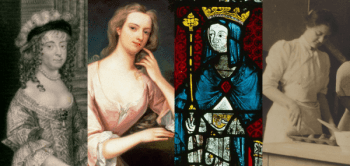 Telling Her Story will bring together heritage professionals and academics to explore the diverse roles and experiences of women at historic sites. Whether in country houses or castles, women have played a pivotal role in shaping the built environment and in influencing the course of history. Yet, more often than not, their voices are marginalised or missing from the historical record and from interpretation at heritage sites.
This conference seeks to uncover the many and varied experiences of women at historic properties in the care of English Heritage and other heritage organisations. It aims to move beyond stock biographies of famous and extraordinary women to discover the many diverse stories of women from all walks of life, to offer new perspectives on better-known individuals and to critique narratives and interpretations which continue to be constructed principally around the experiences of men.
This conference is being jointly organised by English Heritage and the University of Leicester, and has been generously supported by the Women’s History Network Small Grant Scheme. Dr. Megan Leyland (English Heritage), Prof. Roey Sweet (University of Leicester), Dr. Andrew Roberts (English Heritage).
Tickets, £30, are available by calling our dedicated ticket sales team on +44(0) 370 333 1183. A limited number of free tickets for students / unwaged are available; to apply, please contact megan.leyland@english-heritage.org.uk with why the conference is relevant to your research, interests, or work. Tickets will be allocated on a first come first serve basis. Please note, this programme is subject to change.
P R O G R A M M E
9:30 Coffee
10:00 Welcome and Introduction
10:10 Castles and Warfare
• Rachel Delman (University of Oxford), Writing medieval women back into castle narratives
• Karen Dempsey (University of Reading), Outside the can(n)on: Telling inclusive stories of the medieval past
• Jessica Malay (University of Huddersfield), Anne Clifford’s transformation of Westmorland through the construction of households
• Emma Turnbull (University of Oxford), Remembering resistance: Female activism during the English Civil Wars
10:10 Silent Voices
• Helen Bates (University of Leicester), The truth, the whole truth and nothing but the truth? New interpretations of women at Lincoln Castle Victorian Prison
• Nigel Cavanagh (Network Archaeology), An alternative focus for industrial heritage: Women’s lives in Elsecar, ca. 1780–1870
• Kate O’Neill (RCA/ V&A), Capturing the invisible? Photography and female domestic servants in the country house, 1850–1920
• Elena Settimini (University of Leicester), Demeter’s daughters: The representation of women within a vineyard landscape
12:00 Lunch
1:00 Eighteenth-Century Female Patronage
• Ruth Larsen (University of Derby), Beyond the withdrawing room: Exploring notions of gendered spaces in the eighteenth-century country house
• Lydia Hamlett (University of Cambridge), Revealing women’s stories through mural painting, 1680–1720
• Amy Boyington (University of Cambridge), Female architectural patronage in eighteenth-century Britain
1:00 Written out of History
• Judith Phillips (Bowes Museum/ Teesside University), Mrs. Bowes’s mansion, museum, and galleries: Joséphine Bowes and The Bowes Museum
• Louise Devoy (Royal Observatory, Greenwich), Observatory life: Adding domestic history and female voices to the story of the Royal Observatory
• Eleanor Sier (Toynbee Hall), Kate Bradley (University of Kent), and Lucinda Matthews-Jones (Liverpool John Moores University), Toynbee Hall: Mother of settlements
2:15 Coffee
2:30 Connecting People, Space, and Place
• Hannah Worthen (University of Hull), Gender and the hidden histories of English landed estates
• Emma Purcell (University of Leicester), The impact of heiresses on the Montagu property network, ca. 1749–1827
• Jon Stobart (Manchester Metropolitan University), Housekeeper, correspondent and confidante: The under-told story of Mrs Hayes of Charlecote Park, ca. 1740–60
2:30 Heritage Industry Approaches
• Rachael Lennon (National Trust), Challenging histories: Women and power
• Morvern French and Stefan Sagrott (Historic Environment Scotland), Telling their stories: From warriors to witches, and everything in between
• Megan Leyland (English Heritage), Telling the story of England: Women’s history at English Heritage
4:00 Closing Discussion / Tour
Exhibitions and Posters
Exhibition material on display throughout the conference includes The Women of Wrest Park (the Wrest Park Volunteer History Group, English Heritage), Uncovering Women’s Voices in the Richmond Castle Cell Block (the Richmond Castle Cell Block Project volunteers, English Heritage), and Marble Hill Revived (English Heritage), as well as academic posters.
J18 | Mary Sheriff on Casanova, Art, and Eroticism
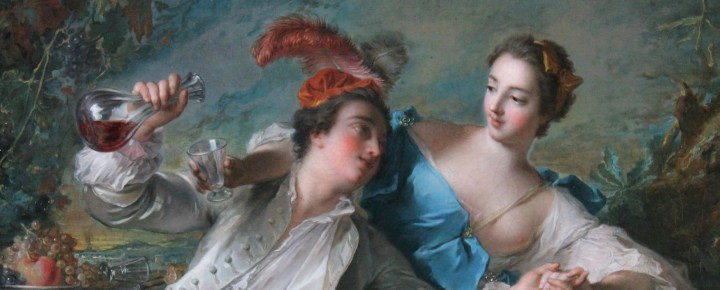
Jean-Marc Nattier, The Lovers, detail, 1744, oil on canvas
(Munich: Alte Pinakothek)
◊ ◊ ◊ ◊ ◊
Trusting that readers regularly visit J18 (always available through the link to the right), I only occasionally note content here at Enfilade. But this contribution from Mary Sheriff is worth highlighting. It’s also worth noting, incidentally, that Journal18 and HECAA are mentioned in the editorial of the January 2018 issue of The Burlington Magazine! I imagine Mary would have been thrilled. –CAH
From Journal18:
Mary D. Sheriff, “Casanova, Art, and Eroticism,” Journal18 (January 2018).
Mary D. Sheriff, one of the most brilliant and beloved scholars of eighteenth-century European art, died on October 19, 2016. Among her last essays was a playful and erudite encounter with Casanova’s memoirs, seen through the prism of eighteenth-century European painting. She originally wrote it for the catalogue to the exhibition Casanova: The Seduction of Europe, connecting paintings in the show with episodes from Casanova’s erotic intrigues. This explains the choices behind some of the artworks she discusses. Due to late changes in the exhibition’s checklist, however, Mary’s essay did not appear in the catalogue. We wanted to publish it in Journal18 so that her vivid insights into Casanova’s libertine text and like-minded artworks could be shared with our scholarly community. The essay is yet another testament to Mary’s unique talent for bringing eighteenth-century art to life and for making us think about it in a new way, as well as her own seductive powers of analysis and wordplay. We are grateful to Keith Luria and Melissa Hyde for making final revisions to the essay and for permitting us to publish it in Journal18.
The essay is available here»
Exhibition | Pastels in Pieces

Maurice-Quentin de La Tour, Portrait of Gabriel Bernard de Rieux, 1739–41; pastel and gouache on paper mounted on canvas, 201 × 150 cm (Los Angeles: The J. Paul Getty Museum).
On view through the summer at The Getty Center:
Pastels in Pieces
Getty, Los Angeles, 16 January — 29 July 2018
Curated by Emily Beeny
European paper was not manufactured in giant sheets until the nineteenth century. Competing with painters who worked on monumental canvases, eighteenth-century pastellists joined together multiple sheets of paper in order to create large, continuous surfaces. The piecing together of pastels, however, also served other purposes, allowing artists to paper over their mistakes or paste the heads of important sitters onto bodies posed by models. Matching each exhibited pastel with a map of its component sheets, this installation encourages visitors to consider how these objects were made.
Exhibition | Oser l’Encyclopédie: Un combat des Lumières
Now on view at the Mazarin Library (with the full press release available as a PDF file here)
Oser l’Encyclopédie: Un combat des Lumières
Bibliothèque Mazarine, Paris, 20 October 2017 — 19 January 2018
 L’Encyclopédie, ou Dictionnaire raisonné des sciences, des arts et des métiers (1751–1772), codirigée par Diderot, D’Alembert et Jaucourt, constitue la plus vaste entreprise éditoriale du 18e siècle, par le nombre des forces humaines mobilisées, l’étendue des savoirs convoqués, et son retentissement en Europe. La publication de cet « ouvrage immense et immortel » (Voltaire), dont la première édition rassemble 28 volumes, quelque 74 000 articles et près de 2 600 planches, s’étend sur plus de 25 ans. Autorisée par un privilège de librairie (1746), elle est censurée alors que deux tomes sont déjà imprimés (1752), puis tolérée (1753), à nouveau interdite et condamnée à la destruction (1759), et enfin poursuivie grâce à une permission tacite (1759–1772). Et, parce qu’elle constitue une entreprise commerciale à succès, elle connaît immédiatement réimpressions et contrefaçons.
Pour la première fois, une édition critique de l’Encyclopédie voit le jour. Réalisée au format numérique et menée de façon collaborative par plus de 120 chercheurs de tous horizons, elle vise l’annotation progressive des articles et des planches, en mobilisant l’ensemble des connaissances sur l’ouvrage. Soutenue par l’Académie des sciences, l’Édition Numérique Collaborative et CRitique de l’Encyclopédie (ENCCRE)1 s’appuie sur un exemplaire exceptionnel du premier tirage de la première édition, conservé par la Bibliothèque Mazarine qui en a fait l’acquisition au 18e siècle, volume après volume.
L’exposition met en relation cet exemplaire original et l’édition numérique. Elle montre ce que fut le travail de l’Encyclopédie au 18e siècle, et ce que représente son édition critique au 21e. De l’architecture complexe de l’ouvrage à son histoire éditoriale, on y découvre matériellement et numériquement l’intérieur de l’œuvre, ses enjeux et ce qui fut une de ses ambitions fondamentales : « changer la façon commune de penser ». (Diderot).
Organisation et commissariat
Alain Cernuschi (Université de Lausanne)
Alexandre Guilbaud (Institut de mathématiques de Jussieu) Marie Leca Tsiomis (Université Paris Ouest, Société Diderot) Irène Passeron (Institut de mathématiques de Jussieu)
Yann Sordet (Bibliothèque Mazarine)
Anne Weber (Bibliothèque Mazarine)
Alain Cernuschi, Alexandre Guilbaud, Marie Leca-Tsiomis, Irène Passeron, with Yann Sordet, preface by Cathérine Bréchignac, Oser l’Encyclopédie: Un combat des Lumières (Paris: EDP Sciences, 2017), 120 pages, ISBN: 978 27598 21389, 15€.
Call for Papers | HECAA at 25
While HECAA has historically had a sizable presence only at meetings of the College Art Association and the American Society of Eighteenth-Century Studies, for the first time, the organization will convene its own conference this fall in Dallas. We would love to have you join us! –Craig Hanson
From the Meadows School of the Arts at SMU:
Art and Architecture in the Long Eighteenth Century: HECAA at 25
Southern Methodist University, Dallas, 1–4 November 2018
Proposals due by 7 February 2018
We invite proposals for participation in the HECAA at 25 conference, to be held November 1–4, 2018, at Southern Methodist University in Dallas, Texas. There are many ways to participate as a presenter: by submitting a paper abstract for a research panel or the early-career scholarship showcase, a proposal for a roundtable, or an application to serve as facilitator for a breakout session.
Guidelines for how to apply can be found under each individual session description. Proposals due to session chairs by February 7, 2018. Applicants may apply to more than one session, or for more than one role; please notify chairs of your parallel applications. Questions about the conference? Contact us at hecaa25@gmail.com.
Keynote Speakers
Melissa Hyde, University of Florida
Daniela Bleichmar, University of Southern California
Local Organizing Committee
Elizabeth Bacon Eager, Southern Methodist University; Denise Baxter, University of North Texas; Kelly Donahue-Wallace, University of North Texas; Lindsay Dunn, Texas Christian University; Amy Freund, Southern Methodist University; Jessica Fripp, Texas Christian University; Nicky Myers, Dallas Museum of Art
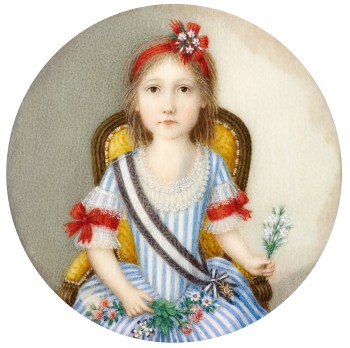
Image: Francisca Efigenia Meléndez y Durazzo, Portrait of a a Seated Girl Holding Flowers, ca. 1795, tempera on ivory, 5 × 5 cm (Dallas: Meadows Museum, SMU, MM.08.01.20).
◊ ◊ ◊ ◊ ◊
R O U N D T A B L E S
The History of Studying Eighteenth-Century Art, the Belgium of Art History
Chair: Michael Yonan, University of Missouri, yonanm@missouri.edu
With Barbara Maria Stafford’s now famous 1988 phrase to guide us, this roundtable seeks to discuss eighteenth-century art history’s historiography. The subject was an infrequently studied one in North America prior to the 1970s, and even into the 1990s its community of adherents was remarkably small, very much in contrast to its current prominence. How has this unusual history shaped the discourse of eighteenth-century art, and what are the challenges it creates for our future? Please send a CV and a 300-word proposal for a brief presentation (5–10 minutes) intended to spur further conversation to Michael Yonan.
Engaging Twenty-First-Century Publics: Innovations in Teaching, Advising, Exhibiting, and Curating
Chair: Amelia Rauser, Franklin and Marshall College, arauser@fandm.edu
In these times it is more important than ever to make the case for art, and for understanding the cultural productions of our own and other cultures. What new approaches to pedagogy or museology are you using to engage students or broader publics in the aesthetics and ideas of eighteenth-century art and architecture? What projects, ideas, and initiatives are the most promising for sustaining and renewing the understanding of our period among a twenty-first-century public? Please send a CV and a 300-word proposal for a brief presentation (5–10 minutes) intended to spur further conversation to Amelia Rauser.
The Future of Studying Eighteenth-Century Art: HECAA at 50?
Chair: Amy Freund, Southern Methodist University, afreund@smu.edu
Where will—or should—our field go next? Or, conversely, what should we avoid or abandon? This roundtable will examine the current state of eighteenth-century art history and foster debate about new modes of inquiry. Propositions, critiques, utopian projects welcome from scholars at all career stages. Please send a CV and a 300-word proposal for a brief presentation (5–10 minutes) intended to spur further conversation to Amy Freund.
How to Art History
Chair: Elizabeth Bacon Eager, Southern Methodist University, eeager@mail.smu.edu
Share your professional experience polishing job applications, publishing, teaching, administrating, and maintaining life-work balance as part of a roundtable aimed at early-career scholars. Please send a CV and a short (100 words or less) statement of interest to Elizabeth Bacon Eager.
F A C I L I T A T O R S
Breakout Session Facilitators
Chair: Jessica Fripp, Texas Christian University, j.fripp@tcu.edu
We are seeking scholars at all career stages to facilitate breakout sessions discussing the keynote addresses and the conference proceedings more generally. We anticipate appointing approximately 20 facilitators to lead groups of 10–15 people; facilitators will formulate initial questions and guide discussion. Please send a CV and a short (100 words or less) statement of interest to Jessica Fripp.
R E S E A R C H P A N E L S
Research by Emerging Scholars
Chair: Christopher Johns, Vanderbilt University, christopher.johns@vanderbilt.edu
This session will showcase short (10 minute) presentations of outstanding research by early-career scholars — graduate students and recent PhDs in non-tenure-stream positions. Please send a CV and a 300-word proposal to Christopher Johns.
Things Change
Chairs: Wendy Bellion, University of Delaware, wbellion@udel.edu; and Kristel Smentek, Massachusetts Institute of Technology, smentek@mit.edu
Objects seldom survive in their original states. Broken and restored, lost and found, reused and displaced, material things transcend their earliest uses, sites, and appearances. We invite proposals for papers that explore reinvention, relocation, and related issues in eighteenth-century decorative arts and material culture. Please send a CV and a 300-word proposal to both chairs.
People, Places, and Things in the Global Eighteenth Century
Chair: Nancy Um, Binghamton University, nancyum@binghamton.edu
Increasingly broad in its definition, the ‘global eighteenth century’ is often used to point to the widened geographic scope of the field, particularly in instances of visual exchange that push past perceived cultural boundaries or hinge upon the movement of artists, art objects, and visual practices across extended distances. This panel aspires to a more rigorous notion of the global eighteenth century: one that questions stable and enduring associations between people, places, and things; examines interactions, movements, and exchanges that are multi-sited rather than binary; and/or takes into account the structures and institutions that facilitated, but also encumbered, eighteenth-century travel, trade, and exchange. Please submit a proposal using this form.
Art and Political Authority in the Long Eighteenth Century
Chairs: Meredith Martin, New York University, msm240@nyu.edu; and Aaron Wile, University of Southern California, awile@usc.edu.
The transition from the seventeenth to the eighteenth century is often seen as marking a crucial transformation in the relation between art and political authority in Europe and around the globe. During the seventeenth century, absolute rulers pressed art into the service of the state, using painting, sculpture, architecture, and spectacle to reinforce their power and instill obedience in their subjects. But the emergence of new political and cultural regimes in the next century, along with new publics, institutions, markets, and aesthetic discourses, put the alliance between art and statecraft under strain. This panel seeks both to enrich and complicate this familiar story. How did art function as a political agent during the long eighteenth century? How did rulers use visual media as a tool of government, and what were the limits to that approach? How was art used to undermine or resist authority? Please send a CV and a 300-word proposal to both chairs.
Apprehending the Spatial: Methods and Approaches
Chair: Christopher Drew Armstrong, University of Pittsburgh, cda68@pitt.edu
The panel invites scholars to present scholarly projects (research or teaching) that are fundamentally spatial in character (such as architecture and urbanism, travel and collecting). We particularly encourage proposals that integrate digital applications or computer methods into the study of eighteenth-century culture, or that otherwise extend or challenge established scholarship and conventional approaches to instruction (undergraduate or graduate levels). How do new methods and areas of inquiry reveal knowledge, provide insights, or open paths of inquiry? Please send a CV and a 300-word proposal to Christopher Drew Armstrong.
Carte Blanche
Chair: Denise Baxter, University of North Texas, Denise.Baxter@unt.edu
Your work doesn’t fit the categories above? This panel will present research on any topic in the visual arts in the long eighteenth century. Surprise us. Please send a CV and a 300-word proposal to Denise Baxter.
Winterthur Research Fellowship Program, 2018–19
Winterthur Research Fellowship Program
Wilmington, Delaware, 2018–19
Applications due by 15 January 2018
Winterthur invites scholars, graduate students, artists, and craftspeople to apply to submit applications to the 2018–2019 Research Fellowships! Fellowships include a 4-month postdoctoral fellowship, 1–2 semester dissertation fellowships, and 1–3 month short-term fellowships.
Winterthur is once again offering short-term ‘Maker-Creator’ Fellowships. These short-term fellowships are designed for artists, writers, filmmakers, horticulturalists, craftspeople, and others who wish to examine, study, and immerse themselves in Winterthur’s vast collections in order to inspire creative and artistic works for general audiences.
Fellows have full access to the library collections, including more than 87,000 volumes and one-half million manuscripts and images, searchable online. Resources for the 17th to the early 20th centuries include printed and rare books, manuscripts, period trade catalogues, auction and exhibition catalogues, printed ephemera, and an extensive reference photograph collection of decorative arts. Fellows may conduct object-based research in the museum’s collections, which include 90,000 artifacts and works of art made or used in America to 1860, with a strong emphasis on domestic life. Winterthur also supports a program of scholarly publications including Winterthur Portfolio: A Journal of American Material Culture.
Fellows may reside in a furnished stone farmhouse on the Winterthur grounds and participate in the lively scholarly community at Winterthur.
At Winterthur, Fellows experience:
• Unparalleled Collections: Printed and rare books, manuscripts and ephemera, images, museum and garden collections
• A Broad Range of Scholarly Topics and Academic Disciplines: Topics in social and cultural history, art history, religion, literary studies, American studies, design history and decorative arts, material culture, and conservation studies, and topics related to the colonial Americas and United States from the seventeenth to the twentieth centuries
• A Collegial Atmosphere: Access to the expertise of librarians, curators, conservators, and research fellows, and graduate students with related interests
• A Material Culture Perspective: Gain experience in seeking new knowledge from the study of the material world
Fellowship applications are due January 15, 2018. For more details and to apply, visit the Research Fellowship web page or email researchapplication@winterthur.org.
Funding Opportunities | Terra Foundation for American Art
Terra Foundation for American Art Academic Awards, Fellowships and Grants
Applications due by 15 January 2018 (some extended to 29 January)
R E S E A R C H A N D T E A C H I N G
Research Travel Grants to the United States
These grants enable scholars outside the United States to consult resources and visit collections within the United States. The foundation accepts proposals from doctoral students and postdoctoral and senior scholars working on American art and visual culture prior to 1980. More
International Research Travel Grants for US-based Scholars
These grants offer US-based scholars working on American art and visual culture prior to 1980 the opportunity to conduct research abroad. Grant funding is available for doctoral students, and postdoctoral and senior scholars, whose projects require the study of materials outside the United States. More
Terra Summer Residency
The Terra Summer Residency brings together doctoral scholars of American Art and emerging artists worldwide for a nine-week residential program in the historic village of Giverny, France. The program encourages independent work while providing seminars and mentoring by senior scholars and artists to foster reflection and debate. More
Terra Foundation Visiting Professorships at the John F. Kennedy Institute, Freie Universität Berlin
Three eight-month visiting professorships will aim at fostering the cross-cultural, trans-disciplinary scholarly engagement with North American Art at the John F. Kennedy Institute for North American Studies, Freie Universität Berlin and the art history departments of Freie Universität and Humboldt Universität, respectively. Visiting professors will offer two specialized seminars per semester in American Art History (B.A. and M.A. levels) and participate in the larger academic community of the Kennedy Institute for the duration of their stay. More
Terra Foundation Postdoctoral Teaching Fellowships at Université Paris Nanterre and Université Paris-Diderot, 2018–22
A new postdoctoral teaching fellowship program, hosted jointly by the Université Paris Nanterre and the Université Paris-Diderot, will begin in fall 2018. Fellows will be nominated for a two-year period (2018–20 and 2020–22) and will instruct American art history and visual culture to graduate students in art history and American cultural history in combination with personal research. More
P U B L I C A T I O N S
Digital Publication Initiatives
Terra Foundation for American Art Digital Publication Initiatives are innovative projects that promote the use and application of computational technology and data in the study of the visual arts of the United States and the dissemination of the resulting research. More
The editors of the online journal Nineteenth-Century Art Worldwide are currently accepting proposals for articles addressing art and visual culture of the Americas in the long nineteenth century, from the American Revolution to World War I as part of the series “American Art History Digitally”. More
UK Export Ban Placed on Guardi’s ‘Rialto Bridge’

Francesco Guardi, The Rialto Bridge with the Palazzo dei Camerlenghi, late-1760s, oil on canvas, 120 × 204 cm. Probably commissioned in Venice in 1768 by Chaloner Arcedeckne, in whose family it remained for the next 123 years, when it was acquired by Sir Edward Cecil Guinness, later 1st Earl of Iveagh, then by descent and inheritance.
◊ ◊ ◊ ◊ ◊
Press release (5 January 2018) from Gov.UK’s Department for Culture, Media & Sport:
Arts Minister John Glen has placed a temporary export bar on The Rialto Bridge with the Palazzo dei Camerlenghi by Francesco Guardi to provide an opportunity to keep it in the country. The extraordinary painting is at risk of being exported from the UK unless a buyer can be found to match the asking price of £26,796,000 (including VAT of £591,000).
With its masterful colouring and dynamic composition in which a series of gondolas bisect the Grand Canal, The Rialto Bridge with the Palazzo dei Camerlenghi showcases Guardi’s atmospheric style and the elegant depiction of light that would come to dominate his later works. Arguably Guardi’s masterpiece, the painting is considered to be one of the ultimate expressions of Venetian vedute, or view painting. Alongside Canaletto and his nephew Bellotto, Guardi was one of the great Venetian view painters of the 18th century. He was much admired in the 19th century for his impressionistic depictions of Venice and the Lagoon, which inspired many generations of artists visiting the city, most significantly Turner. The painting is believed to have been commissioned in 1768 by the relatively unknown grand tourist, Chaloner Arcedeckne, making it of great importance to the study of the British relationship with Venice and Grand Tour commissions.
Arts Minister John Glen said: “This magnificent painting is a true masterpiece that encapsulates the vibrant atmosphere and light of 18th-century Venice. I very much hope that it can be kept in the UK, where it can be appreciated and admired by future generations for many years to come.”
The decision to defer the export licence follows a recommendation by the Reviewing Committee on the Export of Works of Art and Objects of Cultural Interest (RCEWA), administered by The Arts Council.
RCEWA member Aidan Weston-Lewis said: “At more than six feet across, this beautifully composed, bustling view of one of the classic stretches of the Grand Canal is one of the most spectacular and attractive Venetian view paintings in this country. Commissioned by a British visitor to Venice in the late 1760s, it has remained in the UK ever since and has frequently been on public display. Its departure from these shores would be a regrettable loss.”
The RCEWA made its recommendation on the grounds of the painting’s outstanding aesthetic importance and outstanding significance for the study of the development of Guardi, Venetian view painting, and the study of Grand Tour patronage and taste. The decision on the export licence application for the painting will be deferred until 4 July 2018. This may be extended until 4 January 2019 if a serious intention to raise funds to purchase it is made at the recommended price of £26,796,000 (including VAT of £591,000). Organisations or individuals interested in purchasing the painting should contact the RCEWA.










 Enfilade
leave a comment