New Book | Piranesi: Studies in Honor of John Wilton-Ely
As noted in Salon, the newsletter of the Society of Antiquaries of London, issue 402 (6 March 2018) . . .
On 31 January John Wilton-Ely FSA was presented with a festschrift at a ceremony at the Instituto Centrale per la Grafica, Palazzo Poli, Rome, in recognition of his services to scholarship on the life and works of Giovanni Battista Piranesi, FSA (elected 1757). The publication is volume 32 of the art historical journal, Studi sul Settecento Romano (Sapienza Università di Roma), entitled Giovanni Battista Piranesi, predecessori, contemporanei e successori: Studi in onore di John Wilton-Ely. The papers were formally delivered in 2016 at a special conference arranged by the Royal Swedish Academy in the Royal Palace at Stockholm, which contains a significant collection of Piranesi’s imaginatively restored classical antiquities, acquired by Gustav III from the artist’s former museo in Rome.
From Arbor Sapientiae:
Francesco Nevola, ed., Giovanni Battista Piranesi, Predecessori, contemporanei e successori: Studi in onore di John Wilton-Ely, Studi sul Settecento Romano, volume 32 (Rome: Sapienza Università di Roma, 2016), 400 pages, ISBN: 978-8871407432, 60€.
 • Francesco Nevola, John Wilton-Ely: Una vita con Piranesi
• Jörg Garms, Il rococò in Italia e la vicenda di Piranesi
• Lola Kantor-Kazovsky, On the Eve of the Graeco-Roman Controversy: Pierre Jean Mariette and Bouchardon’s Fountain of the Four Seasons
• Francesco Nevola, Giovanni Battista Piranesi’s Origins as a Vedutista: The impact of Canaletto and Bellotto
• Myra Nan Rosenfeld, Piranesi’s Grotteschi: A Visual Expression of the Literary Aims of the Accademia degli Arcadi
• Silvia Gavuzzo-Stewart, Irony in Piranesi’s Carceri and Lettere di Giustificazione
• Frank Salmon, Piranesi and the Accademia di San Luca in Rome
• Susanna Pasquali, Piranesi’s Campo Marzio as described in 1757
• Elisa Debenedetti, Piranesi, Marchionni e il mito di Diogene
• Mario Bevilacqua, Piranesi’s Ironies and the Egyptian and Etruscan Dreams of Margherita Gentili Boccapaduli
• Georg Kabierske, Vasi, urne, cinerarie, altari e candelabri: Newly Identified Drawings for Piranesi’s Antiquities and Sculptural Compositions at the Staatliche Kunsthalle Karlsruhe
• Heather Hyde Minor and John Pinto, ‘Marcher sur les traces de son père’: The Piranesi Enterprise between Rome and Paris
• Pier Luigi Panza, Il Museo Piranesi: Un censimento e osservazioni su attribuzioni, vendite e uso dei pezzi in architettura
• Raffaella Bosso, Per un catalogo dei marmi piranesiani del Museo Gustavo III di Stoccolma: Il caso di studio del candelabro con uccelli
• Alvar Gonzalez-Palacios, Il Nilo in bigio del Museo Gregoriano Egizio
• Anne-Marie Leander Touati, Piranesi’s Grande Cheminée, Virtually Recreated for John Wilton-Ely
• Cesare de Seta, Roma al tempo di Giovan Battista Piranesi e i suoi eredi nell’arte del paesaggio nel Settecento europeo
Indice dei nomi
Print Quarterly, March 2018

J. R. Smith after John Francis Rigaud, Group Portrait of Agostino Carlini, Fransescho Bartolozzi, Giovani Battista Cipriani, 1778, mezzotint, 44.4 × 504 cm (London: The British Museum).
◊ ◊ ◊ ◊ ◊
The eighteenth century in the current issue of Print Quarterly:
Print Quarterly 35.1 (March 2018)
 A R T I C L E S
• David Alexander, “A Cosmopolitan Engraver in London: Francesco Bartolozzi’s Studio, 1763–1802,” pp. 6–26.
S H O R T E R N O T I C E S
• Daan van Heesch, “The Graphic Source for Rajput Images of Fools,” pp. 50–53.
N O T E S A N D R E V I E W S
• Ellis Tinios, Review of the exhibition catalogue T. June Li and Suzanne Wright, Gardens, Art, and Commerce in Chinese Woodblock Prints (The Huntington Library, Art Collections, and Botanical Gardens, 2016), pp. 63–65.
• David Pullins, Review of W. McAllister Johnson, The Rise and Fall of the Fine Art Print in Eighteenth-Century France (University of Toronto Press, 2016), pp. 65–66.
• Naomi Lebens, Review of the exhibition catalogue The Royal Game of the Goose: 400 Years of Printed Board Games (Grolier Club, 2016), pp. 66–70.
• Brendan Cassidy, Note on William Woollett’s Ring, pp. 70–71.
• Ellis Tinios, Review of the exhibition catalogue A Third Gender: Beautiful Youths in Japanese Prints (Royal Ontario Museum, 2016), pp. 72–74.
• Martin Hopkinson, Review of Gill Saunders, Eclectic: The Julie and Robert Breckman Collections at the Victoria and Albert Museum (V&A Publishing, 2016), pp. 74–75.
• Jesusa Vega, Review of Juliet Wilson-Bareau and Leah Lehmbeck, Goya in the Norton Simon Museum (Norton Simon Museum, 2016), pp. 75–77.
• Mark McDonald, Review of Antonio G. Moreno Garrido, La Estampa de devoción en la España de los siglos XVIII y XIX (Editorial Universidad de Granada, 2015), pp. 77–78.
• Jean Michel Massing, Review of Juan Pimentel, The Rhinoceros and the Megatherium: An Essay in Natural History, translated by Peter Mason (Harvard University Press, 2017), pp. 78–79.
• Stephan Bann, Review of Antony Griffiths, The Print before Photography: An Introduction to European Printmaking, 1550–1820 (The British Museum Press, 2016), pp. 94–97.
• Bozena Anna Kowalczyk, Review of Michael Matile with Alberto Craievich and Isabelle Scheck, Della Grafica Veneziana: Das Zeitalter Anton Maria Zanettis (1680–1767) (Michael Imhof Verlag, 2016), pp. 98–101.
New Book | Giambettino Cignaroli: Memoire
Soon available from Artbooks.com:
Bruno Chiappa and Andrea Tomezzoli, Giambettino Cignaroli: Memoire (Verona: Scripta, 2017), 368 pages, ISBN: 9788898877966, $68.
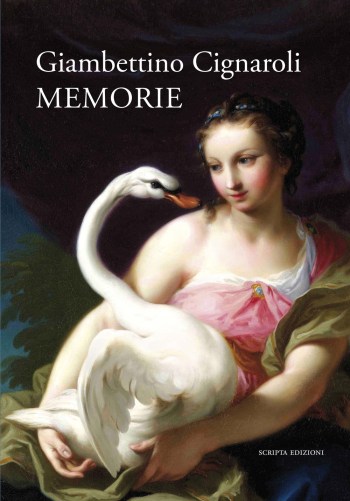 Tanti, innumerevoli sono i protagonisti di trentasei carte di un piccolo taccuino manoscritto: il principe di Chablais, il ministro plenipotenziario Carlo Firmian, l’imperatore Giuseppe II, Bartolomeo Cavaceppi, Angelica Kauffman, il giovanissimo Mozart, Kirill Grigorievich Razumovski grande atamano dei cosacchi… E ancora: ambasciatori, nunzi apostolici, letterati, esploratori, ufficiali o semplici militari, vescovi e abati, nobiluomini e nobildonne italiani e foresti… Tutti passano—tra marzo 1754 e ottobre 1770— dallo studio del più accreditato pittore veronese di quei decenni: Giambettino Cignaroli (1706–1770). E Cignaroli li registra minuziosamente con una scrittura che talvolta fa trasparire in filigrana dinamiche di mercato, ma anche legami professionalie amicali. Il volume ne offre trascrizione commentata, nel tentativo di allacciare fi li rossi tra il caleidoscopio di personaggi che si avvicendano nell’atelier dell’artista e la città di Verona, che emerge da queste pagine come vero e proprio crocevia del Settecento europeo.
Galleria Antonacci Lapiccirella at TEFAF 2018
Press release, via Art Daily (5 March 2018) . . .
Galleria Antonacci Lapiccirella Fine Art at TEFAF
Maastricht, 8–18 March 2018
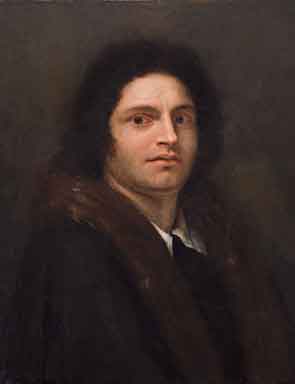
Antonio Canova, ‘Self-Portrait’ of Giorgione, 1792, oil on wood, 72.5 × 64 cm.
The Galleria Antonacci Lapiccirella Fine Art will be showing once again this year at TEFAF Maastricht 2018, bringing an exceptionally interesting selection of works of art to its stand. Tireless research, matchless skill and competence, scrupulous documentation, the aspiration to total quality, an international vision and unflagging enthusiasm are the qualities for which Francesca Antonacci and Damiano Lapiccirella are known at the highest level in the art world. The selection of works they present this year is inspired by their gallery’s profound interest in painting from the neoclassical era to the early 20th century.
Among the works on show stands out an unpublished painting by Antonio Canova on public display for the very first time; it constitutes a major rediscovery and marks a significant addition to our knowledge of the great sculptor’s work as a painter. The painting in question is a ‘Self-Portrait’ of Giorgione, 1792, an oil painting on wood, 72.5 × 64 cm, still housed in its magnificent original carved and gilded frame made in Rome, which the gallery knows to have been commissioned by Roman Senator Prince Abbondio Rezzonico, the young sculptor’s great protector and patron who was the picture’s first owner.
The most authoritative sources for Canova’s life narrated this fascinating story: Canova himself had skillfully painted the portrait on a 16th-century panel painting of the Holy Family, the image of which has been traced through reflectography and infrared inspection, taking as his model a portrait of Giorgione. Prince Rezzonico was also an accomplice in the bizarre story of the trick that Canova played on the greatest artists then present in Rome, who were invited to dine at the Senator’s home and shown this painting, which was palmed off as an original self-portrait of Giorgione. They all adored it, thanks also to the mastery with which it had been painted, and acclaimed it to a man as an authentic work by the Venetian 16th-century painter. This exemplary story points up Canova’s love of the glorious tradition of Venetian painting, in which he also sought inspiration for his sculpture.
The gallery’s passion for Italian painting is borne out in the first instance by a rare and precious oil painting by Giovanni Boldini depicting a Female Nude, dated to around 1890, which was shown for the first time in Forlì in 2015 at the most important monographic exhibition ever devoted to this Ferrara-born artist entitled Giovanni Boldini and the Spectacle of Modernity, testifying to the international renown that Boldini achieved in the 19th century in Paris, then the undisputed capital of modern art. The picture is remarkable for its rich, vibrant strength, for its freedom of expression and for the dynamic and impetuous brushwork, the characteristic hallmark with which Boldini succeeded in capturing the seductive sensuality of the female body. The young model reclines with nonchalance on an unmade bed, her hair loose, her eyes closed, emanating a strong erotic charge while maintaining an ineffable, sophisticated elegance.
The gallery will also highlight the enormous art historical interest of three very fine paintings by Giulio Aristide Sartorio, 1906. The panels in question constitute an important rediscovery of parts of a large decorative frieze entitled From the Fall of the Roman Empire to the Most Recent Achievements of Science, which Sartorio made for the Lazio Room at the Esposizione Internazionale del Sempione in Milan in 1906. The frieze, an oil on canvas painted en grisaille, consisted in a cycle of panels with which Sartorio set out to illustrate “Italy’s driving energy in history, ferrying the classical ideal into the modern world” and which critics hailed as one of his most successful decorative ventures to date. In the three panels on display, entitled From the Great Discoveries, through the Gloomy Ages, to the Living Revival of the Race; From the Myth of Brute Forces Tamed to the Most Recent Achievements of Science; and The Advent of Art and Culture respectively, Sartorio gives us a foretaste, in the development of his composition, in his sophisticated, elegant style and in the fluid and dynamic movement of his figures, of what was to be his greatest monumental work ever, the decoration of the parliamentary auditorium at the Palazzo di Montecitorio in Rome a few years later.
A large canvas entitled Spring dated 1925 by Cagnaccio di San Pietro, one of Italy’s greatest Hyperrealist artists, displays the artist’s delineated, compact and meticulous brushwork and unique, almost vitreous enamelled palette that were the manifesto of ‘Magical Realism’, an artistic trend which developed in Italy in the 1920s and which had a clear affinity with the Neue Sachlichkeit, or New Objectivity, and the Magischer Realismus of northern Europe. The painting, from a prestigious Italian private collection, has revealed a fascinating and hitherto unknown history: thanks to in-depth research and to an X-ray inspection performed during cleaning, it was discovered that the picture was first shown at Ca’ Pesaro in Venice in 1923 under the title Spring, while two years later the artist, who, in the meantime, had acquired a greater awareness of the philosophy underlying his work, felt the need in the prevailing climate of ‘Magical Realism’ to eliminate the excessively obvious naturalism from the work, thus de facto turning the painting into the manifesto of this new trend in art. On that occasion he signed it and dated it 1925, and showed it from that moment on under the title The Two Sisters or The Letter.
Established in 1988, TEFAF is widely regarded as the world’s pre-eminent organization of fine art, antiques, and design. TEFAF runs three Fairs internationally—TEFAF Maastricht, which covers 7,000 years of art history; TEFAF New York Spring, focused on modern and contemporary art and design; and TEFAF New York Fall, covering fine and decorative art from antiquity to 1920. TEFAF champions the finest quality art from across the ages by creating a community of the world’s top art dealers and experts to inspire lovers and buyers of art everywhere.
New Book | Dutch Drawings in Swedish Public Collections
Published by Hatje Cantz and available from ArtBooks.com:
Börje Magnusson, Dutch Drawings in Swedish Public Collections (Stuttgart: Hatje Cantz, 2018), 336 pages, ISBN: 9783775743259, 60€ / $85.
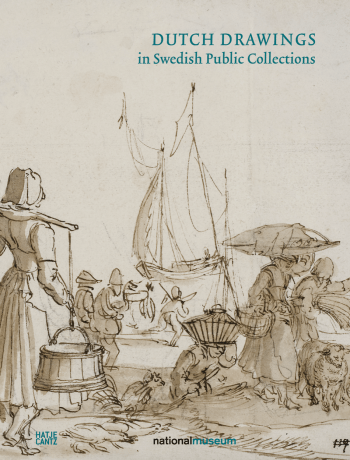 The Nationalmuseum, Stockholm, holds the most extensive collection of Dutch master drawings in Sweden. It comprises important works by Rembrandt and his pupils, as well as drawings by Abraham Bloemart, Jan van Goyen, Herman Saftleven, Willem van de Velde, and many other artists. Although trade contacts between the Netherlands and Sweden were lively in the seventeenth century, they account for only a small part of the collection. The bulk of the drawings was acquired by Swedish collectors in the eighteenth and nineteenth centuries. Foremost among them was Count Carl Gustaf Tessin, whose acquisitions at the 1741 Paris sale of the financier Pierre Crozat make up the core of the collection. This catalogue, the result of a long-term research project, includes almost 600 drawings, of which approximately 130 are previously unpublished. Besides the Nationalmuseum, it draws on the collections of the Royal Academy of Fine Arts in Stockholm, The Gothenburg Museum of Art, the Uppsala University Library, and other institutions.
New Book | Captain Cook and the Pacific
From Yale UP, in association with the National Maritime Museum:
John McAleer and Nigel Rigby, Captain Cook and the Pacific: Art, Exploration and Empire (New Haven: Yale University Press, 2017), 256 pages, ISBN: 9780300207248, $45.
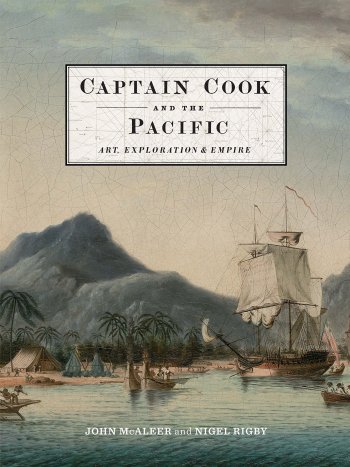 British Royal Navy Captain James Cook’s voyages of exploration across and around the Pacific Ocean were a marvel of maritime achievement and provided the first accurate map of the Pacific. The expeditions answered key scientific, economic, and geographic questions and inspired some of the most influential images of the Pacific made by Europeans. Now readers can immerse themselves in the adventure through the collections of London’s National Maritime Museum, which illuminate every aspect of the voyages: oil paintings of lush landscapes, scientific and navigational instruments, ship plans, globes, charts and maps, rare books and manuscripts, coins and medals, ethnographic material, and personal effects. Each artifact holds a story that sheds light on Captain Cook, the crews he commanded, and the effort’s impact on world history. Showcasing one of the richest resources of Cook-related material in the world, this publication invites readers to engage with the extraordinary voyages—manifested in material culture—and their continuing significance today.
John McAleer is a lecturer in history at the University of Southampton, and former curator of imperial and maritime history at the National Maritime Museum, Greenwich. Nigel Rigby is curator of exploration at the National Maritime Museum, Greenwich.
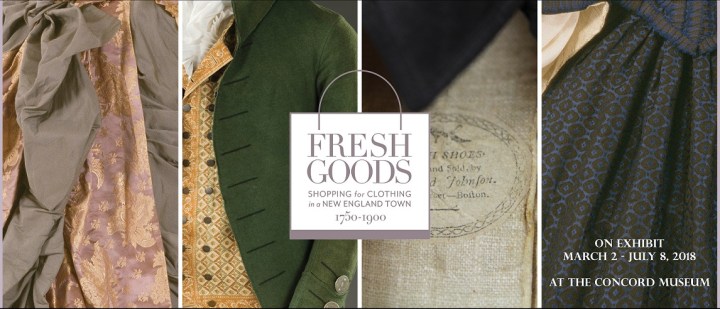
Exhibition | Fresh Goods: Shopping for Clothing
Now on view at the Concord Museum:
Fresh Goods: Shopping for Clothing in a New England Town, 1750–1900
Concord Museum, 2 March — 8 July 2018
Curated by Jane Nylander and Richard Nylander with David Wood
The Concord Museum unveils a portion of its extensive historic clothing collection for the first time, along with textiles and decorative arts in a new exhibition, Fresh Goods: Shopping for Clothing in a New England Town, 1750–1900, on view from March 2 until July 8, 2018.
 As part of the state-wide MASS Fashion collaborative project, the exhibition examines questions about the sources and context of small-town Massachusetts fashion through the Museum’s extensive historic clothing, textile, and decorative arts collection, as well as probate inventories, account books, advertisements, photographs, and letters and diaries of the period. Material culture historians Jane and Richard Nylander are the consulting curators for the exhibition. In careers spent reconstructing New England’s material past, the Nylanders have unearthed remarkable historical evidence and developed fresh and original interpretations on a wide variety of subjects.
Clothing conveys information about the wearer’s gender, age, rank, and wealth, as well as clues about subtler categories, such as taste, education, marital status, and aspiration. Through twenty evocative documented outfits, the exhibition will consider the shopping habits of Concordians in the 18th and 19th centuries. Included in the exhibition are pieces made at home with fabric purchased at shops on Concord’s main street, or made at the local workplaces of seamstresses, tailors, and milliners; or purchased in Boston, New York, London, or Paris. Through close looking at these rare and rarely-displayed artifacts, visitors will be encouraged to compare their own conventions for consuming clothing to people’s practices in the past.
The accessories and services available through the 18th- and 19th-century shops on Concord’s Milldam (the main street of the town), including mantua (dress) makers, tailors, hatters, and boot and shoe makers, will also be explored. In addition, visitors will be able to virtually ‘shop’ the Museum’s historic clothing collection through a specially designed interactive experience that utilizes an online shopping platform.
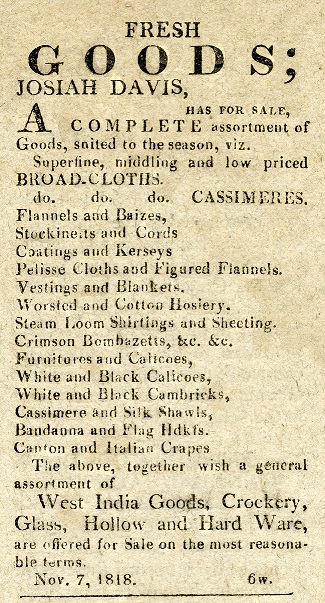
The title, Fresh Goods, is taken from a November 1816 newspaper ad for the Concord shop of Josiah Davis announcing the sale of fabrics such as figured flannels, crimson bombazettes, and white and black cambricks. The exhibition will be accompanied by a broad range of engaging public programs for both adults and children.
S E L E C T E D P R O G R A M M I N G
The Indigenous Look: Attire in 18th-Century Massachusetts
Thursday, 3 May 2018, 7:00pm
Aquinnah Wampanoag artist and designer Elizabeth James-Perry will discuss the period from 1750 to 1900 in terms of Indigenous Massachusetts attire and jewelry. While preferences often continued for use of soft smoked deerskin, elk and textured moose for clothing and sturdy footwear, along with a variety of furs and indigenous textiles, decreasing availability of some materials—especially in the 18th century—led to interesting combinations and substitutions of Native and Euro-American styles and materials. Click here for more information.
Transgressing the Color Line: Depictions of Free Blacks in the Popular Press
Thursday, 10 May 2018, 7:00pm
Join writer and historian Jonathan Michael Square as he analyzes images of free Africans Americans in New York City, Philadelphia, and Boston that appeared in the popular press. Specifically, a series of cartoons published in the early nineteenth century used to arouse Northern anti-black fears that free blacks might be threatening the racial, sexual, and class hierarchies. Fashion will be the central analytic as free blacks were often depicted as dandified buffoons. He will show how the overly fashioned bodies of the free blacks in northern metropolises transgressed and threatened the, until then, established slavocratic order. In partnership with the Robbins House. Click here for more information.
Shift, Stays, and Pannier
Thursday, 31 May 2018, 7:00pm
Join historians and living history interpreters Linda Greene and Michele Gabrielson for an in depth look at how women got dressed every day in the 1700s. They will explore the ‘ins’ and ‘outs’ of a typical 18th-century woman’s dress from a common, lower to middling class status to an upper class persona. Each layer of clothing will be discussed with a focus on fabric, style, and purpose. Perfect for anyone interested in colonial era costume or the lives of women in the 18th century. Click here for more information.
New Acquisition | Am Not I A Man and a Brother
Press release, via Art Daily (1 March 2018). . .

Am Not I A Man and a Brother, ca. 1800 (Liverpool: International Slavery Museum). The painting is based on a design commissioned by the Committee for the Abolition of the Slave Trade on 5 July 1787.
The International Slavery Museum in Liverpool has been awarded a significant grant to support the acquisition of its first painting to depict the powerful and resonant iconography of abolition. The £50,000 used to acquire Am Not I A Man and a Brother, a painting dating from around 1800, is the result of a joint funding effort, made possible through a generous grant award by Art Fund and the Heritage Lottery Fund’s Collecting Cultures programme.
The painting’s dominant motif is that of an enslaved African, kneeling, bound in chains and set against the backdrop of a Caribbean sugar plantation. It is based on a design commissioned by the Committee for the Abolition of the Slave Trade on 5 July 1787 and is considered to be one of the first instances of a logo designed for a political cause, used famously by the potter Josiah Wedgwood. A significant acquisition for the UK, it is only the second known painting to exist featuring this motif—the only other being The Kneeling Slave at the Wilberforce House Museum in Hull.
Stephen Carl-Lokko, Curator, International Slavery Museum said: “This acquisition represents the first painting ever to be acquired by National Museums Liverpool to depict the powerful and resonant iconography of abolition, and we are very pleased to add it to our collection. Resistance is a key part of the history we bring to life in the International Slavery Museum, and abolition is a very important part of this wider narrative. The painting is a remarkable surviving product of the early phase of the British movement to abolish the transatlantic slave trade during the 18th and 19th century.”
Following restoration and cleaning work to be carried out on the painting, it will go on display in the International Slavery Museum towards the end of 2018. The painting was in a private collection previously.
Stephen Deuchar, Director, Art Fund said: “We are proud to be able to support the International Slavery Museum in acquiring this fascinating version of an iconic image. It will undoubtedly enrich the museum’s narrative around abolition and its important place in British history.”
The painting is another acquisition the International Slavery Museum has announced under the Transatlantic and Contemporary Slavery Collecting Project, part of the Heritage Lottery Fund’s Collecting Cultures programme. Previous announcements under this project have included the acquisition of a copper engraving by the famous British caricaturist James Gillray and the first example of an account by a female anti-slavery campaigner, into the Museum’s collection.
Am Not I a Man and a Brother is one of several iconic paintings relating to all aspects of the transatlantic slave trade, which are now part of the collection at National Museums Liverpool, including The Hunted Slaves by Richard Ansell and The Black Boy by William Windus, both on display at the International Slavery Museum and a 1768 portrait of Liverpool merchant Richard Gildart by Joseph Wright of Derby at the Walker Art Gallery. The first painting to depict the theme of abolition at the International Slavery Museum, Am Not I a Man and a Brother is also part of a wider collection of objects and documents exploring abolition, including a porcelain sugar bowl from 1820–30 inscribed “East India Sugar. The produce of Free Labour”and a 1793 edition of the autobiography of the famous Black anti-slavery campaigner Olaudah Equiano.
The International Slavery Museum highlights the international importance of enslavement and slavery, both in a historic and modern context. Working in partnership with other organisations with a focus on freedom and enslavement, the Museum provides opportunities for greater awareness and understanding of the legacies of enslavement today.
New Book | The Country House Library
From Yale UP:
Mark Purcell, The Country House Library (New Haven: Yale University Press, in association with the National Trust, 2017), 352 pages, ISBN: 978 0300227406, $55.
 Beginning with new evidence that cites the presence of books in Roman villas and concluding with present day vicissitudes of collecting, this generously illustrated book presents a complete survey of British and Irish country house libraries. Replete with engaging anecdotes about owners and librarians, the book features fascinating information on acquisition bordering on obsession, the process of designing library architecture, and the care (and neglect) of collections. The author also disputes the notion that these libraries were merely for show, arguing that many of them were profoundly scholarly, assembled with meticulous care, and frequently used for intellectual pursuits. For those who love books and the libraries in which they are collected and stored, The Country House Library is an essential volume to own.
Mark Purcell is deputy director of Cambridge University Library and was the former libraries curator to the National Trust.










 Enfilade
leave a comment