Conference | Romantic Prints on the Move
From the University of Pennsylvania:
Romantic Prints on the Move
University of Pennsylvania and Philadelphia Museum of Art, 1–2 February 2019
Organized by Cordula Grewe and Catriona MacLeod

Caspar David Friedrich, Woman Seated under a Spider’s Web (Melancholy), detail, ca. 1803, woodcut (Philadelphia Museum of Art 1993-128-1).
In partnership with the Philadelphia Museum of Art, the Kislak Center for Special Collections, Rare Books, and Manuscripts is pleased to introduce Romantic Prints on the Move. This symposium takes its lead from the 2013 PMA exhibition and corresponding collection catalogue, The Enchanted World of German Romantic Prints, 1770–1850 (Yale University Press, 2017).
In the second half of the nineteenth century John S. Phillips amassed a collection of roughly 8500 German works in all media and all genres, housed today at the Philadelphia Museum of Art. Inspired by recent debates about the circulation and pricing of contemporary art, the conference bridges the nineteenth and the twenty-first century by shedding light on the economic, aesthetic, and geographical aspects of the production, dissemination, and collection of these prints in the era of their burgeoning new technologies, and by bringing together a unique mixture of academics and curators, dealers, and collectors.
For registration (free but kindly requested), announcements, and updates, please visit the conference web pages.
F R I D A Y , 1 F E B R U A R Y 2 0 1 9
To be held at the Kislak Center for Special Collections, Rare Books, and Manuscripts, University of Pennsylvania Libraries, Van Pelt-Dietrich Library Center, 6th floor, 3420 Walnut Street.
1:30 Introduction by Catriona MacLeod (Edmund J. and Louise W. Kahn Term Professor of German, University of Pennsylvania)
1:45 Print Economies
Moderator: Britany Salsbury (Associate Curator of Prints and Drawings, The Cleveland Museum of Art)
• F. Carlo Schmid (C. G. Boerner, Düsseldorf), Johann Christian Reinhart and the Print Market in Germany and Rome around 1800
• Peter Fuhring (Fondation Custodia/Collection Frits Lugt), Catalogues and Correspondences: The Marketing Tools of German Print Publishers, 1780–1850
3:15 Break
4:00 Collecting German Romanticism Today: Discussion with Contemporary Collectors
Introduction by Cordula Grewe (Associate Professor of Art History, Indiana University Bloomington)
Participants
• Fiona Chalom (Psychotherapist, Board Member of Wende Museum of the Cold War and Chair of the J. Paul Getty Museum Disegno Group/Friends of Drawings, Los Angeles)
• Charles Booth-Clibborn (Founder of Paragon Press, London)
5:30 Reception
S A T U R D A Y , 2 F E B R U A R Y 2 0 1 9
To be held at Perelman Auditorium, Philadelphia Museum of Art.
1:15 Introduction by Cordula Grewe (Associate Professor of Art History, Indiana University Bloomington)
1:30 Spreading the Print
Moderator: Freyda Spira (Associate Curator, Department of Drawings and Prints, The Metropolitan Museum of Art, New York)
• Kirsten ‘Kit’ Belgum (Associate Professor of German, University of Texas at Austin), Serialized Landscapes: Joseph Meyer and the Transnational Print Market, 1833–1856
• Michael Leja (James and Nan Wagner Farquhar Professor of the History of Art, University of Pennsylvania), From Print to Image Culture
3:00 Break
3:30 Keynote Address
Introduction by Louis Marchesano (Audrey and William H. Helfand Senior Curator of Prints, Drawings, and Photographs, Philadelphia Museum of Art)
• Jay A. Clarke (Rothman Family Curator, Department of Prints and Drawings, The Chicago Art Institute), The Matrix, the Market, and Its Critical Reception in Late Nineteenth-Century Berlin
New Book | Scotch Baronial: Architecture and National Identity
From Bloomsbury:
Miles Glendinning and Aonghus MacKechnie, Scotch Baronial: Architecture and National Identity in Scotland (London: Bloomsbury, 2019), 312 pages, ISBN: 978-1474283472, £65 / $88.
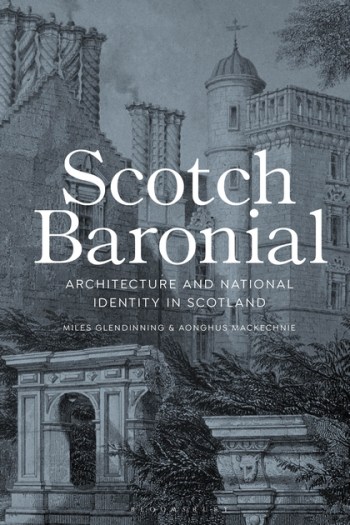 As the debate about Scottish independence rages on, this book takes a timely look at how Scotland’s politics have been expressed in its buildings, exploring how the architecture of Scotland—in particular the constantly-changing ideal of the ‘castle’—has been of great consequence to the ongoing narrative of Scottish national identity. Scotch Baronial provides a politically-framed examination of Scotland’s kaleidoscopic ‘castle architecture’, tracing how it was used to serve successive political agendas both prior to and during the three ‘unionist centuries’ from the early 17th century to the 20th century. The book encompasses many of the country’s most important historic buildings—from the palaces left behind by the ‘lost’ monarchy, to revivalist castles and the proud town halls of the Victorian age—examining their architectural styles and tracing their wildly fluctuating political and national connotations. It ends by bringing the story into the 21st century, exploring how contemporary ‘neo-modernist’ architecture in today’s Scotland, as exemplified in the Holyrood parliament, relates to concepts of national identity in architecture over the previous centuries.
Miles Glendinning is Professor of Architectural Conservation at the Edinburgh School of Architecture and Landscape Architecture, University of Edinburgh. Aonghus MacKechnie is an architectural historian and Head of Heritage Management at Historic Scotland. Together, they have co-authored numerous books including A History of Scottish Architecture (1996, co-authored with Ranald MacInnes) and Scottish Architecture (2004).
C O N T E N T S
Introduction, Pre-1603 Scotland: Castellated Architecture and ‘Martial Independence’
Part I: Absent Monarchs and Civil Strife
1 1603–1660: Empty Royal Palaces and Castellated Court Architecture
2 1660–1689: From Restitution to Rejection of the Old Order
3 1689–1750: The Architecture of Dynastic Struggle
Part II: From ‘Romantic Scotland’ to ‘Imperial Scotland’
4 1750–1790: Enlightenment and Romanticism
5 1790–1820: Scotland and England in the Age of Revolutionary War
6 1820–1840: Scott, Abbotsford, and ‘Scotch’ Romanticism
7 1840–1870: Billings and Bryce: Mid-Century Baronial
8 1870–1900: Traditionalism
9 External Reflections: ‘National’ Scottish Architecture and the Empire
Part III: The Twentieth Century
10 1914 Onwards: Scottish Architectural Identity in the Age of Modernism
Conclusion, The Architecture of Unionist Nationalism and Its International Significance
Bibliography
Index
Exhibition | Anton Maria Maragliano (1664–1739)
On view in Genoa at the Palazzo Reale:
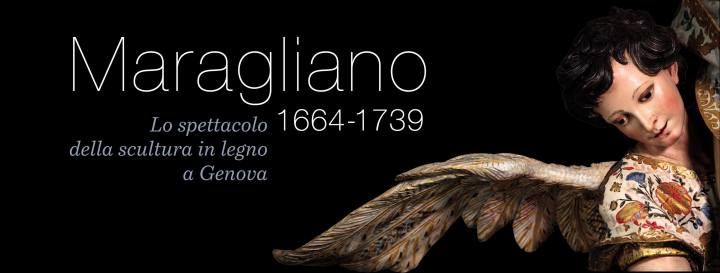
Anton Maria Maragliano (1664–1739), Lo spettacolo della scultura in legno a Genova
Palazzo Reale di Genova, 10 November 2018 — 10 March 2019
Curated by Daniele Sanguineti
From November 10th 2018 to March 10th 2019 Teatro del Falcone in Palazzo Reale Museum hosts the first monographic exhibition dedicated to the Genoese sculptor Anton Maria Maragliano (1664–1739). Viewers can admire the artist’s masterpieces, testaments to the persuasive power of painted and gilded wood to personify the protagonists of Paradise: from the elegant Marian statues, to the graceful Crucifixes, to the great processional machines with the martyrs of the saints.
 Maragliano’s ability to meet the needs of clients through beautiful images and strong emotional impacts made possible the obtaining of a monopoly that forced the sculptor to develop a structured business model. Two generations of students were welcomed in the rooms of Strada Giulia, in the heart of Genoa, where Maragliano had his workshop, giving rise to the phenomenon of divulging the master’s language which represents the most fascinating, though problematic, aspect of the approach to sculptor: and the pupils of the students pursued this popularization beyond the end of the century. The exhibition presents a dual approach: on the one hand, it displays a chronological path, with Maragliano’s cultural references, the beginnings, the artist’s workshop; on the other hand, it displays thematic sections, articulated in groups of works divided according to iconography.
The exhibition opens with a section dedicated to artistic precedents for the young Maragliano, from Giuseppe Arata and Giovanni Battista Agnesi, to Giovanni Battista Bissoni and Marco Antonio Poggio. The places that Maragliano evoked through a series of documents, engravings, and watercolors usefully tell the stages of apprenticeship and the environments that hosted the master’s workspace over the years. The magnificent San Michele Arcangelo of Celle Ligure, requested of Maragliano in 1694, and the San Sebastiano for the Disciplinanti of Rapallo, commissioned in 1700, testify to the role of models in tune with the most up-to-date figurative culture rooted in Genoa thanks to the painter Domenico Piola and the French sculptor Pierre Puget. These sculptures, capable of translating into the three-dimensionality of the artefact the engaging grace of contemporary painting and Bernini’s sculpture, reveal the new, delicate dynamism of Baroque culture.
The practice of work, from the manipulation of clay models to the collaboration with painters—especially those of Casa Piola—constitute a deepening of particular interest that make comprehensible the ideational project in the entirety of its process. The progressive juxtaposition of Crucifixes—large and small, from a chapel, from a high altar, or from a procession—shows the substantial renewal conferred by Maragliano on the iconography until obtaining a repeatable formula on the part of the students. A series of spectacular Madonnas seated on the throne and an extraordinary processional chest—the Sant’Antonio Abate contemplates the death of Saint Paul the Hermit now relevant to the brotherhood of Mele—highlight the theatrical values of Maragliano’s compositions, for which the biographer Ratti, reporting the judgment of the people, wrote, “have all the air of Paradise.”
Penitential themes from Holy Week are illustrated in the enthralling section on the Passion. Alongside works of small format, including nativity statues are exhibited refined objects—sacred and profane—commissioned by noble families for their private collections. The journey ends with an allusion to the complex management of Maragliano’s heritage, thanks to the presence of some pieces made by his primary students.
The catalogue is published by Sagep and available from Artbooks.com:
Daniele Sanguineti, et al., Maragliano (1664–1739), Lo spettacolo della scultura in legno a Genova (Genova: Sagep Editori, 2018), 288 pages, ISBN: 978-8863735970, €30 / $60.
Exhibition | Drawings and Paintings from The Horvitz Collection
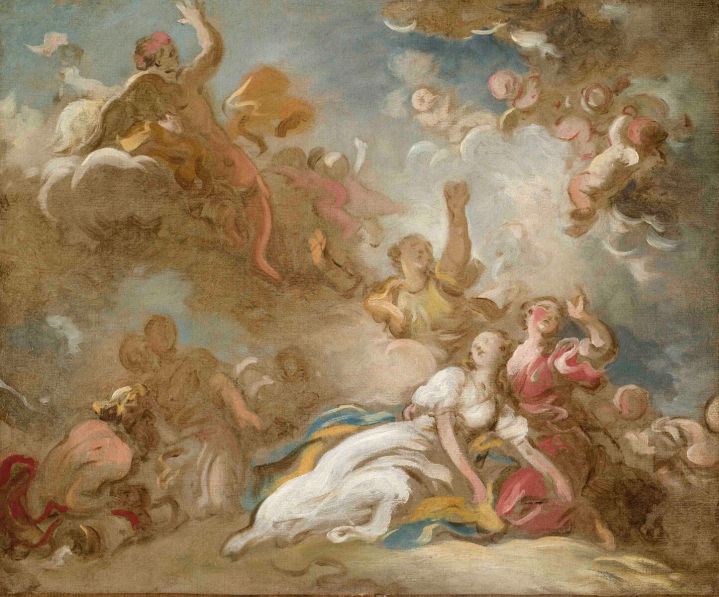
Jean-Honoré Fragonard, Death of Cleopatra
(The Horvitz Collection; photo by Michael Gould)
◊ ◊ ◊ ◊ ◊
Opening this month at FUAM, the exhibition is a variation of Storytelling: French Art from the Horvitz Collection; from the press release:
A French Affair: Drawings and Paintings from The Horvitz Collection
Fairfield University Art Museum, Fairfield, Connecticut, 25 January — 29 March 2019
Curated by Alvin Clark
The Fairfield University Art Museum is pleased to announce its upcoming exhibition, A French Affair: Drawings and Paintings from The Horvitz Collection, which will be on view from January 25 through March 29, 2019, in the museum’s Bellarmine Hall Galleries in Bellarmine Hall on the campus of Fairfield University.
Produced by some of the most prominent artists of the Renaissance, Baroque, Rococo, and Neoclassical epochs, the 80 works on view comprise two separate exhibitions—Imaging Text: Drawings for French Book Illustration and Seventeenth and Eighteenth-Century French Paintings. All come from The Horvitz Collection, one of the world’s finest and most distinguished holdings of French art.
History, mythology, poetry, portraiture, and everyday life provided a vast storehouse of subject matter for French artists from the 16th through the mid-19th centuries. A French Affair features paintings and drawings in all these genres by celebrated artists such as Charles Le Brun, Nicolas de Largillière, Jean-Honoré Fragonard, Jean-Baptiste Oudry, and Anne-Louis Girodet de Roucy Trioson. The impressive selection of 70 drawings, some exhibited with related prints, focuses on a particular category—designs for book illustration—thereby highlighting not only the creative inventiveness of the artists who formulated lavish visual imagery from the written word, but also the rich literary traditions of France and the vibrant book publishing industry they spawned.
“It is a privilege for the Fairfield University Art Museum to present this captivating array of paintings and drawings by some of the leading protagonists of French art of the ancien régime and post-Revolutionary period, lent by the renowned Horvitz Collection,” said Linda Wolk-Simon, Frank and Clara Meditz Director and Chief Curator.
Particularly rich is the drawings exhibition component of this two-part presentation, Imaging Text, which highlights for visitors the importance of book illustration and the robust publishing trade in France as a catalyst for artistic invention. The new prominence of illustrations in printed books, and the heightened demand for draftsmen to produce such images, offered many artists entree into elite artistic, literary, and social circles beginning in the late 17th century. The choice selection of paintings from the same moment, with their bravura handling of light and color and masterful depictions of human form and inanimate objects, speaks to the rigorous artistic training and traditions, promoted by the French Academy and the Salon (the official annual art exhibition), in which all artists of the period—painters, sculptors, draftsmen, printmakers—were schooled.
Renowned for its breadth and quality, The Horvitz Collection has been the focus of many national and international exhibitions and scholarly publications, and it now contains nearly 2,000 drawings, paintings, and sculptures. The exhibition is curated by Alvin L. Clark, Jr., Curator, The Horvitz Collection and the J.E. Horvitz Research Curator, Emeritus, Department of Drawings, Division of European and American Art, Harvard Art Museums/Fogg. An illustrated catalogue of the drawings is available.
Alvin Clark and Elizabeth M. Rudy, Imaging Text: French Drawings for Book Illustration from The Horvitz Collection (Boston: The Horvitz Collection, 2018), 76 pages, ISBN: 978-0991262533, $10.
S E L E C T E D P R O G R A M M I N G
Thursday, January 24, 5:00pm
Collecting French Art: A Conversation with Jeffrey Horvitz and Alvin Clark
Saturday, February 2, 12:00pm
Sarah Cantor (Kress Interpretative Fellow), Gallery Talk: Drawing for Books in 18th-Century France
Thursday, February 7, 11:00am
Michelle DiMarzo (Curator of Education and Academic Engagement), Art in Focus: Pierre-Paul Prud’hon, Sylvia and the Satyr, 1800
Tuesday, February 12, 6:00pm
Performance: ekphrasis vii — Fairfield University MFA students will read original pieces inspired by the works on view in A French Affair: Paintings and Drawings from The Horvitz Collection
Thursday, February 21, 5:00pm
Sarah Cantor (Kress Interpretative Fellow), Gallery Talk: Drawings to Prints
Wednesday, March 6, 5:00pm
Elizabeth Rudy (Carl A. Weyerhaeuser Associate Curator of Prints, Harvard Art Museums), Lecture: 18th-Century French Drawings — part of the Edwin L. Weisl, Jr. Lectureships in Art History, funded by the Robert Lehman Foundation
Conference | Horace Walpole and the Queer Eighteenth Century
From St Mary’s University:
Text Artefact Identity: Horace Walpole and the Queer Eighteenth Century
Strawberry Hill, 15–16 February 2019
 This conference will bring together scholars and curators from the disciplines of Literature, Cultural History, Art and Architectural History, and Heritage to investigate LGBTQ perspectives on the ‘long’ eighteenth century, and features keynotes from Walpole’s biographer, George Haggerty, and Matthew Reeve, who has written extensively on Gothic architecture, sexuality, and aesthetics.
Hosted in partnership with Horace Walpole’s Gothic villa at Strawberry Hill in west London, the conference will complement a major exhibition taking place October 2018–February 2019, The Lost Treasures of Strawberry Hill, which brings together, for the first time since 1842, masterpieces from Walpole’s collection. There will be an opportunity to visit the exhibition during the conference.
Booking is now available online via Strawberry Hill House’s website, with generous reductions for unfunded students. One and two-day tickets are available, in addition to reduced prices for those not funded by their employer or external body. The conference is a partnership between the National Trust, Strawberry Hill, and St Mary’s University. More information is available here.
F R I D A Y , 1 5 F E B R U A R Y 2 0 1 9
9.00 Registration and coffee
9.50 Welcome by Peter Howell, Nino Strachey, and Silvia Davoli
10.00 Keynote Lecture
• George Haggerty, Horace Walpole: ‘Queernesses’ in the Epistolary Mode
11.00 Break
11.10 Panel 1: Horace Walpole and His Network
• Eugenia Zuroski, ‘That you may show us what we have seen’: Bentley’s Drawings and the Archive of Queer Feeling
• Freya Gowrley, Inheriting Strawberry Hill: Shared Practices and Shared Spaces
• Andrew Rudd, Shut out of the Queer Family Romance: Thomas Chatterton’s Revenge on Walpole
12.40 Lunch
1.40 Keynote Lecture
• Maurice Howard, Resolving the Past without a Certain Future: Classical and Gothic in John Chute’s Ideas for The Vyne
2.40 Break
2.50 Panel 2: Queer Perspectives on Eighteenth-Century Culture (1)
• Gràinne O’Hare, Harmless Queerness: Eighteenth-Century Erasure of Female Sexual Experience
• Emily West, ‘A little play-thing-house’: Queer Childishness at Strawberry Hill
• Keiko Kimura, The Americanized Gothic Theatre: C. B. Brown’s Wieland
4.20 Break
4.30 Panel 3: Queer Perspectives on Eighteenth-Century Culture (2)
• Dominic Janes, Queer Eye for the Queer Guys?: Horace Walpole and the Macaronis
• Cameron MacDonell, Walpole’s Queer Passionometer: Britain’s Climate and Gothic Aesthetics
5.30 Tea and tours of the exhibition, The Lost Treasures of Strawberry Hill
7.00 Drinks and dinner
S A T U R D A Y , 1 6 F E B R U A R Y 2 0 1 9
9.30 Registration and coffee
10.00 Keynote Lecture
• Matthew Reeve, Queer Family Romance in the Strawberry Hill Collections
11.00 Break
11.10 Panel 4: Architecture, Display, and ‘Camp’
• Daniela Roberts, Framing Queer Identity: Gothic Revival Interior and Collection Display in Strawberry Hill
• Wojciech Szymański and Robert Kusek, Strawberry Hill and the Camp History of Architecture: The Case of Central Europe
• Luciana Colucci, ‘Well, I begin to be ashamed of my magnificence’: Horace Walpole and the Queer Eighteenth Century
12.40 Lunch
1.40 Keynote Lecture
• Daniel Orrells, Walpole, Neoclassicism, and the Erotics of Historical Debate in the Eighteenth Century
2.40 Panel 5: Neo-classicism and Sexual Identity
• Sarah Betzer, Aesthetic Antagonists? Walpole, Patch, and Queer Taste
• Caroline Gonda, Identity and the Classics in the Notebooks of Anne Damer (1748–1828)
3.40 Break
3.50 Keynote Lecture
• Ulf Hansson, ‘I Find I Cannot Live Without Stosch’s Intaglia of the Gladiator with the Vase’: The Museo Stoschiano, Male Homosociability, and the Cult of the Ancients
4.50 Panel 6: Strawberry Hill and LGBTQ Heritage
• Nino Strachey, Alison Oram, and Richard Sandell, Presentations and discussion reflecting on Strawberry Hill and the legacies of Prejudice & Pride (National Trust) and Pride of Place (Historic England)
6.00 Farewell drinks
Workshop | Doing Connoisseurship
From H-ArtHist:
Doing Connoisseurship: Yesterday, Today, Tomorrow
Bielefeld University, 11 January 2019
It has become a historiographical commonplace to describe connoisseurship as the natural forerunner of the academic history of art and visual culture. However, connoisseurship did not just end at a certain point, but it is still part of scientific practices today, and in all likelihood, it will continue to do so in the future. Therefore, this workshop is dedicated to the impact—past, present, and future—which connoisseurship has on our understanding of artistic artifacts.
In order to analyze the preconditions, merits, and problems of connoisseurship, it is worth looking at how working routines, interest in particular questions, the way of perception, and its verbalization might result from an early eighteenth-century understanding of categorizing and comparing. Therefore, it appears necessary to discuss some aspects of connoisseurship in greater detail: its actors, its discourses, its modes of visual experience, and its objects.
It is remarkable that connoisseurship, from its beginnings, particularly benefited from an interdisciplinary orientation. The biographies of early connoisseurs span a wide range from individuals with a background in the natural sciences to artists or scholars of philosophy. In light of different interests, it is not trite to examine the different preconditions of working methods applied in these fields. How did a certain technical and empirical know-how form a certain epistemological interest? What kinds of questions and requirements arose from a culture where collectors, art dealers, philosophers, artists, or natural scientists were entangled in a complex discourse on the judgment of art? While it is common practice to start with a historiographical contextualization of the eighteenth-century discourse visible in a great number of treatises and early histories on art, it might also be enlightening to look at practices prior to those written works. Distinctive modes of visual and practical experiences, the negotiation of norms, and the learning of a ‘language’ of resemblance and difference, thus the argument, shaped a professional way of viewing up to the present day. The workshop aims to critically trace its formation and develop a future perspective on connoisseurship.
P R O G R A M
9.00 Introduction by Joris Heyder
9.30 Fabienne Brugère, Inventing the Audience in the Eighteenth Century: Taste in the Arts
10.30 Break
11.00 Pascal Griener, For a New History of Connoisseurship in the Nineteenth Century: Analysis of Some Connoisseurs’ Greatest Blunders in Context
12.00 Valérie Kobi, On Spectacles And Lorgnettes: The Connoisseur’s Vision Aids
13.00 Lunch
14.15 Ingrid Vermeulen, The Connoisseurship of Forging Relations Between School and Nation, 1650–1750
15.15 Stephan Kemperdick, Connoisseurship: Looking for Masters or Looking for Connections?
16.15 Closing Remarks
Display | Instruction and Delight: Children’s Games

Wallis’s Elegant and Instructive Game exhibiting the Wonders of Art in Each Quarter of the World, ca. 1820
(New Haven: Yale Center for British Art)
◊ ◊ ◊ ◊ ◊
Opening this month at YCBA:
Instruction and Delight: Children’s Games from the Ellen and Arthur Liman Collection
Yale Center for British Art, New Haven, 17 January — 23 May 2019
Curated by Elisabeth Fairman with Laura Callery
By the beginning of the eighteenth century in Britain, parents and teachers had begun to embrace wholeheartedly a suggestion from the philosopher John Locke (1632–1704) that “Learning might be made a Play and Recreation to Children.” The material culture of this period, and the subsequent generation, reveals a significant shift in thinking, as adults found fresh value in childhood and in play for its own sake. British publishers leapt at the chance to design books and games for both instruction and delight. This small display celebrates the recent gift of eighteenth- and nineteenth-century children’s games and books to the Center by Ellen and Arthur Liman, Yale JD 1957.
Instruction and Delight: Children’s Games from the Ellen and Arthur Liman Collection has been curated by Elisabeth Fairman, Chief Curator of Rare Books and Manuscripts at the Center, with the assistance of Laura Callery, Senior Curatorial Assistant.
A catalogue appeared in 2017 from Pointed Leaf Press:, with additional information (and images) from this HyperAllergic piece by Claire Voon).
Ellen Liman, Georgian and Victorian Board Games: The Liman Collection (New York: Pointed Leaf Press, 2017), 182 pages, ISBN: 978-1938461439, $65.
New Book | The Life of Romeyn de Hooghe, 1645–1708
From Amsterdam UP:
Henk Van Nierop, The Life of Romeyn de Hooghe, 1645–1708: Prints, Pamphlets, and Politics in the Dutch Golden Age (Amsterdam: Amsterdam University Press, 2018), 452 pages, ISBN: 9789462981386, 99€ / $115.
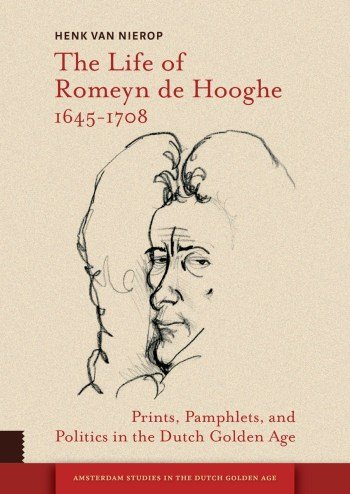 Romeyn de Hooghe was the most inventive and prolific etcher of the later Dutch Golden Age. The producer of wide-ranging book illustrations, newsprints, allegories, and satire, he is best known as the chief propaganda artist working for stadtholder and king William III. This study, the first book-length biography of de Hooghe, narrates how his reputation became badly tarnished when he was accused of pornography, fraud, larceny, and atheism. Traditionally regarded as a godless rogue, and more recently as an exponent of the Radical Enlightenment, de Hooghe emerges in this study as a successful entrepreneur, a social climber, and an Orangist spin doctor. A study in seventeenth-century political culture and patronage, focusing on spin and slander, this book explores how artists, politicians, and hacks employed literature and the visual arts in political discourse, and tried to capture their readership with satire, mockery, fun, and laughter.
Henk van Nierop is Professor Emeritus of Early Modern History at the University of Amsterdam. He has widely published on the Dutch Revolt and the Dutch Golden Age. He is the author of The Nobility of Holland: From Knights to Regents, 1500–1650 (1993) and Treason in the Northern Quarter: War, Terror, and the Rule of Law in the Dutch Revolt (2009).
C O N T E N T S
List of Figures
Acknowledgements
Note on Usage
Genealogical Tables
Abbreviations
Introduction
1 Under the Spire of the Zuiderkerk
The Zuiderkerk
The Gift of God
Ancestors
The Learned Son
2 Ingenious Inventions and Rich Designs
Setting Up
News prints
Paris and Beyond
Book Illustrations
Critical Appreciation
The Art of Etching
Inventions and Designs
Wrestlers and Jews
Commercial Success
Marriage
Houses
Claims to Gentility
3 Patriotic Prints
The Year of Disaster
Orangists and Republicans
The Elevation of the Prince of Orange
The de Witt Brothers Slain
French Tyranny
Illustrating the War
The Gelderland Affair
Satire
Publishing his Own Work
Dedications
The Wheel of Fortune
Competitors
4 A Wandering Whore and a Talking Dog
The Wandering Whore
The Talking Dog
The Forged Chinese Pictures
The Nicked Timepiece and the Lace Jabot
The (Not So) Secret Life of Maria Lansman
Honour and Shame
The Anatomist and the Abbé
Novels and Drollery
5 A Fresh Start
Romeyn Evicted?
Uncle Pieter’s Testament
Motives for Moving
Before the Consistory
Settling Down
Moving Up
A Drawing Academy and a Stately Mansion
A Prestigious Map
Client of the Stadtholder
A Blueberry Diploma
6 The Prince Abandoned and Regained
The Great Turkish War
The Luxembourg Affair
The Revocation of the Edict of Nantes
The Glorious Revolution
Glorifying the Revolution
7 The Harlequin Prints
Lampooning the Sun King
Arlequin Déodat
The Son of a Miller
Riding the Hippogryph
Frogs and Toads
Hypochondriacs
Royal Infidelity
Three Kings
A Royal Enema
Royal Cuckolds
Driving Home the Message
8 Lampooning the Regents
The Cows, the Herdsman, and the Wolf
The Affair of the Magistrates
A New Tune: Toads and Barrel-Riders
The French Calendar: The Cock and the Donkey
Bigwig and the Privilege-Seeker
A Stagecoach Chat
The French Blue Shin
The Cricket that Spoils the Harvest
9 The Pamphlet War
A Triplet of Rogues
The Quack: Govert Bidloo
The Hack: Ericus Walten
The Orangist Triumvirate at Work
Arch-Cuckold de Hooghe
Vilifying Romeyn
Scaling Mount Parnassus
Arch-Cuckold Shareholder
10 The Memorandum of Rights
Legal Action
Witnesses
Romeyn Interrogated
Blasphemy
A False Libel
Embarrassing Letters
11 Honour Defended
The Chief Sheriff Fooled
More Pamphlets
Bribery Exposed
Malice and the Spirit of Quarrelling
Romeyn Spins a Conspiracy
Walten Sacrificed
Tying Up Loose Ends
12 Serving the Stadtholder
The Desolate End of Ericus Walten
Running a Spy Network
Father and Daughter
Vassal of Kennemerland
13 Composing most Pompously
Intendant of the King’s Buildings
Director of the Lingen Quarries
Director of the Triumphal Arches
Tampering with the Books
Oil Paintings
Glasses, Cups, and Medals
The World’s First Satirical Periodical
Self-Portraits
14 Final Years
A Masterless Man
A Man of Letters
An Invisible Church
Death and Legacy
Appendix: Genealogy of the De Hooghe Family
Sources
Index
Mary D. Sheriff Travel and Research Award for 2019
The Mary D. Sheriff Travel and Research Award
Applications due by 15 January 2019
The Mary D. Sheriff Travel and Research Award supports feminist topics in eighteenth-century art history and visual culture. The award will be given every other year, beginning in 2019 with $2000.
Doctoral candidates, early career scholars, and contingent faculty who are current members of the American Society for Eighteenth-Century Studies (ASECS) and the Historians of Eighteenth-Century Art and Architecture (HECAA) are eligible to apply. Applicants should submit a 750-word description of the proposed project and a CV (as a pdf or MS Word doc) to Melissa Hyde, mhyde@arts.ufl.edu by 15 January 2019. The award will be presented at the 2019 ASECS business meeting.
Award money will be drawn from an endowed account managed by ASECS. Donations to this account are tax-deductible.
Exhibition | Winckelmann and the Vatican Museums
Now on view at the Vatican:
Winckelmann: Masterpieces throughout the Vatican Museums
Winckelmann: Capolavori diffusi nei Musei Vaticani
Vatican Museums, 9 November 2018 — 9 March 2019
Curated by Guido Comini and Claudia Valeri
 A ‘journey within the journey’ along the entire Vatican Museums tour itinerary, this ‘dispersed’ exhibition celebrates the great German scholar Johann Joachim Winckelmann, father of modern archaeology and precursor of today’s art historians. Preceded by and announced in May at the study day on the Montalto Collection in Villa Negroni, Winckelmann: Masterpieces throughout the Vatican Museums symbolically brings to a conclusion the many initiatives organized to honour the renowned archaeologist in the dual anniversary year of 2018—300 years since his birth and 250 since his tragic death in Trieste.
In the years of his ‘dazzling’ stay in Rome (1755–1768), the Vatican Museums as we know them did not yet exist, but Winckelmann already visited the Vatican Belvedere and returned repeatedly to admire the statues conserved there. Indeed, it was due to his favourable judgement that many antiquities that he studied during his visits to the monuments and collections of the Eternal City were then purchased by the pontiffs. The exhibition, curated by Guido Cornini and Claudia Valeri, is intended to highlight precisely this role of the Vatican collections as a cornerstone for the studies, theories, and writings of the renowned German archaeologist. All sectors of the museums have been involved in this impressive and original exhibition project that offers the visitor a thematic itinerary with pauses for in-depth analysis of 50 selected works—on the basis of the role Winckelmann attributed to them in the construction of his aesthetic thought.
Room XVII of the Pinacoteca is dedicated to the presentation of the figure and his age. The screening of a film and the display of some of his most important writings help explain the atmosphere and cultural climate of Rome around the mid-eighteenth century. Winckelmann arrived in 1755 for a brief stay and instead spent the rest of his life in Italy; enchanted by the grandiose beauty of the antiquities, he devoted all his attention and prodigious talent to them.
Guido Comini and Claudia Valeri, Winckelmann: Masterpieces throughout the Vatican Museums (Vatican City: Edizioni Musei Vaticani, 2018), 232 pages, ISBN: 978-8882714307, $58. Also available in Italian.










 Enfilade
leave a comment