New Book | Johann Joachim Winckelmann
Available from Artbooks.com:
Elisa Debenedetti, ed., Johann Joachim Winckelmann (1717–1768) nel duplice anniversario (Rome: Quasar, 2018), 344 pages, ISBN: 978-8871409191, €60 / $95.
 C O N T E N T S
• Editoriale, Elisa Debenedetti
• Johann Joachim Winckelmann (1717–1768) nella doppia ricorrenza, Claudio Strinati
• Winckelmann und seine Eminenzen, Steffi Roettgen
• Tra lettere e licenze: Luci e ombre su Winckelmann Commissario delle antichità (1763–1768), Federica Papi
• ‘Quando con questo dubbio osservai di nuovo la nostra opera, mi si accese una luce’: Le intuizioni iconografiche di Winckelmann, Brigitte Kuhn-Forte
• Winckelmann als Apodemiker, Martin Disselkamp
• Un database in miniatura: Il manoscritto di Winckelmann alla Biblioteca Nazionale Centrale di Roma, Gabriella Catalano
• Addendum al corpus degli scritti di Winckelmann, Stefano Ferrari
• Winckelmann nel Regno di Napoli, oltre il Museo ercolanense: Pozzuoli e Paestum, Fabio Mangone
• Osservazioni dalla mostra Il Tesoro di Antichità (Musei Capitolini, 7/12/2017 – 22/4/2018), Pierluigi Panza
• Winckelmann: Moderne Antike Recensione della mostra al Neues Museum di Weimar dal 7 aprile al 2 luglio 2017, Davide Ferri
• Winckelmann a Milano, Pierluigi Panza
• Iniziative dei Musei Vaticani in occasione delle celebrazioni dedicate a Johann Joachim Winckelmann, Claudia Valeri
• La ‘Sala delle cose egizie’ del museo Pio-Clementino: alcune considerazioni, Rosella Carloni
• Dipinti e opere d’arte in Casa Albani: L’allestimento delle collezioni di famiglia in un inventario del 1724, Matteo Borchia
• Pergolati, fontane ed erme a Villa Albani: Un’ipotesi di ricostruzione, Alberta Campitelli
• La genesi della Pala di Possagno e l’interpretazione critica di Giulio Carlo Argan, Elisa Debenedetti
Sommari
Indice dei nomi
New Book | Germany’s Ancient Pasts
From The University of Chicago Press:
Brent Maner, Germany’s Ancient Pasts: Archaeology and Historical Interpretation since 1700 (Chicago: The University of Chicago Press, 2018), 336 pages, ISBN: 978-0226592916 (hardback), $120 / ISBN: 978-0226593074 (paperback), $40.
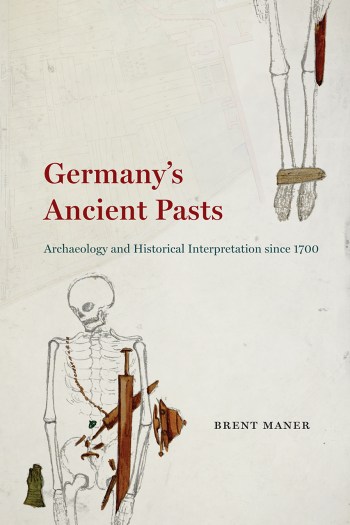 In Germany, Nazi ideology casts a long shadow over the history of archaeological interpretation. Propaganda, school curricula, and academic publications under the regime drew spurious conclusions from archaeological evidence to glorify the Germanic past and proclaim chauvinistic notions of cultural and racial superiority. But was this powerful and violent version of the distant past a nationalist invention or a direct outcome of earlier archaeological practices? By exploring the myriad pathways along which people became familiar with archaeology and the ancient past—from exhibits at local and regional museums to the plotlines of popular historical novels—this broad cultural history shows that the use of archaeology for nationalistic pursuits was far from preordained.
In Germany’s Ancient Pasts, Brent Maner offers a vivid portrait of the development of antiquarianism and archaeology, the interaction between regional and national history, and scholarly debates about the use of ancient objects to answer questions of race, ethnicity, and national belonging. While excavations in central Europe throughout the eighteenth and nineteenth centuries fed curiosity about the local landscape and inspired musings about the connection between contemporary Germans and their ‘ancestors’, antiquarians and archaeologists were quite cautious about using archaeological evidence to make ethnic claims. Even during the period of German unification, many archaeologists emphasized the local and regional character of their finds and treated prehistory as a general science of humankind. As Maner shows, these alternative perspectives endured alongside nationalist and racist abuses of prehistory, surviving to offer positive traditions for the field in the aftermath of World War II. A fascinating investigation of the quest to turn pre- and early history into history, Germany’s Ancient Pasts sheds new light on the joint sway of science and politics over archaeological interpretation.
Brent Maner is associate professor of history at Kansas State University.
C O N T E N T S
List of Illustrations
List of Abbreviations
Introduction
I. The Discovery of Germany’s Ancient Pasts
1 The Sources for Prehistory: Texts and Objects in the Eighteenth Century
2 Preparing Artifacts for History: Archaeology after the Napoleonic Wars
3 Archaeology and the Creation of Historical Places
II. The New Empire and the Ancient Past
4 Rudolf Virchow and the Anthropological Orientation of Prehistory
5 Domestic Archaeology: A Preeminently Regional Discipline
6 Narrating the National Past
III. Between Science and Ideology
7 Professionalization and Nationalism in Domestic Archaeology
8 Prehistory as a National Socialist Narrative
Epilogue
Acknowledgments
Notes
Bibliography
Index
Exhibition | Painting the Floating World

Utagawa Toyokuni, One Hundred Looks of Various Women, 1816
(Roger Weston Collection)
◊ ◊ ◊ ◊ ◊
Press release (4 October 2018) for the exhibition:
Painting the Floating World: Ukiyo-e Masterpieces from the Weston Collection
Art Institute of Chicago, 4 November 2018 — 27 January 2019
Curated by Janice Katz
The Art Institute of Chicago presents Painting the Floating World: Ukiyo-e Masterpieces from the Weston Collection, a collection formed by Roger Weston over the last twenty-five years which captures compellingly the beginning, major developments, and final flowering of ukiyo-e (pictures of the floating world) painting. Encompassing folding screens, hanging scrolls, handscrolls, and albums, these works are technically accomplished masterpieces by the most famous artists in Edo (present-day Tokyo) and beyond. Ukiyo-e comprises both paintings and prints, so it is especially meaningful that such a complete collection of paintings can be shown at a museum known for its significant holdings of prints.

Chobunsai Eishi, Woman Writing a Poem on a Fan, 1789/1801 (Roger Weston Collection).
The floating world (ukiyo) flourished in the bustling urban centers of Kamigata (Kyoto, Osaka) and Edo from the seventeenth through nineteenth centuries. People of all ranks shared in metropolitan amusements, including the Yoshiwara pleasure quarters and the kabuki theater. The extraordinary paintings in the exhibition, which focus almost exclusively on the beautiful people (bijinga) who were the celebrities of this milieu, offer a privileged, intimate view of the floating world and its many attractions. Ukiyo-e paintings were commissioned works executed by well-known artists, among them Katsushika Hokusai (1760–1849) and Kitagawa Utamaro (1753–1806). Lavish, one-of-a-kind objects, the paintings display the makers’ extraordinary technical skill and address a wide range of subjects, including actors, courtesans, geisha, musicians, and scenes of everyday life in Edo.
“When visitors walk away from this show, we want them to have an understanding that the floating world is full of individuals looking to forge a unique identity for themselves as urban, sophisticated, fashionable and trendy, just as we do in our modern-day society,” said Janice Katz, the Roger L. Weston Associate Curator of Japanese Art.
The exhibition, staged in the museum’s Regenstein Hall, will be the largest exhibition exclusively of ukiyo-e paintings in the U.S. With approximately 160 pieces of art on display, the sheer size of the exhibition is spectacular. Visitors can find parallels between ukiyo-e and present day culture—the exploration of fashion and celebrity, the desire to seek out unique experiences—as well as a thread of influence that can be traced though to the fantasy worlds of Japanese anime and manga.
The paintings are organized in chronological order throughout eight rooms, charting the birth of ukiyo-e and key moments in its evolution. To give visitors the ability to observe the skill of the artists up close, the glass cases housing the works will have a depth of just eight inches. The experience of the exhibition is further enhanced with dynamic maps of the city, educational videos, and digital tablets.
The Art Institute of Chicago will be the exclusive venue for this exhibition. A one-day international symposium will be held on November 15, 2018. In addition, a complementary exhibition in the Weston Wing and Japanese Art Galleries featuring prints and paintings from the Art Institute’s collection will be on view from October 6, 2018 to February 10, 2019. Painting the Floating World: Ukiyo-e Masterpieces from the Weston Collection is generously sponsored by Roger L. and Pamela Weston.
Janice Katz and Mami Hatayama, eds., Painting the Floating World: Ukiyo-e Masterpieces from the Weston Collection (Chicago: Art Institute of Chicago, 2018), 350 pages, ISBN: 978-0300236910, $65.
 From the seventeenth through the nineteenth century, artists in Kyoto and Edo (now Tokyo) captured the metropolitan amusements of the floating world (ukiyo in Japanese) through depictions of subjects such as the beautiful women of the Yoshiwara pleasure quarters and performers of the kabuki theater. In contrast to ukiyo-e prints by artists such as Katsushika Hokusai, which were widely circulated, ukiyo-e paintings were specially commissioned, unique objects that displayed the maker’s technical skill and individual artistic sensibility. Featuring more than 150 works from the celebrated Weston Collection, the most comprehensive of its kind in private hands and published here for the first time in English, this lavishly illustrated and meticulously researched volume addresses the genre of ukiyo-e painting in all its complexity. Individual essays explore topics such as shunga (erotica), mitate-e (images that parody or transform a well-known story or legend), and poetic inscriptions, revealing the crucial role that ukiyo-e painting played in a sophisticated urban culture.
Janice Katz is Roger L. Weston Associate Curator of Japanese Art at the Art Institute of Chicago. Mami Hatayama is curator of the Weston Collection.
Exhibition | Women Artists in Europe, Monarchy to Modernism
Press release (28 December 2018) from the DMA:
Women Artists in Europe from the Monarchy to Modernism
Dallas Museum of Art, 22 December 2018 — 9 June 2019
Curated by Nicole Myers
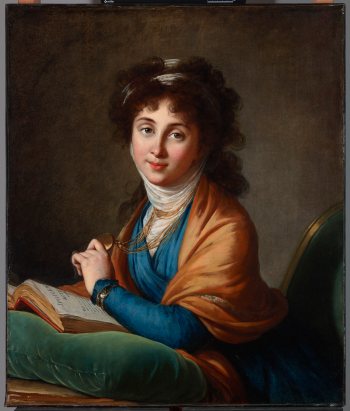
Elisabeth Louise Vigée-Lebrun, Portrait of Natalia Zakharovna Kolycheva, née Hitrovo, 1799, oil on canvas (lent by the Michael L. Rosenberg Foundation, 29.2004.13).
Spanning Europe from the late 18th through mid-20th centuries, the women artists featured in this exhibition worked at a time when prestigious art schools, exhibition venues, and commercial outlets were primarily reserved for their male counterparts. Drawn primarily from the DMA’s permanent collection, this special presentation features paintings and works on paper by artists including Elisabeth Vigée-Lebrun, Rosa Bonheur, Eva Gonzalès, Käthe Kollwitz, Gabriele Münter, and more. Although their artwork cannot be characterized by a single style, viewpoint, or technique, these artists are united by the challenges they faced in pursuing professional careers.
Underlying women’s exclusion was the widely held belief that they were biologically incapable of the intellectual and manual skills necessary to produce great art. Banned from studying the live nude model until the late 1800s, they were prevented from receiving the training necessary for depicting historical or religious subjects that glorify the human form. Instead, women were encouraged to focus on the less significant fields of portraiture, genre, and still life, and to practice drawing, pastel, and watercolor rather than oil painting. Despite this discrimination, the number of professional women artists grew rapidly from the 1850s onward. The triumph of modern art movements over traditional academic styles resulted in more opportunities for equality in the arts in the 20th century.
Women Artists in Europe from the Monarchy to Modernism, on view through June 9, 2019, is organized by the Dallas Museum of Art and curated by Nicole R. Myers, The Lillian and James H. Clark Curator of European Painting and Sculpture. The exhibition can be seen for free as part of the Museum’s general admission policy.










 Enfilade
leave a comment