New Book | Venetian Drawings
On this day (12 May) in 1797, Ludovico Manin, the last doge of Venice—in response to Napoleonic aggression—formally abolished La Serenissima after 1,100 years of existence. Notice of this SMK catalogue seems like a fine way to mark the anniversary. I didn’t provide a posting here at Enfilade when it was initially published in 2018, but copies are still available. Thomas Dalla Costa’s review of it appears in the current issue of Master Drawings (2021, volume 59, issue 1); it also was reviewed by Jörg Zutter for The Burlington in December 2019. –CH
Chris Fischer, Venetian Drawings: The Royal Collection of Graphic Art (Copenhagen: Statens Museum for Kunst, 2018), 339 pages, ISBN 978-8775510719, 300 Danish Kroner (DKK), or about $50.
 This catalogue is the first publication of all the Venetian drawings in the Royal Collection of Graphic Art at the National Gallery of Denmark (Statens Museum for Kunst). Few of these drawings have ever been published, and only a handful has been shown to the public within living memory. Research in connection with this catalogue has revealed that not only is the number of drawings from this geographic area surprisingly high, but the quality of the drawings is stupendous, counting some of the most beautiful sheets in the collection. Furthermore, the comprehensiveness of this part of the collection has proved extraordinary with very even coverage of the development of draughtsmanship in Venice and the Venetian mainland from the 1480s, when sketching on paper became common, through the lesser-known 17th century to the fall of the Venetian republic in 1797. The catalogue presents more than 200 fine drawings by Vittore Carpaccio, Moretto da Brescia, Domenico Campagnola, Jacopo Bassano, Paolo Farinati and Paolo Veronese, large groups of studies by Palma Giovane and Antonio Vassilacchi called Aliense, as well as sheets by 18th-century draughtsmen such as Giovanni Antonio Pellegrini, Gaspare Diziani, Giovanni Battista Tiepolo and his son Domenico, Francesco Fontebasso, Francesco Guardi, and Giovanni Battista Piranesi.
It is available at the SMK Shop, and can be ordered in Danish bookstores and webshops such as Academic Books, Bog & Idé, Bogreolen, Buuks, Gucca, I Music, Plusbog og Saxo.
Online Workshop | Viewing Topography Across the Globe, Indigeneity
From The Lewis Walpole Library:
Viewing Topography Across the Globe Series, Workshop II: Indigeneity
Online, The Lewis Walpole Library, 13–14 May 2021
Organized by Cynthia Roman and Holly Schaffer
Topography, from topos, is the practice of describing place through language, the features of the land, the inhabitants, and the accumulation of history. Specific to locality and the perspective of the person delineating, describing, or collecting materials, topography counters the worldliness of geography while also offering a potential tool to multiply singular approaches.
In this second workshop in the series Viewing Topography Across the Globe, we will consider approaches to place from Indigenous and European perspectives and interrogate the frame of ‘topography’ in global contexts (the first workshop was held at Brown on 11 December 2019). In two half-day virtual sessions, we will focus on topographical practices in the Americas as well as South and Southeast Asia and the Pacific Ocean as well as how the materials of art-making both locate and disrupt notions of place. We will hear from artists and academics, work with colonial-era paintings, Indigenous objects, mapping, and literature, and consider Indigenous pedagogy.
The workshop, which will take place via Zoom, has been organized by Cynthia Roman (The Lewis Walpole Library, Yale University) and Holly Schaffer (Brown University). Details, including abstracts for each talk, are available as a PDF file here. Please note that registration is required for each day’s sessions (links are available below).
Keynote Speakers
• Cannupa Hanska Luger
• Douglas Fordham
◊ ◊ ◊ ◊ ◊
T H U R S D A Y , 1 3 M A Y 2 0 2 1
Register here»
10.00 Panel 1: The Americas
• Barbara E. Mundy (Fordham University), Indigenous Bodies and Topographical Imagination
• Emmanuel Ortega (University of Illinois at Chicago), Local vs. Universal Knowledge: Locating Place in von Humboldt’s Picturesque
• Robbie Richardson (Princeton University), Sucker-fish Writings: Indigenous Inscription and the History of Written Language in the 18th Century
• Heather V. Vermeulen (Wesleyan University), Sybil / Spider / Sibyl: On Anancy*ness, Archives, and Spider Space
12.00 Lunchtime Keynote Talk
Moderated by Marina Tyquiengco (Boston Museum of Fine Arts)
• Cannupa Hanska Luger (Artist), Artist as Social Engineer
F R I D A Y , 1 4 M A Y 2 0 2 1
Register here»
10.00 Panel 2: South, Southeast Asia, and the Pacific Ocean
• Jinah Kim (Harvard University), Beyond Human Vision: Knowing Angkor Wat through Topography, from a Watercolor Map to LIDAR Capture
• Dipti Khera (New York University) and Debra Diamond (Freer Gallery of Art and Arthur M. Sackler Gallery, Smithsonian Institution), Unexplored Terrains: Topography, Temporality, and Emotion in 18th-Century Udaipur
• Kailani Polzak (University of California, Santa Cruz), Rising from the Ocean: Perspectives of Land and Watercraft during Cook’s Third Voyage
• Ayesha Ramachandran (Yale University), Topographies of Battle: The National War Memorial, New Delhi
• Garima Gupta (Artist and Researcher) and Chitra Ramalingam (Yale Center for British Art), Anxieties of a Bazaar: Making of Commodities in Colonial South and Southeast Asia
12.00 Lunchtime Keynote Talk
Moderated by Tim Barringer (Yale University)
• Douglas Fordham (University of Virginia), Techniques of the Imperial Observer: How Aquatint Travel Books Taught Britons to See
Napoleon Two Centuries Later

Two centuries after his death (the anniversary of which arrived last week on May 5), Napoleon’s legacy remains combustible. From the Musée de l’Armée:
Napoléon n’est plus / Napoleon Is No Nore
Musée de l’Armée Invalides, Paris, 31 March — 31 October 2021
The death of Napoleon I on 5 May 1821—although it went relatively unnoticed in the eyes of the world—was extremely well documented by his companions in exile. Despite the abundance of memories, letters, sketches, relics, and stories, this history nevertheless includes grey areas, uncertainties, contradictions. In this exhibition, we examine the major themes surrounding the death of Napoleon by changing the perspectives. By calling in new scientific disciplines (archaeology, medicine, chemistry) in order to complete already known historical sources and material evidence of this history, the musée de l’Armée provides visitors with all the necessary elements to enable them to conduct the investigation by themselves.
This exhibition is part of the 2021 Napoleon Season organised to celebrate the bicentenary of the Emperor’s death. The musée de l’Armée will present a rich and varied cultural offering evoking the end of Napoleon’s personal adventure, while opening up to the topicality and the current reality of his legacy to the world. . . .
Napoléon n’est plus (Paris: Gallimard, 2021), 296 pages, ISBN: 978-2072931604, 35€.
From the Musée de l’Armée:
Napoleon? Encore!
Musée de l’Armée Invalides, Paris, 7 May 2021 — 13 February 2022
Curated by Éric de Chassey and Julien Voinot
This contemporary art tour evokes the figure of Napoleon as well as his legacy. Thirty contemporary artists received carte blanche to question this symbolic and historical figure.
Echoing the commemorations of the bicentenary of the death of the Emperor, the musée de l’Armée is presenting, for the first time in its history, a contemporary art tour at Les Invalides. The presentation of pre-existing works and specially commissioned orders entrusted to renowned or emerging artists, from France and abroad, evokes the figure of Napoleon as well as the impact of his action in today’s world. Presented in conjunction with the exhibition Napoleon Is No More, the curation of this contemporary tour was entrusted to Éric de Chassey, Director of the Institut National d’Histoire de l’Art, and Julien Voinot, Collections Manager in the Department of 19th-Century and Symbolic Art of the musée de l’Armée.
◊ ◊ ◊ ◊ ◊
From The New York Times:
Roger Cohen, “France Battles over Whether to Cancel or Celebrate Napoleon,” The New York Times (5 May 2021). President Emmanuel Macron laid a wreath at the emperor’s tomb on the 200th anniversary of his death, stepping into a national debate over the legacy of Napoleon.
Jacques Chirac couldn’t stand him. Nicolas Sarkozy kept his distance. François Hollande shunned him. But on the 200th anniversary this week of Napoleon Bonaparte’s death, Emmanuel Macron has chosen to do what most recent presidents of France have avoided: honor the man who in 1799 destroyed the nascent French Republic in a putsch.
By choosing to lay a wreath Wednesday at Napoleon’s tomb under the golden dome of Les Invalides, Mr. Macron stepped into the heart of France’s culture wars. Napoleon, always a contested figure, has become a Rorschach test for the French at a moment of tense cultural confrontation.
Was Napoleon a modernizing reformer whose legal code, lycée school system, central bank and centralized administrative framework laid the basis for post-revolutionary France? Or was he a retrograde racist, imperialist, and misogynist?
By paying his respects to Napoleon, Mr. Macron will please a restive French right dreaming of lost glory and of a moment when, under its turbulent emperor, France stood at the center of the world. The French obsession with the romantic epic of Napoleon’s rise and fall is undying, as countless magazine covers and talk shows have underscored in recent weeks. But in the current zeitgeist, Napoleon’s decisive role as founder of the modern French state tends to pale beside his record as colonizer, warmonger and enslaver. . . .
The full article is available here»
◊ ◊ ◊ ◊ ◊

Rendering from Pascal Convert of his Memento Marengo as envisioned at Les Invalides in Paris.
◊ ◊ ◊ ◊ ◊
From Apollo Magazine:
Laura O’Brien, “The Celebrity Horse That’s Putting Napoleon in the Shade,” Apollo Magazine (6 May 2021).
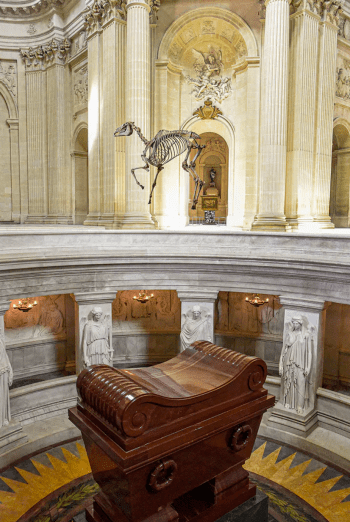 On a cold December day in 1840, Napoleon Bonaparte’s body made its final journey through the streets of Paris for reburial at the Dôme church at Les Invalides. Nineteen years after his death on Saint Helena, on 5 May 1821, the former emperor’s remains had been repatriated to France. The procession to Les Invalides included a lone, riderless white horse. In the emotionally charged atmosphere of that day, some witnesses even believed for a moment that this was the emperor’s most famous mount: Marengo.
Now, 200 years after Napoleon’s death, Bonaparte and Marengo are to be reunited, albeit temporarily. As part of Napoleon? Encore!, an exhibition of contemporary art responding to Napoleon’s image and complex legacies [on view from 7 May 2021 to 13 February 2022], the French multimedia artist Pascal Convert has created Memento Marengo: a life-sized, 3D-printed copy of the skeleton of the Arab horse said to have been Napoleon’s favourite—or one of his favourites, at least. Convert had originally hoped to use the real skeleton, which is usually on display at London’s National Army Museum, but its fragility made this impossible. Memento Marengo will hang from the ceiling of the Dôme church, the equine skeleton suspended a few metres above the enormous red quartzite tomb of its ex-master. On 5 May, President Emmanuel Macron placed a wreath of red, white, and blue flowers at the foot of the tomb, as part of the official commemorations—not celebrations, as the Élysée Palace has carefully insisted—of Napoleon’s death. Memento Marengo was not in place during the solemn ceremonies at Les Invalides, but with these now completed, the artwork can be installed ahead of the planned reopening of the museum later this month. . . .
The full article is available here»
Exhibition | Vicereines of Ireland
Opening at the end of this month in the State Apartment Galleries at Dublin Castle:
Vicereines of Ireland: Portraits of Forgotten Women
Dublin Castle, 31 May – 5 September 2021 (dates subject to Covid-19 restrictions)
Curated by Myles Campbell
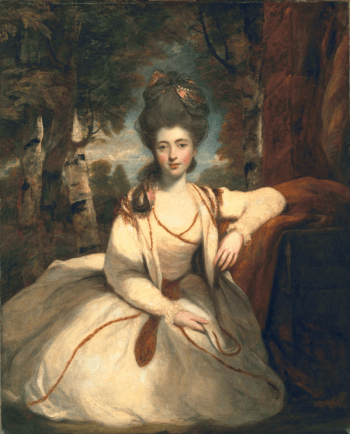
Joshua Reyolds, Frances Molesworth, later Marchioness Camden, 1777, oil on canvas, 56 × 45 inches (San Marino: The Huntington Library, Art Museum, and Botanical Gardens).
Fabrics shimmer, flowers blossom, and pearls glint in the painted world of the vicereines of Ireland. But who were the women behind these genteel portraits? Discover their untold story in this landmark exhibition.
As the wives of Ireland’s viceroys, the vicereines were once the fashionable figureheads of social and cultural life at Dublin Castle. Often sympathetic but sometimes apathetic, their attitudes and activities offer fresh insights into the workings of the British administration in Ireland. Campaigns to develop hospitals, relieve poverty, promote Irish fashions, and, in some cases, mitigate what they described as the injustices of British rule in Ireland, are just some of their overlooked initiatives. Featuring works by masters such as Sir Joshua Reynolds, Thomas Gainsborough, John Singer Sargent, and Sir John Lavery, together with intimate personal objects, this exhibition shines a light on these activities to create new and illuminating portraits of forgotten women.
The exhibition is curated by Dr Myles Campbell, Research and Interpretation Officer, Dublin Castle. Lending institutions include the National Gallery of Ireland, National Trust, Royal Collection Trust, Trinity College Dublin, and Chatsworth House.
◊ ◊ ◊ ◊ ◊
From the Irish Academic Press:
Myles Campbell, ed., Vicereines of Ireland: Portraits of Forgotten Women (Dublin: Irish Academic Press, 2021), 328 pages, ISBN: 978-1788551335, €35 / $45.
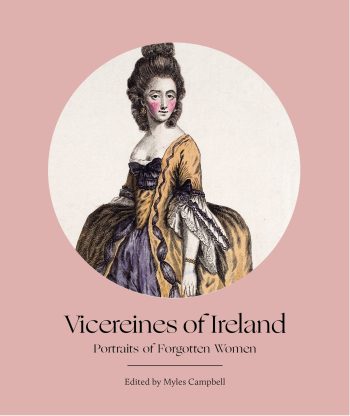 By exploring previously unknown or rarely seen artworks by prominent Irish and British artists of the eighteenth and nineteenth centuries, Vicereines of Ireland tells the untold story of the women who were the faces of the British administration in Ireland. Featuring essays by leading scholars and based on original sources, including diaries and letters, this beautifully illustrated book brings together text and image to create new and illuminating portraits of forgotten women.
Myles Campbell is now Research and Interpretation Officer (Curator) for the Office of Public Works at Dublin Castle, where he has curated several exhibitions. In 2017 he was co-editor of Making Majesty: The Throne Room at Dublin Castle, A Cultural History (Irish Academic Press), research for which earned him the inaugural George B. Clarke Prize.
C O N T E N T S
Foreword by Mary Heffernan, OPW
Editor’s Introduction
1 ‘The Goverment of the Familie’: The First Duchess of Ormonde’s Understanding of the Role of Vicereine ~ Naomi McAreavey
2 ‘That Caballing Humour, which has Very Ill Effects’: Frances Talbot, Jacobite Duchess of Tyrconnell and Vicereine of Ireland ~ Frances Nolan
3 ‘She Made Charity and Benevolence Fashionable’: Mary, Marchioness of Buckingham, Vicereine of Ireland ~ Janice Morris
4 ‘An Admirable Vice-Queen’: The Duchess of Rutland in Ireland, 1784–87 ~ Rachel Wilson
5 ‘A Subject for History’: Maria, Marchioness of Normanby as Vicereine of Ireland, 1835–39 ~ Myles Campbell
6 Lacing Together the Union: How Theresa, Marchioness of Londonderry’s Unionist Endeavours were at the Heart of her Viceregal Tenure in Ireland, 1886–89 ~ Neil Watt
7 ‘One of the Sincerest Democrats of her Caste’: Lady Ishbel Aberdeen’s Crusade against Tuberculosis in Ireland ~ Éimear O’Connor
Online Talk | Alec Cobbe, Birds, Bugs and Butterflies
Tomorrow, from The Decorative Arts Trust:
Recounting the Life of the ‘Peacock’ Worcester Service (1763)
Alec Cobbe, joined with Leslie Fitzpatrick
Online, Monday, 10 May 2021, 1.00pm (ET)
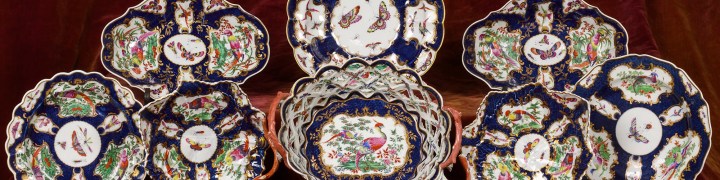
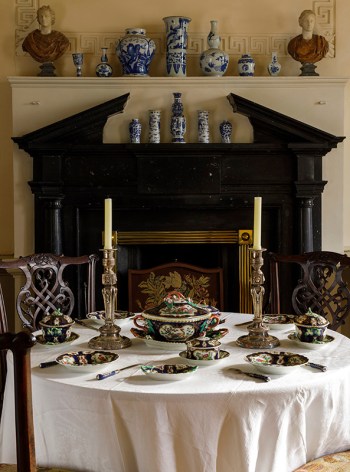
Join us as we learn about some incredible ceramics from Ireland with artist, designer, and collector Alec Cobbe. Alec will share an illustrated talk about the creation, dispersal, and recovery of the ‘Peacock’ Worcester service of 1763, the largest mid-18th-century service recorded from any British porcelain manufacturer. Thomas and Lady Betty Cobbe of Newbridge House, County Dublin, acquired the service after becoming acquainted with Dr. Wall’s porcelain factory in Worcester as they traveled from Dublin to Bath.
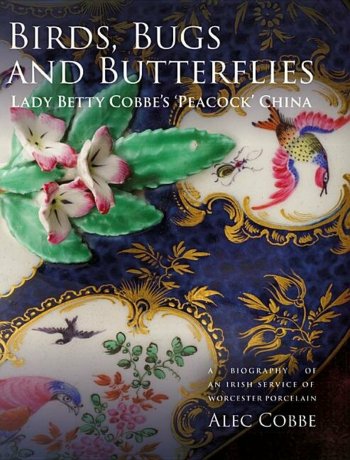
 This lecture features scholarship that is part of a recent publication and exhibition Birds, Bugs and Butterflies: Lady Betty Cobbe’s ‘Peacock’ Worcester Porcelain composed by Alec and shown at Dublin Castle (October 2019 to February 2020).
After his presentation, Alec will be joined in conversation with Leslie Fitzpatrick, who previously served as the Samuel and M. Patricia Grober Associate Curator of European Decorative Arts at the Art Institute of Chicago.
This program is dedicated in memory of Christopher Monkhouse, a recipient of the Decorative Trust’s Award of Merit, whose extraordinary 2015 exhibition and publication Ireland: Crossroads of Art and Design, 1690–1840 continue to serve as a testament to the incredible material culture of Ireland.
Participants will receive an email with the event link after registering. If you have any questions about this or other programs, please email carrie@decorativeartstrust.org.
Registration is available here (pay what you can)
◊ ◊ ◊ ◊ ◊
From Boydell and Brewer:
Alec Cobbe, Birds, Bugs and Butterflies: Lady Betty Cobbe’s ‘Peacock’ China: A Biography of an Irish Service of Worcester Porcelain (London: Boydel Press, 2019), 143 pages, ISBN: 9781783274727, £45 / $80.
A major contribution to our knowledge of the Worcester porcelain factory in its early years, based on a single large and elaborate dinner service commissioned by an Irish family.
 2020 Winner of the American Ceramic Circle Book Award
The early years of the famous Worcester porcelain factory established by Dr Wall have always been a little mysterious, owing to the destruction of the records of the business for this period. Alec Cobbe’s discovery of family papers listing the purchases over a period of years of a particularly beautiful and ornate table set have enabled him to give a vivid glimpse of how the factory interacted with its customers. He is able to describe the commissioning of perhaps the largest service of first period Worcester porcelain on record by Thomas and Lady Betty Cobbe for Newbridge House Co. Dublin. It was bought in stages from 1763 as the family travelled from Dublin to Bath each year, stopping at Worcester en route, as other Irish gentry did. The Cobbe service, uniquely in the context of British porcelain, was accompanied by a full set of Irish silver and steel cutlery fitted with Worcester porcelain handles matching the service. The various pieces of porcelain and their historical context are described as well as their painted decoration, and the sources for it. The later history of the service is outlined and its gradual dispersal in the nineteenth century, culminating in a final sale of the remaining pieces lot by lot in a Christie’s sale in 1920. This book celebrates Cobbe’s reassembly of more than 160 pieces of the original service over a period of more than thirty years and their return to Newbridge following their exhibition in the State Apartments at Dublin Castle. Overall, the book gives an important insight into Irish social life and patronage in the mid-eighteenth century.
Alec Cobbe was born in Ireland and still resides in Newbridge House, Co. Dublin, where his ancestors have lived since it was built in the middle of the eighteenth century. He practises as an artist and designer. As a passionate collector, he added to his family’s historic collections and assembled the world’s largest group of composer-owned keyboard instruments.
C O N T E N T S
Foreword
Preface and Acknowledgements
Beginnings
‘Snuff for Dr Walls’: The Cobbes in Worcester and London
Plans for Collecting and Entertaining
The Peacock Service and Its Cutlery
The Decoration of the Original Peacock Service
The Service through Later Centuries, Sale, and Reassembly
Appendices
I. Transcripts from Worcester and Cobbe archives, accounts, and inventories
II. Hypothetical tally of the original Peacock Service
III. Transcript of Christie’s 1920 sale catalogue
IV. Known destinations of Cobbe pieces
V. A note on the nomenclature of Worcester porcelain pieces
VI. Inventory of Worcester blue-scale porcelain from the original service and re-assembled pieces in Lady Betty’s pattern of birds, insects, and butterflies
Call for Papers | American Popular Graphic Arts, Yesterday and Today
From The Library Company of Philadelphia:
Collecting, Curating, and Consuming American Popular Graphic Arts Yesterday and Today
The Library Company of Philadelphia, 25 March 2022
Proposals due by 2 August 2021
A symposium held in conjunction with the exhibition Imperfect History: Collecting the Graphic Arts Collection at Benjamin Franklin’s Public Library in commemoration of the fiftieth anniversary of the Graphic Arts Department at the Library Company of Philadelphia
In 1876, during the exhibition in Philadelphia in honor of the 100th anniversary of the birth of the republic, Philadelphia Evening Telegram art critic John V. Sears noted, “in Philadelphia today, the scion of art culture … has taken deep root in the homes of the people … Not so cosmopolitan as New York, nor so thoroughly local in character as Boston, Philadelphia represents American institutions and the progress of American civilization more perfectly than any other of our older cities ….”
Today, nearly one hundred and fifty years later, Philadelphia and the country inhabit a world in which our “art culture” is influenced and inspired by rhetoric and current events challenging our perception, trust in, and inherent understanding of what we see in our daily lives, and in public and private spaces. In this climate, creators, stewards, and collectors of fine and popular art representing and documenting American civilization have begun to question and address their role in a conflicted and diverse democratic society in a tenuous condition. How can a public library founded by Benjamin Franklin and with significant holdings of historical and popular American graphic arts confront this critical period in the history of our country’s evolving democratic principles and art culture?
In response to this salient question and to commemorate the fiftieth anniversary of the establishment of the Graphic Arts Department, the Library Company will display Imperfect History: Curating the Graphic Arts Collection at Benjamin Franklin’s Public Library, September 20, 2021 – April 8, 2022. Imperfect History explores the development of the Library’s graphics art collection as it relates to historical and cultural biases within American history. The exhibition is a candid exploration of the evolution of American graphic arts curatorship and collections in one of the oldest cultural institutions in the country. The Library’s graphic arts collection, including prints, photographs, original works of art, and ephemera primarily dated between the late 18th and mid-20th-century is vital to the understanding of the nation’s complex visual history.
Collecting, Curating, and Consuming American Popular Arts Yesterday and Today continues the conversation started through Imperfect History. The symposium seeks to examine changing and innovative directions in how historical popular graphic art (i.e., art not traditionally classified as fine art, that is representative of popular culture, and/or is mass produced and consumed) is curated, interpreted, and used and understood by those who produced, viewed, and consumed it. Collecting, Curating, and Consuming asks how does historical American popular graphic art act as a mirror, bridge, and barrier in facilitating our visual conceptions of our past and present?
We invite proposals for twenty-minute papers that will foster broad and interdisciplinary discussions about historical American popular graphic arts collected by individuals or institutions; the evolving meaning of the term curator; (un)conscious bias in the creation, collection, and curation of popular graphic arts; and the contemporary and historicized role of the visual consumer of mass-produced art. Submissions from a wide range of scholars, practitioners, and specialists are encouraged. We seek proposals from art historians, historians, artists, curators, conservators, emerging scholars, and other voices within the humanities, arts, and cultural communities.
Possible topics might include:
• Popular graphic art collectors and/or their collections
• History and evolution of the institutional role of the curator of American graphic arts
• Visual literacy and an engaged citizenry
• Politics of art
• Digital humanities projects based on popular graphic arts collections
• Remediation projects in the description and access of visually harmful historical graphic arts in institutional collections
• Art libraries and libraries of art
• Racialized/Black/gendered/queer gaze
Proposals should include an abstract of no more than 300 words and a two-page CV or resume. Joint proposals and illustrated proposals are welcome. Please email your proposals with the subject line “IH 2022” as a Word or PDF document to epiola@librarycompany.org. Submissions should be received by Monday, August 2. Selected participants will be notified via email by early October 2022. Any questions may be directed to Erika Piola epiola@librarycompany.org.
Call for Papers | Glass in the Atlantic World
From the Call for Papers:
Glass in the Atlantic World during the Long 18th Century
59th Annual Seminar on Glass
Online, Corning Museum of Glass, Corning, New York, 8–9 October 2021
Proposal due by 1 June 2021
 The Corning Museum of Glass is pleased to announce its 59th Annual Seminar on Glass, presented in conjunction with the exhibition In Sparkling Company: Glass and the Costs of Social Life in Britain during the 1700s, on view at the Museum from 22 May 2021 until 3 January 2022. For the first time, the Annual Seminar on Glass will take place virtually, on Friday, 8 October, and Saturday, 9 October 2021.
We invite sparkling minds from all backgrounds to submit abstracts for papers that offer diverse and multidisciplinary perspectives on glass in the Atlantic World during the long 18th century.
Broad topics might include:
· science, innovation, and travel
· trade networks
· architecture and interiors
· cultural reception
· beads and beadmaking
· collecting and display
· fashion and personal adornment
· colonization, enslavement, and resistance
Papers will be pre-recorded and made available to registrants before the event. Presenters will be invited to participate in one of three live panel discussions on 9 October 2021. Each moderated panel discussion will address a particular theme common to the papers in question, and will last 45 minutes with the opportunity for Q&A.
We hope that this event will offer a unique foray into the many approaches we might take in understanding glass within the time and places it was designed, made, marketed, consumed, and valued. Papers will be published in digital proceedings in early 2022.
For selected papers, we are pleased to offer an honorarium of $200, a complimentary copy of the exhibition publication In Sparkling Company: Reflections on Glass in the 18th-Century British World, and access to both days of the seminar. To submit a proposal, please send a 250-word abstract and abbreviated resume to seminar@cmog.org.
◊ ◊ ◊ ◊ ◊
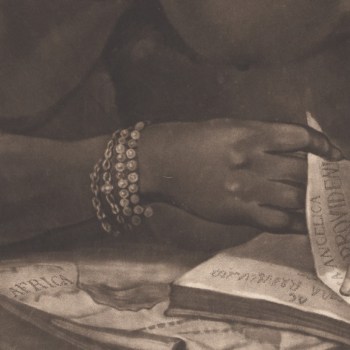
W. Pyott after Carl Frederick van Breda, The Benevolent Effects of Abolishing Slavery, or the Planter Instructing his Negro, detail, 1792 (Yale Center for British Art, B2010.14). More information»
Important Dates for Presenters
Friday, 11 June
Selected speakers will be notified.
Friday, 25 June
Approve abstract for publication and submit short bio (150 words) with headshot. This material will be made available on the seminar webpage and through institutional social media promotions.
Monday, 6 September
Submit a 20-minute pre-recorded paper with transcript (without footnotes). Your paper will be reviewed by the panel moderators for discussion points and made available for asynchronous viewing by registrants no less than one week before the live event. We assume that speakers have the necessary software and capabilities to record their illustrated paper. However, please let us know if you require assistance and we will be happy to help. We will use your transcript to make your paper accessible through subtitles. Please indicate slide breaks.
Saturday, 9 October
Participation in one live panel discussion. Selected papers will be grouped according to common themes. Live panel discussions will be held on Saturday, October 9, and hosted by a moderator who will facilitate discussion. All panel discussions will take place live between 10am and 4pm EDT. This event will be recorded.
Monday, 22 November
Submit manuscript and 5–10 figures with permissions for publication in proceedings. Papers will be published in a digital proceedings.
Online Seminars | Sartorial Society Series, Summer 2021

I’ve included here a selection of talks most relevant to the 18th century, but the whole series looks terrific.–CH From the Sartorial Society Series:
Looking Back: The Historicisms, Hauntings, and Heritage of Dress
Sartorial Society Series, Summer Semester 2021
A digital seminar series exploring the history of dress, fashion, and bodily adornment.
“The past has to be taken apart. Old themes are worn as new details.” –Judith Clark
When introduced to histories of dress, we are often met with timelines of fashion that imply a neat, progressive evolution of fashionable styles through the years. Clothing is framed as an index to history. Yet dress does not conform to an orderly chronology. It is full of disruptive reverberations, re-interpretations, and revivals. The fashions of the past are repeatedly dismantled and reimagined, sending sartorial echoes through time.
The historic resonance of dress can also carry an emotional weight on a personal level. Clothes can serve as welcome memories of loved ones, or less-welcome spectres of the past. Memories of clothes can be deeply nostalgic, while the garments not-worn can serve as ‘sliding-door’ moments, causing us to dwell on the parallel lives we did not live or bodies unlike our own. This has been explored, for example, by Shahidha Bari, who describes “spectral visions of ourselves [that] haunt these garments like all things that are romanticised and never realised.”
Dress maintains its capacity to ‘haunt’ in the setting of the museum or archive. Elizabeth Wilson described museums of dress as ‘mausoleums of culture’: haunted and eerie. She stated that ‘there are dangers in seeing what should have been sealed up in the past. We experience a sense of the uncanny when we gaze at garments that had an intimate relationship with human beings long since gone to their graves.’ Carol Tulloch has written of the power of archives to access personal fashion histories that may otherwise have been lost, suggesting that: “archives enable a lived experience to be revived and reassessed time and time again.”
The Sartorial Society Series is organised by a group of dress historians and curators with the aim of celebrating the diverse, innovative, and excellent research emerging in the field of dress history. We want to create a space that welcomes and supports dress historians from all backgrounds, and fosters positive connections within our field. The series will encourage collegiality and will be an open, inclusive, and friendly space to meet others interested in dress history. We encourage BYO wine, tea or soft drink of choice and invite you to join the post-talk Q&A.
All sessions are held on Thursday evenings at 6pm UK time (BST/GMT). Most talks are 20 minutes; some are 10 minutes. Registration links are available here.
◊ ◊ ◊ ◊ ◊
Week 1 | Nostalgia and Nationalism
20 May 2021
• Cecilia Gunzburger, French Revolutionary Dress in the Bourbon Restoration: The Political Uses of Historic Dress
• Sabine Wieber, Vienna’s 1879 Festzug and the Habsburg Empire’s ‘Glorious’ Past
• Alison Toplis, An Exploration of the Smock as a Nostalgic Spectre of Rural England
◊ ◊ ◊ ◊ ◊
Week 3 | Reconstruction and Reproduction
10 June 2021
• Amber Pouliot, Serena Partridge’s ‘Accessories’ Collection for the Brontë Parsonage Museum: Haunting the Heritage Context
• Jordan Mitchell-King, Reanimating Dress: Interpreting Historical Clothing through Experimental Wearing
• Cynthia Chin Kirk, ‘I Am Only Fond of What Comes from the Heart’: Memory and Trauma in Martha Washington’s Purple Silk Gown
◊ ◊ ◊ ◊ ◊
Week 4 | Performance and Performativity
24 June 2021
• Ella Hawkins, The Time is Out of Joint: ‘Haunted’ Costuming at Shakespeare’s Globe
• Hilary Davidson, Looking Back Through Fashion: Regency Romanticisms
• Anouska Lester, ‘Item, One Ghost’s Crown’: Haunting and Loss in Philip Henslowe’s 1598 Theatrical Inventories
◊ ◊ ◊ ◊ ◊
Week 7 | Historicism, Revival, and Re-Use
29 July 2021
• Serena Dyer, Sartorial Chronology and Fashionable Anachronism: Historicism, Temporality, and the Making of Dress Histories
• Sarah Hodge, A Fancy for the Past: Historical Style in Britain, 1800–1851
• Ruby Hodgson, Robe a la Grand-Mere: Re-Use of 18th-Century Silk in Romantic Era Dress
• Jane Hattrick, Queering the Hartnell Crinoline: Reinventing Second Empire French Fashions, Fantasy, Gender Performativity, and the Royal Body
New Book | Sapphic Crossings
From the U. of Virginia Press:
Ula Lukszo Klein, Sapphic Crossings: Cross-Dressing Women in Eighteenth-Century British Literature (Charlottesville: University of Virginia Press, 2021), 258 pages, ISBN: 978-0813945507 (cloth), $95 / ISBN: 978-0813945514 (paper), $33 / ISBN: 978-0813945521 (ebook), $25.
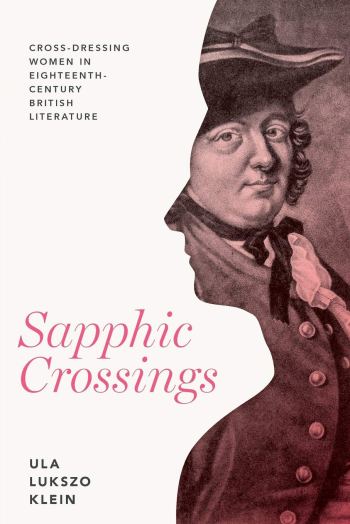 Across the eighteenth century in Britain, readers, writers, and theater-goers were fascinated by women who dressed in men’s clothing—from actresses on stage who showed their shapely legs to advantage in men’s breeches to stories of valiant female soldiers and ruthless female pirates. Spanning genres from plays, novels, and poetry to pamphlets and broadsides, the cross-dressing woman came to signal more than female independence or unconventional behaviors; she also came to signal an investment in female same-sex intimacies and sapphic desires. Sapphic Crossings reveals how various British texts from the period associate female cross-dressing with the exciting possibility of intimate, embodied same-sex relationships. Ula Lukszo Klein reconsiders the role of lesbian desires and their structuring through cross-gender embodiments as crucial not only to the history of sexuality but to the rise of modern concepts of gender, sexuality, and desire. She prompts readers to rethink the roots of lesbianism and transgender identities today and introduces new ways of thinking about embodied sexuality in the past.
Ula Lukszo Klein is Director of Women’s and Gender Studies at the University of Wisconsin–Oshkosh.
C O N T E N T S
Acknowledgments
Introduction: Imagining Sapphic Possibility
1 Eighteenth-Century Female Cross-Dressers and Their Beards
2 Sapphic Breasts and Bosom Friends
3 Pentetrating Discourse and Sapphic Dildos
4 Putting on Gender, One Leg at a Time
Coda: Future Crossings
Notes
Bibliography
Index
Online Conference | Reimagining the Court Portrait, 1500–1800
From CRASSH at Cambridge:
Dressing a Picture: Reimagining the Court Portrait, 1500–1800
Online, CRASSH, University of Cambridge, 6–7 May 2021
Organized by Ana Howie and Alessandro Nicola Malusà

Juan Pantoja de la Cruz, Portrait of Doña Ana de Velasco y Girón, Duchess of Braganza, 1603 (Alicia Koplowitz Collection).
As Ulinka Rublack asserts in Dressing Up, her seminal book on dress in early modern Europe, society was extremely dress-literate and nowhere more so than in the courtly environments that generated and fuelled fashion. Within these sartorially-minded elite communities, one was constantly on display. Capturing dressed sitters in paint for prosperity, portraiture was a unique vehicle for the inherent dialectic in clothing between subject and observer, and presentation and perception. As such, this conference will examine three themes surrounding early modern portraiture: the artist, the depicted material culture and the setting for its iconographic display, that is the court. We aim to examine these connections via the prism of the period’s intricate social stratification and complex gender power dynamics. To provide sufficient breadth, the conference will present papers dealing with material between 1500 and 1800.
Considering the interdisciplinary nature of our project—spanning history, dress studies, art theory, gender history, court studies and architectural history—we believe that our conference will generate exciting contributions from leading international scholars. This conference will meaningfully contribute to the wider scholarly debate on the significance of early modern portraiture as pivotal sources for numerous branches of historical research and not just art history. Our conference will both firmly enable this discussion and bring attention to this burgeoning field of interdisciplinary historical studies. Registration is available here»
Keynote Speakers
• Erin Griffey (University of Auckland)
• Karen Hearn (UCL)
• Katarzyna Kosior (Northumbria University)
• Mei Mei Rado (LACMA)
• Catherine Stearn (Kentucky University)
• Cordula van Wyhe (York University)
T H U R S D A Y , 6 M A Y 2 0 2 1
All times are BST.
13.00 Welcome and Opening Remarks
13.20 Panel 1: Materialising Courtly Bodies
Chair: Holly Fletcher (University of Sussex)
• Panel Keynote — Karen Hearn (UCL), ‘Richly apparelled, and her belly laid out …’: Signalling (or not Signalling) Pregnancy in 16th- and Early 17th-Century Court Portraits
• Ana Howie (University of Cambridge), ‘White Ruff and Red Cuffs, on a Black Dress. The Negro Dressed in Yellow’: Materialising Bodies in van Dyck’s Portrait of Elena Grimaldi-Cattaneo
• Lisa Nunn (East Anglia), ‘A Hundred Times Fitter for a Barn than a Palace’: A Gendered Analysis of the Protectorate Portraits of Elizabeth Cromwell and Her Daughters
14.50 Break
15.00 Panel 2: Negotiating Gender in Early Modern Portraiture
Chair: Sophie Pitman (Aalto University)
• Panel Keynote — Catherine Stearn (Kentucky University), Countess or Queen, Countess and Queen: How Dress and Portraiture Illuminate the Role of Elizabeth I’s Privy Chamber Women
• Vanessa de Cruz Medina (Independent Scholar, former Prado Museum & Villa I Tatti Fellow), Ladies-in-Waiting and Portrait Galleries: Identity, Family, and Power at Early Modern Habsburg Courts
• Alice Blow (University of Cambridge), Gender Ambiguity in The Cobbe Portrait of Henry Wriothesley, Third Earl of Southampton, c.1590–93
16.30 Break
16.40 Panel 3: The Court Portrait: Global Considerations
Chair: Giorgio Riello (European University Institute)
• Panel Keynote — Mei Mei Rado (LACMA), Qing Imperial Portraits and Europe
• Jessica Hower (Southwestern University), Drawing an Empire: Elizabeth I, The Armada Portrait, and the Creation of a British Atlantic World
• Marina Hopkins (Warburg Institute), The Portrait of María Luisa de Toledo with Her Indigenous Companion
• Alejandro M. Sanz Guillén (Universidad de Zaragoza), Shoguns and Emperors: Representations of the Japanese Court in Europe during the 18th Century
F R I D A Y , 7 M A Y 2 0 2 1
13.10 Panel 4: The Court: A Stage for Princely Society
Chair: Caroline van Eck
• Panel Keynote — Katarzyna Kosior (Northumbria University), Defining the Royal Court in Poland-Lithuania: Some Textual Evidence From Jan III Sobieski’s Lifetime (1629–1696)
• Martina Vyskupova (Slovak National Museum), Portrait Representation of Maria Theresa as a Queen of Hungary Seated on a Horse in the Context of Period Female Equestrian Portraits in the 18th Century
• Pedro Manuel Tavares (Centro de História de Arte — CHAIA), D. Joana de Áustria, Embodiment of Political/Religious Propaganda of the Habsburg Women, Beyond the Validos Power
• Anna Lisa Nicholson (University of Cambridge), The Transfiguration of Hortense Mancini: How the Vagabond Duchess Became the Patron Saint of Brides
15.20 Break
15.30 Panel 5: The Artist Behind the Portrait
Chair: Alexander Marr (University of Cambridge)
• Panel Keynote — Cordula van Wyhe (York University), Fashioning Displaced Identities: Anthony van Dyck as Portraitist of the French Exiles
• Sarah Emily Farkas (University of North Carolina at Chapel Hill), Sibylle of Cleves: Cranach, Convention, and Clothing Identity in Lutheran Saxony
• Alessandro Nicola Malusà (University of Cambridge), The Sitter as Artist: Depicting Mourning Dress and Negotiating Authority in the Regencies of Christine of France and Marie Jeanne Baptiste of Savoy-Nemours
17.00 Break
17.30 Featured Keynote Address
Chair: Ulinka Rublack (University of Cambridge)
• Erin Griffey (The University of Auckland), ‘Beauties Silken Livery’: Dressing the Face at the Early Modern Court
18.30 Final Remarks and Thanks










 Enfilade
leave a comment