Call for Papers | French Art and the Aesthetics of Power
From the Call for Papers:
French Art and the Aesthetics of Power
Special issue of Arts, edited by Hector Reyes
Proposals due by 31 July 2026; final manuscripts due by 1 June 2027
French art looms large in the historiography of art history; its centrality is tied to the political role that France played in articulating the very idea of centralized state power for Europe more generally during the transition between the early modern and the modern age. The art of French culture, born of centralized power and encoded with cultural knowledge, has been able to sustain our collective attention, analyses, and interpretations. But as the field and the humanities have reconfigured what constitutes power and how it operates, it seems appropriate to rethink the transparency of the historical narrative that links political centralization to cultural authority to formal manifestation in art.
We invite papers that reconfigure those seemingly streamlined relations in various ways, for example: the identification of new archives that challenge our ideas about the locations or operations of power; new ideas about form, its constitution, or theorization; new ways to think about ‘experience’ as a political, social, or artistic phenomenon; new narratives of cultural patrimony; new theories or ideas of periodization; postcolonial or decolonial analyses. Together, the articles of this Special Issue will compliment and challenge the established narratives of French cultural authority while still taking seriously the artistic object that is at the heart of French patrimony’s power.
We request that, prior to submitting a manuscript, interested authors first submit a proposed title and an abstract of 200–400 words summarizing their intended contribution. Please send it to the guest editor hectorre@usc.edu or to the Arts editorial office (arts@mdpi.com). Abstracts will be reviewed by the guest editor for the purpose of ensuring proper fit within the scope of the Special Issue. Full manuscripts will undergo double-blind peer-review.
Hector Reyes
Guest Editor
Department of Art History, University of Southern California, Los Angeles
New Book | The Story of Printmaking
From Yale UP:
Holly E.J. Black, The Story of Printmaking: A Global History of Art (New Haven: Yale University Press, 2026), 272 pages, ISBN: 978-0300274080, $35.
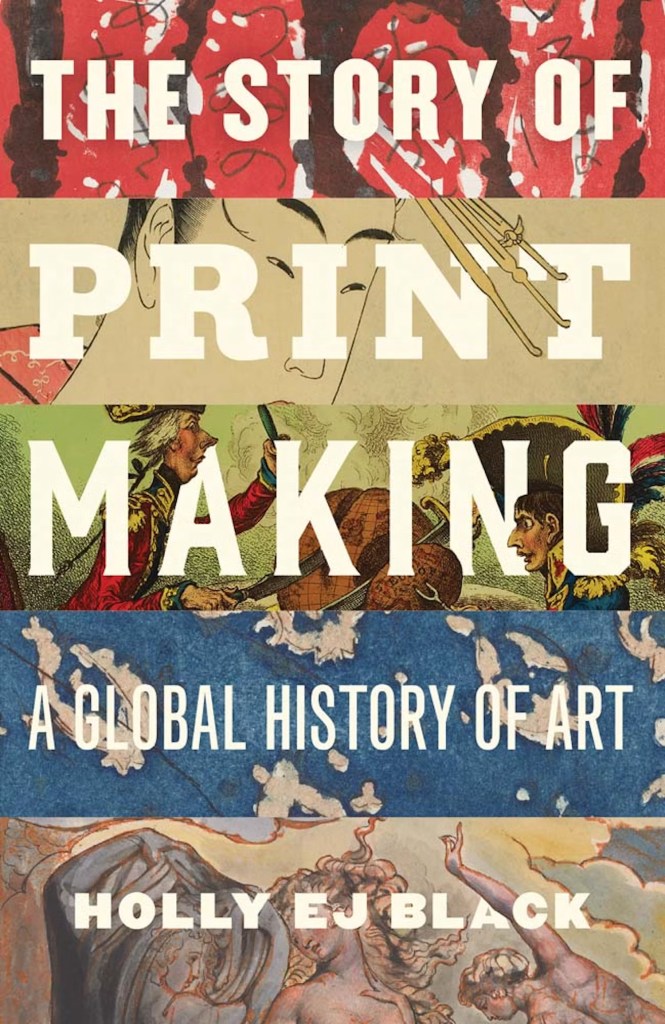 A vivid history of the evolution of printmaking as a means of creative expression, from prehistory to the present day
The significance of printmaking within the history of art is often underplayed, obscured or misunderstood. This book tells the story of artist prints from across the globe in a manner that is accessible and engaging. It demystifies how prints are made—from woodblock to etching—and explores how, throughout history, printmaking has defied easy categorisation, straddling ‘fine’ art practices and commercially minded production. In fact, it has been employed as much for creative experimentation as it has for disseminating information.
Beginning in ancient East Asia and travelling through Renaissance Europe, revolutionary Mexico, and post-Apartheid South Africa, these ten chapters celebrate the interconnected nature of the printed image and its multiple histories, while illuminating the lesser-known players who have been deliberately or erroneously overlooked. Whether formed by slicing linoleum or plunging plates into acid, then distributed via bound books or pasted posters, the print has not just replicated the world, it has shaped it.
Holly E. J. Black is a London-based journalist and contributing arts editor at The World of Interiors. Her writing has appeared in titles including The Art Newspaper, Art Review, Financial Times, House & Garden, and Wallpaper. She is the author of Artists on Art.
Symposium | Imagining Britain
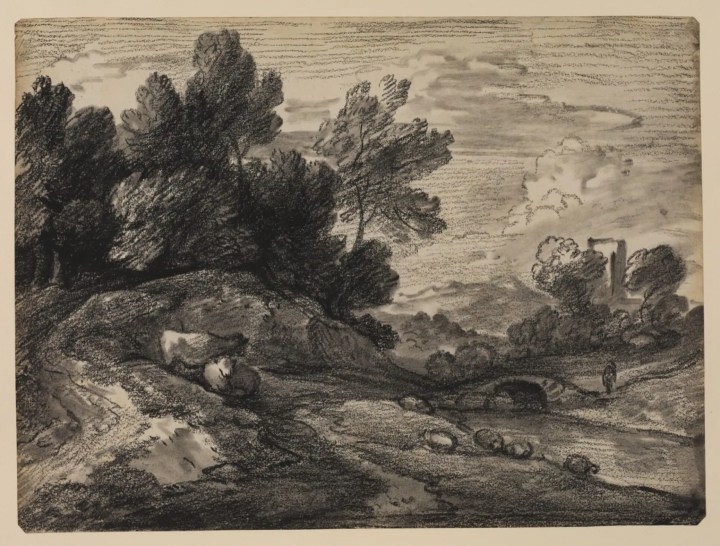
Thomas Gainsborough, Landscape with Sheep and Cattle on the Bank of a Stream, 1780–84, synthetic black chalk with stumping on wove paper, all four corners cut (London: Courtauld Gallery, Robert Clermont Witt, bequest, 1952).
◊ ◊ ◊ ◊ ◊
Upcoming at the Courtauld:
Imagining Britain: Postgraduate and Early Career Research in British and Irish Art
Courtauld, Vernon Square Campus, London, 9 June 2026
Organized by Claire Ó Nualláin and Clara Shaw
A decade on from the inaugural provocation of British Art Studies Volume I, published in November 2015, in which art historians responded to the statement, “There’s No Such Thing as British Art,” a significant aspect of British art studies has involved reflection on the nature and boundaries of the field itself.
The expansion of the field’s geographic and intellectual perspectives has opened new avenues for further research. For instance, scholars have recognised the possibilities afforded to the study of British art when it is brought into dialogue with the arts of regions which have been marginalised in its discussion, including Ireland and former colonial territories. This introspection has instigated a re-examination of British collections, with major rehangs including at Tate Britain, encouraging fresh perspectives on canonical works of art and the emergence of lesser-known artists and histories from the archive. In 2025, the Courtauld Institute of Art announced the opening of the Manton Centre for British Art, a major new initiative in the field, and providing new contexts in which to explore the definition, scope and even relevance of the concept of ‘British’ art.
Centred around themes of a national taste, the construction of landscapes, visualisations of empire, and the fabrication of a ‘national’ identity, this symposium provides an interdisciplinary, cross-period forum for fruitful discussions by PhD and early career researchers on the role of visual and material culture in reinforcing, challenging and complicating the notion of ‘British.’
This symposium event is organised by Claire Ó Nualláin and Clara Shaw, supported by the CHASE Doctoral Training Partnership and the Manton Centre for British Art.
p r o g r a m m e
9.30 Registration
10.00 Opening remarks
10.10 Session 1 | Cultivating Taste
Chaired by Jelena Sofronijevic
• Isobel Muir — ‘Art for the People’? An Examination of the Response to the ‘Modern Painters of To-Day’ exhibitions of 1942, curated by Lillian Browse
• Nam Huh — Whose Britain? Diasporic Moving-Image, Archives, and Contemporary Histories
• Ella Nixon — The Arts Council Collection: Redefining British Art in the 1980s
11.20 Tea and Coffee break
11.35 Session 2 | Constructing Spaces
Chaired by Jack Englehardt
• Grace Fannon — Performing Britain in John Speed’s The Theatre of the Empire of Great Britaine
• Eleanor Stephenson — Visualising Britishness in Industrial Landscapes of Wales
• Méabh Scahill — Germinating ‘Britain’ in Ireland?: Centring Ireland in Decimus Burton and Richard Turner’s Botanic Architecture
12.45 Lunch break
13.45 Session 3 | Conceptualising Empire
Chaired by Alisha Ma
• Abigail Spencer — The Maternal Image and the Visual Culture of Slavery, c.1788–1814
• Sarah Hutcheson — ‘Whose rich productions we so justly prize’: Naturalizing Catarina de Bragança in the Ceiling Paintings at Windsor Castle, 1678–88
• Shaheen Alikhan — Elephant and Castle: African Forts and Heraldry in the Shaping of British National Identity
14.55 Tea and coffee break
15.10 Session 4 | Creating Identities
Chaired by Emma Davis
• Christina Childs — Free Unions Locked Up: The Paradox of Resistance and the Special Branch Confiscation of a British Surrealist Journal
• Ed Kettleborough — Sunset on Stability: Class, Nation, and Masculinity in the Early Work of Derek Boshier
• Amber Butchart — Fabric of Britain: Textiles, Affect, and the Propaganda of National Identity
16.20 Closing remarks
16.30 Wine reception










leave a comment