Talk | Riva Arnold on Jewish Ritual Art of Rosh Hashanah
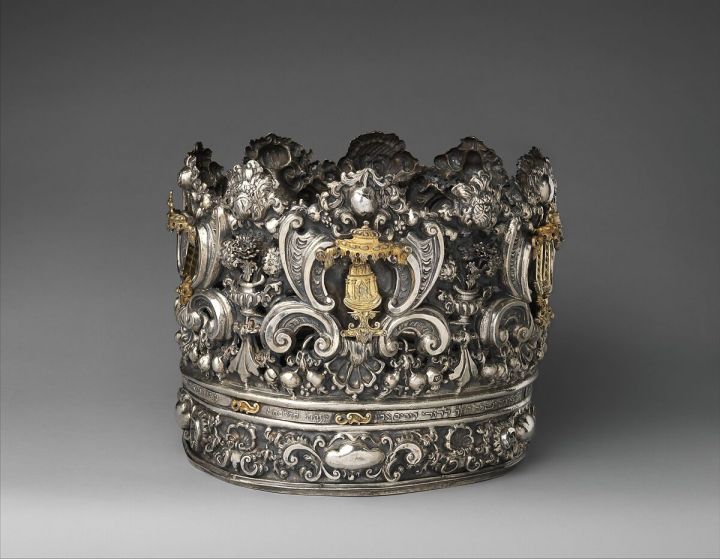
Andrea Zambelli ‘L’Honnesta’, Torah Crown (keter), ca. 1740–50, silver, parcel gilt
(New York: The Metropolitan Museum of Art, 2013.443)
◊ ◊ ◊ ◊ ◊
This talk is already sold out, but I’m glad for any excuse to post exquisite eighteenth-century silver from Venice. And for readers celebrating, happy new year. –CH
Riva Arnold | Looking at the Jewish Ritual Art of Rosh Hashanah
The Metropolitan Museum of Art, New York, 15 September 2026, 3pm
Join Riva Arnold, David Berg Foundation Senior Research Associate, to discover The Met’s Judaica collection with a focus on Jewish ritual art used in the synagogue. Timed with the High Holidays, a season rich in tradition and symbolism, this talk will examine exceptional works including a rare set of Torah finials from the Rothschild collection and an Italian Torah crown manufactured by silversmith Andrea Zambelli for an 18th-century Jewish community. The next tour in this series will be on 8 December 2026 in celebration of Hanukkah.
Exhibition | John Constable: The Landscape Reimagined
Now on view at the YCBA:
John Constable: The Landscape Reimagined
Yale Center for British Art, New Haven, 3 September 2026 — 25 July 2027
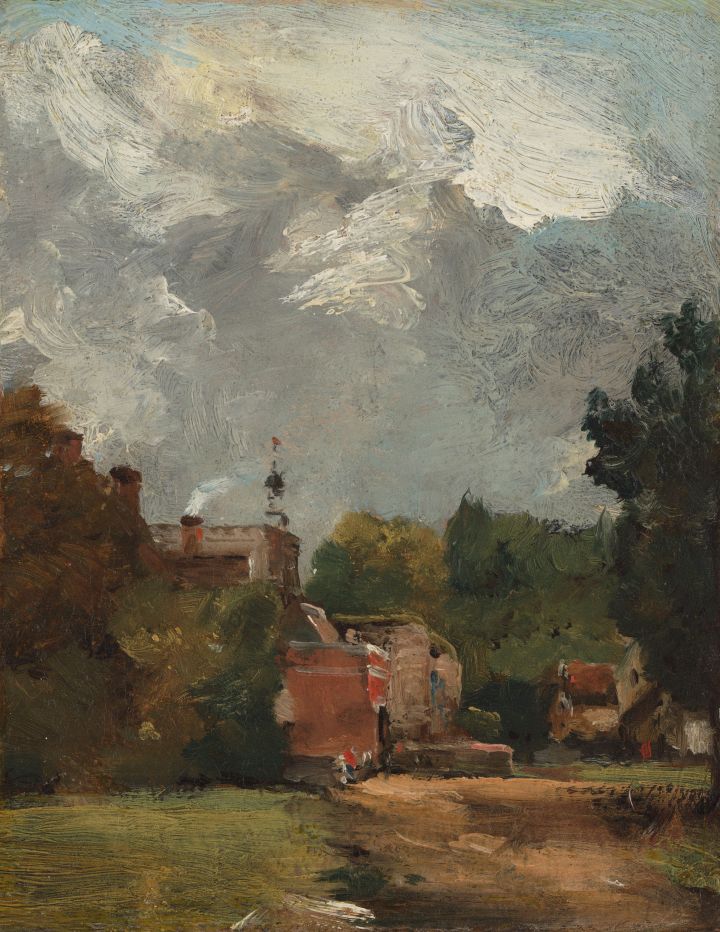
John Constable, East Bergholt Church, 1809, oil on paper mounted to panel, 20 × 16 cm (New Haven: Yale Center for British Art, Paul Mellon Collection, B2001.2.237).
John Constable: The Landscape Reimagined explores Constable’s bold, innovative open-air paintings, which radically transformed the trajectory of European landscape painting. Working against the ‘picturesque’ tradition, in which long-established conventions governed what landscape painting should look like, Constable made the skies, light, seasons, and atmosphere the central subjects of his art. Created outdoors and rooted in the direct observation of nature, his iconic pictures of the English landscape have shaped the image of Britain in the popular imagination.
As the only major US exhibition to focus on the seminal British painter on the 250th anniversary of his birth, John Constable: The Landscape Reimagined offers a unique opportunity for American audiences to experience the breadth of the artist’s masterpieces. Bringing together a rich selection of Constable’s great works, the exhibition includes his remarkable cloud studies and plein air sketches alongside two of his ‘six-footers’, including Hadleigh Castle, one of the most iconic works of English landscape painting. The exhibition also presents works that have never before been publicly displayed in the US, among them a study of Hampstead Heath that was recently acquired by the YCBA.
These works are shown alongside engravings and drawings that illuminate the remarkable breadth of Constable’s achievement as a painter, printmaker, and draftsman. Seen together, they reveal how his creative process developed across different media and offer a fuller understanding of an artist who profoundly influenced subsequent generations of painters. The exhibition also includes key pieces by Constable’s contemporaries, such as John Linnell and Richard Parkes Bonington, that reveal the broader artistic context in which he worked. Through his direct engagement with the natural world, Constable established landscape painting as a serious and significant pursuit for artists.
◊ ◊ ◊ ◊ ◊
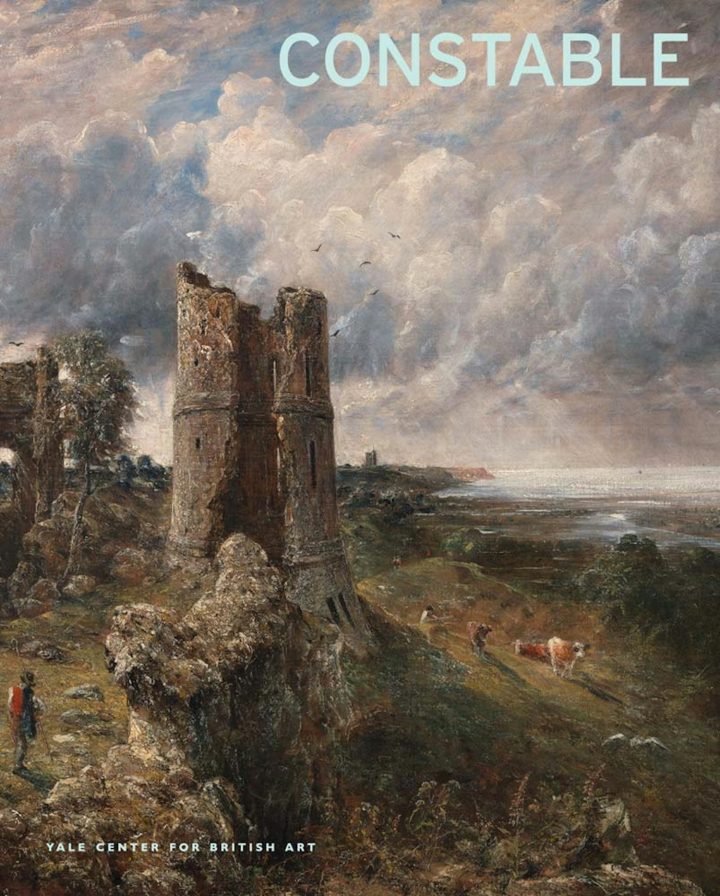 The landscape paintings of John Constable (1776–1837) are among the most iconic images in British art, transforming the genre of landscape painting. Born in Suffolk, England, the son of a corn and coal merchant and a farmer, Constable took up painting as a youth and entered the Royal Academy Schools in London in 1799 to study as a painter. As an adult, he moved from London to Hampstead, which would provide the inspiration for his most acclaimed works. Constable’s astonishing capacity to reproduce not only the appearance but also the feeling of nature in paint brought the landscape radically to life, and his commitment to painting ‘on the spot’ was part of a broader artistic approach that would profoundly influence subsequent generations of landscape painters—and shape how the English landscape is imagined and represented to this day.
Tim Barringer, with contributions by Nicholas Robbins, Constable (New Haven: Yale University Press, 2026), 128 pages, ISBN: 978-0300284669, $40.
Print Quarterly, September 2026
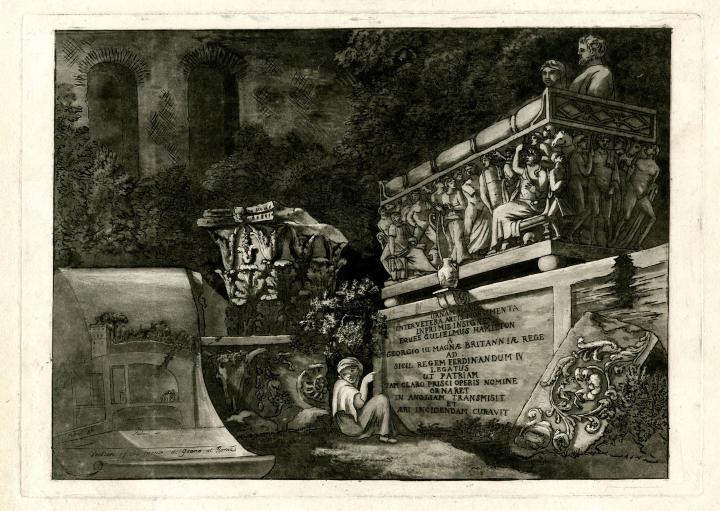
Charles F. Greville, Title-Plate to the Set of Prints of the Portland Vase, 1786, etching and aquatint, 251 × 354 mm
(London: The British Museum)
◊ ◊ ◊ ◊ ◊
The long eighteenth century in the latest issue of Print Quarterly:
Print Quarterly 43.3 (September 2026)
a r t i c l e s
• Georgii Titov, “Lost and Found: An Unpublished Woodcut by Pamvo Berynda,” pp. 235–45. In identifying the lower half of a 1629 woodcut, The Prison of The Holy Convicts, the author unfolds, “a revealing case study of how early modern prints circulated and were valued within imperial Russian collections” in the eighteenth and nineteenth centuries.
• Domenico Pino, “Filippo Morghen as Print Publisher in Naples: New Documents,” pp. 246–52. This article arises from the discovery of a small, dated letterpress catalogue of Filippo Morghen’s (1730–1807) production, preserved inside a bound copy of his print series Le Antichità di Pozzuoli, Baja e Cuma that surfaced at auction in Rome. Analysed in conjunction with an unpublished privilege application by Morghen, the new document sheds light on his printmaking, and, especially, on his highly prolific activity as a print-publisher in Naples. It significantly expands the limited archival material relating to the artist, including his known commissions, level of involvement and prices of his prints.
• Ann V. Gunn, “Charles F. Greville (1749–1809) and the Print Industry,” pp. 253–63. Gunn looks at the many ways an eighteenth-century gentleman, Charles F. Greville (1749–1809), interacted with the print industry. Through detailed examination of the sales catalogues of his various collections and correspondence, she demonstrates how his practical involvement in printmaking impacted other areas of his life and career, from disseminating visual knowledge of art, antiquarianism, minerology and horticulture to successfully introducing into Parliament an amendment and extension to the copyright law relating to prints and printmakers in 1777. A portion of the article recounts Greville’s campaign to have the Portland Vase and a painting previously attributed to Correggio engraved by Francesco Bartolozzi (1727–1815).
n o t e s a n d r e v i e w s
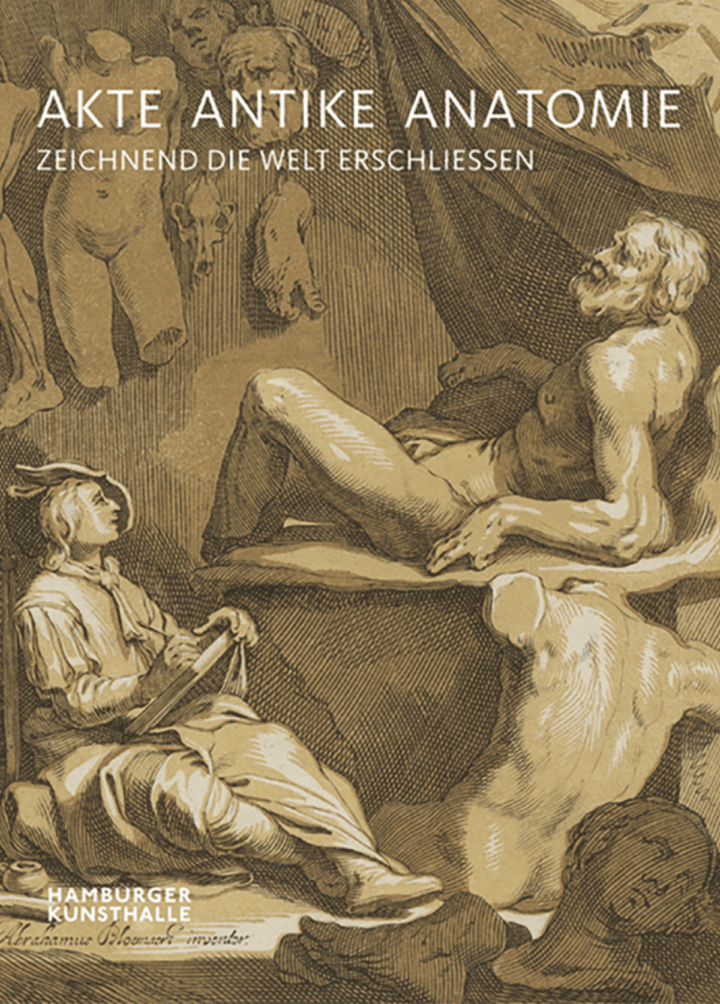 • Guido Scholten, Review of the exhibition catalogued ed. by Andreas Stolzenburg and Iris Wenderholm, Akte, Antike, Anatomie: Zeichnend die Welt erschliessen (Michael Imhof, 2024), pp. 281–83.
• Anthony Griffiths, Review of Martin Rose, Henry Winstanley, 1644–1703: The Last Renaissance Engineer. With a Catalogue Raisonné of His Prints (The Cygnet Press, 2024), p. 287.
• An Van Camp, Review of Vincent Wackenheim, La mort dans tous ses états: Modernité et esthétique des Danses macabres, 1785–1966 (L’Atelier contemporain, 2025), pp. 289–92.
• Timon Screech, Review of the exhibition catalogue by Alfred Haft, Hiroshige: Artist of the Open Road (British Museum Press, 2025), pp. 312–15.
New Book | Unconventual Women in the Habsburg Low Countries
From Routledge (and discounted until December 31, with code ADC26) . . .
Sarah Joan Moran, Unconventual Women in the Habsburg Low Countries, 1585–1794: Visual Culture at the Court Beguinages (New York: Routledge, 2026), 352 pages, ISBN: 978-9462986343, $234.
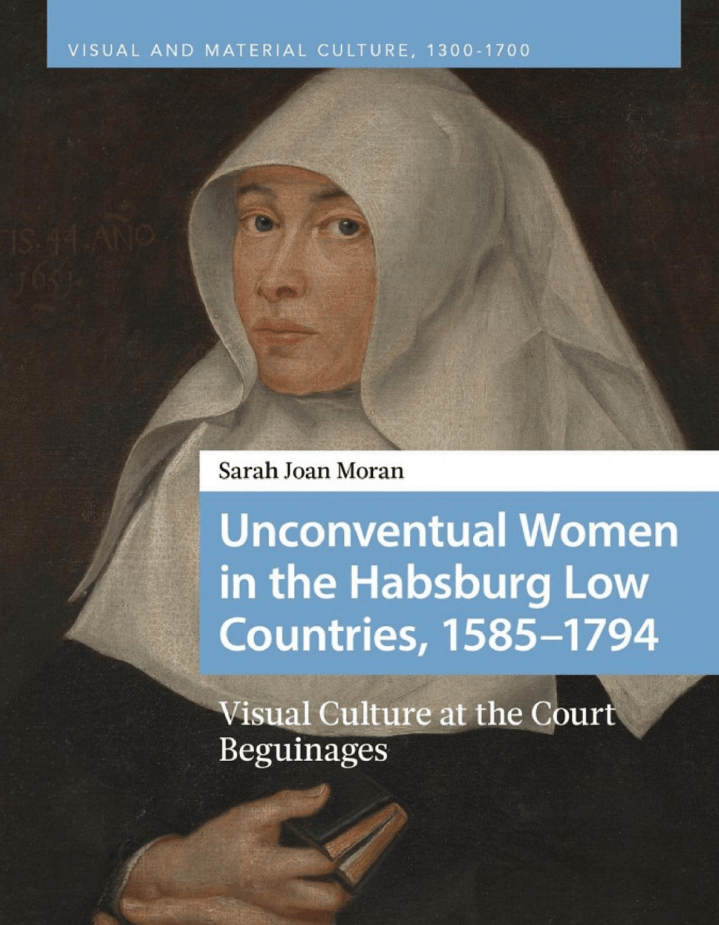 This book examines the Court Beguinages, a fascinating group of semi-monastic female communities that were endemic to cities of the Southern Low Countries from the thirteenth century into the twentieth. Their members, called Beguines, played fundamental social and religious roles in their communities, and they also became major patrons of art and architecture, building vast complexes and filling them with paintings, sculptures, prints, textiles, and all sorts of other decorative objects. As the first comprehensive and primary source-driven account of Court Beguinage visual culture, this study explores the historical importance of these institutions and reveals how the Beguines used buildings and images to support devotional practice, shape public perception, raise funds, and negotiate power relationships during the Counter-Reformation. Unconventual Women in the Habsburg Low Countries is intended for scholars and students of early modern history, art and architectural history, cultural history, religious history, and women’s and gender studies.
Sarah Joan Moran is an interdisciplinary historian focused on early modern women and their relationships to visual culture. She received her PhD in the History of Art and Architecture from Brown University in 2010, and her work has been funded by the Fulbright Foundation, Belgian American Educational Foundation, the Swiss National Science Foundation, the European Research Council, and the Netherlands Institute for Advanced Study. From 2009 to 2013, she held a junior faculty post at the University of Bern; and at Utrecht University, she was Assistant Professor of Art before 1850 in 2017–18 and Associate Professor of Art before 1850 from 2018 until 2022. Dr. Moran currently holds a research faculty appointment in the Department of Theology at the University of Oslo.
c o n t e n t s
Introduction
1 Beguine Visual Culture in Context
2 The Architecture of the Court Beguinages
3 A ‘Monastic Makeover’: Art and the Consolidation of Beguine Identity in the Counter Reformation
4 Models of Piety: Portrayals of Beguines and Their Audiences
5 Inside Beguine Homes: Material Culture, Devotion, and Family Ties
6 Inside Beguine Churches: Patterns of Patronage and Devotion
7 Framing the Mass: The Altars and Their Altarpieces
8 Beguine Church Furniture for Sacrament, Sermon, and Song
Conclusions
Call for Articles | Sequitur (Fall 2026): Ephemera
From the Call for Papers:
Sequitur, Fall 2026 | Ephemera
Submissions due by 28 September 2026
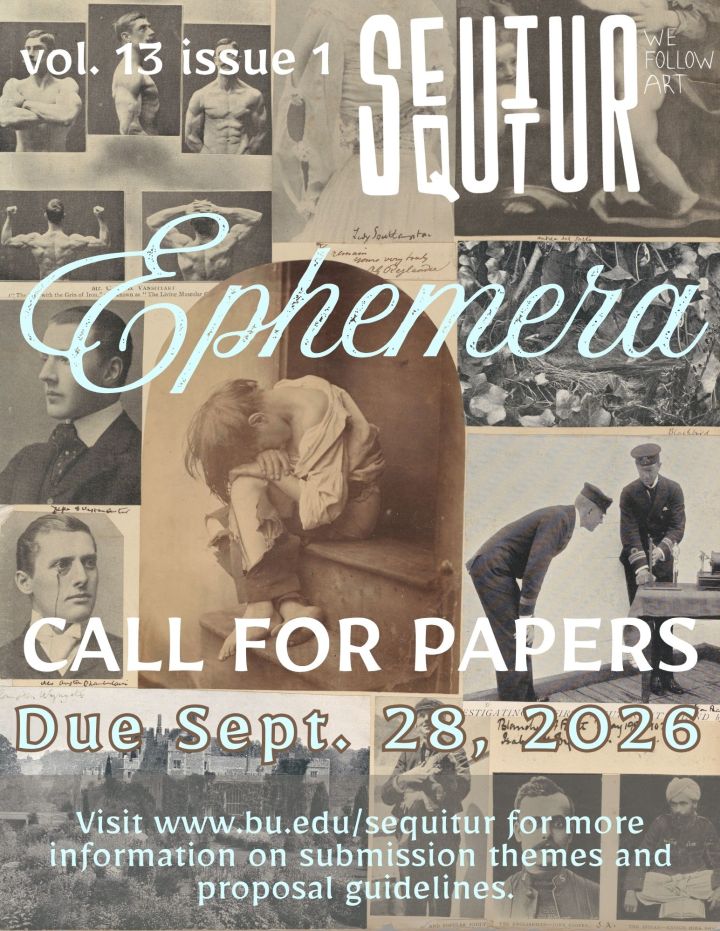 The editors of SEQUITUR, the graduate student journal published by the Department of History of Art & Architecture at Boston University, invite current and recent MA, MFA, and PhD students to submit content on the theme of “Ephemera” for our Fall 2026 issue. This issue invites submissions that consider material ephemera and its temporal connotations. “Ephemera” refers to the short-lived: fragments, traces, and remnants of material culture, survived in physical form or in memory alone. We encourage submissions that deal not only with physical objects, but with artworks, ideas, and texts that memorialize or reference things past.
Ephemera takes many forms, including letters, notes, doodles, waste, newspapers, trinkets, receipts, clothing, digital articles, or other transitory objects. It invites a consideration of fragmentary materials—pieces of ceramics, scraps of fabric or paper, archaeological remnants, among other parts of a whole. Ephemera also refers to short-lived events—pageants, parades, spectacles, and performances, whether unrecorded or reenacted—or it may be commemorative in its intertextuality, allusion, or indexicality.
In 1589, the Medici staged a mock sea battle—a naumachia—at the Palazzo Pitti as one of several events to celebrate the marriage of Christine of Lorraine to Ferdinando de Medici. The event is recorded in text but elaborated in an etching by Orazio Scarabelli, the only visual evidence from that grandiose celebration. While the event was a spectacle, it is preserved through a print, easily distributable and quotidian in comparison to the event. And yet, it is the print that indexes the performance.
Ephemera also relates to the temporal dimensions of memory that an object holds onto. As Andreas Huyssen argues, the past persists in the present like a palimpsest, meaning our access to the past is inevitably mediated by the present, even as traces of the past continue to shape how the present is experienced. Such temporal layering complicates any attempt to encounter an object solely through the historical moment of its production or from the perspective of the present. Ephemera are thus self-referential: their material or immaterial presence points toward what has passed, while the traces they accumulate make visible the distance between then and now. Remembering, in this sense, does not necessarily preserve the past intact. Whether oral, visual, material, digital, or embodied, it can reconstruct, fragment, or reactivate the past, at times pushing against the coherence and authority of official historical narratives.
This issue seeks to collect scholarship spanning antiquity to the present that investigates the traces, scraps, fragments, and mementos of daily life—extant or refuse, partial or whole, indexical or commemorative. Potential subjects may include but are not limited to:
material culture, temporary materials, traditional or non-traditional archival materials, mementos, remnants, ruins, photographs, newspapers, notes, letters, cards, postcards, trinkets, tickets, receipts, stickers, organic matter, fabric, scraps, junk, compostable material, disposable/plastic/single use objects, waste, garbage, unpublished materials, advertisements, flyers, digital ephemera (texts, social media, emails), digital memory, database, preservation, conservation, fragmentary, partial, reconstruction, reenactment, tribute, memory, memorializing, remembering, mnemonic traces, commemorative, personal memory, collective memory, generational memory, legacy, heritage, referentiality, the picturesque, temporality, anachronism, palimpsest, forgetting, amnesia, post-memory
SEQUITUR welcomes submissions from graduate students in the disciplines of art history, architecture, archaeology, fine arts, material culture, visual culture, literary studies, queer and gender studies, disability studies, memory studies, and environmental studies, among others. We encourage submissions that take advantage of the digital format of the journal.
Founded in 2014, SEQUITUR is an online biannual scholarly journal dedicated to addressing events, issues, and ideas in art and architectural history. SEQUITUR, edited by graduate students at Boston University, engages with and expands current conversations in the field by promoting the perspectives of graduate students from around the world. It seeks to contribute to existing scholarship by focusing on valuable but often overlooked parts of art and architectural history. Previous issues of SEQUITUR can be found here.
We invite full submissions in the following categories. Please submit your material in full for consideration in the publication:
Feature essays (1500 words)
Content should present original material that falls within the stipulated word limit (1500 words). Please adhere to the formatting guidelines available here.
Visual and creative essays (250 words, up to 10 works)
We invite M.Arch. or M.F.A. students to showcase a selection of original work in or reproduced in a digital format. We welcome various kinds of creative projects that take advantage of the online format of the journal, such as works that include sound or video. Submissions should consist of a 250-word artist statement and up to 10 works in JPEG, HTML, or MP4 format. All image submissions must be numbered and captioned and should be of good quality and high resolution.
We invite proposals for the following categories. Please write an abstract of no more than 200 words outlining your intended project:
Exhibition reviews (500 words)
We are especially interested in exhibitions currently on display or very recently closed. We typically prioritize reviews of exhibitions in the Massachusetts and New England area.
Book or exhibition catalog reviews (500 words)
We are especially interested in reviews of recently published (1–3 years old) books and catalogs.
Interviews (750 words)
Please include documentation of the interviewee’s affirmation that they will participate in an interview with you. Plan to provide either a full written transcript or a recording of the interview (video or audio).
Research spotlights (750 words)
Short summaries of ongoing research written in a more casual format than a feature essay or formal paper. For research spotlights, we typically, but not universally, prioritize doctoral candidates who plan to use this platform to share ongoing dissertation research or work of a comparable scale.
To submit, please send the following materials to sequitur@bu.edu:
• Your proposal or submission
• A recent CV
• A brief (50-word) bio
• Your contact information in the body of the email: name, institution, program, year in program, and email address
• ‘SEQUITUR Fall 2026’ and the type of submission/proposal as the subject line
All submissions and proposals are due 28 September 2026. Please remember to adhere to the formatting guidelines available here. Text must be in the form of a Word document, and images should be sent as .jpeg files. While we welcome as many images as possible, at least one must be very high resolution and large format. All other creative media should be sent as weblinks, HTML, or MP4 files if submitting video or other multimedia work. Please note that authors are responsible for obtaining all image copyright releases before publication. Authors will be notified of the acceptance of their submission or proposal the week of 16 October 2026, for publication in January 2027. If you have any questions, please do not hesitate to contact the SEQUITUR editors at sequitur@bu.edu.
The SEQUITUR Editorial Team
Ada, Emma, Hamin, Hannah, Isaline, and Jenna
Exhibition | The Art of Kandy: Sri Lanka’s Last Kingdom
From the press release for the exhibition . . .
The Art of Kandy: Sri Lanka’s Last Kingdom
Norton Simon Museum, Pasadena, 4 September 2026 — 8 February 2027
Organized by Lakshika Senarath Gamage
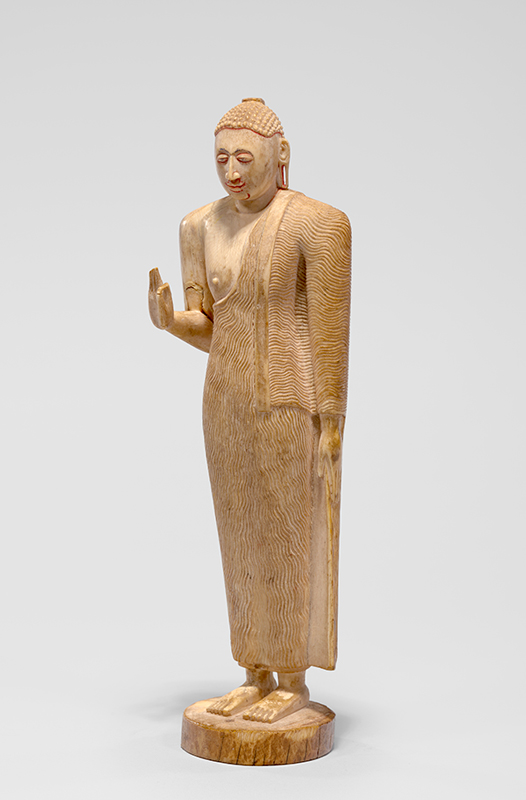
Sri Lanka, Buddha, 18th century, ivory with traces of pigment, 25 cm high (Pasaden: Norton Simon Museum).
The Art of Kandy: Sri Lanka’s Last Kingdom brings together 13 objects from the Norton Simon Museum’s collection of art from the kingdom of Kandy, the final royal capital of Sri Lanka before the onset of British colonial rule. From intricately carved ivory sculptures to gem-studded silver objects for the elite, this presentation of small-scale, portable works showcases the skill and ingenuity of the kingdom’s artisans. Kandyan craftsmen flourished under royal sponsorship, fostering the development of a creative and distinctive identity amid internal strife and pressures from foreign powers.
Founded in 1469, the kingdom of Kandy was re-established in 1592 and remained independent until its annexation into British Ceylon in 1815. Although Kandy was a remote kingdom in the central hills of Sri Lanka, it played a significant role in revitalizing the island’s social landscape. Kandyan kings formed marriage alliances with South Indian royals, negotiated trade with the Dutch who controlled the coastal regions, maintained diplomatic ties with Thai rulers to foster visits from Buddhist monks, and restored the Buddhist monastic order. Despite shifting political conditions, contested authority, and moments of usurpation, local and migrant artisans continued to create works in royal ateliers and regional workshops. Kandyan art developed alongside sustained exchange with South India, Southeast Asia, and European trading networks.
The art of this period blended local styles and motifs with South Indian designs, combining Buddhist and Hindu iconographies with pan-Asian symbolism. Patronage of Buddhist art and architecture was essential for a king to be considered a pious benefactor of the faith, and in turn, to legitimize their claim to the throne. Due to these factors, Kandyan art and architecture flourished by drawing from both foreign interactions and deeply rooted local traditions.
Figural sculpture developed a distinctive, robust flair—with eyes that gaze directly at the viewer, broad shoulders and imposing limbs—while mythical and composite creatures animated much of the visual culture. Among the highlights in the exhibition is an 18th-century standing ivory Buddha that exemplifies the hallmarks of Kandyan sculpture, including broad shoulders, a stern facial expression, and stylized drapery. The exhibition also features elaborately crafted objects that demonstrate the technical mastery of silversmiths, ivory carvers, and metalsmiths who likely worked in royal workshops. The works on view may have been commissioned for the royal court or made for Buddhist devotees to use as offerings.
“The Art of Kandy offers new perspectives on cultural exchange, artistic resilience, and the interconnected histories of South and Southeast Asia,” said Lakshika Senarath Gamage, Assistant Curator at the Norton Simon Museum. “The exhibition reveals how Kandyan artists drew from local traditions and international exchanges to create a distinctive visual language that continues to resonate today.”
Presented in an intimate gallery setting, this exhibition of Kandyan art reflects wide-ranging themes of royal sponsorship, Buddhist devotion, and creative imagination, illustrating how artisans and patrons of diverse backgrounds shaped an ongoing artistic legacy that transcends cultural and political boundaries.
Conference | Drawing as Knowledge
From the PMC:
Drawing as Knowledge: Practice, Theory, and History
Online and in-person, Warburg Institute, London, 16–17 September 2026
A collaboration between the Paul Mellon Centre for Studies in British Art and the Warburg Institute, this is a conference about ‘drawing as visual thinking’ within the context of British art history, inspired by the life and work of Deanna Petherbridge (1939–2024).
This conference has been organised to coincide with a display at the Paul Mellon Centre, ‘Just on the Edge’: Exploring the Deanna Petherbridge Archive (29 July – 29 October 2026). Featuring materials from Petherbridge’s archive at the PMC, together with artworks from private collections, a key theme of the display is Petherbridge’s lifelong commitment to the medium of drawing as an active process of knowledge acquisition and formation. Delegates will be given the opportunity to view the display and hear from the curator at PMC on the evening of Wednesday, 15 September. This will be followed by two days of papers and discussion in the Warburg Institute’s Lecture Theatre.
One panel will explore drawing within the practice of a range of British artists, including its function, meaning, and relationship with other media. Another will turn to curators, the role of drawing in their collaborations, and the processes of recording and understanding collections. A number of papers grouped around the theme of ‘intersections’ will explore the interconnectedness of artistic drawing practice with other disciplines, such as mapping and writing. Other talks will be situated between art history and medical humanities, looking at the role of drawing in navigating trauma, mental illness, and bereavement. Two of the panels will range across anatomy, natural history, and empire, exploring drawing as a means of knowing, conceptualising, and mastering the world. Encompassing peoples, lands, flora, and fauna, a key focus will be drawing as a technology of both colonial governance and resistance.
t u e s d a y , 1 5 s e p t e m b e r
Paul Mellon Centre
5.30 Drinks Reception
Short talk from Petherbridge display curator, Hannah Jones, and opportunity to see the exhibition
w e d n e s d a y , 1 6 s e p t e m b e r
The Warburg Institute
9.30 Registration and coffee
10.00 Welcome and introduction — Kate Retford, Alixe Bovey, and Flora Dennis
10.30 Panel 1 | Artists’ Practices
• Drawing to Belong: Katerina Wilczynski’s Oxford Portraits — Eliza Goodpastures
• A Rhythm of Thrusts and Curves: Barbara Hepworth’s Drawing in the 1950s — Stephen Feeke
• ‘Straining against the Limits of the Archive’: Drawing as Reimagination — Isabel Seligman
Noon Lunch
1.15 Panel 2 | Curators’ Practices
• Drawing Sculpture in the British Museum: William Alexander, Henry Corbould, and the Ancient Marbles — Tessa Kilgarriff
• Drawing Curators: Materiality, Communication, Collaboration — Claire Wintle
• Drawing from Art: Copying, Cognition, and Visual Thinking in the Museum — Antje Southern
2.45 Tea and coffee
3.15 Panel 3 | Care
• Mimesis and Memorialisation: ‘Looking After’ in End-of-Life Drawings — Eve Ess
• Commissioned Drawing as an Encounter between Forms of Knowledge — Rose Forshall and Aimee Middlemiss
• Drawn from Experience: Co-Creating Visual Narratives of Illness, Trauma and Healing — Jenny Wright
• Drawing Loneliness and Connection from the Lived Experience of Mental Distress: Findings from a Pilot Study — Louisa Smyllie-Peters and Jo Doll
5.15 Drinks Reception
t h u r s d a y , 1 7 s e p t e m b e r
The Warburg Institute
9.00 Arrival and registration
9.15 Panel 4 | Resisting Empire
• Drawing Against the Grain: Colonial Plans, Everyday Paper Handling, and the Production of Spatial Knowledge in Colonial Bombay — Excy Hansda
• Iconologies of Line: Visual Thinking, Medium, and Colonial Power in the Daniells’ Drawings of India — Nuno Grancho
• Counter-Cartographies of Dissent: Dhali Al Mamoon’s Drawing against the Colonial Map — Humaira Hossain
10.45 Panel 5 | Travel
• A Cat Called Beef: Exploring the Drawing Practices of British Naval Officers — Katherine Gazzard
• ‘Sketching and Journalising’: Ottoman Encounters in George Scharf’s Travel Sketchbooks — Sebastian Marshall
11.45 Lunch
1.00 Panel 6 | Natural Histories
• The Quick and the Dead: George Stubbs between Drawing and Painting — Michaela Giebelhausen
• Drawn from Nature: Illustrators as Knowledge-makers in 18th-Century British Natural History — Isobel Elstob
2.00 Tea and coffee
2.30 Panel 7 | Intersections
• Only in Drawing: Impossible Objects and the Pre-Disciplinary Sketch — Tal Horesh
• Tracing Musical Logic in the Legacy of Deanna Petherbridge’s The Primacy of Drawing — Jane Alden (online)
• Cartouches and Calligraphy: Gravelot’s Designs for London’s Writing Masters, 1737–40 — Alice Clanachan
• Property Lines: Drawing, Design, and Documentation on the 18th-Century Landed Estate — John Bonehill
4.30 Concluding remarks
Exhibition | A Light in the Dark: Joseph Wright of Derby
Opening this fall at The Getty:
A Light in the Dark: Joseph Wright of Derby
Getty Center, Los Angeles, 24 November 2026 — 14 March 2027
The British painter Joseph Wright of Derby is celebrated for his astonishing ability to capture the magic of light piercing the dark. In 1760s London he exhibited a series of remarkable pictures that catapulted the provincial artist to national fame. This exhibition reunites several of these works—including the Getty’s recently rediscovered Two Boys with a Bladder—and explores the technical innovations and artistic ambitions behind some of the most enthralling paintings of the 18th century.
From the Getty Shop:
Julia Siemon, ed., A Light in the Dark: Joseph Wright of Derby (Los Angeles: Getty Publications, 2026), 144 pages, ISBN: 979-8887120416, $30.
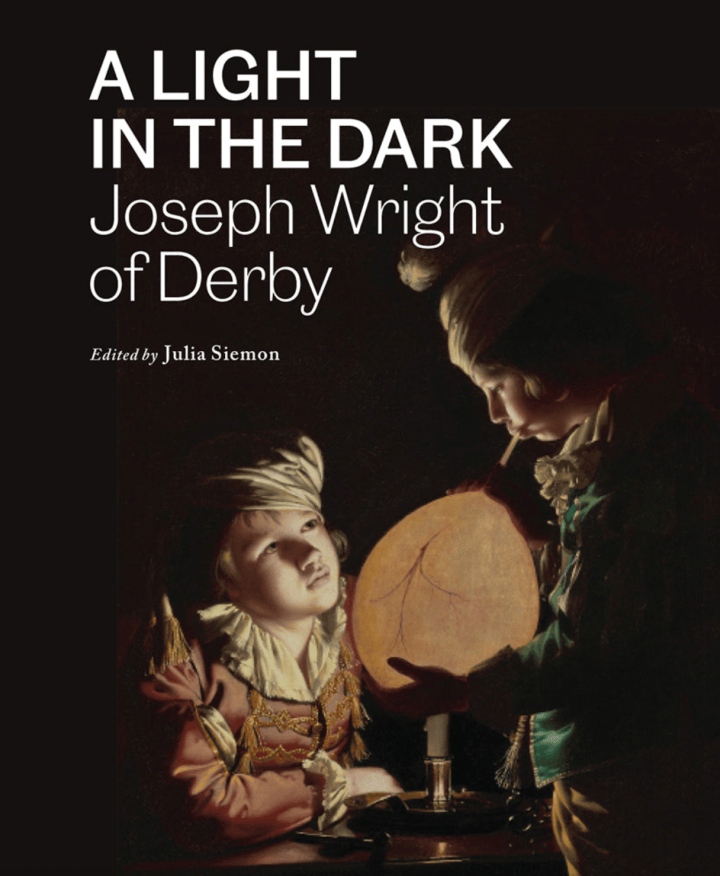 The dramatic ‘candlelight’ paintings of Joseph Wright of Derby (1734–1797) cast a spell, enthralling viewers with striking scenes that portray human curiosity, the quiet intensity of domestic life, and the excitement of scientific discovery. With a variety of brushstrokes—dabbed here, whiskered there, and dragged elsewhere—Wright pushed boundaries with the transformative power of light. In 2020, the Getty Museum acquired the newly rediscovered Two Boys with a Bladder (1767), a luminous study of innovation, intimacy, and artistic brilliance that challenged established assumptions about Wright and sparked renewed interest in his experiments with light.
A Light in the Dark presents new research to uncover the origins of Two Boys and expand our understanding of Wright’s early candlelights, tracing the invention and initial development of his distinctive style. Whereas recent scholarship has maintained an outward approach that ties the artist’s oeuvre to places that he visited, this volume returns the focus to Wright himself—his biography, technique, and hometown of Derby—in a much-needed reexamination. Complete with fresh historical and technical evidence, this is a fascinating look into the inspirations, aspirations, and experiments behind some of the most remarkable paintings in the history of British art.
Julia Siemon is deputy director and chief curator at Bard Graduate Center. Her publications include, as editor and primary author, The Silver Caesars (2017), and, as contributing author, The Medici (2021), A Royal Renaissance Treasure and Its Afterlives (2021), and others.
The Magazine of the Decorative Arts Trust, Summer 2026
The Decorative Arts Trust has shared select articles from the summer issue of their member magazine as online articles for all to enjoy.
The Magazine of the Decorative Arts Trust, Summer 2026
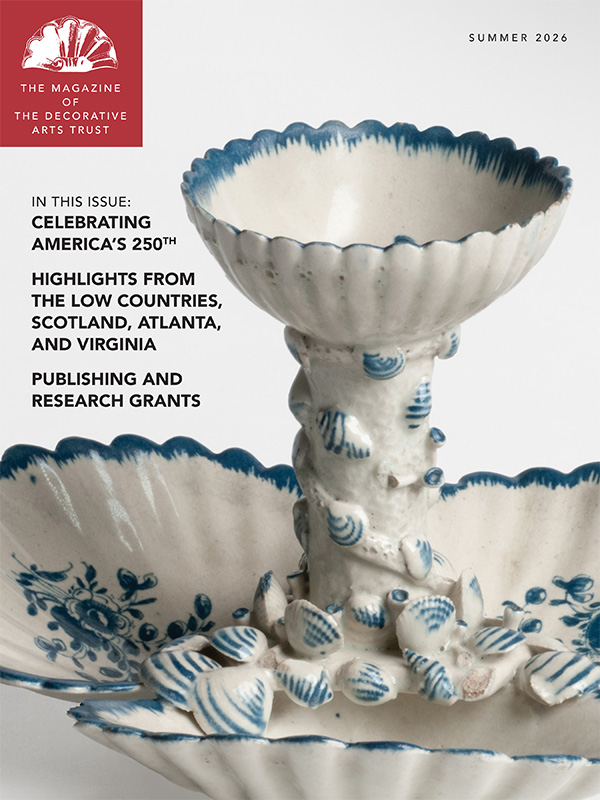 • “A Nation of Artists: 250 Years of Creativity” by Alexandra Alevizatos Kirtley Link»
• “Workshop of the World: Arts and Crafts in Philadelphia” by David L. Barquist and Colin Fanning Link»
• “Window to Revolution: Pennsylvania Germans and the War for Independence” by Lisa Minardi, Emily Sneff, Christopher Malone, and Sarah Bowen Link»
• “Seeking Profit and Power: Philadelphia, China Trade, and the Making of America” by Peter Seibert Link»
• “Challenging Masterpieces: Art and Identity in American Furniture” by Josh Lane Link»
• “Radical Americana: 45 Artists and 25 Philadelphia-area Sites Celebrate the Semiquincentennial” by Jennifer Zwilling Link»
• “The Politics of Taste: The Presidential Houses of Virginia and Washington” by Amy Hudson Henderson Link»
• “The Work of the Edinburgh Upholstery Company at Hopetoun House” by Stephen Jackson Link»
• “Philip Trammel Shutze: Atlanta’s Consummate Collector” by Michael Rose Link»
• “Novel Nature: How a Maritime Byproduct Defined the Elite 17th-Century Interior” by Lauryn Smith Link»
The printed Magazine of the Decorative Arts Trust is mailed to Trust members twice per year. If you would like a print copy, click here to become a Trust member.










leave a comment