New Book | Jacobites: A New History of the ’45 Rebellion
From Bloomsbury:
Jacqueline Riding, Jacobites: A New History of the ’45 Rebellion (London: Bloomsbury, 2016), 608 pages, ISBN: 978-1608198047, £25.
 The Jacobite Rebellion of 1745–46 is one of the most important turning points in British history–in terms of national crisis every bit the equal of 1066 and 1940. The tale of Charles Edward Stuart, ‘Bonnie Prince Charlie’, and his heroic attempt to regain his grandfather’s (James II) crown remains the stuff of legend: the hunted fugitive, Flora MacDonald, and the dramatic escape over the sea to the Isle of Skye. But the full story—the real history—is even more dramatic, captivating, and revelatory.
Much more than a single rebellion, the events of 1745 were part of an ongoing civil war that threatened to destabilize the British nation and its empire. The Bonnie Prince and his army alone, which included a large contingent of Scottish highlanders, could not have posed a great threat. But with the involvement of Britain’s perennial enemy, Catholic France, it was a far more dangerous and potentially catastrophic situation for the British crown. With encouragement and support from Louis XV, Charles’s triumphant Jacobite army advanced all the way to Derby, a mere 120 miles from London, before a series of missteps ultimately doomed the rebellion to crushing defeat and annihilation at Culloden in April 1746—the last battle ever fought on British soil. Jacqueline Riding conveys the full weight of these monumental years of English and Scottish history as the future course of Great Britain as a united nation was irreversibly altered.
Dr Jacqueline Riding specialises in eighteenth- and early nineteenth-century British history and art. She read History and Art History at the universities of Leicester, London and York, and has over twenty-five years’ experience working as a curator and consultant within a broad range of museums, galleries and historic buildings, including the Guards Museum, Tate Britain and Historic Royal Palaces. From 1993 to 1999 she was Assistant Curator at the Palace of Westminster and later founding Director of the Handel House Museum, London. Her publications include Houses of Parliament: History, Art, Architecture (2000). She was the consultant historian and art historian on Mike Leigh’s award-winning Mr. Turner (2014) and is the consultant historian on his next feature film, Peterloo. Jacqueline Riding is an Associate Research Fellow in the School of Arts, Birkbeck College, University of London and lives in South London.
Scottish NPG Acquires Ramsay’s Portrait of Bonnie Prince Charlie
On this day (16 April) in 1746, the armies of Charles Edward Stuart were defeated at Culloden. From the Scottish National Portrait Gallery:

Allan Ramsay, Portrait of Prince Charles Edward Stuart, 1745 (Scottish National Portrait Gallery)
A hugely significant portrait of Bonnie Prince Charlie by the greatest Scottish portrait painter of the eighteenth century has been acquired by the Scottish National Portrait Gallery thanks to the AIL (Acceptance in Lieu of Tax) Scheme.
Prince Charles Edward Stuart (1720–1788), later known as Bonnie Prince Charlie, was the Jacobite hero who sought to re-capture the British throne for the House of Stuart during the ill-fated Rising of 1745. He landed in Scotland on the 23rd of July, and marched to Edinburgh, defeating a government army at the Battle of Prestonpans. Charles then travelled south as far as Derbyshire, before returning to Scotland; his army was eventually crushed at the Battle of Culloden on the 16th of April 1746. The Jacobite cause was lost and he fled to exile.
This portrait is thought to have been created at Holyrood in Edinburgh during Bonnie Prince Charlie’s short time in the city at the height of the Rising, by the most accomplished Scottish portrait painter of the period, Allan Ramsay (1713–1784). Ramsay was born in Edinburgh, the son of a poet of the same name, and studied in London, Rome and Naples, before returning to Scotland in 1738. He worked for the grandest patrons both north and south of the border, creating a reputation for displaying great sensitivity to the characters of his sitters and masterly renderings of their clothes and poses in his paintings.
His portrait of Bonnie Prince Charlie is an accomplished early work, created when the sitter was 25 and the artist 32. Charles is depicted in half-length format, turning to confront the viewer directly. He wears a powdered wig, has a velvet robe fringed with ermine, and the blue riband and star of the Order of the Garter. The portrait was used as a prototype for painted and engraved versions, which were employed to promote the Jacobite cause.
Since the eighteenth century, the painting has formed part of a collection outside Edinburgh; it has come from the Wemyss Heirlooms Trust and was last exhibited in the city in 1946. Recently attention was drawn to its status by a BBC 2 Culture Show Special, presented by Dr. Bendor Grosvenor (22 February 2014). The painting will be displayed in Gallery 4 of the Scottish National Portrait Gallery as a centrepiece to the Gallery’s outstanding collection of Jacobite art which is one of the great strengths of the collection. The National Galleries of Scotland houses an unsurpassed collection of Ramsay’s drawings and paintings. The amount of tax settled by the acceptance of the portrait through the AIL system is £1,122,838.33.
Christopher Baker, Director of the Scottish National Portrait Gallery, commented “This meticulous and dashing portrait is a work of great historical resonance, which in a real sense has now come home, as it will be celebrated as a key work in the nation’s Jacobite collection and as such become widely accessible. We are immensely grateful to everyone who has made its transference to public ownership, through the AIL scheme, possible.”
Edward Harley, the Acceptance in Lieu Panel Chairman, noted “The Acceptance in Lieu Panel is pleased to have helped this iconic image of Bonnie Prince Charlie return to the city in which it was painted 270 years ago. It now takes its fitting place as one of the highlights of the great collection of the Scottish National Portrait Gallery where it can be enjoyed by all. This is indeed a unique moment in Scottish history.”
Call for Nominations | Top 100 British Art Books, 1600–1850

John Carter, View of the Library at Strawberry Hill, watercolour, 23.7 × 28.8 cm, from Horace Walpole, A Description of the Villa … at Strawberry-Hill (Strawberry Hill, 1784). The Lewis Walpole Library, Yale University.
◊ ◊ ◊ ◊ ◊
The 100 Most Important Books for Understanding British Art, 1600–1850
Nominations due by 1 June 2016
As a cooperative initiative with Choice Magazine, the Historians of British Art (HBA) is working to assemble a list of the most important books for understanding British art produced between 1600 and 1850. The project, which will result in a bibliographic review essay for Choice, is particularly aimed at strengthening library holdings, and so nominations of studies broad in scope or significance are especially encouraged. In addition to studies of paintings, sculpture, and print culture, scholarship addressing country houses, gardens, decorative arts, patronage, and the history of exhibitions and collections for the period are welcome. Exhibition catalogues, historiographical studies, and works that situate British art within international contexts are also welcome. Books published within the past 10–20 years will anchor the final list, but nominations of titles from any period are eligible. Self-nominations are entirely appropriate. Don’t be shy. Nominate early and often!
Nominations may be submitted at the HBA website or emailed directly to HBA president, Craig Hanson, Top100BritishArtBooks@gmail.com. Nominations due by June 1.
Symposium | IFA and The Frick Host History of Art Symposium
This weekend’s symposium includes two papers on the eighteenth century; the full program is available as a PDF file here. Details are also available from The Frick Collection.
A Symposium on the History of Art
The Institute of Fine Arts of New York University (Friday) and The Frick Collection (Saturday), 15–16 April 2016
Friday, 15 April, 3:20pm, “‘An Event Like a Ritual’: Representative Fictions in The Declaration of Independence by John Trumbull” Abigail Glogower, University of Rochester
Saturday, 16 April, 10:00am, “Seductive Surfaces in Anne Vallayer Coster’s Still Life with Seashells and Coral (1769)” Kelsey Brosnan, Rutgers University
Lecture | Basile Baudez on Color in Architectural Drawing

François-Joseph Bélanger, An Elevation for the Projected Mill at Méréville, ca. 1786 (New York: The Metropolitan Museum of Art, Gift of Mrs. Charles Wrightsman, 2003)
◊ ◊ ◊ ◊ ◊
Basile Baudez (Paris-Sorbonne University), Histoire de la couleur dans le dessin d’architecture, XVIe–XIXe siècles / History of Color in Architectural Drawing, 16th–19th Centuries
Centre André Chastel, Paris, 11 May 2016
Architectural historians have focused on the history of drawing as one of project design tools. By applying the methods of art history, this paper traces color as a key player in the long history of rivalry and exchange between European traditions in architectural drawing and practice. While Italian Renaissance drawings were largely monochrome and developed their conventions under pressure from engravers, the seventeenth-century European situation is characterized by a contrast between a colorful German and Dutch world around architect-painters’ designs and a still largely monochrome tradition in Italy and England. At the end of Louis XIV’s reign, French architects adopted a series of color conventions taken from the engineers, largely for informational purposes. In the middle of the eighteenth century, however, a color revolution took place, one in which a new generation of architects who were working alongside painters developed a wide chromatic range that was no longer limited to informing the worker but to persuading academic juries and gain commissions. This eighteenth-century French employment of color laid the foundation for Beaux-Arts architectural drawings in the first half of the nineteenth century, at a moment when English architectural drawings, too, adopted color in response to the English watercolor movement. Wednesday, 11 May 2016, 6:30–8:00pm, Galerie Colbert, 2 rue Vivienne, 75002 Paris, salle Ingres (2nd floor).
New Book | Órdenes y espacio: sistemas de expresion
From Artbooks.com:
Esther Alegre Carvajal and Consuelo Gómez López, Ordenes y espacio: sistemas de expresion de la arquitectura moderna, siglos XV–XVIII (Madrid: UNED, 2016), 311 pages, ISBN: 978-8436269970, 30€ / $58.
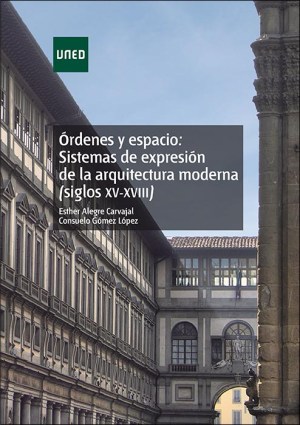 Un recorrido por la arquitectura y el urbanismo europeos de la Edad Moderna nos muestra un lenguaje arquitectónico vinculado al Clasicismo, que con la articulación de los órdenes clásicos, sus normas y sus proporciones crea espacios arquitectónicos y urbanos para los usos culturales, ideológicos y políticos del momento. Con este encuadre es necesario centrarse en el estudio del lenguaje de los órdenes arquitectónicos y los debates teóricos que surgieron durante los siglos XV al XVIII; el proceso de configuración formal y simbólico del espacio arquitectónico y su interpretación historiográfica; la creación de tipologías arquitectónicas, la relación entre el edificio y su espacio urbano; cómo influyeron las fuentes impresas y su circulación en la configuración de tipologías y modelos espaciales, o la recepción y aplicación que tuvo el Clasicismo como un sistema arquitectónico válido en los diferentes territorios europeos.
Lecture | Satish Padiyar on Fragonard, Temporality, and Suprises
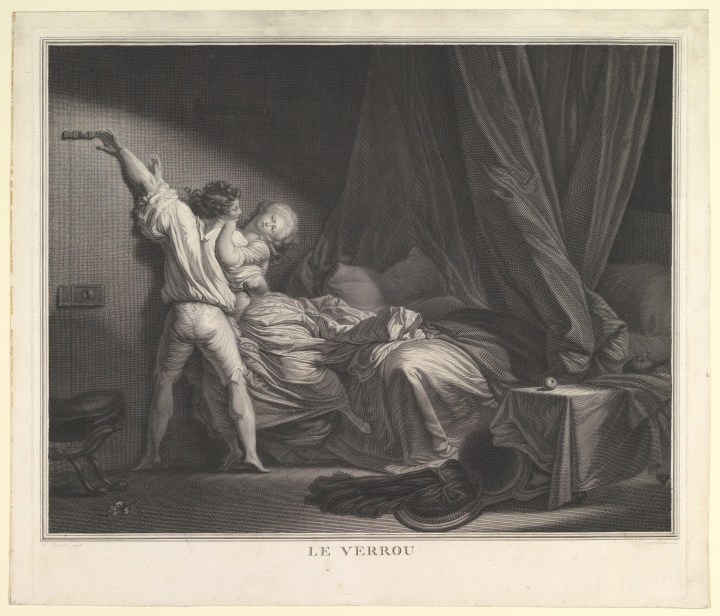
Maurice Blot, after Jean Honoré Fragonard, Le Verrou (The Bolt, or The Lock), etching, second state, sheet: 41.8 × 49 cm, image: 36.8 × 45 cm (New York: The Metropolitan Museum of Art, The Elisha Whittelsey Collection, The Elisha Whittelsey Fund, 1974.652). Fragonard’s painting is in The Louvre.
◊ ◊ ◊ ◊ ◊
Satish Padiyar, Surprises: Fragonard and Temporality
The Institute of Fine Arts, New York University, 21 April 2016
Arguably, Jean-Honoré Fragonard (1732–1806) was a painter at odds with late-eighteenth-century bourgeois notions of progressive time and the Enlightenment concept of historical and material progress. In this talk, Satish Padiyar asks how Fragonard marks time and what is the time and the timing of his quasi-expressionist marks.
In an oeuvre eminently about love, it is the particular moment of ‘surprise’ that Fragonard obsessively returns to: a moment of temporal suspense in which the human subject is taken by storm and which resurrects a quasi-infantile sense of un-control and openness to the unexpected. Through the “spontaneous gesture” (Winnicott), Fragonard seeks to throw the subject outside the received norms of time and social courtesies. The surprise attack characterizes both his technical audacity and his psychology of love, corporeal attraction and violence. Thursday, 21 April 2016, 6:00pm, Institute of Fine Arts, Lecture Hall, New York University, 1 East 78th Street.
Satish Padiyar is a Visiting Scholar at the Institute of Fine Arts and Senior Lecturer in Nineteenth-Century European Art at The Courtauld Institute of Art.
RSVP here»
The lecture is scheduled to be live-streamed.
Exhibition | Freemasonry
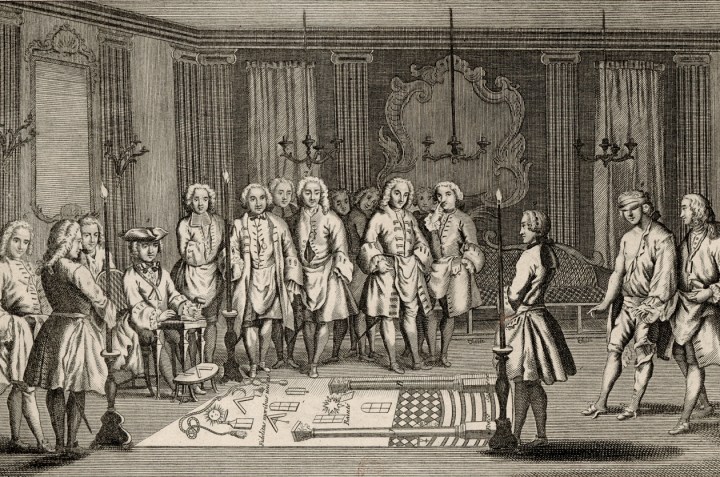
Assemblée de Francs-Maçons pour la réception des Maîtres, 1745
◊ ◊ ◊ ◊ ◊
Now on view at the BnF:
Freemasonry
Bibliothèque Nationale de France, Paris, 12 April — 24 July 2016
Curated by Pierre Mollier, Sylvie Bourel, and Laurent Portes
The Bibliothèque nationale de France, which houses one of the most important Masonic collections in the world, organizes a major exhibition dedicated to French freemasonry, in partnership with the Musée de la franc-maçonnerie. Over 450 pieces are presented, some of them for the first time ever. Some of these pieces belong either to the library’s collections or to major French obediences. Others were exceptionally lent by foreign owners. The exhibition focuses on the following issues: the origins of freemasonry, how it was founded in France, its symbols and rituals, its involvement in the political, religious, artistic and philosophical fields, the variety of associated legends… Its aim is to present freemasonry as an accessible issue.
The exhibition website is available here»
◊ ◊ ◊ ◊ ◊
Pierre Mollier, Sylvie Bourel, et Laurent Portes, La franc-maçonnerie (Paris: Bibliothèque Nationale de France, 2016), 344 pages, ISBN: 978-2717726992, 45€.
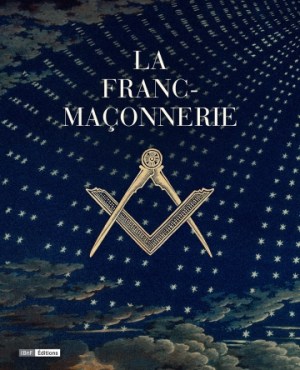 À partir du XVIIIe siècle, la franc-maçonnerie s’implante aussi profondément que durablement dans la société française. Si, de nos jours, celle-ci fait régulièrement la une des journaux, elle n’en demeure pas moins mal connue—quand elle ne nourrit pas encore d’obscurs soupçons de trafic d’influence, de complot ou d’occultisme. Publié à l’occasion de l’exposition d’une envergure sans précédent que la Bibliothèque nationale de France consacre à la franc‑maçonnerie, cet ouvrage est appelé à devenir l’une des références incontournables du domaine. Réunissant les contributions des plus grands spécialistes, il répond à la légitime curiosité dont la maçonnerie fait l’objet.
Des origines légendaires à la franc-maçonnerie moderne, dite spéculative, il retrace l’histoire de la franc-maçonnerie en faisant la part du fantasme et de la réalité. Il présente le corpus symbolique et les rites maçonniques associés à la notion, ici centrale, d’initiation. Excluant tout esprit polémique, il répertorie les réalisations politiques et sociétales de l’histoire moderne qui puisent leurs sources dans l’engagement philanthropique des maçons : les lois sur la liberté de la presse, la liberté d’association, la laïcité, l’école gratuite et obligatoire ou encore les premières bases de la protection sociale. Il relève également les inspirations maçonniques variées qui, depuis trois siècles, irriguent les arts et les lettres, de La Flûte enchantée de Mozart à Léon Tolstoï ou Rudyard Kipling, en passant, aujourd’hui, par la bande dessinée ou le roman policier. Riche par la diversité des thèmes abordés, cet ouvrage l’est enfin par son iconographie. La Bibliothèque nationale de France abrite l’un des plus importants dépôts de documents maçonniques au monde : manuscrits, estampes, livres rares y sont à la fois nombreux et d’une qualité remarquable. Ces collections exceptionnelles méritaient d’être connues et admirées au-delà du monde des chercheurs et des spécialistes ; reproduites ici, parfois pour la toute première fois, elles contribueront désormais, de manière aussi spectaculaire que documentée, à la meilleure compréhension d’une société dont les adeptes eux-mêmes reconnaissent la complexité.
Cet ouvrage est publié à l’occasion de l’exposition «La franc-maçonnerie», organisée par la Bibliothèque nationale de France et présentée sur le site François-Mitterrand, du 12 avril au 24 juillet 2016.
Aaron Wile Awarded the 2015–16 James Clifford Prize

Jean-Antoine Watteau, Le rendez-vous de chasse, ca. 1717–18, oil on canvas, 124.5 × 189 cm
(London: The Wallace Collection)
◊ ◊ ◊ ◊ ◊
As noted at CAA News (15 March 2016) . . .
Aaron M. Wile is the winner of the 2015–16 James L. Clifford Prize. The prize is awarded annually by the American Society for Eighteenth-Century Studies to the author of the best article regarding any aspect of eighteenth-century culture. Receiving the award is Wile’s “Watteau, Reverie, and Selfhood,” published by College Art Association in The Art Bulletin.
The Clifford Fund was originally established to support an annual prize in honor of James L. Clifford. Clifford founded The Johnsonian News Letter in 1940, was Secretary to the English Institute, twice a Guggenheim Fellow, a Fellow of the Royal Society of Literature, and third President of the American Society for Eighteenth-Century Studies. During his long and energetic life, he produced numerous books, articles, bibliographies, essays, edited collections, editions and, of course, the much beloved, imitated, and quoted Johnsonian News Letter. Accordingly, the Clifford Prize is awarded to the author of the best article on an eighteenth-century subject, interesting to any eighteenth-century specialist, regardless of discipline.
The American Society for Eighteenth-Century Studies is a non-profit, educational group founded to promote the study of all aspects of the eighteenth century. It sponsors conferences, awards, fellowships and prizes, and publishes Eighteenth-Century Studies and Studies in Eighteenth-Century Culture. Requests for information about the Clifford Prize and nominations may be addressed to: asecs@wfu.edu.
Aaron M. Wile, “Watteau, Reverie, and Selfhood,” The Art Bulletin 96 (September 2014): 319–37.
Watteau’s fêtes galantes break with key aspects of academic art theory in early eighteenth-century France—particularly as put forward by Roger de Piles—to elicit an experience of reverie in the spectator. Watteau’s formal innovations inaugurated a new relationship between painting and beholder that opened up a new sphere of subjective experience, linking the artist’s enterprise with the rise of modern interiority.
The article is available free to everyone through the Taylor & Francis website, until 30 June 2016.
New Book | Elegantiores statuae antiquae: Parole e immagini
From Artbooks.com:
Leonarda Di Cosmo and Lorenzo Fatticcioni, Elegantiores statuae antiquae: Parole e immagini per una fruizione ‘turistica’ dell’Antico nella Roma del Settecento (Rome: Bentivoglio, 2016), 350 pages, ISBN: 978-8898158553, 40€ / $70.
 Legato al genere degli ‘atlanti’ statuari, il volumetto Elegantiores statuae antiquae in variis romanorum palatiis asservatae di Dominique Magnan (1731–1796), offrendo una selezione aggiornata delle più apprezzate statue antiche, si connota come uno dei numerosi canali di divulgazione della cultura antiquaria operativi nel secondo Settecento. Organizzando il testo secondo strategie comunicative mutuate dalle più aggiornate ‘guide di Roma’ e coniugando nell’apparato iconografico le immagini di consolidate e nuovissime eccellenze statuarie, Magnan realizza un prodotto editoriale nuovo e di sicuro impatto commerciale. Configurate dunque come un’antologia del ‘più bello’ delle collezioni romane di antichità e quasi anticipando le rubriche ‘da non perdere’ o ‘vale il viaggio’ delle guide turistiche a noi contemporanee, le Elegantiores si proponevano come un agile prontuario che poteva essere acquistato ad accompagnamento di altri prodotti dell’ ‘industria’ culturale basata sull’Antico.
Leonarda Di Cosmo e Lorenzo Fatticcioni, studiosi di Storia dell’Archeologia Classica, svolgono la loro attività di ricerca presso la Scuola Normale Superiore di Pisa. Si occupano in particolare di antiquaria e di ‘fortuna dell’Antico’, di Storia del Collezionismo e, in parallelo, di Metodologie Informatiche applicate ai Beni Culturali. In quest’ultimo settore si dedicano alla progettazione di banche dati per la gestione di fonti storico-artistiche e documentarie e di siti web per la Museologia e la Comunicazione del Patrimonio Culturale. Hanno coordinato, tra l’altro, i progetti Monumenta Rariora. Metamorfosi dell’Antico, sulla fortuna della statuaria antica in età moderna e Arretinum Museum, sulla storia del collezionismo di antichità in territorio aretino. Tra le loro pubblicazioni più recenti si segnalano i volumi Le componenti del classicismo secentesco: Lo statuto della scultura antica e Le regole della bellezza: Saperi antiquari e teorie dell’arte nei ‘Segmenta nobilium signorum et statuarum’ di François Perrier.










 Enfilade
leave a comment