New Book | Planting the World
From Harper Collins:
Jordan Goodman, Planting the World, Joseph Banks and his Collectors: An Adventurous History of Botany (New York: William Collins, 2021), 560 pages, ISBN : 978-0007578832, $33.
 A bold new history of how botany and global plant collecting—centred at Kew Gardens and driven by Joseph Banks—transformed the earth.
Botany was the darling and the powerhouse of the eighteenth century. As European ships ventured across the Atlantic, Indian and Pacific oceans, discovery bloomed. Bounties of new plants were brought back, and their arrival meant much more than improved flowerbeds—it offered a new scientific frontier that would transform Europe’s industry, medicine, eating and drinking habits, and even fashion. Joseph Banks was the dynamo for this momentous change. As botanist for James Cook’s great voyage to the South Pacific on the Endeavour, Banks collected plants on a vast scale, armed with the vision—as a child of the Enlightenment—that to travel physically was to advance intellectually. His thinking was as intrepid as Cook’s seafaring: he commissioned radically influential and physically daring expeditions such as those of Francis Masson to the Cape Colony, George Staunton to China, George Caley to Australia, William Bligh to Tahiti and Jamaica, among many others.
Jordan Goodman’s epic history follows these high seas adventurers and their influence in Europe, as well as taking us back to the early years of Kew Gardens, which Banks developed devotedly across the course of his life, transforming it into one of the world’s largest and most diverse botanical gardens. In a rip-roaring global expedition, based on original sources in many languages, Goodman gives a momentous history of how the discoveries made by Banks and his collectors advanced scientific understanding around the world.
Jordan Goodman is Honorary Research Associate in the Department of Science and Technology Studies at University College London. He is the author of The Rattlesnake: A Voyage of Discovery to the Coral Sea, The Devil and Mr Casement, and Paul Robeson: A Watched Man. He has published extensively on the history of medicine and science, and cultural and economic history.
The Burlington Magazine, March 2021
The eighteenth century in The Burlington (I’m catching up, gradually!) . . . –CH
The Burlington Magazine 163 (March 2021)
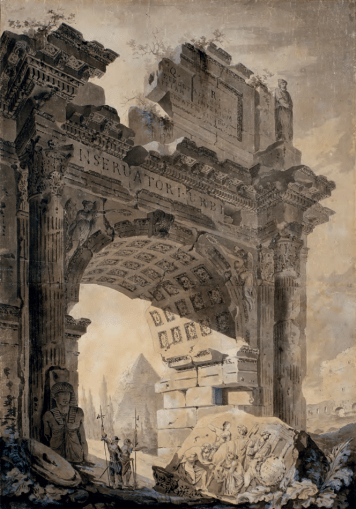
Hubert Robert, Arch of Septimius Severus, 1756; pen with grey and beige washes, 73 × 52 cm (Musée de Valence).
A R T I C L E S
• Pedro Luengo, “Spatial Rhetoric: Echoes of Madrid’s Alcázar in Palaces Overseas,” pp. 236–43.
Several key features of the Alcazar in Madrid—including the twin-courtyard plan, double staircase, and layout of the royal chapel—were replicated in royal palaces in Spain and elsewhere and in the viceregal palaces in Spain’s American empire as part of a desire to project a unified imperial image.
• Yuriko Jackall and Kari Rayner, “Becoming Hubert Robert: Some New Suggestions,” pp. 244–53.
The thin documentation of Hubert Robert’s early years makes it difficult to understand how the largely untrained student who went to Rome in 1754 emerged as a leading talent in Paris in the mid 1760s. Close examination of his art suggests that his rapid development was due to a rigorous course of study of perspective and life drawing, probably in response to criticisms of his abilities by the secretary of the Académie Royale, Charles-Nicolas Cochin.
R E V I E W S
 • Michael Hall, Review of Matthew Reeve, Gothic Architecture and Sexuality in the Circle of Horace Walpole (Pennsylvania State University Press, 2020), pp. 264–69.
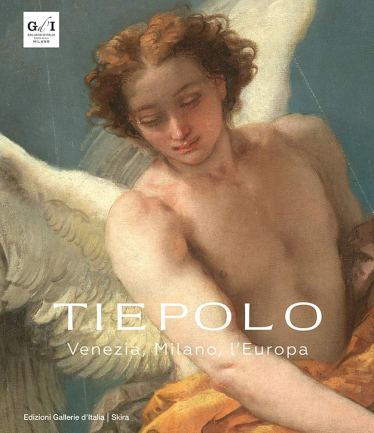
• Antonio Mazzotta, Review of the exhibition Tiepolo: Venezia, Milano, l’Europa (Milan: Gallerie d’Italia, 2020–21), pp. 273–75.
• Christoph Stiegemann, Review of the exhibition Passion, Leidenschaft: Die Kunst der großen Gefühle (Münster: LWL-Museum für Kunst und Kultur, 2020–21), pp. 275–78.
• Stephen Leach, Review of Matthew Craske, Joseph Wright of Derby: Painter of Darkness (Paul Mellon Centre for Studies in British Art, 2020), pp. 297–98.
• Philippe Malgouyres, Review of Suzanne Higgott, ‘The Most Fortunate Man of his Day’: Sir Richard Wallace: Connoisseur, Collector, and Philanthropist (Wallace Collection, 2018), pp. 298–99.
• Elena Almirall Arnal, Review of Carolina Naya Franco, El joyero de la Virgen del Pilar: Historia de una colección de alhajas europeas y americanas (Institución Fernando El Católico, 2019), pp. 302–03.
• Gauvin Alexander Bailey, Review of Laura Windisch, Kunst, Macht, Image: Anna Maria Luisa de’ Medici (1667–1743) im Spiegel ihrer Bildnisse und Herrschaftsräume (Böhlau Verlag, 2019), p. 303.
O B I T U A R I E S
• Peter Cherry, Obituary of Carmen Garrido (1947–2020), pp. 305–06.
Director of the Gabinete de Documentación Técnica at the Prado for thirty years, Carmen Garrido made major contributions to the technical study of Spanish painting, in particular with her publications on Diego Velázquez.
• Ger Luijten, Obituary of David Scrase (1949–2020), pp. 306–08.
In a career spent almost entirely at the Fitzwilliam Museum, Cambridge, David Scrase was responsible for numerous significant acquisitions and exhibitions. His magnum opus his his catalogue for the museum’s Italian drawings, published in 2011.
Panel Discussion | Enduring Versailles

Adam Perelle, Veue et Perspective du Chasteau de Versailles, avec le parterre d’eau du costé du Jardin, detail, 1680s.
◊ ◊ ◊ ◊ ◊
From Eventbrite:
Panel Discussion: Enduring Versailles
Online, Wednesday, 28 April 2021, 18.30–20.00 (EST)
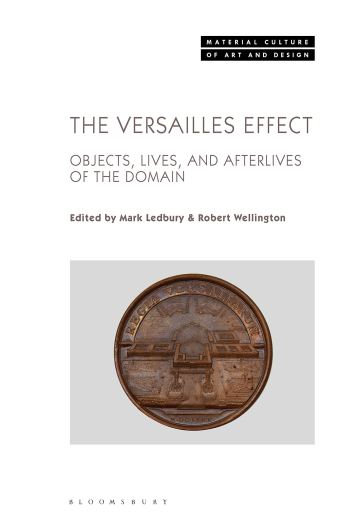
To celebrate the launch of the new book edited by Mark Ledbury and Robert Wellington, The Versailles Effect: Objects, Lives, and Afterlives of the Domaine (Bloomsbury Academic, 2020), we invite you to join us for a panel discussion on the place of the château de Versailles, the Trianons, and the domaine in the history of art today. As symbol, system and ecology, the Château and Domain of Versailles has long held a central but complex place in the history of Western art and in the global imaginary. The panel—hosted by the Historians of Eighteenth-Century Art & Architecture— will discuss how and why Versailles still remains at the center of long-eighteenth-century studies today. How does the monument to the Bourbon regime fare in the era of recuperative histories of gender, race, and class? Why bother with Versailles?
This is an online event; a Zoom link will be sent, one day prior, to those who have registered (via Eventbrite).
 Conveners
• Mark Ledbury—Power Professor of Art and Visual Culture, The University of Sydney
• Robert Wellington—Senior Lecturer, Centre for Art History and Art Theory, Australian National University
Panellists
• Basile Baudez—Assistant Professor in Architectural History, Department of Art and Archeology, Princeton
• Sarah Grandin—The Clark-Getty Paper Project Curatorial Fellow, Clark Art Institute
• Junko Takeda—Professor of History, Maxwell School of Citizenship and Public Affairs, Syracuse University
• Aaron Wile—Associate Curator, Department of French Paintings, National Gallery of Art, Washington, D.C.
US/UK/France
Wednesday, 28 April 2021
15.30–17.00 (PDT)
18.30–20.00 (EST)
23.30–01.00 (GMT)
00.30–02.00 (CEST)
Australia/New Zealand
Thursday, 29 April 2021
08.30–10.00 (AEST)
10.30–12.00 (NZST)
Should you wish to order a copy of The Versailles Effect, we invite you to take advantage of a 30% discount by entering the code AAH21 at the Bloomsbury website.
New Book | Surroundings
From the 1790s to today (Earth Day); from The University of Chicago Press:
Etienne Benson, Surroundings: A History of Environments and Environmentalisms (Chicago: The University of Chicago Press, 2020), 296 pages, ISBN: 978-0226706153 (hardcover), $83 / ISBN: 978-0226706290 (paperback), $28.
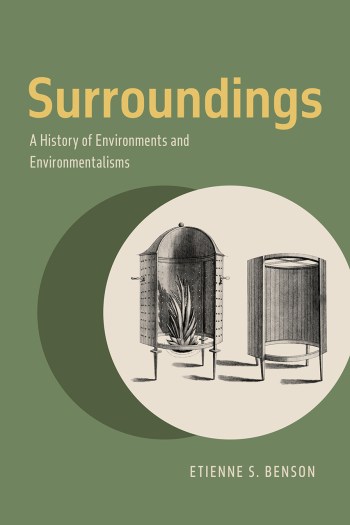 Given the ubiquity of environmental rhetoric in the modern world, it’s easy to think that the meaning of the terms environment and environmentalism are and always have been self-evident. But in Surroundings, we learn that the environmental past is much more complex than it seems at first glance. In this wide-ranging history of the concept, Etienne S. Benson uncovers the diversity of forms that environmentalism has taken over the last two centuries and opens our eyes to the promising new varieties of environmentalism that are emerging today. Through a series of richly contextualized case studies, Benson shows us how and why particular groups of people—from naturalists in Napoleonic France in the 1790s to global climate change activists today—adopted the concept of environment and adapted it to their specific needs and challenges. Bold and deeply researched, Surroundings challenges much of what we think we know about what an environment is, why we should care about it, and how we can protect it.
Etienne S. Benson is associate professor in the Department of History and Sociology of Science at the University of Pennsylvania. He is the author of Wired Wilderness: Technologies of Tracking and the Making of Modern Wildlife.
C O N T E N T S
Introduction: What Was an Environment?
1 The World in the Museum: Natural History and the Invention of Organisms and Environments in Post-Revolutionary Paris
2 Environments of Empire: Disease, Race, and Statistics in the British Caribbean
3 The Urban Milieu: Evolutionary Theory and Social Reform in Progressive Chicago
4 The Biosphere as Battlefield: Strategic Materials and Systems Theories in a World at War
5 The Evolution of Risk: Toxicology, Consumption, and the US Environmental Movement
6 The Human Planet: Globalization, Climate Change, and the Future of Civilization on Earth
Conclusion: What Might the Environment Become?
Acknowledgments
Notes
Index
New Book | The Usufructuary Ethos: Power, Politics, and Environment
Forthcoming from the University of Virginia Press:
Erin Drew, The Usufructuary Ethos: Power, Politics, and Environment in the Long Eighteenth Century (2021), 232 pages, ISBN: 978-0813945798 (cloth), $85 / ISBN: 978-0813945804 (paper), $40 / ISBN: 978-0813945811 (ebook), $30.
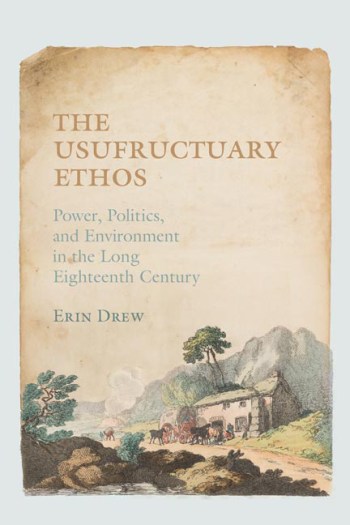 Who has the right to decide how nature is used, and in what ways? Recovering an overlooked thread of seventeenth- and eighteenth-century environmental thought, Erin Drew shows that English writers of the period commonly believed that human beings had only the ‘usufruct’ of the earth—the ‘right of temporary possession, use, or enjoyment of the advantages of property belonging to another, so far as may be had without causing damage or prejudice’. The belief that human beings had only temporary and accountable possession of the world, which Drew labels the ‘usufructuary ethos’, had profound ethical implications for the ways in which the English conceived of the ethics of power and use. Drew’s book traces the usufructuary ethos from the religious and legal writings of the seventeenth century through mid-eighteenth-century poems of colonial commerce, attending to the particular political, economic, and environmental pressures that shaped, transformed, and ultimately sidelined it. Although a study of past ideas, The Usufructuary Ethos resonates with contemporary debates about our human responsibilities to the natural world in the face of climate change and mass extinction.
Erin Drew is Associate Professor of English at the University of Mississippi.
New Collection of Essays | The Classical Vase Transformed
From Oxford University Press:
Alexia Petsalis-Diomidis with Edith Hall, eds., The Classical Vase Transformed: Consumption, Reproduction, and Class in Eighteenth- and Nineteenth-Century Britain, special issue of Bulletin of the Institute of Classical Studies 63.1 (June 2020).
The Classical Vase Transformed: Consumption, Reproduction, and Class in Eighteenth- and Nineteenth-Century Britain explores hitherto marginalized working-class and middle-class engagements with ancient Greek vases. Its origins lie in a symposium which took place in May 2016 at King’s College London, Ancient Greek Pots and Class in Britain, 1798–1939. This themed issue of BICS has three principal aims. First, to sharpen our awareness of the range of engagements with classical culture experienced at the lower end of the social spectrum, in the context of a scholarly focus on elites. Second, to help redress the balance within Classical Reception Studies, which is heavily skewed towards receptions of classical literature rather than classical material culture. And third, to increase the prominence of humble ceramics as compared to grand monumental sculpture, which remains the focus of studies on the reception of classical material culture. . . .
While a small but vocal minority of classicists remain unconvinced of the value of Classical Reception Studies, seeing ‘reception’ as an extraneous layer that needs to be ‘peeled off’ in order to access the ancient world ‘directly’, the theoretical basis of Classical Reception Studies continues to be a subject of scholarly debate (4). . . .
The reception of classical sculpture has fared relatively well within the disciplines of Art History, Eighteenth-Century Studies, and even Classical Archaeology. Areas of particular interest are collecting and the Grand Tour, and the nationalist use of sculptural archaeological remains in the nineteenth and twentieth centuries (9). But the reception of Greek vases, including the history of scholarship, collecting, creative responses, and influence on the production of later painting, has only recently started to be explored in depth. This state of affairs gives rise to the third aim of the issue: to put the reception of Greek vases in the spotlight in the context of the dominance of monumental stone sculpture in studies of receptions of classical material culture. . . .
The full introduction (including notes) is available here»
C O N T E N T S
 Acknowledgements
Contributors
List of Figures
• Alexia Petsalis-Diomidis, “Introduction,” pp. 8–14.
The Classical Vase Produced and Consumed in New Ceramic Forms
• Edith Hall, “How Much Did Pottery Workers Know about Classical Art and Civilisation?,” pp. 17–33.
• Alexia Petsalis-Diomidis, “Pottery Workers, ‘the Ladies’, and ‘the Middling Class of People’: Production and Marketing of ‘Etruscan and Grecian Vases’ at Wedgwood c.1760–1820,” pp. 34–53.
• Janett Morgan, “A Greek Tragedy? Why ‘Dillwyn’s Etruscan Ware’ Failed,” pp. 54–71.
• Paul Lewis, “Archaeology in the Home: Neoclassical Ceramics for New Audiences in Mid-Nineteenth-Century Britain,” pp. 72–88.
The Classical Vase Constrained in the Museum Cabinet and Transfigured in the Body
• Caspar Meyer, “Ancient Vases in Modern Vitrines: The Sensory Dynamics and Social Implications of Museum Display,” pp. 91–109.
• Helen Slaney, “Pots in Performance: Emma Hamilton’s Attitudes,” pp. 110–22.
• Abigail Baker, Myths of the Odyssey in the British Museum (and beyond): Jane Ellen Harrison’s Museum Talks and Their Audience,” pp. 123–37.
Response
• Katherine Harloe, “Classics Transformed? Ancient Figured Vases as a Test-Case for the Preoccupations of Classical Reception Studies,” pp. 138–42.
New Book | Classical Caledonia
From Edinburgh UP:
Alan Montgomery, Classical Caledonia: Roman History and Myth in Eighteenth-Century Scotland (Edinburgh: Edinburgh University Press, 2020), 232 pages, ISBN: 978-1474445641, £75 / $100 (also available in ebook and PDF formats).
 Explores early modern interpretations of Roman Scotland
• Examines an important aspect of the development of Scottish identity, a subject being brought to the fore again in recent debates surrounding Scottish independence
• Offers an in-depth study of a largely overlooked aspect of Scottish historiography
• Makes extensive use of archival and manuscript material, much of it previously unpublished
• Takes a broad, multidisciplinary approach
• Examines the influence of the Scottish Enlightenment, James Macpherson’s Ossianic poems, and the rise of Romanticism
This book focuses on early modern attitudes towards Scotland’s ancient past and looks in particular at the ways in which this past was not only misunderstood, but also manipulated in attempts to create a patriotic history for the nation. Adding a new perspective on the formation of Scotland’s national identity, the book documents a century-long, often heated debate regarding the extent of Roman influence north of Hadrian’s Wall. By exploring the lives and writings of antiquarians, poets, and Enlightenment thinkers, it aims to uncover the political, patriotic, and intellectual influences which fuelled this debate. Classical Caledonia casts light on a rarely discussed aspect of Scotland’s historiography, one which played a vital role in establishing early modern notions of ‘Scottishness’ at a time when Scotland was coming to terms with radical and traumatic changes to its position within Britain and the wider world.
Alan Montgomery received his PhD at the Birkbeck, University of London in 2016 and published several papers in key journals, including The Journal of British Identities and The Proceedings of the Society of Antiquaries of Scotland. Montgomery was elected a Fellow of the Society of Antiquaries of Scotland in 2019.
C O N T E N T S
Introduction
1 Imagining a Classical Caledonia: Sir Robert Sibbald’s Vision of Scotland’s Roman Past
2 Walled Out of Humanity: Sir John Clerk and his Circle
3 Resisting the ‘Conquerors of the Universe’: Celebrating the Caledonian Rejection of Rome
4 ‘Beyond the Vallum’: English Interpretations of Scottish History
5 ‘Monuments and Delights of the Arts’: Rediscovering the Material Remains of Rome in Scotland
6 Reconquering the Highlands: Hanoverian Interpretations of Roman Scotland
7 The Age of ‘Agricolamania’: Early Modern Uses and Abuses of Tacitus’ Agricola
8 Forging a Nation: The Spurious Histories of Charles Bertram and James Macpherson
9 After Ossian: Changing Interpretations of Roman Scotland
Conclusion
New Book | The Architecture of Scotland, 1660–1750
From Edinburgh UP:
Louisa Humm, John Lowrey, Aonghus MacKechnie, eds., The Architecture of Scotland, 1660–1750 (Edinburgh: Edinburgh University Press, 2020), 672 pages, ISBN: 978-1474455268, £150 / $195 (also available in ebook and PDF formats).
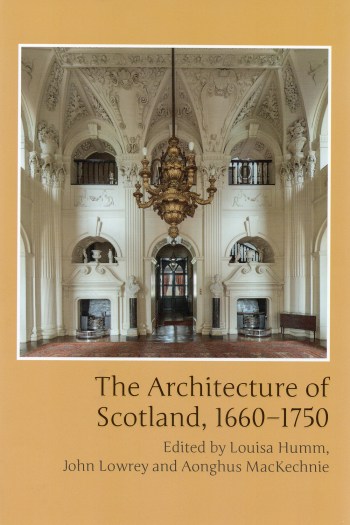 A rich, revisionist overview of Scotland’s early classical architecture
• Steps decisively away from the ‘Scottish castle’ genre of architecture
• Contextualises the work of Scotland’s first well-documented grouping of major architects—including Sir William Bruce, Mr James Smith, James Gibbs, and the Adam dynasty
• Documents the architectural developments of a transformational period in Scottish history
• Beautifully illustrated throughout with 300 colour illustrations
This architectural survey covers one of Scotland’s most important periods of political and architectural change when mainstream European classicism became embedded as the cultural norm. Interposed between the decline of ‘the Scottish castle’ and its revival as Scotch Baronial architecture, the contributors consider both private and public/civic architecture. They showcase the architectural reflections of a Scotland finding its new elites by providing new research, analysing paradigms such as Holyrood and Hamilton Palace, as well as external reference points such as Paris tenements, Roman precedents, and English parallels. Typologically, the book is broad in scope, covering the architecture and design of country estate and also the urban scene in the era before Edinburgh New Town.
Louisa Humm works at Historic Environment Scotland as Senior Casework Officer responsible for listed building consent work in Glasgow and other parts of South-West Scotland. Her interests include early eighteenth century gardens and designed landscapes, railway station architecture, and waterworks (particularly the Loch Katrine Scheme).
John Lowrey is a senior lecturer in architectural history in the School of Architecture and Landscape Architecture at Edinburgh University. He is also Dean of Undergraduate Studies in the College of Humanities and Social Science. His research interests are mainly Scottish and mainly in the long eighteenth century, with a special interest and wide range of publications in the architecture and urban design of the Enlightenment period, the early classical country house of the late seventeenth and early eighteenth century, and the designed landscape of Scotland.
Aonghus MacKechnie is Professor of Architecture at the University of Strathclyde, Glasgow; he also teaches at the Scottish Centre for Conservation Studies at the University of Edinburgh. He has researched and published on Renaissance-early modern architecture, culture, and Romanticism in Scotland, and also on the history and culture of the Highlands, in particular as author of Carragh-chuimhne, Two Islay Monuments and Two Islay People: Hector Maclean and John Francis Campbell (Ileach, 2004). His most recent book is his co-authored Scotch Baronial: Architecture and National Identity (Bloomsbury, 2019). Currently, he is a contributor to the forthcoming The Buildings of Scotland: Lothian (Yale University Press).
C O N T E N T S
Setting the Scene
Introduction — Aonghus MacKechnie
1 Political Economy and the Shaping of Early Modern Scotland — Allan Macinnes
Classicism and the Castle
2 The Paired Columned Entrance of Holyroodhouse as a Solomonic Signifier — Ian Campbell
3 Exiting Europe? The Royal Works in the Age of 1689 Revolution and 1707 Union — Aonghus MacKechnie
4 Sir William Bruce: Classicism and the Castle — John Lowrey
5 A Classic Looks at the Gothic: Sir John Clerk, Ruins, and Romance — Iain Gordon Brown
The Business of Building: Trades, Materials, and Pattern Books
6 Scottish Ironwork, 1660–1730 — Ali Davey and Aonghus MacKechnie
7 The Roof Structure of George Heriot’s Hospital Chapel and Roof Design in Scotland during the Seventeenth and Eighteenth Centuries — Anna Serafini and Cristina González-Longo
8 Thomas Albourn, William Bruce’s Plasterer: An Englishman and the Best Plaisterer That Was Ever Yet in Scotland — William Napier
9 Colen Campbell, James Gibbs and Sir John Vanbrugh: Rethinking the Origins of the British Architectural Plate Book — James Legard
The Country House
10 The Architectural Innovations of Mr James Smith of Whitehill (c. 1645–1731) within the European Context — Cristina González-Longo
11 From England to Scotland in 1701: The Duchess of Buccleuch Returns to Dalkeith Palace — Sally Jeffery
12 Women Patrons and Designers in Early Eighteenth-Century Scotland: Lady Panmure and Lady Nairne — Clarisse Godard Desmarest
13 Architectural Works by Andrew Fletcher of Saltoun — Rory Lamb
14 Mannerism in the Work of John Douglas in Eighteenth-Century Scotland — Dimitris Theodossopoulos
Gardens
15 ‘The Inexpressible Need of Enclosing and Planting’: Country House Policies in Scotland, 1660–1750 — Christopher Dingwall
16 The Terraced Garden in Scotland in the Seventeenth Century — Marilyn Brown
17 Alexander Edward’s European Tour — John Lowrey
18 William Adam and Formal Landscape Design in Scotland, 1720–1745 — Louisa Humm
19 Adam and Antiquity: An Arcadian Retreat at Arniston? — Nick Haynes
Urban Architecture
20 Town Housing and Planning: McGill, Gibbs, and Dreghorn in Early Georgian Glasgow — Anthony Lewis
21 Interpretation of European Classicism: Three Eighteenth-Century University Libraries — Deborah Mays
22 Edinburgh and Venice: Comparing the Evolution in Communal Living in Geographically Challenged Mercantile Communities — Giovanna Guidicini
23 Living Horizontally: The Origin of the Tenement in Paris and Edinburgh — Clarisse Godard Desmarest
24 William Adam’s Public Buildings — David W. Walker
Conclusion
25 Was Scotland a ‘Narrow Place’? — Ranald MacInnes
Abbreviations
End Notes
Index
Exhibition | American Weathervanes
This summer at the American Folk Art Museum (with the catalogue already available from Rizzoli). . .
American Weathervanes: The Art of the Winds
American Folk Art Museum, New York, 23 June 2021 — 2 January 2022
Organized by Robert Shaw and Emelie Gevalt
 American Weathervanes: The Art of the Winds is the first exhibition in more than four decades to highlight the beauty, historical significance, and technical virtuosity of American vanes fashioned between the late seventeenth and early twentieth centuries. The exhibition includes the graceful figure of Fame blowing a trumpet and standing en pointe like a celestial ballerina, attributed to well-known manufactory E.G. Washburne & Co. in New York City; a Dove of Peace designed by George Washington for his home in Mount Vernon; and an eagle possibly made in the foundry of revolutionary patrior Paul Revere. In addition to weathervanes, the exhibition will also include beautifully articulated wood sculptures by Harry Leach that functioned as patterns for weathevane molds for the Cushing & White and L.W. & Sons manufactories in Waltham, MA., watercolors of historic weathervanes painted for the Index of American Design, and rare archival materials that illuminate the development of the weathervane in the United States of America.
Robert Shaw is a critically acclaimed author, curator, and art historian who has written and lectured extensively on many aspects of American folk art. He has curated exhibitions at the Dallas Museum of Natural History, the Fenimore Art Museum, the National Gallery of Art, and the Shelburne Museum, where he served as curator from 1981 to 1994.
Robert Shaw, American Weathervanes: The Art of the Winds (New York: Rizzoli Electa, 2021), 256 pages, ISBN: 978-0847863907, $75.
New Book | Enlightened Animals in Eighteenth-Century Art
From Bloomsbury:
Sarah Cohen, Enlightened Animals in Eighteenth-Century Art: Sensation, Matter, and Knowledge (London: Bloomsbury Visual Arts, 2021), 264 pages, ISBN: 978-1350203587, $170 (also available in ebook and PDF formats).
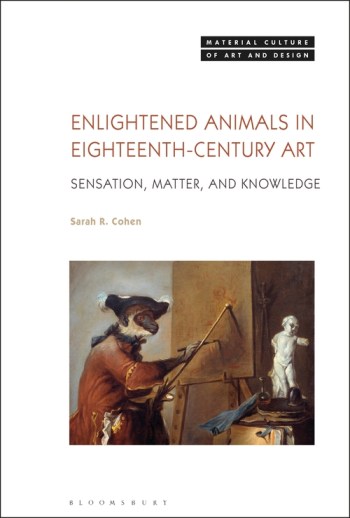 How do our senses help us to understand the world? This question, which preoccupied Enlightenment thinkers, also emerged as a key theme in depictions of animals in eighteenth-century art. This book examines the ways in which painters such as Chardin, as well as sculptors, porcelain modelers, and other decorative designers portrayed animals as sensing subjects who physically confirmed the value of material experience.
The sensual style known today as the Rococo encouraged the proliferation of animals as exemplars of empirical inquiry, ranging from the popular subject of the monkey artist to the alchemical wonders of the life-sized porcelain animals created for the Saxon court. Examining writings on sensory knowledge by La Mettrie, Condillac, Diderot and other philosophers side by side with depictions of the animal in art, Cohen argues that artists promoted the animal as a sensory subject while also validating the material basis of their own professional practice.
Sarah Cohen is Professor of Art History and Women’s Studies at the University at Albany, SUNY, USA. She has published extensively on representations of the body, both human and animal. Her first book Art, Dance and the Body in French Culture the Ancien Régime was published in 2000.
C O N T E N T S
Introduction
1 The Social Animal
2 The Sensitive Animal
3 Monkey Artists
4 The Language of Brutes
5 Animating Porcelain
6 The Soul of Matter
Conclusion
Bibliography
Index










 Enfilade
leave a comment