New Book | Old Masters Worldwide
From Bloomsbury:
Susanna Avery-Quash and Barbara Pezzini, eds., Old Masters Worldwide: Markets, Movements and Museums, 1789–1939 (London: Bloomsbury, 2020), 320 pages, ISBN: 978-1501348143, $130.
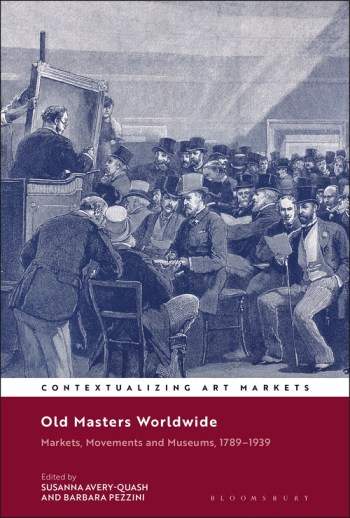 As a result of the Napoleonic wars, vast numbers of Old Master paintings were released on to the market from public and private collections across continental Europe. The knock-on effect was the growth of the market for Old Masters from the 1790s up to the early 1930s, when the Great Depression put an end to its expansion. This book explores the global movement of Old Master paintings and investigates some of the changes in the art market that took place as a result of this new interest. Arguably, the most important phenomenon was the diminishing of the traditional figure of the art agent and the rise of more visible, increasingly professional, dealerships; firms such as Colnaghi and Agnew’s in Britain, Goupil in France, and Knoedler in the USA, came into existence. Old Masters Worldwide explores the ways in which the pioneering practices of such businesses contributed to shape a changing market.
Susanna Avery-Quash is Senior Research Curator (History of Collecting) at The National Gallery London. Barbara Pezzini is a prolific writer on European Old Masters and British art of the period 1830–1970; she has previously worked in curatorial, research, and archival projects for The National Gallery, National Trust, and The Burlington Magazine.
C O N T E N T S
List of Figures
Series Editor’s Introduction, Kathryn Brown
Foreword, Gabriele Finaldi
Acknowledgements
List of Abbreviations
Introduction, Susanna Avery-Quash and Barbara Pezzini
Part I: Developing European Networks, 1780–1894
1 The European Market for Italian Old Masters after Napoleon — Robert Skwirblies (Technische Universität Berlin)
2 Old Masters from Rome to London: Alexander Day and Pietro Camuccini — Pier Ludovico Puddu (Palacký University, Czech Republic)
3 Selling Old Masters in Britain, France, and the Netherlands: The Networking Strategies of John Smith — Julia Armstrong-Totten (Independent Scholar, USA)
4 A Web of Agents: Buying Old Masters for the National Gallery, London — Susanna Avery-Quash (National Gallery, UK)
Part II: Gaining International Visibility and Expertise, 1850–1909
5 Old Masters versus Modern Art in Parisian Auctions — Léa Saint-Raymond (Université Paris Nanterre)
6 Agnew’s from Modern Art to the Old Masters — Barbara Pezzini (Independent Scholar, UK)
7 Taste or Opportunity? Durand-Ruel and Spanish Old Masters — Véronique Gerard Powell (Independent Scholar, France)
8 Authority and Expertise in the Old Master Market: Bode and Duveen — Catherine Scallen (Case Western Reserve University)
9 Scholar, Dealer, and Museum Man: Robert Langton Douglas in the International Old Master Market — Imogen Tedbury (Royal Holloway, University of London)
Part III: Casting a Wider Web, 1900–1939
10 A Missed Opportunity? Goupil and the Old Masters — Agnès Penot (Independent Scholar, USA)
11 Knoedler and Old Masters in America — Inge Reist (The Frick Collection)
12 Trust, Friendship, and Politics in the Old Master Market: Duveen and the State Art Collection of the Kingdom of Yugoslavia — Jelena Todorovic (Faculty of Fine Arts, Serbia)
13 Negotiating Old Masters for the Melbourne National Gallery — Monique Webber (The University of Melbourne and Monash University Art Design and Architecture)
14 The Distant Old Masters of South Africa — Jillian Carman (University of the Witwatersrand, South Africa)
Select Bibliography
Author Biographies
Index
New Book | The Purchase of the Past
From Cambridge UP:
Tom Stammers, The Purchase of the Past: Collecting Culture in Post-Revolutionary Paris c.1790–1890 (New York: Cambridge University Press, 2020), 370 pages, ISBN: 978-1108478847, $120.
 Offering a broad and vivid survey of the culture of collecting from the French Revolution to the Belle Époque, The Purchase of the Past explores how material things became a central means of accessing and imagining the past in nineteenth-century France. By subverting the monarchical establishment, the French Revolution not only heralded the dawn of the museum age, it also threw an unprecedented quantity of artworks into commercial circulation, allowing private individuals to pose as custodians and saviours of the endangered cultural inheritance. Through their common itineraries, erudition, and sociability, an early generation of scavengers established their own form of ‘private patrimony’, independent from state control. Over a century of Parisian history, Tom Stammers explores collectors’ investments—not just financial but also emotional and imaginative—in historical artefacts, as well as their uncomfortable relationship with public institutions. In so doing, he argues that private collections were a critical site for salvaging and interpreting the past in a post-revolutionary society, accelerating but also complicating the development of a shared national heritage.
Tom Stammers is Associate Professor in Modern European Cultural History at the University of Durham. He is a historian of modern France, specialising in visual and material culture; he works frequently with museums and heritage organisations, including collaborating on exhibitions, and is a regular contributor to arts reviews like Apollo.
C O N T E N T S
List of Illustrations
Acknowledgements
Introduction: Collection, Recollection, Revolution
1 Amateurs and the Art Market in Transition, c.1780–1830
2 Archiving and Envisioning the French Revolution, c.1780–1830
3 Book Hunting, Bibliophilia, and a Textual Restoration, c.1790–1840
4 Salvaging the Gothic in Private and Public Spaces, c.1820–1870
5 Royalists versus Vandals, and the Cult of the Old Regime, c.1860–1880
6 Allies of the Republic? Inside the Sale of the Century, c.1870–1895
Conclusion: The Resilience and Eclipse of Curiosité
Bibliography
Index
New Book | Divine Images: The Life and Work of William Blake
From Reaktion Books:
Jason Whittaker, Divine Images: The Life and Work of William Blake (London: Reaktion Books, 2021), 392 pages, ISBN: 978-1789142877, £25 / $35.
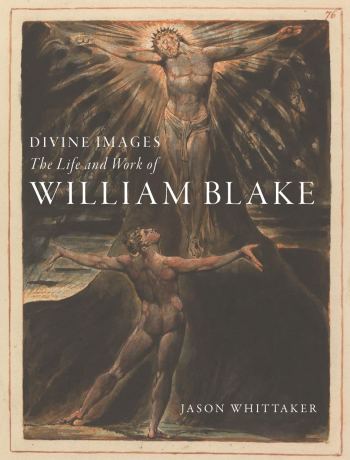 Although relatively obscure during his lifetime, William Blake has become one of the most popular English artists and writers, through poems such as ‘The Tyger’ and ‘Jerusalem’, and images including The Ancient of Days. Less well-known is Blake’s radical religious and political temperament, and that his visionary art was created to express a personal mythology that sought to recreate an entirely new approach to philosophy and art. This book examines both Blake’s visual and poetic work over his long career, from early engravings and poems to his final illustrations to Dante and the Book of Job. Divine Images further explores Blake’s immense popular appeal and influence after his death, offering an inspirational look at a pioneering figure.
Jason Whittaker is Head of the School of English and Journalism at the University of Lincoln. His books include William Blake and the Myths of Britain (1999) and Blake 2.0 (2012).
C O N T E N T S
Introduction: This World is a World of Imagination and Vision
1 Early Life and Work
2 Visions of Innocence
3 A New Heaven is Begun
4 Lambeth and Experience
5 A New System of Mythology
6 Night Thoughts and the Four Zoas
7 England’s Pleasant Land
8 Creating Systems
9 Final Visions
10 Death and Resurrection: The Legacy of William Blake
Bibliography
New Book | Metz royale et impériale: La cathédrale
From the École nationale supérieure d’architecture Paris-Malaquais:
Aurélien Davrius, Metz royale et impériale: La cathédrale, la mémoire et l’amnésie (Bordeaux: Éditions William Blake & Co, 2020), ISBN: 978-2841032303, 28€.
 Ville libre d’Empire, protectorat de facto du royaume France à partir de 1552, puis incorporée en 1648, Metz se voit annexée au Second Reich en 1871, avant de redevenir française en 1918. C’est l’histoire d’une ville de l’entre-deux qui se lit dans l’architecture messine. Le quartier de la Neue Stadt, bien sûr, rappelle ce passé germanique; la «gothisation» de la cathédrale à la fin du XIXe siècle aussi. Partant de l’exemple de l’entrée principale de la cathédrale Saint-Étienne remaniée par le Reich, cette étude vise à relever le caractère symbolique que Metz avait revêtu pour la monarchie française et qu’elle revêtit de nouveau, mais cette fois pour la monarchie impériale prussienne, au-delà du rôle purement stratégique qu’elle jouait pour les deux nations successives.
Louis XV, au milieu du Siècle des Lumières, chargea son architecte Jacques-François Blondel d’aménager les abords de la cathédrale, en créant trois places et en construisant un portique monumental, véritable ex-voto à la gloire du Prince, en style classique. Un siècle plus tard, Guillaume II fera démonter cette entrée, jugée trop française, pour effacer le souvenir de l’ancienne puissance dominante. C’est un portail néo-gothique qu’il fait édifier sur les dessins de son architecte Paul Tornow, digne de la haute culture du Second Reich. Le kaiser se fit représenter lui-même sous les traits du prophète Daniel, statue intégrée dans le décor du portail. Guillaume II tenta d’effacer et de remplacer Louis XV.
Afin de mieux comprendre les luttes de pouvoir entre France et Allemagne qui se nouèrent à Metz, à travers les œuvres d’architecture, cette étude se propose d’élargir la question à l’ensemble du contexte franco-allemand, de la fin du XVIIIe siècle au début du XXe. Les travaux de la cathédrale de Metz n’offrent qu’une pièce d’un puzzle beaucoup plus vaste, dont on peine à saisir tous les tenants et aboutissants. Il faut faire remonter cette rivalité à l’époque des armées napoléoniennes occupant et humiliant la Prusse, de la récupération de la figure de Vercingétorix par Napoléon III, de l’appropriation d’un certain style architectural par Guillaume II, mais aussi des chantiers d’achèvement des cathedrales de Cologne ou d’Ulm. Sur la base d’une riche iconographie, des articles de presse de l’époque ou encore de fonds archivistiques peu exploités, c’est un double portrait de la ville de Metz qui s’offre au lecteur: une ville à la fois royale et impériale.
S O M M A I R E
Partie I : Metz royale
• Metz et la politique royale d’embellissements
• Le portique de la cathédrale : un monument royal pour symboliser le Prince
• Un portique classique pour une cathédrale gothique
• Blondel théoricien et architecte d’un gothique des Lumières
Partie II : Metz impériale
• « Architecture allemande » (Goethe, 1772)
• Du gothique au classique, et retour : menaces sur l’œuvre de Blondel
• Paul Tornow, le « Viollet-le-Duc de Metz »
• Une gothisation du gothique
• Le Kaiser et l’équerre
• La fabrique d’un art national
• Gothique français contre gothique allemand : l’architecture comme enjeu national
New Book | The Marquis de Sade and the Avant-Garde
Sade died on this day, December 2, in 1814 at the Charenton Asylum; from Princeton UP:
Alyce Mahon, The Marquis de Sade and the Avant-Garde (Princeton: Princeton University Press, 2020), 296 pages, ISBN: 978-0691141619, £38 / $45.
 How the notorious author of The 120 Days of Sodom inspired the surrealists and other avant-garde artists, writers, and filmmakers
The writings of the Marquis de Sade (1740–1814) present a libertine philosophy of sexual excess and human suffering that refuses to make any concession to law, religion, or public decency. In this groundbreaking cultural history, Alyce Mahon traces how artists of the twentieth century turned to Sade to explore political, sexual, and psychological terror, adapting his imagery of the excessively sexual and terrorized body as a means of liberation from systems of power.
Mahon shows how avant-garde artists, writers, dramatists, and filmmakers drew on Sade’s ‘philosophy in the bedroom’ to challenge oppressive regimes and their restrictive codes and conventions of gender and sexuality. She provides close analyses of early illustrated editions of Sade’s works and looks at drawings, paintings, and photographs by leading surrealists such as André Masson, Leonor Fini, and Man Ray. She explains how Sade’s ideas were reflected in the writings of Guillaume Apollinaire and the fiction of Anne Desclos, who wrote her erotic novel, Story of O, as a love letter to critic Jean Paulhan, an admirer of Sade. Mahon explores how Sade influenced the happenings of Jean-Jacques Lebel, the theater of Peter Brook, the cinema of Pier Paolo Pasolini, and the multimedia art of Paul Chan. She also discusses responses to Sade by feminist theorists such as Simone de Beauvoir, Susan Sontag, and Angela Carter.
Beautifully illustrated, The Marquis de Sade and the Avant-Garde demonstrates that Sade inspired generations of artists to imagine new utopian visions of living, push the boundaries of the body and the body politic, and portray the unthinkable in their art.
Alyce Mahon is Reader in Modern and Contemporary Art History at the University of Cambridge. She is the author of Surrealism and the Politics of Eros, 1938–1968 and Eroticism and Art.
New Book | Joseph Wright of Derby: Painter of Darkness
From Yale University Press:
Matthew Craske, Joseph Wright of Derby: Painter of Darkness (London: Paul Mellon Centre for Studies in British Art, 2020), 368 pages, ISBN: 978-1913107123, £45 / $60.
 A revelatory study of one of the 18th century’s greatest artists, which places him in relation to the darker side of the English Enlightenment
Joseph Wright of Derby (1734–1797), though conventionally known as a ‘painter of light’, returned repeatedly to nocturnal images. His essential preoccupations were dark and melancholy, and he had an enduring concern with death, ruin, old age, loss of innocence, isolation, and tragedy.
In this long-awaited book, Matthew Craske adopts a fresh approach to Wright, which takes seriously contemporary reports of his melancholia and nervous disposition, and goes on to question accepted understandings of the artist. Long seen as a quintessentially modern and progressive figure—one of the artistic icons of the English Enlightenment—Craske overturns this traditional view of the artist. He demonstrates the extent to which Wright, rather than being a spokesman for scientific progress, was actually a melancholic and sceptical outsider, who increasingly retreated into a solitary, rural world of philosophical and poetic reflection, and whose artistic vision was correspondingly dark and meditative. Craske offers a succession of new and powerful interpretations of the artist’s paintings, including some of his most famous masterpieces. In doing so, he recovers Wright’s deep engagement with the landscape, with the pleasures and sufferings of solitude, and with the themes of time, history, and mortality. Joseph Wright of Derby emerges not only as one of Britain’s most ambitious and innovative artists, but also as one of its most profound.
Matthew Craske is reader in art history at Oxford Brookes University.
New Book | Discovering Dalmatia
From Bookshop Dominović:
Katrina O’Loughlin, Ana Šverko and Elke Katharina Wittich, eds., Discovering Dalmatia: Dalmatia in Travelogues, Images, and Photographs (Zagreb: The Institute of Art History, 2019), 382 pages, ISBN: 978-9537875466, 180KN / £22.
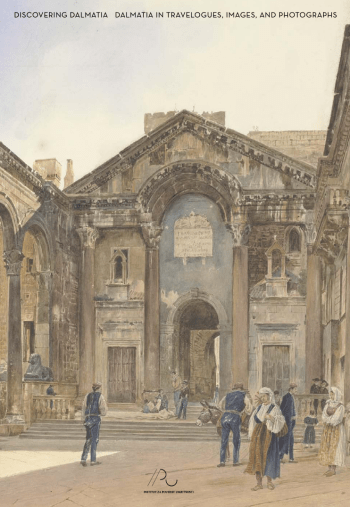 This book is the second to emerge from the conferences organised as a part of the Croatian Institute of Art History research project Dalmatia as a Destination of the European Grand Tour in the Eighteenth and the Nineteenth Century (Grand Tour Dalmatia), a project funded by the Croatian Science Foundation. Although this three-year project, which began in 2014, has officially concluded, this wonderful scholarly journey through histories of travellers’ perceptions of Dalmatia only continues—through the organisation of annual conferences under the collective title of Discovering Dalmatia, and in the ongoing conversations and discoveries of our research community. Our first publication, in 2017, was dedicated to Diocletian’s Palace through the prism of Robert Adam’s book Ruins of the Palace of the Emperor Diocletian in Spalatro in Dalmatia (London, 1764). In this volume we are pleased to present twelve essays which offer fragments for assembling a wider and richer picture of Dalmatia through maps, travelogues, images, and photographs from the sixteenth to the early twentieth centuries.
C O N T E N T S
Acknowledgments
• Ana Sverko, Preface: A Collage of Fragments
• Elke Katharina Wittich, On Towns and People: Traditions of Describing and Depicting Dalmatia and South-Eastern Europe from the Sixteenth to the Eighteenth Century
• Jean-Pierre Caillet, A French Humanist’s First Impressions of Istria and Dalmatia: The Account of a Voyage by Jacob Spon, 1678
• Colin Thom, ‘This Knotty Business’: The Making of Robert Adam’s Ruins of the Palace of the Emperor Diocletian (1764), Revealed in the Adam Brothers’ Grand Tour Correspondence
• Cvijeta Pavlović, Correctio descriptionis: Lovrić vs. Fortis
• Magdalena Polczynska, Who is Observing and Who Describing?: Travels to the Slavic Lands by Aleksander Sapieha
• Nataša Ivanović, Framed Views of Dalmatia
• Irena Kraševac, Views of Dalmatian Cities and Architectural Monuments for the Publication The Austro-Hungarian Monarchy in Words and Pictures – Volume Dalmatia
• Sanja Žaja Vrbica, Archduke Ludwig Salvator von Habsburg’s Travel Writing from the Region of Dubrovnik
• Hrvoje Gržina, Nineteenth-Century Dalmatia Inverted in the Camera: Photographic Glass Plate Negatives by Franz Thiard de Laforest
• Dragan Damjanović, Politics, Photography, and Architecture: The University of Vienna’s First Study Trip (Erste Wiener Universitätsreise) and Monuments on the Eastern Adriatic Coast
• Katrina O’Loughlin, Ana Šverko, Gertrude Bell’s Spring in Dalmatia, 1910
• Joško Belamarić, Ljerka Dulibić, Bernard Berenson’s Journey to Yugoslavia and along the Dalmatian Coast, 1936
Index
List of Illustrations
List of Contributors
New Digital Publication | Art & the Country House

From the Mellon Centre:
Martin Postle, ed., Art & the Country House, launched November 2020.
Explore the collections of Castle Howard, Doddington Hall, Mells Manor, Mount Stuart, Petworth House, Raynham Hall, Trewithen and West Wycombe through the Paul Mellon Centre’s new online publication Art & the Country House.
Involving research by over forty authors, Art & the Country House brings together detailed catalogues, document transcriptions, commissioned essays, films and an abundance of specially commissioned photography. Through its search facility, objects, artists, art works and bibliographies can be located and compared in new, productive, and more rapid ways.

Each of the houses has been carefully selected so as to ensure a broad range of research topics and to provide an appropriately varied set of examples, in terms of geographical location, scale, patterns of ownership, chronologies, collections and displays.
Essay topics include the evolution of customised picture galleries; the conscious preservation of the past; women’s collecting and display strategies; country houses as homes and tourist destinations; and the economic and political structures that underpinned the extravagant acquisition policies of the owners of so-called ‘power houses’.
Art & the Country House, as with all other Paul Mellon Centre digital publications, is open access.
New Book | Piranesi Unbound
From Princeton UP:
Carolyn Yerkes and Heather Hyde Minor, Piranesi Unbound (Princeton: Princeton University Press, 2020), 240 pages, ISBN: 978-0691206103, £54 / $65.
 Why Piranesi’s greatest works weren’t his famous prints but rather the books for which he made them
A draftsman, printmaker, architect, and archaeologist, Giovanni Battista Piranesi (1720–1778) is best known today as the virtuoso etcher of the immersive and captivating Views of Rome and the darkly inventive Imaginary Prisons. Yet Carolyn Yerkes and Heather Hyde Minor argue that his single greatest art form—one that combined his obsessions most powerfully and that he pursued throughout his career—was the book. Piranesi Unbound provides a fundamental reinterpretation of Piranesi by recognizing him, first and foremost, as a writer, illustrator, printer, and publisher of books.
Featuring nearly two hundred of Piranesi’s engravings and drawings, including some that have never been published before, this visually stunning book returns Piranesi’s artworks to the context for which he originally produced them: a dozen volumes that combine text and image, archaeology and imagination, erudition and humor. Drawing on new research, Piranesi Unbound uncovers the social networks in which Piranesi published, including the readers who bought, read, and debated his books. It reveals his habit of raiding the wastepaper pile for cast-off sheets upon which to draw and fuse printed images and texts. It shows how, even after his books were bound, they were subject to change by Piranesi and others as pages were torn out and added.
The first major exploration of the lives of Piranesi’s books, Piranesi Unbound reimagines the full range of the artist’s creativity by showing how it is inextricably bound to his career as a maker of books.
Carolyn Yerkes is associate professor of early modern architecture at Princeton University and the author of Drawing after Architecture. Heather Hyde Minor is professor of art history at the University of Notre Dame. She is the author of Piranesi’s Lost Words and The Culture of Architecture in Enlightenment Rome.
New Book | The Closet
From Princeton UP:
Danielle Bobker, The Closet: The Eighteenth-Century Architecture of Intimacy (Princeton: Princeton University Press, 2020), 288 pages, ISBN: 978-0691198231, £38 / $45.
 A literary and cultural history of the intimate space of the eighteenth-century closet—and how it fired the imaginations of Pepys, Sterne, Swift, and so many other writers
Long before it was a hidden storage space or a metaphor for queer and trans shame, the closet was one of the most charged settings in English architecture. This private room provided seclusion for reading, writing, praying, dressing, and collecting—and for talking in select company. In their closets, kings and duchesses shared secrets with favorites, midwives and apothecaries dispensed remedies, and newly wealthy men and women expanded their social networks. In The Closet, Danielle Bobker presents a literary and cultural history of these sites of extrafamilial intimacy, revealing how, as they proliferated both in buildings and in books, closets also became powerful symbols of the unstable virtual intimacy of the first mass-medium of print.
Focused on the connections between status-conscious—and often awkward—interpersonal dynamics and an increasingly inclusive social and media landscape, The Closet examines dozens of historical and fictional encounters taking place in the various iterations of this room: courtly closets, bathing closets, prayer closets, privies, and the ‘moving closet’ of the coach, among many others. In the process, the book conjures the intimate lives of well-known figures such as Samuel Pepys and Laurence Sterne, as well as less familiar ones such as Miss Hobart, a maid of honor at the Restoration court, and Lady Anne Acheson, Swift’s patroness. Turning finally to queer theory, The Closet discovers uncanny echoes of the eighteenth-century language of the closet in twenty-first-century coming-out narratives.
Featuring more than thirty illustrations, The Closet offers a richly detailed and compelling account of an eighteenth-century setting and symbol of intimacy that continues to resonate today.
Danielle Bobker is associate professor of English at Concordia University in Montreal.
C O N T E N T S
List of Illustrations
Preface
Rooms for Improvement
1 The Way In
Favor
2 The Duchess of York’s Bathing Closet
Houses of Office
3 Lady Acheson’s Privy for Two
Breaking and Entering
4 Miss C—y’s Cabinet of Curiosities
Moving Closets
5 Parson Yorick’s Vis-a-vis
Coda: Coming Out
Acknowledgments
Appendix: Closets without Walls, 1550–1800
Notes
Bibliography
Index










 Enfilade
leave a comment