New Book | Scenes and Traces of the English Civil War
From Reaktion Books:
Stephen Bann, Scenes and Traces of the English Civil War (London: Reaktion Books, 2020), 288 pages, ISBN: 978-1789142280, £40 / $60.
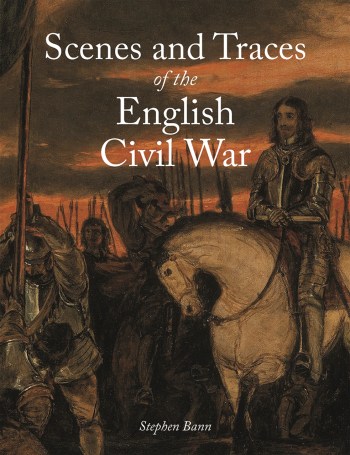 The English Civil War has become a frequent point of reference in contemporary political debate. A bitter and bloody series of conflicts, it shook the very foundations of seventeenth-century Britain. This is the first attempt to portray the visual legacy of this period, as passed down, revisited, and periodically reworked over two and a half centuries of subsequent English history. Stephen Bann deftly interprets the mass of visual evidence accessible today, from ornate tombs and statues to surviving sites of vandalism and iconoclasm, public signage, and historical paintings of subjects, events, and places. Through these important scenes and sometimes barely perceptible traces, Bann shows how the British view of the War has been influenced and transformed by visual imagery.
Stephen Bann is Professor in the Department of History of Art at the University of Bristol. He is author of many books including Romanticism and the Rise of History (1995); Paul Delaroche: History Painted (Reaktion, 1997); and Jannis Kounellis (Reaktion, 2003).
C O N T E N T S
Introduction
1 Speaking Stones: Inscriptions of Identity from Civil War Monuments
2 A Kentish Family in Wartime: The Bargraves of Bifrons
3 Kings on Horseback: Charles I’s Statue at Charing Cross and Its Afterlife
4 Whig Views of the Past: Horace Walpole and Co.
5 Illustrating History: Visual Narratives from the Restoration to Hume’s History of England
6 Boots and All: Cromwell Evoked by James Ward and Paul Delaroche
7 French Genre for English Patrons: Paul Delaroche’s Charles I Insulted by the Soldiers of Cromwell
8 A Sense of an Ending: Problems of English History Painting in the Nineteenth Century
Chronology
Bibliography
Acknowledgements
List of Illustrations
Index
Exhibition | Alexander von Humboldt and the United States

Now on view at SAAM:
Alexander von Humboldt and the United States: Art, Nature, and Culture
Smithsonian American Art Museum, Washington, DC, 18 September 2020 — 3 January 2021
Organized by Eleanor Jones Harvey
Renowned Prussian naturalist and explorer Alexander von Humboldt was one of the most influential figures of the nineteenth century. He lived for 90 years, published more than 36 books, traveled across four continents, and wrote well over 25,000 letters to an international network of colleagues and admirers. In 1804, after traveling four years in South America and Mexico, Humboldt spent exactly six weeks in the United States. In these six weeks, Humboldt—through a series of lively exchanges of ideas about the arts, science, politics, and exploration with influential figures such as President Thomas Jefferson and artist Charles Willson Peale—shaped American perceptions of nature and the way American cultural identity became grounded in our relationship with the environment.
Alexander von Humboldt and the United States: Art, Nature, and Culture places American art squarely in the center of a conversation about Humboldt’s lasting influence on the way we think about our relationship to the natural world. Humboldt’s quest to understand the universe—his concern for climate change, his taxonomic curiosity centered on New World species of flora and fauna, and his belief that the arts were as important as the sciences for conveying the resultant sense of wonder in the interlocking aspects of our planet—make this a project evocative of how art illuminates some of the issues central to our relationship with nature and our stewardship of this planet.

Charles Willson Peale, Self-Portrait with Mastodon Bone, 1824, oil on canvas, 26 × 22 inches (New-York Historical Society, Purchase, James B. Wilbur Fund).
This exhibition will be the first to examine Humboldt’s impact on five spheres of American cultural development: the visual arts, sciences, literature, politics, and exploration, between 1804 and 1903. It centers on the fine arts as a lens through which to understand how deeply intertwined Humboldt’s ideas were with America’s emerging identity. The exhibition includes more than 100 paintings, sculptures, maps, and artifacts as well as a video introduction to Humboldt and his connections to the Smithsonian through an array of current projects and initiatives.
Artworks by Albert Bierstadt, Karl Bodmer, George Catlin, Frederic Church, Eastman Johnson, Samuel F.B. Morse, Charles Willson Peale, John Rogers, William James Stillman, and John Quincy Adams Ward, among others, will be on display. The installation features a digital exploration of Frederic Church’s famous landscape, Heart of the Andes (1859), enabling visitors to engage with the painting’s details in new ways. The wealth of detail is a painterly extrapolation of Humboldt’s plant geography map. The mountain at the center of the work, Chimborazo, was referred to as ‘Humboldt’s Mountain’. The narrated, 2.5D animated projection enables visitors to appreciate the connections between Church’s painting and Humboldt’s ideas.
The exhibition also includes the original ‘Peale Mastodon’ skeleton, on loan from the Hessisches Landesmuseum Darmstadt, with ties to Humboldt, Peale and an emerging American national identity in the early nineteenth century. Its inclusion in the exhibition represents a homecoming for this important fossil that has been in Europe since 1847, and emphasizes that natural history and natural monuments bond Humboldt with the United States.
Alexander von Humboldt and the United States: Art, Nature, and Culture is organized by Eleanor Jones Harvey, senior curator at the Smithsonian American Art Museum. A major catalogue, written by Harvey, accompanies the exhibition. The book shows how Humboldt inspired a network of like-minded individuals who would go on to embrace the spirit of exploration, decry slavery, advocate for the welfare of Native Americans and extol America’s wilderness as a signature component of the nation’s sense of self. Harvey traces how Humboldt’s ideas influenced the transcendentalists and the landscape painters of the Hudson River School, and laid the foundations for the Smithsonian, the Sierra Club, and the National Park Service.
Eleanor Jones Harvey, Alexander von Humboldt and the United States: Art, Nature, and Culture (Princeton: Princeton University Press, 2020), 448 pages, ISBN: 978-0691200804, £62 / $75.
New Book | Tokyo Before Tokyo
From Reaktion Books:
Timon Screech, Tokyo Before Tokyo: Power and Magic in the Shogun’s City of Edo (London: Reaktion Books, 2020), 240 pages, ISBN: 9781789142334, £25 / $40.
 Tokyo today is one of the world’s mega-cities, and the centre of a scintillating, hyper-modern culture—but not everyone is aware of its past. Founded in 1590 as the seat of the warlord Tokugawa family, Tokyo, then called ‘Edo’, was the locus of Japanese trade, economics and urban civilization until 1868, when it mutated into Tokyo and became Japan’s modern capital.
This beautifully illustrated book presents important sites and features from the rich history of Edo, drawn from contemporary sources such as diaries, guidebooks and woodblock prints. These include the huge bridge on which the city was centred, the vast castle of the shogun, sumptuous Buddhist temples, bars, kabuki theatres and the Yoshiwara, Edo’s famous red-light district.
Timon Screech is Professor in the History of Art at SOAS, University of London, and a Fellow of the British Academy. He is the author of many books, including Sex and the Floating World: Erotic Images in Japan, 1700–1820 (2nd edn, Reaktion, 2009).
C O N T E N T S
Introduction
1 The Ideal City
2 The Centre of the Shogun’s Realm
3 Edo as Sacred Space
4 Reading Edo Castle
5 The City’s Poetic Presence
6 A Trip to the Yoshiwara
Epilogue: From Edo to Tokyo
References
Selected Sources and Further Reading
General Bibliography
Acknowledgements
Photo Acknowledgements
New Book | The Place of Many Moods: Udaipur’s Painted Lands
From Princeton UP:
Dipti Khera, The Place of Many Moods: Udaipur’s Painted Lands and India’s Eighteenth Century (Princeton: Princeton University Press, 2020), 232 pages, ISBN , $65 / £54.
 In the long eighteenth century, artists from Udaipur, a city of lakes in northwestern India, specialized in depicting the vivid sensory ambience of its historic palaces, reservoirs, temples, bazaars, and durbars. As Mughal imperial authority weakened by the late 1600s and the British colonial economy became paramount by the 1830s, new patrons and mobile professionals reshaped urban cultures and artistic genres across early modern India. The Place of Many Moods explores how Udaipur’s artworks—monumental court paintings, royal portraits, Jain letter scrolls, devotional manuscripts, cartographic artifacts, and architectural drawings—represent the period’s major aesthetic, intellectual, and political shifts. Dipti Khera shows that these immersive objects powerfully convey the bhava—the feel, emotion, and mood—of specific places, revealing visions of pleasure, plenitude, and praise. These memorialized moods confront the ways colonial histories have recounted Oriental decadence, shaping how a culture and time are perceived.
Illuminating the close relationship between painting and poetry, and the ties among art, architecture, literature, politics, ecology, trade, and religion, Khera examines how Udaipur’s painters aesthetically enticed audiences of courtly connoisseurs, itinerant monks, and mercantile collectives to forge bonds of belonging to real locales in the present and to long for idealized futures. Their pioneering pictures sought to stir such emotions as love, awe, abundance, and wonder, emphasizing the senses, spaces, and sociability essential to the efficacy of objects and expressions of territoriality.
The Place of Many Moods uncovers an influential creative legacy of evocative beauty that raises broader questions about how emotions and artifacts operate in constituting history and subjectivity, politics and place.
Dipti Khera is associate professor in the Department of Art History and the Institute of Fine Arts at New York University.
◊ ◊ ◊ ◊ ◊
Celebrating Dipti Khera’s The Place of Many Moods
Friday, 4 December 2020, live-streamed at 11:00am ET
Please join the Institute of Fine Arts in conversation with Dipti Khera about her new book The Place of Many Moods: Udaipur’s Painted Lands and India’s Eighteenth Century. Responding to the book will be Vittoria Di Palma, Associate Professor of Architectural History and Art History at the University of Southern California, and Kavita Singh, Professor of Art History at the School of Arts and Aesthetics of Jawaharlal Nehru University. RSVP to receive the webinar link for this live-streamed event.
◊ ◊ ◊ ◊ ◊
Note (added 23 November 2020) — The original posting did not include information on the live-streamed event.
New Book | Material Literacy in Eighteenth-Century Britain
From Bloomsbury:
Serena Dyer and Chloe Wigston Smith, eds., Material Literacy in Eighteenth-Century Britain: A Nation of Makers (New York: Bloomsbury, 2020), 328 pages, ISBN: 978-1501349614, $135.
 The eighteenth century has been hailed for its revolution in consumer culture, but Material Literacy in Eighteenth-Century Britain repositions Britain as a nation of makers. It brings new attention to eighteenth-century craftswomen and men with its focus on the material knowledge possessed not only by professional artisans and amateur makers, but also by skilled consumers. This edited collection gathers together a group of interdisciplinary scholars working in the fields of art history, history, literature, and museum studies to unearth the tactile and tacit knowledge that underpinned fashion, tailoring, and textile production. It invites us into the workshops, drawing rooms, and backrooms of a broad range of creators, and uncovers how production and tacit knowledge extended beyond the factories and machines which dominate industrial histories.
This book illuminates, for the first time, the material literacies learnt, enacted, and understood by British producers and consumers. The skills required for sewing, embroidering, and the textile arts were possessed by a large proportion of the British population: men, women and children, professional and amateur alike. Building on previous studies of shoppers and consumption in the period, as well as narratives of manufacture, these essays document the multiplicity of small producers behind Britain’s consumer revolution, reshaping our understanding of the dynamics between making and objects, consumption and production. It demonstrates how material knowledge formed an essential part of daily life for eighteenth-century Britons. Craft technique, practice, and production, the contributors show, constituted forms of tactile languages that joined makers together, whether they produced objects for profit or pleasure.
Serena Dyer is Lecturer in History of Design and Material Culture at De Montfort University. She has taught at the University of Warwick and the University of Hertfordshire, and was Postdoctoral Fellow at the Paul Mellon Centre for Studies in British Art. She was previously Curator of the Museum of Domestic Design and Architecture. She has published on albums, wallpaper, consumer culture, and childhood in the eighteenth century. Her book, Material Lives: Women Makers and Consumer Culture in the Eighteenth Century, is forthcoming with Bloomsbury.
Chloe Wigston Smith is Senior Lecturer in the Department of English and Related Literature and the Centre for Eighteenth Century Studies at the University of York. She is the author of Women, Work, and Clothes in the Eighteenth-Century Novel (Cambridge University Press, 2013), as well as articles on women in literature, material culture studies and fashion culture. Her current British Academy funded project looks at domestic crafts in the Atlantic world.
C O N T E N T S
List of Figures
List of Tables
Notes on Contributors
Acknowledgements
1 Serena Dyer (De Montfort University) and Chloe Wigston Smith (University of York), Introduction
2 Ariane Fennetaux (University of Paris), ‘Work’d pockets to my entire satisfaction’: Women and the Multiple Literacies of Making
3 Crystal B. Lake (Wright State University), Needlework Verse
4 Chloe Wigston Smith (University of York), Domestic Crafts at the School of Arts
5 Nicole Pohl (Oxford Brookes University), ‘To Embroider what is Wanting’: Making, Consuming and Mending Textiles in the Lives of the Bluestockings
6 Jon Stobart (Manchester Metropolitan University), Material Literacies of Home Comfort in Georgian England
7 Serena Dyer (De Montfort University), Stitching and Shopping: The Material Literacy of the Consumer
8 Alicia Kerfoot (SUNY Brockport), Stitching the It-Narrative in The History and Adventures of a Lady’s Slippers and Shoes
9 Sarah Howard (Independent Scholar, UK), Making, Measuring and Selling in Hampshire: The Provincial Tailor’s Accounts of George and Benjamin Ferrey
10 Emily Taylor (National Museums Scotland), Gendered Making and Material Knowledge: Tailors and Mantua-Makers, c. 1760–1820
11 Hilary Davidson (University of Sydney), Dress and Dressmaking: Material Evolution in Regency Dress Construction
12 Elisabeth Gernerd (Historic Royal Palaces), Fancy Feathers: The Feather Trade in Britain and the Atlantic World
13 Robbie Richardson (University of Kent), Tomahawks and Scalping Knives: Manufacturing Savagery in Britain
14 Laura Engel (Duquesne University), The Lady Vanishes: Madame Tussaud’s Self Portrait and Material Legacies
15 Beth Fowkes Tobin (University of Georgia), Learning to Craft
Select Bibliography
Index
New Book | Organic Supplements: Bodies and Things
From the University of Virginia Press:
Miriam Jacobson and Julie Park, eds., Organic Supplements: Bodies and Things of the Natural World, 1580–1790 (Charlottesville: University of Virginia Press, 2020), 296 pages, ISBN 978-0813944937 (hardback) / ISBN 978-0813944944 (paperback) / ISBN 978-0813944951 (Ebook), $35.
 From the hair of a famous dead poet to botanical ornaments and meat pies, the subjects of this book are dynamic, organic artifacts. A cross-disciplinary collection of essays, Organic Supplements examines the interlaced relationships between natural things and human beings in early modern and eighteenth-century Europe. The material qualities of things as living organisms–and things that originate from living organisms– enabled a range of critical actions and experiences to take place for the people who wore, used, consumed, or perceived them.
Miriam Jacobson is Associate Professor of English at the University of Georgia and author of Barbarous Antiquity: Reorienting the Past in the Poetry of Early Modern England.
Julie Park is Assistant Curator and Faculty Fellow at the Special Collections Center of Elmer Holmes Bobst Library, New York University, and author of The Self and It: Novel Objects in Eighteenth-Century England.
C O N T E N T S
Acknowledgments
Introduction: Process and Connection
Part 1. Inscription and Incorporation
• Julie Park, Feather, Flourish, and Flow: The Organic Technology of Early Modern Handwriting
• Rebecca Laroche, The Flower of Ointments and Early Modern Transcorporeality
• Kevin Lambert, The Paris Opéra as a Vibrating Body: Feeling Pygmalion’s Kiss
Part II. Interface and Merger
• Jessica Wolfe, Gorgonick Spirits: Myth, Figuration, and Mineral Vivency in the Writings of Thomas Browne
• Lynn Festa, Things with Kid Gloves
• Miriam Jacobson, Vegetable Loves: Botanical Enthrallment in Early Modern Poetry
Part III. Vitality and Decay
• Michael Yonan, Knowing the World through Rococo Ornamental Prints
• Diane Purkiss, Fingers in the Pie: Baked Meats, Adultery, and Adulteration
• Jayne Lewis, Milton’s Hair
• Julia Reinhard Lupton, Afterword: Virtuous Properties of the Organic Supplement
Notes on Contributors
Index
New Book | Merchants of Medicines
From The University of Chicago Press:
Zachary Dorner, Merchants of Medicines: The Commerce and Coercion of Health in Britain’s Long Eighteenth Century (Chicago: University of Chicago Press, 2020), 280 pages, ISBN: 978-0226706801, $50.
 The period from the late seventeenth to the early nineteenth century—the so-called long eighteenth century of English history—was a time of profound global change, marked by the expansion of intercontinental empires, long-distance trade, and human enslavement. It was also the moment when medicines, previously produced locally and in small batches, became global products. As greater numbers of British subjects struggled to survive overseas, more medicines than ever were manufactured and exported to help them. Most historical accounts, however, obscure the medicine trade’s dependence on slave labor, plantation agriculture, and colonial warfare.
In Merchants of Medicines, Zachary Dorner follows the earliest industrial pharmaceuticals from their manufacture in the United Kingdom, across trade routes, and to the edges of empire, telling a story of what medicines were, what they did, and what they meant. He brings to life business, medical, and government records to evoke a vibrant early modern world of London laboratories, Caribbean estates, South Asian factories, New England timber camps, and ships at sea. In these settings, medicines were produced, distributed, and consumed in new ways to help confront challenges of distance, labor, and authority in colonial territories. Merchants of Medicines offers a new history of economic and medical development across early America, Britain, and South Asia, revealing the unsettlingly close ties among medicine, finance, warfare, and slavery that changed people’s expectations of their health and their bodies.
Zachary Dorner is the Patrick Henry Postdoctoral Fellow in history at Johns Hopkins University.
C O N T E N T S
List of Figures and Tables
Introduction
1 Toward an Industry
2 Distance’s Remedies
3 The Possibility of Unfree Markets
4 Pine Trees and Profits
5 Self-Sufficiency in a Bottle
Conclusion
Acknowledgments
Notes
Bibliography
Index
New Book | Hua Yan (1682–1756)
From Brill, this book by Kristen Chiem (now, incidentally, Kristen Brennan). . .
Kristen Loring Chiem, Hua Yan (1682–1756) and the Making of the Artist in Early Modern China (Leiden, Brill, 2020), 224 pages, ISBN: 978-9004427631, €110 / $132.
 Hua Yan (1682–1756) and the Making of the Artist in Early Modern China explores the relationships between the artist, local society, and artistic practice during the Qing dynasty (1644–1911). Arranged as an investigation of the artist Hua Yan’s work at a pivotal moment in eighteenth-century society, this book considers his paintings and poetry in early eighteenth-century Hangzhou, mid-eighteenth-century Yangzhou, and finally their nineteenth-century afterlife in Shanghai. By investigating Hua Yan’s struggle as a marginalized artist—both at his time and in the canon of Chinese art—this study draws attention to the implications of seeing and being seen as an artist in early modern China.
Kristen Loring Chiem, Ph.D. (2011), University of California, Los Angeles, is Associate Professor of Art History at Pepperdine University. Her work explores the intersections of gender, painting, and garden imagery in Chinese art.
C O N T E N T S
Acknowledgments
Introduction
The Mountain Man of Xinluo
Lyricism in Words and Images
Painting the Garden from Life
Picturing People, Past and Present
The Xinluo School
Epilogue: Lives of Jiangnan Artists, 1700–1900
Bibliography
Index
New Book | Building America: The Life of Benjamin Henry Latrobe
From Oxford UP:
Jean Baker, Building America: The Life of Benjamin Henry Latrobe (Oxford: Oxford University Press, 2020), 304 pages, ISBN: 978-0190696450, $35.
 Building America: The Life of Benjamin Henry Latrobe is a biography of America’s first professionally trained architect and engineer. Born in 1764, Latrobe was raised in Moravian communities in England and Germany. His parents expected him to follow his father and brother into the ministry, but he rebelled against the church. Moved to London, he studied architecture and engineering. In 1795 he emigrated to the United States and became part of the period’s Transatlantic Exchange. Latrobe soon was famous for his neoclassical architecture, designing important buildings, including the US Capitol and Baltimore Basilica as well as private homes. Carpenters and millwrights who built structures more cheaply and less permanently than Latrobe challenged his efforts to establish architecture as a profession. Rarely during his twenty-five years in the United States was he financially secure, and when he was, he speculated on risky ventures that lost money. He declared bankruptcy in 1817 and moved to New Orleans, the sixth American city that he lived in, hoping to recoup his finances by installing a municipal water system. He died there of yellow fever in 1820. The themes that emerge in this biography are the critical role Latrobe played in the culture of the early republic through his buildings and his genius in neoclassical design. Like the nation’s political founders, Latrobe was committed to creating an exceptional nation, expressed in his case by buildings and internal improvements. Additionally, given the extensive primary sources available for this biography, an examination of his life reveals early American attitudes toward class, family, and religion.
Jean H. Baker is Bennett-Harwood Professor of History Emerita at Goucher College. An eminent political historian and biographer, she is the author of Margaret Sanger: A Life of Passion, Sisters: The Lives of America’s Suffragists, James Buchanan, and Mary Todd Lincoln: A Biography, among other titles.
C O N T E N T S
Acknowledgments
Introduction
1 Itching Ears
2 This New American
3 Capital Projects
4 Beloved Mary and the Little Folks
5 Breaking Points
6 Final Beginnings
Conclusion
Notes
Index
New Book | The Man of the People
From UP of Kansas:
Nathaniel Green, The Man of the People: Political Dissent and the Making of the American Presidency (Lawrence: University Press of Kansas: 2020), 408 pages, ISBN: 978-0700629954, $50.
 Donald Trump’s election has forced the United States to reckon with not only the political power of the presidency, but also how he and his supporters have used the office to advance their shared vision of America: one that is avowedly nationalist, and unrepentantly rooted in nativism and white supremacy. It might be easy to attribute this dark vision, and the presidency’s immense power to reflect and reinforce it, to the singular character of one particular president—but to do so, this book tells us, would be to ignore the critical role the American public played in making the president ‘the man of the people’ in the nation’s earliest decades.
Beginning with the public debate over whether to ratify the Constitution in 1787 and concluding with Andrew Jackson’s own contentious presidency, Nathaniel Green traces the origins of our conception of the president as the ultimate American: the exemplar of our collective national values, morals, and ‘character’. The public divisiveness over the presidency in these earliest years, he contends, forged the office into an incomparable symbol of an emerging American nationalism that cast white Americans as dissenters—lovers of liberty who were willing to mobilize against tyranny in all its forms, from foreign governments to black ‘enemies’ and Indian ‘savages’—even as it fomented partisan division that belied the promise of unity the presidency symbolized. With testimony from private letters, diaries, newspapers, and bills, Green documents the shaping of the disturbingly nationalistic vision that has given the presidency its symbolic power.
This argument is about a different time than our own. And yet it shows how this time, so often revered as a mythic ‘founding era’ from which America has precipitously declined, was in fact the birthplace of the president-centered nationalism that still defines the contours of politics to this day. The lessons of The Man of the People contextualize the political turmoil surrounding the presidency today. Never in modern US history have those lessons been more badly needed.
Nathaniel C. Green is professor of history at Northern Virginia Community College.










 Enfilade
leave a comment