New Book | The New Town of Edinburgh
From Birlinn Ltd:
Clarisse Godard Desmarest, ed., The New Town of Edinburgh: An Architectural Celebration (Edinburgh: John Donald, 2019), 336 pages, ISBN: 978-1910900352, £40.
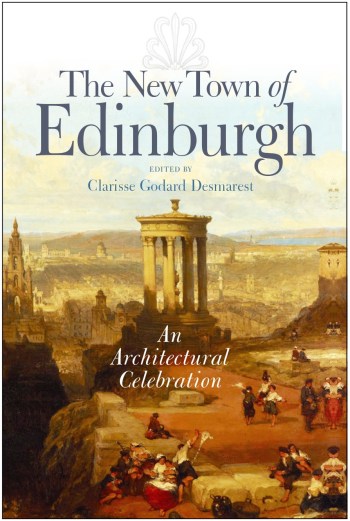 This collection of innovative essays celebrates the New Town of Edinburgh over the 250 years since its original creation. The contributing authors discuss the intellectual, economic, and political contexts that provided the impetus for the city of Edinburgh to expand north of the Old Town, and analyse the New Town’s unique architectural status in terms of its size, monumentality, and degree of preservation. For centuries, Scotland has pursued innovation, improvement, commerce, and contact with England and the Continent; and since medieval times it has been an urbanising land of planned towns. This book reflects on the constantly changing dialogue between Edinburgh’s Old and New Towns—from the eighteenth century to the present time—as the city became increasingly commercialised. It also compares Edinburgh’s New Town with more recent new towns elsewhere, notably nineteenth-century Dunedin in New Zealand and Scotland’s planned new-town movement of the twentieth century. The age of conservation is another of the central themes. By drawing on different approaches to the new town phenomenon in Scotland, this volume pays tribute to Scotland’s vibrant capital and offers insights into new research on Scotland’s urban development.
Clarisse Godard Desmarest is a lecturer at the University of Picardie Jules Verne, Amiens, and a fellow of the Institut Universitaire de France. She specialises in Scottish architectural history and heritage, and has held fellowships at the Institute of Advanced Studies in the Humanities (IASH), Edinburgh College of Art and the School of History, Classics and Archaeology at the University of Edinburgh. She holds an ‘Agrégation in English’ and is a graduate of Sciences Po Paris. Her doctorate at the Sorbonne, jointly supervised by the University of Edinburgh, was awarded a national prize in France for the best thesis on a Scottish subject.
New Book | Calton Hill
From Birlinn Ltd:
Kirsten Carter McKee, Calton Hill and the Plans for Edinburgh’s Third New Town (Edinburgh: John Donald, 2018), 224 pages, ISBN: 978-1910900178, £25.
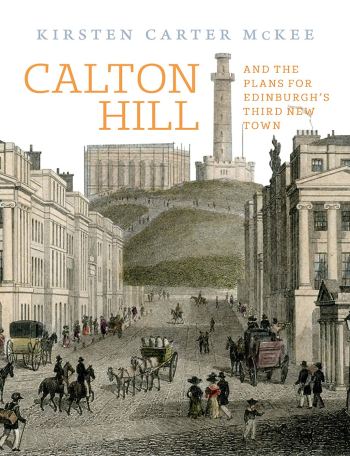 Calton Hill, on the eastern edge of Edinburgh’s centre, has a special relationship with the city. Development of the hill and its surrounding area (often referred to as Edinburgh’s ‘Third New Town’) began in the late eighteenth and early nineteenth centuries by a decision-making elite, who proposed to change the site from a rural periphery into the new urban core of the city. This book shows that the architecture and urban design on Calton Hill was a demonstration of Scotland’s cultural identity and political allegiance to the British State—as key enlightenment figures and theories were celebrated alongside the British naval heroes and the House of Hanover in the early stages of its development. However, as Scotland’s identity within Britain evolved through changes in governance in the nineteenth and early twentieth centuries, Calton Hill—and all that its neo-Greek architecture came to represent—became a metaphor for the friction between Scottish and British Nationalism, resulting in it being considered a ‘Nationalist Shibboleth’ by the last years of the twentieth century. This book considers how the architectural expression of Calton Hill has been perceived, accepted and rejected as ideas surrounding cultural identity, governance and nationalism have changed over the last 200 years.
Kirsten Carter McKee is an architectural historian and cultural landscape specialist. She has a PhD from the University of Edinburgh and has worked for a number of organisations as an archaeologist, historic buildings specialist, and heritage consultant. She is currently a research and teaching fellow in architectural history and conservation at the University of Edinburgh.
New Book | A Rare Treatise on Interior Decoration and Architecture
From Getty Publications:
Simon Swynfen Jervis, ed., A Rare Treatise on Interior Decoration and Architecture: Joseph Friedrich zu Racknitz’s Presentation and History of the Taste of the Leading Nations, translated by Simon Swynfen Jervis (Los Angeles: Getty Publications, 2020), 368 pages, ISBN: 978-1606066249, $85.
 Baron Joseph Friedrich zu Racknitz’s pioneering Presentation and History of the Taste of the Leading Nations in Relation to the Interior Decoration of Rooms and to Architecture (Darstellung und Geschichte des Geschmacks der vorzüglichsten Völker in Beziehung auf die innere Auszierung der Zimmer und auf die Baukunst), published between 1796 and 1799, is little known today. Racknitz, a German aristocrat, traced an early global history of design and ornament through discussions of what he distinguished as twenty-four essential regional historical tastes. He included those of a diverse group of ancient classical civilizations, European nations and peoples, Eastern civilizations, and more exotic reaches of the world.
This sensitive and informed translation also includes reproductions of the original color plates and essays on Racknitz’s biography, his publication, and the German Enlightenment context, making this an essential volume for studying eighteenth- and nineteenth-century architecture, decorative arts, and garden design.
Simon Swynfen Jervis has worked extensively as a curator, writer, and scholar of decorative arts. He has authored dozens of books, articles, guidebooks, and exhibition catalogues and organized exhibitions at British, European, and American institutions.
New Book | The Dramaturgy of the Spectator
From the University of Toronto Press:
Tatiana Korneeva, The Dramaturgy of the Spectator: Italian Theatre and the Public Sphere, 1600–1800 (Toronto: University of Toronto Press, 2019), 274 pages, ISBN 978-1487505356, $80.
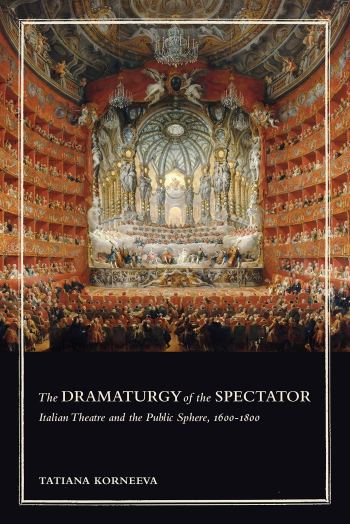 The Dramaturgy of the Spectator explores how Italian theatre consciously adjusted to the emergence of a new kind of spectator who became central to society, politics, and culture in the mid-seventeenth and eighteenth centuries. The author argues that while a focus on spectatorship in isolation has value, if we are to understand the broader stakes of the relationship between the power structures and the public sphere as it was then emerging, we must trace step-by-step how spectatorship as a practice was rooted in the social and cultural politics of Italy at the time. By delineating the evolution of the Italian theatre public, as well as the dramatic innovations and communicative techniques developed in an attempt to manipulate the relationship between spectator and performance, this book pioneers a shift in our understanding of audience as both theoretical concept and historical phenomenon.
Tatiana Korneeva is an assistant professor in Comparative Literature at the Freie Universität, Berlin.
C O N T E N T S
Acknowledgements
Chronology
Introduction
1 How Theatre Invents the Public Sphere
2 The Privileged Visibility of the Viewer
3 The Politics of Spectatorship
4 Public Emotions and Emotional Publics
5 Playwrights Fight Back
6 Liberty and the Audience
Epilogue
Bibliography
Index
New Book | Worn on This Day
From Running Press:
Kimberly Chrisman-Campbell, Worn on This Day: The Clothes That Made History (Philadelphia: Running Press, 2019), 336 pages, ISBN: 978-0762493579, $28.
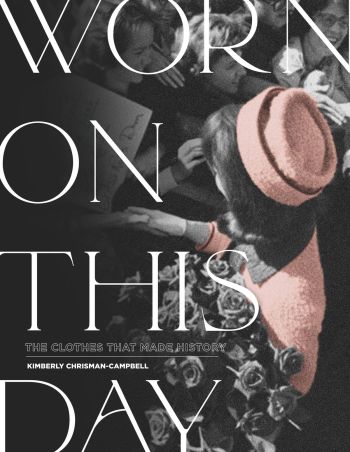 This stunning visual guide is a journey of discovery through fashion’s fascinating history, one day at a time. Beginning on January 1st and ending on December 31st, Worn On This Day looks at garments worn on monumental occasions across centuries, offering capsule fashion histories of everything from space suits to wedding gowns, Olympics uniforms, and armor. It creates thought-provoking juxtapositions, like Wallis Simpson’s June wedding and Queen Elizabeth’s June coronation, or the battered shoes Marie-Antoinette and a World Trade Center survivor wore to escape certain death, just a few calendar days apart. In every case there is a newsworthy narrative behind the garment, whether famous and glamorous or anonymous and humble. Prominent figures like Abraham Lincoln, Marilyn Monroe, and the Duchess of Cambridge are represented alongside ordinary people caught up in extraordinary events. Beautifully illustrated throughout, Worn On This Day presents a revelatory mash-up of styles, stories, and personalities.
Kimberly Chrisman-Campbell is a fashion historian, curator, and journalist. She is the author of the award-winning book Fashion Victims: Dress at the Court of Louis XVI and Marie-Antoinette. Kimberly lives in Los Angeles.
New Book | A History of Art History
From Princeton UP:
Christopher S. Wood, A History of Art History (Princeton: Princeton University Press, 2019), 472 pages, ISBN: 978-0691156521, $35.
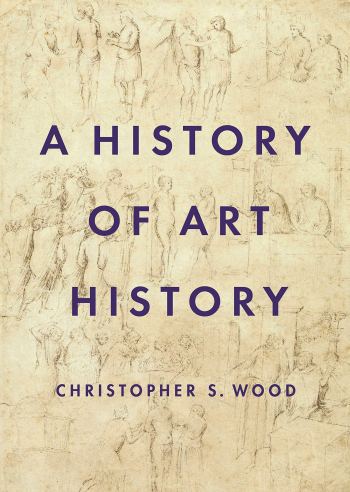 In this wide-ranging and authoritative book, the first of its kind in English, Christopher Wood tracks the evolution of the historical study of art from the late middle ages through the rise of the modern scholarly discipline of art history. Synthesizing and assessing a vast array of writings, episodes, and personalities, this original and accessible account of the development of art-historical thinking will appeal to readers both inside and outside the discipline.
The book shows that the pioneering chroniclers of the Italian Renaissance—Lorenzo Ghiberti and Giorgio Vasari—measured every epoch against fixed standards of quality. Only in the Romantic era did art historians discover the virtues of medieval art, anticipating the relativism of the later nineteenth century, when art history learned to admire the art of all societies and to value every work as an index of its times. The major art historians of the modern era, however—Jacob Burckhardt, Aby Warburg, Heinrich Wölfflin, Erwin Panofsky, Meyer Schapiro, and Ernst Gombrich—struggled to adapt their work to the rupture of artistic modernism, leading to the current predicaments of the discipline. Combining erudition with clarity, this book makes a landmark contribution to the understanding of art history.
Christopher S. Wood is a professor at New York University. He is the author of Forgery, Replica, Fiction: Temporalities of German Renaissance Art and Albrecht Altdorfer and the Origins of Landscape, the coauthor of Anachronic Renaissance, and the editor of The Vienna School Reader: Politics and Art Historical Method in the 1930s.
New Book | Witnessing Slavery
From Yale UP:
Sarah Thomas, Witnessing Slavery: Art and Travel in the Age of Abolition (London: Paul Mellon Centre for Studies in British Art, 2019), 304 pages, ISBN: 978-1913107055, $55.
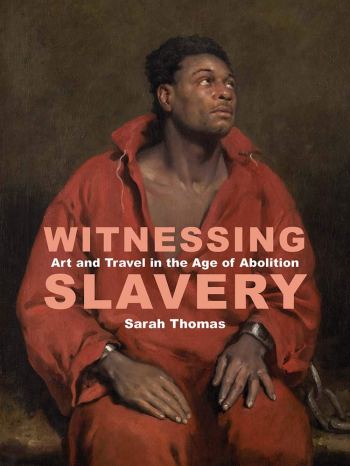 Gathering together over 160 paintings, watercolors, drawings, and prints, this book offers an unprecedented examination of the shifting iconography of slavery in British and European art between 1760 and 1840. In addition to considering how the work of artists such as Agostino Brunias, James Hakewill, and Augustus Earle responded to abolitionist politics, Sarah Thomas examines the importance of the eyewitness account in endowing visual representations of transatlantic slavery with veracity. ‘Being there’, indeed, became significant not only because of the empirical opportunities to document slave life it afforded but also because the imagery of the eyewitness was more credible than sketches and paintings created by the ‘armchair traveler’ at home. Full of original insights that cast a new light on these highly charged images, this volume reconsiders how slavery was depicted within a historical context in which truth was a deeply contested subject.
Sarah Thomas is lecturer in the Department of History of Art at Birkbeck, University of London.
Exhibition | Savour: Food Culture in the Age of Enlightenment
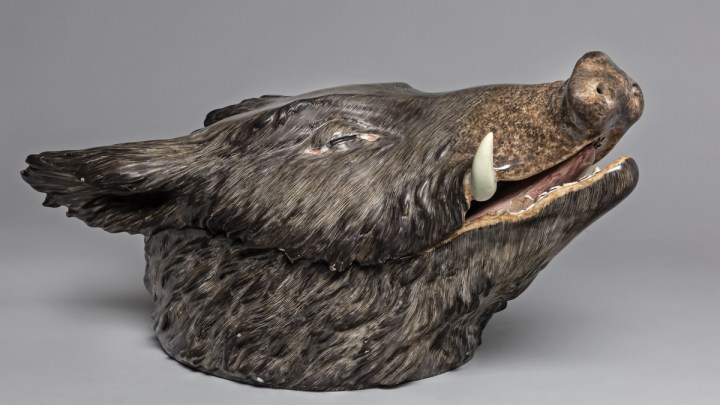
Boar’s Head Tureen, France, probably Strasbourg, ca. 1745; tin-glazed earthenware (faïence)
(Toronto: Gardiner Museum, anonymous loan; photo by Toni Hafkenscheid)
◊ ◊ ◊ ◊ ◊
Opening next month at the Gardiner Museum:
Savour: Food Culture in the Age of Enlightenment
Gardiner Museum, Toronto, 17 October 2019 — 19 January 2020
Wadsworth Atheneum Museum of Art, Hartford, CT, 29 February — 24 May 2020
Curated by Meredith Chilton
Food and dining were transformed in Europe during the age of Enlightenment by profound changes that still resonate today. What many of us eat, the way food is cooked, and how we dine continues to be influenced by radical changes that occurred in France from 1650 until the French Revolution in 1789.

Philippe Mercier, The Sense of Taste, 1744–47, oil on canvas, 132 × 154 cm (New Haven: Yale Center for British Art, Paul Mellon Collection, B1974.3.18).
Savour: Food Culture in the Age of Enlightenment explores the story of this transformation with rare objects, fascinating histories, and amusing stories. We start in the kitchen gardens at Versailles where advances in horticulture expanded the growing seasons of vegetables and fruits, making a greater selection of foods available year-round. Then we visit the steamy kitchens of cooks who advocated light, flavourful cuisine centuries before our time. Next, we discover surprisingly modern philosophies for healthy eating and vegetarianism, and join ardent foodies as they savour meals served on newly invented ceramic and silver wares, from sauceboats to tureens. Along the way, we explore how social changes were impacting eating then, just as now, as the grand formality of the past was abandoned in favour of informality and intimacy.
Savour: Food Culture in the Age of Enlightenment is organized by the Gardiner Museum and curated by Meredith Chilton, C.M., Curator Emerita. Works of art and objects from major North American museums and private collections, as well as key pieces of contemporary ceramics and knitted art, will come together in a delectable feast for the senses designed by Opera Atelier’s Resident Set Designer, Gerard Gauci.
After the Gardiner Museum, the exhibition will tour to the Wadsworth Atheneum Museum of Art, Hartford, Connecticut. The exhibition is accompanied by a cookbook titled The King’s Peas: Delectable Recipes and their Stories from the Age of Enlightenment by Meredith Chilton, with contributions by Markus Bestig, Executive Chef, The York Club, Toronto.

Children Shelling Peas, England, Chelsea, ca. 1759–70; soft-paste porcelain, enamels, and gilding
(Museum of Fine Arts, Boston)
◊ ◊ ◊ ◊ ◊
Meredith Chilton, The King’s Peas: Delectable Recipes and Their Stories from the Age of Enlightenment (Stuttgart: Arnoldsche Verlagsanstalt, 2019), 144 pages, ISBN: 978-3897905603, $50.
Food and dining were transformed in Europe during the Age of Enlightenment, and these profound changes continue to resonate today. What many of us now eat, the way our food is prepared and how we dine are the result of radical changes that occurred in France from 1650 until the French Revolution in 1789. Over thirty French and English recipes of the period are presented in this cookbook, offering readers a taste of the past. Amusing stories, culinary insights, and snippets of history outline the cultural milieu of the time. The King’s Peas is richly illustrated with pictures of paintings, books, silver, glass and ceramics to stimulate the imagination—and the appetite. You are cordially invited to take part in this delectable historical feast.
New Book | The Architecture of Ruins
From Routledge:
Jonathan Hill, The Architecture of Ruins: Designs on the Past, Present, and Future (New York: Routledge, 2019), 374 pages, ISBN: 978-1138367777 (hardback), $140 / ISBN: 978-1138367784 (paperback), $47.
 The Architecture of Ruins: Designs on the Past, Present and Future identifies an alternative and significant history of architecture from the sixteenth century to the twenty-first century, in which a building is designed, occupied, and imagined as a ruin. This design practice conceives a monument and a ruin as creative, interdependent and simultaneous themes within a single building dialectic, addressing temporal and environmental questions in poetic, psychological, and practical terms, and stimulating questions of personal and national identity, nature and culture, weather and climate, permanence and impermanence, and life and death. Conceiving a building as a dialogue between a monument and a ruin intensifies the already blurred relations between the unfinished and the ruined and envisages the past, the present, and the future in a single architecture.
Structured around a collection of biographies, this book conceives a monument and a ruin as metaphors for a life and means to negotiate between a self and a society. Emphasising the interconnections between designers and the particular ways in which later architects learned from earlier ones, the chapters investigate an evolving, interdisciplinary design practice to show the relevance of historical understanding to design. Like a history, a design is a reinterpretation of the past that is meaningful to the present. Equally, a design is equivalent to a fiction, convincing users to suspend disbelief. We expect a history or a novel to be written in words, but they can also be delineated in drawing, cast in concrete or seeded in soil. The architect is a ‘physical novelist’ as well as a ‘physical historian’.
Like building sites, ruins are full of potential. In revealing not only what is lost, but also what is incomplete, a ruin suggests the future as well as the past. As a stimulus to the imagination, a ruin’s incomplete and broken forms expand architecture’s allegorical and metaphorical capacity, indicating that a building can remain unfinished, literally and in the imagination, focusing attention on the creativity of users as well as architects. Emphasising the symbiotic relations between nature and culture, a building designed, occupied, and imagined as a ruin acknowledges the coproduction of multiple authors, whether human, non-human or atmospheric, and is an appropriate model for architecture in an era of increasing climate change.
Jonathan Hill is Professor of Architecture and Visual Theory at the Bartlett School of Architecture, University College London, where he directs the MPhil/PhD Architectural Design programme. He is the author of The Illegal Architect (1998), Actions of Architecture (2003), Immaterial Architecture (2006), Weather Architecture (2012), and A Landscape of Architecture, History and Fiction (2016); editor of Occupying Architecture (1998) and Architecture—the Subject is Matter (2001); and co-editor of Critical Architecture (2007).
C O N T E N T S
List of Figures
Acknowledgements
Introduction
1 Monuments to Rome
2 The First ‘Ruins’
3 Architecture in Ruins
4 Speaking Ruins
5 Ruin and Rotunda
6 Life in Ruins
7 Wrapping Ruins around Buildings
8 Nations in Ruins
Conclusion: A Monument to a Ruin
Bibliography
New Book | Crowning Glories
From the University of Toronto Press:
Harriet Stone, Crowning Glories: Netherlandish Realism and the French Imagination during the Reign of Louis XIV (Toronto: University of Toronto Press, 2019), 312 pages, ISBN 978-1487504427, $70.
 Crowning Glories integrates Louis XIV’s propaganda campaigns, the transmission of Northern art into France, and the rise of empiricism in the eighteenth century—three historical touchstones—to examine what it would have meant for France’s elite to experience the arts in France simultaneously with Netherlandish realist painting. In an expansive study of cultural life under the Sun King, Harriet Stone considers the monarchy’s elaborate palace decors, the court’s official records, and the classical theatre alongside Northern images of daily life in private homes, urban markets, and country fields.
Stone argues that Netherlandish art assumes an unobtrusive yet, for the history of ideas, surprisingly dramatic role within the flourishing of the arts, both visual and textual, in France during Louis XIV’s reign. Netherlandish realist art represented thinking about knowledge that challenged the monarchy’s hold on the French imagination, and its efforts to impose the king’s portrait as an ideal and proof of his authority. As objects appreciated for their aesthetic and market value, Northern realist paintings assumed an uncontroversial place in French royal and elite collections. Flemish and Dutch still lifes, genre paintings, and cityscapes, however, were not merely accoutrements of power, acquisitions made by those with influence and money. Crowning Glories reveals how the empirical orientation of Netherlandish realism exposed French court society to a radically different mode of thought, one that would gain full expression in the Encyclopédie of Diderot and d’Alembert.
Harriet Stone is Professor of French and Comparative Literature at Washington University in St. Louis.
C O N T E N T S
Acknowledgments
List of Images
Introduction: Hiding in Plain Sight
Part I: Divergent Patterns
1 Two Models in Context: Northern Realist Art in France
2 France at the Intersection: Configuring the French Response to Northern Realism
Part II: Transformations
3 Fractured Spaces: Staging the King’s Portrait
4 In Death as in Life
Part III: Patterns of Change
5 The Great Reveal
6 Legacies
Coda: Trompe l’oeil Illusions and the Thoughts They Inspire
Notes
Works Cited










leave a comment