New Book | La scuola ascolana di pittura tra XVII e XVIII secolo
An account of painters in Ascoli working after Carlo Maratti, from Il Lavoro:
Valentina Coccia, Una Città, un’Accademia e l’Eredità Marattesca: La scuola ascolana di pittura tra XVII e XVIII secolo (Ancona: Il Lavoro Editoriale, 2018), 234 pages, ISBN: 9788876638602, $50.
 Era il 1834 quando Amico Ricci, con le sue Memorie storiche, aprì per la prima volta uno squarcio sulla realtà pittorica ascolana tra XVII e XVIII secolo, facendo riferimento all’Accademia aperta nella città di Ascoli Piceno da Ludovico Trasi, primo pittore di cultura barocca presente sul territorio e precoce divulgatore del linguaggio marattesco. Questo volume raccoglie il prezioso spunto offerto dallo studioso andando ad analizzare quel nutrito gruppo di artisti, finora pressoché ignoti, che aderirono a questa scuola (Luca Vitelli, Silvestro Mattei, Carlo Palucci, Giuseppe Angelini e Biagio Miniera), erroneamente considerati minori e secondari, in realtà laboriosi tessitori di quella fitta trama di sperimentazioni stilistiche, linguaggi e modelli sulla quale sono nate ed evolute le personalità più note—dal Trasi stesso, al Nardini, fino a Nicola Monti. Lo studio va dunque ad illuminare questa scuola pittorica—una scuola in dialogo costante con Roma e capace perciò di assorbirne i vitali impulsi figurativi—con numerose novità relative ai pittori e al loro operato, colmando il vuoto lasciato dalla letteratura artistica esistente in materia. Una scuola nella quale l’arte di Carlo Maratti risulta agire come una sorta di forza invisibile, che con maniacale operosità va ad insinuarsi nelle fessure di ogni tela, lungo lo scorrere di ogni pennellata, sin nelle più profonde trame del malconcio intreccio del più dimenticato stendardo processionale, riemergendo con sorprendente forza a rivendicare tutto il suo, indiscusso, primato.
Exhibition | Fray Manuel Bayeu
Now on view in Huesca, with a 24-page press kit, which includes a checklist arranged according to the major sections of the exhibition, available as a PDF file here:
Friar Manuel Bayeu: Carthusian, Painter, and Witness of His Time
Sala de exposiciones de la Diputación Provincial de Huesca, 21 July — 4 November 2018
Curated by José Ignacio Calvo Ruata
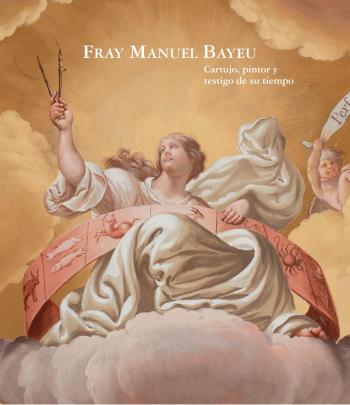 Desde el año 2015 la Diputación Provincial de Huesca es propietaria de la cartuja de Nuestra Señora de las Fuentes (Sariñena, Huesca), declarada Bien de Interés Cultural y uno de los principales monasterios de Aragón. Aunque fundada en 1507, el monumento tal como hoy lo conocemos fue levantado de nueva planta en el siglo XVIII. Posee un extenso conjunto de pinturas murales que cubren los muros y bóvedas de sus dependencias más nobles, indisolublemente unidas a los valores arquitectónicos del monasterio. Fueron realizadas por el cartujo y pintor fray Manuel Bayeu Subías (Zaragoza, 1740–¿1809?). La revalorización que vive hoy la cartuja y el interés que suscita el pintor invita a acercarnos a su obra y a su figura a través de una exposición monográfica.
Hermano de los afamados pintores de cámara Francisco y Ramón Bayeu y cuñado del universal Francisco de Goya, Manuel se formó como ellos en el lenguaje del barroco tardío, que mantuvo dentro de un estilo personal bastante estable a lo largo de toda su producción. Una concisa selección de obras de aquellos artistas y de otros como José Luzán, Corrado Giaquinto, Manuel Eraso y Diego Gutiérrez nos hablan en la exposición de las raíces artísticas de Manuel Bayeu.
De la actividad del artista en la cartuja monegrina dan cuenta algunos bocetos preparatorios para los grandes murales con arreglo a una manera metódica de trabajar que era habitual en la época. También realizó para su casa de profesión numerosos cuadros de caballete, como los que ilustran la vida de san Bruno, fundador de la Orden Cartujana. Autor muy prolífico y con enorme capacidad de trabajo, acometió asimismo muchos encargos para el exterior, entre los que destacan varios lienzos para la catedral de Huesca y la iglesia de Chodes o la decoración del nuevo ábside mayor de la catedral de Jaca, de cuyas trazas arquitectónicas también se hizo cargo y cuyos bocetos se han conservado en su totalidad. De todas estas obras da cuenta la exposición.
El conocimiento que tenemos de Manuel Bayeu nos brinda un atractivo añadido que es su faceta personal. A través de los documentos se adivina que fue hombre campechano y expansivo, y su condición de hermano cartujo no le impidió viajar y entablar relaciones muy cordiales con gentes diversas. Especial mención merece su amistad con Martín Zapater, el rico comerciante zaragozano que fue íntimo amigo de Goya. Manuel Bayeu le escribió numerosas cartas que conserva el Museo del Prado, doce de las cuales han sido seleccionadas para la exposición para retratar su perfil más humano a través de multitud de asuntos y anécdotas. También se conocen testimonios de las relaciones que tuvo con los hermanos Comenge de Lalueza, generosos benefactores de la cartuja, con algunos canónigos de Jaca, con la familia Ric de Fonz y con las monjas de Sijena, entre otras. Sin olvidar que con motivo de su viaje a Mallorca para pintar en la cartuja de Valldemosa mantuvo afectuoso trato con Gaspar Melchor de Jovellanos, eminente figura de la Ilustración española. No son pocos los cuadros de tema religioso, retratos y pinturas de otros géneros que surgieron precisamente en el marco de las amistades cultivadas por el artista cartujo.
La exposición dedicada a fray Manuel Bayeu no se limita a una selección de lienzos, sino que incluye grabados, documentos, libros, esculturas y otros objetos al servicio de recrear un contexto que contribuye a ofrecer una visión globalizadora del personaje y a poner de relieve su cualidad de atento espectador del mundo que le tocó vivir, más allá de lo meramente artístico.
José Ignacio Calvo Ruata (Zaragoza, 1959), doctor en Historia del Arte. Dedicó su tesis al estudio de la vida y la obra del pintor fray Manuel Bayeu (Universidad de Zaragoza, 1998). Es especialista en pintura del siglo XVIII. Sus libros, artículos y conferencias abarcan también temas diversos de arte aragonés. Ha comisariado exposiciones, entre ellas las que llevan por título genérico Joyas de un patrimonio, dedicadas al patrimonio restaurado de la Provincia de Zaragoza, y recientemente la exposición Goya y Buñuel. Los sueños de la razón. Ha sido becario de investigación del Instituto de Estudios Altoaragoneses y profesor asociado de Historia del Arte de la Universidad de Zaragoza. Es Jefe de la Sección de Restauración de Bienes Muebles de la Diputación Provincial de Zaragoza, académico correspondiente de la Real Academia de Bellas Artes de San Luis, Patrono de mérito de la Fundación Goya en Aragón, Director de Centro de Investigación y Documentación de la Fundación Goya en Aragón y miembro de Vestigium (grupo de investigación consolidado de la Universidad de Zaragoza).
José Ignacio Calvo Ruata, Elena Barlés Báguena, Carlos E. de Corbera y Tobeña, and Juan Carlos Lozano López, Fray Manuel Bayeu: Cartujo, pintor y testigo de su tiempo (Huesca: Diputación Provincial de Huesca, 2018), 300 pages, ISBN: 978-8492749676, 30€ / $70.
• Prólogo
• José Ignacio Calvo Ruata, Semblanza de fray Manuel Bayeu, cartujo y pintor
• Juan Carlos Lozano López, Pintar en los claustros (siglos XVII y XVIII)
• Elena Barlés Báguena, El siglo de oro de la cartuja de Nuestra Señora de las Fuentes
• José Ignacio Calvo Ruata, Fray Manuel Bayeu en la cartuja de Nuestra Señora de las Fuentes
• José Ignacio Calvo Ruata, El monasterio de Sijena y la familia Ric en las andanzas de fray Manuel Bayeu
• Carlos E. de Corbera y Tobeña, Heráldica y genealogía en la pintura de fray Manuel Bayeu
• José Ignacio Calvo Ruata, Obras de fray Manuel Bayeu en exposición
• Catálogo general de la exposición
• Bibliografía
New Book | The World’s Most Beautiful Libraries
From Taschen:
Massimo Listri, with an introductory essay by Georg Ruppelt and entries by Elisabeth Sladek, The World’s Most Beautiful Libraries (Cologne: Taschen, 2018), 560 pages, ISBN: 978-3836535243, $200.
 From the mighty halls of ancient Alexandria to a camel bookmobile on the Kenyan-Somali border, human beings have had a long, enraptured relationship with libraries. Like no other concept and like no other space, the collection of knowledge, learning, and imagination offers a sense of infinite possibility. It’s the unrivaled realm of discovery, where every faded manuscript or mighty clothbound tome might reveal a provocative new idea, a far-flung fantasy, an ancient belief, a religious conviction, or a whole new way of being in the world. In this new photographic journey, Massimo Listri travels to some of the oldest and finest libraries to reveal their architectural, historical, and imaginative wonder. Through great wooden doors, up spiraling staircases, and along exquisite, shelf-lined corridors, he leads us through outstanding private, public, educational, and monastic libraries, dating as far back as 766. Between them, these medieval, classical, baroque, rococo, and 19th-century institutions hold some of the most precious records of human thought and deed, inscribed and printed in manuscripts, volumes, papyrus scrolls, and incunabula. In each, Listri’s poised images capture the library’s unique atmosphere, as much as their most prized holdings and design details.
Featured libraries include the papal collections of the Vatican Apostolic Library, Trinity College Library, home to the Book of Kells and Book of Durrow, and the priceless holdings of the Laurentian Library in Florence, the private library of the powerful House of Medici, designed by Michelangelo. With meticulous descriptions accompanying each featured library, we learn not only of the libraries’ astonishing holdings but also of their often lively, turbulent, or controversial pasts—like Altenburg Abbey in Austria, an outpost of imperial Catholicism repeatedly destroyed during the European wars of religion, or the Franciscan monastery in Lima, Peru, with its horde of archival Inquisition documents.
At once a bibliophile beauty pageant, an ode to knowledge, and an evocation of the particular magic of print, Massimo Listri, The World’s Most Beautiful Libraries is a cultural-historical pilgrimage to the heart of our halls of learning and the stories they tell. Text in English, French, and German.
Massimo Listri (b. 1953) is a Florence-based photographer whose work often presents interiors of great architectural and cultural importance. He has photographed ancient castles, villas, and palaces as well as hidden gardens, libraries, convents, monasteries, and universities. His photographs have been exhibited in numerous public and private institutions, including the Palazzo Pitti in Florence (2009), The Morgan Library and Museum in New York (2010), Vatican Museum in Rome (2014), Palazzo Reale in Turin (2014), and the Kunsthistorisches Museum in Wien (2015). He has produced over 70 books.
After studying history, German language and literature, education and philosophy, Georg Ruppelt gained his PhD with a thesis on Friedrich Schiller. He subsequently worked as a librarian, becoming deputy director of the Herzog August Bibliothek in Wolfenbüttel in 1987 and director of the Gottfried Wilhelm Leibniz Bibliothek in Hanover from 2002 to 2016. Ruppelt has published over 400 essays and 40 monographs on the subject of books, library science, and cultural history.
Elisabeth Sladek studied Art History, Classical Archaeology, and Judaic Studies, writing her dissertation at the Max Planck Institute in Rome. Her field is the history of Baroque art and architecture, and she is an active researcher and teacher in Vienna, Rome, and Zurich.
Exhibition | Gainsborough and the Theatre
This fall at The Holburne Museum:
Gainsborough and the Theatre
The Holburne Museum, Bath, 5 October 2018 — 20 January 2019
Curated by Hugh Belsey and Susan Sloman

Thomas Gainsborough, Portrait of Mrs, Siddons, 1785 (London: The National Gallery).
By bringing together some of Thomas Gainsborough’s finest portraits of his friends in the theatre, this exhibition will create a conversation between the leading actors, managers, musicians, playwrights, designers, dancers, and critics of the 1760s–80s. Gainsborough and the Theatre explores themes of celebrity, naturalism, performance, and friendship through some of the most touching likenesses by ‘the most faithful disciple of Nature that ever painted’. The exhibition will include 37 objects, including 15 oil portraits by Gainsborough, works on paper (including satires, views of theatres, and playbills), and ephemera from public and private collections across the UK.
Following the Restoration of the Monarchy in 1660, theatre became an increasingly popular pastime, with existing playhouses enlarged and others newly commissioned throughout London and the provinces—particularly in Bath, where the Holburne Museum is located. In 1759, 32-year-old Gainsborough arrived in Bath, accompanied by his wife and two daughters. Having already garnered a reputation as a skilled portraitist, he soon found a keen clientele among Bath’s fashionable (and well-off) visitors. Gainsborough’s arrival in the West Country coincided with the rising wealth and social status of leading actors, such as James Quin and David Garrick, both of whom he painted. His friendship with the pair opened more doors for him, both in Bath and then later in London. The two actors also enabled Gainsborough to explore naturalism in portraiture, just as they and their contemporaries were turning to less artificial forms of performance in theatre, music, and dance.
Gainsborough & the Theatre is supported by Bath Spa University, Gainsborough Bath Spa Hotel, and a publications grant from the Paul Mellon Centre for Studies in British Art—with Farrow and Ball as the exhibition paint partner.
Hugh Belsey and Susan Sloman, Gainsborough and the Theatre (London: Philip Wilson, 2018), 112 pages, ISBN: 978-1781300664, $20.
Based on new research this book draws together a group of works from public and private collections to examine, for the first time, the relationship that Gainsborough had with the theatrical world and the most celebrated stage artists of his day. His advocate Henry Bate, editor of the Morning Herald, wrote one of the most successful theatrical afterpieces of the period.
Thomas Gainsborough (1727–1788) was linked with the stage through personal friendships with James Quinn, David Garrick and Sarah Siddons, the most renowned actors of the eighteenth century. He painted notable portraits of these and twenty others, including dramatists, dancers and composers.
Not long after Gainsborough moved from Bath to London in 1774 the management of the Drury Lane Theatre passed to the artist’s friends Richard Brinsley Sheridan and Thomas Linley. At this period London’s theatres were undergoing regular refurbishment to take account of technical innovations in lighting and stage machinery. At the King’s Theatre in Haymarket in 1778 the ‘elegant improvements’ included frontispiece figures emblematic of Music and Dancing painted in monochrome by Gainsborough.
The book establishes the artist’s place within Bath and London’s theatrical worlds. It will show why the art of ballet, and in particular Gainsborough’s sitters Gaetan Vestris, Auguste Vestris, and Giovanna Baccelli rose to prominence in 1780, and examines parallels between Gainsborough’s much admired painterly naturalism and the theatrical naturalism of David Garrick and Mrs. Siddons.
Hugh Belsey formed a collection of the artist’s work at Gainsborough’s House in Sudbury much of which was published in Gainsborough at Gainsborough’s House (2002). During his time at the museum he organised many exhibitions most notably Gainsborough’s Family (1988) and, with Felicity Owen, From Gainsborough to Constable (1991).
Susan Sloman is an independent researcher and writer. Since her first article on Gainsborough in 1992 she has contributed new research on the painter in The Burlington Magazine and published Gainsborough in Bath (2002) and Gainsborough’s Landscapes (2011) and has contributed to both Sensation and Sensibility (ed. Ann Bermingham, 2005) and Gainsborough’s Family (ed. David Solkin, 2018).
New Book | A Dark Inheritance
From Yale UP:
Brooke Newman, A Dark Inheritance: Blood, Race, and Sex in Colonial Jamaica (New Haven: Yale University Press, 2018), 352 pages, ISBN: 978-0300225556, $65.
 A major reassessment of the development of race and subjecthood in the British Atlantic
Focusing on Jamaica, Britain’s most valuable colony in the Americas by the mid-eighteenth century, Brooke Newman explores the relationship between racial classifications and the inherited rights and privileges associated with British subject status. Weaving together a diverse range of sources, she shows how colonial racial ideologies rooted in fictions of blood ancestry at once justified permanent, hereditary slavery for Africans and barred members of certain marginalized groups from laying claim to British liberties on the basis of hereditary status.
Brooke N. Newman is associate professor of history and associate director of the Humanities Research Center at Virginia Commonwealth University. She is coeditor of Native Diasporas: Indigenous Identities and Settler Colonialism in the Americas and lives in Richmond, VA.
New Book | Treasures Afoot
From Johns Hopkins UP:
Kimberly Alexander, Treasures Afoot: Shoe Stories from the Georgian Era (Baltimore: Johns Hopkins University Press, 2018), 248 pages, ISBN: 978-1421425849, $40.
 In Treasures Afoot, Kimberly Alexander introduces readers to the history of the Georgian shoe. Presenting a series of stories that reveal how shoes were made, sold, and worn during the long eighteenth century, Alexander traces the fortunes and misfortunes of wearers as their footwear was altered to accommodate poor health, flagging finances, and changing styles. She explores the lives and letters of clever apprentices, skilled cordwainers, wealthy merchants, and elegant brides, taking readers on a colorful journey from bustling London streets into ship cargo holds, New England shops, and, ultimately, to the homes of eager consumers.
We trek to the rugged Maine frontier in the 1740s, where an aspiring lady promenades in her London-made silk brocade pumps; sail to London in 1765 to listen in as Benjamin Franklin and John Hose caution Parliament on the catastrophic effects of British taxes on the shoe trade; move to Philadelphia in 1775 as John Hancock presides over the Second Continental Congress while still finding time to order shoes and stockings for his fiancée’s trousseau; and travel to Portsmouth, New Hampshire, in 1789 to peer in on Sally Brewster Gerrish as she accompanies President George Washington to a dance wearing a brocaded silk buckle shoe featuring a cream ground and metallic threads.
Interweaving biography and material culture with full-color photographs, this fascinating book raises a number of fresh questions about everyday life in early America: What did eighteenth-century British Americans value? How did they present themselves? And how did these fashionable shoes reveal their hopes and dreams? Examining shoes that have been preserved in local, regional, and national collections, Treasures Afoot demonstrates how footwear captures an important moment in American history while revealing a burgeoning American identity.
Kimberly S. Alexander, a former curator at the MIT Museum, the Peabody Essex Museum, and Strawbery Banke, teaches material culture and museum studies at the University of New Hampshire.
C O N T E N T S
Acknowledgments
Introduction
1 The Cordwainers
2 Wedding Shoes
3 The Value of a London Label
4 Coveting Calamancos: From London to Lynn
5 The Cordwainer’s Lament: Benjamin Franklin and John Hose Testify on the Effects of the Stamp Act
6 ‘For My Use, Four Pair of Neat Shoes’: George Washington, Virginia Planter, and Mr. Didsbury, Boot- and Shoemaker of London
7 Boston’s Cordwainers Greet President Washington, 1789
Conclusion
Epilogue
Appendixes
Glossary
Notes
Bibliography
Index
New Book | European Silver in the Collection of Her Majesty The Queen
Distributed in the USA and Canada by The University of Chicago Press:
Kathryn Jones, European Silver in the Collection of Her Majesty The Queen (London: Royal Collection Trust, 2018), 552 pages, ISBN: 978-1909741379, £95 / $145.
 The Royal Collection contains one of the finest ensembles of pre-twentieth-century European silver in the world. More than 350 works are catalogued in this volume, the majority being manufactured in France, Germany, Russia, and the Netherlands, with a smaller number of pieces from Italy, Spain, Portugal, Scandinavia, and the Austro-Hungarian Empire. An introduction on the history of collecting European silver is followed by catalogue entries on silver objects used for dining; serving and drinking tea, coffee, and chocolate; personal grooming; as well as desk accessories and church plates. Highlights include unusual German Kunstkammer objects acquired by George IV. A fascinating and beautifully illustrated survey, this is the first study of European silver in the Royal Collection for more than a hundred year, bringing together research and new information on the subject. It will be an invaluable resource for students and collectors alike.
Kathryn Jones is Curator of Decorative Arts, Royal Collection Trust.
C O N T E N T S
Preface by Jonathan Mardsen
Acknowledgements
Notes for the reader
Genealogical table
Maps
Introduction by Kathryn Jones
The Catalogue
Germany (cats 1–101)
Austria (cats 102–09)
The Netherlands (cats 110–34)
France (cats 135–202)
Italy (cats 203–08)
Sweden (cats 209–18)
Denmark (cats 219–49)
Russia (cats 250–304)
Other European Locations (cats 305–10)
Composite Pieces or Works of Unknown Origin (cats 311–35)
Concordance
Appendix: Coats of Arms, Crests, Ciphers, and Other Initials
Unpublished Manuscript Sources
Abbreviations and Bibliography
Exhibitions
Indexes
Photographic Acknowledgements
Exhibition | On a Pedestal
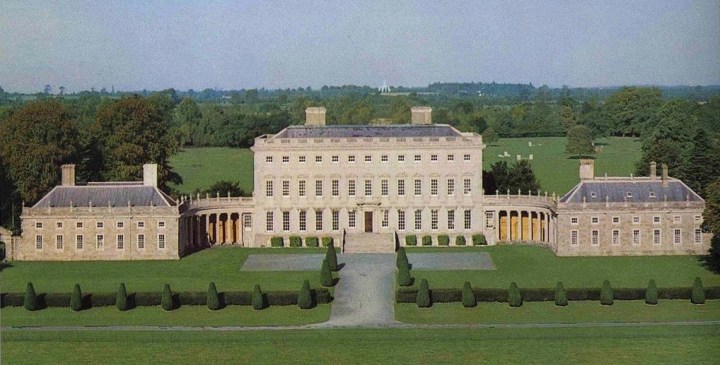
Alessandro Galilei and Edward Lovett Pearce, Castletown House, Celbridge, County Kildare, ca. 1722–29, built for William Conolly, Speaker of the Irish House of Commons; extensive rennovations were made by Lady Louisa Conolly starting in 1759 (Photo: Wikimedia Commons).
◊ ◊ ◊ ◊ ◊
Now on view at Castletown:
On a Pedestal: Celebrating the Contemporary Portrait Bust
Castletown House, Celbridge, County Kildare, 1 July – 31 August 2018
Dublin Castle, 8 September — 4 November 2018
Curated by Mary Heffernan, Hélène Bremer, and Nuala Goodman
Inspired by the classical busts in Castletown’s Long Gallery, this exhibition brings together works from an international group of contemporary artists who explore the genre of the portrait bust in a variety of media: from wood to stone, from marble to ceramics, from stainless steel to more ephemeral materials such as sugar. Initiating a dialogue between past and present, classic and modern art, the diversity of materials and techniques used by the artists represented in the exhibition will inspire visitors this summer.
Among those included in the exhibition are Irish artists Ursula Burke, Janet Mullarney and Kevin Francis Gray. International artists include Sir Tony Cragg, Giulio Paolini, and Ah Xian. Curated by Mary Heffernan, General Manager Castletown House; Helene Bremer, Dutch art historian and curator; and Nuala Goodman, Milan-based Irish artist and curator.
Mary Heffernan, Hélène Bremer, and Nuala Goodman, eds., On a Pedestal: Celebrating the Contemporary Portrait Bust in the 21st Century (Dublin: Office of Public Works, 2018), 95 pages, ISBN: 978-1406429862.

Installation view of the exhibition On a Pedestal: Celebrating the Contemporary Portrait Bust at Castletown House.
◊ ◊ ◊ ◊ ◊
From Aidan Dunne’s article for The Irish Times (3 July 2018). . .
This year, observes Mary Heffernan, the general manager of Castletown House, is the 275th anniversary of the birth of “the great heroine of the story of Castletown,” Lady Louisa Connolly. On a Pedestal, an exhibition of portrait busts at Castletown, is intended as an homage to Louisa, and “the magical Long Gallery she created.”

Anne Valerie Dupond, ‘Lady Louisa Connolly’, 2018.
In 1743 Louisa was born into privileged circumstances: her father was the second Duke of Richmond, and her childhood was spent in great houses, including Richmond House in Whitehall, Goodwood House in Sussex and, after her parents died within a year of each other, Carton House in Co Kildare. She married Thomas Connolly of Castletown, the wealthiest man in Ireland, in 1758.
Inspired by the many houses she knew and loved, she set about making changes to Castletown, including a new cantilevered staircase, La Franchini plasterwork, the print room, diningroom and the Long Gallery. The gallery, which she referred to as her livingroom, housed her library with busts and murals of classical writers, philosophers, gods and goddesses, including the nine muses. Compare it to the collection in the Long Gallery in Trinity College Dublin, initiated in 1743, which historian Hélène Bremer describes as the most significant single influence on Louisa’s project .…
The full article is available here»
◊ ◊ ◊ ◊ ◊
Note (added 24 August 2018) — The original posting did not include details of the catalogue.
Exhibition | Woven Strands: The Art of Human Hair Work
The exhibition, now on view at The Mütter Museum, presents mainly nineteenth-century objects, though there are several striking eighteenth-century works, too; it’s a fascinating exploration of palette, table work, dissolving hair, and gimp techniques.
Woven Strands: The Art of Human Hair Work
The Mütter Museum, The College of Physicians of Philadelphia, 19 January — 16 September 2018
Curated by Emily Snedden Yates, John Whitenight, and Evan Michelson
 A favored folk art of the 18th and 19th centuries, hair art was a sentimental expression of grief and love, usually created by women whose identities have become anonymous over time. Human hair—from both living and deceased persons—was used to form flower bouquets, wreaths, braided jewelry chains, weeping willows, and painted scenes of mourning. Considered to be a form of portraiture, these were cherished tokens to preserve the memory of a deceased loved one, chart a vibrant family tree of the living, or to be traded as friendship keepsakes. It is rare to view such pieces publicly as they were created in domestic settings, for home display. Drawing from six private collections, the Mutter Museum together with John Whitenight and Evan Michelson has assembled an exquisite group of hair art and jewelry as well as accompanying materials that discuss the social expectations of Victorian-era mourning rituals that ruled 19th-century society with strict standards.
A Brief History of Hair Art as Seen in Woven Strands: The Art of Human Hair Work at the Mütter Museum (Philadelphia: Mütter Museum, 2018), 80 pages, $17.
New Book | Chippendale’s Classic Marquetry Revealed
From Jack Metcalfe’s website, Marquetry Matters:
Jack Metcalfe, Chippendale’s Classic Marquetry Revealed (CreateSpace Independent Publishing Platform, 2018), 304 pages, ISBN: 978-1720881131, $65.
 In this lavishly illustrated, wide-ranging volume, expert marqueteur Jack Metcalfe gives fascinating insights into all aspects of eighteenth-century marquetry, gained from close first-hand examination of Chippendale’s original pieces. Using his insider’s knowledge and skills as a practitioner, he investigates the materials, dyes, tools, and techniques used to create Chippendale’s polychromatic pieces. With its lively, engaging narrative and over 700 colour images, this book is essential reading for marqueteurs, cabinet makers, dyers, furniture historians, and anyone interested in the work of Britain’s supreme furniture maker, Thomas Chippendale.
Separate chapters cover:
• Materials and tools used in Chippendale’s time
• Techniques of eighteenth-century marquetry
• Dyes and dyeing techniques, including the scientific analysis of dyes used on Chippendale’s furniture
• Detailed step-by-step descriptions of the construction of three replica pieces by the author
• A detailed illustrated gallery of all the known marquetry commissions made by Thomas Chippendale.
With over 20 years’ experience as a marqueteur, Jack Metcalfe has devoted himself to uncovering and mastering the techniques of marquetry as practised by Chippendale’s skilled artisans in the eighteenth century. Using equipment, materials, dyes and techniques as close to the original as possible, Jack has created striking replicas of marquetry panels from Chippendale furniture, including the famous Diana and Minerva Commode. His careful research into the use of dyes, including ground-breaking scientific analysis of coloured veneers used, has enabled him to reveal the often startlingly fresh colours that Chippendale’s furniture would have displayed when first constructed.










 Enfilade
leave a comment