New Book | Emma Hamilton
From Routledge:
Ersy Contogouris, Emma Hamilton and Late Eighteenth-Century European Art: Agency, Performance, and Representation (New York, Routledge, 2018), 172 pages, ISBN: 9780815374237, $150.
 This book uses an art historical and feminist methodology to engage with Emma Hamilton, an eighteenth-century celebrity who appeared in many works of art by important artists including Angelica Kauffmann, George Romney, and Élisabeth Vigée-Le Brun. Ersy Contogouris analyzes works of art in which Hamilton appears, her performances, and writings by her contemporaries to establish her impact on this pivotal moment in European history and art. This pioneering volume shows that Hamilton did not attempt to present a coherent or polished identity, arguing instead that she was a kaleidoscope of different selves that she used to both express herself and present to others what they wanted to see. She was resilient, effectively asserted her agency, and was a powerful inspiration for generations of artists and women.
Ersy Contogouris is Assistant Professor at Université de Montréal.
C O N T E N T S
Introduction: Emma Hamilton, the Most Beautiful Compound Ever Beheld
1 La vie de Lady Hamilton est un roman
2 The Acme of Sir William’s Delights
3 Emma’s Attitudes: Movements and Surprising Transformations
4 The Tarantella
5 Model, Muse, and Artist
Conclusion
New Book | Architecture and Urbanism in the French Atlantic Empire
From McGill Queen’s University Press:
Gauvin Alexander Bailey, Architecture and Urbanism in the French Atlantic Empire: State, Church, and Society, 1604–1830 (Montreal: McGill Queen’s University Press, 2018), 696 pages, ISBN: 978-0773553149, $75.
 Spanning from the West African coast to the Canadian prairies and south to Louisiana, the Caribbean, and Guiana, France’s Atlantic empire was one of the largest political entities in the Western Hemisphere. Yet despite France’s status as a nation at the forefront of architecture and the structures and designs from this period that still remain, its colonial building program has never been considered on a hemispheric scale.
Drawing from hundreds of plans, drawings, photographic field surveys, and extensive archival sources, Architecture and Urbanism in the French Atlantic Empire focuses on the French state’s and the Catholic Church’s ideals and motivations for their urban and architectural projects in the Americas. In vibrant detail, Gauvin Alexander Bailey recreates a world that has been largely destroyed by wars, natural disasters, and fires—from Cap-François (now Cap-Haïtien), which once boasted palaces in the styles of Louis XV and formal gardens patterned after Versailles, to failed utopian cities like Kourou in Guiana. Vividly illustrated with examples of grand buildings, churches, and gardens, as well as simple houses and cottages, this volume also brings to life the architects who built these structures, not only French military engineers and white civilian builders, but also the free people of colour and slaves who contributed so much to the tropical colonies. Taking readers on a historical tour through the striking landmarks of the French colonial landscape, Architecture and Urbanism in the French Atlantic Empire presents a sweeping panorama of an entire hemisphere of architecture and its legacy.
Gauvin Alexander Bailey is professor and Alfred and Isabel Bader Chair in Southern Baroque Art at Queen’s University.
New Book | The Palace of Sans-Souci in Milot, Haiti, ca. 1806–13
From Deutscher Kunstverlag:
Gauvin Alexander Bailey, Der Palast von Sans-Souci in Milot, Haiti (ca. 1806–1813): Das vergessene Potsdam im Regenwald / The Palace of Sans-Souci in Milot, Haiti (ca. 1806–1813): The Untold Story of the Potsdam of the Rainforest (Berlin: Deutscher Kunstverlag, 2017), 200 pages, ISBN: 978-3422074668, 15€. German and English.
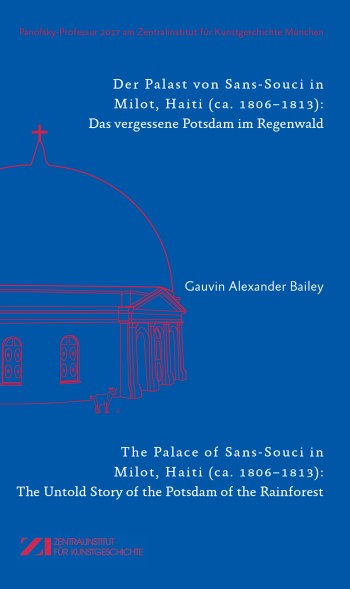 One of the most mysterious buildings in the Western hemisphere, King Henri Christophe’s lavish neoclassical palace in the rain forest, enthrones the small Haitian town of Milot. Begun less than a decade after the Haitian Revolution for independence (1804) by the first black African king in the Americas, this massive monument was built to showcase Haiti’s power and self-confidence. Despite its status as UNESCO World Heritage and a tourist attraction, the unusual building has never before been the subject of a study. On the basis of unpublished archival sources and exact photographic documentation, this book is the first to publish detailed information about the genesis this extraordinary architecture and the story of its builder.
Gauvin Alexander Bailey is professor and Alfred and Isabel Bader Chair in Southern Baroque Art at Queen’s University.
Call for Papers | Masterpiece London: Museums and the Art Trade

Masterpiece Symposium: Museums and the Art Trade
Masterpiece London, 30 June 2018
Proposals due by 11 May 2018
Masterpiece London is delighted to host a day of lectures, seminars, and discussion sessions co-organised by the Fair and Dr Thomas Marks, editor of Apollo, to bring together the preeminent museum curators of tomorrow with the emerging stars of the art and antiques trade, with the aim of encouraging constructive discussion, networking, and the exchange of knowledge and practical advice. We invite art historians and members of the art trade to submit short academic papers (15–20 minutes) for presentation during the Masterpiece Symposium, or simply to attend the event. Please note that although spaces are free, we are limited to 100 delegates and so your early response is encouraged.
Applicants should submit a 200-word abstract and a brief biography to francesca.charltonjones@masterpiecefair.com by 11 May 2018. The papers will be reviewed by a selection committee: Philip Hewat-Jaboor (Chairman, Masterpiece London), Thomas Marks (Editor, Apollo), and Jocelyn Poulton (Head of Vetting, Masterpiece London). Travel bursaries will be available to applicants invited to speak.
Suggested paper topics for Masterpiece London Symposium 2018 include
• Significant historical art dealers, their business practices, client relationships, or premises
• The historical or current relationship between institutions and the art trade
• Art dealers who have worked as curators or curators who have worked collaboratively with art dealers—nationally and/or internationally
• The cultural philanthropic activity and impact thereof, of art businesses
• The impact and practices of art dealers in the historical acquisition of non-European objects or antiquities by museums
• The ethics of collaborative work between museums and the art trade
Exhibition | James Cook: The Voyages

Now on view at the British Library, with lots of information and resources on the BL’s exhibition website:
James Cook: The Voyages
British Library, London, 27 April — 28 August 2018
Curated by William Frame and Laura Walker
It is 250 years since the Endeavour set sail from Plymouth in August of 1768. Our exhibition tells the story of Captain James Cook’s three world-changing voyages through original documents, many of which were produced by the artists, scientists, and sailors on board the ships. Maps, artworks, and journals from the voyages sit alongside newly-commissioned films offering contemporary perspectives. Examine the expeditions that shaped Europe’s knowledge of the world and consider their far-reaching legacy.
See Cook’s handwritten journal detailing the first crossing of the Antarctic Circle, when they travelled further south than anyone in the world, stunning artwork including the earliest European depiction of a kangaroo, and intricate maps charting the voyages that spanned more than a decade. Learn about the experiences on board the Endeavour, Resolution, and Discovery and the impact of their arrival. Drawings by the Polynesian high priest and navigator Tupaia, who accompanied Cook to New Zealand and Australia, will be displayed together for the first time. These will sit alongside works by expedition artists Sydney Parkinson, William Hodges, and John Webber.
Visit our James Cook: The Voyages website for a range of different perspectives on the voyages and their legacy and impact. These include responses from people of the communities Cook encountered, documented, and learned from. You can also follow the timeline of the journeys, read articles about the individual voyages and immerse yourself in the expeditions through our digitised collection items.
Hear the stories. Read the diaries. Revisit the momentous voyages made 250 years ago.
Programming information is available here»
William Frame with Laura Walker, James Cook: The Voyages (London: British Library Publishing, 2018), 224 pages, ISBN: 978-0773552869, £25 / $45.
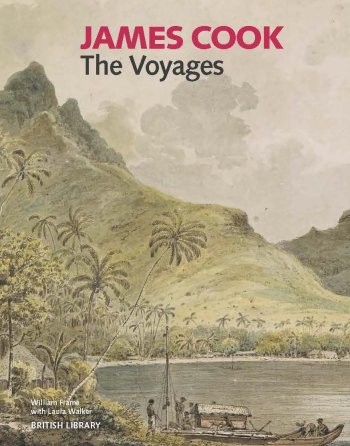 A stunningly illustrated, object-centred history, this book offers a once in a generation opportunity to discover the uniquely rich Captain Cook collection of the British Library. The authors explore a series of themes including the navigation and charting of the Pacific; first encounters between Western and indigenous cultures; the representation of the voyages in art; and scientific discovery and the natural world. Themes of cultural encounter and scientific discovery are interwoven with the personal stories of the key protagonists, including James Cook and Joseph Banks. The illustrations include drawings by all the artists employed on the voyage, as well as the only surviving paintings by Tupaia, a Polynesian high priest who joined Cook’s ship at Tahiti and sailed to New Zealand and Australia.
William Frame is head of modern archives and manuscripts at the British Library. Laura Walker is lead curator of modern archives and manuscripts, 1850–1950, at the British Library.
Exhibition | The Art of Science: Nicolas Baudin’s Voyagers, 1800–1804
I noted this exhibition in 2015 when it was entitled Napoleon’s Artists in Australia. Here’s a more complete venue listing with details on the catalogue, published by Wakefield Press. –CH
The Art of Science: Nicolas Baudin’s Voyagers, 1800–1804
South Australian Maritime Museum, Adelaide, 30 June — 11 December 2016
Queen Victoria Museum and Art Gallery, Launceston, 7 January — 20 March 2017
Tasmanian Museum and Art Gallery, Hobart, 7 April — 9 July 2017
Australian National Maritime Museum, Sydney, 31 August — 26 November 2017
National Museum of Australia, Canberra, 30 March — 20 June 2018
Western Australian Museum, Perth, 12 September — 12 December 2018
See exquisite illustrations of Australian animals and marine life, as well as striking portraits of Aboriginal people, rare documents and hand-drawn maps from Nicolas Baudin’s expedition to Australia. Discover the ambitions behind this lavishly funded French voyage and experience a captivating fusion of art and science.
Jean Fornasiero, Lindl Lawton, John West-Sooby, eds., The Art of Science: Nicolas Baudin’s Voyagers 1800–1804 (Adelaide: Wakefield Press, 2016), 176 pages, ISBN: 978-1743054277, $40AU.
 It was one of the most lavishly equipped scientific expeditions ever to leave Europe. At the dawn of the nineteenth century, French navigator Nicolas Baudin led two ships carrying 22 scientists and more than 230 officers and crew on a three-and-a-half-year voyage to the ‘Southern Lands’, charting coasts, studying the natural environment and recording encounters with indigenous peoples. Inspired by the Enlightenment’s hunger for knowledge, Baudin’s expedition collected well in excess of 100,000 specimens, produced more than 1500 drawings and published the first complete chart of Australia. Baudin’s artists, Charles-Alexandre Lesueur and Nicolas-Martin Petit, painted a series of remarkable portraits of Aboriginal people and produced some of the earliest European views of Australian fauna. An integral part of the French scientific project, these exquisite artworks reveal the sense of wonder this strange new world inspired.
Jean Fornasiero is Emeritus Professor of French Studies at the University of Adelaide and a Fellow of the Australian Academy of the Humanities. Lindl Lawton is Senior Curator at the South Australian Maritime Museum. John West-Sooby is Professor of French Studies at the University of Adelaide.
Exhibition | ‘So That You Might Know Each Other’
From the press release (19 April 2018) for the exhibition:
‘So That You Might Know Each Other’: Faith and Culture in Islam
Sharjah Museum of Islamic Civilisation, Emirate of Sharjah, United Arab Emirates, 2014
National Museum of Australia, Canberra, 20 April — 22 July 2018
 Fine embroidered textiles, camel and horse saddles, musical instruments, and carved amulets headline a new exhibition on view at the National Museum of Australia in Canberra, which showcases intriguing objects from the Anima Mundi Museum, the section of the Vatican Museums devoted to extra-European collections, and the Sharjah Museums Authority, United Arab Emirates.
Featuring over 100 precious 18th- to 20th-century objects from over twenty countries, ‘So That You Might Know Each Other’: Faith and Culture in Islam illustrates the evolution of Islam across the globe and celebrates diverse Muslim societies from the Middle East, through to Africa and India, China and South East Asia. Inspired by a verse from the Holy Qur’an, the exhibition’s title invites visitors to learn more about each other’s lives, religions, and cultures in a spirit of intercultural respect and dialogue.
Including many everyday items, the exhibition—which opened at the National Museum as its only Australian venue—tells the stories of ordinary peoples’ lives, beliefs, and cultural traditions. It is the first time these objects, rarely seen outside their own institutions, have been displayed in Australia. This unique international collection is being complemented by Australian objects that celebrate the contributions made by people of Islamic faith to Australian history.
National Museum of Australia director, Dr Mathew Trinca, said he was delighted Australian audiences would have the opportunity to see these distinctive and beautiful collections. “Islamic arts and decorative crafts are globally recognised for their beauty and artistry, and we hope this exhibition promotes mutual understanding and dialogue between cultures and faiths,” said Dr Trinca. “There has never been a more important time for a show of this kind in Australia.”
Director of the Vatican Museums, Dr Barbara Jatta, said she hopes Australian audiences would embrace the show. “As I followed the preparation of this exhibition, I was sincerely struck by the beauty and sophistication of the Islamic world—I saw firsthand the refined productions of people living across a vast area stretching from Africa to Australia.”
Director General, Sharjah Museums Authority, Manal Ataya, hoped the exhibition boosted intercultural understanding: “‘So That You Might Know Each Other’ is an unique exhibition devised to give a glimpse of the diversity of Muslim material culture and is intended to foster intercultural dialogue and promote tolerance and peace—among Muslims the world over and between Islam and other faiths.”
Key objects in the exhibition include a late 19th-century wood and leather horse saddle from Tunisia; a late 19th- or early 20th-century silver coral, horn, and glass necklace from Libya; a tapestry wool and silk overcoat from Syria; traditional women’s and men’s costumes from Sharjah; an illuminated Qur’an from Ottoman Turkey; and an 18th-or 19th-century vase from China, combining Islamic inscriptions and Buddhist symbols.
These are complemented by Australian objects from the National Museum’s collection, including an intricate bark painting depicting early contact between Aboriginal people in north Australia and Muslim fisherman from Makassar in southern Sulawesi, Indonesia, who came to Australia in search of trepang or sea cucumber, a delicacy they traded to China as food and medicine.
The exhibition highlights the role Muslims played in the exploration and opening up of huge expanses of outback Australia for the pastoral industry and trade. On show is a rare original drawing made in 1953, of Bejah Dervish. Described as Australia’s ‘greatest cameleer’, Bejah was born in Baluchistan (now Pakistan) and came to Australia in 1890 as a camel-handler. He excelled in this profession, helping to save members of the ill-fated Calvert Expedition of 1896–97, and later running a successful camel string at Marree, on the Birdsville track, for a further thirty years. The drawing is featured alongside a rare early camel saddle on loan from the Museum of Arts and Applied Sciences, Sydney.
The ‘Afghans’ or ‘Ghans’, as they became known (although they mainly came from India and present-day Pakistan), pioneered a network of tracks that became the major roads of Central Australia. Apart from Australian Aborigines, they were the first people who were able to navigate and survive these challenging terrains. Together with their imported camels, they hauled the equipment, water, food and other supplies needed for building the great desert railways, and, with their work on the Overland Telegraph Line, they helped revolutionise communications in Australia.
From the 1860s to the 1920s, an estimated 20,000 camels and 2000 cameleers reached Australia. While many of the men who were indentured to large agricultural companies returned to their countries of origin, others, like Bejah Dervish, remained, building mosques and raising families who formed the first Islamic communities in Australia.
Launched in April 2018, ‘So That You Might Know Each Other’: Faith and Culture in Islam invites Muslim and non-Muslim people to learn more about each others’ lives across regions, religions, beliefs, and cultures. The objects highlight and celebrate the diverse cultures of traditional Muslim societies ranging from Africa and the Middle East, to China, India, Indonesia, and Australia.
The exhibition is an unprecedented collaboration between the Vatican Anima Mundi Museum, the Sharjah Museums Authority and the National Museum of Australia. It focuses on areas around the world and in Australia, where Muslim people have settled and created communities. The objects from the Vatican Museums and Sharjah Museums have not appeared in Australia before, nor have many been on display elsewhere, apart from the previous 2014 exhibition at the Sharjah Museum of Islamic Civilisation, Emirate of Sharjah, United Arab Emirates.
The majority of the objects in the exhibition came to the Vatican Museums as gifts sent to Pope Pius XI, on the occasion of the Universal Exposition held in Rome in 1925. These gifts formed the basis of the Vatican’s large extra-European collections, recently rebranded as the Vatican Anima Mundi (‘Soul of the World’) Museum. Almost 90 years later, after preserving and caring for these gifts with the same dedication extended to Italian masterpieces, the Vatican offered a selection of its collection for the exhibition, displayed at the Sharjah Museum of Islamic Civilization in 2014. This first exhibition was also called ‘So That You Might Know Each Other’.
The Sharjah Museum of Islamic Civilization opened in 2008 and is just one of 16 museums that form the Sharjah Museums Authority (SMA). This Museum and others—including the Sharjah Maritime Museum, Calligraphy Museum, Heritage Museum, and the Bait Al Naboodah Museum—have contributed objects for the exhibition in Canberra.
‘So That You Might Know Each Other’: Faith and Culture in Islam (Canberra: National Museum of Australia Press, 2018), 120 pages, ISBN: 978-1921953316, $30.
Exhibition | Religion in Early America
From the Smithsonian:
Religion in Early America
National Museum of American History, Washington, D.C., 28 June 2017 — 3 June 2018

Thomas Jefferson’s private text, The Life and Morals of Jesus of Nazareth—colloquially known as the Jefferson Bible (Smithsonian’s National Museum of American History; photo by Hugh Talman).
The role of religion in the formation and development of the United States is at the heart of this one-year exhibition that explores the themes of religious diversity, freedom, and growth from the colonial era through the 1840s. National treasures from the Museum’s own collection are on view, such as George Washington’s christening robe from 1732, Thomas Jefferson’s The Life and Morals of Jesus of Nazareth, also known as ‘The Jefferson Bible’, and Wampum beads. Significant objects on loan include Massachusetts Bay Colony-founder John Winthrop’s communion cup, circa 1630; a Torah scroll on loan from New York’s Congregation Shearith Israel, founded in 1654; a chalice used by John Carroll, the first Roman Catholic bishop in the U.S. and founder of Georgetown University; and a first edition of the Book of Mormon. The objects represent the diverse range of Christian, Native American, and African traditions as well as Mormonism, Islam, and Judaism that wove through American life in this era.
◊ ◊ ◊ ◊ ◊
Peter Manseau, Objects of Devotion: Religion in Early America (Washington, D.C.: Smithsonian Books, 2017), 260 pages, ISBN: 978-1588345929, $30.
 Objects of Devotion: Religion in Early America tells the story of religion in the United States through the material culture of diverse spiritual pursuits in the nation’s colonial period and the early republic. The beautiful, full-color companion volume to a Smithsonian National Museum of American History exhibition, the book explores the wide range of religious traditions vying for adherents, acceptance, and a prominent place in the public square from the 1630s to the 1840s. The original thirteen states were home to approximately three thousand churches and more than a dozen Christian denominations, including Anglicans, Baptists, Catholics, Congregationalists, Lutherans, Methodists, Presbyterians, and Quakers. A variety of other faiths also could be found, including Judaism, Islam, traditional African practices, and Native American beliefs. As a result, America became known throughout the world as a place where, in theory, if not always in practice, all are free to believe and worship as they choose. The featured objects include an 1814 Revere and Sons church bell from Salem, the Jefferson Bible, wampum beads, a 1654 Torah scroll brought to the New World, the only known religious text written by an enslaved African Muslim, and other revelatory artifacts. Together these treasures illustrate how religious ideas have shaped the country and how the treatment and practice of religion have changed over time. Objects of Devotion emphasizes how religion can be understood through the objects, both rare and everyday, around which Americans of every generation have organized their communities and built this nation.
Peter Manseau is the Lilly Endowment Curator of American Religious History at the Smithsonian Institution’s National Museum of American History. He holds a doctorate in religion from Georgetown University and writes frequently for publications including The New York Times, The Atlantic, and The Wall Street Journal.
Exhibition | The Great Spectacle: 250 Years of the Summer Exhibition
From the RA:
The Great Spectacle: 250 Years of the Summer Exhibition
Royal Academy of Arts, London, 12 June — 19 August 2018
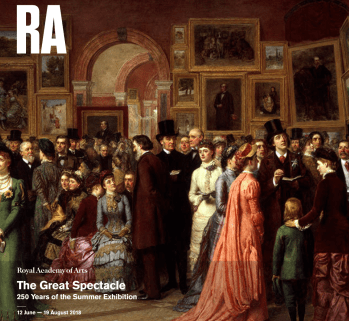 The Great Spectacle tells the story of 250 years of the Summer Exhibition, the world’s longest running annual display of contemporary art. Ever since 1769, and at a succession of locations ranging from Pall Mall to Piccadilly, the Academy’s exhibition rooms have been crowded for some two months each year with hundreds of paintings and sculptures produced by many of Britain’s leading artists.
Over the last two hundred and fifty years, these spectacular displays of art—dominated by what has become a famously crowded and collage-like arrangement of pictures across the Academy’s walls—have provided thousands of artists with a crucial form of competition, inspiration and publicity, and captured the interest of millions of visitors. The Great Spectacle tells the story of these exhibitions and, in doing so, offers an innovative, illuminating and visually stunning celebration of the Academy’s first 250 years and demonstrates the impact of these exhibitions on art in Britain and internationally.
Staged to coincide with the Summer Exhibition of 2018, and taking the form of a sequence of interlinked gallery displays that will recreate a series of important moments in the history of the Academy and its shows, The Great Spectacle will dramatise the excitement, variety and richness of the Summer Exhibition, offering visitors a fascinating, ever-changing journey from Joshua Reynolds to Wolfgang Tillmans.
Mark Hallett and Sarah Victoria Turner, The Great Spectacle 250 Years of the Summer Exhibition (London: ACC Publishing Group, 2018), 224 pages, ISBN: 9781910350706, £25.
Note added (23 August 2018) — Also, see the related online publication: Hallett, Mark, Sarah Victoria Turner, Jessica Feather, Baillie Card, Tom Scutt, and Maisoon Rehani, eds., The Royal Academy Summer Exhibition: A Chronicle, 1769–2018 (London: Paul Mellon Centre for Studies in British Art, 2018).
New Book | The Royal Academy of Arts: History and Collections
From Yale UP:
Robin Simon and MaryAnne Stevens, eds., The Royal Academy of Arts: History and Collections (London: Paul Mellon Centre for Studies in British Art, 2018), 676 pages, ISBN: 9780300232073, $95.
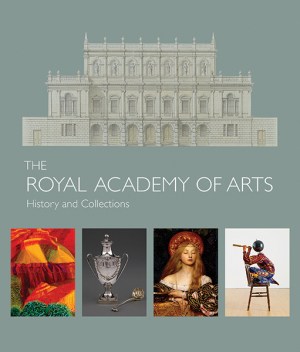 Animated by an unprecedented study of its collections, this book tells the story of the Royal Academy of Arts, London, and illuminates the history of art in Britain over the past two and a half centuries. Thousands of paintings, sculptures, drawings, and engravings, as well as silver, furniture, medals, and historic photographs, make up this monumental collection, featured here in stunning illustrations, and including an array of little-studied works of art and other objects of the highest quality. The works of art complement an archive of 600,000 documents and the first library in Britain dedicated to the fine arts. This fresh history reveals the central role of the Royal Academy in British national life, especially during the 19th century. It also explores periods of turmoil in the 20th century, when the Academy sought either to defy or to come to terms with modernism, challenging linear histories and frequently held notions of progress and innovation.
Robin Simon is editor of the British Art Journal and honorary professor of English at University College London. MaryAnne Stevens is an independent art historian and curator.










 Enfilade
leave a comment