New Book | Interacting with Print
From The University of Chicago Press:
The Multigraph Collective, Interacting with Print: Elements of Reading in the Era of Print Saturation (Chicago: The University of Chicago Press, 2018), 416 pages, ISBN: 978 022646 9140, $45.
 A thorough rethinking of a field deserves to take a shape that is in itself new. Interacting with Print delivers on this premise, reworking the history of print through a unique effort in authorial collaboration. The book itself is not a typical monograph—rather, it is a ‘multigraph’, the collective work of twenty-two scholars who together have assembled an alphabetically arranged tour of key concepts for the study of print culture, from Anthologies and Binding to Publicity and Taste. Each entry builds on its term in order to resituate print and book history within a broader media ecology throughout the eighteenth and nineteenth centuries. The central theme is interactivity, in three senses: people interacting with print; print interacting with the non-print media that it has long been thought, erroneously, to have displaced; and people interacting with each other through print. The resulting book will introduce new energy to the field of print studies and lead to considerable new avenues of investigation.
The Multigraph Collective, emanating from the Montreal-based Interacting with Print research group, comprises: Mark Algee-Hewitt, Angela Borchert, David Brewer, Thora Brylowe, Julia Carlson, Brian Cowan, Susan Dalton, Marie-Claude Felton, Michael Gamer, Paul Keen, Michelle Levy, Michael Macovski, Nicholas Mason, Nikola von Merveldt, Tom Mole, Andrew Piper, Dahlia Porter, Jonathan Sachs, Diana Solomon, Andrew Stauffer, Richard Taws, and Chad Wellmon.
C O N T E N T S
List of Illustrations
Preface; or, What Is a Multigraph?
Introduction
1 Advertising
2 Anthologies
3 Binding
4 Catalogs
5 Conversations
6 Disruptions
7 Engraving
8 Ephemerality
9 Frontispieces
10 Index
11 Letters
12 Manuscript
13 Marking
14 Paper
15 Proliferation
16 Spacing
17 Stages
18 Thickening
Epilogue
Works Cited
About the Multigraph Collective
Index
Zeitschrift für Kunstgeschichte 80.4 (2017), Penser le rococo
The current issue of Zeitschrift für Kunstgeschichte focuses on the theme ‘Reconsidering the Rococo’, the subject of a November 2015 conference at the University of Lausanne. Abstracts (in English) are available as a PDF file here.
Zeitschrift für Kunstgeschichte 80.4 (2017), Penser le rococo
Guest edited by Carl Magnusson and Marie-Pauline Martin
A R T I C L E S
• Carl Magnusson, “Le rococo, une construction historiographique: introduction”
• Marie-Pauline Martin, “‹Rococo›: du jargon à la catégorie de style”
• Catherine Thomas-Ripault, “Evasion temporelle et fantaisie créatrice: usage des peintures du xviiie siècle dans les fictions romantiques”
• Etienne Tornier , “‹This new-born word is rococo›: Généalogie et fortune du rococo aux États-Unis”
• Jean-François Bédard, “La vitalité du décor : Fiske Kimball, du rococo au Colonial Revival”
• Carl Magnusson, “Le rococo est-il décoratif ?”
• David Pullins, “‹Quelques misérables places à remplir›: Locating Shaped Painting in Eighteenth-Century France
• Bérangère Poulain, “Rococo et fugacité du regard: émergence et modifications de la notion de ‹papillotage›”
R E V I E W S
• Paul Williamson, Review of Laurence Terrier Aliferis, L’imitation de l’Antiquité dans l’art médiéval, 1180–1230 (Répertoire iconographique de la littérature du Moyen Âge, Études du RILMA, vol. 7, 2016).
• Christoph Martin Vogtherr, Review of Jérôme Delaplanche, Un tableau n’est pas qu’une image: La reconnaissance de la matière de la peinture en France au XVIIIe siècle (2016).
• Martin Dönike, Review of Johann Joachim Winckelmann, Monumenti antichi inediti spiegati ed illustrati, Roma 1767, edited by Adolf H. Borbein and Max Kunze (2011) | Johann Joachim Winckelmann, Monumenti antichi inediti spiegati ed illustrati, Roma 1767, edited by Adolf H. Borbein, Max Kunze, and Axel Rügler (2015).
• Anna Degler, Review of Guillaume Cassegrain, La coulure: Histoire(s) de la peinture en mouvement, XIe–XXIe siècles (2015).
New Book | Jean–Bernard Restout (1732–1796)
From Arthena:
Nicole Willk-Brocard, Jean–Bernard Restout (1732–1796) (Paris: Arthena, 2018), 240 pages, ISBN: 978-2903239596, 86€.
 Fils de Jean II Restout, grand peintre religieux du xviiie siècle, apparenté à Noël Hallé et à Jean Jouvenet, Jean-Bernard Restout reçoit une solide formation artistique et littéraire. Pensionnaire à l’Académie de France à Rome, il exprime d’emblée un talent novateur, sobre et vigoureux.
Agréé à l’Académie royale comme peintre d’histoire en 1765, il connaît ses premiers succès. Il s’insurge contre le refus du jury d’exposer une de ses oeuvres au Salon de 1769 ; son ressentiment envers l’Académie et les institutions ne fera que croître. Il peint peu, tarde à honorer ses commandes, mais ses oeuvres de la maturité confirment les exceptionnelles qualités de l’artiste, également subtil et intelligent portraitiste. La Révolution à laquelle il adhère avec enthousiasme lui permet, aux côtés de David, d’assouvir sa vengeance contre l’Académie. Il côtoie Robespierre et Fabre d’Églantine mais signe ainsi sa perte : nommé inspecteur général du Garde-Meuble, il est injustement impliqué dans le vol des bijoux de la Couronne et incarcéré avant d’être libéré après le 9 Thermidor. La redécouverte de son oeuvre—largement inédit—fait regretter son choix de la politique au détriment de la peinture.
Docteur ès lettres, membre du conseil d’administration de la Société des Amis du Louvre, ancienne chargée de mission au département des Peintures du musée du Louvre, Nicole Willk-Brocard est spécialiste de la peinture française du XVIIIe siècle. Elle a publié deux monographies de référence : François-Guillaume Ménageot (Arthena, 1978) couronnée par le prix de la Fondation Paul Cailleux, et Une dynastie. Les Hallé (Arthena, 1992) ainsi que de nombreux articles dans des revues scientifiques (Revue des musées de France, Bulletin de la Société de l’Histoire de l’art français, Gazette des Beaux-Arts).
New Book | Joseph-Benoît Suvée (1743–1807)
From Arthena:
Sophie Join-Lambert and Anne Leclair, Joseph-Benoît Suvée (1743–1807) (Paris: Arthena, 2017), 440 pages, ISBN : 978 2903239 602, 129€.
 Formé à Bruges, Suvée se perfectionne à Paris dans l’atelier de Bachelier. En 1771, il est lauréat du Grand Prix de l’Académie, devançant David qui lui en gardera une rancune tenace. À Rome, le pensionnaire de l’Académie de France montre une vive curiosité pour les sites antiques. Il réalise de très nombreux dessins dont certains, admirables, révèlent un des dessinateurs les plus doués de sa génération. En 1779, de retour à Paris, il est reçu à l’Académie royale. Il jouera désormais un rôle de premier plan. Les tableaux qu’il expose régulièrement au Salon de 1779 à 1796 témoignent d’une adhésion sans réserve au néoclassicisme. Certaines oeuvres remportent un vif succès, qu’il s’agisse de tableaux d’histoire nationale, d’histoire antique ou de tableaux religieux. Parallèlement, il peint de nombreux portraits avec un réalisme émouvant, les plus célèbres étant ceux de ses compagnons d’infortune détenus avec lui pendant la Terreur dans la prison Saint-Lazare, en particulier celui du poète André Chénier. En 1801, Suvée prend la direction de l’Académie de France à Rome. C’est sous sa houlette qu’une nouvelle génération d’artistes, parmi lesquels Ingres, complète sa formation. Dessinateur hors pair, peintre délicat et novateur, pédagogue reconnu, Suvée, artiste européen entre Bruges, Paris et Rome, appartient pleinement au monde des Lumières.
Docteur en histoire de l’art, conservateur en chef, directrice du musée des Beaux-Arts de Tours, Sophie Join-Lambert a été commissaire de nombreuses expositions en particulier Les peintres du Roi (2000) et L’Apothéose du geste, l’esquisse peinte au siècle de Boucher et Fragonard (2003–2004). Travaillant plus particulièrement sur le xviiie siècle français, elle a publié le catalogue raisonné des Peintures françaises xviiie siècle, du musée des Beaux-arts de Tours et du château d’Azay-le-Ferron (2008). Elle a réalisé en 2017 la première exposition consacrée à Joseph-Benoît Suvée.
Spécialiste de la peinture française du xviiie siècle, Anne Leclair a publié une monographie sur le peintre Louis-Jacques Durameau (Arthena, 2001), couronnée par la Fondation del Duca. Ses recherches ont notamment porté sur la peinture d’histoire (cycle de la Vie de saint Louis à l’École militaire) et sur les décors peints de la Chancellerie d’Orléans; elle a écrit des articles remarqués sur le marché de l’art et sur les cabinets d’amateurs au siècle des Lumières (Mariette, Choiseul et Voyer d’Argenson).
New Book | The Painter’s Touch
From Princeton UP:
Ewa Lajer-Burcharth, The Painter’s Touch: Boucher, Chardin, Fragonard (Princeton: Princeton University Press, 2018), 336 pages, ISBN 978 06911 70121, $65 / £55.
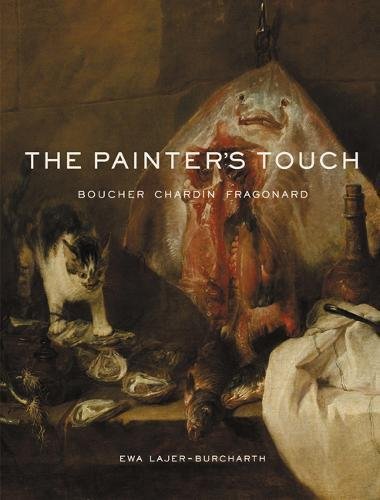 A new interpretation of the development of artistic modernity in eighteenth-century France.
What can be gained from considering a painting not only as an image but also a material object? How does the painter’s own experience of the process of making matter for our understanding of both the painting and its maker? The Painter’s Touch addresses these questions to offer a radical reinterpretation of three paradigmatic French painters of the eighteenth century. In this beautifully illustrated book, Ewa Lajer-Burcharth provides close readings of the works of François Boucher, Jean-Siméon Chardin, and Jean-Honoré Fragonard, entirely recasting our understanding of these painters’ practice. Using the notion of touch, she examines the implications of their strategic investment in materiality and sheds light on the distinct contribution of painting to the culture of the Enlightenment.
Lajer-Burcharth traces how the distinct logic of these painters’ work—the operation of surface in Boucher, the deep materiality of Chardin, and the dynamic morphological structure in Fragonard—contributed to the formation of artistic identity. Through the notion of touch, she repositions these painters in the artistic culture of their time, shifting attention from institutions such as the academy and the Salon to the realms of the market, the medium, and the body. Lajer-Burcharth analyzes Boucher’s commercial tact, Chardin’s interiorized craft, and Fragonard’s materialization of eros. Foregrounding the question of experience—that of the painters and of the people they represent—she shows how painting as a medium contributed to the Enlightenment’s discourse on the self in both its individual and social functions.
By examining what paintings actually ‘say’ in brushstrokes, texture, and paint, The Painter’s Touch transforms our understanding of the role of painting in the emergence of modernity and provides new readings of some of the most important and beloved works of art of the era.
Ewa Lajer-Burcharth is the William Dorr Boardman Professor of Fine Arts at Harvard University. Her books include Chardin Material and Necklines: The Art of Jacques-Louis David after the Terror.
C O N T E N T S
Acknowledgments
Introduction
1 Boucher’s Tact
Materiality and Personality
Touch and Tact
The Commercial Imagination
Personal Mythologies
The Promiscuous Self
The Artist as Consumer
Pompadour’s Painter
2 Chardin’s Craft
Deep Materiality
The Object (Inside/Out)
The Blind Touch
Underneath the Visible
The Subject
The Return to the Object
The Painter
3 Fragonard’s Seduction
Eros and Individuality
The Unseen
Being and Becoming
Pictorial Seduction
The Erotic Mother
The Artist’s Pleasure
The Painter’s Touch
Love and Life
Ars Erotica
Notes
Bibliography
Index
Image Credits
The Burlington Magazine, January 2018
The eighteenth century in The Burlington, which includes, as noted last week, mention of HECAA and J18 in the editorial in connection with the new scholarship:
The Burlington Magazine 160 (January 2018)
 E D I T O R I A L
“The Burlington Magazine Scholarship for the Study of French Eighteenth-Century Fine and Decorative Art,” p. 3. This month The Burlington Magazine launches an annual scholarship for the study of French eighteenth-century fine and decorative art. Initiated and funded by Richard Mansell-Jones, a trustee of The Burlington Magazine Foundation, the scholarship offers £10,000 to a student based anywhere in the world who has embarked or is about to embark on an M.A. or Ph.D. or is undertaking research in a post-doctoral or independent capacity. The full review is available here (also see below).
A R T I C L E S
• Aloisio Antinori, “New Light on the Production of Il Tempio Vaticano,” pp. 22–30.
R E V I E W S
• Susan Walker, Review of Elizabeth Bartman, The Ince Blundell Collection of Classical Sculpture, Volume 3: The Ideal Sculpture (Liverpool University Press, 2017), pp. 64–5.
• Elizabeth Savage, Review of Mark Stocker and Phillip Lindley, eds., Tributes to Jean Michel Massing: Towards a Global Art History (Harvey Miller, 2016), p. 74. [The volume includes Robin Middleton’s essay, “A Cautionary Tale: The History of Eighteenth-Century Architecture in France.”]
• Jeremy Warren, Review of Giovanna Baldissin Molli and Elda Martellozzo Forin, eds., Gli inventari della Sacrestia della Cattedrale di Padova, secoli XIV–XVIII (Il Prato Publishing House, 2016), p. 75.
◊ ◊ ◊ ◊ ◊
The Burlington Magazine Scholarship for the Study of French Eighteenth-Century Fine and Decorative Art
Applications due by 1 March 2018
The Burlington Magazine is pleased to announce the launch of The Burlington Magazine scholarship for the study of French 18th-century fine and decorative art. The scholarship has been created to provide funding over a 12-month period to those engaged in the study of French 18th-century fine and decorative art to enable them to develop new ideas and research that will contribute to this field of art historical study.
Applicants must be studying, or intending to study, for an MA, PhD, post-doctoral or independent research in the field of French 18th-century fine and decorative arts within the 12-month period the funding is given. Applications are open to scholars from any country. A grant of £10,000 will be awarded to the successful applicant.
More information is available here»
New Book | Schenau (1737–1806)
From Imhof:
Anke Fröhlich-Schauseil, Schenau (1737–1806): Monografie und Werkverzeichnis der Gemälde, Handzeichnungen und Druckgrafik von Johann Eleazar Zeissig, gen. Schenau (Petersberg: Imhof, 2018), 640 pages, ISBN: 978 373190 5684, 78€ / $135.
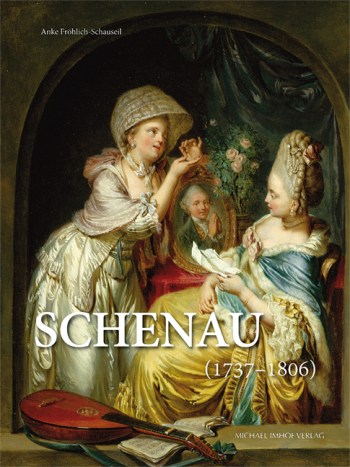 Das Werk des Malers Johann Eleazar Zeißig, gen. Schenau (1737–1806), erhielt lange Zeit auch von der Kunstgeschichte nur wenig Aufmerksamkeit; dabei war er mit seinem in Frankreich entwickelten, empfindsamen Rokokostil zu Lebzeiten in Deutschland und darüber hinaus bekannt und berühmt. In Sachsen hatte er als Direktor der Dresdner Kunstakademie sowie als Leiter der Zeichenschule der Porzellanmanufaktur in Meißen eine einflussreiche Stellung inne. Sein OEuvre umfasst Gemälde, Radierungen sowie zahlreiche Zeichnungen und Aquarelle. Hinzu kommt eine große Zahl von französischen und deutschen Kupferstichen nach Werken von seiner Hand, die im vorliegenden Band in Wort und Bild vorgestellt werden.
Exhibition | Winckelmann and the Capitoline Museum
From the Capitoline Museum:
The Treasure of Antiquity: Winckelmann and the Capitoline Museum in Eighteenth-Century Rome
Musei Capitolini, Rome, 7 December 2017 — 22 April 2018
Curated by Eloisa Dodero and Claudio Parisi Presicce
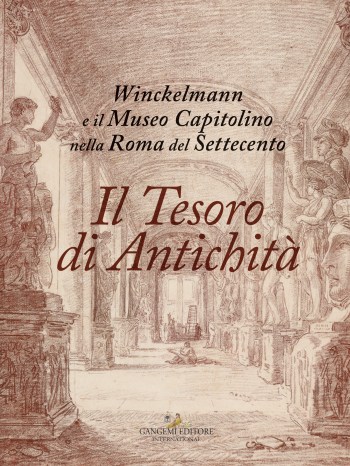 Una mostra per celebrare gli anniversari della nascita e della morte del fondatore dell’archeologia moderna, Johann Joachim Winckelmann (1717–1768)
La mostra Il Tesoro di Antichità. Winckelmann e il Museo Capitolino nella Roma del Settecento intende celebrare gli importanti anniversari winckelmanniani del 2017 (300 anni dalla nascita) e del 2018 (250 anni dalla morte) e si inserisce nel contesto delle manifestazioni europee coordinate dalla Winckelmann Gesellschaft di Stendal, dall’Istituto Archeologico Germanico di Roma e dai Musei Vaticani. L’esposizione ha una duplice finalità: la prima, offrire ai visitatori il racconto degli anni cruciali che hanno portato, nel dicembre del 1733, all’istituzione del Museo Capitolino, il primo museo pubblico d’Europa, destinato non solo alla conservazione ma anche alla promozione della “magnificenza e splendor di Roma”; la seconda, presentare le sculture capitoline sotto una luce diversa, ovvero attraverso le intuizioni, spesso geniali, del grande Winckelmann.
Arricchita da una selezione di 124 opere e da apparati multimediali realizzati appositamente, il Tesoro di Antichità si sviluppa in tre sedi diverse nell’ottica di una “mostra diffusa”: le Sale Espositive di Palazzo Caffarelli, le Stanze Terrene di Sinistra del Palazzo Nuovo e le Sale museali del Palazzo Nuovo.
Negli anni in cui Winckelmann rivoluziona il modo di studiare le testimonianze del mondo antico dando inizio alla moderna archeologia, il modello di museo pubblico rappresentato dal Museo Capitolino si diffonde rapidamente in tutta Europa, segnando la nascita di modalità del tutto nuove di fruizione dei beni artistici: un Tesoro di Antichità non più concepito come proprietà esclusiva di pochi, ma come luogo destinato all’avanzamento culturale della società.
Eloisa Dodero and Claudio Parisi Presicce, Il Tesoro di Antichità: Winckelmann e il Museo Capitolino nella Roma del Settecento (Rome: Gangemi Editore, 2017), 384 pages, ISBN: 978 884923 5371, 35€.
«Vivo come un artista e come tale sono accolto nei luoghi dove ai nella Roma del Settecento giovani è permesso di studiare, come nel Campidoglio. Qui è il Tesoro delle Antichità di Roma e qui ci si può trattenere in tutta libertà dalla mattina alla sera». È il 7 dicembre del 1755 ed è con queste parole che Johann Joachim Winckelmann (1717–1768) descrive a un amico la sua prima visita al Museo Capitolino. Negli anni in cui Winckelmann rivoluziona il modo di studiare le testimonianze del mondo antico, il modello di museo pubblico rappresentato dal Museo Capitolino si diffonde in tutta Europa, segnando la nascita di nuove modalità di fruizione dei beni culturali: un «Tesoro di Antichità» non più concepito come proprietà esclusiva di pochi, ma come luogo destinato all’avanzamento culturale della società.
Exhibition | Thomas Gainsborough: Modern Landscape

Thomas Gainsborough, Mr. and Mrs. Andrews, ca. 1750
(London: National Gallery)
◊ ◊ ◊ ◊ ◊
On view this spring at the Hamburger Kunsthalle:
Thomas Gainsborough: The Modern Landscape / Die moderne Landschaft
Hamburger Kunsthalle, 2 March — 27 May 2018
Curated by Katharina Hoins and Christoph Martin Vogtherr
Thomas Gainsborough (1727–1788) was a pioneering artist in the development towards ›modern‹ landscape painting of around 1800. He was mainly perceived as a painter of brilliant society portraits by his contemporaries, although he personally far preferred his landscapes. They reflect the dramatic technological and artistic developments of his time and the growing contradictions in British society. Landscape painting served Gainsborough as a laboratory to transform impressions into innovation. He experimented with colours and techniques, painted on glass and combined natural materials into landscape models. Establishing England as a centre of European landscape painting, he created images of timeless power. Iconic works like Mr and Mrs Andrews will feature in the exhibition. Gainsborough: Modern Landscape is the first exhibition by a German museum devoted to Gainsborough. For a German and an international public it promises the (re-)discovery of an exceptional painter.
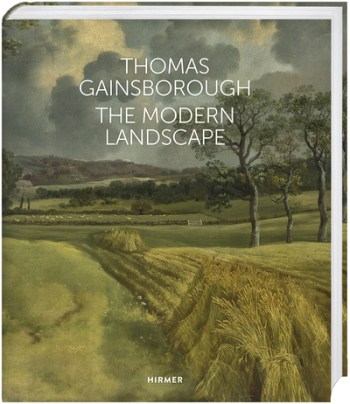 M. Bills, B. Gockel, M. Hallett, K. Hoins, R. Jones, J. Karg, S. Pisot, and C. Vogtherr, Thomas Gainsborough: The Modern Landscape (Munich: Hirmer, 2018), 224 pages, ISBN: 978 37774 29977, $65.
Gainsborough himself favoured landscape painting, a field to which he made important contributions, over his well-known portraits. His works are fascinating for their painterly subtlety and technical variation. This volume brings together German and British traditions of viewing, interpreting, and studying Gainsborough. It looks at the connections to the Dutch landscapes, explains Gainsborough’s unusual and experimental techniques from an art technological point of view, and situates his landscapes in the context of the social tensions of early industrialisation.
New Book | The Gardens of La Gara
Distributed by ACC Publishing and The University of Chicago Press:
Anette Freytag, ed., The Gardens of La Gara: An 18th-Century Estate in Geneva with Gardens Designed by Erik Dhont and a Labyrinth by Markus Raetz (Zurich: Scheidegger and Spiess, 2017), 272 pages, ISBN: 978 38588 18027, $99 / £85.
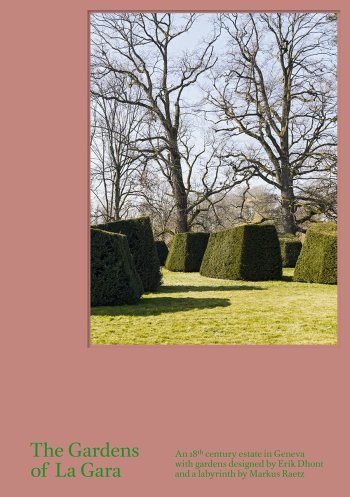 La Gara is an 18th-century country estate in Jussy, a village near Geneva, Switzerland. The buildings have been carefully restored by Swiss architect Verena Best, who also added inspired touches to the interior design. The renowned Belgian landscape designer Erik Dhont reinterpreted and subtly redesigned the gardens and surrounding grounds, completed by a palindrome-like labyrinth designed by Swiss artist Markus Raetz. This new book tells the story of the La Gara estate and illustrates its beauty. The essays investigate its preservation and restoration of buildings and gardens and the contemporary interventions. They highlight features such as the historic watering system for the gardens and the fishponds and look at the specific Genevan garden tradition and characteristics of the rural landscape around Jussy with its biodiversity. Moreover, they contextualise La Gara with the ‘ferme ornée’, a villa with agricultural and ornamental features following ancient Roman models. The beautiful volume is rounded out with newly commissioned photographs by renowned Swiss photographer Georg Aerni.
Anette Freytag is Professor of Landscape Design at Rutgers University in New Brunswick, New Jersey.










 Enfilade
leave a comment