New Book | Turin and the British in the Age of the Grand Tour
Scheduled for November publication from Cambridge UP:
Paola Bianchi and Karin Wolfe, eds., Turin and the British in the Age of the Grand Tour (Cambridge: Cambridge University Press, 2017), 506 pages, ISBN: 978 110714 7706, $135.
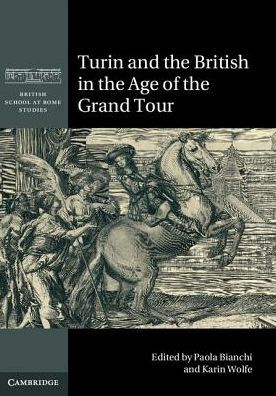 The Duchy of Savoy first claimed royal status in the seventeenth century, but only in 1713 was Victor Amadeus II, Duke of Savoy (1666–1732), crowned King of Sicily. The events of the Peace of Utrecht (1713) sanctioned the decades-long project, the Duchy had pursued through the convoluted maze of political relationships between foreign powers. Of these, the British Kingdom was one of their most assiduous advocates, because of complimentary dynastic, political, cultural and commercial interests.
A notable stream of British diplomats and visitors to the Sabaudian capital engaged in an extraordinary and reciprocal exchange with the Turinese during this fertile period. The flow of travellers, a number of whom were British emissaries and envoys posted to the court, coincided, in part, with the itineraries of the international Grand Tour which transformed the capital into a gateway to Italy, resulting in a conflagration of cultural cosmopolitanism in early modern Europe.
Paola Bianchi teaches Early Modern History at the Università della Valle d’Aosta. She has researched and written on the journeys of various English travellers who came to Italy in the eighteenth century to be presented at the Savoy court and to be part of Piedmont society. Her publications include Onore e mestiere: Le riforme militari nel Piemonte del Settecento (2002); Cuneo in età moderna: Città e stato nel Piemonte d’antico regime (with A. Merlotti) (2002); Sotto diverse bandiere: L’internazionale militare nello stato sabaudo d’antico regime (2012); L’affermarsi della corte sabauda: Dinastie, poteri, élites in Piemonte e Savoia fra tardo Medioevo e prima età moderna (with L.C. Gentile) (2006); Le strategie dell’apparenza: Cerimoniali, politica e società alla corte dei Savoia in età moderna (with A. Merlotti) (2010); and Storia degli Stati sabaudi, 1416–1848 (with A. Merlotti) (2017).
Karin Wolfe is a Research Fellow at the British School at Rome. Her research focuses on topics in seventeenth- and eighteenth-century Italian history, including art, architecture, patronage, and collecting, as well as the history of cardinals and the Grand Tour. Her publications include Roma Britannica: Art Patronage and Cultural Exchange in Eighteenth-Century Rome (edited with D. R. Marshall and S. Russell, 2011). She is presently completing a monograph on Francesco Trevisani, Francesco Trevisani (1656–1746): A Universal Painter, Catalogue Raisonné.
C O N T E N T S
List of figures
Contributors
Preface and Acknowledgements, Christopher J. Smith and Andrea Merlotti
Foreword, Martin Postle
Introduction, Paola Bianchi and Karin Wolfe
Part I | Britain in Turin: Politics and Culture at the Savoy Court
1 England and Savoy: Dynastic Intimacy and Cultural Relations under the Early Stuarts, Toby Osborne
2 Marriage Proposals: Seventeenth-Century Stuart–Savoy Matrimonial Prospects and Politics, Andrea Pennini
3 The Court of Turin and the English Succession, 1712–20, Edward Corp
4 The British Diplomatic Presence in Turin: Diplomatic Culture and British Elite Identity, 1688–1789/98, Christopher Storrs
Part II | Turin: Gateway to Grand Tour Society
5 The British at the Turin Royal Academy: Cosmopolitanism and Religious Pragmatism, Paola Bianchi
6 Thomas Coke in Turin and the Turin Royal Academy, Andrew Moore
7 ‘Never a More Favorable Reception than in the Present Juncture’: British Residents and Travellers in and about Turin, 1747–48, Edoardo Piccoli
8 The British and Freemasonry in Eighteenth-Century Turin, Andrea Merlotti
Part III | Torino Britannica: Diplomacy and Cultural Brokerage
9 John Molesworth: British Envoy and Cultural Intermediary in Turin, Karin Wolfe
10 Silver from London and Turin: Diplomacy by Display and George Hervey, Earl of Bristol, Envoy Extraordinary to the Court of Savoy, 1755–58, James Rothwell
11 The ‘Savoyard’: The painter Domenico Duprà and His British Sitters, Jonathan Yarker
12 The Culture of Confession: The Sardinian Chapel in London in the Eighteenth Century, Paola Cozzo
Part IV | Turin and Britain: Architectural Crossroads
13 Architects and Kings in Grand Tour Europe, Tomasso Manfredi
14 A Homage from Turin: Filippo Juvarra’s Sketches for Lord Burlington, Cristina Ruggero
15 Crossing Borders: The Pioneering Role of the Architect-Engineer Giovanni Battista Borra between Piedmont and Britain, Olga Zoller
Part V | Britain and Turin: Chinoiserie as an International Aesthetic
16 Chinoiserie in Piedmont: An International Language of Diplomacy and Modernity, Christopher M. S. Johns
17 ‘Alla China’: The Reception of International Decorative Models in Piedmont, Cristina Mossetti
18 The British Garden in Piedmont in the Late Eighteenth Century: Variations on the Picturesque, the Anglo-Chinese, and the Landscape Garden, Paolo Cornaglia
Part VI | Turin in Britain: Cultural Exchange in Grand Tour Europe
19 A Plurality of Pluras: The Plura Family of Sculptors between Turin and Britain, Alastair Laing
20 ‘A Memorable Era in the Instrumental Music of This Kingdom’: Piedmontese Musicians in London in the Latter Half of the Eighteenth Century, Annarita Colturato
21 The British Baretti: Didactics and Criticism, Cristina Bracchi
22 Vittorio Alfieri and the ‘English Republic’: Reflections on an Elective Affinity, Francesca Fedi
Appendices
A British Diplomats and Visitors to Turin in the Eighteenth Century, Christopher Storrs
Sabaudian Diplomats to London in the Eighteenth Century, Andrea Merlotti
B British Attendees at the Turin Royal Academy, Paola Bianchi
C Letters from the Molesworth–Galilei Correspondence, 1721–25, Karin Wolfe
References
Index
Exhibition | Making Beauty: The Ginori Porcelain Manufactory
Now on view at the Bargello:
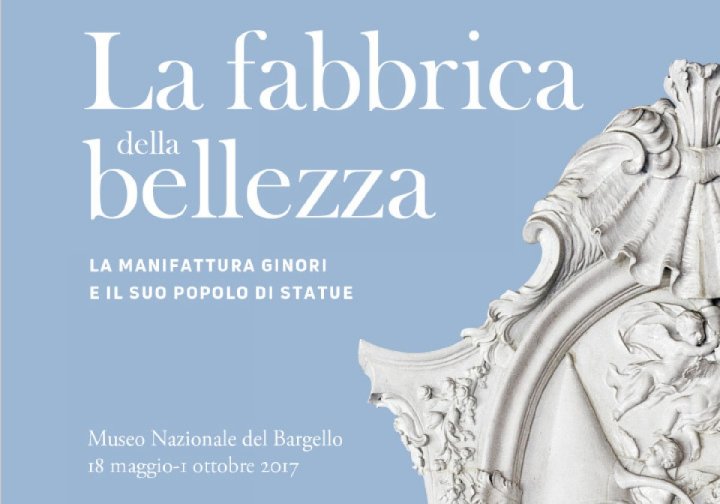
Making Beauty: The Ginori Porcelain Manufactory and Its Progeny of Statues
La Fabbrica della Bellezza: La manifattura Ginori e il suo popolo di statue
Museo Nazionale del Bargello, Florence, 8 May — 1 October 2017
The exhibition is divided into six thematic sections illustrating the transformation of sculptural invention into works of porcelain. The first section opens with an 18th-century life-size bronze Venus, a copy of the celebrated Medici Venus in the Uffizi Tribune. Sculpted by Massimo Soldani Benzi in 1702, the bronze was commissioned by Prince Johann Adam Andreas I of Liechtenstein and still forms part of the present prince’s collection, this exhibition marking its first return to Italy in over 350 years. It stands side by side with a large porcelain Venus made by Gasparo Bruschi in 1747–48, probably using the plaster moulds which Carlo Ginori purchased from Soldani Benzi’s workshop. The two Venuses are, in turn, displayed alongside a monumental porcelain Mercury based on another Classical statue in the Uffizi Tribune. The Mercury, now in the Ginori Lisci Collection, is on display for the very first time in this exhibition, not only with the Venus but also with the monumental Fireplace alongside which it stood in the old Museo di Doccia until 1962, because the Museo Ginori has kindly granted the loan of the two most important works in its entire collection: the Medici Venus reproducing the celebrated statue in the Uffizi Tribune, and the monumental Fireplace specially restored for the exhibition.

Tempietto Ginori, modeled by Gaspero Bruschi, 1750–51; glazed and painted porcelain, heigh 167 cm including ebony base (Museo dell’Academia Etrusca e della Città di Cortona).
The second section is devoted to the superlative Ginori Tempietto Ginori, a masterpiece by Gasparo Bruschi which Carlo Ginori himself donated to the Accademia Etrusca in Cortona. The Tempietto, of exceptional sophistication in terms of its technique and design and unique in terms of its size, summarises in concentrated form not only the artistic aims but also the political aspirations of the manufactory’s founder. Specially restored for the exhibition, it is returning to Florence for the first time since 1757. Alongside it we have Giambologna’s small bronze and wax models of Mercury, from the Bargello Collection and the Museo Ginori respectively, which inspired the Mercury atop Gaspare Bruschi’s Tempietto.
The next room hosts two large, complex bronze and porcelain versions of the Pietà. In 1708, Soldani made the model for the large Lamentation over the Dead Christ, of which numerous versions are known. Carlo Ginori purchased the plaster moulds—some of which are on display in the exhibition—which were used for the porcelain version that the Marchese Ginori gave to the influential Cardinal Neri Corsini around 1745. The group was made in fifty-nine different porcelain parts, individually fired and then assembled by the manufactory’s craftsmen in Sesto Fiorentino.
Somewhat smaller but equally sophisticated in terms of their execution are the groups of Judith with the Head of Holofernes that comprise the exhibition’s fourth thematic section. Gaspare Bruschi’s porcelain version, on loan from the Los Angeles County Museum, is displayed in an unprecedented dialogue with Agostino Cornacchini’s terracotta model, the first sculptural study for this popular group.

Lamentation over the Dead Christ, after Massimo Soldani Benzi, 1745–50, glazed porcelain, height 71.5 cm not including ebony base (Rome: Palazzo Corsini).
This is followed by Soldani’s precious bronze ‘pictorial’ relief depicting the Passing of St. Joseph and the wax model based on the bronze, from the Bargello Collection, which are on display alongside the preparatory study in unfired clay, it too in Italy for the very first time, testifying to the Ginori Manufactory’s plan to produce porcelain versions of it—none of which have, however, survived.
The exhibition’s ‘grand finale’ is the monumental porcelain Fireplace, an absolutely unique work, which may be attributed to Doccia’s chief modeller Gasparo Bruschi and to Domenico Stagi, a stage set designer and painter of quadrature. The piece is a veritable triumph of technical mastery and ornamental sophistication. Its upper part hosts porcelain versions of works by illustrious sculptors, the oval bas-relief with ‘putti distilling flowers’ after a bronze by Massimiliano Soldani Benzi and copies of Dawn and Dusk which Michelangelo carved for the tomb of Lorenzo de’ Medici in the Medici Chapels.
The exhibition is accompanied by a catalogue rich in new research, published by Mandragora in both Italian and English. The catalogue entries explore the manufactory’s artistic and political history, using essays focusing on the works on display to set Ginori’s porcelain sculpture, whether monumental or on a smaller scale, in the broader artistic and political context of the time, and presenting a number of important new attributions. The catalogue also contains fascinating input from experts in the manufacture of porcelain, not only reviewing the manufactory’s history but also illustrating previously unpublished material and highlighting the unique technical nature of Ginori’s inventions.
 La Fabbrica della bellezza has also served as a formative experience for two university students who have taken part in all of the various phases in the development of the exhibition project and drafted the catalogue entries on the basis of an apprenticeship agreement with Florence University’s SAGAS Department. The exhibition and catalogue have been designed and produced with a grant from the Fondazione Cassa di Risparmio di Firenze, with the sponsorship of Richard Ginori and with the collaboration of Firenze Musei; Opera Laboratori Fiorentini and Arteria have also contributed in their capacity as partners for the layout and transport respectively.
In addition to acquainting the general public with an exceptional chapter in the history of Florentine sculpture, the exhibition also sets out to draw the attention of Florentine and international public opinion to the fate of the Museo di Doccia. The generosity of international loans for the exhibition points to the intense interest in the the museum and the manufactory shown by numerous institutions both in Italy and abroad. In that connection, we would like to express our special gratitude to HRH Prince Hans-Adam II von und zu Liechtenstein for granting the exhibition his lofty patronage.
Tomaso Montanari and Dimitrios Zikos, eds., Making Beauty: The Ginori Porcelain Manufactory and Its Progeny of Statues (New York: ACC Publishing, 2017), 160 pages, ISBN: 978 88746 13496, $30. Also available in Italian.
◊ ◊ ◊ ◊ ◊
Note (added 17 September 2017) — Aileen Dawson provides a review of the exhibition in the current issue of The Burlington Magazine (September 2017), pp. 748–49.
Exhibition | Luigi Crespi
Now on view at the Museo Davia Bargellini in Bologna:
Luigi Crespi: Portraitist in the Age of Pope Lambertini
Museo Davia Bargellini, Bologna, 15 September — 3 December 2017
Curated by Mark Gregory d’Apuzzo and Irene Graziani
 The Musei Civici d’Arte Antica dell’Istituzione Bologna Musei, in collaboration with the Department of Arts at the University of Bologna, present Luigi Crespi: Portraitist in the Age of Pope Lambertini, the first exhibition dedicated to the painter and art dealer Luigi Crespi (1708–1779), the son of the famous painter Giuseppe Maria Crespi (1665–1747).
The exhibition is a tribute to this multifaceted figure—among the most interesting of the artistic and literary panorama of eighteenth-century Bologna—in relation to the climate of cultural renewal favored by the enlightened pastoral work of Cardinal Prospero Lambertini, who in 1740 became Pope Benedict XIV. The exhibition presents the most significant core of Crespi’s paintings here, together with other works from the Municipal Art Collections and loans from other important museums and private collectors. The exhibition is organized around seven thematic sections that chart the most important phases of the artist’s career.
◊ ◊ ◊ ◊ ◊
La mostra, a cura di Mark Gregory D’Apuzzo e Irene Graziani, è la prima dedicata al pittore, molte opere del quale sono esposte presso il Museo Davia Bargellini e le Collezioni Comunali d’Arte. Figura poliedrica fra le più interessanti del panorama artistico e letterario di Bologna durante l’episcopato del cardinale Prospero Lambertini (1731–54), e dunque nel periodo di apertura della città alle istanze di rinnovamento culturale sostenute dal vescovo e poi papa Benedetto XIV (1740–58), Luigi Crespi è protagonista della mostra realizzata grazie alla collaborazione di importanti Istituzioni museali cittadine e collezionisti privati.
Luigi, pur essendo soprattutto celebre come letterato e autore del terzo tomo della Felsina Pittrice, edita nel 1769, ha percorso con successo anche la carriera artistica, intrapresa sotto la guida del padre fra la fine degli anni venti e gli inizi degli anni trenta del Settecento. Un’attività che egli stesso, molti anni più tardi, nella biografia del padre (1769), sosterrà di aver svolto «per divertimento», per significare il privilegio accordato al prestigioso ruolo, assunto a partire dagli anni cinquanta, di scrittore e critico d’arte, che gli frutterà infatti l’aggregazione alle Accademie di Firenze (1770), di Parma (1774) e di Venezia (1776).
La sua produzione figurativa tuttavia, in particolar modo quella rappresentata dal più congeniale genere del ritratto, lo rivela sensibile al dialogo con la scienza moderna e con la libera circolazione delle idee dell’Europa cosmopolita. Nonostante l’impegno applicato anche all’ambito dell’arte sacra, cui Luigi si dedica almeno fino agli inizi degli anni sessanta, è soprattutto nella ritrattistica che raggiunge esiti di grande efficacia, molto apprezzati dalla committenza. «Ebbe un particolare dono di ritrarre le fisionomie degli Uomini, e ne fece una serie di Ritratti di Cavaglieri e Damme», scrive infatti Marcello Oretti (1760–80), celebrandone l’abilità nell’adattare la formula del codice ritrattistico alle esigenze della clientela.
Come dimostrano il Ritratto di giovane dama con il cagnolino, o i tre ritratti dei Principi Argonauti in origine nel collegio gesuitico di San Francesco Saverio, la pittura di Crespi junior, già addestrato dal genitore Giuseppe Maria ad un fare schietto, attento al naturale e al «vero», evolve verso un nitore della visione che risalta i dettagli, in un’analitica investigazione della realtà, memore di certi esempi (Balthasar Denner e Martin van Meytens) osservati durante un viaggio di sette mesi fra Austria e Germania, dove visita le Gallerie delle corti di Dresda e Vienna (1752). Così li commenterà infatti Gian Pietro Zanotti in una nota manoscritta: «Bisogna dire il vero che ora fa ritratti bellissimi, e di ottimo gusto, in un certo stile oltramontano».
Dal confronto con il «grande mondo»—per utilizzare un’espressione di Prospero Lambertini, che fu in stretti rapporti con Giuseppe Maria Crespi e fu in gran parte il responsabile della carriera ecclesiastica del figlio, conferendogli la carica di «segretario generale della visita della città e della diocesi», il canonicato di Santa Maria Maggiore (1748) ed ancora nominandolo suo cappellano segreto—Luigi deriva dunque la conferma della validità del codice del ritratto ufficiale, che gli consente di rappresentare i personaggi, qualificandone i gusti sofisticati, le abitudini raffinate, i comportamenti eleganti e disinvolti da assumere nella vita di società, dove si praticano i rituali di quella “civiltà della conversazione” che nella moderna Europa riunisce aristocratici e intellettuali in un dialogo paritario, dettato dalla condivisione di regole e valori comuni. Ma la prossimità con la cultura lambertiniana lo conduce anche a sperimentare, dapprima ancora con il sostegno del padre, poi autonomamente (Ritratto di fanciulla), nuove tipologie di ritratto, in cui lo sguardo incrocia i volti di individui del ceto borghese: talvolta sono gli oggetti a raccontare con la loro perspicuità di definizione la dignità del lavoro (Ritratto di Antonio Cartolari), altre volte sono invece i gesti caratteristici, l’inquadratura priva di infingimenti (Ritratto di fanciulla), la resa confidenziale del modello, quasi al limite della caricatura (Ritratto di Padre Corsini), a fare emergere il valore umano di quella parte della società, cui papa Lambertini riconosceva un ruolo fondamentale nel rinnovamento.
Irene Graziani and Mark Gregory d’Apuzzo, Luigi Crespi: Ritrattista nell’età di Papa Lambertini (Milan: Silvana, 2017), 144 pages, ISBN: 978 88366 37928, $35.
New Book | Robert Adam and Diocletian’s Palace in Split
From the ‘Grand Tour: Dalmatia’ project website:
Joško Belamarić and Ana Šverko, eds., Robert Adam and Diocletian’s Palace in Split (Zagreb: Školska knjiga, 2017), 608 pages, ISBN 978 9537875 381 / 978 9530 609754, $61.
 When, on his Grand Tour, the Scottish architect Robert Adam travelled from Rome to Split in 1757 to study Diocletian’s Palace, he expected to find a monumental Roman villa. Instead, he came across an exceptional late antique structure that, in the Middle Ages, had been transformed into a city. Adam turned his study of this monument into an original architectural theory, and, in London in 1764, it was published in one of the most beautiful books of the eighteenth century: Ruins of the Palace of the Emperor Diocletian at Spalatro in Dalmatia.
The lessons Adam grasped in Split also inspired his own architectural projects in England and Scotland, influencing, in part, the ‘Adam Style’, a specific neoclassical style that had a significant impact on European and American architecture. We find the imprint of Diocletian’s Palace as a design model everywhere in Adam’s projects, from the scale of the ornamentation (a famous example is his interpretation of the capital from Diocletian’s Peristyle) to the application of the specificities of its spatial construction.
In 2014, a group of scholars gathered in Split to mark the 250th anniversary of the publication of Adam’s book, and a series of essays developed out of their discussions. Their texts are illustrated with more than two hundred images, some of which are being published for the first time, from numerous archives and museums, from Sir John Soane’s Museum in London to the State Hermitage Museum in Saint Petersburg.
This book shows that the ancient stratum of Diocletian’s Palace, this extraordinary multi-layered urban fabric, has not changed notably since Adam’s visit to Split. Yet the book is more than just the story of Adam and Diocletian’s Palace; it is also a guide to the Palace’s spaces and monuments, and a witness to its changes and its continuity. All of these we would not have been able to understand, nor experience so well, without Adam’s tireless research. The book can be ordered at: izvoz@skolskaknjiga.hr.
Contributors
Josko Belamaric, Iain Gordon Brown, Stephen Caffey, Amanda Green, Heather Hyde Minor, Angelo Lorenzi, Krasanka Majer Jurišić, Ivan Mirnik, John A. Pinto, Ante Rendić-Miočević, Frances Sands, Valery Shevchenko, Ana Sverko, Colin Thom, Isabelle Warin, Elke Katharina Wittich
New Book | Bernardo De Dominici e le vite degli artisti napoletani
From Officina Libraria:
Andrea Zezza, Bernardo De Dominici e le vite degli artisti napoletani: Geniale imbroglione o conoscitore rigoroso? (Milan: Officina Libraria, 2017), 112 pages, ISBN: 978 889976 5392, $30.
 Bernardo De Dominici (Napoli, 1683–1759) è tra le personalità più controverse della storiografia artistica italiana. Modesto pittore di paesaggi, mercante di disegni ed aspirante letterato, pubblicò dopo una lunga elaborazione, tre tomi di Vite de’ pittori, scultori e architetti napoletani (1742–45). Concepita nel momento di maggior successo della scuola napoletana di pittura, tra i clamori dei successi internazionali di Luca Giordano, Paolo De Matteis, Francesco Solimena, l’opera costituisce il primo e il più ambizioso tentativo di costruire una storia dell’arte napoletana.
Nonostante qualche perplessità suscitata già al tempo della prima pubblicazione, le Vite costituiscono da allora un punto di riferimento essenziale per chiunque sia interessato alla storia dell’arte in Italia meridionale. Costruite attraverso un uso estremamente disinvolto delle fonti, con largo ricorso a manoscritti ignoti e più che sospetti, le Vite non passarono il severo vaglio critico degli studiosi del secondo Ottocento, che dimostrarono l’inaffidabilità di larga parte del testo, soprattutto delle parti relative al Medioevo e al primo Rinascimento, e bollarono il loro autore come ‘Il falsario’ (così si intitolava un saggio di Benedetto Croce sul nostro autore). Nel corso del Novecento, a cominciare dai primi studi di Roberto Longhi, l’opera è stata largamente riabilitata, soprattutto per le sue parti sei e settecentesche.
Il libro, elaborato al termine di un lungo lavoro di edizione e commento dell’opera, condotto dall’autore in collaborazione con Fiorella Sricchia Santoro e con altri studiosi, offre per la prima volta una approfondita analisi della storia dell’opera, del contesto in cui fu concepita, dei metodi utilizzati dal biografo, della sua altalenante fortuna e del ruolo che ancora oggi può e deve svolgere per la conoscenza e la comprensione dell’arte napoletana.
Andrea Zezza è professore associato di Storia dell’Arte Moderna presso l’Università della Campania ‘Luigi Vanvitelli’. Si occupa prevalentemente di storia dell’arte in Italia meridionale tra Cinquecento e Settecento. Con Fiorella Sricchia Santoro ha curato l’edizione commentata delle Vite de’ pittori, scultori e architetti napoletani (Napoli 2003–14). Tra i suoi scritti ricordiamo la monografia Marco Pino: L’opera completa (Napoli 2003).
New Book | De Dominici, Vite de’ pittori, scultori ed architetti napoletani
From ArtBooks.com:
Bernardo De Dominici, Vite de’ pittori, scultori ed architetti napoletani, edited by Fiorella Sricchia Santoro and Andrea Zezza (Naples: Paparo, 2017), 5 vols., 3206 pages, ISBN: 9788899130336, $340.
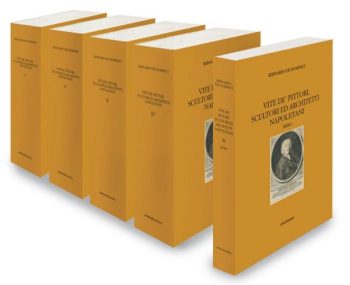 ‘Stomachevole’, ‘geniale imbroglione’, oppure scrittore ‘a cui siamo sempre disposti a concedere credito’; ‘la cui posizione e i cui meriti nei riguardi della storia artistica di Napoli non sono lontani da quelli Boschini per Venezia e di Malvasia per Bologna’: Bernardo De Dominici e la sua opera sono stati per due secoli e mezzo oggetto di feroci stroncature e di risolute riabilitazioni, restando sempre al centro dell’attenzione di chiunque si sia interessato alla storia dell’arte napoletana tra il Medioevo e l’età moderna. Nel 1950 Giuseppe Ceci, studioso di non comune rigore, invitò a fuggire dalle facili generalizzazioni e a intraprendere ‘l’umile ma indispensabile lavoro’ di una analisi completa delle Vite, un testo che rimane unico e insostituibile, pur con tutte le sue pecurialità e i suoi difetti. Da allora, mentre aumentava la consapevolezza della utilità dell’opera per gli studi, si è fatta sempre più presente la richiesta di una edizione commentata, che ne favorisse la lettura e insieme un uso cauto e criticamente avvertito: a questa esigenza vuole rispondere l’edizione commentata che, dopo un lavoro quindicennale, viene finalmente conclusa con questo tomo dedicato agli indici
Prima edizione moderna, commentata, di un’opera fondamentale per la storia dell’arte napoletana, stampata per la prima volta tra il 1742 e il 1745. L’opera si compone di due volumi: il primo dalle origini all’inizio del Seicento, il secondo (diviso in due tomi) dal Seicento al Settecento, il terzo dedicato agli indici.
Edizione a cura di Fiorella Sricchia Santoro e Andrea Zezza. Coordinatore al commento del primo tomo Francesco Aceto. Coordinatore al commento del secondo e terzo tomo Andrea Zezza. Testi a cura di Daria Di Bernardo, Marina Milella Consulenza filologica Nicola De Blasi. Autori delle introduzioni e delle note di commento delle singole vite Anna Bisceglia, Paola D’Agostino, Rosanna De Gennaro, Daniela del Pesco, Ippolita di Majo, Stefano D’Ovidio, Viviana Farina, Pierluigi Feliciano, Elena Fumagalli, Paolo Giannattasio, Fabiola Lagalla, Riccardo Naldi, Cristiana Pasqualetti, Maria Gabriella Pezone, Valter Pinto, Antonella Putaturo Murano, Concetta Restaino, Renato Ruotolo, Donato Salvatore, Fabio Speranza, Fiorella Sricchia Santoro, Andrea Zezza.
• Dalle Origini alla prima metà del Seicento
• Seicento (da J. de Ribera a L. Giordano)
• Seicento e Settecento (da G. Farelli a F. Solimena)
• Indici
Exhibition | Becoming a Woman in the Age of Enlightenment
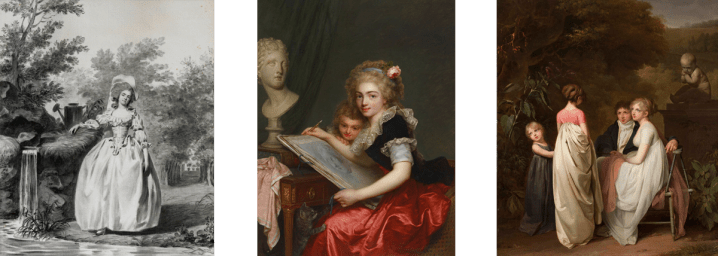
Jacques-Antoine-Marie Lemoine, Woman Standing in a Garden, 1783, black chalk and brush with gray wash on off-white laid paper; Antoine Vestier, Allegory of the Arts, 1788, oil on canvas; and Louis-Léopold Boilly, Conversation in a Park, oil on canvas. All on loan from The Horvitz Collection.
◊ ◊ ◊ ◊ ◊
From the Harn Museum of Art:
Becoming a Woman in the Age of Enlightenment: French Art from The Horvitz Collection
Harn Museum of Art, University of Florida, Gainesville, 6 October — 31 December 2017
Ackland Art Museum, The University of North Carolina at Chapel Hill, 26 January — 8 April 2018
Crocker Art Museum, Sacramento, 13 May — 19 August 2018
Smith College Museum of Art, Northampton, MA, dates TBA
Curated by Melissa Hyde and Mary D. Sheriff
Organized by Alvin Clark
Becoming a Woman in the Age of Enlightenment: French Art from the Horvitz Collection is primarily an exhibition of drawings but will include pastels, paintings, and sculptures selected from one of the world’s best private collections of French drawings. The exhibition will feature nearly 120 works by many of the most prominent artists of the eighteenth century, including Antoine Watteau, Nicolas Lancret, François Boucher, Jean-Honoré Fragonard, as well as lesser-known artists both male and female, such as Anne Vallayer-Coster, Gabrielle Capet, François-André Vincent, Philibert-Louis Debucourt. Ranging from spirited, improvisational sketches and figural studies, to highly finished drawings of exquisite beauty, the works included in the exhibition vary in terms of style, genre, and period.
Becoming a Woman will be organized into thematic sections that address some of the most important and defining questions of women’s lives in the eighteenth century. These include: how the stages of a woman’s life were measured; what cultural attitudes and conditions in France shaped how women were defined; what significant relations women formed with men; what social and familial rituals gave order to their lives; what pleasures they pursued; and what work they accomplished. The aim is to bring new insights to the questions of what it meant to be a woman in this period, by offering the first exhibition to focus specifically on representations of women of a broad range of ages and conditions.
The exhibition will offer fresh perspectives on a subject that still has direct relevance to our times but that has not been the focus of a significant exhibition for decades. Through its conceptual framework, thematic organization, and its emphasis on historical context, the exhibition will provide viewers opportunities to consider what issues pertaining to women’s lives seem to have changed or persisted through time and across space. Although the circumstances and the specifics have changed, many issues remain with us today and can still provoke contentious debates. Pay equity, reproductive rights, gender-discrimination, violence against women, work-family balance, the ‘plight’ of the alpha-female, and the devaluation of the stay-at-home mom, are but a few of the women’s issues that are still hotly contested in the media, in cultural production of all kinds, in politics, and in public and private life.
Becoming a Woman is curated by Melissa Hyde, Professor of Art History, University of Florida Research Foundation Professor, University of Florida, and the late Mary D. Sheriff, W.R. Kenan J. Distinguished Professor of Art History, University of North Carolina, Chapel Hill; the exhibition is organized by Alvin L. Clark, Jr, Curator, The Horvitz Collection and The J.E. Horvitz Research Curator, Harvard Art Museums/Fogg.
The catalogue is available from ArtBooks.com:
Melissa Hyde, Mary D. Sheriff, and Alvin Clark, Becoming a Woman in the Age of Enlightenment: French Art from The Horvitz Collection (Boston: The Horvitz Collection, 2017), 208 pages, ISBN: 978 099126 2526, $39.

François Boucher, Young Travelers, black chalk on cream antique laid paper, framing line in black ink, laid down on a decorated mount, 295 × 188 mm; Jacques-Louis David, Andromache Mourning the Death of Hector, pen with black ink and brush with gray wash over traces of black chalk on cream antique laid paper, 293 × 248 mm; Jean-Baptiste Greuze, The Chestnut Vendor, brush with gray and brown wash on cream antique laid paper, 385 × 460 mm. All works on loan from The Horvitz Collection.
◊ ◊ ◊ ◊ ◊
From the Lecture and Symposium Schedule:
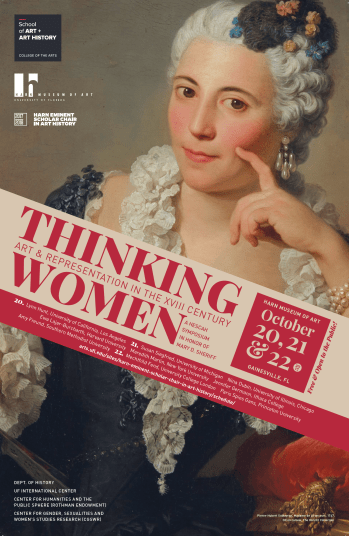
Thinking Women: Art and Representation in the Eighteenth Century
A Symposium in Honor of Mary D. Sheriff
Harn Museum of Art, University of Florida, Gainesville, 20–22 October 2017
• Keynote Address: “The Woman Artist and the Uncovering of the Social World,” Lynn Hunt, Distinguished Research Professor, University of California, Los Angeles
Art, women, and society came together in surprising ways at the end of the eighteenth century. ‘Society’ only began to be conceptualized as an object for study at the end of the 1700s, in particular in reaction to the French Revolution. Art, especially engraving and painting, helped make society visible to itself. Women could join the art world but rarely as fully fledged members, and as a consequence they occupied a kind of in-between position that made them especially attuned to social relations. The life and work of Marie-Gabrielle Capet will be highlighted to show how the social world could be uncovered.
 • “Fashion in Time: Visualizing Costume in the Eighteenth Century,” Susan Siegfried, Denise Riley Collegiate Professor of the History of Art and Women’s Studies, Department of Art History, University of Michigan
• “Beauty Is a Letter of Credit,” Nina Dubin, Associate Professor, Department of Art and Art History University of Illinois, Chicago
• “Chardin: Gender and Interiority,” Ewa Lajer-Burcharth, William Dorr Boardman Professor of Fine Arts, Department of History of Art and Architecture, Harvard University
• “The Global Allure of the Porcelain Room,” Meredith Martin, Department of Art History, New York University
• “Pictured Together? Questions of Gender, Race, and Social Rank in the Portrait of Dido Elizabeth Belle and Lady Elizabeth Murray,” Jennifer Germann, Associate Professor, Department of Art History, Ithaca College
• “Becoming an Animal in the Age of Enlightenment,” Amy Freund, Associate Professor & Kleinheinz Family Endowed Chair in Art History, Southern Methodist University
• “Marguerite Lecomte’s Smile: Portrait of a Woman Engraver,” Mechthild Fend, Reader in the History of Art, Department of History of Art, University College London
• “Exceptional, but not Exceptions: Women Artists in the Age of Revolution,” Paris Spies Gans, Doctoral Candidate, Department of History, Princeton University
The final program, with times, is available here»
At the Ackland Art Museum at UNC, Chapel Hill, there will be a sister symposium in Mary’s honor entitled “Taking Exception: Women, Gender, Representation in the Eighteenth Century,” 1–3 February 2018.
◊ ◊ ◊ ◊ ◊
Note (added 14 October 2017) — The posting has been updated with additional information, including details on the catalogue, venues, and the conferences.
New Book | Chinese Wallpaper in Britain and Ireland
From I. B. Tauris:
Emile de Bruijn, Chinese Wallpaper in Britain and Ireland (London: Philip Wilson Publishers, 2017), 272 pages, ISBN: 978 17813 00541, £30 / $55.
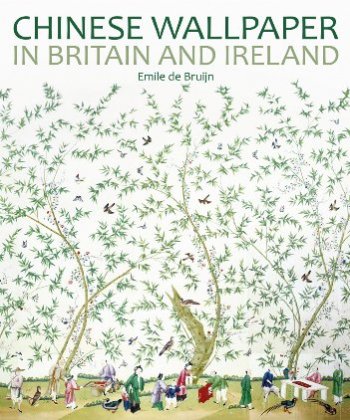 Chinese wallpaper has been an important element of western interior decoration for three hundred years. As trade between Europe and China flourished in the seventeenth century, Europeans developed a strong taste for Chinese art and design. The stunningly beautiful wall coverings now known as ‘Chinese wallpaper’ were developed by Chinese painting workshops in response to western demand. In spite of their spectacular beauty, Chinese wallpapers have not been studied in any depth until relatively recently. This book provides an overview of some of the most significant Chinese wallpapers surviving in the British Isles. Sumptuously illustrated, it shows how these wallpapers became a staple ingredient of high-end interiors while always retaining a touch of the exotic.
Emile de Bruijn studied Japanese and museology at the universities of Leiden and Essex. He worked in the Japanese and Chinese departments of the auctioneers Sotheby’s in London before joining the National Trust, where he is now a member of the central collections management team. Emile has lectured and published on many different aspects of chinoiserie in historic houses and gardens. He was co-author (with Andrew Bush and Helen Clifford) of the catalogue Chinese Wallpaper in National Trust Houses (National Trust, 2014)
New Book | Wedgwood: A Story of Creation and Innovation
From Rizzoli:
Gaye Blake-Roberts and Mariusz Skronski, with a foreword by Alice Rawsthorn, Wedgwood: A Story of Creation and Innovation (New York: Rizzoli, 2017), 304 pages, ISBN: 978 08478 60104, $60.
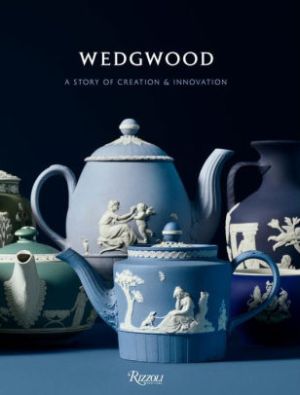 Founded in 1759, Wedgwood has a deep heritage in pottery making that represents timeless design and enduring style. The eponymous founder, Josiah Wedgwood, was an entrepreneur and visionary who quickly became Britain’s most successful ceramics pioneer, elevating pottery from a cottage craft into a luxury good and an art form. He was the mastermind behind Wedgwood’s most enduring pieces, including Queen’s Ware, Black Basalt, and Jasperware. That tradition of master craftsmanship and innovation continues today as Wedgwood works with celebrated designers such as Vera Wang and Jasper Conran.
With historic photographs, drawings, and watercolors from Wedgwood’s extensive archive, which display the craftsmanship and technical innovation, this book is a visual celebration of English design. It offers a lavish look at some of the most timeless china creations in history with a focus on Wedgwood’s 100 icons, in-depth essays on the brand and its history, and pattern books and sketches from the Wedgwood archives. While paying homage to the pioneering spirit of Wedgwood, this volume documents the achievements of a brand that is a symbol of elegance and timelessness, infusing classic craftsmanship with fresh design, and promises to impress fans of Wedgwood, old and new.
Gaye Blake-Roberts is a design historian and the curator of the Museum at Wedgwood. Alice Rawsthorn, OBE, is a British design critic who writes for the international edition of The New York Times. Mariusz Skronski is the creative and strategic director at Fiskars Living Brands.
New Book | Picturing India
From the University of Washington Press in conjunction with the British Library:
John McAleer, Picturing India: People, Places, and the World of the East India Company (Seattle: University of Washington Press, 2017), 224 pages, ISBN: 978 029574 2939, $40.
 The British engagement with India was an intensely visual one. Images of the subcontinent, produced by artists and travelers in the eighteenth- and nineteenth-century heyday of the East India Company, reflect the increasingly important role played by the Company in Indian life. And they mirror significant shifts in British policy and attitudes toward India. The Company’s story is one of wealth, power, and the pursuit of profit. It changed what people in Europe ate, what they drank, and how they dressed. Ultimately, it laid the foundations of the British Raj.
Few historians have considered the visual sources that survive and what they tell us about the link between images and empire, pictures and power. This book draws on the unrivalled riches of the British Library-both visual and textual-to tell that history. It weaves together the story of individual images, their creators, and the people and events they depict. And, in doing so, it presents a detailed picture of the Company and its complex relationship with India, its people and cultures.
John McAleer is lecturer in history at the University of Southampton. He was previously curator of imperial and maritime history at the National Maritime Museum, Greenwich. He is the author of Britain’s Maritime Empire: Southern Africa, the South Atlantic and the Indian Ocean 1763–1820.










 Enfilade
leave a comment