Exhibition | In Her Majesty’s Hands: Medals of Maria Theresa
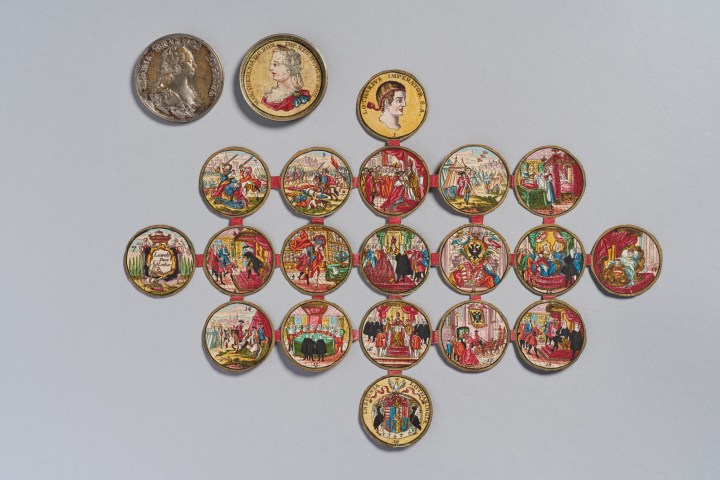
Matthäus Donner / Andreas Vestner, Maria Theresa Box Medal (Schraubmedaille) containing hand-coloured drawings; silver, hand-coloured drawing on paper inside the medal (Vienna, Kunsthistorisches Museum, Coin Collection, inv.no. 5955/1914B).
◊ ◊ ◊ ◊ ◊
Press release (via Art Daily) for the exhibition now on view at the KHM:
In Her Majesty’s Hands: Medals of Maria Theresa
Kunsthistorisches Museum, Vienna, 28 March 2017 — 18 February 2018
Curated by Anna Fabiankowitsch and Heinz Winter
The Kunsthistorisches Museum’s Coin Collection holds both the largest and by far the most important collection of coins minted under Maria Theresa; it is the best place, and now is the best time, to host an exhibition that presents the monarch’s life in medals to celebrate what would have been her 300th birthday.
 The exhibition focuses on the most important topoi in Maria Theresa’s private and public life. It presents her in the company of her large family, running the gamut of events from dynastic marriages to heart-breaking calamities. It showcases her role as a ruler forced to fight several wars for her inheritance and, together with her son and co-regent Joseph II, as a pioneering social reformer. The artefacts on show also illustrate the extent of Maria Theresa’s realm, which comprised many different ethnicities and cultures.
All these topoi are reflected in medals that emblematise historical events with the help of allegories. Maria Theresa was already widely glorified and celebrated during her lifetime, but the exhibition also documents how she was portrayed by her enemies. So-called satirical medals, which were passed around in private, turned Maria Theresa into an object of derision.
The exhibition focuses, too, on the historical background of medal production to illustrate the requisite technical skills, expenditure, and effort; introduce the most important protagonists; and document the range, purview, and media-value of Maria Theresa’s medals.
Maria Theresa (1717–1780) became a legend during her lifetime, and few female rulers were depicted more frequently or diversely. Her many likenesses—among them portraits, engravings, medals, and medallions—were designed to preserve her memory for posterity, turning her into an 18th-century media-star.
Medals played a central role in this propaganda effort controlled by the imperial court. Among the period’s foremost artistic mass media, medals were minted under the aegis of the court, and they continue to reflect the ruler’s political aims and the way she saw herself. Over three hundred different medals were produced during Maria Theresa’s reign to commemorate or celebrate either members of the imperial family or political events, both national and international.
Medals functioned as a way to commemorate important events of her reign, and as they were minted in large numbers, the material is noted for its longevity and their handy format made it easy to disseminate them, they were regarded as a historical record that would last forever. Contemporaries called these miniature memorials show- or commemorative coins, and they evolved into much sought-after and frequently exchanged collectors’ pieces. The monarch presented them as signs of imperial favour, in recognition of the recipient’s merits or achievements, or to strengthen diplomatic ties, and the majority of the medals produced in Vienna were destined for the court—ending up in Her Majesty’s hands.
Zuhanden Ihrer Majestät: Medaillen Maria Theresias (Vienna: Kunst Historisches Museum, 2017), 100 pages, 15€.

Curator Anna Fabiankowitsch during preparations for the exhibition
Photo by Lukas Beck
New Book | Maria Theresa and the Arts
From Hirmer:
Stella Rollig and Georg Lechner, eds., Maria Theresa and the Arts (Munich: Hirmer Velag, 2017), 232 pages, ISBN: 978 37774 29236, £38.
With contributions by A. Gamerith, S. Grabner, M. Hohn, R. Johannsen, G. Lechner, M. Pötzl-Malikova, S. Rollig, B. Schmidt, K. Schmitz-von Ledebur, S. Schuster-Hofstätter
 The 300th birthday of Empress Maria Theresia provides an opportunity to examine her outstanding interest in the fine arts. At the invitation of the reforming monarch a large number of painters, sculptors and other artists in Austria and abroad found a wealth of work opportunities. Correspondingly, this era has left its mark on the countries of the former Habsburg monarchy to this day. Maria Theresia pursued an individual approach with regard to cultural policy. She was interested in reform not only in education, but also in the field of art. She commissioned contemporary artists and helped portrait painting to a new upswing, leading not least to the international consolidation of the newly formed House of Habsburg-Lorraine. This was the function also fulfilled by the allegorical paintings and ceiling frescoes for which impressive cartoons have survived. Landscape painting was highly esteemed, and finally outstanding masterpieces were produced in sculpture and three-dimensional works, for example by Balthasar Ferdinand Moll and Franz Xaver Messerschmidt.
New Book | The Museum by the Park: 14 Queen Anne’s Gate
From Paul Holberton Publishing:
Max Bryant, The Museum by the Park: 14 Queen Anne’s Gate (London: Paul Holberton Publishing, 2017), 128 pages, ISBN: 978 1911300 328, £25 / $35.
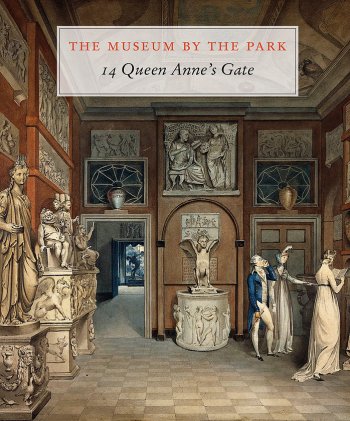 The depth of history at Queen Anne’s Gate—a handsome Baroque street overlooking St James’s Park—is unusual even in London, and few houses resonate with more memories than the extraordinary number 14. The story of the house over the centuries features political revolutionaries, occult initiations, clandestine war meetings, and a decapitated head. It begins, however, as a museum of Roman sculpture, unrivalled outside Italy, designed for connoisseur and virtuoso Charles Townley (1737–1805). Townley embodied Enlightenment values perhaps more completely than any other figure in the art world of 18th-century Britain—his portrait by Johann Zoffany is one of the iconic paintings of the period—yet remarkably he has never been the subject of a major publication.
Written with a sparkle matching Townley’s own enthusiasm, this beautiful and engaging publication tells the story of 14 Queen Anne’s Gate and examines the extraordinary life of Charles Townley and his remarkable collection of over 150 Roman marble statues (mostly now in The British Museum but captured in spectacular engravings of the period). It will be a revelation.
The house was designed as a temple to the past, reviving in the modern city the occult practices of the ancient world. Here visitors in the eighteenth century would have found an assembly of Roman sculpture unrivalled outside Italy, as well as a library and collection devoted to understanding a universal ‘generative sprit’ worshipped by early civilizations. That spirit may be found in the succession of major roles the house has continued to take through generations of dramatic change up to the present day.
Charles Townley, for whom the house was built, was a figure both marginal and emblematic. Catholic and bisexual, he forged a life literally on the borders of the Protestant British establishment. He remains little understood or appreciated in his homeland and, remarkably, has never been the subject of a major exhibition or publication. The ‘emblematic’ side of Townley’s life was dedicated to virtù, the term used for an appreciation of fine art pursued for its own sake. The ‘marginal’ side of Townley, by contrast, manifested itself in a fascination with the ancient occult, particularly the Bacchic mysteries. The house he made for himself was at once a temple to virtu and to Bacchus and contained an unprecedented programme of Bacchic iconography.
The Burlington Magazine, August 2017
The eighteenth century in The Burlington:
The Burlington Magazine 159 (August 2017)
 E D I T O R I A L
• “Reflected Glory: University Art Collections in Britain,” p. 599.
O B I T U A R I E S
• Simon Jervis, “Rudolf Hermann Wackernagel (1933–2017),” p. 639. His great article, “Carlton House Mews: The State Coach of the Prince of Wales and of the Later Kings of Hanover, A Study in the Late-Eighteenth-Century ‘Mystery’ of Coach-Building, in Furniture History 31 (1995) remains the most authoritative statement on London coach building in the late eighteenth century. But his crowning achievement was the massive two-volume Staats- und Galawagen der Wittelsbacher (Stuttgart, 2002). This is a catalogue of the wonderful collection of the Marstallmuseum at Schloss Nymphenburg, outside Munich, where he generously deposited part of his own extensive and systematic archive on coaches and carriages…
R E V I E W S
• Gauvin Alexander Bailey, Review of Christine Casey, Making Magnificence: Architects, Stuccatori and the Eighteenth-Century Interior (Yale University Press, 2017), pp. 642–43.
• Ayla Lepine, Review of Julian Holder and Elizabeth McKellar, eds., Neo-Georgian Architecture, 1880–1970: A Reappraisal (Historic England, 2016), pp. 643–44.
• Michael Hall, Review of Pauline Prévost-Marcilhacy, ed., Les Rothschild: une dynastie de mécènes en France, 1873–2016 (Somogy éditions d’Art, 2016), pp. 644–46.
• Francis Russell, Review of the exhibition Canaletto and the Art of Venice (London: The Queen’s Gallery, Buckingham Palace, 2017), pp. 651–52.
• Matthi Forrer, Review of the exhibition Hokusai: Beyond the Great Wave (London, The British Museum; and Osaka: Abeno Harukas Art Museum, 2017), pp. 652–53.
•Eric Zafran, Review of the exhibition America Collects Eighteenth-Century French Painting (Washington: D.C.: National Gallery of Art, 2017), pp. 669–70.
R E C E N T A C Q U I S I T I O N S
Recent acquisitions (2007–17) by regional university collections in Britain
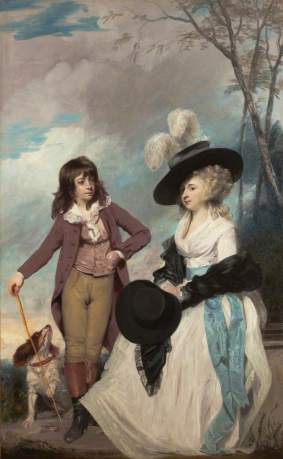
Joshua Reynolds, Maria Marow Gideon and Her Brother, William, 1786–87 (Birmingham: The Barber Institute of Fine Arts), January 2013.
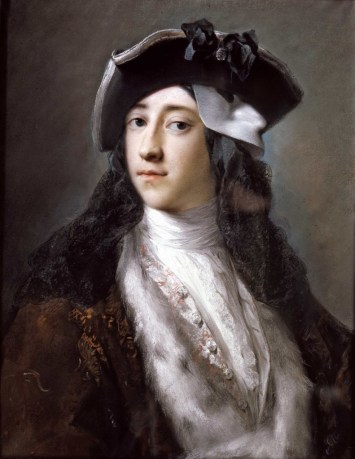
Rosalba Carriera, Portrait of Gustavus Hamilton, 2nd Viscount Boyne, ca. 1730–31; pastel, heightened with white bodycolour on paper (Birmingham: The Barber Institute of Fine Arts), 2009.
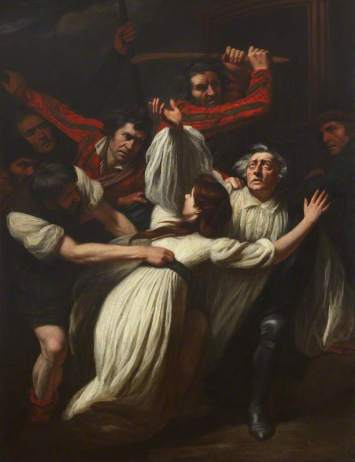
John Opie, The Death of Archbishop Sharpe, 1797; oil on canvas (University of St Andrews), 2008.
Exhibition | Basic Instincts

Joseph Highmore, The Angel of Mercy, ca. 1746; oil on canvas, 59.7 × 48.3 cm (New Haven: Yale Center for British Art, Paul Mellon Collection, B1981.25.362).
◊ ◊ ◊ ◊ ◊
Press release from The Foundling Museum:
Basic Instincts
The Founding Museum, London, 29 September 2017 — 7 January 2018
Curated by Jacqueline Riding
A highly successful artist and Governor of the Foundling Hospital, Joseph Highmore (1692–1780) is best known as a portrait painter of the Georgian middle class. However, during the 1740s Highmore’s art radically shifted as he turned his focus to societal attitudes towards women and sexuality. Curated by Highmore expert, Dr Jacqueline Riding, Basic Instincts explores this ten-year period and his disruptive commentary, reflecting his engagement with the work of the new Foundling Hospital and its mission to support desperate and abused women. On public display in the UK for the first time is a remarkable painting that still retains the power to shock.
In 1744 Highmore created a series of 12 paintings on his own initiative inspired by Samuel Richardson’s international bestseller, Pamela, or Virtue Rewarded. First published in 1740, the novel’s sixth edition of 1742 included illustrations by Hubert Gravelot and Francis Hayman. However, unlike the commissioned illustrations, Highmore’s paintings explicitly make reference to the abuse and sexual violence at the heart of Richardson’s story of a virtuous young maidservant fighting off the unwanted advances of her predatory master. Highmore and Richardson became friends, and Highmore subsequently illustrated Richardson’s masterpiece, Clarissa, or, the History of a Young Lady, whose tragic heroine avoids a forced marriage, but dies having been abandoned by her family, duped by an admirer, drugged and raped.
Unlike William Hogarth, Highmore’s representation of Georgian society favoured realism over broad humour and theatricality, so his nuanced articulation of social attitudes towards women and sexuality means that modern audiences can miss his challenging commentary. However, at the heart of Basic Instincts is a remarkable painting that has never before been publically displayed in the UK and which does not fail to shock. The Angel of Mercy (c.1746) depicts a desperate mother in the act of killing her baby, with the distant Foundling Hospital presented as an alternative solution. This painting is unique in western art for showing maternal infanticide as a contemporary reality. The fashionably dressed mother is free from direct biblical or mythological allusion, unlike Hagar and Ishmael (1746) the large canvas Highmore donated to the newly established Hospital, which represents an Old Testament story of maternal abandonment. Instead The Angel of Mercy confronts the ‘elephant in the room’ in terms of the Hospital’s campaign; that without Christian compassion and practical support, even respectable women will be driven to murder.
Basic Instincts curator Jacqueline Riding said: “This is the first major Highmore exhibition for 50 years and nowhere can his life and work have greater resonance than at the Foundling Museum: an organisation at the forefront of the public display, interpretation and appreciation of early-Georgian art. Setting The Angel of Mercy, the Pamela paintings and Hagar and Ishmael among Highmore’s most tender portraits of mothers and children, family and friends, uniquely demonstrates the artist’s depth and variety, while indicating the true breadth of British Art in a period still labelled ‘The Age of Hogarth’.”
Foundling Museum director Caro Howell said: “Basic Instincts demonstrates that in the eighteenth century, the Foundling Hospital’s impact on contemporary artists went far beyond a simple donation of art. For Joseph Highmore it sparked a radical engagement with the issue of women’s vulnerability to sexual assault and society’s unwillingness to support them, culminating in a work of quite exceptional power.”
Basic Instincts explores the limits and narratives around female respectability in Georgian society, and reveals the complexity of Highmore’s engagement with issues surrounding women’s vulnerability to male exploitation. The first major publication dedicated to Joseph Highmore and written by Dr Riding will be published by Paul Holberton publishing to coincide with the exhibition. The exhibition is supported by the Paul Mellon Centre for Studies in British Art.
On display in the Museum’s historic rooms, a series of nine previously unseen sculptures by acclaimed contemporary artist Rachel Kneebone provide a highly charged counterpoint to Basic Instincts. Exploiting porcelain’s history as a material of refinement and rococo exuberance, Kneebone subverts viewers’ expectations by creating works that are simultaneously delicate and visceral. Raft of the Medusa’s tumbling limbs and fractured swags are at once coquettish and sinister; their gleaming white surfaces and exquisite detail belie scenes of collapse and dismemberment. Displayed amongst the Museum’s historic Collection, these works distil and abstract the Foundling Hospital’s suppressed narratives of sexual desire, emotional damage, and female strength.
Jacqueline Riding specialises in Georgian history and art. She read History and Art History at the universities of Leicester, London, and York and has over twenty-five years’ experience working as a curator and consultant within a broad range of museums, galleries, and historic buildings, including the Guards Museum, Tate Britain, and Historic Royal Palaces. From 1993 until 1999 she was Assistant Curator of the Palace of Westminster and later founding Director of the Handel House Museum in London. She has published widely on early-Georgian art and history, including her major book Jacobites: A New History of the ’45 Rebellion (Bloomsbury 2016). She is currently writing a biography of William Hogarth (Head of Zeus). She was the consultant historian and art historian on Mike Leigh’s award-winning film Mr. Turner (2014) and is the consultant historian on his next feature film, Peterloo. Jacqueline Riding is Associate Research Fellow in the School of Arts, Birkbeck College, University of London and a Fellow of the Clore Leadership Programme.
Rachel Kneebone (b. 1973) lives and works in London. Recent solo exhibitions include Rachel Kneebone at the V&A, London (2017); 399 Days, White Cube Bermondsey (2014) and London; and Regarding Rodin, Brooklyn Museum, New York (2012). Group exhibitions include Obsession, Maison Particulière, Brussels and Flesh, York Art Gallery (2016); Lust for Life, Galleri Anderson Sandstrom, Stockholm and Ceramix at Bonnefantenmuseum, Maastricht (2015); 3am: Wonder, Paranoia and the Restless Night, The Bluecoat, Liverpool and Chapter, Cardi (2013–14); The Surreal House, Barbican Centre, London (2010); Summer Exhibition, Royal Academy of Arts, London (2008); and Mario Testino at Home, Yvon Lambert, New York (2007). In 2005, Kneebone was nominated for the MaxMara Art Prize and this year has been nominated for the breakthrough award for the 2017 South Bank Show Sky Arts Award.
The accompanying book is published by PHP:
Jacqueline Riding, Basic Instincts: Love, Passion, and Violence in the Art of Joseph Highmore (London: Paul Holberton Publishing, 2017), 120 pages, ISBN: 978 1911300 281, £25.
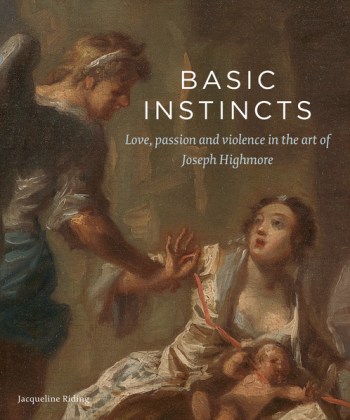 Published to coincide with the exhibition at the Foundling Museum in London, this fascinating book will re-introduce Joseph Highmore (1692–1780), an artist of status and substance in his day, who is now largely unknown. It takes as its focus Highmore’s small oil painting known as The Angel of Mercy (ca. 1746, Yale), one of the most shocking and controversial images in 18th-century British art.
The painting depicts a woman in fashionable mid-18th-century dress strangling the infant lying on her lap. A cloaked, barefooted figure cowers to the right as an angel intervenes, pointing towards the Foundling Hospital, the recently built refuge for abandoned infants, in the distance. The image attempts to address one of the most disturbing aspects of the Foundling Hospital story—certainly a subject that many (now as then) would consider beyond depiction. But if any artist of the period had attempted such a subject it would surely be William Hogarth, not the portrait painter Joseph Highmore? In fact, the painting was attributed to Hogarth for almost two centuries, until its reattribution in the 1990s. Even so, it is surprising that despite the wealth of scholarship associated with Hogarth and the ‘modern moral subject’ of the 1730s and 1740s, The Angel of Mercy has received little attention until now. The book and exhibition seeks to address this, while encouraging greater interest in, and appreciation for, this significant British artist.
Jacqueline Riding sets this extraordinary painting within the context of the artist’s life and work, as well as broader historical and artistic contexts. This includes exploration of superb examples of Highmore’s portraiture, such as his complex, monumental group portrait The Family of Sir Eldred Lancelot Lee and the exquisite small-scale ‘conversations’ The Vigor Family and The Artist and his Family, juxtaposed with analysis of key subject paintings, including the Foundling Museum’s Hagar and Ishmael and Highmore’s Pamela series, inspired by Samuel Richardson’s bestselling novel. Collectively they tackle relevant and highly contentious issues around the status and care of women and children, master/servant relations, motherhood, abuse, abandonment, infant death, and murder.
New Book | Chevening: A Seat of Diplomacy
From Paul Holberton Publishing:
Julius Bryant, Chevening: A Seat of Diplomacy (London: Paul Holberton Publishing, 2017), 96 pages, ISBN: 978 191130 0113, £30.
 A welcome introduction to the handsome architecture, splendid decoration, notable collections, and glorious gardens of Chevening, the grand country residence used for several decades by Britain’s Foreign Secretary.
Chevening stands in a magnificent park below the wooded escarpment of the North Downs in Kent. It has a history dating back around 800 years, but the Chevening we see today we see today is almost entirely the creation of seven generations of the Stanhope family, building on the original Inigo Jones house of 1630. For 250 years the Stanhopes served their country as soldiers and statesmen, and at Chevening as patrons of architecture and art. This new guide highlights the contributions of the Earls and Countesses Stanhope to the building, furniture, pictures, gardens and landscape of Chevening. It also gives a short account of the family in the wider world in order to set their creations in context.
The decoration and architectural features of each of the rooms—from the Entrance Hall with its spectacular swirling staircase of c. 1721 to the sumptuous Tapestry Room with its rare Berlin tapestries woven by Huguenot craftsmen in 1708—are described and illustrated, and significant and unusual works of art highlighted, such as important portraits by Allan Ramsay, Thomas Gainsborough, and Sir Thomas Lawrence.
The Estate consists of some 3,000 acres, and the gardens include a lake, maze, parterre and a double-walled hexagonal kitchen garden. The history of the garden is explored, from the extensive landscaping in the formal style by the 1st and 2nd Earls in the early 18th century, to the naturalistic style created in 1775–78—much of the character of which survives today—to the re-formalizing in the 19th century, with the creation of the ‘Italian’ gardens, a maze and hedged allées. The wonderful restoration of recent decades and the replanting to the designs of Elizabeth Banks is celebrated with new photography.
Published to coincide with the 50th anniversary of the Chevening Act coming into effect with the death of the last Earl Stanhope and the 300th anniversary of his family’s acquisition of the Chevening estate.
Julius Bryant is Keeper of Word and Image at the Victoria and Albert Museum, London.
Exhibition | Visual Voyages: Images of Latin American Nature
Press release from The Huntington:
Visual Voyages: Images of Latin American Nature from Columbus to Darwin
The Huntington Art Gallery, San Marino, 16 September 2017 — 8 January 2018
Curated by Catherine Hess and Daniela Bleichmar
 A sweeping international loan exhibition at The Huntington Library, Art Collections, and Botanical Gardens will explore how the depiction of Latin American nature contributed to art and science between the late 1400s and the mid-1800s. Visual Voyages: Images of Latin American Nature from Columbus to Darwin, on view in the MaryLou and George Boone Gallery from September 16, 2017 to January 8, 2018, will feature more than 150 paintings, rare books, illustrated manuscripts, prints, and drawings from The Huntington’s holdings as well as from dozens of other collections. Many of these works will be on view for the first time in the United States.
Visual Voyages will be complemented by a richly illustrated book, along with an array of other programs and exhibitions, including a sound installation by Mexican experimental composer Guillermo Galindo. The exhibition is a part of the Getty’s Pacific Standard Time: LA/LA initiative, an exploration of Latin American and Latino art that involves more than 70 arts institutions across Southern California.
“Despite notorious depredation of people and resources during the period, the brilliant work of a number of Latin Americans and Europeans helped to illuminate our understanding of the natural world,” said Catherine Hess, chief curator of European art at The Huntington and co-curator of Visual Voyages. “We aim to shed light on this relatively unexamined piece of the story—to show how beautiful, surprising, and deeply captivating depictions of nature in Latin America reshaped our understanding of the region and, indeed, the world—essentially linking art and the natural sciences.”
Visual Voyages looks at how indigenous peoples, Europeans, Spanish Americans, and individuals of mixed-race descent depicted natural phenomena for a range of purposes and from a variety of perspectives: artistic, cultural, religious, commercial, medical, and scientific. The exhibition examines the period that falls roughly between Christopher Columbus’s first voyage in 1492 and Charles Darwin’s publication of On the Origin of Species in 1859, a work based largely on Darwin’s own voyage to the region in the 1830s.
“Information and materials circulated at an unprecedented rate as people transformed their relationship to the natural world and to each other,” said Daniela Bleichmar, associate professor of art history and history at the University of Southern California (USC) and co-curator of the exhibition. “Images served not only as artistic objects of great beauty but also as a means of experiencing, understanding, and possessing the natural world. These depictions circulated widely and allowed viewers—then and now—to embark on their own ‘visual voyages’.”
Bleichmar, who was born in Argentina and raised in Mexico, is an expert on the history of science, art, and cultural contact in the early modern period. Her publications include the prize-winning book Visible Empire: Botanical Expeditions and Visual Culture in the Hispanic Enlightenment (The University of Chicago Press, 2012).
The Huntington’s three collection areas—library, art, and botanical—all contribute to Visual Voyages. Its Library is one of the world’s greatest research institutions in the fields of British and American history, art, and the history of science, stretching from the 11th century to the present, and includes such riches as the first European depiction of a pineapple and a rare 16th-century manuscript atlas that includes three stunning maps of the Americas. From The Huntington’s art holdings, Frederic Edwin Church’s monumental painting Chimborazo (1864) will be on display, depicting a Latin American landscape both real and imaginary. The Huntington’s 120 acres of gardens include several thousand plant species from Latin America, including pineapple, vanilla, cacao, and various orchids and succulents.
Designed by Chu+Gooding Architects of Los Angeles, Visual Voyages engages visitors through an evocative installation that includes interactive media, display cases of specimens and rare materials, and two walls almost completely covered with grids of visually arresting depictions of botanical specimens and still lifes.
The exhibition opens with a playful display of taxidermy mounts to make vivid the rare animals that captured the imagination of Europeans and were avidly collected during the period. Visual Voyages then begins with a section on “Rewriting the Book of Nature,” in which manuscripts, maps, and publications show how nature came to be reconsidered in the first century of contact. This section includes a copy of the 1493 letter Christopher Columbus wrote to the King and Queen of Spain while on the return leg of his first voyage to the New World. He writes that the region is “so fertile that, even if I could describe it, one would have difficulty believing in its existence.” This section highlights the many contributions of indigenous Americans to the exploration of New World nature, among them two large-scale maps painted by indigenous artists in Mexico and Guatemala; a volume from the Florentine Codex, a 16th-century Mexican manuscript on loan from the Laurentian Library, Florence; and a spectacular feather cape created by the Tupinambá of Brazil.
Next, a gallery called “The Value of Nature” explores the intertwining of economic and spiritual approaches to Latin American nature. Commercial interests resulted in the investigation, depiction, and commercialization of such natural commodities as tobacco and chocolate. Indigenous religions considered the natural world to be infused with the divine, while Christian perspectives led observers to envision Latin American nature as both rich in signs of godliness as well as marked with signs of the devil—and needing eradication. Various depictions of the passion flower, a New World plant, show how the flower’s form recalled to missionaries the instruments of Christ’s Passion.
A third section, “Collecting: From Wonder to Order,” shows how the ‘wonder’ that European collectors held for the astonishing material coming from the New World became a desire to possess and, later, to “order” this material, following systems of taxonomy and classification. On view will be a spectacular set of large paintings depicting Brazilian fruits and vegetables by the Dutch painter Albert Eckhout (ca.1610–1665) as well as 30 artful, vivid, and detailed drawings of botanical specimens painted by artists from New Granada (present-day Colombia, Ecuador, Panama, Venezuela, Peru, northern Brazil, and western Guyana), never before seen in the United States.
The final section of the exhibition, called “New Landscapes,” examines scientific and artistic perspectives on Latin America created in the 19th century, a period when a new wave of voyagers explored the region and independence wars resulted in the emergence of new nations. The Romantic and imperial visions of artists and scientists from Europe and the U.S. are juxtaposed with the patriotic and modernizing visions of artists and scientists from Latin America, who envisioned nature as an integral part of national identity. This juxtaposition can be seen visually in the pairing of The Huntington’s monumental Chimborazo by Church with the equally monumental Valley of Mexico (1877) by Mexican painter José María Velasco, on loan from the Museo Nacional de Arte in Mexico City.
Gallery text is in Spanish and English.
Daniela Bleichmar, Visual Voyages: Images of Latin American Nature from Columbus to Darwin (New Haven: Yale University Press, 2017), 240 pages, ISBN: 978 030022 4023, $50.
Visual Voyages: Images of Latin American Nature from Columbus to Darwin is accompanied by a hardcover book of the same title written by Daniela Bleichmar, co-curator of the exhibition. In a narrative addressed to general audiences as well as students and scholars, Bleichmar reveals the fascinating story of the interrelationship of art and science in Latin America and Europe during the period.
More information is available from Yale UP.
◊ ◊ ◊ ◊ ◊
The Huntington will present an array of public programs to complement Visual Voyages, including a lecture, a curator tour, and focused exhibitions.
Guillermo Galindo Installation and Performance
16 September 2017 — 8 January 2018
Experimental composer, sonic architect, and performance artist Guillermo Galindo will create an outdoor sound installation and performance at The Huntington during the run of the exhibition. The program is part of USC Annenberg’s Musical Interventions, a series of public events organized for Pacific Standard Time: LA/LA by Josh Kun, historian of popular music and recently named a MacArthur Fellow.
Nuestro Mundo
16 September 2017 — 8 January 2018
About two dozen paintings by students of Art Division make up this installation of works inspired by Visual Voyages. Art Division is a non-profit organization dedicated to training and supporting underserved Los Angeles youth who are committed to studying the visual arts. Flora-Legium Gallery, Brody Botanical Center (weekends only).
In Pursuit of Flora: Eighteenth-Century Botanical Drawings
28 October 2017 — 19 February 2018
European exploration of other lands during the so-called Age of Discovery revealed a vast new world of plant life that required description, cataloging, and recording. By the 18th century, the practice of botanical illustration had become an essential tool of natural history, and botanical illustrators had developed strategies for presenting accurate information through exquisitely rendered images. From lusciously detailed drawings of fruit and flowers by Georg Dionysius Ehret (1708–1770), a collaborator of Linnaeus, to stunning depictions of more exotic examples by the talented amateur Matilda Conyers (1753–1803), In Pursuit of Flora reveals the 18th-century appreciation for the beauty of the natural world.
Symposium: Indigenous Knowledge and the Making of Colonial Latin America
The Getty Center, Los Angeles, 8-10 December 2017
This symposium will bring together an interdisciplinary group of scholars to explore the ways in which indigenous knowledge contributed to the making of colonial Latin America. A dozen talks will examine practices related to art, architecture, science, medicine, governance, and the study of the past, among other topics. Curator-led visits to two related exhibitions—Visual Voyages at The Huntington and Golden Kingdoms: Luxury and Legacy in the Ancient Americas at The J. Paul Getty Museum—will allow participants to view magnificent examples of work by indigenous artists and authors, including more than half a dozen rare pictorial manuscripts (codices). The symposium is organized by Daniela Bleichmar, co-curator of Visual Voyages and Kim Richter, co-curator of Golden Kingdoms and senior research specialist at the Getty Research Institute, with funding from the USC-Huntington Early Modern Studies Institute, the Seaver Institute, and the Getty Research Institute
New | Book Silent Witnesses: Trees in British Art, 1760–1870
From Sansom & Co:
Christiana Payne, Silent Witnesses: Trees in British Art, 1760–1870 (Bristol: Sansom & Company, 2017), 176 pages, ISBN: 978 1911408 123, £25.
 In the eighteenth and nineteenth centuries, naturalists, poets and artists were united in their love of trees. William Gilpin began his influential Remarks on Forest Scenery (1791) with the bold statement that ‘It is no exaggerated praise to call a tree the grandest, and most beautiful of all the productions of the earth.’ Illustrated books and tree portraits celebrated the beauty, antiquity and diversity of individual, and particularly ancient specimens. A wide range of drawing manuals showed artists and amateurs how to express their ‘character’ and ‘anatomy’, as if they were human subjects.
Paintings of woodland scenes provided welcome relief from city life, and studies of exotic trees reflected the growth of tourism and empire. The arrival of new species from all over the world aroused much excitement and scientific activity. At the same time, the native trees—oak, ash, beech, elm—acquired new resonance as emblems of the rural countryside. Many of Britain’s most important landscape painters, including Paul Sandby, John Constable, Samuel Palmer, Edward Lear, and the Pre-Raphaelites, made themselves experts in the drawing and painting of trees.
Christiana Payne is Professor of History of Art at Oxford Brookes University, where she has been teaching since 1994. Her previous books include Where the Sea Meets the Land: Artists on the Coast in Nineteenth-Century Britain (Sansom and Company, 2007) and John Brett, Pre-Raphaelite Landscape Painter (Yale University Press, 2010). She has curated major exhibitions and displays at the Yale Center for British Art, Tate Britain, and the Royal West of England Academy, Bristol.
New Book | The Prince of Antiquarians: Francesco de Ficoroni
Available from ArtBooks.com:
Ronald Ridley, The Prince of Antiquarians: Francesco de Ficoroni (Rome: Quasar, 2017), 300 pages, ISBN: 978 887140 7753, 36€ / $55.
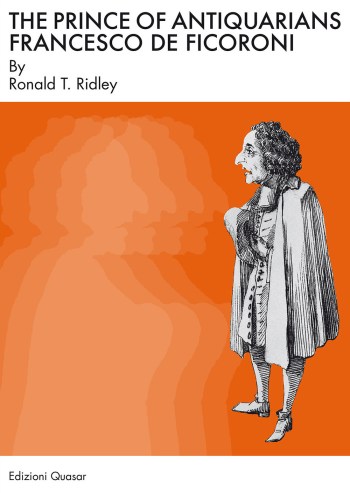 In all the literature on Rome in the eighteenth century, a figure is constantly—but fleetingly—mentioned: (Francesco di) Ficoroni. It is time to restore him to his rightful place, namely as the leading antiquarian in Rome of his age (1662–1747). He is the author of many books on his collections, and more than 500 of his letters survive, showing him as a central figure in the antiquarian life of Europe in the first half of the century, relied on by aristocrats, Church figures, and collectors. He was the leading cicerone (guide) to the early visitors of the Grand Tour. The richness and importance of his life are here revealed for the first time.
Ronald T. Ridley retired from University of Melbourne in 2005. He is the author of numerous books, including Napoleon’s Proconsul in Egypt, The Eagle and the Spade, and The Emperor’s Retrospect. He is a Fellow of the Antiquaries’ Society, the Royal Historical Society, the Pontifical Academy of Roman Archaeology, and the Australian Academy of the Humanities.
New Book | Cerimoniale dei Borbone di Napoli
Available from ArtBooks.com:
Attilio Antonelli, ed., Cerimoniale dei Borbone di Napoli, 1734–1801 (Naples: Arte’m, 2017), 560 pages, ISBN: 9788 85690 5595, 65€ / $100.
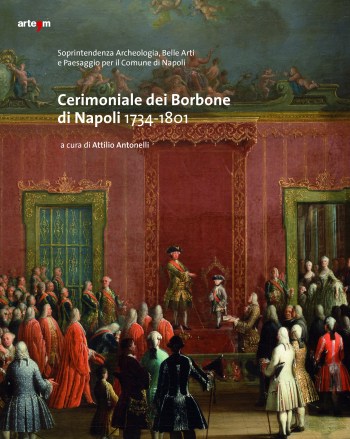 Quarto volume della collana, esemplare per rigore filologico e ricchezza degli apparati iconografici, dedicata ai cerimoniali della corte di Napoli, dato alle stampe in occasione del terzo centenario della nascita di Carlo di Borbone. Arricchito da una magistrale introduzione di Raffaele Ajello, il volume—corredato di saggi, illustrazioni, note e apparati corposi—presenta due manoscritti che illustrano la vita di corte nell’arco della lunga parabola del nuovo regno: dall’arrivo di Carlo nel 1734 fino alla sua partenza nel 1759, quando meriterà una nuova corona, quella di re di Spagna. Accanto a Carlo, le figure della moglie Maria Amalia di Sassonia e del ministro Bernardo Tanucci. Il ritorno di Ferdinando di Borbone da Palermo a Napoli nel 1801 segna il momento conclusivo della cronaca cerimoniale.










leave a comment