New Book | The Collector’s Cabinet and Miniature Pharmacy
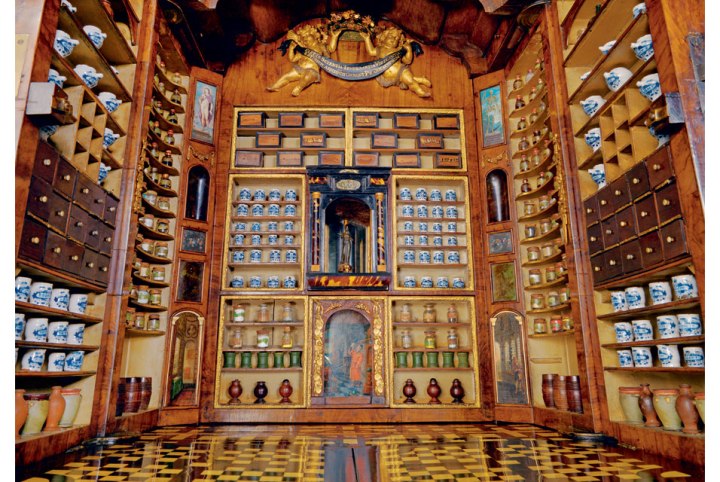
Collector’s Cabinet with Miniature Apothecary’s Shop, 1730
(Amsterdam: Rijksmuseum)
◊ ◊ ◊ ◊ ◊
Press release (23 June 2017) from the Rijksmuseum. The English edition of the book should be be available from Distributed Art Publishers (DAP) in August.
Paul van Duin, ed., The Collector’s Cabinet and Miniature Pharmacy / Verzamelaarskast met miniatuurapotheek (Amsterdam: Rijksmuseum, 2017), 184 pages, ISBN: 978 949171 4610 (Dutch edition) / ISBN: 978 949171 4726 (English edition), 40€ / $60. Essays by Reinier Baarsen, Annette Bierman, Judith van der Brugge-Mulder, Gerhard Cadée, Roelof van Gelder, and Dave van Gompel.
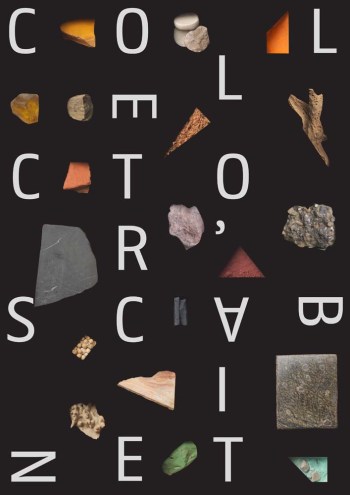 In the last few years no fewer than 50 experts have been involved in conducting research on the only eighteenth-century miniature apothecary’s shop in the Netherlands. The Rijksmuseum is now presenting the results of this research and conservation project in an extensive publication, designed by Irma Boom and showing the miniature pharmacy and 56 secret drawers for the first time, at almost actual size.
This rare collector’s cabinet houses an abundance of curiosities including a fully fitted miniature apothecary’s shop containing more than three hundred Delftware pots, glass bottles, tiny wooden drawers, paintings, and gilded ornaments. Concealed beside and behind the miniature pharmacy are no fewer than 56 secret drawers, all but five of which contain the collection of nearly 2000 varieties of naturalia, including seeds, flowers, roots, animal parts, rocks, minerals, and fossils.
The research has now been completed, providing a far deeper understanding of the cabinet’s origins, its purpose, the exceptional naturalia it contains, and the collectors’ world it inhabited. We can now be fairly certain that the cabinet was made in Amsterdam in 1730 for a wealthy doctor or apothecary, as a curiosity for the entertainment of a select group of friends and fellow collectors. The study also revealed that most of the naturalia items form the original contents of the cabinet. The naturalia even include uraninite and two other minerals containing uranium—for safety reasons, these materials are now safely stored in lead caskets in the Rijksmuseum’s depot, in accordance with the regulations and permit issued under the Dutch Nuclear Energy Act.
The conservation and restoration work have for a large part returned the cabinet and miniature apothecary’s shop to their former glory, and this object is now one of the highlights of the eighteenth-century galleries in the Rijksmuseum.
With thanks to the Cultural Heritage Agency of the Netherlands, Naturalis Biodiversity Center, Leiden University, and the Royal Netherlands Institute of Sea Research. The research, conservation, and publication were made possible by the Bank of America Merrill Lynch Art Conservation Project.
New Book | The Paper Zoo: 500 Years of Animals in Art
From The University of Chicago Press:
Charlotte Sleigh, The Paper Zoo: 500 Years of Animals in Art (Chicago: The University of Chicago Press, 2017), 256 pages, ISBN: 978 022644 7124, $45.
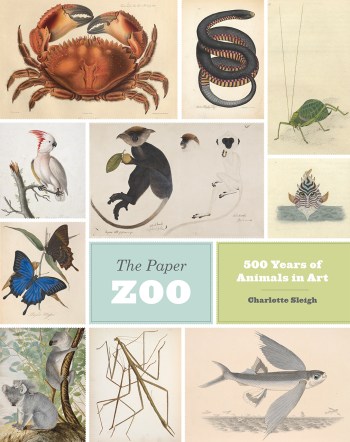 As children, our first encounters with the world’s animals do not arise during expeditions through faraway jungles or on perilous mountain treks. Instead, we meet these creatures between the pages of a book, on the floor of an obliging library. Down through the centuries, illustrated books have served as our paper zoos, both documenting the world’s extraordinary wildlife in exquisite detail and revealing, in hindsight, how our relationship to and understanding of these animals have evolved over time.
In this stunning book, historian of science Charlotte Sleigh draws on the ultimate bibliophile’s menagerie—the collections of the British Library—to present a lavishly illustrated homage to this historical collaboration between art and science. Gathering together a breathtaking range of nature illustrations from manuscripts, prints, drawings, and rare printed books from across the world, Sleigh brings us face to face (or face to tentacle) with images of butterflies, beetles, and spiders, of shells, fish, and coral polyps. Organized into four themed sections—exotic, native, domestic, and paradoxical—the images introduce us to some of the world’s most renowned natural history illustrators, from John James Audubon to Mark Catesby and Ernst Haeckel, as well as to lesser-known artists. In her accompanying text, Sleigh traces the story of the art of natural history from the Renaissance through the great age of exploration and into the nineteenth century, offering insight into the changing connections between the natural and human worlds.
But the story does not end there. From caterpillars to crabs, langurs to dugongs, stick insects to Old English pigs; from the sinuous tail feathers of birds of paradise to the lime-green wings of New Zealand’s enormous flightless parrot, the kakapo; from the crenellated plates of a tortoise’s shell to imagined likenesses of unicorns, mermaids, and dinosaurs, the story continues in this book. It is a Paper Zoo for all time.
Charlotte Sleigh is a reader in history at the University of Kent. She is the author of Ant, Six Legs Better: A Cultural History of Myrmecology, Literature and Science, and Frog.
Musée d’art Hyacinthe Rigaud to Reopen This Week
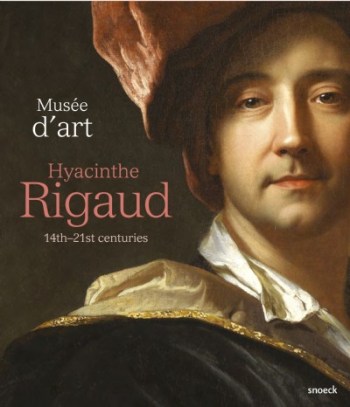 The newly renovated and expanded Hyacinthe Rigaud Art Museum in Perpignan is scheduled to open on June 24th. From Snoeck Publishers:
Musée d’art Hyacinthe Rigaud, 14th–21st Centuries (Gent: Snoeck Publishers, 2017), 214 pages, ISBN: 978 946161 3998, 25.
In 2017 the Musée d’Art Hyacinthe Rigaud is reopening. After three years of work, a renovated building now houses an enriched and restored collection, to be discovered through a completely redesigned itinerary. To accompany the rediscovery, this guide presents a selection of works chosen to reflect the diversity and excellence of this heritage. Richly illustrated, it is both a souvenir of your visit and an invitation to open the museum’s doors.
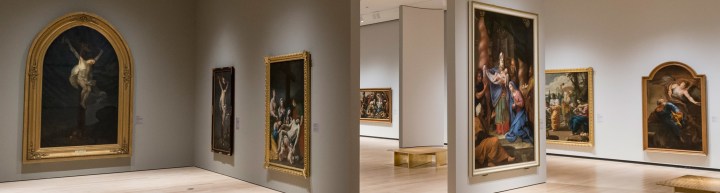
Exhibition | Paintings of the Abbés Desjardins
◊ ◊ ◊ ◊ ◊
Press release for the exhibition now on view at the MNBAQ:
The Fabulous Destiny of the Paintings of the Abbés Desjardins / Le Fabuleux Destin des Tableaux des Abbés Desjardins
Musée National des Beaux-Arts du Québec, 15 June — 4 September 2017
Musée des Beaux-Arts de Rennes, 14 October 2017 — 28 January 2018
Curated by Daniel Drouin and Guillaume Kazerouni
This exhibition highlights the bicentennial of the arrival in Canada of some 200 paintings initially done by renowned artists for churches in Paris in the 17th and 18th centuries. These paintings, confiscated during the French Revolution and reunited by clergyman Philippe-Jean-Louis Desjardins (1753–1833) , were shipped to Québec City to be sold to the rapidly growing parishes and religious congregations at the time. Fairly unfamiliar in France, this important body of religious paintings was researched recently. The history of the paintings is marked by two major periods—their use in France and their 19th-century use and impact in the Province of Québec. First, thanks to recent discoveries in France resulting in new attributions, more is known about the background for their creation. Several big names in French painting were involved—artists such as Claude Vignon, Simon and Aubin Vouet, Frère Luc, Charles-Michel-Ange Challes, Jean-Baptiste Corneille, Daniel Hallé, Pierre Puget, Michel Dorigny, Louis Boulogne le jeune, Joseph Christophe, Pierre Dulin, Samuel Massé, Jean-Jacques Lagrenée, François-Guillaume Ménageot, and Matthias Stomer—several of whom were French Court painters.
Philippe-Jean-Louis Desjardins, through his brother Louis-Joseph (1766–1848), chaplain to the Augustines de l’Hôtel-Dieu de Québec, was very aware of the situation of Québec churches. The clergy and religious communities were booming and did not have sufficient art of devotional calibre. In 1817 and 1820, nearly 200 paintings made the voyage to Quebec. They would go on to be reframed and sold on site before being placed in various churches and chapels. Alongside this, a new cohort of Canadian artists such as Jean-Baptiste Roy-Audy, Joseph Légaré, Antoine Plamondon and Théophile Hamel would get their training by restoring French works and copying them at the request of sponsors, thereby making up for the shortage of painters in the British colony. This period saw the birth of Canadian painting, but also the creation of the first art collections in Québec and the appearance of the first museum.
A selection of some 40 French paintings and 20-or-so Québec copies of French masterpieces that have disappeared, as well as of genuine Québec work, are on display in the Pierre Lassonde Pavilion using contemporary staging. Only the French paintings from the Québec exhibition will cross the ocean again in the fall of 2017, bound for the Musée des beaux-arts de Rennes, the MNBAQ’s partner in this great museological adventure.
Once Upon a Time… Philippe-Jean-Louis et Louis-Joseph Desjardins
Philippe-Jean-Louis and Louis-Joseph Desjardins were born in Messas, France. They both studied theology at the Seminary of Orléans, and then in Paris and Bayeux. The former was ordained in 1777 and the second in 1790. During the Revolution, the two brothers, faithful to their values, fled France to England. The elder arrived in Québec City in 1793—followed by his younger sibling the following year—and held various positions, including vicar general, Séminaire professor, and chaplain of the Augustines de l’Hôtel-Dieu and of the Ursulines. The youngest was initially a missionary in Baie-des-Chaleurs before becoming vicar, then pastor, of Notre-Dame de Québec, the chaplain of the Augustines and the Superior of the Ursulines.
Philippe returned to France in 1802. His interest in the Diocese of Québec and his experience made it clear to him that painters able to meet local demand were few and far between. On returning home, he also realized that the family business was in dire financial straits. It dawned on him that there was simple solution: combine both interests by selling paintings in Lower Canada and using the profits to help his family.
Between 1803 and 1810, he acquired paintings in circumstances that remain largely unknown. The first shipment was in 1816. Four rolls and a case totaling 120 paintings left the port of Brest bound for New York City. On site, the imports had to be cleared and transportation to Québec City arranged. In the winter of 1817, the works of art made the voyage to Québec City in a sleigh. Once there, the works were delivered to Louis-Joseph in the outer chapel of the Augustines, which was transformed into a workshop where several young artists remounted the pieces and restored them before the art was sold to various parishes and communities. The same scenario was repeated in 1820, but this time with some sixty paintings.
The 17th-Century Desjardins Paintings
Most of the Desjardins paintings are 17th-century French works and, with a few exceptions, work from Italian and Northern schools. The composition of this ensemble speaks volumes about the taste of the French at the time of the Revolution. It reflects the conservation choices made in separating the works that would be placed in the newly created museums from those destined to be sold and saved by amateurs like Philippe Desjardins. As a result, the generation of painters of the 1640s, appreciated for their classicism by the curators who formed the nucleus of French national collections, such as Jacques Stella, Laurent de La Hyre, Eustache Le Sueur, Philippe de Champaigne, Sébastien Bourdon and obviously, their model, Nicolas Poussin, is either totally absent or is represented by work incorrectly attributed even before it arrived in Québec City. Only a few paintings by Philippe de Champaigne and his studio are the exception to the rule.
The strength of the Desjardins paintings lies in the art from the opposite ends of the century. Christ in the Garden of Olives, a rare canvas by Quentin Varin, introduces a remarkable ensemble from the 1630s, with two paintings by Simon Vouet and several works by his pupils and followers such as Michel Dorigny and Jean Senelle. For the second half of the century—basically the years 1680 to 1690—there are some interesting anonymous paintings such as Angels and Shepherds Adoring the Child Jesus, but especially the great paintings by Daniel Hallé, Brother Luc, Jean-Baptiste Corneille and Louis de Boullogne, including The Presentation of Jesus in the Temple, one of the masterpieces of the exhibition.
Master Simon Vouet and His Entourage
Around 1630, a new generation of artists who had trained in Italy came back to France. The most notable return was that of Simon Vouet, in 1627. After a brilliant career primarily in Rome, the painter was recalled to Paris by Louis XIII. At that time, Philippe de Champaigne and Claude Vignon—whose works are exhibited in this gallery—were beginning their careers and the biggest workshop in the city was that of Georges Lallemant, which was soon surpassed by Vouet’s. Alongside private assignments, in which Vouet excelled, the artist received commissions for religious art throughout his career.
The Desjardins paintings feature a particularly important set of works by Vouet and his entourage. This is undeniably one of the strong points of the ensemble and of this exhibition. The master himself is represented by two canvases. Saint Francis of Paola Resuscitating a Child is one of the last commissions by Vouet before his death, while The Apparition of the Virgin and Child Jesus to Saint Anthony, revealed here after its de-restoration, is situated at the very beginning of the painter’s Parisian career, just after he returned from Italy. Around these two altarpieces are paintings in which Vouet’s influence and the propagation of his artistic manner are palpable.
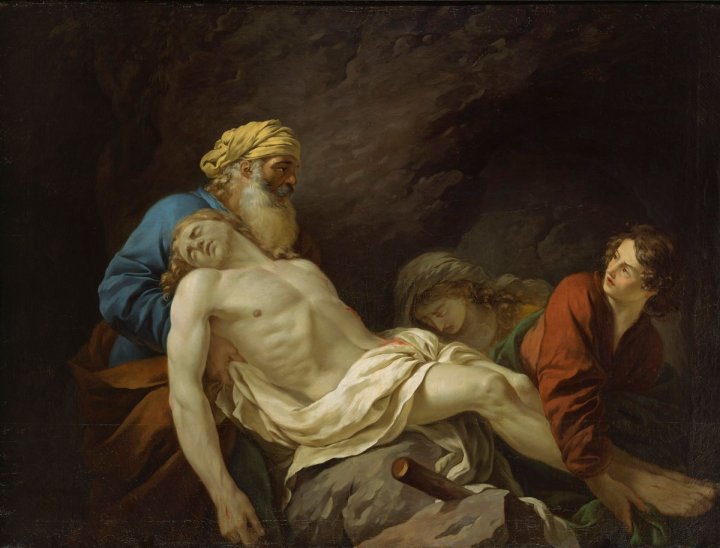
Jean-Jacques Lagrenée, The Entombment, 1770, oil on canvas, 155 × 205 cm
(Québec City, MNBAQ, 1970.115; photo: Patrick Altman)
◊ ◊ ◊ ◊ ◊
The 18th-Century Desjardins Paintings
The Desjardins paintings consist of fewer 18th-century works—mainly French—than 17th-century ones. However, chronologically, they cover the entire century. It comprises a body of work done for the churches of Paris by the most important artists of the time. At first there were originals or copies by all the big names (Collin de Vermont, Restout, Cazes, Massé or Vanloo), but several have disappeared since. The absence of a Boucher or a Fragonard is not surprising, since religious commissions occupied only a very minor place in their respective work.
The second half of the century, which marks a renewal of history painting and a gradual return to the antique model, is illustrated through Challe’s paintings for the Louvre Oratory, Lagrenée’s two masterpieces from the Abbey of Montmartre, and the large painting by Menageot. This work by well-known painters is complemented by paintings by less famous artists such as Godefroy and Preudhomme (Ursulines de Québec chapel). As a result, the paintings from the 18th century provide a far more exhaustive portrait of their era than their 17th-century counterparts. It must be borne in mind that the paintings of the Enlightenment were still very recent at the time when the Revolution broke out and did not always enjoy the same prestige as the works of the Grand Siècle.
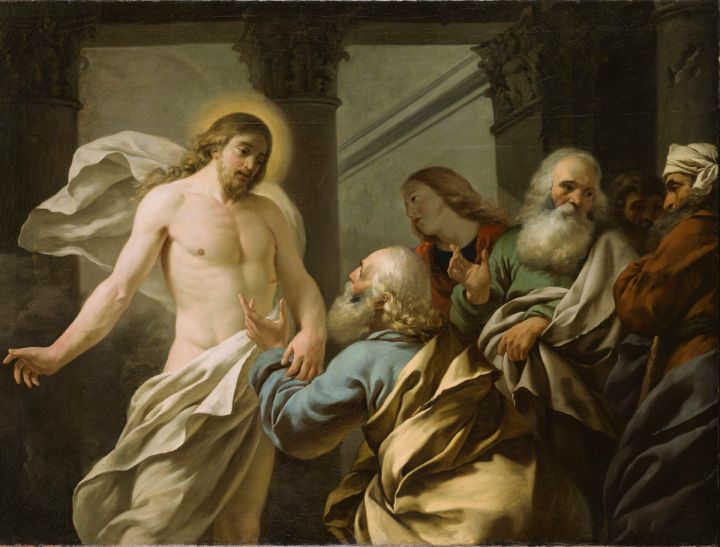
Jean-Jacques Lagrenée, The Incredulity of St Thomas, 1770, oil on canvas, 156 × 206 cm
(Québec City, MNBAQ, 1970.114; photo: Patrick Altman)
◊ ◊ ◊ ◊ ◊
The Desjardins Paintings, Joseph Légaré and Art Museums in Québec
Starting in the early 1820s, self-taught Québec painter Joseph Légaré purchased several canvases from among the Desjardins paintings, some of which were the inspiration for his numerous copies. His collection would pave the way for the creation of the first two art museums in Québec in the 19th century.
As early as 1829, Légaré exhibited his collection in the meeting room of the Literary and Historical Society of Quebec. In 1833, he moved it to his three-storey residence on Sainte-Angèle Street. In association with lawyer Thomas Amiot, he inaugurated the Québec Gallery of Paintings in 1838. However, Légaré’s ventures did not seem to spark much interest, and the gallery folded in 1840. Undaunted, in 1852 the painter opened the Quebec Gallery in his new home at the corner of Sainte-Ursule and McMahon Streets. Légaré died in 1855, but his widow kept the museum open until her death in 1874. Monseigneur Thomas-Étienne Hamel, Superior of the Séminaire de Québec and Rector of Laval University, bought the collection.
This acquisition laid the foundation for the Pinacotheque at Laval University as North America entered a period of museum-mania. Even before the inauguration of the first building of the Art Association of Montreal (the future Montréal Museum of Fine Arts) in 1879, the City of Québec had an art museum, thanks to Joseph Légaré’s determination. The Desjardins paintings imported some 60 years earlier formed the core of the museum’s collection.
The Augustines and Ursulines de Québec Paintings
As we have seen, the Abbés Desjardins had special ties with the Augustines de l’Hôtel-Dieu and the Ursulines de Québec, ties that went well beyond the paintings themselves. From the outset, the former were an integral part of the adventure by lending their buildings for the reception, uncrating and remounting of the paintings and by extending their hospitality to the painters involved and customers from everywhere in Québec. François-Guillaume Ménageot’s The Virgin Placing Saint Teresa under the Protection of Saint Joseph, usually found on the left lateral altarpiece of the exterior chapel of the Augustines, attests to this significant episode in the life of the paintings.
Several generations of Ursulines have venerated Christ Exposing his Sacred Heart to Margaret Mary Alacoque, by Pierre-Jacques Cazes, usually strategically placed in the exterior chapel, a place of worship which is the permanent home of the greatest number of Desjardins paintings. Seven paintings are displayed there, including Brother André’s The Meal at the House of Simon, the biggest of all the Desjardins paintings, at 3.66 metres high by 6.10 metres wide.
Copying and Distribution of the Desjardins Paintings
 The Desjardins paintings played a crucial role in the growth of painting in Lower Canada by stimulating the budding careers of artists who, after having done copies of certain works, diversified their output. Since at the time there were no fine arts academies or schools in Lower Canada, these painters were able to learn the basics by borrowing to various degrees from the French academic tradition made available through this pool of 17th- and 18th-century paintings.
The inventory of the copies—a little over 120 done in the 19th century—shows that one quarter of the Desjardins paintings were used as templates by Québec artists. The most of the copies were in the chapel of the Séminaire de Québec, at the Cathedral-Basilica of Notre-Dame-de-Québec and in Joseph Légaré’s collection. The copies found their way to nearly 70 parishes or collectors, the result being considerable visibility for these paintings in our churches.
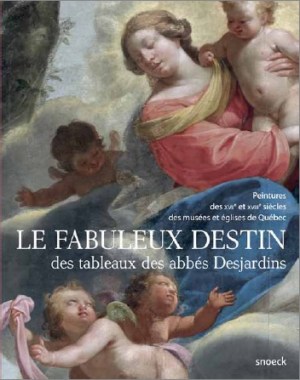
Laurier Lacroix, Guillaume Kazerouni, and Daniel Drouin, Le Fabuleux Destin des Tableaux des Abbés Desjardins: Peintures des XVIIe et XVIIIe siècles des musées et églises du Québec (Gent: Snoeck Publishers, 2017), 312 pages, ISBN: 978 94616 14162, 39€.
New Book | The Accomplished Lady
Available from ArtBooks.com:
Noël Riley, The Accomplished Lady: A History of Genteel Pursuits, c. 1660–1860 (Wetherby: Oblong Creative, 2017), 460 pages, ISBN: 978 09575 99291, $53.
 This richly illustrated book is a study of the skills and pastimes of upper-class women and the works they produced during a 200-year period. Their activities included watercolours, printmaking and embroidery, shellwork, drawn from diaries and journals, rolled and cut paperwork, sand painting, wax flower modelling, painting on fabrics and china, featherwork, japanning, silhouettes, photography, and many others, some familiar and others little known. The context for these pursuits sets the scene: the general position of women in society and the restrictions on their lives, their virtues and values, marriage, domestic life, and education. This background is amplified with chapters on other aspects of women’s experience, such as sport, reading, music, dancing, and card-playing. While some of the activities discussed appear trivial, others show evidence of great seriousness of purpose and extraordinary talent. Pursuits of choice rather than for payment could reach levels of excellence as high as any commercially driven occupations, especially for those with plenty of time to follow their interests. Most of these women—because of their social status—were precluded from working for money, but they had time to study and hone their skills, and their creative works were supremely important to them. In some cases—particularly among watercolourists—they enjoyed the very best of teachers. The word ‘amateur’ in the context of this book is not a term of disparagement but rather a celebration of the fine work produced by those who followed their inclinations with loving care and diligent practice without the pressures of the market place. The material for this book has been drawn from diaries and journals, biographies and social histories, letters, documents, periodicals, contemporary pastime manuals, domestic guides, and conduct books. Above all, it has come from decades of close study—and sometimes collection—of the objects made by gentlewomen over more than two centuries. The illustrations come from a similarly wide range of sources: private collections, museums, galleries, country houses, and dealers in art and antiques.
Noël Riley is a writer and lecturer on the decorative arts and a consultant at Sotheby’s Institute of Art, London.
◊ ◊ ◊ ◊ ◊
Book Launch
Gainsborough’s House, Sudbury, Suffolk, 19 June 2017
Join us on Monday, 19 June, 6–8pm to celebrate the launch of Noel Riley’s latest book The Accomplished Lady: A History of Genteel Pursuits, 1660–1860.
New Book | Japanese Gardens and Landscapes, 1650–1950
From Penn Press:
Wybe Kuitert, Japanese Gardens and Landscapes, 1650–1950 (Philadelphia: University of Pennsylvania Press, 2017), 384 pages, ISBN: 978 08122 44748, $70 / £60.
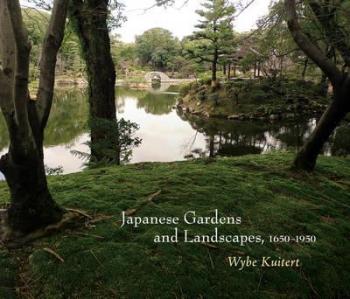 Moss, stone, trees, and sand arranged in striking or natural-looking compositions: the tradition of establishing and refining the landscape has been the work of Japanese gardeners and designers for centuries. In Japanese Gardens and Landscapes, 1650–1950 Wybe Kuitert presents a richly illustrated survey of the gardens and the people who commissioned, created, and used them and chronicles the modernization of traditional aesthetics in the context of economic, political, and environmental transformation.
Kuitert begins in the Edo period (1603–1868), when feudal lords recreated the landscape of the countryside as private space. During this same period, and following Chinese literary models, scholars and men of letters viewed the countryside itself, without any contrivance, as the ideal space in which to meet with friends and have a cup of tea. Stewards of inns, teahouses, and temples, on the other hand, followed increasingly clichéd garden designs prescribed in popular, mass-produced pattern books. Over the course of the late nineteenth and early twentieth centuries, the newly wealthy captains of industry in Tokyo adopted the aesthetic of the feudal lords, finding great appeal in naturalistic landscapes and deciduous forests.
Confronted with modernization and the West, tradition inevitably took on different meanings. Westerners, seeking to understand Japanese garden culture, found their answers in the pattern-book clichés, while in Japan, private landscapes became public and were designed in environmentally supportable ways, all sponsored by the government. An ancient, esoteric, and elite art extended its reach to every quarter of society, most notably with the extensive rebuilding that occurred in the aftermath of the Tokyo earthquake of 1923 and the end of World War II. In the wake of destruction came a new model for sustainable public parks and a heightened awareness of ecological issues, rooted above all in the natural landscape of Japan.
Featuring more than 180 color photographs and reproductions, Japanese Gardens and Landscapes, 1650–1950 illustrates a history of changes and continuities across a span of three centuries and makes an eloquent case for the lessons to be learned from the Japanese tradition as we face the challenges of a rapidly changing human habitat.
Wybe Kuitert is a licensed landscape architect and Professor of Environmental Studies at Seoul National University. He is author of Themes in the History of Japanese Garden Art.
C O N T E N T S
Preface
1 Landscape Enjoyed at Ease
2 Garden Stuff and Blueprints for the Masses
3 Time and Space in a Cup of Tea
4 Defining the Japanese Garden: Science, Vacuum, and Confusion
5 Passion and Emotion in the Meiji Landscape
6 Reforming the Tradition
7 Everybody’s Landscape
Epilogue: The Cricket Cage
Notes
Bibliography
Index
Acknowledgments
Exhibition | Fired by Passion: Masterpieces of Du Paquier Porcelain
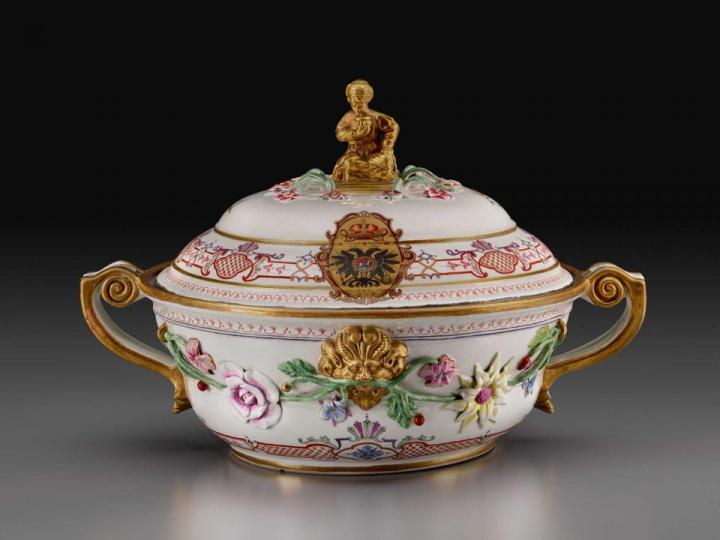
Du Paquier Manufactory, Tureen from the Service for Czarina Anna Ivanovna,; ca. 1735; hard-paste porcelain, 23.2 × 36.5 × 28.9 cm (The Frick Collection; gift of from the Melinda and Paul Sullivan Collection, 2016).
◊ ◊ ◊ ◊ ◊
Now on view at The Frick:
Fired by Passion: Masterpieces of Du Paquier Porcelain from the Sullivan Collection
The Frick Collection, New York, 8 June 2017 — 12 August 2018
Curated by Charlotte Vignon
The Frick Collection announces a new year-long installation in the Portico Gallery, Fired by Passion, inspired by the generous gift of fourteen pieces of Du Paquier porcelain made to the Frick in 2016 by Paul Sullivan and Trustee Melinda Martin Sullivan. The Du Paquier Manufactory was established in Vienna in 1718 by Claudius Innocentius du Paquier, an entrepreneur and official at the Viennese Court, and was only the second manufactory in Europe to produce true porcelain, after the Royal Meissen Manufactory, outside Dresden. Although in operation for only twenty-five years, Du Paquier left an impressive body of inventive and often whimsical work, forging a distinct identity in the history of European porcelain production.
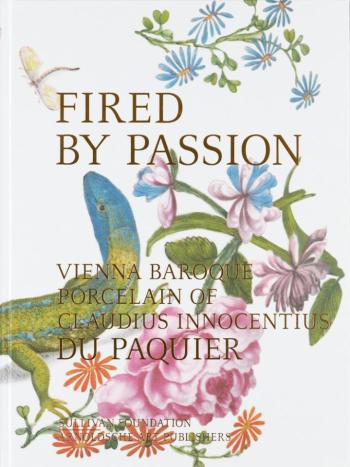 Fired by Passion presents about forty tureens, drinking vessels, platters, and other objects produced by Du Paquier between 1720 to 1740, which were coveted by aristocrats in Vienna and throughout Europe. In addition to exploring the rivalry between the Du Paquier and Meissen manufactories, the exhibition highlights the eclectic mix of references—many of them East Asian—that inspired Du Paquier porcelain. Splendid examples with coats of arms and heraldic symbols from commissions across Europe also illustrate the manufactory’s success and influence beyond Vienna. Fired By Passion is organized by Charlotte Vignon, Curator of Decorative Arts, The Frick Collection.
Meredith Chilton and Claudia Lehner-Jobst, Fired by Passion: Vienna Baroque Porcelain of Claudius Innocentius du Paquier (Stuttgart: Arnoldsche Art Publishers, 2009), 1432 pages, ISBN: 978 38979 03043 (English) / ISBN: 978 38979 03081 (German), $200.
The first comprehensive publication on this important porcelain manufactory, this work has been made possible through a five-year research program conducted by the Melinda and Paul Sullivan Foundation for the Decorative Arts. The objects shown, many of them for the first time here, are in major public and private collections. This 3-volume set presents the distinctive style and the exciting history of Du Paquier porcelain in the context of Baroque Vienna.
Extensive additional information, including photographs of all objects in the exhibition, is available here»
◊ ◊ ◊ ◊ ◊
Note (added 14 June 2017) — The original version of this posting mistakenly listed the date of the catalogue as 2017; in fact, it appeared in 2009.
New Book | Roma hispánica
Published by CEEH, and now available from Artbooks.com:
Pablo González Tornel, Roma hispánica: Cultura festiva española en la capital del Barroco (Madrid: Centro de Estudios Europa Hispánica, 2017), 392 pages, ISBN: 978 8415245 582, 34€ / $65.
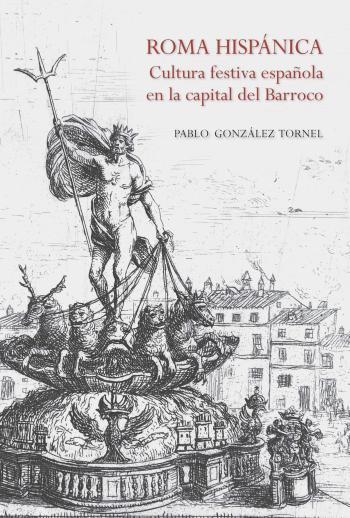 Roma y España mantuvieron un vínculo muy intenso desde tiempos de los Reyes Católicos hasta los albores del mundo contemporáneo. La ciudad era la sede del príncipe de la Iglesia, y la Monarquía Hispánica—que hizo del catolicismo militante el eje de su teología política, sobre todo bajo el gobierno de los Habsburgo—necesitaba de manera imperiosa la aprobación papal. Este lazo indisoluble entre la Monarquía Hispánica y el Papado durante la Edad Moderna dio lugar a una intensísima labor diplomática. La presencia española en Roma fue, desde finales del siglo xv, cada vez más numerosa, y las necesidades representativas de los súbditos de la Corona dieron lugar a una verdadera geografía hispánica en la ciudad, cuyos hitos principales eran el palacio de la Embajada de España y las iglesias nacionales de aragoneses y castellanos de Santa Maria di Monserrato y San Giacomo degli Spagnoli.
Gonzalez Tornel estudia en este libro uno de los elementos fundamentales de la rica y polifacética presencia hispana en Roma: la fiesta. Los rituales y las celebraciones que protagonizaron allí los españoles sirvieron para cohesionar a la comunidad y, sobre todo, tuvieron un papel clave en la acción propagandística de la Corona. Canonizaciones, entradas triunfales, celebraciones de éxitos políticos, fiestas religiosas o funerales regios hicieron presente a España tanto o más que las personas que los protagonizaron o los lugares donde se desarrollaron. Durante la Edad Moderna la fiesta fue capital a la hora de entender tanto el poder como las relaciones entre la Iglesia y los Estados, y aquella que protagonizó la Monarquía Hispánica en Roma es imprescindible para explicar ambas realidades.
Pablo González Tornel, doctor en Historia del Arte, es profesor en la Universitat Jaume I de Castellón. Durante sus estancias en la Università degli Studi di Palermo, la Biblioteca Hertziana, la Università di Roma La Sapienza o la Villa I Tatti (Harvard University), se ha centrado en la historia cultural de la Monarquía Hispánica, especialmente en la arquitectura y la cultura festiva durante la Edad Moderna. Entre sus trabajos destacan Los Habsburgo. Arte y propaganda en la colección de grabados de la Biblioteca Casanatense de Roma (2013), La fiesta barroca: los reinos de Nápoles y Sicilia (2014) o Cuatro reyes para Sicilia. Proclamaciones y coronaciones en Palermo 1700–1735 (2016).
Exhibition | Cristóbal de Villalpando: Mexican Painter of the Baroque
Press release from The Met:
Cristóbal de Villalpando: Mexican Painter of the Baroque
Palacio de Cultura Banamex – Palacio de Iturbide, Mexico City, 9 March — 4 June 2017
The Metropolitan Museum of Art, New York, 25 July — 15 October 2017
Curated by Ronda Kasl, Jonathan Brown, and Clara Bargellini
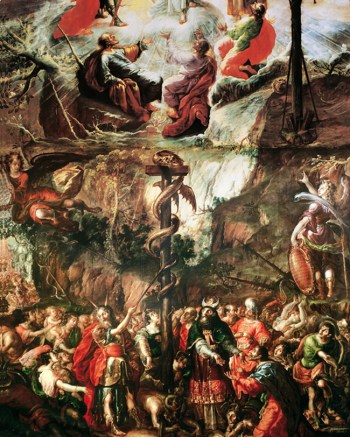
Cristóbal de Villalpando, Moses and the Brazen Serpent and the Transfiguration of Jesus (detail), 1683; oil on Canvas. Col. Propiedad de la Nación Mexicana, Secretaría de Cultura, Dirección General de Sitios y Monumentos del Patrimonio Cultural Acervo de la Catedral de Nuestra Señora de la Inmaculada Concepción, Puebla, Mexico.
Cristóbal de Villalpando (ca. 1649–1714) emerged in the 1680s not only as the leading painter in viceregal Mexico, but also as one of the most innovative and accomplished artists in the entire Spanish world. Opening July 25 at The Metropolitan Museum of Art, the exhibition Cristóbal de Villalpando: Mexican Painter of the Baroque features his earliest masterpiece, a monumental painting depicting the biblical accounts of Moses and the brazen serpent and the Transfiguration of Jesus that was painted in 1683 for a chapel in Puebla Cathedral. Newly conserved, this 28-foot-tall canvas has never been exhibited outside its place of origin. Ten additional works, most of which have never been shown in the United States, will also be exhibited. Highlights include Villalpando’s recently discovered Adoration of the Magi, on loan from Fordham University, and The Holy Name of Mary, from the Museum of the Basilica of Guadalupe.
Born in Mexico City around mid-century, Cristobal de Villalpando may have begun his career in the workshop of Baltasar de Echave Rioja (1632–1682). Villalpando’s rise to prominence coincided with the death of Echave Rioja in 1682, just one year before Villalpando painted his ambitious Moses and the Brazen Serpent and the Transfiguration of Jesus. Villalpando was celebrated in his lifetime, rewarded with prestigious commissions, and honored as an officer of the Mexico City painters’ guild.
The exhibition begins with Villalpando’s masterful Moses and the Brazen Serpent and the Transfiguration of Jesus, which was painted to decorate a chapel in Puebla Cathedral that was dedicated to a miracle-working image of Christ at the Column. In wealth and importance, Puebla Cathedral was second only to the Metropolitan Cathedral in Mexico City.
This painting—the first in a series of important ecclesiastical commissions—marks a breakthrough in Villalpando’s work, in terms of its grand scale and its audacious conception and execution. He signed it Villalpando inventor, an inscription that distinguishes the artist’s intellectual achievement from his manual skill and asserts his professional status as the learned practitioner of a noble art. In a bold and erudite arrangement, Villalpando juxtaposed the Old Testament story of Moses and the brazen serpent with the New Testament account of the Transfiguration—an unprecedented pairing of subjects. The two biblical events are staged within a single, continuous sacred landscape that encompasses the wilderness of Exodus and the holy mounts of Calvary and Tabor. Life-size figures of every age and gender, clothed and nude and in an astounding variety of poses and attitudes, populate the composition. The painting’s lower half features the story of Moses making and using the image of the brazen serpent according to God’s instructions to heal Israelites bitten by poisonous serpents. This episode provides a scriptural precedent for the making and use of images in worship, while also affirming the importance of art and artists. The upper half of the composition represents the transfiguration of Jesus’s corporeal body into light, a scene that demanded nothing less than the materialization of light in paint, which Villalpando attained through shimmering color and fluid brushwork.
Ten additional paintings by Villalpando will demonstrate his intense striving as an inventor; his great originality and skill; his ability to convey complex subject matter; and his capacity to envision the divine.
Catalogues in English and Spanish published by Fomento Cultural Banamex will accompany the exhibition. Essays address the major themes of the exhibition. The catalogues will be available for purchase in The Met book shop. A series of exhibition tours will complement the exhibition.
The exhibition was curated by Ronda Kasl, Curator of Latin American Art in The American Wing at The Met; Jonathan Brown, Carol and Milton Petrie Professor of Fine Arts, Institute of Fine Arts, New York University; and Clara Bargellini, Professor, Instituto de Investigaciones Estéticas, Universidad Nacional Autónoma de México. The work of Dr. Brown and Dr. Bargellini was commissioned by Fomento Cultural Banamex. At The Met, the exhibition is designed by Michael Langley, Exhibition Design Manager; graphics are by Mortimer Lebigre, Graphic Designer; and lighting is by Clint Ross Coller and Richard Lichte, Lighting Design Managers, all of the Museum’s Design Department.
New Book | Elfenbeinkunst im Grünen Gewölbe zu Dresden
This catalogue of ivory works in the Green Vault in Dresden is distributed by Sandstein Verlag:
Jutta Kappel, Elfenbeinkunst im Grünen Gewölbe zu Dresden (Staatliche Kunstsammlungen Dresden, 2017), 652 pages, ISBN: 978 395498 2264, 78€.
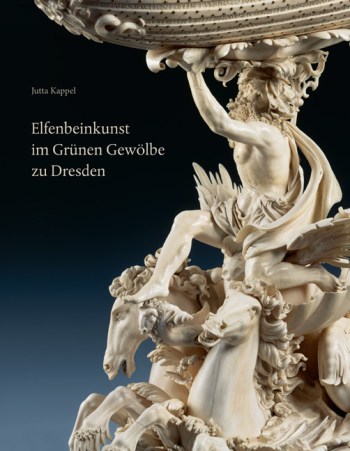 Das Grüne Gewölbe zu Dresden verwahrt eine der umfangreichsten, kunsthistorisch höchst bedeutsamen Elfenbeinsammlungen der Welt. Nach Jahren intensiver Forschung kann erstmalig der Bestand an aus Elfenbein geschnittenen Statuetten, Figurengruppen, Reliefs und in Silber gefassten Prunkgefäßen in diesem opulent illustrierten wissenschaftlichen Katalogwerk zusammenfassend vorgestellt werden.
Die frühesten Werke stammen aus byzantinischer Zeit, der Großteil aus dem 17. und 18. Jahrhundert, darunter Arbeiten solch berühmter, mit Dresden eng verbundener Elfenbeinkünstler wie Jacob Zeller, Melchior Barthel, Balthasar Permoser und Johann Christoph Ludwig Lücke. Die chronologische Gliederung des Bestandskataloges basiert auf den Inventaren der Dresdner Kunstkammer und des Grünen Gewölbes.
Dem Leser erschließt sich über stilkritische Analysen, Vergleiche, ikonographische und künstlermonographische Darlegungen zum Einzelwerk ein facettenreiches Spektrum an Motiven, Themen und Vorlagen. Zugleich werden die Geschichte dieser historisch gewachsenen Sammlung, deren Entwicklungslinien und dynastische Traditionen sichtbar gemacht. Mit dieser »Spurensuche« wird Neuland betreten.










leave a comment