
Mantua purportedly worn by Helena Slicher for her marriage to Aelbrecht baron van Slingelandt on 4 September 1759
(Amsterdam: Rijksmuseum)
◊ ◊ ◊ ◊ ◊
Now on view at the Rijksmuseum:
Catwalk, 1625–1960
Rijksmuseum, Amsterdam, 20 February — 16 May 2016
Curated by Bianca du Mortier; designed by Erwin Olaf
For the first time, the Rijksmuseum presents a large selection of its diverse fashion collection in an exhibition designed by world-renowned Dutch photographer Erwin Olaf.
From February 20 through May 16 2016, six galleries of the Philips Wing will be dedicated to fashion of the Dutch from 1625 to 1960. Starting with garments worn by members of the Frisian branch of the house of Nassau in the Golden Age, the exhibits will feature vibrantly coloured French silk gowns and luxurious velvet gentlemen’s suits of the eighteenth century, classically-inspired Empire dresses, and bustles of the Fin de Siècle—culminating in twentieth-century French haute couture by Dior and Yves Saint Laurent.

Wedding dress, 1759; photo by Erwin Olaf, model is Ymre Stiekema.
As Rijksmuseum Curator of Costumes Bianca du Mortier explains, “The garments presented in this exhibition reflect the stories of the people who wore them. In fashion, the choices of the wearer count—they make him or her a trendsetter or a follower. Even today the clothes of the very rich and powerful always convey a conscious or unconscious message. In that respect, nothing has changed over the last 330 years. These choices are restricted by such factors as budget, opportunity, age, social status, climate, personal likes and dislikes and so forth. And when presented in a museum, there is a final selection: the selection of the Rijksmuseum.”
The exhibition is designed by world-renowned Dutch photographer Erwin Olaf. He states, “The challenge and honour of designing this exhibition . . . for the most extraordinary museum in the Netherlands came at exactly the right moment for me. For several years now I’ve been exploring alternative ways to present my photographic work and to integrate it in installations, sound, video and films as means to immerse viewers in a world that fires and challenges their personal imaginations and, ultimately, sparks a stimulating dialogue between the viewer and the work on view.
Highlights include
• A pair of underpants belonging to Hendrik Casimir I, Count of Nassau Dietz (1612–1640)
• The widest dress in the Netherlands: Helena Slicher’s (1737–1776) wedding gown or mantua, which she supposedly wore at her marriage to Aelbrecht baron van Slingelandt (1732–1801) on 4 September 1759
• An exceptionally precious and fragile dress of blonde silk bobbin lace (1815–1820)
• A silk taffeta cocktail dress by Cristóbal Balenciaga (1951–1952)
The Rijksmuseum’s fashion collection totals some 10,000 items , with men’s, women’s and children’s attire and accessories spanning the period from 1700 until 1960. In addition, the History Department owns the earliest Dutch costumes, worn in the seventeenth century by the Frisian branch of the Nassau family and by the Stadtholder and King William III. Being the oldest costumes collection in the country, having begun in 1870, acquisitions initially emphasized on the eighteenth and nineteenth centuries, but over time gradually expanded to include the first half of the twentieth century. All of the garments comes from the wardrobes of upper-class Dutch men and women, but they were not necessarily made in the Netherlands. Foreign fashion houses and fabrics from all the leading textile-manufacturing countries around the world are amply represented. Acquisitions for the collection are based on historical significance, such as a post-war dress made of silk RAF pilots maps; design relevance, such as Yves Saint Laurent’s 1965 ‘Mondrian dress’; and costume-historical importance, such as a silk taffeta cocktail gown by Cristóbal Balenciaga (1951–1952). Most items were donated or bequeathed, supplemented with purchases.
To coincide with the exhibition, the Rijksmuseum is publishing a richly illustrated ‘Collection Book’ – Costume & Fashion, authored by Curator of Costumes Bianca du Mortier, with contributions from the museum’s textile restorers, fellow conservators, and a specialized colour analyst. The photography is by Rijksmuseum photographer Carola Van Wijk in collaboration with Frans Pegt. Various activities will be organized in conjunction with the exhibition, including a series of lectures by the catalogue’s authors and external experts.
◊ ◊ ◊ ◊ ◊
Symposium | Fashion in Museums: Past, Present, and Future
Rijksmuseum, Amsterdam, 21–22 April 2016
Not only the curator’s and conservator’s point of view will be presented, but also the administrator’s—who is often unfamiliar with costume and fashion’s different requirements and has to be convinced of the steep costs of a fashion exhibit. Experts from leading national and international institutions will present their insights: a conference not to be missed!
Over the past two decades most of the blockbuster fashion exhibitions around the world have centered around present day fashion designers and were more or less offered to the respective institutions as a complete package including the extensive marketing and publicity apparatus of the fashion brand. This is a far cry from Diana Vreeland’s original concept (1983–84) of a museum celebrating a contemporary designer—in her case Yves Saint Laurent—by presenting a retrospective curated by the museum and presented by them.
In a speech delivered by renowned fashion journalist Suzy Menkes (International Vogue Editor) at the Rijksmuseum in June 2015 she called for a return to museum curated exhibitions based on in-depth research of their own collections which hold so many amazing yet unexplored treasures. With the exhibition Catwalk, Fashion at the Rijksmuseum, the museum puts a renewed step in this direction by presenting a cross-section of its costume collection—the oldest in the country—in a setting designed by renowned Dutch photographer, Erwin Olaf.
Speakers
• Gieneke Arnolli (Fries Museum, Leeuwarden)
• Ninke Bloemberg (Centraal Museum, Utrecht)
• Bianca du Mortier (Rijksmuseum)
• Johanna Hashagen (Bowes Museum, UK)
• Johannes Pietsch (Bayerisches Nationalmuseum, Munich)
• Ellinoor Bergvelt and Christine Delhaye (University of Amsterdam)
• Angelika Riley (Museum für Kunst und Gewerbe Hamburg)
• Alexandra Bosc (Palais Galliera, Musée de la mode de la Ville de Paris)
• Mila Ernst (Digitaal platform Modemuze)
• Sue-an van der Zijpp (Groninger Museum)
Details are available here»
 With a collection of more than 100 paintings, drawings and sculptures by David, Girodet, Gericault, Ingres and Delacroix, Faces of Terror presents French forms of fantastical Romanticism. This darker part of 19th-century art reveals a certain strength of spirit and provides a fascinating perspective on imagination during the romantic period.
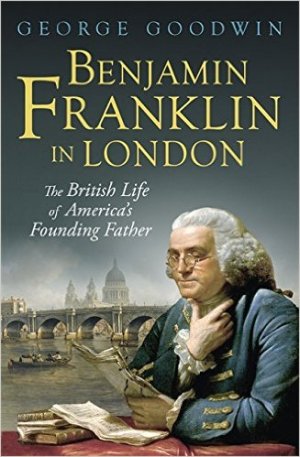 For more than one-fifth of his life, Benjamin Franklin lived in London. He dined with prime ministers, members of parliament, even kings, as well as with Britain’s most esteemed intellectuals—including David Hume, Joseph Priestley, and Erasmus Darwin—and with more notorious individuals, such as Francis Dashwood and James Boswell. Having spent eighteen formative months in England as a young man, Franklin returned in 1757 as a colonial representative during the Seven Years’ War, and left abruptly just prior to the outbreak of America’s War of Independence, barely escaping his impending arrest.
 From the Middle Ages to the present day, parsonages—vicarages, rectories, and later manses, presbyteries, and chapel houses—have been among the most significant dwellings in every kind of British community. Their roles have been wide and varied. Architecturally important, and ranging from medieval vernacular buildings to the bespoke house designs of leading architects of the nineteenth and twentieth centuries, to the more modest homes of today’s clergy, parsonages are important not only as buildings but for the part they—and their occupants—have played in the life of local communities, and in their links with the wider world. The parsonage, a hub of activity and connection, a place of change and continuity, provides fascinating historical insights both general and local. This study draws on the evidence of architecture, official documents, private records, literary accounts, and contemporary and modern images to build a picture of parsonages and their occupants. It includes a section on tracing the history of a parsonage.
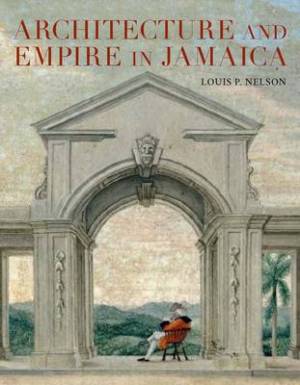 Through Creole houses and merchant stores to sugar fields and boiling houses, Jamaica played a leading role in the formation of both the early modern Atlantic world and the British Empire. Architecture and Empire in Jamaica offers the first scholarly analysis of Jamaican architecture in the long 18th century, spanning roughly from the Port Royal earthquake of 1692 to Emancipation in 1838. In this richly illustrated study, which includes hundreds of the author’s own photographs and drawings, Louis P. Nelson examines surviving buildings and archival records to write a social history of architecture.
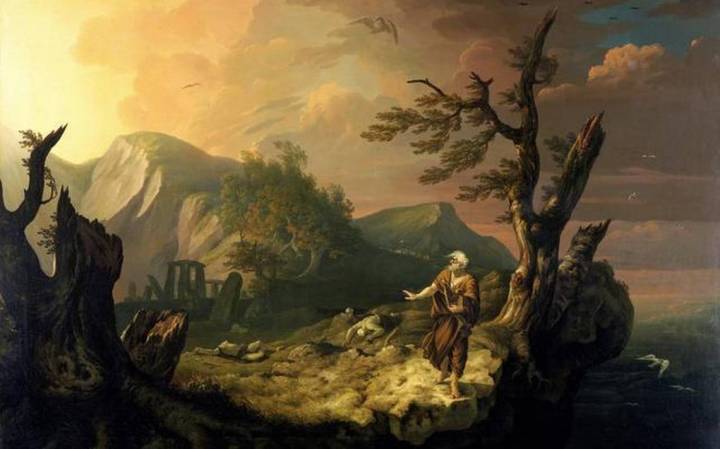
 Pastures Green & Dark Satanic Mills recounts the story of British landscape painting from the Industrial Revolution in the late 18th century to the present day. Examining 88 paintings from the National Museum of Wales, this volume traces the history of landscape art through romanticism, impressionism and modernism right up to the postindustrial imagery of the 21st century.
 Rediscovering a Baroque Villa in Rome: Cardinal Patrizi and the Villa Patrizi, 1715–1909 draws on a large body of archival material to reconstruct in detail the creation of the Villa Patrizi outside Porta Pia from 1715 to 1727 and its afterlife. This material includes building documentation, inventories, and above all the letters written by Cardinal Giovanni Batista Patrizi, papal legate in Ferrara, to his brothers in Rome, both dilettante artist-architects. These letters provide a unique insight into the decision-making processes involved in such a large-scale enterprise, in particular the hiring of artists and the decoration of individual rooms. These rooms included a Gallery inspired by the Galleria Colonna, a romitorio, or fictive hermitage, a Mirror Room anticipating those created later in the century, and one of the first Chinoiserie interiors in Rome.
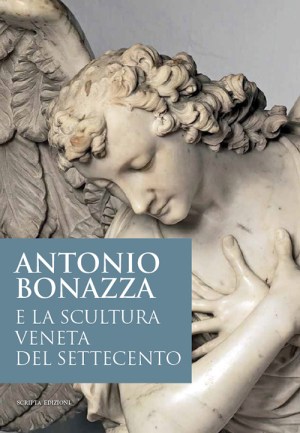 Antonio Bonazza è esponente di spicco di una delle più operose famigliedi scultori del Settecento veneto: insieme al padre Giovanni eai fratelli Francesco e Tommaso ha lavorato in moltissime chiese diPadova e del territorio, oltre che nei giardini delle ville di campagna dinobili famiglie veneziane.Le sue opere si collocano spesso ben al di sopra del livello di quelle deisuoi contemporanei, e raggiungono esiti di eleganza e leggerezza tra ipiù alti della scultura veneta del Settecento.La giornata di studi, organizzata dal Museo Diocesano di Padova inoccasione dei 250 anni dalla morte dell’artista (12 gennaio 1763), è stata occasione per aggiornare il catalogo delle opere, precisare la cronologia, mettere a fuoco la personalità umana e artistica di Antonio e i suoi rapporti con quella del padre Giovanni e dei fratelli Francesco e Tommaso, indagare modelli e fonti visive ed esplorare le relazioni tra la sua arte e quella dei suoi contemporanei.
 Having worked at Ashgate Publishing since 2011, Margaret Michniewicz recently joined Bloomsbury’s New York office as Visual Arts Acquisition Editor. In addition to welcoming proposals for book projects, she is currently focused on launching new series and invites inquiries and ideas from prospective series editors. Open to a wide array of subject matter, including interdisciplinary approaches and work addressing issues of gender and race, Michniewicz will be commissioning projects in art history and visual culture from the eighteenth century onward.









leave a comment