Exhibition | Élisabeth Louise Vigée Le Brun (1755–1842)
Opening next month in Paris at the Grand Palais:
Élisabeth Louise Vigée Le Brun (1755–1842)
Grand Palais, Paris, 23 September 2015 — 11 January 2016
The Metropolitan Museum of Art, New York, 9 February — 15 May 2016
National Gallery of Canada, Ottawa, 10 June — 12 September 2016
Curated by Joseph Baillio and Xavier Salmon
This first retrospective devoted to the works of Elisabeth Louise Vigée Le Brun presents an artist whose life stretched from the reign of Louis XV to that of Louis-Philippe—one of the most eventful and turbulent periods in European and above all French history of modern times.
 Self-portraits by Vigée Le Brun abound: paintings, pastels and drawings that elegantly associate feminine grace and pride. With the Ancien Régime and its School of Fine Arts coming to an end, she supplanted most of her rival portrait artists. Vigee Le Brun used self-portraits to assert her status, circulate her image and show people the mother she had become despite the constraints of a career.
She made her greatest coup de force at the 1787 Exhibition where she presented two paintings that cannot be dissociated. First, a Portrait of Queen Marie-Antoinette posing for a portrait surrounded by her children in an attempt to rectify the image of an extravagant libertine; secondly, the portrait of a female artist hugging her daughter Julie to her chest in an effusive Raphael-like manner. The latter is one of the finest and most popular of the many works by this painter owned by the Louvre and has remained the emblem of «maternal tenderness» since it was first exhibited to the public. The culture of the Enlightenment and the influence of Rousseau obliged the artist to take on this role, which she did happily and with resounding success. As a counterpoint, she painted the Portrait of Hubert Robert. These paintings are absolute icons illustrating the joy of life and creative genius, complementing and communicating with each other.
What is even more remarkable was her determination to overcome obstacles hindering her career. Born in Paris in 1755, she came from a relatively modest background, her mother a hairdresser and her father a talented portrait artist. Her father died when she was a young adolescent. Drawing inspiration from his example, the brilliant young artist was accepted as a master painter at the Academy of Saint-Luc. In 1776, she married the most important art dealer of her generation, Jean Baptiste Pierre Le Brun (1748–1813), but this prevented her from being accepted at the Royal Academy of Painting and Sculpture because its regulations formally forbid any contact with mercantile professions. However, this union had a beneficial effect on her career. When the price of Flemish paintings soared, she learnt how to master the magic of colours and the fine craftsmanship of Rubens and Van Dyck. Her clientèle had mainly been the bourgeoisie but in 1777, she started working for the aristocracy, descendants of royal blood and finally Queen Marie-Antoinette. However, it was not until 1783 and the intervention of the Queen’s husband, Louis XVI, that the portrait artist was able to join the Royal Academy of Painting after much polemic.
Organized by the Réunion des musées nationaux/Grand Palais in Paris, The Metropolitan Museum of Art in New York, and the National Gallery of Canada in Ottawa.
The exhibition booklet is available here»
Details on the catalogue to follow later.
New Book | Then and Now: Collecting and Classicism
From McGill-Queen’s University Press:
Jean Coutu, Then and Now: Collecting and Classicism in Eighteenth-Century England (Montreal: McGill-Queen’s University Press, 2015), 340 pages, ISBN: 978-0773545434, $100.
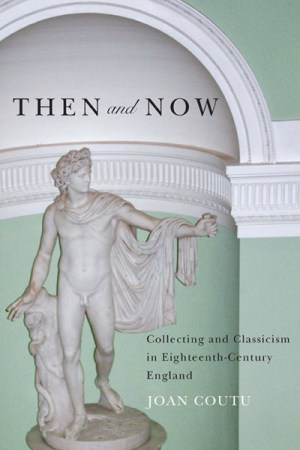 In the mid-eighteenth century, English gentlemen filled their houses with copies and casts of classical statuary while the following generation preferred authentic antique originals. By charting this changing preference within a broader study of material culture, Joan Coutu examines the evolving articulation of the English gentleman.
Then and Now consists of four case studies of mid-century collections. Three were amassed by young aristocrats—the Marquis of Rockingham, the Duke of Richmond, and the Earl of Huntingdon—who, consistent with their social standing, were touted as natural political leaders. Their collections evoke the concept of gentlemanly virtue through example, offering archetypes to encourage men toward acts of public virtue. As the aristocrats matured in the politically fractious realm of the 1760s, such virtue could become politicized. A fourth study focuses on Thomas Hollis, who used his collection to proselytize his own unique political ideology.
Framed by studies of collecting practices earlier and later in the century, Coutu also explores the fluid temporal relationship with the classical past as the century progressed, firmly situating the discussion within the contemporaneous emerging field of aesthetics. Broadening the focus beyond published texts to include aesthetic conversations among the artists and the aristocracy in Italy and England, Then and Now shows how an aesthetic canon emerged—embodied in the Apollo Belvedere, the Venus de’ Medici, and the like—which shaped the Grand Manner of art.
Joan Coutu is associate professor of art history and visual culture at the University of Waterloo, and author of Persuasion and Propaganda: Monuments and the Eighteenth-Century British Empire.
◊ ◊ ◊ ◊ ◊
C O N T E N T S
Figures
Acknowledgments
Introduction
1 Temporal Elision and Sculpture Collections in the First Half of the Eighteenth Century
2 An “Old Whig”: The 2nd Marquis of Rockingham and His Collections
3 The 3rd Duke of Richmond and His Sculpture Gallery in Whitehall: Munificence Worthy of a Prince
4 The 10th Earl of Huntingdon and the Arcadian Plains of Leicestershire
5 Thomas Hollis and His Life Plan
6 Conclusion: The Nuances of the Classical Archetype
Notes
Bibliography
Index
New Book | From Invention to Perfection
Published by Arnoldsche and available from Artbooks.com:
Sarah-Katharina Andres-Acevedo and Hans Ottomeyer, eds., From Invention to Perfection: Masterpieces of Eighteenth-Century Decorative Art (Stuttgart: Arnoldsche, 2015), 352 pages, ISBN: 978-3897904422, 78€.
 One hundred masterpieces of European art and arts and crafts of the eighteenth century form a panorama of innovation, design and expert realisation. In their sumptuous design, the porcelain, furniture, bronzes and silver objects are all miracles of the luxury craftsmanship found in court art. Such sophisticated design was the driving force behind the quickly successive styles of classicism, naturalism and the exotic design of the Rococo period. André-Charles Boulle, Jakob Philipp Hackert, Johann Joachim Kaendler, Alexandre-Jean Oppenordt und Jean-Baptiste François Pater are just some of the renowned artists featured in this catalogue. The artworks are opulently presented, interpreted in detail and arranged according to context. Thus the colourful image of a great era in art emerges, one that relied on creative energy and the power of the imagination.
With contributions by Sarah-K. Andres-Acevedo, Christine Cornet, Melitta Kunze-Köllensperger, Georg Lechner, Claudia Lehner-Jobst, Claudia Nordhoff, Hans Ottomeyer, Ulrich Pietsch, Christina Pucher, David Ranftl, Michael Röbbig-Reyes, Max Tillmann and Alfred Ziffer.
New Book | William Hunter’s World
From Ashgate:
E. Geoffrey Hancock, Nick Pearce, and Mungo Campbell, eds., William Hunter’s World: The Art and Science of Eighteenth-Century Collecting (Farnham: Ashgate Publishing, 2015), 424 pages, ISBN: 978-1409447740, $140.
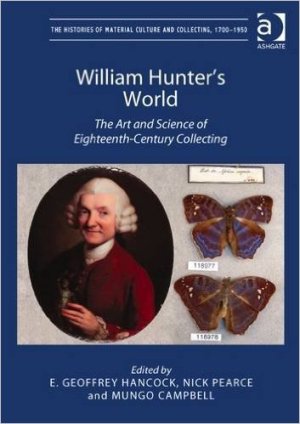 Despite William Hunter’s stature as one of the most important collectors and men of science of the eighteenth century, and the fact that his collection is the foundation of Scotland’s oldest public museum, The Hunterian, until now there has been no comprehensive examination in a single volume of all his collections in their diversity. This volume restores Hunter to a rightful position of prominence among the medical men whose research and amassing of specimens transformed our understanding of the natural world and man’s position within it.
This volume comprises essays by international specialists and are as diverse as Hunter’s collections themselves, dealing as they do with material that ranges from medical and scientific specimens, to painting, prints, books and manuscripts. The first sections focus upon Hunter’s own collection and his response to it, while the final section contextualises Hunter within the wider sphere. The volume includes references to The Hunterian’s web pages and on-line databases, enabling searches for items from Hunter’s collections, both from his museum and library.
Locating Hunter’s collecting within the broader context of his age and environment, this book provides an original approach to a man and collection whose importance has yet to be comprehensively assessed.
E. Geoffrey Hancock, an entomologist with a career in various British museums, is currently Honorary Curator of Entomology and a Research Fellow in The Hunterian Museum. His interests include the history of museums and their collections.
Nick Pearce holds the Sir John Richmond Chair of Fine Art at the University of Glasgow, where he specialises in the arts of China. His career has spanned both museums and universities, including the Victoria & Albert Museum, The Burrell Collection in Glasgow and the universities of Durham and Edinburgh.
Mungo Campbell worked at the National Galleries of Scotland until 1997 and is now Deputy Director of The Hunterian. Curating several major loan exhibitions culminated recently in Allan Ramsay: Portraits of the Enlightenment (2013), and he edited the accompanying publication.
◊ ◊ ◊ ◊ ◊
C O N T E N T S
Foreword, David Gaimster
Introduction, Mungo Campbell
Part I—William Hunter: Developing His Museum
1 The Great Windmill Street Anatomy School and Museum, Helen McCormack
2 Anatomy and the ‘museum oeconomy’: William and John Hunter as collectors, Simon Chaplin
Part II—William Hunter: Anatomy in Practice
3 William Hunter’s sources of pathological and anatomical specimens, with particular reference to obstetric subjects, Stuart W. McDonald and John W. Faithfull
4 ‘An universal language’: William Hunter and the production of The Anatomy of the Human Gravid Uterus, Caroline Grigson
5 The anatomist and the artists: Hunter’s involvement, Anne Dulau Beveridge
6 William Hunter’s anatomical and pathological specimens, Stuart W. McDonald
Part III—William Hunter: Collector
7 Animal specimens in William Hunter’s anatomical collection, Stuart W. McDonald and Margaret Reilly
8 William Hunter’s zoological collections, Margaret Reilly
9 The shaping role of Johann Christian Fabricius: William Hunter’s insect collection and entomology in 18th-century London, E. Geoffrey Hancock
10 Dr John Fothergill: Significant donor, Starr Douglas
11 The mineral collection of William Hunter: Assembly and function, John W. Faithfull
12 A collection without a catalogue: Captain John Laskey and the missing vertebrate fossils from the collection of William Hunter, Jeff Liston
13 Archaeological objects in William Hunter’s collection, Sally-Anne Coupar
14 William Hunter’s parade shield: A memento of Leonardo’s Milan?, Martin Kemp
15 Ethnographic treasures in the Hunterian from Cook’s voyages, Adrienne L. Kaeppler
16 ‘At last in Dr Hunter’s library’: William Hunter’s Chinese collections, Nick Pearce
17 William Hunter’s numismatic books, Donal Bateson
18 The ‘Hunterian orchard’: William Hunter’s library, David Weston
Part IV—William Hunter: The Wider World
19 On the way to the museum: Frederich The Great’s Bildergalerie in the park of Sanssouci in the context of other painting collections in 18th-century Germany, Heiner Krellig
20 Dr Black goes down to town: The 1788 tour to Ireland and England, Robert G. W. Anderson
21 For ‘instruction and delight’: The enfilade of nature at Sir Ashton Lever’s museum, Leicester House, London, 1775–86, Clare Haynes
22 David Ure (1749–98): The enlightened fossil collector, Neil D. L. Clark
Index
New Book | Indian Cotton Textiles from the Karun Thkar Collection
From ACC Distribution:
John Guy, Indian Cotton Textiles: Chintz from the 14th to the Early 20th Centuries in Karun Thkar Collection (New York: ACC Art Books, 2015), 172 pages, ISBN: 978-1851498093, $70.
 India has been at the heart of the global trade in textiles since ancient times, and cotton has been at the heart of the Subcontinent’s economy for millennia. Indian dyed and painted cottons were admired in and traded to the Far East and the Mediterranean world for many generations before European interest in chintz created a new market. The trade in Indian cloth flourished due to the ability of its craftsmen to create a multitude of detailed and expressive patterns with strong and fast colors. Such textiles gained high esteem among the elite at home and abroad, ultimately acquiring heirloom status.
Karun Thakar has been collecting textile art for more than 30 years, and has one of the world’s leading private collections from the Indian Subcontinent, with costume and fabrics from the 14th century through to the early 20th. Aspects of the Thakar Collection have been exhibited in the Victoria & Albert Museum in London and at the Metropolitan Museum of Art in New York.
The Indian dyed and painted cotton cloths in the Thakar Collection are perhaps the best in private hands. Many have never previously been published. Dating from the 15th century onwards, the collection illustrates the trade in textiles across the Indian Ocean with the Malay-Indonesian world, with Sri Lanka, Armenia and Europe, as well as within the Indian domestic market.
John Guy is the Florence and Herbert Irving Curator of the Arts of South and Southeast Asia, Department of Asia Art, The Metropolitan Museum of Art, New York, and an elected Fellow of the Society of Antiquaries, London. His major publications include: Woven Cargoes: Indian Textiles in the East (1998), Indian Temple Sculpture (2007), Wonder of the Age: Master Painters of India, 1100–1900, and Lost Kingdoms: Hindu-Buddhist Sculpture of Early Southeast Asia (2014).
New Book | Carlo Marchionni: Caricaturista
From Campisano:
Simonetta Prosperi Valenti Rodino, Carlo Marchionni: Caricaturista tra Roma, Montefranco, Civitavecchia e Ancona (Rome: Campisano, 2015), 464 pages, ISBN: 978-8898229482, $90.
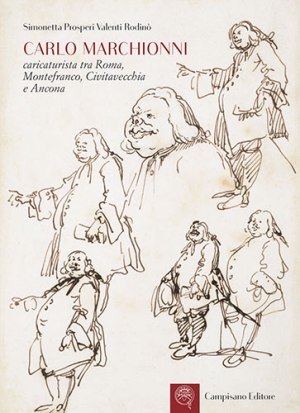 Carlo Marchionni (1702–1786) è assai noto per la sua attività di architetto e decoratore nel Settecento a Roma, città dove lavorò nelle imprese più significative del tempo: la Fabbrica e la Sacrestia di San Pietro, anche se la sua fama è legata alla celebre Villa Albani sulla via Salaria, da lui progettata per raccogliere la collezione di antichità del cardinal Alessandro Albani. Accanto a questa attività, Marchionni si dedicò anche alla caricatura, realizzando per suo divertimento un’ampia serie di divertenti studi caricaturali dedicati a personaggi d’ogni ambiente sociale del suo tempo: da gentiluomini ed ‘offiziali’, prelati e personaggi di Curia, artisti suoi colleghi incontrati all’Accademia di San Luca, quali l’architetto Barigioni, i pittori Benefial, Batoni e Monosilio, senza dimenticare servi, mendicanti, gobbi ed appartenenti alla più bassa categoria sociale, che ci offrono nel loro insieme uno spaccato interessantissimo della società romana del Settecento. Se le strade di Roma, fornirono il materiale umano più interessante all’occhio curioso dell’architetto, la sua vena satirica lo accompagnò anche nei suoi viaggi di lavoro a Civitavecchia ed Ancona, luoghi dove si soffermò a ritrarre figure di turchi, levantini e lavoranti portuali incontrati per caso. Una pausa serena gliela offrì la cittadina umbra di Montefranco, nei pressi di Terni, dove soggiornò con la sua famiglia in una tranquilla vacanza ospitato dall’amico Lorenzo Sinibaldi: lì ebbe modo di fissare in divertentissime vignette i personaggi più in vista del piccolo centro agricolo, dal Segretario comunale, ai villici, al barbiere, sino a fabbri, contadini e i caratteristici gobbi, da lui presi bonariamente in giro. Tre di questi tomi, ed indubbiamente i più significativi, sono confluiti nelle raccolte del Museo di Roma a Palazzo Braschi: insieme agli analoghi volumi, oggi conservati uno nella Biblioteca Palatina di Parma, l’altro nella Biblioteca Apostolica Vaticana, ed infine l’ultimo nel Département des Arts Graphiques del Louvre di Parigi, essi costituiscono il documento della produzione di caricature, davvero non secondaria, del più noto architetto attivo a Roma nel Settecento. Questo libro illustra tale attività, offrendo il catalogo completo delle ben 294 caricature conservate nei tre volumi del Museo di Roma.
Simonetta Prosperi Valenti Rodinò è professore ordinario di Storia dell’arte moderna all’Università di Roma Tor Vergata. Èspecialista del disegno italiano ed in particolare romano dal XVI al XVIII secolo, soggetto ai cui ha dedicato molti saggi in riviste italiane e straniere ed in cataloghi di mostre. Da anni approfondisce lo storia del collezionismo ed il mercato del disegno in Italia dei secoli XVII e XVIII. Le sue più recenti e significative pubblicazioni su questi soggetti sono i volumi Il Codice Resta di Palermo (2007), I disegni del Codice Capponiano 237 della Biblioteca Apostolica Vaticana (2010), Dilettanti del disegno nell’Italia del Seicento: padre Resta tra Malvasia e Magnavacca (2013). È uno dei curatori ed autori del volume di Atti del Convegno Maratti e l’Europa (Roma, 11–12 novembre 2013), di prossima pubblicazione.
New Book | The Writings of James Barry
From Ashgate:
Liam Lenihan, The Writings of James Barry and the Genre of History Painting, 1775–1809 (Farnham: Ashgate, 2014), 218 pages, ISBN: 978-1409467526, $110.
 Examining the literary career of the eighteenth-century Irish painter James Barry through an interdisciplinary methodology, The Writings of James Barry and the Genre of History Painting, 1775–1809 is the first full-length study of the artist’s writings. Liam Lenihan critically assesses the artist’s own aesthetic philosophy about painting and printmaking, and reveals the extent to which Barry wrestles with the significant stylistic transformations of the pre-eminent artistic genre of his age: history painting. Lenihan’s book delves into the connections between Barry’s writings and art, and the cultural and political issues that dominated the public sphere in London during the American and French Revolutions.
Barry’s writings are read within the context of the political and aesthetic thought of his distinguished friends and contemporaries, such as Edmund Burke, his first patron; Joshua Reynolds, his sometime friend and rival; Mary Wollstonecraft and William Godwin, with whom he was later friends; and his students and adversaries, William Blake and Henry Fuseli. Ultimately, Lenihan’s interdisciplinary reading shows the extent to which Barry’s faith in the classical tradition in general, and the genre of history painting in particular, is permeated by the hermeneutics of suspicion. This study explores and contextualizes Barry’s attempt to rethink and remake the preeminent art form of his era.
Liam Lenihan was National University of Ireland Centennial Postdoctoral Fellow in Irish Studies from 2009 to 2011. He teaches English literature and History of Art at University College Cork.
◊ ◊ ◊ ◊ ◊
C O N T E N T S
Introduction: James Barry’s Writings and the Genre of History Painting
1 Barry’s Inquiry into public taste
2 The Progress of Human Culture as a Narrative of Enlightenment
3 Barry’s Lectures on Painting and the Royal Academy of Arts
4 Wollstonecraft’s Reading of Milton and the Sublime of Barry, Fuseli and Blake
5 Barry’s Self-Portrait as Timanthes and His Tenure as Professor of Painting
Conclusion: History Painting as a ‘Union of Talents’
Works Cited
Index
Display | Jonathan Richardson by Himself
Now on view at The Courtauld:
Jonathan Richardson by Himself
The Courtauld Gallery, London, 24 June — 20 September 2015
Curated by Susan Owens

Jonathan Richardson, Self-Portrait, ca. 1738 (London: The Courtauld Gallery)
Jonathan Richardson the Elder (1667–1745) was one of the most influential figures in the visual arts of 18th-century England. A leading portrait painter, Richardson was also a theorist and an accomplished poet and amassed one of the great collections of drawings of the age.
Towards the end of his life Richardson created a remarkable but little known series of self-portrait drawings. They show Richardson adopting a wide range of poses, guises and dress, in some cases deliberately evoking other artists, such as Rembrandt, whose work he owned. These remarkable drawings show Richardson considering and making visual the different aspects of himself. But much more than this, they were the means with which he reviewed his life and achievements.
Emma Crichton-Miller provides a review of the exhibition for Apollo Magazine’s Muse Room (27 July 2015). . .
Richardson’s habit of self-portraiture, charting his declining physical appearance, was married over a decade to a discipline of almost daily poems, where he examined his state of mind. Indeed as interesting as the images themselves is the intellectual and philosophical hinterland they suggest, which drove this self-made man, an admirer of Milton, who apparently turned down royal patronage, to pursue this humanist practice. . .
The full review is available here»
◊ ◊ ◊ ◊ ◊
From Paul Holberton:
Susan Owens, Jonathan Richardson By Himself (London: Paul Holberton, 2015), 64 pages, ISBN: 978-1907372841, £13.
Jonathan Richardson (1667–1745) was one of 18th-century England’s most significant cultural figures. A leading portrait painter and influential art theorist, he also amassed one of the period’s greatest collections of drawings. But there was another, highly unusual dimension to his pursuits. In 1728, at the age of 61 and shortly before his retirement from professional life, Richardson began to create a remarkable series of self-portrait drawings. Not intended for public display, these works were unguarded explorations of his own character.
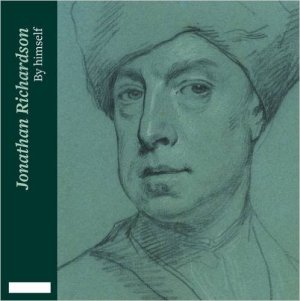 In one of the most astonishing projects of self-examination ever undertaken by an artist, for over a decade Richardson repeatedly drew his own face. His self-portrait drawings are usually dated precisely, and they document, from month to month, his changing state of mind as much as his appearance. Many were drawn in chalks on large sheets of blue paper, from his reflection in the mirror. Some of these are bold and psychologically penetrating, while others, in which he regards his ageing features with gentle but unflinching scrutiny, are deeply touching. A further group of self-portraits is drawn with graphite on small sheets of fine vellum, and in these Richardson often presents himself in inventive and humorous ways, such as in profile, all’antica, as though on the face of a coin or medal; or crowned with bays, like a celebrated poet. Sometimes, too, he copies his image from oil paintings made decades earlier, in order to recall his appearance as a younger man. In this extraordinary series of self-portraits, Richardson offers a candid insight into his mind and personality. Together, these drawings create nothing less than a unique and compelling visual autobiography.
This publication—which accompanies the first ever exhibition devoted to Richardson’s self-portrait drawings, held in the new Gilbert and Ildiko Butler Drawings Gallery at the Courtauld—tells the story of these remarkable works and puts them into the context of his other activities at this period of his life, in particular the self-searching poems he wrote during the same years and often on the same days as he made the drawings. An introductory essay is followed by focused discussions of each work in the exhibition. This part of the book explores the materials and techniques Richardson used, whether working in chalks on a large scale or creating exquisitely refined drawings on vellum. It will also reveal how Richardson modeled some of his portraits on old master prints and drawings, including works in his own collection by Rembrandt and Bernini. The publication brings together the Courtauld Gallery’s fine collection of Richardson’s drawings with key works in the British Museum, the National Portrait Gallery and the Fitzwilliam Museum.
New Book | The Imaginary Orient: Exotic Buildings
From Artbooks.com:
Stefan Koppelkamm, The Imaginary Orient: Exotic Buildings of the 18th and 19th Centuries in Europe (Stuttgart: Axel Menges, 2015), 192 pages, ISBN: 978-3936681772, $78.
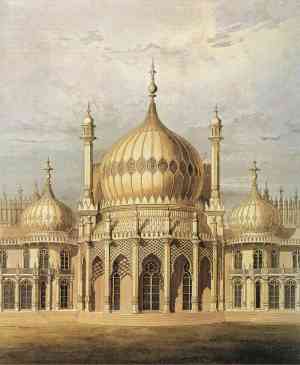 In the eighteenth century the idea of the landscape garden, which had originated in England, spread all over Europe. The geometry of the Baroque park was abandoned in favour of a ‘natural’ design. At the same time the garden became the ‘land of illusion’: Chinese pagodas, Egyptian tombs and Turkish mosques, along with Gothic stables and Greek and Roman temples, formed a miniature world in which distance mingled with the past. The keen interest in a fairy-tale Orient was manifested also in architecture. This ‘Orient’, which could hardly be clearly defined geographically, was characterized by Islamic culture. The Islamic styles seemed especially appropriate for buildings of a secular and cheerful character. The promise of happiness associated with an Orient staged by architectural means was intended to guarantee the commercial success of coffee houses and music halls, amusement parks and steam baths. But even extravagant summer residences and middle-class villas were built in faux-Oriental styles.
◊ ◊ ◊ ◊ ◊
Note (added 21 December 2016) — Barry Bergdoll reviews the book for The Burlington Magazine 158 (December 2016), p. 982:
Published originally in German in 1987 to accompany a series of no doubt delightful exhibitions entitled Exotische Welten-Europäische Phantasien in Stuttgart (Institut für Auslansbeziehungen), this anthology seems to be more concerned with compiling examples than analysing them . . . Sometimes groundbreaking exhibition catalogues are republished years later either because of their historical importance or because greater availability stimulates new research. The decision to translate (more or less) this rather helter-skelter overview into English more than a quarter of a century after its appearance is mystifying . . .
New Book | British Silver: State Hermitage Museum Catalogue
Scheduled for October release, from Yale UP:
Marina Lopato, British Silver: State Hermitage Museum Catalogue (London: The Paul Mellon Centre for Studies in British Art, 2015), 400 pages, ISBN: 978-0300213201, $175.
 Despite its comparatively small size—just over 370 items, dating mainly from the 18th century—the collection of British silver in the Hermitage is renowned for its variety and quality. Over the course of the 18th and 19th centuries, the introduction of European dining habits and Russian Anglophilia contributed to the acquisition of large quantities of British silver. Most of the pieces were functional rather than decorative, such as dinner or toilet services specially commissioned by members of the imperial family and the aristocracy.
Marking the 250th anniversary of the State Hermitage Museum, this catalogue offers a grand presentation of these glorious silver items, supported by new research and documents. In her introduction, Marina Lopato details the complexities of Russian and Hermitage history to set the scene for the objects. Sumptuous illustrations showcase the exceptional nature of the Hermitage’s British silver, most evident in four monumental wine coolers that are among the best known pieces of British silver anywhere in the world.
Marina Lopato is curator of European silver at the State Hermitage Museum, St. Petersburg.










 Enfilade
leave a comment