New Book | The Courtiers’ Anatomists
From The University of Chicago Press:
Anita Guerrini, The Courtiers’ Anatomists: Animals and Humans in Louis XIV’s Paris (Chicago: The University of Chicago Press, 2015), 352 pages, ISBN: 978-0226247663, $35.
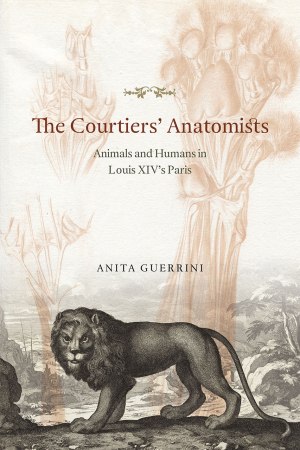 The Courtiers’ Anatomists is about dead bodies and live animals in Louis XIV’s Paris–and the surprising links between them. Examining the practice of seventeenth-century anatomy, Anita Guerrini reveals how anatomy and natural history were connected through animal dissection and vivisection. Driven by an insatiable curiosity, Parisian scientists, with the support of the king, dissected hundreds of animals from the royal menageries and the streets of Paris. Guerrini is the first to tell the story of Joseph-Guichard Duverney, who performed violent, riot-inducing dissections of both animal and human bodies before the king at Versailles and in front of hundreds of spectators at the King’s Garden in Paris. At the Paris Academy of Sciences, meanwhile, Claude Perrault, with the help of Duverney’s dissections, edited two folios in the 1670s filled with lavish illustrations by court artists of exotic royal animals.
Through the stories of Duverney and Perrault, as well as those of Marin Cureau de la Chambre, Jean Pecquet, and Louis Gayant, The Courtiers’ Anatomists explores the relationships between empiricism and theory, human and animal, as well as the origins of the natural history museum and the relationship between science and other cultural activities, including art, music, and literature.
Anita Guerrini is Horning Professor in the Humanities and professor of history in the School of History, Philosophy, and Religion at Oregon State University. She is the author of Experimenting with Humans and Animals: From Galen to Animal Rights and Obesity and Depression in the Enlightenment: The Life and Times of George Cheyne.
◊ ◊ ◊ ◊ ◊
C O N T E N T S
A Note on Names, Dates, and Other Matters
Abbreviations Used in the Notes
List of Illustrations
Introduction
1 Anatomists and Courtiers
2 The Anatomical Origins of the Paris Academy of Sciences
3 The Animal Projects of the Paris Academy of Sciences
4 The Histoire des animaux
5 Perrault, Duverney, and Animal Mechanism
6 The Courtiers’ Anatomist: Duverney at the Jardin du roi
Conclusion
Epilogue: The Afterlife of the Histoire des animaux
Acknowledgments
Notes
Bibliography
Index
Exhibition | New for Now: The Origin of Fashion Magazines
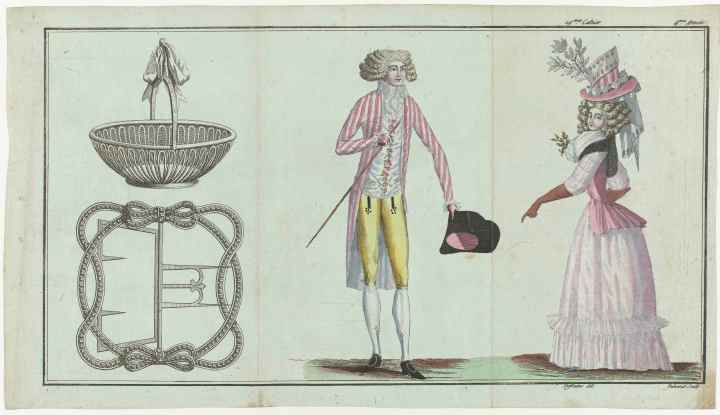
Magasin des Modes Nouvelles Françaises et Anglaises (1 Juin 1789), Pl. 1, 2 et 3
(Amsterdam: Rijksmuseum)
◊ ◊ ◊ ◊ ◊
Press release (20 May 2015) from the Rijksmuseum:
New for Now: The Origin of Fashion Magazines
Rijksmuseum, Amsterdam, 12 June — 27 September 2015
From 12 June, the Rijksmuseum presents a major retrospective of its rich collection of costume and fashion prints for the first time. The change in women’s and men’s fashion from the year 1600 up to and including the first half of the 20th century, and the development of the fashion magazine into the fashion glossies we know today, can be seen in more than 300 prints. The exhibition was designed by designer and co-curator Christian Borstlap, in collaboration with fashion illustrators Piet Paris and Quentin Jones.
The publishers of fashion prints did everything to make their product as attractive as possible. They attracted skilled illustrators for this purpose, some of whom went on to become specialists in this area: true ‘fashion illustrators’. The trick was to portray the models on the prints as skillfully as possible and with a great sense of elegance. The printmaker was responsible for transferring the design sketches onto an engraving that could reproduce the design. A so-called ‘colourist’ subsequently added colours to each individual image by hand.
New for Now shows prints by fashion designer Paul Poiret, among others. His ‘Fashion is Art’ statement marked the beginning of a new era. He presented his designs in two artfully designed series of works in bright opaque colours, which served as an inspiration for a number of artistically high-quality fashion magazines.
Many of the prints shown are from two important collections acquired by the Rijksmuseum in 2009: The Raymond Gaudriault Collection and The MA Ghering-van Ierlant Collection. All 8,000 prints from these collections can be seen online from June 2015. This is the result of a multi-year project in which the prints were catalogued, described and digitalised.
◊ ◊ ◊ ◊ ◊
The catalogue is available from the Rijksmuseum:
Georgette Koning and Els Verhaak, New For Now: The Origin of Fashion Magazines (Amsterdam: Rijksmuseum, 2015), 204 pages, 20€.
 Fashion changes constantly, but the desire to be ‘in fashion’ is eternal. For centuries people have eagerly followed the latest fashion trends. But how did one keep up in an age without internet, fashion blogs, Pinterest and glossy fashion magazines? New for Now explores how trends were spread before Vogue and Harper’s Bazaar appeared on the shelves. From the costume book in the 16th century by way of individual, hand-coloured fashion plates to the first fashion magazine to roll off the presses in 1785: Cabinet des Modes. There was no stopping after this, and one fashion magazine appeared hard on the heels of the other, reaching an absolute high point in the Gazette du Bon Ton in 1912, full of magnificent art deco illustrations.
Exhibition | Tavole Barocche: Banchetti, Feste e Nature Morte

◊ ◊ ◊ ◊ ◊
From Gioia Oggi:
Tavole Barocche: Banchetti, feste e nature morte tra
XVII e XVIII secolo dalla Collezione Corsi di Firenze
Castello Svevo di Gioia del Colle (Ba), 11 April — 28 June 2015
Curated by Francesco Di Ciaula
Nell’anno dell’Expo di Milano, dedicato alle tematiche dell’alimentazione, le suggestive sale del Castello Svevo di Gioia del Colle (Ba) ospitano dall’11 aprile al 28 giugno 2015 la mostra Tavole Barocche, promossa dalla Regione Puglia e dal Comune di Gioia del Colle.
La mostra, a cura di Francesco Di Ciaula ed organizzata dalla società Sistema Museo, espone dipinti raffiguranti nature morte, paesaggi e scene conviviali tra XVII e XVIII secolo, provenienti dalla Collezione Corsi di Firenze conservata presso il Museo Bardini, una delle istituzioni museali più importanti del capoluogo toscano. L’esposizione è allestita nel Castello di Gioia del Colle, tra i più affascinanti manieri realizzati dalle maestranze dell’Imperatore Federico II Hohenstaufen, il Sovrano tedesco che fece della Puglia del XIII secolo la sua terra d’elezione. Tra la magnifica Sala del Trono, così nominata per la presenza dell’imponente seggio reale, la Sala del Camino, la Torre de’ Rossi e il Gineceo, si sviluppa armoniosamente la mostra, ricca di opere importanti per la storia dell’arte del Seicento e del Settecento italiano e fiammingo, come quelle del Gobbo dei Carracci, lo Spadino, Giovan Battista Ruoppolo, Jacopo da Empoli, Gian Domenico Ferretti, della bottega dell’Arcimboldo e del seguito di Pieter Brueghel il Giovane. Due le sezioni di mostra, incentrate sulla cultura del cibo e della tavola: la prima espone la rappresentazione degli alimenti nel genere della natura morta, che si impone in maniera decisiva nel Seicento. I dipinti sono dominati dalla variegata presenza di carni, selvaggina, pesci, frutti e ortaggi realizzati da artisti soprattutto di ambito toscano e romano-napoletano. La seconda sezione, arricchita dalle opere di autori fiamminghi, presenta i piaceri conviviali: prevalgono scene di banchetto e di festa, riscontrabili sia nei rituali opulenti e fastosi delle classi aristocratiche sia nelle immagini di contesti umili e popolari, nei quali l’alimentazione più che piacere della tavola diviene ricerca di appagamento della fame.
Le Sezioni
Il tema delle quaranta opere esposte, il cibo e la tavola, si rifà al mondo fisico puramente rappresentato, in un contesto di pittura profana dell’epoca barocca, il cui chiaro richiamo alle esperienze dei sensi conduce l’osservatore verso una visione seducente delle cose naturali. La nascita della natura morta, al centro della prima sezione della mostra, è paradigmatica di un interesse, presente già negli ultimi decenni del XVI secolo tra Fiandre e Italia settentrionale, della possibilità di indagare il reale negli aspetti più dettagliati e “microscopici”, considerati “laterali” nella pittura di storia. L’illusionismo, tutto teatrale, di credere di poter toccare, annusare, assaggiare i cibi sul piano della tela, accentua questa visione di una riproduzione della realtà riconoscibile come vita e vissuto quotidiano dove gli stessi alimenti, fuori da ogni intendimento retorico, suscitano desideri e ricordi sensoriali. Il processo di crescita e decadenza della frutta e dei vegetali, in connessione con l’idea del tempo che scorre, pone la natura morta come specchio della vita della materia, le cui forme assumono più o meno colore e spessore dall’impatto con la luce, l’unico elemento in grado di interagire con lo spazio della scena. Nella seconda sezione della mostra, illustrante i piaceri conviviali, i dipinti di ambito fiammingo e francese, raffiguranti feste aristocratiche tra parchi e boschi, fanno riferimento alla fusione del momento della tavola con l’intrattenimento di danze e musiche. Sempre fiamminghe le scene campestri illustranti i pasti del mondo contadino e le colazioni borghesi, mentre nelle vedute urbane del Settecento fiorentino si osserva la vita brulicante delle città, tra fiere e mercati. Le dispense e le cucine, come luoghi della conservazione e della cottura dei cibi, assumono anch’esse una rilevanza artistica, espressione di una concezione fortemente naturalistica e verosimile della realtà, priva ormai del puro idealismo del Rinascimento.
Le Opere
Come incipit del percorso di visita, accanto al trono di Federico, sono collocate la Primavera, l’Estate e l’Inverno eseguiti dalla bottega dell’Arcimboldo, l’enigmatico pittore lombardo cinquecentesco, il quale inventò la conversione del corpo umano in figura vegetale, facendo delle sue opere una prefigurazione della nascita della natura “in posa”. Nell’insieme delle nature morte qui presenti spiccano i dipinti, la Frutta e la Natura morta con cacciagione e frutta, legati a due tra gli esponenti più rappresentativi del genere in Italia, come Pietro Paolo Bonzi, detto il Gobbo dei Carracci e il Maestro S.B., noto come lo Pseudo Salini, i quali riflettono le innovazioni caravaggesche dei primi capolavori romani del Merisi, connotate da un intenso e “contemplativo” naturalismo. Nel caso del secondo pittore si nota la ripresa di modelli nordici, nell’iconografia degli animali da selvaggina, e una carica cromatica tipica della scuola napoletana del Seicento alla quale egli era legato, che in mostra è splendidamente rappresentata dalla tela attribuita a Giovan Battista Ruoppolo, la Natura morta di cucina. La natura morta fiorentina è presente nelle opere della cerchia di Jacopo da Empoli, il pittore che, formatosi sulla pittura manierista fiorentina, “importa” a Firenze nei primi decenni del XVII secolo il nuovo genere proveniente dalle botteghe romane, tramite la presenza nelle collezioni Medicee di varie tele raffiguranti “pose” di animali e vegetali. I fasti del Barocco romano sono evocati dalla Natura morta di frutta e zucche di Giovanni Paolo Castelli detto lo Spadino, e la grande tela di Michelangelo Pace detto da Campidoglio, Natura morta di fiori e frutta con papere che si abbeverano ad una fontana. La seconda parte della mostra è aperta dai convivi immersi liberamente nel contesto naturale di parchi, boschetti e giardini, con l’allusione all’imprescindibile legame tra cibo ed Eros. La cornice fiabesca delle tele fiamminghe qui esposte, Festa nel parco del Castello e Convivio, con i meravigliosi sfondi di castelli dall’aspetto ancora medievale, dona alla scena un’atmosfera sognante e ovattata, tipica della vita di corte. Ancora di scuola fiamminga, della prima metà del Seicento, sono le due tele che illustrano la piacevolezza del mangiare immersi nella natura, il Banchetto all’aperto e il Paesaggio estivo, nei quali gli atteggiamenti dei personaggi richiamano una disinvoltura borghese nell’atto della consumazione dei pasti e dello stare a tavola. La presenza in mostra di un’opera come Interno di osteria con contadini, attribuibile a un artista del seguito di Pieter Brueghel il Giovane, ci permette di cogliere l’elemento grottesco di una scena di festa contadina, dove l’aspetto di preparazione e consumazione del pasto assume una grandissima forza espressiva, tipica dell’arte bruegheliana. La descrizione della vita umile degli ultimi, in una chiave legata ai costumi alimentari, viene espressa dalla presenza di una tela del pittore del Settecento bolognese, Stefano Gherardini, Interno di osteria con personaggi, formatosi sulla scia del Crespi, e da Il Pulcinella malato, eseguito da un seguace di Pier Leone Ghezzi, il grande caricaturista romano attivo nella Roma della prima metà del XVIII secolo. In posizione dominante, nella bellissima Sala del Camino, svetta il Bacco e Arianna del pittore Rococò fiorentino Gian Domenico Ferretti, il cui dipinto celebra il Dio del vino, dell’ebbrezza, della trasformazione e della rigenerazione della vegetazione. Seguendo un suadente percorso tra dipinti ricolmi di frutta, selvaggina, pesci, tavole imbandite e paesaggi animati da feste aristocratiche, colazioni campestri e fiere cittadine, si assiste alla rivelazione di una cultura artistica dominata dal trionfo della Natura mater, la procreatrice dei prodotti della terra, raffigurata nei paesaggi come luogo di bucolico abbandono, dove Eros e le Dee della fertilità e dell’abbondanza giacciono felici sul verde rigoglioso di un prato primaverile.
Il Castello
Tra le opere fortificate di epoca federiciana presenti in Puglia, il castello di Gioia del Colle è una di quelle che conservano più integro l’impianto architettonico, definito dall’ampio cortile quadrangolare, le poderose torri angolari e le cortine con paramento a conci bugnati. L’originaria struttura di epoca bizantina fu ampliata in epoca normanna. Fin dal 1500 storici, viaggiatori e studiosi hanno attribuito a Federico II la sistemazione definitiva del castello così come appare attualmente. Parte integrante della visita al monumentale Castello di Gioia del Colle sono le sale del Museo Archeologico, dove è presente una sistematica esposizione dei numerosi corredi delle necropoli di Monte Sannace e Santo Mola che coprono un ampio arco cronologico, dall’inizio del VI al III/II secolo a.C. Vasi geometrici e figurati, armi in bronzo, fibule e statuine fittili definiscono la consueta composizione dei corredi funerari del glorioso centro indigeno, ma anche delle più ampie comunità peucete.
◊ ◊ ◊ ◊ ◊
The catalogue is available from Artbooks.com:
Francesco Di Ciaula, Tavole Barocche: Banchetti, feste e nature morte tra XVII e XVIII secolo dalla Collezione Corsi di Firenze (Foggia: Claudio Grenzi, 2015), 96 pages, ISBN: 978-8884315830, $53.
New Series from Ashgate | Science and the Arts since 1750
A new series from Ashgate:
Science and the Arts since 1750
Series editor: Barbara Larson
This series of monographs and edited volumes explores the arts—painting and sculpture, drama, dance, architecture, design, photography, popular culture materials—as they intersect with emergent scientific theories, agendas, and technologies, from any geographical area from 1750 to now. It welcomes studies on the aesthetic conditioning of scientists as well as those that explore the influence of technologies, medicine, and science on visual culture either in a specific cultural or social context or through webs of influence that cross national, political, or imperial boundaries. Projects additionally might address philosophies of mind, brain, and body that changed the way visuality and aesthetic theory were understood or how new theories can be used to reinterpret the past. For more information on how to submit a book proposal to the series, please contact Margaret Michniewicz, at mmichniewicz@ashgate.com.
Barbara Larson is Professor of Art History at the University of West Florida.
New Book | Anarchist’s Guide to Historic House Museums
Forthcoming from Left Coast Press:
Franklin D. Vagnone and Deborah E. Ryan, Anarchist’s Guide to Historic House Museums (Walnut Creek, California: Left Coast Press, 2015), 210 pages, ISBN: 978-1629581705 (hardback), $99 / ISBN: 978-1629581712 (paperback), $30 / ISBN: 978-162958173 (ebook), $30.
 In these days of an aging traditional audience, shrinking attendance, tightened budgets, increased competition, and exponential growth in new types of communication methods, America’s house museums need to take bold steps and expand their overall purpose beyond those of the traditional museum. They need not only to engage the communities surrounding them, but also to collaborate with visitors on the type and quality of experience they provide. This book
• is a ground-breaking manifesto that calls for the establishment of a more inclusive, visitor-centered paradigm based on the shared experience of human habitation
• draws inspiration from film, theater, public art, and urban design to transform historic house museums
• provides a how-to guide for making historic house museums sustainable, through five primary themes: communicating with the surrounding community, engaging the community, re-imagining the visitor experience, celebrating the detritus of human habitation, and acknowledging the illusion of the shelter’s authenticity
• offers a wry, but informed, rule-breaking perspective from authors with years of experience
• gives numerous vivid examples of both good and not-so-good practices from house museums in the U.S.
Franklin Vagnone has professional experience in preservation, architecture, design, landscape architecture, archive formation and management. He was the Executive Director of the Philadelphia Society for the Preservation of Landmarks (PSPL) for four years and managed four Historic House Museums. In 2008 Vagnone became the Executive Director of the Historic House Trust of New York City, where he manages 23 Historic House Museums. Vagnone has won numerous awards, including two Lucy G. Moses Awards from the New York Landmarks Conservancy, the Award of Excellence from the Greater Hudson Heritage Network, and the Award of Merit from the Museum Association of New York. He serves on numerous nonprofit boards, such as the Greater Hudson Heritage Network and the Advisory Board for the national organization Partners for Sacred Places. His expertise and knowledge are utilized as a grant reviewer for the New York State Culture and Arts Panels. In addition to his passion for architecture and preservation, Vagnone also paints and sculpts, regularly writes on his blog Twisted Preservation, moderates the international LinkedIn Discussion group The Anarchist Guide to Historic House Museums, and tweets about museums on @Franklinvagnone and @museumanarchist.
Deborah Ryan, RLA is an associate professor of architecture and urban design at the University of North Carolina Charlotte, where she founded the Charlotte Community Design Studio as the community outreach arm of the university. As director of the Mayor’s Institute for City Design: South and the Open Space Leadership Institute, she led symposia that taught local leaders how to face growth issues in their communities. Ryan has also served as a faculty member at the Graduate School of Design at Harvard University and as a visiting critic at Columbia University. Ryan designed and developed Wikiplanning™ as an online site for increasing civic engagement in the community planning process. She has published and lectured widely on the subject of community engagement, and in 2013 she was named a Senior Edward I. Koch Fellow by the Historic House Trust of New York City to lead civic engagement efforts for the LatimerNOW project.
◊ ◊ ◊ ◊ ◊
C O N T E N T S
Foreword by Gretchen Sorin
Preface
Research Tools
1 Introduction: Why ‘Anarchist’?
2 Community Markings
3 Communication Markings
4 Experience Markings
5 Environmental Markings
6 Shelter Markings
Appendix: Evaluation Questions
References
Index
Exhibition | Rich and Tasty: Vermont Furniture to 1850
On view this summer at the Shelburne Museum:
Rich and Tasty: Vermont Furniture to 1850
Shelburne Museum, Shelburne, 25 July — 1 November 2015

Stand, attributed to Lemuel Bishop, Charlotte, Vermont, ca. 1815. Cherry, birch, mahogany, basswood and brass, 28 x 18 x 15 inches. Private Collection
This exhibition and accompanying catalogue will introduce and identify Vermont high style furniture, previously known only to decorative arts scholars, historians, and collectors. The project arrives twenty years after Shelburne Museum published a seminal checklist of early Vermont Furniture and is the result of two decades of scholarship. The exhibition will feature pieces that will illuminate the craft practices and regional economics that help define Vermont furniture’s stylistic features and unexpected aesthetic innovations, referred to as “rich and tasty” by one Vermont cabinetmaker.
◊ ◊ ◊ ◊ ◊
Jean M. Burks and Philip Zea, eds., Rich and Tasty: Vermont Furniture to 1850 (Shelburne, Vermont: Shelburne Museum, 2015), 180 pages, ISBN: 978-0939384112, $30.
Two landmark 1995 publications, The Best the Country Affords: Vermont Furniture 1765–1850 and Vermont Cabinetmakers & Chairmakers Before 1855: A Checklist, reintroduced Vermont high style furniture to decorative arts scholars, historians, and collectors. Equipped with this seminal knowledge, a small cadre of Vermont connoisseurs started scouring country auctions, adding signed and well-documented pieces to their private collections. Twenty years later, it is time to bring these pieces together and share them with the public. This catalog and the accompanying exhibition advances the understanding of Vermont high style furniture—from its features, craftsmanship, and economics, to its unexpected aesthetic innovations. The authors identify key eighteenth-century Vermont pieces before covering a variety of topics, including clockmaking, chairmaking, the half sideboard, furniture from Woodstock, and furniture from Vermont factories. Seventy-five full-color photographs by acclaimed Boston photographer David Bohl and extended catalog entries display furniture from all over the Green Mountain State.
New Book | Global Trade and Visual Arts in Federal New England
From the University Press of New England:
Patricia Johnston and Caroline Frank, eds., Global Trade and Visual Arts in Federal New England (University of New Hampshire Press, 2014), 296 pages, ISBN: 978-1611685848 (hardback), $85 / ISBN: 978-1611685855 (paperback), $45 / ISBN: 978-1611685862, $45 Ebook.
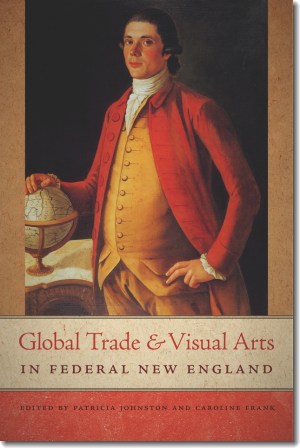 A highly original and much-needed collection that explores the impact of Asian and Indian Ocean trade on the art and aesthetic sensibilities of New England port towns in the late eighteenth and early nineteenth centuries. This diverse, interdisciplinary volume adds to our understanding of visual representations of economic and cultural changes in New England as the region emerged as a global trading center, entering the highly prized East Indies trades. Examining a wide variety of commodities and forms including ceramics, textiles, engravings, paintings, architecture, and gardens, the contributors highlight New Englanders’ imperial ambitions in a wider world.
Patricia Johnston is professor of art history and Rev. J. Gerard Mears, S.J., Chair in Fine Arts at the College of the Holy Cross. Caroline Frank teaches American studies at Brown University.
◊ ◊ ◊ ◊ ◊
C O N T E N T S
Acknowledgments
Introduction: Emerging Imperial Aesthetics in Federal New England—Patricia Johnston and Caroline Frank
Part I: Political Geographies
• The Art of Tea, Revolution, and an American East Indies Trade—Caroline Frank
• West from New England: Geographic Information and the Pacific in the Early Republic—David Jaffee
• The Forgotten Connection: The Connecticut River Valley and the China Trade—Amanda E. Lange
Part II: Commodities
• Salem’s China Trade: ‘Pretty Presents’ and Private Adventures—Jessica Lanier
• ‘Shipped in Good Order’: Rhode Island’s China Trade Silks—Madelyn Shaw
• The Story of A’fong Moy: Selling Chinese Goods in Nineteenth-Century America—Nancy Davis
Part III: Domesticating Asia
• Cultivating Meaning: The Chinese Manner in Early American Gardens—Judy Bullington
• ‘Lavish Expenditure, Defeated Purpose’: Providence’s China Trade Mansions—Thomas Michie
• Fabrics and Fashion of the India Trade at a Salem Sea Captain’s Wedding—Paula Bradstreet Richter
Part IV: Global Imaginaries
• Drawing the Global Landscape: Captain Benjamin Crowninshield’s Voyage Logs—Patricia Johnston
• Capturing the Pacific World: Sailor Collections and New England Museums—Mary Malloy
• Beyond Hemp: The Manila-Salem Trade, 1796–1858—Florina H. Capistrano-Baker
Part V: Global Productions
• Osceola’s Calicoes—Elizabeth Hutchinson
• From Salem to Zanzibar: Cotton and the Cultures of Commerce, 1820–1861—Anna Arabindan-Kesson
• Luxury and the Downfall of Civilization in Thomas Cole’s Course of Empire—Alan Wallach
Contributors
Index
Exhibition | Treasure Ships: Art in the Age of Spices

Scenes of Traders in Nagasaki, mid-eighteenth century, detail from a pair of hand scrolls, opaque watercolour, ink and gold on paper, box, wood, paper and ink, each 313 x 35 cm (Art Gallery of South Australia, Adelaide)
◊ ◊ ◊ ◊ ◊
Press release (April 2015) from the Art Gallery of South Australia:
Treasure Ships: Art in the Age of Spices
Art Gallery of South Australia, Adelaide, 13 June — 30 August 2015
Art Gallery of Western Australia, Perth, 10 October 2015 — 31 January 2016
Curated by James Bennett and Russell Kelty
Treasure Ships: Art in the Age of Spices is the first exhibition on view in Australia to present the complex artistic and cultural interaction between Europe and Asia from the sixteenth to the nineteenth centuries—a period known as the Age of Spices. The exhibition includes 300 outstanding and rarely seen works of ceramics, decorative arts, furniture, metalware, paintings, prints, engravings and textiles from both public and private collections in Australia, India, Portugal, Singapore and the United States.
Nick Mitzevich, Director, Art Gallery of South Australia sees this landmark exhibition and its publication as highlighting the Gallery’s international reputation for presenting spectacular exhibitions of historical Asian and European art. Treasure Ships showcases a diverse collection of luxury objects, many of which have never previously been seen on public display in Australia. This has been made possible through the extensive cooperation and support the Gallery has received from institutions, collectors and scholars in Portugal, India, Singapore, Indonesia and the United States, as well as the partnership with the Art Gallery of Western Australia. The Gallery’s two curators James Bennett and Russell Kelty have worked researching the exhibition for over three years, and their professional commitment has ensured the success of this much-anticipated exhibition.

China and Europe–Japan, Surcoat (jinbaori), with mon, late 18th century with 19th-century repairs, brocade created in China, velvet and factory print created in Europe, possibly France, garment constructed in Japan, cotton, wool, silk, velvet, metallic thread, natural dyes, supplementary weft and plain weave, wood, 101 x 85 cm (Helen Bowden Gift Fund 2015, Art Gallery of South Australia, Adelaide)
The works of art selected reveal how the international trade in spices and other exotic commodities inspired dialogue between Asian and European artists, a centuries old conversation whose heritage is the aesthetic globalism we know today. Europe’s infatuation with pepper, nutmeg and cloves has often been explained in terms of the necessity to preserve cooked foods in the days before the invention of refrigeration. “This is a half-truth, which takes little account of the complex reasons the condiments of luxury and status were so avidly sought, often at great expense to human lives,” said Bennett.
The exhibition commences with the small country of Portugal. Located on the periphery of Europe, Portugal re-mapped the West’s view of the world and created a mercantile spice empire stretching halfway around the globe during the fifteenth-sixteenth century. In 1498 Vasco Da Gama’s small fleet became the first to reach India, landing with the famous words, ‘we come in search of Christians and spices’. Within a decade, the Portuguese soldier—aristocrat Francisco de Almeida (1450–1510) had ruthlessly seized control of the Indian Ocean spice trade and established Portugal’s permanent presence in Asia that lasted four hundred years.
Treasure Ships also presents the story of the slave trade, piracy and shipwrecks, as well as illustrating the astonishing beauty of Chinese porcelain, known as ‘white gold’, and celebrating the vibrant Indian textiles created for export around the world. There are several highlights in this exhibition including two works from the personal collection of Queen Adelaide (1792–1849), after whom the city of Adelaide was named in 1836: artefacts retrieved from the Batavia, which sank off the Western Australian coast in the seventeenth century, and a magnificent early 19th-century Chinese punchbowl depicting Sydney Cove that locates Australia within this global history.
It is most appropriate that this exhibition should originate in Adelaide as this is the only Australian city founded on the vision of a Eurasian—the surveyor Colonel William Light (1786–1839) whose Mother was of Malaysian descent and whose remarkable self-portrait features in the exhibition said James Bennett.
Treasure Ships also examines the impact of the Age of Spices on the ‘discovery’ of the Australian continent and the commencement of English occupation in 1788. The colonial art of the period displays the aesthetic reverberations that continued in the Australasian region long after European ships had ceased carrying cargoes of nutmeg and cloves.
James Bennett and Russell Kelty, Treasure Ships: Art in the Age of Spices (Adelaide: Art Gallery of South Australia, 2015), ISBN: 978-1921668227, $70.
New Book | The Gentleman’s House in the British Atlantic World
From Palgrave Macmillan:
Stephen Hague, The Gentleman’s House in the British Atlantic World, 1680–1780 (London: Palgrave Macmillan, 2015), 264 pages, ISBN: 978-1137378378, $90.
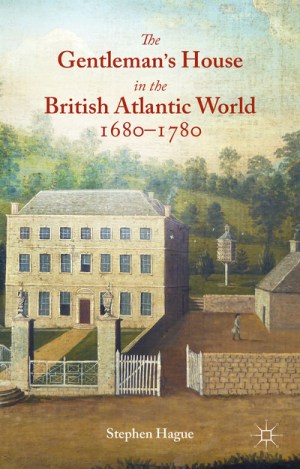 The eighteenth-century Georgian mansion holds a fascination in both Britain and America. Between the late seventeenth century and 1780, compact classical houses developed as a distinct architectural type. From small country estates to provincial towns and their outskirts, ‘gentlemen’s houses’ proliferated in Britain and its American colonies.
The Gentleman’s House analyses the evolution of these houses and their owners to tell a story about incremental social change in the British Atlantic world. It challenges accounts of the newly wealthy buying large estates and overspending on houses and materials goods. Instead, gentlemen’s houses offer a new interpretation of social mobility characterized by measured growth and demonstrate that colonial Americans and provincial Britons made similar house building and furnishing choices to confirm their status in British society. This book is essential reading for social, cultural, and architectural historians, curators, and historic house-enthusiasts.
Stephen Hague teaches modern European, British and British imperial history at Rowan University in New Jersey. Previously, he held the SAHGB Ernest Cook Trust Research Studentship at Oxford University, UK, and is a Supernumerary Fellow of Linacre College, Oxford. He has published essays on the intersection of social, cultural, and architectural history.
◊ ◊ ◊ ◊ ◊
C O N T E N T S
1 Introduction
2 The Gentleman’s House in Context
3 Building Status
4 Situating Status
5 Arranging Status
6 Furnishing Status
7 Enacting Status
8 Social Strategies and Gentlemanly Networks
9 Conclusion
Exhibition | Vices of Life: The Prints of William Hogarth

William Hogarth, After (detail), 1736, etching and engraving, 41 x 33 cm
(Städel Museum, Frankfurt am Main)
◊ ◊ ◊ ◊ ◊
Press release for the exhibition now on view at the Städel Museum:
Vices of Life: The Prints of William Hogarth
Laster des Lebens: Druckgrafik von William Hogarth
Frankfurt’s Städel Museum, Frankfurt, 10 June — 6 September 2015
Schloss Neuhardenberg, Brandenburg, TBA
Curated by Annett Gerlach
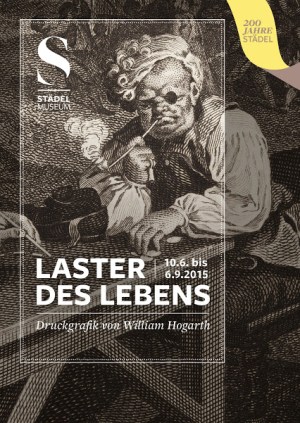
From 10 June to 6 September 2015—in its bicentennial year ‘200 Years Städel’—Frankfurt’s Städel Museum will be presenting prints by the English painter, engraver and etcher William Hogarth (1697‒1764). Altogether seventy works including the famous printmaking series A Harlot’s Progress (1732), A Rake’s Progress (1735) and Marriage à la Mode (1745) will be on view in the exhibition hall of the Department of Prints and Drawings. These visual novels from the Städel holdings take the fashions, vices and downsides of modern life in the London metropolis as their themes. Hogarth conceived of his artworks as printed theatre of his times and with them he laid the cornerstone for socio-critical caricature in England. The prints owe their special quality to the keen powers of perception and caustic humour of an artist who contributed so greatly to shaping the image of his era that it is still referred to as ‘Hogarth’s England’ today. Executed during Johann Friedrich Städel’s lifetime, the engravings are among the Städel’s oldest holdings and mirror the critical spirit inherent to this institution since its founding.
 William Hogarth was born in London in 1697. In keeping with an early eighteenth-century fashion, his father Richard opened a coffee house at which only Latin was spoken. The business failed, and Richard Hogarth had to serve five years in London’s notorious Fleet Prison for failure to pay his debts. As was usual at the time, his wife and children had to accompany him. In 1713, after his father’s release, William Hogarth began an apprenticeship as a silver engraver where he also learned the rudiments of the complex techniques of intaglio printing—engraving and etching. Following his seven-year training, he went into business for himself as an engraver and attended the privately run St Martin’s Lane Academy, an art school in London, to acquire the art of painting. In 1724 he also became a member of the academy of royal court painter James Thornhill (1675‒1734), whose daughter Jane he married in 1729. It was not with his paintings, however, that Hogarth achieved a breakthrough with the public, but with the prints made after his works on canvas. With the series A Harlot’s Progress, produced in the early 1730s, he founded a new genre he later dubbed modern moral subjects. Hogarth conceived of these subjects as contemporary, moral-didactic history scenes. He thus took a stand against the hierarchization of the visual arts, a firmly entrenched principle of academy doctrine which granted classical history painting pride of place. With his printmaking works, he succeeded in creating a new, up-to-date genre based on the keen observation of reality. In 1755 Hogarth was elected to the Royal Society of Arts, which he quit again just two years later on account of artistic and personal differences. His appointment as royal court painter followed in 1757, but never led to any commissions. The final years of the artist’s life were overshadowed by bitter disputes between himself and his critics. A stroke in 1763 left Hogarth severely handicapped and he died the following year in his home in Leicester Fields, a district of London.
The presentation in the exhibition gallery of the Department of Prints and Drawings focuses primarily on those of William Hogarth’s printmaking series that earned him international fame: A Harlot’s Progress, A Rake’s Progress und Marriage à la Mode. There is a very simple reason for the fact that his works on paper secured him a place in art history: prints can be circulated far better than paintings. It was by these means that the artist reached the enlightened and educated public of his day in large numbers. Already the first edition of A Harlot’s Progress (1732) comprised 1,240 sold copies. In six episodes, this series describes the rise and fall of a young woman who has come from the country to the city to find work. To earn a living she ends up as a prostitute and lands in prison as a result. The final scene shows the wretched funeral of the protagonist, whose life has already come to an end at the age of twenty-three. Hogarth had numerous real and literary models to look to for his creation of this figure. Inspired by his great interest in the social characterization of his time, he directed his critical, ironical gaze to all strata of society, from the highest nobility to the most abject circumstances. The sick and needy of all generations formed the downside of the economic boom enjoyed by the colonial and commercial metropolis and its many profiteers.
In his second series, A Rake’s Progress (1735), consisting of eight prints, Hogarth tells the story of the social decline of Tom Rakewell, who brainlessly squanders his inheritance and is thrown first into debtors’ prison and then the madhouse. Rakewell’s incarceration on grounds of indebtedness is reminiscent of the artist’s own biography. Entirely unlike his father, however, William Hogarth was an excellent businessman and very clever at taking advantage of the London press—which was flourishing in his day—and its public impact for his own purposes. In newspapers such as the London Daily Post, the General Advertiser or the London Journal he published announcements of his prints and advertised them for subscription.
Hogarth borrowed the title of his third major series, published in 1745, from a comedy by John Dryden (1631‒1700). Marriage à la Mode is about an espousal arranged by the two spouses’ fathers. Neither the bride nor the groom is the least bit interested in the other, both amuse themselves on the side, and the situation comes to a dramatic conclusion. Hogarth’s protagonists feign innocence and practise deception, abandon themselves to their passions and founder on their false ideals. Looking to true stories for orientation and integrating well-known persons and recognizable sites, he warned his public of the dangers of modern life—dangers still very real today. In 1751, with his popular prints Beer Street and Gin Lane, he supported a public campaign against the excessive consumption of gin. The former scene presents the enjoyment of beer as healthy and beneficial in contrast to the destructive effects of gin portrayed in the latter.
From mid century onward, in addition to socio-critical themes Hogarth also devoted himself to matters of national and political relevance, which represent a further focus of the exhibition. In several works, the artist addressed the relationship between France and England, which were at war. The Gate of Calais (1748) was his response to his arrest on suspicion of espionage during one of his trips to France. In 1756, in The Invasion, he again caricatured the French as grotesque, haggard figures who are after the tasty beer and luscious roast beef of the English. Some fifteen years later, in the print The Times, Plate 1 (1762), Hogarth made an urgent appeal for the cessation of the Seven Years’ War.
In 1753, Hogarth published his own art-theoretical deliberations in the book The Analysis of Beauty. In it he concerned himself with the foundations of visual-artistic production and particularly the matter of how to achieve beauty and grace. Hogarth considered the study of nature to be the key to beauty. He called upon his readers to perceive the objects of nature with their own eyes and judge them according to rational criteria. The German writer Christlob Mylius (1722–1754) was in London when Hogarth’s Analysis came out, and he translated it into German the very next year. Johann Friedrich Städel had a copy of this translation in his library, and it will be on display in the show.
In conjunction with the exhibition, the Städel Museum is publishing a catalogue by Annett Gerlach with approximately 50 pages, 10€. Following its presentation at the Städel Museum, the show will be on view at Neuhardenberg Castle. The exhibition is being sponsored by the Hessische Kulturstiftung.
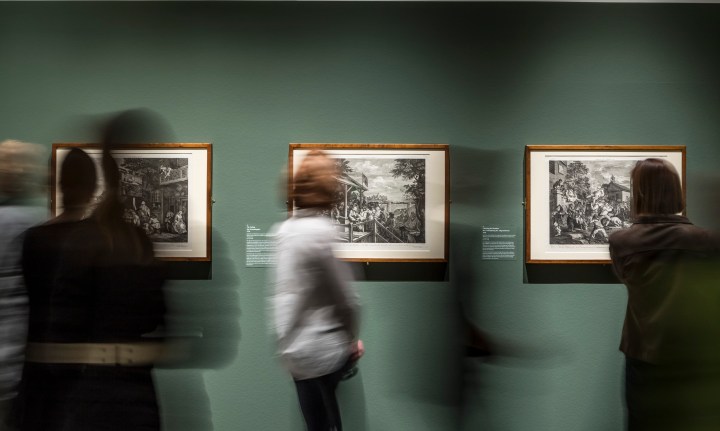
Installation view of the exhibition Vices of Life: The Prints of William Hogarth at Frankfurt’s Städel Museum (June 2015)










 Enfilade
leave a comment