Exhibition | Gods and Heroes

Jean-Honoré Fragonard, Jeroboam Sacrificing to the Idols,
48 x 62 inches, 1752 (École des Beaux-Arts, Paris)
From the American Federation of Arts:
Gods and Heroes: Masterpieces from the École des Beaux-Arts, Paris
Oklahoma City Museum of Art, 19 June — 14 September 2014
Albuquerque Museum of Art and History, 12 October 2014 — 4 January 2015
The Baker Museum, Naples, Florida, 19 February — 17 May 2015
Portland Art Museum, 13 June — 13 September 2015
This rich overview of masterpieces from the École des Beaux-Arts—the original school of fine arts in Paris and a repository for work by Europe’s most renowned artists since the seventeenth century—will include approximately 140 paintings, sculptures, and works on paper dating from the seventeenth through nineteenth centuries. The focus will be on epic themes such as courage, sacrifice, and death, as well as the ways that changing political and philosophical systems affected the choice and execution of these subjects. Among the featured works will be paintings by Jacques-Louis David, Jean-Honoré Fragonard, Anne-Louis Girodet, and Jean-Auguste-Dominique Ingres; sculpture by Antoine-Louis Barye, Jean-Baptiste Carpeaux, Jean-Antoine Houdon, and François Rude; drawings by François Boucher, Leonardo da Vinci, Nicolas Poussin, Titian, and Jean-Antoine Watteau; and prints by Albrecht Dürer and Rembrandt van Rijn.
The epic deeds of gods and heroes, enshrined in the Bible and the works of Homer, were the primary narratives from which both aspiring and established academicians drew their inspiration. Their ideology was rooted in the study of the idealized human form as envisioned in classical art. At the École, learning how to construct persuasive and powerful paintings from carefully delineated anatomy, expressive faces, and convincing architectural and landscape settings was understood by aspiring artists to be the route to success and recognition.
Gods and Heroes will offer unique insight into the development of an aesthetic ideology that fostered some of western art’s most magnificent achievements. Among the masterworks included will be Fragonard’s Jeroboam Sacrificing to the Idols; Joseph-Marie Vien’s David Resigns Himself to the Will of the Lord, Who Struck His Kingdom of the Plague (1743); Jacques-Louis David’s Erasistratus Discovers the Cause of Antiochus’s Disease (1774); and Jean-Auguste-Dominque Ingres’s Achilles Receiving the Ambassadors of Agamemnon (1801).

Jean Auguste-Dominique Ingres, The Ambassadors to Agamemnon Visiting Achilles,
45 x 58 inches, 1801 (École des Beaux-Arts, Paris)
◊ ◊ ◊ ◊ ◊
From Giles:
Emmanuel Schwartz, Emmanuelle Brugerolles, and Patricia Mainardi, Gods and Heroes: Masterpieces from the École des Beaux-Arts, Paris (London: D. Giles Limited, 2014), 240 pages, ISBN: 978-1907804120, £40 / $60.
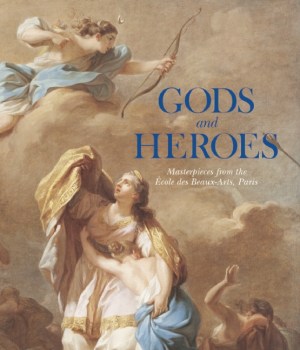 Gods and Heroes: Masterpieces from the École des Beaux-Arts, Paris will be published by D Giles Limited, in association with the American Federation of Arts in June 2014. This fully illustrated volume examines the pivotal role of the École des Beaux-Arts in influencing so much of the history, content and style of late- 17th-, 18th- and 19th-century European art
Not only did the École train generations of artists, but it also served as a repository for work by the most renowned artists in Europe. In three essays, as well as in over 200 catalogue entries and colour plates, the volume tells a fascinating, multi-layered story. On one level it is a study of the role of the epic deeds of classical and biblical gods and heroes in the work of generations of artists in France and beyond. On another level, it explores the impact of the École des Beaux-Arts’ curriculum on Western visual culture, and the persistence of the classical tradition.
From the late 17th through to the mid-19th century, the École was a highly competitive, government school that rigorously trained artists to fulfill the needs of royal, state, and church patrons. In so doing, the École created a particular ‘way of seeing’ that created the established aesthetic and ideological norms in French artistic production right through to the First World War, and provided the backdrop against which the modernist ‘revolution’ from the mid-19th century emerged and developed.
Gods and Heroes features 208 extraordinary art works from the collection of the École, dating from the 17th to the 19th century, including important works by such masters as Antoine- Louis Barye, François Boucher, Jean-Baptiste Carpeaux, Jacques-Louis David, Leonardo da Vinci, Jean-Honoré Fragonard, Jean-Auguste- Dominique Ingres, Charles Le Brun, Charles Natoire, Nicolas Poussin, Carle Van Loo, and Jean-Antoine Watteau
Emmanuel Schwartz is Chief Curator of Heritage at the École des Beaux-Arts, Paris and the author of The Legacy of Homer: Four Centuries of Art from the École Nationale Superieure des Beaux-Arts, Paris (2005). Emmanuelle Brugerolles is Chief Curator of Drawings at the École Nationale Supérieure des Beaux-Arts, Paris. Her most recent publication is The Male Nude: Eighteenth-Century Drawings from the Paris Academy (2013). Patricia Mainardi is Professor Emerita, Doctoral Program in Art History, The Graduate Center of the City University of New York and the author of Husbands, Wives and Lovers: Marriage and Its Discontents in Nineteenth-Century France (2003).
New Book | Studies on Anton von Maron
Published by Campisano and available from ArtBooks.com:
Antonello Cesareo, Studi su Anton von Maron, 2001–2012 (Rome: Campisano Editore, 2014), 200 pages, ISBN: 9788898229239, 30€ / $59.
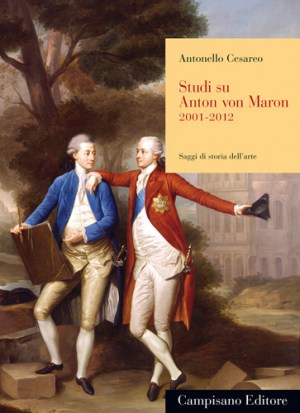 Il volume racchiude gli scritti dedicati per più di un decennio da Antonello Cesareo ad Anton von Maron (1731–1808), sommo ritrattista Neoclassico, di cui l’autore ricostruisce la personalità e il catalogo delle opere. Grazie all’attenta analisi della sua produzione, rivivono le principali figure della storia politica e culturale del Settecento, dall’archeologo tedesco Johan Joachim Winckelmann agli Accademici di San Luca, dalle nobildonne e dai gentiluomini europei attori del Grand-Tour fino alla coppia imperiale austriaca. «La nobile semplicità dei suoi ritratti», come scrive lo stesso autore, è raggiunta «grazie ad una sapiente resa atmosferica che oltrepassa il modello batoniano, seppure dallo stesso Maron più volte ripreso, per giungere a definire un esempio che trascende la resa del personaggio incipriato nel massimo del suo splendore».
È l’Europa del Secolo dei Lumi a sfilare davanti a noi, ancora vivida e pregna di significato attraverso i volti dei suoi protagonisti.
Antonello Cesareo (L’Aquila 1971 – Trento 2013) si è laureato, specializzato e ha conseguito il titolo di dottore di ricerca presso l’Università degli Studi di Roma La Sapienza studiando artisti e collezionisti inglesi in Italia tra Seicento e Settecento, quali Gavin Hamilton e Thomas Howard secondo conte di Arundel. È stato autore di saggi e approfondimenti su artisti quali Thomas Jenkins, Marcello Bacciarelli e committenti come il cardinale Henry Stuart duca di York, il cardinale Ercole Consalvi e Angelo Maria Ricci. Nel 2012 ha dedicato un volume alla ricostruzione del fecondo rapporto di Antonio Canova con l’Accademia di San Luca, grazie al ritrovamento di numerosi documenti inediti, frutto di un triennio di studi trascorso come borsista presso la prestigiosa istituzione. Nel 2013 la commissione per l’Abilitazione Scientifica Nazionale, riconoscendo l’alto valore innovativo dei suoi contributi, gli ha attribuito le funzioni di professore di II fascia.
S O M M A R I O
Hugh Honour, Prefazione
Alvar González-Palacios, Antonello
1. Nobile, fiero e di gentile aspetto: su di un Autoritratto giovanile di Anton von Maron; pubblicato in Neoclassico 20 (2001): 22–33.
2. ‘Valentissimo pittor divenuto…’: un Autoritratto di Anton von Maron; pubblicato in Bollettino del Museo Civico di Bassano 25 (2004): 251–68.
3. Anton von Maron: ‘The first portrait painter at present in Rome’; pubblicato in Antologia di Belle Arti, II (2007): 104–29.
4. ‘I cui nomi sono cogniti per ogni dove…’. A proposito di Caterina Cherubini Preciado e Theresa Mengs Maron; pubblicato in Les Cahiers d’Histoire de l’Art 6 (2008): 78–87.
5. Ancora su Anton von Maron ritrattista (pubblicato in Antologia di Belle Arti, III, 2009, pp. 62-93)
6. ‘Mein Lieber Meister…’. Appunti sulla bottega di Anton von Maron; pubblicato in Ricerche di Storia dell’Arte 101 (2010): 81–88.
7. Anton von Maron e l’Accademia di San Luca; pubblicato in Studi sul Settecento Romano 26 (2010): 201–34.
8. ‘Con maestra mano usa il pennello creando opere sublimi’. Anton von Maron ritrattista al servizio della corte austriaca; conferenza tenuta all’Accademia degli Agiati di Rovereto l’8 marzo 2012.
Bibliografia di Antonello Cesareo
New Book | Jodice: Canova

◊ ◊ ◊ ◊ ◊
Accompanying an exhibition of photographs by Mimmo Jodice of works by Canova (Museo Civico di Bassano del Grappa, 15 September 2013 to 23 March 2014), the catalogue will appear in English this September. As reported at the Robb Rebort, in 2009 Silvio Berlusconi presented members of the G8 with copies of the book Antonio Canova: L’invenzione della bellezza, each handmade with a marble cover weighing 21 pounds and 77 photographs by Jodice; only 39 copies were published by Marilena Ferrari House of Fine Art and Foundation (FMR) of Bologna, with 4 copies being donated to museums and 25 copies offered for sale at a whopping $200,000 each (itself interesting for the reception history of Canova). -CH
From ArtBooks.com:
Giuliana Ericani, Jodice: Canova (Venice: Marsilio, 2014), 116 pages, ISBN: 978-8831717571, $47.
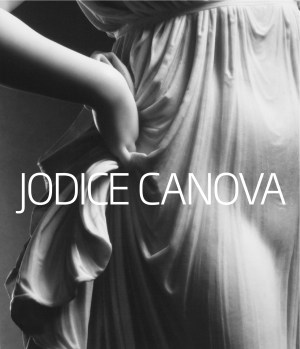 A disquiet expressed with a timeless vision. The decision to pay homage to Antonio Canova could not but start out of the encounter with the man who, back in 1992, had already understood his sculptures and captured their essence in images that have themselves become works of art. This man, this contemporary artist, could only be Mimmo Jodice. He is not only a photographer of art but a person with a keen gaze and vision who has decided to tackle perhaps the most complex sculptor of all time. Jodice chose to approach Canova with love and intellectual nobility and now, through a fascinating series of unprecedented details, is offering us a new, contemporary, conceptually lucid, authoritative, and captivating view of one of the greatest artists in history.
Giuliana Ericani was born in Trieste and graduated in Art History with Rodolfo Pallucchini at the University of Padua. She
is the director of the museums at Bassano del Grappa.
Book Discussion | Basile Baudez on Architecture et tradition académique
From the École Nationale des Chartes:
Basile Baudez on Architecture et tradition académique, with Katie Scott
École Nationale des Chartes, Paris, 29 March 2014
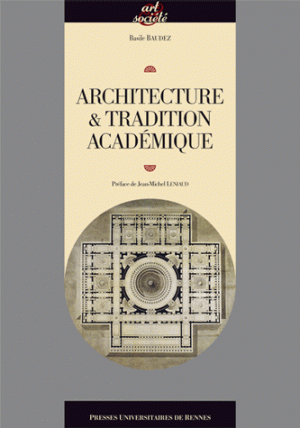 Basile Baudez, Architecture & tradition académique au temps des Lumières (Presses Universitaires de Rennes, 2013), 390 pages, ISBN: 978-2753521223, 24€.
Issu d’une thèse de doctorat soutenue à l’Éphé sous la direction de Jean-Michel Leniaud, cet ouvrage, constitue la première synthèse jamais publiée traitant des rapports entre l’architecture, les architectes et l’institution académique au XVIIIe siècle en Europe.
Adoptant une méthode comparatiste, ce livre permet d’interroger la pertinence d’un modèle élaboré dans l’Italie humaniste et transformé au XVIIe siècle pour servir la politique culturelle de Louis XIV. Le succès considérable de cette forme institutionnelle dans l’Europe des Lumières s’explique en grande partie par sa souplesse, à l’opposé de son évolution au XIXe siècle et sa capacité à organiser de manière efficace les rapports entre certains artistes, le pouvoir et le public.
Étudier l’histoire de l’architecture sous l’angle de la tradition académique, c’est mettre au jour la naissance de la profession architecturale telle qu’on la connait aujourd’hui. L’appartenance à une académie sanctionnée par le pouvoir politique permet en effet de définir les critères au nom desquels l’exercice de la profession était possible, d’une part, et la relation du milieu de l’architecture au pouvoir, d’autre part, la soif de reconnaissance et de protection à la fois.
L’auteur
Archiviste paléographe (prom. 2000), Basile Baudez est agrégé d’histoire, maître de conférences en histoire du patrimoine moderne et contemporain à l’Université Paris-Sorbonne et travaille sur l’histoire de l’architecture européenne au XVIIIe siècle ainsi que sur l’histoire des institutions artistiques.
Le discutant
Katie Scott travaille au Courtauld Institute of Art with et s’est spécialisée dans les représentations du quotidien en particulier à travers les arts éphémères. Sa récente étude est dédiée à ce sujet, plus particulièrement dans le Paris du XVIIIe siècle : Trade and the Ephemeral Everyday in Eighteenth-century Paris.
La conférence se déroulera à 17 h, en grande salle de cours de l’École nationale des chartes, au 19, rue de la Sorbonne (Paris Ve).

New Book | Sweden in the Eighteenth-Century World
From Ashgate:
Göran Rydén, ed., Sweden in the Eighteenth-Century World: Provincial Cosmopolitans (Aldershot: Ashgate, 2013), 386 pages, ISBN: 978-1409465881, £75 / $135.
 Eighteenth-century Sweden was deeply involved in the process of globalisation: ships leaving Sweden’s central ports exported bar iron that would drive the Industrial Revolution, whilst arriving ships would bring not only exotic goods and commodities to Swedish consumers, but also new ideas and cultural practices with them. At the same time, Sweden was an agricultural country to a large extent governed by self-subsistence, and—for most—wealth was created within this structure. This volume brings together a group of scholars from a range of disciplinary backgrounds who seek to present a more nuanced and elaborated picture of the Swedish cosmopolitan eighteenth century. Together they paint a picture of Sweden that is more like the one eighteenth-century intellectuals imagined, and help to situate Sweden in histories of cosmopolitanism of the wider world.
Göran Rydén is Professor of Economic History at the Institute for Housing and Urban Research at Uppsala University, Sweden.
◊ ◊ ◊ ◊ ◊
C O N T E N T S
1. Provincial cosmopolitanism: An introduction, Göran Rydén
2. Where in the world was Sweden? A brief guide for foreigners, Chris Evans
3. The language of cosmos: The cosmopolitan endeavour of universal languages, David Dunér
4. Swedish agriculture in the cosmopolitan eighteenth century, Mats Morell
5. Travelling and the formation of taste: The European journey of Bengt Ferrner and Jean Lefebure, 1758–1763, Lars Berglund
6. Eskiltuna Fristad: The beginnings of an urban experiment, Göran Rydén
7. Prints and attraction in eighteenth-century Stockholm, Sonya Petersson
8. In defence of freedom: Christianity and the pursuit of human happiness in Anders Chydenius’ world, Carola Nordbäck
9. Sweden’s neutrality and the eighteenth-century inter-state system, Leos Müller
10. Runaway colours: Recognisability and categorization in Sweden and early America, 1750–1820, Karin Sennefelt
11. When Sweden harboured idlers: Gender and luxury in public debates, c. 1760–1830, Karin Hassan Jansson
12. A divided space: Subjects and others in the Swedish West Indies during the late eighteenth century, Holger Weiss
13. A world of fiction: Bengt Lidner and global compassion in eighteenth-century Sweden, Anna Cullhed
14. Sveaborg and the end of the Swedish cosmopolitan eighteenth century: An epilogue, Göran Rydén and Holger Weiss
Select bibliography
Index
New Book | Adam von Bartsch (1757–1821): Life and Work
Published by Imhof and available from Artbooks.com:
Rudolf Rieger, Adam von Bartsch (1757–1821): Leben und Werk des Wiener Kunsthistorikers und Kupferstechers unter besonderer Berücksichtigung seiner Graphik nach Handzeichnungen (St Petersburg: Imhof, 2013), 1264 pages, 2 volumes with DVD, ISBN: 978-3865687012, 199€ / $325.
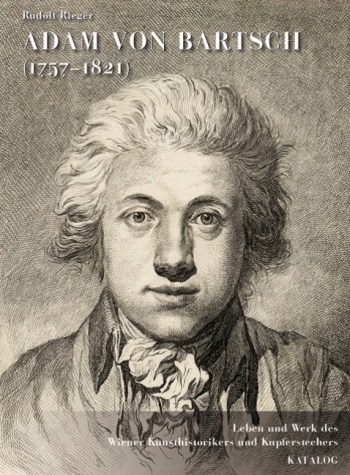 Adam von Bartsch gilt als ‘Ahnvater’ der modernen Graphikforschung, formulierte er doch nicht nur grundlegende Überlegungen zur Systematisierung von Druckgraphik, sondern schuf mit seinem 21-bändigen ‘Le Peintre Graveur’ (1803–1821) ein fundamentales Korpuswerk, das bis heute den Ausgangspunkt für die Beschäftigung mit graphischer Kunst von den Anfangen bis ins 18. Jahrhundert darstellt. Kaum bekannt ist hingegen, dass Bartsch auch künstlerisch tätig war und mit einem OEuvre von fast 600 Blatt zu den innovativsten Graphikern seiner Zeit gehörte, dessen herausragende Stellung in der Graphik um 1800 noch nicht dargestellt wurde. Neben Porträts und Illustrationsgraphik widmete er sich vor allem der Reproduktion von Handzeichnungen alter Meister und schuf auf diesem Gebiet zahlreiche Blatter, die teils einzeln, teils als Folgen verlegt wurden.
Der Werkkatalog unterzieht erstmalig alle Arbeiten Bartschs einer Sichtung und Beurteilung. Begleitet wird er von einer biographischen Studie und einer Analyse des graphischen Schaffens sowie einer nach Ländern gegliederten, in dieser Form noch nicht unternommenen Darstellung zur Reproduktionsgraphik nach Zeichnungen im 18. und 19. Jahrhundert, vor deren Hintergrund Bartschs Stellung erst deutlich konturiert werden kann. Neben der Würdigung Bartschs als herausragendem Vertreter eines durch die Aufklärung geprägten neuen Wissenschaftler- und Künstlertypus liefert die Publikation somit einen grundlegenden Beitrag zur Graphikgeschichte jener Zeit im europäischen Kontext.
◊ ◊ ◊ ◊ ◊
Note (added 1 March 2015) — The book is reviewed by F. Carlo Schmid in The Burlington Magazine 157 (February 2015): 108–09.
Exhibition | Pierre-Antoine Demachy (1723–1807)
Adapted from the Office of Tourism of Versailles:
Le Témoin Méconnu: Pierre-Antoine Demachy (1723–1807)
Musée Lambinet, Versailles, 15 February — 18 May 2014
 The Musée Lambinet in Versailles dedicates a unique exhibition to Pierre Antoine Demachy. This little-known artist of the eighteenth century, whose work has never before been showcased in a single exhibition, is a fabulous witness of his time. Strongly influenced by Italian art, Demachy applied to Paris cityscape types practiced by Canaletto and Guardi. He was among the artists whom the Empress Catherine II of Russia in 1768 placed an order through its ambassador to France, and the Count of Angivillers purchased for Louis XVI a view of the Seine at the Salon of 1783.
The work of Demachy will be presented through the following seven themes:
• Architectural whims and fantasy views
• Views related to the Louvre
• Demolition of churches and fire the Foire Saint-Germain
• Church interiors
• Other views in and around Paris
• Historic Events
• Views of the Seine and cityscapes
The press release, which includes a checklist of the major works exhibited, is available here»
◊ ◊ ◊ ◊ ◊
The catalogue is available from Artbooks.com:
Françoise Roussel-Leriche and Marie Petkowska Le Roux, Le Témoin Méconnu: Pierre-Antoine Demachy, 1723–1807 (Paris: Magellan, 2014), 216 pages, ISBN: 978-2350742809, $55.
New Book | The Architectural Capriccio
From Ashgate:
Lucien Steil, ed., The Architectural Capriccio: Memory, Fantasy and Invention (Aldershot: Ashgate, 2014), 548 pages, ISBN: 978-1409431916, £90 / $125.
 Bringing together leading writers and practicing architects including Jean Dethier, David Mayernik, Massimo Scolari, Robert Adam, David Watkin and Leon Krier, this volume provides a kaleidoscopic, multilayered exploration of the architectural capriccio. It not only explains the phenomena within a historical context, but moreover, demonstrates its contemporary validity and appropriateness as a holistic design methodology, an inspiring pictorial strategy, an efficient rendering technique and an optimal didactic tool. The book shows and comments on a wide range of historic masterworks and highlights contemporary artists and architects excelling in a modern updated, refreshed and original tradition of the capriccio. The capacity of the capriccio to create an imaginary, imagined or ‘analogue’ reality by combining and relocating existing or invented buildings and places in uniquely suggestive drawings and paintings offers unprecedented insights in the ‘Architectural Mind’.
Unlike what the word capriccio might suggest, it is not ‘capricious’ but indeed follows complex rules of realism and figuration, as well as coherent narratives and semantics. It is a playful reflection of the dialectics of the real and the ideal. The capriccio does not challenge the mechanism of reality, but questions the mechanic and linear reading of the real, of life and of art and offers a large palette of threads, figures, tones and nuances to illustrate and contribute creatively to the complexity of a sustainable built and living architectural environment.
Lucien Steil is an Associate Professor in Architecture at the University of Notre Dame, Indiana and Rome.
◊ ◊ ◊ ◊ ◊
C O N T E N T S
• Foreword: Capriccio: The efficacy of spatial narrative, Michael Graves
• Preface: The Architectual Capriccio: Memory, fantasy, invention, Lucien Steil
• Introduction, Alireza Sagharchi
• ‘Il Capriccio’, Definition of the capriccio (caprice) in the French Larousse Dictionary, trans. Julie Kleinman
• Meaning and purpose of the Capriccio, David Mayernik
• The poietic image, Samir Younés
• The Capricci of Giovanni Paolo Panini, David Mayernik
• Patronage in the golden age of the Capriccio, Selena Anders
• The grand tour, Lucien Steil
• Capriccio: The leap of the goat or the unexpected, Jose Cornelio da Silva
• Metaphors for a political urban landscape: Schinkel’s Capricci of a ‘new Athens-on-the-Spree’, Jean-François Lejeune
• J.M. Gandy’s composite views for John Soane, William Palin
• American Capriccio: Imaginary architecture in nineteenth-century painting, Gail Leggio
• The Capricci of Carl Laubin, David Watkin
• Symmetria and ethics: The didactic Capriccio, David Ligare
• Settings: Emily Allchurch and the old masters, Xavier Bray and Minna Moore Ede
• Massimo Scolari, Leon Krier
• Drawing, Leon Krier
• Capriccio, Leon Krier
• ‘Imago Luxemburgi’, Leon Krier
• The Capriccio and poetical realism, Lucien Steil
• Urban chiaroscuro (after Piranesi): Behind the scenes, Emily Allchurch
• Sublime architecture: Capricci in sketchbook and paintings, Lucien Steil
• Le Corbusier’s eye and the vanishing point of modernity, David Brain
• The architectural project: An homage to Rob Krier, Lucien Steil
• ‘La citta analoga’: Thoughts on the urban Capriccio for the design of real cities, Pier Carlo Bontempi
• Magical realism in Miami, Javier Cenicaceleya
• A very British Capriccio, Alireza Sagharchi
• Building the Capriccio, Robert Adam
• Capricci capricciosi, Ettore Maria Mazzola
• The double nature of the architectural Capriccio: From pictorial fiction to urban reality, Jean Dethier
• Postface: ‘techne’ and technology, Lucien Steil
• The aura of the computer generated image: Or virtuosity and the cult of the artifact, Dialog between Alireza Sagharchi and Gil Gorski
• Index
New Book | Globes: 400 Years of Exploration, Navigation, and Power
From The University of Chicago Press:
Sylvia Sumira, Globes: 400 Years of Exploration, Navigation, and Power (Chicago: The University of Chicago Press, 2014), 224 pages, ISBN: 978-0226139005, $45.
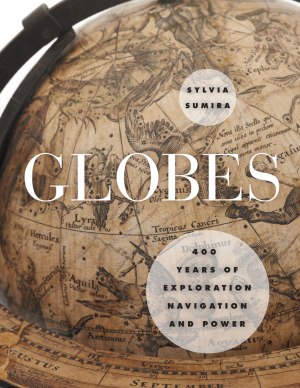 The concept of the earth as a sphere has been around for centuries, emerging around the time of Pythagoras in the sixth century BC, and eventually becoming dominant as other thinkers of the ancient world, including Plato and Aristotle, accepted the idea. The first record of an actual globe being made is found in verse, written by the poet Aratus of Soli, who describes a celestial sphere of the stars by Greek astronomer Eudoxus of Cnidus (ca. 408–355 BC). The oldest surviving globe—a celestial globe held up by Atlas’s shoulders—dates back to 150 AD, but in the West, globes were not made again for about a thousand years. It was not until the fifteenth century that terrestrial globes gained importance, culminating when German geographer Martin Behaim created what is thought to be the oldest surviving terrestrial globe. In Globes: 400 Years of Exploration, Navigation, and Power, Sylvia Sumira, beginning with Behaim’s globe, offers a authoritative and striking illustrated history of the subsequent four hundred years of globe making.
Showcasing the impressive collection of globes held by the British Library, Sumira traces the inception and progression of globes during the period in which they were most widely used—from the late fifteenth century to the late nineteenth century—shedding light on their purpose, function, influence, and manufacture, as well as the cartographers, printers, and instrument makers who created them. She takes readers on a chronological journey around the world to examine a wide variety of globes, from those of the Renaissance that demonstrated a renewed interest in classical thinkers; to those of James Wilson, the first successful commercial globe maker in America; to those mass-produced in Boston and New York beginning in the 1800s. Along the way, Sumira not only details the historical significance of each globe, but also pays special attention to their materials and methods of manufacture and how these evolved over the centuries.
Sylvia Sumira is a leading authority on historic globes and one of few conservators in the world to specialize in printed globes. She worked at the National Maritime Museum, Greenwich before setting up her own studio, where she carries out conservation work for museums, libraries, and other institutions, as well as for private owners. She lives in London.
New Book | Mimesis Across Empires
From Duke UP:
Natasha Eaton, Mimesis across Empires: Artworks and Networks in India, 1765–1860 (Durham: Duke University Press, 2013), 352 pages, ISBN: 978-0822354802, $30.
 In Mimesis Across Empires, Natasha Eaton examines the interactions, attachments, and crossings between the visual cultures of the Mughal and British Empires during the formative period of British imperial rule in India. Eaton explores how the aesthetics of Mughal ‘vernacular’ art and British ‘realist’ art mutually informed one another to create a hybrid visual economy. By tracing the exchange of objects and ideas—between Mughal artists and British collectors, British artists and Indian subjects, and Indian elites and British artists—she shows how Mughal artists influenced British conceptions of their art, their empire, and themselves, even as European art gave Indian painters a new visual vocabulary with which to critique colonial politics and aesthetics. By placing her analysis of visual culture in relation to other cultural encounters—ethnographic, legislative, diplomatic—Eaton uncovers deeper intimacies and hostilities between
the colonizer and the colonized, linking artistic mimesis to the larger colonial
project in India.
Natasha Eaton is a Lecturer in the History of Art at University College London.
◊ ◊ ◊ ◊ ◊
C O N T E N T S
List of Illustrations
Acknowledgments
Introduction
1. Colonizing the Exotic: Indian and Colonial Art in London
2. The Mirroring of Mirrors: Nostalgia, Sovereignty, and Unhomely Images in Calcutta
3. Mimicking Kingship: Sovereign Genealogies, Vernacular Landscape, and the Work of William Hodges
4. Art and Gift in India: Mimesis and Inalienability
5. Sacrifice and the Double: Physiognomy, Divination, and Ethnographic Art in India
Conclusion
Notes
Works Cited
Index










leave a comment