New Book | Native Nations: A Millennium in North America
From Penguin Random House:
Kathleen DuVal, Native Nations: A Millennium in North America (New York: Random House, 2024), 752 pages, ISBN: 978-0525511038, $38.
 Finalist for the Cundill History Prize
Long before the colonization of North America, Indigenous Americans built diverse civilizations and adapted to a changing world in ways that reverberated globally. And, as award-winning historian Kathleen DuVal vividly recounts, when Europeans did arrive, no civilization came to a halt because of a few wandering explorers, even when the strangers came well armed.
A millennium ago, North American cities rivaled urban centers around the world in size. Then, following a period of climate change and instability, numerous smaller nations emerged, moving away from rather than toward urbanization. From this urban past, egalitarian government structures, diplomacy, and complex economies spread across North America. So, when Europeans showed up in the sixteenth century, they encountered societies they did not understand—those having developed differently from their own—and whose power they often underestimated.
For centuries afterward, Indigenous people maintained an upper hand and used Europeans in pursuit of their own interests. In Native Nations, we see how Mohawks closely controlled trade with the Dutch—and influenced global markets—and how Quapaws manipulated French colonists. Power dynamics shifted after the American Revolution, but Indigenous people continued to command much of the continent’s land and resources. Shawnee brothers Tecumseh and Tenskwatawa forged new alliances and encouraged a controversial new definition of Native identity to attempt to wall off U.S. ambitions. The Cherokees created institutions to assert their sovereignty on the global stage, and the Kiowas used their power in the west to regulate the passage of white settlers across their territory.
In this important addition to the growing tradition of North American history centered on Indigenous nations, Kathleen DuVal shows how the definitions of power and means of exerting it shifted over time, but the sovereignty and influence of Native peoples remained a constant—and will continue far into the future.
Kathleen DuVal is a professor of history at the University of North Carolina at Chapel Hill, where she teaches early American and American Indian history. Her previous work includes Independence Lost, which was a finalist for the George Washington Prize, and The Native Ground: Indians and Colonists in the Heart of the Continent. She is a coauthor of Give Me Liberty! and coeditor of Interpreting a Continent: Voices from Colonial America.
Berger Prize Shortlist, 2024
From the press release for the shortlist, as shared on 15 September; the winner will be announced 15 November.
 The Walpole Society has recently announced the shortlist for the Berger Prize, the most prestigious book prize for art history, including a major publication on Gwen John, one of the most significant British women artists of the 20th century, and a book which explores the role that art played in destabilising the legitimacy of the one of the most powerful corporations in history: the East India Company.
A lifetime of knowledge is gifted to the reader in Steven Brindle’s monumental Architecture in Britain and Ireland 1530–1830 (Paul Mellon Centre). From its brilliant opening introduction this magisterial overview sets the national architectural story alight and the reader is struck by the scale and the sweep of history that Brindle handles with consummate skill, revealing a lifetime of practical and scholarly expertise in the field. This book will become an essential handbook and a classic study for future generations of scholars.
In her critical biography, Gwen John: Art and Life in London and Paris (Thames & Hudson), Alicia Foster deftly dismantles the various myths surrounding John and ensures that she regains her full artistic stature; the author asks important theoretical questions about the status of a self-portrait and the artist-model relationship in the nineteenth and twentieth centuries. Enriched by over 240 reproductions of paintings and contemporary photographs and through many excerpts of letters, the reader is immersed in the artist’s deeply personal aesthetic world.
Richly researched and beautifully written, Laura Freeman charts the story of one of the most fascinating figures of mid-century British art, the curator, patron and museum maker, Jim Ede. Ways of Life: Jim Ede and the Kettle’s Yard Artists (Penguin, Jonathan Cape), brings Ede’s Cambridge house to life, offering fresh insights into its familiar collection of paintings, sculptures and pebbles. Based on meticulous research, Freeman populates her narrative with a fascinating cast of characters from Henri Gaudier-Brzeska to T.E. Lawrence.
 Highlighting an area which is gaining momentum and interest for scholars as well as collectors, Alun Graves’s Studio Ceramics (Thames & Hudson / V&A) presents the state of the national collection of Studio Ceramics and will have international impact. The exemplary writing, photography and design make this the unmissable reference work on the subject.
The complex world of post-colonial scholarship is nimbly traversed for a modern audience by Tom Young in Unmaking the East India Company: British Art and Political Reform in Colonial India, c.1813–58 (Paul Mellon Centre). This revelatory book explores how the visual culture of members of the East India Company prompted significant structural change. Fresh material is explored from a compelling new angle, charting the ways in which new artistic forms and practices presaged shifts in the governance of the Company and its relationship with the people it governed. This is a dazzling and erudite intervention that will define the discipline for future generations.
The Berger Prize is the most prestigious award in art history, offering the largest cash prize in the field: £5,000 is awarded to the winner and £500 to each of the shortlisted authors. Named in honour of the late William B. Berger, whose collection of British art is on display at the Denver Art Museum in his native Colorado, the award was founded in 2001 by the Berger Collection Educational Trust (BCET) and The British Art Journal. This year, for the first time, The Walpole Society, which promotes the study of Britain’s art history, has partnered with the BCET to deliver the prize, which celebrates brilliant writing and scholarship about the arts and architecture of the United Kingdom.
New Book | Goya’s Caprichos in Nineteenth-Century France
From CEEH:
Paula Fayos Pérez, Goya’s Caprichos in Nineteenth-Century France: Politics of the Grotesque (Madrid: Centro de Estudios Europa Hispánica, 2024), 544 pages, ISBN: 978-8418760204, €56.
 The impact of Goya’s oeuvre and particularly of the Caprichos (1799) on nineteenth-century French art was immense, long lasting, and multifaceted. Whereas in Spain Goya was associated with the work he produced as court painter, in France he became known as the author of the Caprichos, interpreted by the Romantics as a lampoon of late eighteenth-century Spain. This vision overlooked the fact that the true modernity of Goya’s work lies in its universalism, as a mirror reflecting the essence of humankind, unfettered by patriotism—this is also true of his monsters and witches, which are nothing more than the deformed reflection of humans. It could be argued that this was a two-way influence: Goya contributed to shape French Romantic art—and thus the beginning of modern art—and the Romantics in turn modelled his critical image. This study challenges the established interpretation of the Spanish artist that has dominated the scholarship until recently, based on Romantic stereotypes, many of which have been perpetuated to this day.
Goya became known in the French market—the main receptor of his work—through his graphic oeuvre. This was promoted by artists, critics and collectors such as Charles Yriarte, Paul Lefort, and Eugène Piot, most of them in association with the Spanish artist and dealer Valentín Carderera. Goya’s influence can be divided into two broad categories: aesthetics and politics. On the one hand, artists of the Romantisme noir—focusing on the taste for the grotesque and the literary vision of Spain—saw Goya as the last representative of the Spanish School. On the other, the political impact of his work can be appreciated in the satirical prints produced by artists such as Honoré Daumier and J. J. Grandville, who held him to be a politically engaged caricaturist who fought against censorship and mocked the aristocracy and the clergy. The case of Eugène Delacroix offers the richest example of Goya’s impact on nineteenth-century French art, here backed up by a catalogue of forty of his copies after the Caprichos, some of them hitherto unpublished.
Paula Fayos Pérez received a PhD in History of Art from the University of Cambridge in 2019 with a dissertation on the influence of Goya on nineteenth-century French art and literature. She worked as a researcher in the Duke of Wellington’s private collection at Apsley House (London) and Stratfield Saye House (Hampshire). Before receiving a ‘Leonardo’ scholarship from the BBVA Foundation she held a ‘Margarita Salas’ postdoctoral fellowship to teach and conduct research at the Universities of Strasbourg and Madrid (Complutense). In 2023 she organised the international seminar Goya: grotesco / coleccionismo. She has written articles for The Burlington Magazine (2019, 2020), Boletín del Museo del Prado (2022), and Print Quarterly (2023).
c o n t e n t s
Note to the Reader
Acknowledgements
Introduction
I | The Spread of Goya’s Œuvre in the French Art Market: Presentations, Viewers, and Collectors
• First Period (1799–1828): Goya’s Lifetime
• Second Period (1828–1854): The Dealing of Javier Goya
• Third Period (1854–1870): The Dealing of Valentín Carderera
• Fourth Period (1870–1900): Major Auction Sales and Collections
II | The Caprichos and Romantic Aesthetics: Goyaesque Spain and the Grotesque in Prints and Literature
• The Romantic Interpretation of Goya
• Romantic Literature and Illustration Inspired by Goya
III | Political Bigotry and Social Mœurs: Caricature, Censorship, and Democracy
• Goya as a Political Artist
• Political Caricature, Censorship and Democracy
• From Political to Social Criticism
IV | ‘Tout Goya palpitait autour de moi’: The Case of Eugène Delacroix
• A Self-proclaimed Classicist
• Goya’s Influence on Delacroix
• Delacroix’s Copies after the Caprichos
• Quotations or ‘Inspired Originals’ after the Caprichos
• Original Works Indirectly Influenced by Goya
V | Conclusion
• The Everlasting Influence of Goya
• Censorship and the Power of Caricature
• Future Research Threads
• The Fine Line between Admiration and Fabrication
Appendices
1 Goya’s Etchings and Lithographs: Series and Single Prints
2 Goya Mentions in French Literature (1771–1900)
3 Catalogue of Eugène Delacroix’s Works after Goya’s Caprichos (c. 1819–1827)
4 Copies by Capricho
List of Illustrations
Bibliography
Goya Works
Index
Illustration Credits
New Book | The Dominion of Flowers
From Yale UP:
Mark Laird, The Dominion of Flowers: Botanical Art and Global Plant Relations (London: Paul Mellon Centre for Studies in British Art, 2024), 277 pages, ISBN: 978-1913107451, £35 / $50.
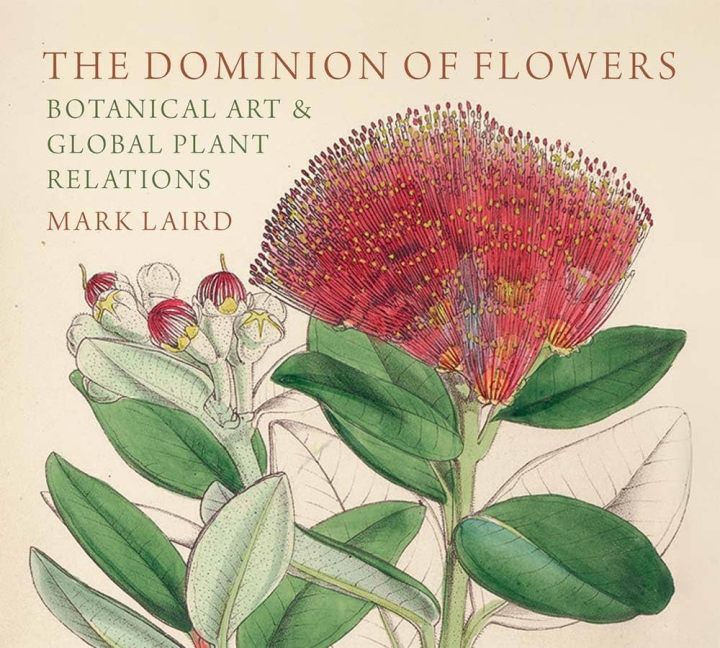 How a wave of exotic botanical imports from across Britain’s empire shaped its gardens and psyche
Between 1760 and 1840, exotic plants were imported from across Britain’s empire and were lavishly depicted in periodicals and scientific treatises as specimens collected alongside other objects of natural history. Mark Laird’s provocative new book—part art history, part polemic—weaves fine art, botanical illustration, and previously unpublished archival material into a political and ethical account of Britain’s heritage, showing how plants were not only integral to English gardens of the Georgian and Victorian eras but also to British culture more broadly. The Dominion of Flowers shines with captivating cross-cultural plant stories. The book opens with the Seymers’ exotic Butterflies and Plants and Pulteney’s catalogue of Dorset’s native wildflowers. It then moves to the German artist John Miller and his illustrations for Lord Bute’s Botanical Tables and concludes by tracing Britain’s fascination with New Zealand’s unique flora, first depicted in Mary Delany’s collages. Copiously illustrated with almost two hundred works, and drawing on Laird’s genealogical research into his own family’s colonial past, this volume foregrounds Indigenous ideas about ‘plant relations’ in a study that brings the trans-oceanic movement of plants and people alive.
Mark Laird is professor emeritus at the University of Toronto and former faculty member at Harvard University. He is the author of The Flowering of the Landscape Garden and A Natural History of English Gardening—recipient of an Elisabeth Blair MacDougall Award. He has been historic planting consultant to Painshill Park Trust, English Heritage, and Strawberry Hill Trust.
New Book | Carlo Maratta Catalogue Raisonné
From Ugo Bozzi Editore (as noted at Art History News) . . .
Stella Rudolph and Simonetta Prosperi Valenti Rodinò, Carlo Maratti (1625–1713) tra la magnificenza del Barocco e il sogno d’Arcadia. Dipinti e disegni (Rome: Ugo Bozzi Editore, 2024), 2 volumes, 1260 pages, ISBN: 978-8870030693, €480.
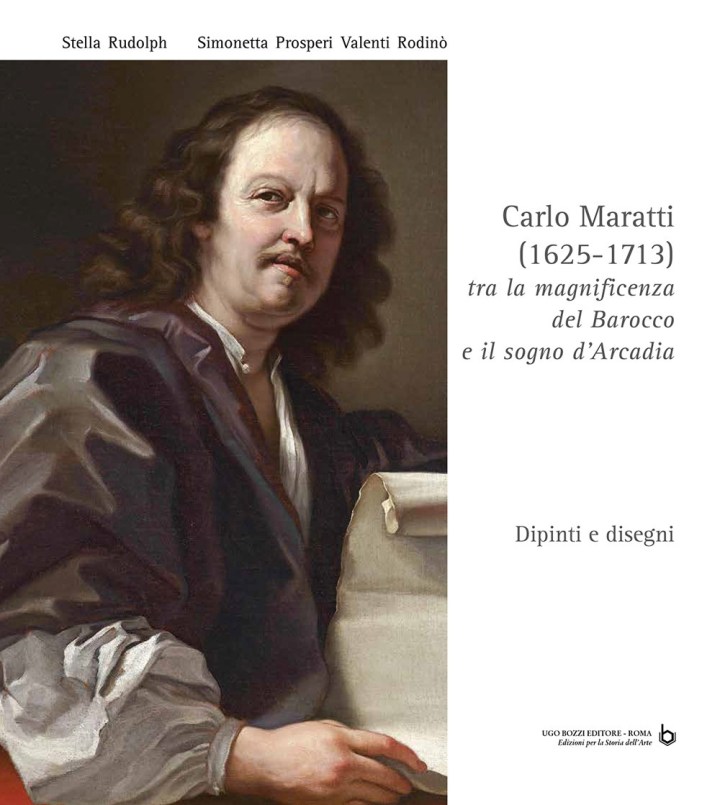 Il noto pittore Carlo Maratti (1625–1713), attivo a Roma per più di 60 anni, raggiunse una grande fama in vita, conteso da papi, cardinali, mecenati, collezionisti, milord venuti in Italia per il Grand tour e regnanti di tutt’Europa. Di contro a questa notorietà, gli studi storico-artistici a lui dedicati sono oggi limitati ad alcuni articoli e a due convegni, tenutisi a Roma nel 2013 e 2014 in occasione della ricorrenza della morte. La monografia a lui dedicata, qui presentata ed avviata da anni, restituisce la posizione di leader raggiunta dal pittore a Roma nella seconda metà del Seicento, mettendo a fuoco il ruolo fondamentale da lui svolto nell’ambiente artistico della città, divenendone protagonista assoluto dopo la scomparsa di Cortona (1669) e Bernini (1680). Artista prediletto di ben sette papi, Maratti fornì numerose pale d’altare in varie chiese romane, affreschi nei palazzi Altieri e del Quirinale, e quadri di soggetto sacro e mitologico inviati in tutta Italia e all’estero su commissione dei re di Francia, di Spagna e degli Absburgo. Maratti fu anche un assiduo ed elegante disegnatore, ne è prova la sua ricchissima produzione grafica, che ammonta a più di duemila fogli autografi, divisi nei nuclei più consistenti nel Kunstpalast di Düssseldorf, nella Real Academia di Madrid, nella Royal Library di Windsor e in molti altri.
In seguito a quattro anni di intenso lavoro, la Redazione della Ugo Bozzi Editore è dunque lieta di annunciare la pubblicazione in due volumi della tanto attesa monografia sull’artista, curata dalle due maggiori esperte sull’argomento, Stella Rudolph per i dipinti e Simonetta Prosperi Valenti Rodinò per i disegni. Oltre 1.000 riproduzioni di cui oltre 900 a colori, oltre 1250 pagine.
Il lavoro di Stella Rudolph, nota studiosa inglese scomparsa nel maggio 2020, che ha dedicato 30 anni a questo progetto senza riuscire a completarlo, ma producendo numerosi saggi su Maratti, è stato ultimato e aggiornato da Simonetta Prosperi Valenti Rodinò, cui si deve la catalogazione dei disegni afferenti ai dipinti e la redazione di ulteriori sezioni sull’attività di Maratti come progettista di statue, oggetti di argenteria, ritratti e caricature, illustrate da disegni di grande qualità esecutiva.
New Book | Academic Writing as if Readers Matter
From Princeton UP:
Leonard Cassuto, Academic Writing as if Readers Matter (Princeton: Princeton University Press, 2024), 224 pages, ISBN: 978-0691195797 £19 / $23.
 If you want people to read your writing, it has to be readable. In Academic Writing as if Readers Matter, Leonard Cassuto offers academic writers a direct, practical prescription for writing that will be read and understood: Take care of your reader. With a wealth of examples from the arts and sciences, this short, witty book provides invaluable advice to writers at all levels, in all fields, on how to write better for both specialized and broad audiences. Good academic writing depends on connecting with readers, earning their time and attention. Cassuto offers tips and advice on how to sharpen arguments and make complex ideas compelling. He addresses the workings of introductions and conclusions, transitions, signposts, paragraphs, and sentences—all the building blocks of academic writing. He also shows how storytelling and metaphor can make your prose more engaging than you thought possible. And he explains the proper use of that most dangerous of tools: jargon.
This book can make any academic writer—including you—into a better writer. That means becoming a better communicator of the ideas and discoveries you want the world to grasp. For the sake of readers inside the academy and beyond it, Academic Writing as if Readers Matter shows how and why you have to make your writing connect with the people you’re writing for.
Leonard Cassuto is professor of English at Fordham University. He writes a regular column, “The Graduate Adviser,” for The Chronicle of Higher Education, and his many books include The New PhD: How to Build a Better Graduate Education.
New Book | The Bookshop
From Penguin Random House (Friss starts his story with Benjamin Franklin’s printing house) . . .
Evan Friss, The Bookshop: A History of the American Bookstore (New York: Viking, 2024), 416 pages, ISBN 978-0593299920, $30.
 An affectionate and engaging history of the American bookstore and its central place in American cultural life, from department stores to indies, from highbrow dealers trading in first editions to sidewalk vendors, and from chains to special-interest community destinations
Bookstores have always been unlike any other kind of store, shaping readers and writers, and influencing our tastes, thoughts, and politics. They nurture local communities while creating new ones of their own. Bookshops are powerful spaces, but they are also endangered ones. In The Bookshop, we see the stakes: what has been, and what might be lost. Evan Friss’s history of the bookshop draws on oral histories, archival collections, municipal records, diaries, letters, and interviews with leading booksellers to offer a fascinating look at this institution beloved by so many. The story begins with Benjamin Franklin’s first bookstore in Philadelphia and takes us to a range of booksellers including the Strand, Chicago’s Marshall Field & Company, the Gotham Book Mart, specialty stores like Oscar Wilde and Drum and Spear, sidewalk sellers of used books, Barnes & Noble, Amazon Books, and Parnassus. The Bookshop is also a history of the leading figures in American bookselling, often impassioned eccentrics, and a history of how books have been marketed and sold over the course of more than two centuries—including, for example, a 3,000-pound elephant who signed books at Marshall Field’s in 1944.
The Bookshop is a love letter to bookstores, a charming chronicle for anyone who cherishes these sanctuaries of literature, and essential reading to understand how these vital institutions have shaped American life—and why we still need them.
Evan Friss is a professor of history at James Madison University and the author of two other books: The Cycling City: Bicycles and Urban America in the 1890s and On Bicycles: A 200-Year History of Cycling in New York City. He lives with his wife (a bookseller) and two children (occasional booksellers) in Harrisonburg, Virginia.
Exhibition | Paris, 1793–1794
Opening at the Musée Carnavalet:
Paris, 1793–1794: A Revolutionary Year
Musée Carnavalet, Paris, 16 October 2024 — 16 February 2025
Musée de la Révolution française, Vizille, 27 June — 23 November 2025
Curated by Valérie Guillaume, Philippe Charnotet, and Anne Zazzo
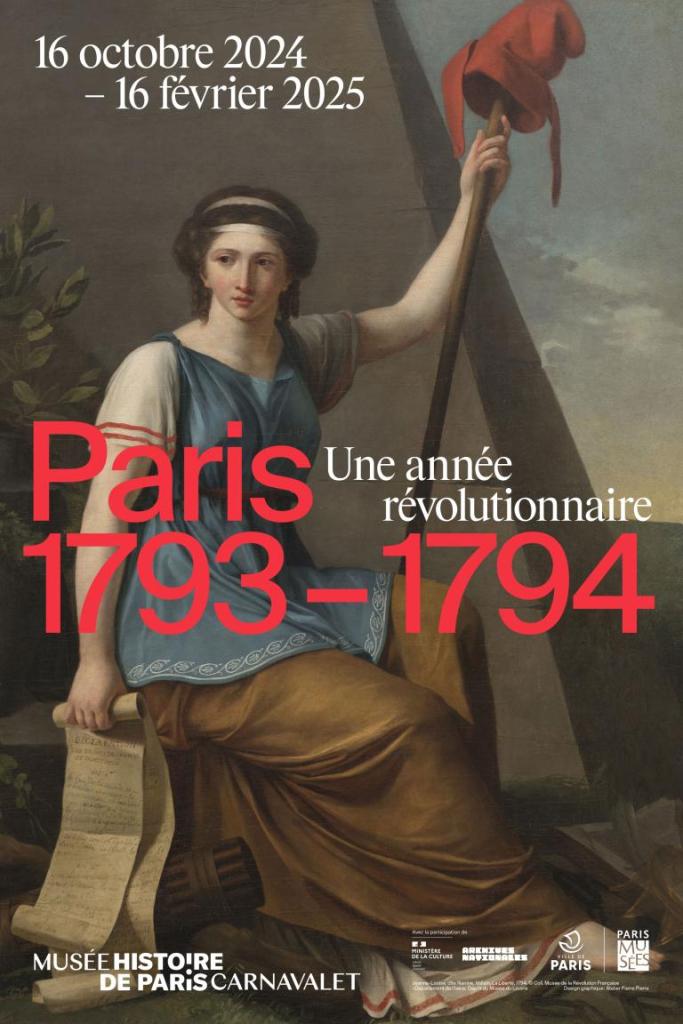 For the first time, the Musée Carnavalet – Histoire de Paris, renowned for its collections on the French Revolution, will single out one key year in the revolution—without a doubt the most complex: ‘Year II’ of the Republican calendar, covering the period from 22 September 1793 to 21 September 1794.
1789, the year of the Storming of the Bastille and The Declaration of the Rights of Man and of the Citizen, is often considered to be the glorious year of the Revolution and even to embody the French Revolution in its entirety. It is the year during which Paris established itself as the capital of the Enlightenment and Revolutions. But compared to the clarity of ’89’, ’93’ appears much darker and thornier. As it was just coming to an end, this long political year spanning from the spring of 1793 to the summer of 1794 had already found a name: the ‘Terror’. Fabricated for political reasons, the word points to the authoritarian transition that the republican regime had undergone. And yet, the years 1793–94 are also the years that some, confident in their ability to reinvent history, called ‘Year II’: a year defined by its breaking with the past and its revitalising of revolutionary utopias. The exhibition is a collection of more than 250 works of all kinds: paintings, sculptures, objects of decorative arts, historical and memorial objects, wallpaper, posters, pieces of furniture… And all translate collective histories and incredible individual fates. These varied objects reveal a context imbued with collective fears and state violence, but also with extraordinary daily activities, feasts, and celebrations.
Paris, 1793–1794: Une année révolutionnaire (Paris Musées, 2024), 224 pages, ISBN: 978-2759605903, €39.
Scientific commission
• Valérie Guillaume, director of the Musée Carnavalet – Histoire de Paris
• Philippe Charnotet, assistant curator and head of the numismatic collection at the Musée Carnavalet
• Anne Zazzo, chief curator, head of the historical and memorial objects collection at the Musée Carnavalet
Scientific committee
• Jean-Clément Martin, professor emeritus of History of the French Revolution at the University Paris I
– Panthéon-Sorbonne
• Alain Chevalier, director of the Musée de la Révolution Française – Domaine de Vizille
• Aurélien Larné, archivist at the Ministry of Justice – Department of the Archives, Documentation and Cultural Heritage
• Marisa Linton, professor of Modern History at the University of Kingston – London
• Guillaume Mazeau, senior lecturer of Modern History at the Université Paris I – Panthéon-Sorbonne
• Allan Potofsky, professor of Modern History at the Université Paris-Cité
• Charles Eloi Vial, curator of the Libraries for the Department of Manuscripts at the Bibliothèque Nationale de France
◊ ◊ ◊ ◊ ◊
Note (added 7 July 2025)— The posting was updated to include the second venue, the Musée de la Révolution française, where the exhibition is titled 1793–1794: Un Tourbillon Révolutionnaire.
Exhibition | Figures of the Fool
Opening next month at the Louvre:
Figures of the Fool: From the Middle Ages to the Romantics
Musée du Louvre, Paris, 16 October 2024 — 3 February 2025
Curated by Élisabeth Antoine-König and Pierre-Yves Le Pogam
 Fools are everywhere. But are the fools of today the same as the fools of yesteryear? This fall, the Musée du Louvre is dedicating an unprecedented exhibition to the myriad figures of the fool, which permeated the pictorial landscape of the 13th to the 16th centuries. Over the course of the Middle Ages and the Renaissance, the fool came to occupy every available artistic space, insinuating himself into illuminated manuscripts, printed books and engravings, tapestries, paintings, sculptures, and all manner of objects both precious and mundane. His fascinating, perplexing and subversive figure loomed large in the turmoil of an era not so different from our own.
The exhibition examines the omnipresence of fools in Western art and culture at the end of the Middle Ages, and attempts to parse the meaning of these figures, who would seem to play a key role in the advent of modernity. The fool may make us laugh, with his abundance of frivolous antics, but he also harbours a wealth of hidden facets of an erotic, scatological, tragic or violent nature. Capable of the best and of the worst, the fool entertains, warns or denounces; he turns societal values on their head and may even overthrow the established order.

Francisco José de Goya y Lucientes, Yard with Madmen, 1794 (Dallas: Meadows Museum).
Within the newly renovated Hall Napoléon, this exhibition, which brings together over 300 works from 90 French, European and American institutions, brings us on a one-of-a-kind journey through Northern European art (English, Flemish, Germanic, and above all French), illuminating the profane aspects of the Middle Ages and revealing a fascinating era of surprising complexity. The exhibition explores the disappearance of the figure of the fool with the Enlightenment and the triumph of reason, and its resurgence at the end of the 18th century and all throughout the 19th. The fool then became a figure with which artists identified, wondering: ‘What if I were the fool?’
The exhibition is curated by Élisabeth Antoine-König, Senior Curator in the Department of Decorative Arts, and Pierre-Yves Le Pogam, Senior Curator in the Department of Sculptures, Musée du Louvre.
With the support of the Cercle des Mécènes du Louvre, the Fondation Etrillard and the New York Medieval Society.
Élisabeth Antoine-König and Pierre-Yves Le Pogam, eds., Figures du Fou: Du Moyen Âge aux Romantiques (Paris: Musée du Louvre éditions / Gallimard, 2024), 448 pages, ISBN: 978-2073073037, €45.
Exhibition | An Actor with No Lines — Pierrot

Watteau, Pierrot, also known as Gilles, detail, ca. 1718–19, oil on canvas, 1.84 × 1.56 meters
(Paris: Musée du Louvre).
◊ ◊ ◊ ◊ ◊
This exhibition opens in October at The Louvre in conjunction with the The Fool . . .
A New Look at Watteau: An Actor with No Lines — Pierrot, Known as Gilles
Musée du Louvre, Paris, 16 October 2024 — 3 February 2025
Curated by Guillaume Faroult
Watteau’s Pierrot, formerly known as Gilles, is one of the most famous masterpieces in the Louvre’s collection. This enigmatic work, which has long raised questions for art historians, is currently undergoing conservation treatment at the Centre for Research and Restoration of the Museums of France, after which time it will be the focus of a spotlight exhibition.

Louis Crépy after Antoine Watteau, Self-Portrait (Paris: Bibliothèque nationale de France).
Nothing is known about the painting before it was discovered by the artist and collector Dominique Vivant Denon (1747–1825), Director of the Louvre under Napoleon. It soon came to be regarded as a Watteau masterpiece and garnered praise from renowned writers and art historians. It has often been seen as reflecting a certain image of the 18th century—mischievous, cynical, or melancholy, depending on the author and the era. Its fame boosted the return to favour of 18th-century art in the age of Manet and Nadar.
The exhibition will present the findings of the conservation project, approaching this wholly original work—whose attribution to Watteau has sometimes been questioned—both as part of the artist’s oeuvre and in the cultural and artistic context of the time. Alongside many other paintings and drawings by Watteau, there will be works by his contemporaries: painters, draughtsmen, engravers (Claude Gillot, Antoine Joseph Pater, Nicolas Lancret, Jean Baptiste Oudry, Jean Honoré Fragonard, etc.), and writers (Pierre de Marivaux, Alain-René Lesage, JeanFrançois Regnard, Evaristo Gherardi), with special emphasis on the rich theatrical repertoire of the time.
As soon as the painting entered the Louvre in 1869, via the bequest of Louis La Caze (1798–1869), it became a favourite with generations of viewers. Its powerful appeal is partly due to its outstanding quality, but also to its originality for the period and to the mystery surrounding its production.
The exhibition will also explore the painting’s rich and varied critical reception and its far-reaching artistic legacy. This powerful, enigmatic image has greatly inspired French writers, including Théophile Gautier, Charles Baudelaire, Paul Verlaine, George Sand, the Goncourt brothers, and Jacques Prévert. The painting has also influenced photographers, filmmakers, and musicians (Nadar, Marcel Carné, Arnold Schoenberg), as well as visual artists (Edouard Manet, Gustave Courbet, Pablo Picasso, André Derain, Juan Gris, James Ensor, Georges Rouault, and Jean-Michel Alberola), driving them to new creative heights.
The show will explore the fascinating conversations between these great creative minds and Watteau’s enigmatic painting, even as it resonates harmoniously with the Figures of the Fool exhibition scheduled for the same dates in the Hall Napoléon.
Guillaume Faroult, Revoir Watteau: Un comédien sans réplique. Pierrot, dit le Gilles (Musée du Louvre Éditions and Liénart Éditions, 2024), 240 pages, €40.










leave a comment