Huge New Discovery of Notes on Hegel’s Lectures
From The Guardian:
Sara Tor, “Manuscript Treasure Trove May Offer Fresh Understanding of Hegel,” The Guardian (29 November 2022).
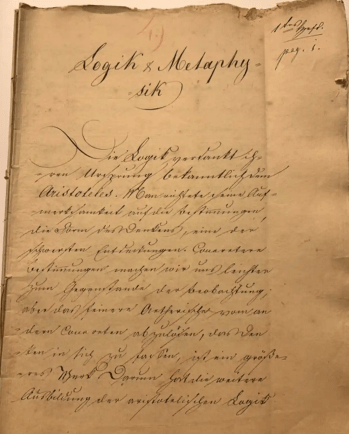
One of the papers from a trove of 4,000 notes on Hegel, found by Professor Klaus Vieweg (Photograph: Marko Fuchs/Copyright Archiv und Bibliothek des Erzbistums München und Freising).
Library discovery of undocumented transcripts of German philosopher’s lectures like ‘finding new Beethoven score’
A biographer researching the German philosopher Hegel (1770–1831) has uncovered a massive treasure trove of previously undocumented lectures that could change perceptions regarding one of the leading figures of modern western philosophy. More than 4,000 pages of notes on Georg Wilhelm Friedrich Hegel’s lectures were found by Klaus Vieweg in the library of the archdiocese of Munich and Freising.
“The discovery of these manuscripts is comparable to finding a new score by Beethoven or a previously unseen painting by Constable,” said Vieweg, a professor at the Friedrich Schiller University Jena in Germany.
He said an early reading of the notes had hinted at a fresh understanding of how Hegel formed his influential ideas on aesthetics, the philosophy around beauty and art, and how he analysed Shakespeare’s plays to help develop his ideas.
The transcripts are thought to have been written by Friedrich Wilhelm Carové, one of the first students at Heidelberg University to be taught by Hegel during the philosopher’s time there between 1816 and 1818. Hegel’s ideas and works are notable for their formidable difficulty. The British philosopher Bertrand Russell described him as “the hardest to understand of the great philosophers.” Vieweg hopes the new find might bring clarity. The papers will now be compiled into an annotated edition by a team of international experts, headed by Vieweg and Christian Illies, a professor of philosophy at the University of Bamberg.
“Major sections of Hegel’s work are only known through his lectures, so scholars have long been trying to find transcripts,” said Illies. “Several were found and published in the 19th and 20th centuries, but over the years uncovering new material has become less and less likely.”
Vieweg’s find is probably the single largest of its kind ever made. It was unearthed after a reader of his recent biography on Hegel pointed him to the archive of Friedrich Windischmann. Windischmann was a professor of Catholic theology in Munich whose father, Karl Joseph Hieronymous Windischmann, was a philosopher and friend of Hegel. A letter between Hegel and Karl Windischmann shows that Carové gave the set of manuscripts to the latter as a gift.
Although research on the material has only just begun, there has already been one significant find: the boxes contain a transcript from one of the very first lectures Hegel gave on aesthetics. Currently, any knowledge of Hegel’s thoughts on aesthetics originates from much later lectures given in Berlin. These were published after his death by his student Heinrich Gustav Hotho using a combination of lecture transcripts and Hegel’s own notes. As there have been no other sources to compare this with, questions have arisen as to how far this material was influenced by Hotho. The discovery of early lectures, therefore, could help to finally clear up the uncertainty. . . .
The full article is available here»
Exhibition Catalogue | Dare to Know
Now available for purchase, the catalogue for the exhibition is one of The New York Times’ ‘best art books of 2022’. Congratulations to everyone involved! The show is on view until 15 January 2023.
Edouard Kopp, Elizabeth Rudy, and Kristel Smentek, eds., Dare to Know: Prints and Drawings in the Age of Enlightenment (Cambridge: Harvard Art Museums, 2022), 334 pages, ISBN: 978-0300266726, $50.
 Are volcanoes punishment from God? What do a fly and a mulberry have in common? What utopias await in unexplored corners of the earth and beyond? During the Enlightenment, questions like these were brought to life through an astonishing array of prints and drawings, helping shape public opinion and stir political change. Dare to Know overturns common assumptions about the age, using the era’s proliferation of works on paper to tell a more nuanced story. Echoing the structure and sweep of Diderot’s Encyclopédie, the book contains 26 thematic essays, organized A to Z, providing an unprecedented perspective on more than 50 artists, including Henry Fuseli, Jean-Honoré Fragonard, Francisco Goya, Jean-Baptiste Greuze, William Hogarth, Giovanni Battista Piranesi, and Giambattista Tiepolo. With a multidisciplinary approach, the book probes developments in the natural sciences, technology, economics, and more—all through the lens of the graphic arts.
Edouard Kopp is the John R. Eckel, Jr., Foundation Chief Curator at the Menil Drawing Institute in Houston; Elizabeth M. Rudy is the Carl A. Weyerhaeuser Curator of Prints at the Harvard Art Museums, Cambridge, MA; and Kristel Smentek is associate professor of art history in the Department of Architecture at the Massachusetts Institute of Technology, Cambridge, MA.
With contributions by J. Cabelle Ahn, Elizabeth Saari Browne, Rachel Burke, Alvin L. Clark, Jr., Anne Driesse, Paul Friedland, Thea Goldring, Margaret Morgan Grasselli, Ashley Hannebrink, Joachim Homann, Kéla Jackson, Penley Knipe, Edouard Kopp, Ewa Lajer-Burcharth, Heather Linton, Austėja Mackelaitė, Tamar Mayer, Elizabeth Mitchell, Elizabeth M. Rudy, Brandon O. Scott, Kristel Smentek, Phoebe Springstubb, Gabriella Szalay, and Christina Taylor.
New Book | Building Greater Britain
Distributed by Yale UP:
G. A. Bremner, Building Greater Britain: Architecture, Imperialism, and the Edwardian Baroque Revival, 1885–1920 (London: Paul Mellon Centre for Studies in British Art, 2022), 368 pages, ISBN: 978-1913107314, £50 / $65.
 This innovative study reappraises the Edwardian Baroque movement in British architecture, placing it in its wider cultural, political, and imperial contexts
The Edwardian Baroque was the closest British architecture ever came to achieving an ‘imperial’ style. With the aim of articulating British global power and prestige, it adorned civic and commercial structures both in Britain and in the wider British world, especially in the ‘white settler’ Dominions of Australia, New Zealand, Canada, and South Africa. Evoking the contemporary and emotive idea of ‘Greater Britain’, this new book by distinguished historian G. A. Bremner represents a major, groundbreaking study of this intriguing architectural movement in Britain and its empire. It explores the Edwardian Baroque’s significance as a response to the growing tide of anxiety over Britain’s place in the world, its widely perceived geopolitical decline, and its need to bolster confidence in the face of the Great Power rivalries of the period. Cross-disciplinary in nature, it combines architectural, political, and imperial history and theory, providing a more nuanced and intellectually wide-ranging understanding of the Edwardian Baroque movement from a material culture perspective, including its foundation in notions of race and gender.
G. A. Bremner is professor of architectural history at the University of Edinburgh, where he specializes in the history of Victorian and Edwardian architecture, with a particular focus on British imperial and colonial architecture and urbanism.
New Book | St James’s Palace
From Yale UP and the Royal Collection Trust:
Simon Thurley, Rufus Bird, and Michael Turner, St James’s Palace: From Leper Hospital to Royal Court (New Haven: Yale University Press, 2023), 308 pages, ISBN: 978-0300267464, £60 / $75.
 The first modern history of St James’s Palace, shedding light on a remarkable building at the heart of the history of the British monarchy that remains by far the least known of the royal residences
In this first modern history of St James’s Palace, the authors shed new light on a remarkable building that, despite serving as the official residence of the British monarchy from 1698 to 1837, is by far the least known of the royal residences. The book explores the role of the palace as home to the heir to the throne before 1714, its impact on the development of London and the West end during the late Stuart period, and how, following the fire at the palace of Whitehall, St James’s became the principal seat of the British monarchy in 1698. The arrangement and display of the paintings and furnishings making up the Royal Collection at St James’s is chronicled as the book follows the fortunes of the palace through the Victorian and Edwardian periods up to the present day. Specially commissioned maps, phased plans, and digital reconstructions of the palace at key moments in its development accompany a rich array of historical drawings, watercolors, photographs, and plans. The book includes a foreword by His Royal Highness The Prince of Wales.
Simon Thurley is a leading historian of royal palaces and the sixteenth- and seventeenth-century English court. Rufus Bird is a furniture specialist and former Surveyor of The Queen’s Works of Art, Royal Collection Trust. Michael Turner is an architectural historian and a former Inspector of Historic Buildings and Areas for Historic England.
C O N T E N T S
Foreword, HRH The Prince of Wales
Acknowledgments
Notes for the Readers
Simon Thurley, Introduction
1 Simon Thurley, From the Hospital of St James to the Civil War
2 Simon Thurley, The Restoration to Queen Anne
3 Rufus Bird, The Georgian Court
4 Michael Turner, George IV to the Second World War
5 Simon Thurley, The Palace Today
Notes
Abbreviations and Bibliography
Index
Illustration Credits
Plans A–D
New Book | Nicholas Barbon: Developing London, 1667–1698
From the London Topographical Society:
Frank Kelsall and Timothy Walker, Nicholas Barbon: Developing London, 1667–1698 (London: London Topographical Society, 2022), 240 pages, £35.
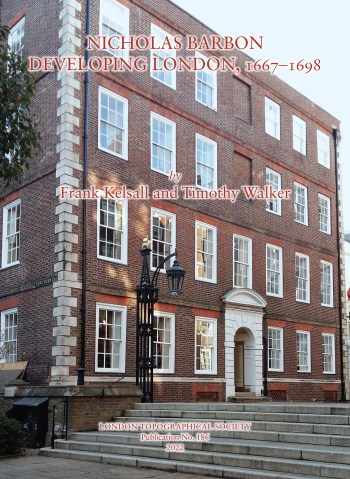 London grew rapidly in the last quarter of the seventeenth century, and Nicholas Barbon (c.1640–1698) was central to its physical transformation. This first complete biography analyses how Barbon’s property development was closely connected to financial innovations. As a young doctor during the Plague year of 1665 Nicholas Barbon stayed in London to help victims, but thereafter his attention turned to building, to finance, and to economics. His first developments were in the City after the Great Fire. He then took advantage of the westward move of aristocratic houses to lay out streets in what had been their grounds, before building in the Temple, moving to sites in Soho and Westminster, eastwards beyond the City walls and north to Holborn. His development of Red Lion Fields (to the fury of neighbouring lawyers in Gray’s Inn) and Lamb’s Conduit Fields is discussed in detail, revealing the sophisticated—some might say ruthless—methods he used to raise funding. His speculative activity created rows of terrace houses and squares that became the norm for the city’s future development. At the same time he set up the first fire insurance company, the second bank, became an MP, and published on economic matters such as free trade and recoinage. He was in the parlance of the day a ‘projector’, and his story reveals a great deal about the way London, and Britain as a whole, was changing topographically, politically and socially in these crucial years.
2022 Berger Prize for British Art History
From The British Art Journal, with the full long list available here:
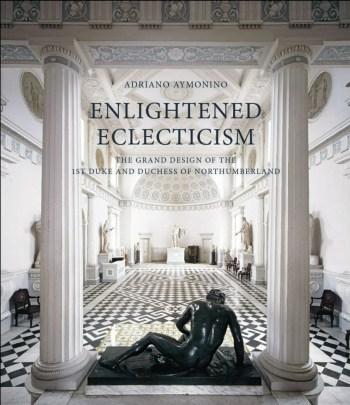 Adriano Aymonino’s Enlightened Eclecticism: The Grand Design of the 1st Duke and Duchess of Northumberland is the winner of the 2022 William MB Berger Prize for British Art History.
The annual prize was created in 2001 to recognize excellence in the field of British art history by the Berger Collection Educational Trust and The British Art Journal in honor of the late American collector and patron William M. B. Berger (1925–1999), who amassed a serious collection of British paintings, which was gifted to the Denver Art Museum in 2019.
S H O R T L I S T
• David Alexander, A Biographical Dictionary of British and Irish Engravers, 1714–1820 (London: Paul Mellon Centre for Studies in British Art, 2022), 1120 pages, ISBN: 978-1913107215, £75.
• Adriano Aymonino, Enlightened Eclecticism: The Grand Design of the 1st Duke and Duchess of Northumberland (London: Paul Mellon Centre for Studies in British Art, 2021), 400 pages, ISBN: 978-1913107178, £50.
• Manolo Guerci, London’s ‘Golden Mile’: The Great Houses of the Strand, 1550–1650 (London: Paul Mellon Centre, 2021), 336 pages, ISBN: 978-1913107239, £50.
• Kenneth McConkey, Towards the Sun: The Artist-Traveller at the Turn of the Twentieth Century (London: Paul Holberton Publishing, 2021), 260 pages, ISBN: 978-1913645083, £50.
• Cicely Robinson, ed, Henry Scott Tuke (New Haven: Yale University Press, 2022), 160 pages, ISBN: 978-0300265842, £20 / £30.
1 8 t h – C E N T U R Y O F F E R I N G S O N T H E L O N G L I S T
• David Alexander, A Biographical Dictionary of British and Irish Engravers, 1714–1820 (London: Paul Mellon Centre for Studies in British Art, 2022), 1120 pages, ISBN: 978-1913107215, £75.
• Malcolm Andrews, A Sweet View: The Making of an English Idyll (London: Reaktion Books, 2022), 352 pages, ISBN: 978-1789144987, £35.
• Adriano Aymonino, Enlightened Eclecticism: The Grand Design of the 1st Duke and Duchess of Northumberland (London: Paul Mellon Centre for Studies in British Art, 2021), 400 pages, ISBN: 978-1913107178, £50.
• Rosemary Baird Andreae, Huguenots, Apothecaries, Gardeners and Squires: The Garniers of Rookesbury, Hampshire (Exeter: Short Run Press, 2021), 52 pages, ISBN: 978-0907473237, £10.
• Tristram Hunt, The Radical Potter: The Life and Times of Josiah Wedgwood (Metropolitan Books, 2021), 352 pages, ISBN: 978-1250128348, £25.
• François Marandet, with prefaces by Emmanuelle Delapierre and Robin Simon, Louis Chéron (1655–1725): L’ambition du dessin parfait (Ballan-Miré: Illustria Librairie des Musées, 2022), 288 pages, ISBN: 978-2354040956, 30€.
• Simon Martin, Drawn to Nature: Gilbert White and the Artists (Chichester: Pallant House Gallery, distributed by Yale University Press, 2022), 192 pages, ISBN: 978-1869827755, £25.
• Susan Sloman, Gainsborough in London (London: Modern Art Press, 2021), 412 pages, ISBN: 978-0956800787, £35.
• Cathryn Spence, Nature’s Favourite Child: Thomas Robins and the Art of the Georgian Garden (Bradford-on-Avon: Stephen Morris, 2021), 312 pages, ISBN: 978-1838472634, £40.
• David Stacey, Art and Industry: Seven Artists in Search of an Industrial Revolution in Britain (London: Unicorn Publishing Group, 2021), 176 pages, ISBN: 978-1913491291, £25.
• Allen Staley, Copley and West in England, 1775–1815 (London: Burlington Press, 2021), 176 pages, ISBN: 978-1916237803, £35.
• Christina Strunck, Britain and the Continent, 1660–1727: Political Crisis and Conflict Resolution in Mural Paintings at Windsor, Chelsea, Chatsworth, Hampton Court and Greenwich (Berlin: De Gruyter, 2021), 528 pages, ISBN: 978-3110729610, £29.
• Adrian Tinniswood, Noble Ambitions: The Fall and Rise of the Post-War Country House (New York: Vintage Publishing, 2021), 416 pages, ISBN: 978-1787331785, £30.
• Joseph Viscomi, William Blake’s Printed Paintings: Methods, Origins, Meanings (London: Paul Mellon Centre for Studies in British Art, 2021), 256 pages, ISBN: 978-1913107208, £40.
Exhibition | The Secret of Colours: Ceramics in China and Europe
Now on view at the Baur Foundation, Museum of Far Eastern Art:
The Secret of Colours: Ceramics in China and Europe from the 18th Century to the Present
Le secret des couleurs: Céramiques de Chine et d’Europe du XVIIIe siècle à nos jours
Fondation Baur, Musée des arts d’Extrême-Orient, Geneva, 14 September 2022 — 12 February 2023
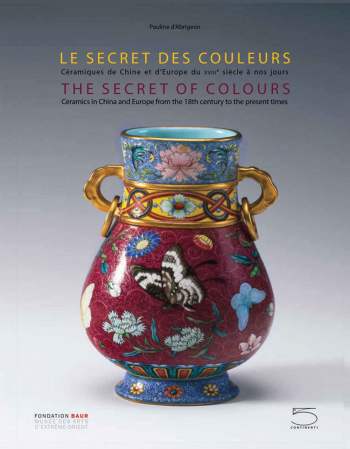 This exhibition tells the often turbulent story of the quest for colour on porcelain in China and France. It contrasts two crucial moments in the history of porcelain driven by the desire to extend the range of enamels. They occurred at the turn of the 18th century in China and during the 19th century in France, two periods during which the interactions between Europe and China, whether cultural or belligerent, were particularly intense.
The first room in the exhibition introduces visitors to enamelling techniques, the notions of translucent and opaque enamels, and to the famille verte and famille rose. This is followed by a presentation of Chinese enamelled porcelain, principally from the reigns of Kangxi (1662–1722), Yongzheng (1723–35), and Qianlong (1736–95), which are among the jewels of Alfred Baur’s collection and which exemplify the use of colour on porcelain over a period of more than a century. The new palette developed in the imperial workshops was soon exported from the port of Canton on porcelain and copper-enamel wares on that had been specially designed for the Western market.
The second section of the exhibition takes place a century later in France, at the Sèvres manufactory, where Chinese colors, long coveted for their brilliance, were keenly researched. Missionaries, chemists, and French consuls in China all contributed to bringing back samples to France where the mysteries of Chinese manufacturing techniques could be fathomed.
The last part of the exhibition introduces more contemporary research on the use of color, first of all by Fance Franck (1927–2008), who from the late 1960s worked with the Sèvres factory to recreate the famous ‘fresh red’ (‘rouge frais‘) or ‘sacrificial red’ (‘rouge sacrificiel‘) that had been mastered by the potters in Jingdezhen several centuries earlier. The exhibition’s investigation into this endless chromatic quest is brought to a close by the pure and gleamingly colourful works of Thomas Bohle (b. 1958).
Pauline d’Abrigeon, Le secret des couleurs: Céramiques de Chine et d’Europe du XVIIIe siècle à nos jours (Milan: 5 Continents Editions, 2022), 170 pages, ISBN: 979-1254600054, €45. Bilingual edition (French and English).
Cover image: Vase with handles, porcelain and polychrome enamels on glaze, China, Jingdezhen, Qing Dynasty, mark and reign of Qianlong (1736–1795) (Geneva: Fondation Baur).
New Book | Global Objects
From Princeton UP:
Edward Cooke, Global Objects: Toward a Connected Art History (Princeton: Princeton University Press, 2022), 336 pages, ISBN: 978-0691184739, £28 / $35.
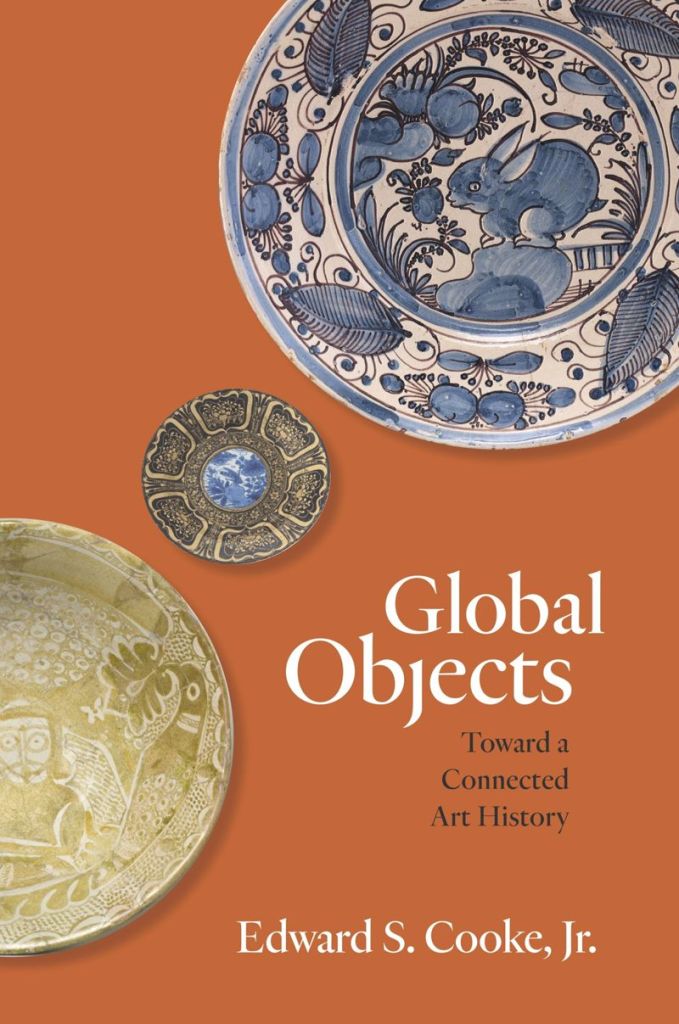 Art history is often viewed through cultural or national lenses that define some works as fine art while relegating others to the category of craft. Global Objects points the way to an interconnected history of art, examining a broad array of functional aesthetic objects that transcend geographic and temporal boundaries and challenging preconceived ideas about what is and is not art. Avoiding traditional binaries such as East versus West and fine art versus decorative art, Edward Cooke looks at the production, consumption, and circulation of objects made from clay, fiber, wood, and nonferrous base metals. Carefully considering the materials and process of making, and connecting process to product and people, he demonstrates how objects act on those who look at, use, and acquire them. He reveals how objects retain aspects of their local fabrication while absorbing additional meanings in subtle and unexpected ways as they move through space and time. In emphasizing multiple centers of art production amid constantly changing contexts, Cooke moves beyond regional histories driven by geography, nation-state, time period, or medium.
Beautifully illustrated, Global Objects traces the social lives of objects from creation to purchase, and from use to experienced meaning, charting exciting new directions in art history.
Edward S. Cooke, Jr. is the Charles F. Montgomery Professor of American Decorative Arts at Yale University. His books include Inventing Boston: Design, Production, and Consumption, 1680–1720 and Making Furniture in Preindustrial America: The Social Economy of Newtown and Woodbury, Connecticut.
C O N T E N T S
Introduction
I. Making
1 Materials
2 Realization
II. Movement
3 Circulation and Interchange
4 Function
III. Meaning
5 Memory and Gift
6 Appearance
7 Touch
Conclusion
Acknowledgments
Glossary
Notes
Index
Photo Credits
Exhibition | François Boucher, du théâtre à l’Opéra
Now on view at the Musée des Beaux-Arts in Tours:
L’amour en scène! François Boucher, du théâtre à l’Opéra
Musée des Beaux-Arts, Tours, 5 November 2022 — 30 January 2023
Curated by Jessica Degain and Guillaume Kazerouni
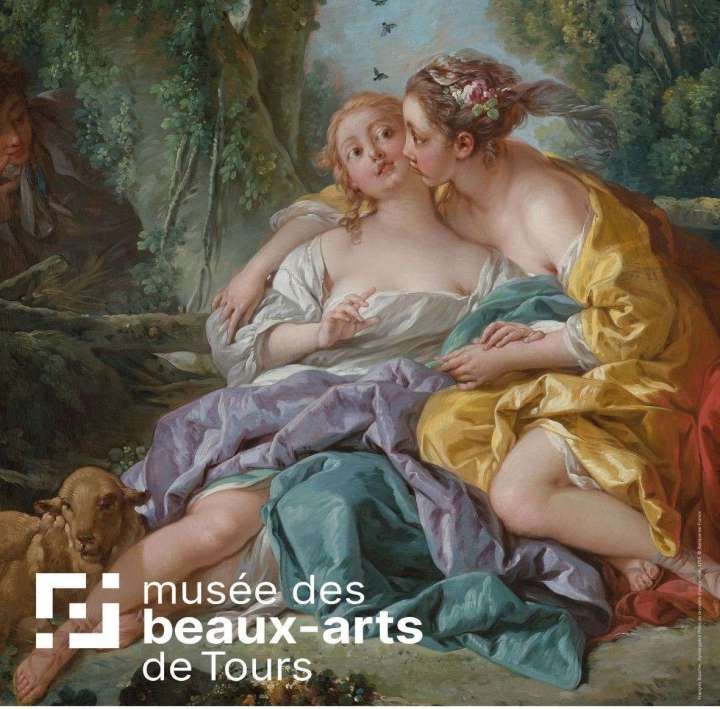
François Boucher, Sylvie Cures Philis of a Bee Sting, 1755, oil on canvas, 103 × 138 cm (Paris: Banque de France).
Le musée des Beaux-arts de Tours propose de mettre en lumière un pan méconnu de la carrière de François Boucher (1703–1770), peintre majeur du 18ᵉ siècle au service de Louis XV et de Madame de Pompadour : sa passion pour le théâtre et l’opéra. Actif à l’Opéra de Paris, à l’Opéra-Comique et au théâtre des Petits Cabinets à Versailles, François Boucher oeuvre tout au long de sa vie à près d’une centaine de spectacles. Qu’il conçoive ou supervise les décors et les costumes de scène, aucun autre peintre de son temps ne fut autant investi dans le monde théâtral.
Point de départ de l’exposition et restaurés à cette occasion, les quatre tableaux du musée de Tours, chefs-d’oeuvre de l’art rocaille, témoignent de l’engouement de l’artiste pour les arts de la scène. Aux côtés de l’esquisse d’Apollon couronnant les arts, réputée être un projet de rideau de scène pour l’Opéra, les trois peintures d’Apollon et Issé et de Sylvie et Aminte mettent à l’honneur les opéras baroques d’Issé et de Silvie. Apollon révélant sa divinité à la bergère Issé est en effet peint par Boucher en 1750 pour la marquise de Pompadour, en souvenir de ses représentations théâtrales à Versailles dans le rôle d’Issé. De même, les tableaux de Sylvie fuyant le loup et Aminte revenant à la vie dans les bras de Sylvie rappellent son apparition théâtrale dans le rôle de la nymphe. Conçus à l’origine pour former un ensemble de quatre tableaux, la série de l’histoire de Sylvie et Aminte sera réunie pour la première fois depuis le 18ᵉ siècle, grâce aux prêts exceptionnels de la Banque nationale de France (qui conserve aujourd’hui Sylvie guérit Philis de la piqûre d’une abeille et Sylvie délivrée par Aminte). OEuvres de maturité, ces tableaux constituent un magnifique témoignage du talent de François Boucher à dépeindre des univers bucoliques, merveilleux et théâtraux.
 Complétés par une soixantaine d’oeuvres, en particulier de la Bibliothèque nationale de France et du Musée du Louvre, l’exposition permettra par ailleurs d’illustrer d’autres contributions de Boucher aux arts de la scène. De ses gravures de jeunesse pour illustrer les OEuvres de Molière, dont on célèbre cette année le quatre centième anniversaire de la naissance, aux décors et costumes conçus pour divers opéras tels Armide ou Aline, reine de Golconde, les oeuvres rassemblées éclairent la vitalité de sa création.
Déployés autour des tableaux du musée, estampes, tapisseries et objets d’art décoratifs s’accompagneront d’oeuvres d’art moderne et contemporain, de Berthe Morisot à Cindy Sherman. La contribution du créateur de mode Sami Nouri révélera enfin comment Boucher et le rococo continuent à inspirer les artistes du 21e siècle.
L’exposition est à découvrir du 5 novembre 2022 au 30 janvier 2023, grâce aux prêts prestigieux de nombreuses institutions : Bibliothèque national de France / Musée du Louvre / Musée national des Châteaux de Versailles et de Trianon / Moulins, Centre national du costume de scène / Narbonne, musée d’art et d’histoire / Paris, Mobilier national / Paris, musée Marmottan-Monet / Centre National des Arts Plastiques / Paris, Banque de France / Sèvres, Cité de la Céramique / Paris, musée des Arts décoratifs / Paris, musée Cognacq-Jay / Paris, Petit Palais / Agen, musée des Beaux-Arts.
Love on Stage! Francois Boucher, from the Theater to the Opera
Commissariat de l’exposition
• Jessica Degain, conservatrice du patrimoine chargée des collections XVIIᵉ–XIXᵉ siècles du musée des Beaux-Arts de Tours
• Guillaume Kazerouni, conservateur, chargé des collections anciennes du musée des Beaux-Arts de Rennes
Jessica Degain, L’amour en scène! François Boucher, du théâtre à l’Opéra (Paris: Éditions Snoeck, 2022), 239 pages, ISBN: 978-9461617200, €29.
New Book | Butts: A Backstory
Sarah Bartmann is part of the story as recounted by Radke; from Simon & Schuster:
Heather Radke, Butts: A Backstory (New York: Simon & Schuster, 2022), 320 pages, ISBN: 978-1982135485, $29.
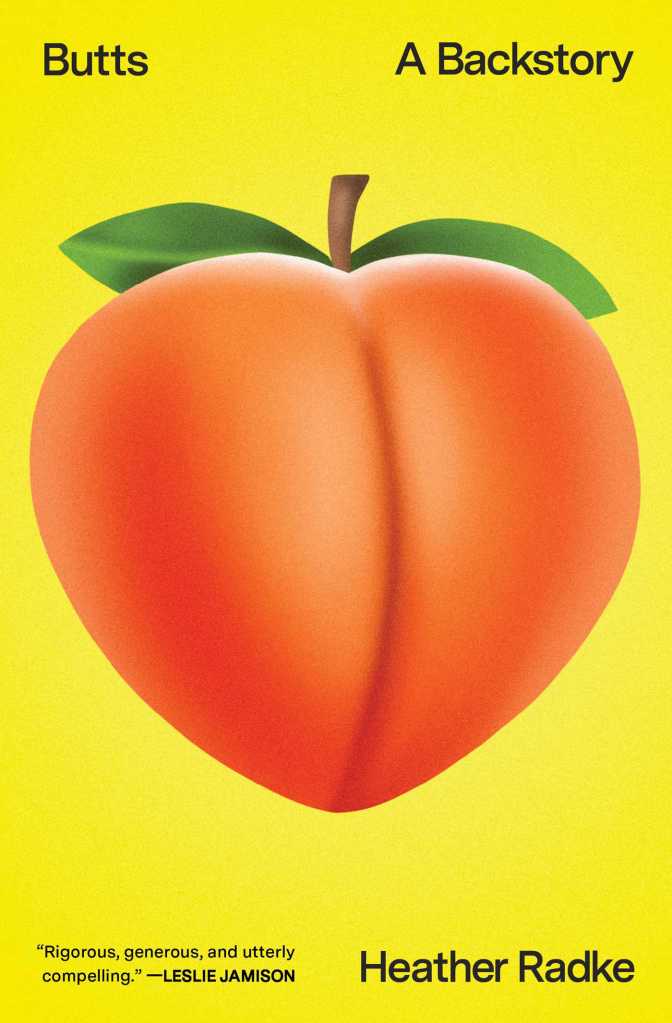 Whether we love them or hate them, think they’re sexy, think they’re strange, consider them too big, too small, or anywhere in between, humans have a complicated relationship with butts. It is a body part unique to humans, critical to our evolution and survival, and yet it has come to signify so much more: sex, desire, comedy, shame. A woman’s butt, in particular, is forever being assessed, criticized, and objectified, from anxious self-examinations trying on jeans in department store dressing rooms to enduring crass remarks while walking down a street or high school hallways. But why? In Butts: A Backstory, reporter, essayist, and RadioLab contributing editor Heather Radke is determined to find out.
Spanning nearly two centuries, this “whip-smart” (Publishers Weekly, starred review) cultural history takes us from the performance halls of 19th-century London to the aerobics studios of the 1980s, the music video set of Sir Mix-a-Lot’s “Baby Got Back” and the mountains of Arizona, where every year humans and horses race in a feat of gluteal endurance. Along the way, she meets evolutionary biologists who study how butts first developed; models whose measurements have defined jean sizing for millions of women; and the fitness gurus who created fads like “Buns of Steel.” She also examines the central importance of race through figures like Sarah Bartmann, once known as the “Venus Hottentot,” Josephine Baker, Jennifer Lopez, and other women of color whose butts have been idolized, envied, and despised. Part deep dive reportage, part personal journey, part cabinet of curiosities, Butts is an entertaining, illuminating, and thoughtful examination of why certain silhouettes come in and out of fashion—and how larger ideas about race, control, liberation, and power affect our most private feelings about ourselves and others.
Heather Radke is an essayist, journalist, and contributing editor and reporter at Radiolab, the Peabody Award–winning program from WNYC. She has written for publications including The Believer, Longreads, and The Paris Review, and she teaches at Columbia University’s creative writing MFA Program. Before becoming a writer, Heather worked as a curator at the Jane Addams Hull-House Museum in Chicago.
◊ ◊ ◊ ◊ ◊
In her piece for The New York Times (28 November 2022), Marisa Meltzer narrates a visit to The Met with Radke to discuss the variety of bottoms—and attitudes toward them—across the history of art.










 Enfilade
leave a comment