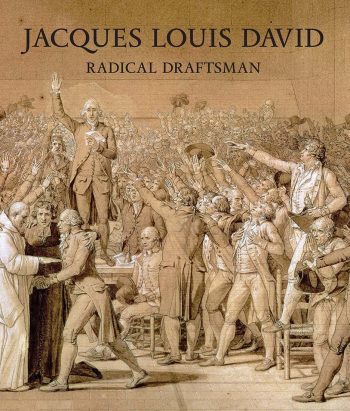
Exhibition | Jacques Louis David: Radical Draftsman
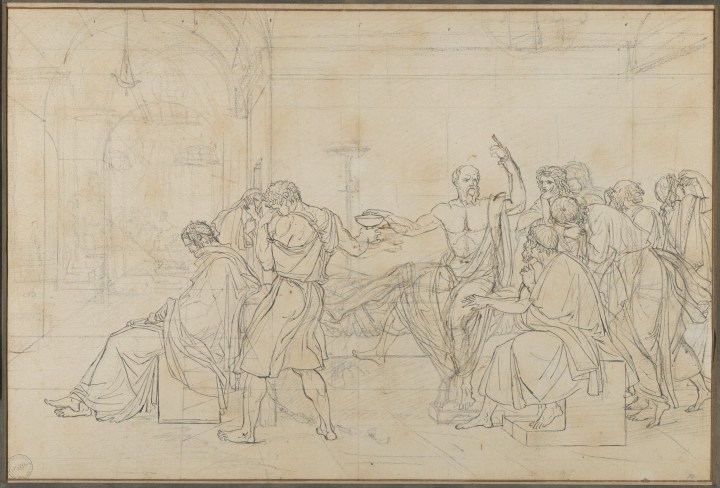
Jacques Louis David, The Death of Socrates, ca. 1786, pen and black ink, over black chalk, touches of brown ink, squared in black chalk, sheet: 11 × 16 inches (New York: The Metropolitan Museum of Art, 2015.149).
◊ ◊ ◊ ◊ ◊
From the press release for the exhibition:
Jacques Louis David: Radical Draftsman
The Metropolitan Museum of Art, New York, 17 February — 15 May 2022
Organized by Perrin Stein
Regarded in his time as the most important painter in France, Jacques Louis David (1748–1825) produced major canvases that shaped the public’s perceptions of historical events in the years before, during, and after the French Revolution. Drawings were the primary vehicle by which he devised and refined his groundbreaking compositions. Jacques Louis David: Radical Draftsman is the first exhibition devoted to works on paper by this celebrated and influential artist. Through some 80 drawings and sketches from the collections of The Met and numerous private and institutional lenders from the United States and abroad—including rarely loaned or newly discovered works—visitors will see the progress of his ideas as he worked to create his masterful paintings. A highlight of the exhibition will be a work in The Met collection, The Death of Socrates (1787)—David’s most important painting in America—which will be displayed along with preparatory drawings that reveal his years-long thought process and planning.
 The exhibition—the first to focus on David’s preparatory studies—looks beyond his public successes to chart the moments of inspiration and the progress of ideas, both artistic and psychological. The works will be presented chronologically, starting with David’s early training in Rome. Sketches from this period represent the vast store of motifs that he mined for decades thereafter, including for his most famous paintings.
The works David submitted to the Salons after returning to France heralded a powerful new neoclassical style that drew its inspiration from classical antiquity. Paintings like The Oath of the Horatii (1784) and The Death of Socrates (1787) won instant acclaim and buttressed his growing reputation as leader of the French school. Several drawings on view demonstrate the artist’s struggles to heighten the psychological impact and create a more powerful overall composition.
Rebelling against the constraints of France’s centralized monarchy in its waning days, David embraced the changes wrought by the Revolution of 1789. His most ambitious project—a depiction of the Oath of the Tennis Court, the event in which representatives of different classes of French society pledged to draft a constitution to counterbalance the absolute authority of the king—was never completed. The exhibition will feature a large presentation drawing that is one of David’s supreme achievements, deftly redeploying the language of the classical past to imbue a contemporary event with the drama and gravitas of a history painting.
David’s support of the more radical faction of the fledgling Republic led to his imprisonment. After his release, he attempted to regain dominance of the French school by exploring themes of national reconciliation through historical subjects like The Intervention of the Sabine Women (1799). Eventually, David reclaimed the spotlight through his support of Napoleon Bonaparte. David’s magisterial canvas memorialized the glittering spectacle in Notre Dame cathedral that marked Napoleon’s ascent from successful general to crowned emperor of France in 1804.
After a string of military defeats led to Napoleon’s downfall and the restoration of the Bourbon monarchy in 1816, David—a former regicide who had lent his talents to gilding the emperor’s image—was banished. He went into exile and spent his final decade working in Brussels.
Jacques Louis David: Radical Draftsman was organized by Perrin Stein, Curator in the Department of Drawings and Prints. The exhibition is accompanied by a catalogue, published by The Metropolitan Museum of Art and distributed by Yale University Press. A related installation, In the Orbit of Jacques Louis David: Selections from the Department of Drawings and Prints, on view 20 January – 10 May 2022, focuses on David’s legacy through works by his pupils and contemporaries (Gallery 690).
Perrin Stein, with contributions by Daniella Berman, Philippe Bordes, Mehdi Korchane, Louis-Antoine Prat, Benjamin Peronnet, and Juliette Trey, Jacques Louis David: Radical Draftsman (New Haven: Yale University Press, 2022), 308 pages, ISBN: 978-1588397461, $65.
New Book | The Story of the Country House
From Yale UP:
Clive Aslet, The Story of the Country House: A History of Places and People (Yale University Press, 2021), 256 pages, ISBN: 978-0300255058, $25.
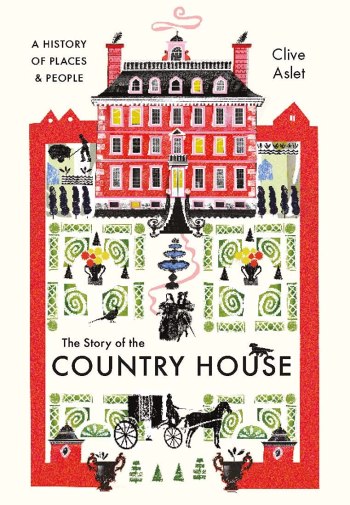 The Story of the Country House is an authoritative and vivid account of the British country house, exploring how they have evolved with the changing political and economic landscape. Clive Aslet reveals the captivating stories behind individual houses, their architects, and occupants, and paints a vivid picture of the wider context in which the country house in Britain flourished and subsequently fell into decline before enjoying a renaissance in the twenty-first century. The genesis, style, and purpose of architectural masterpieces such as Hardwick Hall, Hatfield House, and Chatsworth are explored, alongside the numerous country houses lost to war and economic decline. We also meet a cavalcade of characters, owners with all their dynastic obsessions and diverse sources of wealth, and architects such as Inigo Jones, Sir John Vanbrugh, Robert Adam, Sir John Soane, and A.W.N. Pugin, who dazzled or in some cases outraged their contemporaries. The Story of the Country House takes a fresh look at this enduringly popular building type, exploring why it continues to hold such fascination for us today.
Clive Aslet is a writer, commentator, historian, editor, and academic. He has written around twenty books on architecture and history and was editor of Country Life magazine from 1993 to 2006.
C O N T E N T S
Acknowledgments
Introduction
Prologue
1 Medieval
2 Tudor and Elizabethan
3 Early Stuart
4 Commonwealth to Queen Anne
5 Early Georgian
6 Mid-Georgian
7 Regency to William IV
8 Early and High Victorian
9 Turn of the Century
10 Between the Wars
11 Post-War: Recovery and Boom
12 Now
Further Reading
Index
New Book | Chatsworth, Arcadia, Now
This book was published in the UK in the fall by Penguin, with a US release scheduled for March from Rizzoli. (I’m always interested in the decision to use different covers for British and American audiences. -CH)
John-Paul Stonard, foreword by The Duke and Duchess of Devonshire, with photographs by Victoria Hely-Hutchinson, Chatsworth, Arcadia, Now: Seven Scenes from the Life of an English Country House (New York: Rizzoli Electa, 2022), 420 pages, ISBN: 978-0847871414, $65.
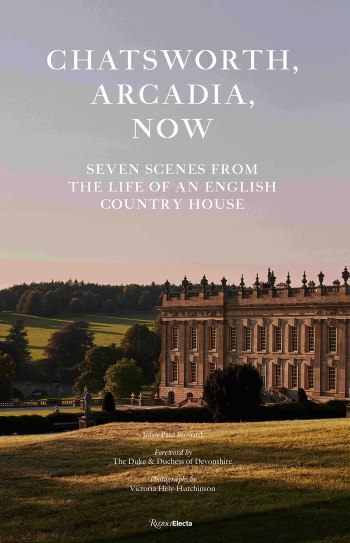 No place embodies the spirit of the English country house better than Chatsworth. From best-selling books such as Georgiana: Duchess of Devonshire and Chatsworth: The House by Deborah Mitford, the late Dowager Duchess of Devonshire, American audiences have long been transfixed by this remarkable place and its extraordinary collection of art and decorative objects.
Today, Chatsworth’s facade is newly cleaned and its windows freshly gilded. The forward-looking current Duke of Devonshire, who likes to say that “everything was new once,” has redone the public and private rooms. This tour-de-force volume is his telling of the story of Chatsworth through seven historical periods accompanied by stunning photo-graphic portraits of the house, its collections, and the grounds.
Chatsworth contains countless treasures from Nicolas Poussin’s Et in Arcadia Ego and Antonio Canova’s Endymion to seminal modern works by Lucian Freud and David Hockney. Though filled with works from different time periods, the collection represents the very best of the “new” from each artistic era.
John-Paul Stonard is an art historian educated at the Courtauld Institute of Art and contributes to the London Review of Books and Times Literary Supplement. The Duke and Duchess of Devonshire reside at Chatsworth, home to the family since 1549. Victoria Hely-Hutchinson is a photographer whose work has appeared in Dazed & Confused, The New Yorker, Vanity Fair, Vogue, and The Wall Street Journal Magazine.
New Book | A History of Arcadia in Art and Literature
Distributed by The University of Chicago Press and Paul Holberton:
A History of Arcadia in Art and Literature: Volume I, Earlier Renaissance (London: Ad Illisum, 2021), 500 pages, ISBN: 978-1912168255, $60 / Volume II, Later Renaissance, Baroque, and Neoclassicism (London: Ad Illisvm, 2021), 500 pages, ISBN: 978-1912168262, $60.
 A History of Arcadia in Art and Literature is an unprecedented exploration of the pastoral through the close examination of original texts of classical and early and later modern pastoral poetry, literature, and drama in ancient Greek, Latin, Italian, French, Spanish, Portuguese, Dutch, German, and English, as well as of a wide range of visual imagery. The book is an iconographic study of Renaissance and Baroque pastoral and related subject matter, with an important chapter on the eighteenth century, both in the visual arts, where pastoral is poorly understood, and in words and performance, about which many false preconceptions prevail.
The book begins with Virgil’s use of Theocritus and an analysis of what basis Virgil provided for Renaissance pastoral and what, by contrast, stemmed from the medieval pastourelle. Paul Holberton then moves through a remarkable range of works, addressing authors such as Petrarch, Tasso, Guarino, Lope de Vega, Cervantes, and Shakespeare, and artists such as Giorgione, Claude, Poussin, Watteau, Gainsborough, and many more. The book serves simultaneously as a careful study, an art book full of beautiful reproductions, and an anthology, presenting all texts both in the original language and in English translation.
Exhibition | Flesh and Bones: The Art of Anatomy
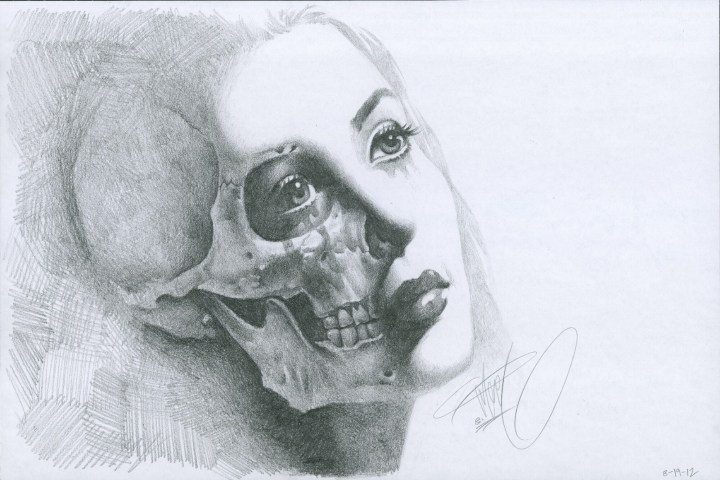
Love & Hate, 19 August 2012, OG Abel (Abel Izaguirre), graphite on paper, 12 1/2 × 19 1/2 × 3 inches (Los Angeles: Getty Research Institute, 2013.M.8. Gift of Ed and Brandy Sweeney © OG Abel).
◊ ◊ ◊ ◊ ◊
From the press release for the exhibition opening this month at The Getty:
Flesh and Bones: The Art of Anatomy
Getty Research Institute, Getty Center, 22 February — 10 July 2022
Curated by Monique Kornell
Featuring works of art from the 16th century to today, the Getty Research Institute exhibition Flesh and Bones: The Art of Anatomy explores the theme of anatomy and art and the impact of anatomy on the study of art.
“Flesh and Bones celebrates the connection between art and science and the role of art in learning,” said Mary Miller, director of the Getty Research Institute. “This exhibition draws on the Getty Research Institute’s rich and varied holdings to tell the story of two disciplines that have long been intertwined. I believe visitors will find meaningful connections with the way artists and scientists have inspired one another for centuries.”
 From spectacular life-size illustrations to delicate paper flaps that lift to reveal the body’s interior, the body is represented through a range of media. In Europe, the first printed anatomical atlases, introduced during the Renaissance, provided new visual maps to the body, often composed of striking images. Landmarks of anatomical illustration such as the revolutionary publications of Vesalius in the 16th century and Albinus in the 18th century are represented as well as little-known rarities such as a pocket-size book of anatomy for artists from over 200 years ago. The exhibition, which explores important trends in the depiction of human anatomy and reflects the shared interest in the structure of human body by medical practitioners and artists, is organized by six themes: Anatomy for Artists; Anatomy and the Antique; Lifesize; Surface Anatomy; Three Dimensionality; and The Living Dead. The last looks at the motif of the representation of the dead as living, with skeletons and anatomized cadavers capable of motion rather than inert on a dissecting table.
“Artists not only helped create these images but were part of the market for them, as anatomy was a basic component of artistic training for centuries,” said exhibition curator Monique Kornell. “Featuring selections from the GRI’s impressive collection of anatomy books for artists as well as prints, drawings, and other works, this exhibition looks at the shared vocabulary of anatomical images and at the different methods used to reveal the body through a wide range of media, from woodcut to neon.”
For artists of the modern era, anatomy is often a medium of expression and a signifier of the body itself, rather than purely an object of study. Robert Rauschenberg’s Booster (1967) and Tavares Strachan’s Robert (2018) are two life-size anatomical portraits as well as symbols of the passing nature of life. Echoing the composite prints of Antonio Cattani’s remarkable life-size anatomical figures from the 1700s in the exhibition, Booster is a fractured self-portrait based on X-rays of the artist that have been joined together.
Strachan’s Robert is not an exact likeness of the man it immortalizes, Major Robert Henry Lawrence Jr., the first African American astronaut, who tragically died in a training accident. In choosing to represent the hidden interior of the body in neon and glass, Strachan, a former GRI artist in residence, makes visible the unique history of Lawrence, while demonstrating an inner structure that equalizes all people.
Anatomists and artists have approached the problem of how best to describe the body’s complex and invisible interior with a variety of representational strategies, ranging from the graphic to the sculptural and, recently, the virtual. From paper-flap constructions that allow viewers to lift and peer under layers of flesh to stereoscopic photographs that mimic binocular perception and project anatomical structures into space, three-dimensionality was inventively pursued in the pre-digital age to cultivate an understanding of anatomy as a synthetic whole.
The exhibition is curated by Monique Kornell, guest curator; guest assistant professor, Program in the History of Medicine, Cedars-Sinai Hospital, Los Angeles, and is accompanied by a richly illustrated publication.
Monique Kornell, with contributions by Thisbe Gensler, Naoko Takahatake, and Erin Travers, Flesh and Bones: The Art of Anatomy (Los Angeles: Getty Research Institute, 2022), 249 pages, ISBN 978-1606067697, $50.
New Book | Masculinity and Danger on the Grand Tour
Distributed by The University of Chicago Press:
Sarah Goldsmith, Masculinity and Danger on the Eighteenth-Century Grand Tour (London: University of London Press, 2021), 200 pages, ISBN: 978-1912702213 (cloth), $55 / ISBN: 978-1912702220 (paper), $35.
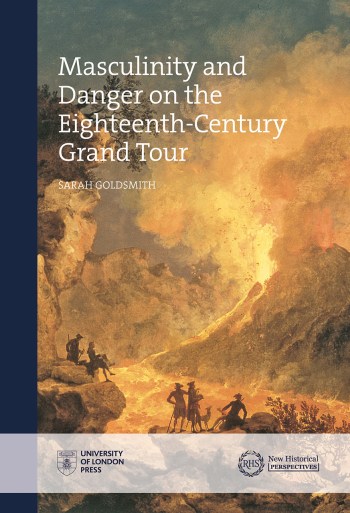 The Grand Tour, a customary trip through Europe undertaken by British nobility and wealthy landed gentry during the seventeenth and eighteenth centuries, played an important role in the formation of contemporary notions of elite masculinity. Through an examination of testimonies written by Grand Tourists, tutors, and their families, Sarah Goldsmith argues that the Grand Tour educated young men in a wide variety of skills, virtues, and vices that extended well beyond polite society.
Goldsmith demonstrates that the Grand Tour was a means of constructing Britain’s next generation of leaders. Influenced by aristocratic concepts of honor and inspired by military-style leadership, elite society viewed experiences of danger and hardship as powerfully transformative and therefore as central to constructing masculinity. Scaling mountains, volcanoes, and glaciers, and even encountering war and disease, Grand Tourists willingly tackled a variety of perils. Through her study of these dangers, Goldsmith offers a bold revision of eighteenth-century elite masculine culture and the critical role the Grand Tour played within it.
Sarah Goldsmith is a lecturer in urban and material culture history at the University of Edinburgh, having previously held a Leverhulme Early Career Research Fellowship at the University of Leicester.
C O N T E N T S
Acknowledgements
Introduction
1 Hazarding Chance: A History of Eighteenth-Century Danger
2 Military Mad: War and the Grand Tour
3 Wholesome Dangers and a Stock of Health: Exercise, Sport, and the Hardships of the Road
4 Fire and Ice: Mountains, Glaciers, and Volcanoes
5 Dogs, Servants, and Masculinities: Writing about Danger and Emotion on the Grand Tour
Conclusion
Appendix
Bibliography
Index
New Book | The Art and Science of Mark Catesby
From Yale UP:
Henrietta McBurney, The Art and Science of Mark Catesby (London: Paul Mellon Centre, 2021), 384 pages, ISBN: 978-1913107192, $50.
 The life and art of the 18th-century naturalist Mark Catesby, and his pioneering work depicting the flora and fauna of North America, are explored in vibrant detail
This book explores the life and work of the celebrated eighteenth-century English naturalist, explorer, artist and author Mark Catesby (1683–1749). During Catesby’s lifetime, science was poised to shift from a world of amateur virtuosi to one of professional experts. Working against a backdrop of global travel that incorporated collecting and direct observation of nature, Catesby spent two prolonged periods in the New World—in Virginia (1712–19) and South Carolina and the Bahamas (1722–6). In his majestic two-volume Natural History of Carolina, Florida and the Bahama Islands (1731–43), esteemed by his contemporary John Bartram as “an ornament for the finest library in the world,” he reflected the excitement, drama, and beauty of the natural world. Interweaving elements of art history, history of science, natural history illustration, painting materials, book history, paper studies, garden history and colonial history, this meticulously researched volume brings together a wealth of unpublished images as well as newly discovered letters by Catesby, which, with their first-hand accounts of his collecting and encounters in the wild, bring the story of this extraordinary pioneer naturalist vividly to life.
Henrietta McBurney is a freelance curator and art historian. She was previously curator in the Royal Library, Windsor Castle. Her publications include studies on the florilegium of Alexander Marshal and the natural history drawings for Cassiano dal Pozzo’s Paper Museum.
New Book | The Doctor’s Garden
From Yale UP:
Clare Hickman, The Doctor’s Garden: Medicine, Science, and Horticulture in Britain (New Haven: Yale University Press, 2021), 288 pages, ISBN: 978-0300236101, $40.
 A richly illustrated exploration of how late Georgian gardens associated with medical practitioners advanced science, education, and agricultural experimentation
As Britain grew into an ever-expanding empire during the late eighteenth and early nineteenth centuries, new and exotic botanical specimens began to arrive within the nation’s public and private spaces. Gardens became sites not just of leisure, sport, and aesthetic enjoyment, but also of scientific inquiry and knowledge dissemination. Medical practitioners used their botanical training to capitalize on the growing fashion for botanical collecting and agricultural experimentation in institutional, semipublic, and private gardens across Britain. This book highlights the role of these medical practitioners in the changing use of gardens in the late Georgian period, marked by a fluidity among the ideas of farm, laboratory, museum, and garden. Placing these activities within a wider framework of fashionable, scientific, and economic interests of the time, historian Clare Hickman argues that gardens shifted from predominately static places of enjoyment to key gathering places for improvement, knowledge sharing, and scientific exploration.
Clare Hickman is a senior lecturer in history at Newcastle University. She lives in Whitley Bay, United Kingdom.
C O N T E N T S
Acknowledgments
Quick Guide to the Key Medical Practitioners and Their Gardens
Introduction, Illuminating the Doctor’s Garden
1 Educating the Senses: The Botanic Garden as a Teaching and Research Center
2 Creating a Perpetual Spring: Tracing Private Botanic Collectors and Their Networks
3 For ‘Curiosity and Instruction’: Visiting the Botanic Garden
4 ‘Hints or Directions’: Reading the Doctor’s Garden
5 For Dulce and Utile: The Garden as Both Ornament and Farm
6 This ‘Terrestrial Elysium’: Sociability and the Garden
Epilogue, The Stories We Tell: Bridging the Gap between Research and Practice
Notes
Selected Bibliography
Index
New Book | Botanical Entanglements
Forthcoming from UVA Press:
Anna Sagal, Botanical Entanglements: Women, Natural Science, and the Arts in Eighteenth-Century England (Charlottesville: University of Virginia Press, 2022), 272 pages, ISBN: 978-0813946955 (cloth), $115 / ISBN: 978-0813946962 (paper), $45. Also available as an ebook.
 To this day, women face barriers in entering scientific professions, and in earlier eras the challenges were greater still. But in Botanical Entanglements, Anna Sagal reveals how women’s active participation in scientific discourses of the eighteenth century was enabled by the manipulation of social and cultural conventions that have typically been understood as limiting factors. By taking advantage of the intersections between domesticity, femininity, and nature, the writers and artists studied here laid claim to a specific authority on naturalist subjects, ranging from botany to entomology to natural history more broadly.
Botanical Entanglements pairs studies of well-known authors—Eliza Haywood, Charlotte Lennox, Maria Edgeworth, and Charlotte Smith—with authors and artists who receive less attention in this context—Priscilla Wakefield, Maria Jacson, Elizabeth Blackwell, Henrietta Maria Moriarty, and Mary Delany—to offer a nuanced portrait of the diverse strategies women employed to engage in scientific labor. Using socially acceptable forms of textual production, including popular periodicals, didactic texts, novels, illustrated works, craftwork, and poetry, these women advocated for more substantive and meaningful engagement with the natural world. In parallel, the book also illuminates the emotional and physical intimacies between women, plants, and insects to reveal an early precursor to twenty-first-century theorizing of plant intelligence and human-plant relationships. Recognizing such literary and artistic ‘entanglement’ facilitates a more profound understanding of the multifaceted relationship between women and the natural world in eighteenth-century England.
Anna K. Sagal is Visiting Assistant Professor of English and Creative Writing at Cornell College.
C O N T E N T S
Introduction
1 Caterpillars in the Garden
2 From Native Blooms to Monster Plants
3 Pedagogies and Possibilities
4 Sketching Vegetality
5 Collecting and Creating
Coda
New Book | The History of Art: A Global View

Cover designs by Jen Montgomery.
◊ ◊ ◊ ◊ ◊
Published by Thames & Hudson and Norton:
Jean Robertson, Deborah Hutton, Cynthia Colburn, Ömür Harmansah, Eric Kjellgren, Rex Koontz, De-nin Lee, Henry Luttikhuizen, Allison Lee Palmer, Stacey Sloboda, and Monica Blackmun Visonà, The History of Art: A Global View, Prehistory to the Present (New York: Thames & Hudson, 2021), 1264 pages, ISBN: 978-0500022375, $207 — with a variety of purchase options (and prices), depending upon coverage, including digital options.
Priscilla McGeehon on the latest art history survey text; interviewed by Craig Hanson
After testing an early digital version of The History of Art: A Global View as a text for one of my thematic courses last year, I’m using it now for my regular survey courses. Here, I’m glad to draw attention to Stacey Sloboda’s outstanding work on the chapters addressing seventeenth- and eighteenth-century Europe. While not rejecting familiar introductory structures, there’s now a nuance built in to the text that allows one (for example) to move away from Rococo and Neoclassicism as the only significant organizational devices for the eighteenth century.
Textbooks are, of course, complicated entities–caught between myriad competing interests (including those of high school classes, thanks to AP courses). With that context in mind, I thought it might be useful to hear from the publisher. Priscilla McGeehon, College Publisher at Thames & Hudson, very kindly responded to a handful of questions I sent to her over the course of a few email exchanges. I’m very grateful for the time and energy she gave to the interview. -CH
◊ ◊ ◊ ◊ ◊
Craig Hanson: The survey textbook has a long history within the field of art history; indeed such books have played an integral role in defining the discipline. How might this latest book feel familiar to readers? How might it feel different?
Priscilla McGeehon: What will be familiar in The History of Art: A Global View is almost everything you’d expect to see in any of the major art history survey textbooks, including the full spectrum of canonical ‘Western’ works, along with a good selection of art from non-Euro-American parts of the world.
Most immediately unfamiliar is the organization of the chapters and the order in which the art is presented. Unlike the two top-selling survey books (Gardner’s Art through the Ages by Fred Kleiner, and Art History by Marilyn Stokstad and Michael Cothren), which both isolate the ‘non-western’ chapters at the end of their volumes 1 and 2, The History of Art: A Global View is organized roughly chronologically.
Although the majority of the book is still dedicated to what’s traditionally called ‘Western’ art (more about that word in a moment), this chronological organization gives students a chance to see what was happening contemporaneously around the world. Thus, for example, the chapters on Classical Greece (600 bce–400 bce) are followed immediately by a chapter on the development of Buddhist and Hindu art in South Asia (250 bce–800 ce), and chapters on the colonial periods in Oceania, South Asia and Southeast Asia immediately follow the chapters on the European Enlightenment, Rococo, Neoclassical, and Romantic art—the styles that predominated during the period when European colonialism was taking hold around the world.
This was achieved by having chapters cover much briefer periods of time than the two books mentioned above, allowing us to interweave the Western and non-western chapters more tightly than if chapters were twice as long. Instructors who’ve piloted the book find it easy to assign two or three of these brief chapters in place of the single, much longer chapter they assigned in the past. Some of them also report an unforeseen benefit—their students are more likely to read the briefer chapters!
To tie it all together, those 74 short chapters are organized into six thematic chronological parts. Each part opens with a short, broad-brushstroke introduction to the era; a timeline with about a dozen important works from around the world made during that time period; and a global map showing where each of those works was created.
CH: What are some other ways this book differs from previous survey books?
PM: A lot of things are subtler and may only become apparent once someone is actually assigning the book. For example, language was carefully considered, and we learned to question a lot of our unconscious use of language, trying to correct it wherever we saw its implicit bias or Eurocentric perspective. There are doubtless examples of where we failed in this regard, but I’m confident that we used language and terminology more thoughtfully than any other survey book.
For example, there was a deliberate decision to avoid use of the term ‘Western’ until it was historically accurate to do so, and to avoid use of the term ‘non-western’ altogether. The Art Historical Thinking feature on p. 927 explains why. In another example, we realized that ‘West Asia’ is a more accurate term than ‘Near East’ or ‘Middle East’, as the latter clearly take a Eurocentric geographical perspective. At some point shortly after we made that change, the Met’s Heilbrunn Timeline made the same switch (not that we’re taking credit for their decision—but it was affirming to see it happen there!)
We tried to avoid describing techniques or styles as more ‘developed’ or artworks as more ‘sophisticated’, to avoid implying a progression or advancement that is often attributed to some cultures more than others. And speaking of cultures, we preferred to use that word, or ‘society’, rather than ‘civilization’, which we avoided. We were careful with words like ‘shaman’ and ‘pagan’ as well, finding appropriate substitutes.
As another example of trying to use language in a neutral way, we found that there was a tendency in the European chapters to refer to European cultural groups with specific names—Normans, Franks, or Visigoths, for example—but to lump other groups into more broad swaths—for example ‘Muslims’ instead of Umayyads or Abbasids or Fatimids. Having expert authors and reviewers who were sensitive to these issues was another important factor in the manuscript development.
HECAA members might be especially interested in how Stacey Sloboda ensured her chapters, although mainly about European art and architecture, nevertheless had a global perspective. That’s easily seen in some of the artworks she chose to discuss—the Metropolitan Cathedral in Mexico City, a casta painting, Girodet’s portrait of Citizen Belley—but her chapters also address important transnational phenomena. We took great care, for example, with the discussions of race and the enslavement of Africans in Europe and the Americas. The introductions to Chapters 49 (African Art and Global Trade, by Monica Visonà) and Chapter 58 (Romantic Art in Europe and North America, by Jean Robertson) both describe the consequences of the transatlantic slave trade, and Stacey included touchstone images—Velazquez’s Portrait of Juan de Pareja, the Wedgewood medallion Am I not a Man and a Brother?, and Benoist’s Portrait of Madeleine—to thread these important themes throughout the 17th- to 19th-century chapters.
In fact, Stacey was deeply involved in conceiving and implantation of the global Seeing Connections features, which have garnered a lot of praise from reviewers. She wrote the initial one, “Blue-and-White Porcelain: A Global Commodity,” to serve as a model for all the others, and it’s regularly cited as a favorite. She co-wrote several others, including “Mapping the World,” “The Artist’s Workshop,” “Picturing the Other in the Age of Imperialism,” and “Modern Art and War,” and played a key role by coordinating the entire team as they collaborated on writing the others.
After taking such care with the text, I realized we needed to pay close attention to the other components of the book as well—specifically the bibliography, glossary, and index. The authors were great about diversifying the Further Reading and Bibliography sections (and I admit to a tiny fist-pump when I opened the print book for the first time and saw that the first bibliography entry was Kwame Anthony Appiah.) In the Glossary, the authors pointed out that some terms which might not be considered art historical in other contexts needed to be defined in that sense for this book. For example, auspicious is an important concept when studying some Asian art; barkcloth is an important material in much Oceanic art.
Finally, I spent hours poring over the first draft of the index and rooting out some unexpected biases the indexer had inadvertently revealed. For example, European palaces and gardens were initially indexed by their proper names (Versailles, Kew Gardens) but those from other parts of the world were indexed by their geographic origin (‘Castles, Japanese’ instead of Himeji Castle; ‘Chinese gardens’ instead of Lingering Garden.) We worked hard to correct many instances like those where we found them. (For more on how indexes have been used historically to promote a particular viewpoint, there’s a recent book.)
CH: Looking into the near future, how do you understand the relationship between physical copies and digital copies? Is it a continuum for students, an either/or, a both/and, or something else?
PM: What always surprised people before 2020 was that the majority of students by far preferred print textbooks. Like so many things, the lockdown and pandemic accelerated a trend that was already underway, so that ebooks now make up the majority of textbook sales, at least in my limited view of the textbook world. In answer to your ‘both/and’ scenario—for students who purchase a new print book, we provide access to the ebook as well, so they can get the benefits of both.
Another transformation that was also already underway in 2019 is Inclusive Access, driven by the need for textbooks to be both more affordable and more equitably distributed. Historically, some students had to wait for financial aid to arrive few weeks after classes began in order to purchase their books. Clearly, they were at a disadvantage compared with students who had their textbooks from the outset. Other students would wait to see whether the instructor was going to test on the book content and if not, might never purchase one; still others decided to share with a classmate or to get through without a book. This inconsistency caused difficulty for the instructor as well as students. Now, many campuses arrange for textbooks (in ebook form) to be made available at a steeply discounted price as part of a course fee. In addition to saving students money, Inclusive Access insures that every student has a book on the first day of class. (Students who prefer a print book can opt out of the course fee.)
CH: There are a host of supporting digital materials for the textbook. Could you describe some of those? Do you have a sense that these are added-value features, or do they have the capacity to transform more dramatically what we understand art historical pedagogy to include at the introductory level?
PM: Ten or more years ago, I was a self-described digital skeptic. What could an ebook do that a print book can’t do just as well? As the technology has developed, though, I’ve become a believer, but I still ask the question ‘how will this enhance the students’ learning?’
With The History of Art: A Global View ebook, the answer lies in the embedded animations, videos, and 360-degree panoramas. Seeing a 3-dimensional object or building definitely brings more to the experience than a static photo or illustration; likewise, watching an animation of how something is made or built makes it easier to understand than reading about it. Embedding those items in the ebook means students don’t have to follow a link to the (potentially distracting) internet.
Having immediate access to audio pronunciation of unfamiliar terms is also especially helpful for the global coverage, both for students and instructors. And finally, we’ve done efficacy studies that show that a homework tool like InQuizitive (a proprietary program from W. W. Norton, Thames & Hudson’s distribution partner in the U.S.) can raise students grades by a full point (e.g. from a C to a B, or a B to an A) if it’s assigned as part of the syllabus—that’s pretty convincing.
CH: Art historians are often pretty specialized, and it can be overwhelming to think about teaching a survey course covering large, varied parts of the world. How does that work?
PM: It’s been a real pleasure to see how people approach the somewhat daunting task of teaching art history from around the world and from prehistory to the present. What I’ve learned is that there is a lot of really great teaching going on out there! The first step seems to be to accept that you can’t be an expert in everything and then to think about how you can use what you do know to expand your comfort with unfamiliar material. Experts in 18th- or 19th-century French painting can apply the same research, analytical and interpretive skills they use in their scholarly work to an African nkisi nkondi figure or a Lenape bandolier bag.
Of course, different media and different cultures may require different approaches, as the feature “Art Historical Thinking: Clothing and Formal Analysis” p. 799 shows.) The “Looking More Closely” features guide readers through the visual analysis of various works. Another advantage of having the expertise of several co-authors is that each author could model for readers how to apply visual analysis skills to the objects in their chapters.
In class, there are the tried-and-true methods of having students research and report back to the class, or of engaging students in the process of learning about new content through a classroom activity. In larger departments, instructors may invite colleagues give guest lectures on certain topics. And now that Zoom is ubiquitous, it seems like you could bring in experts from almost anywhere in the world!
We’ve provided materials to support instructors and students with new or unfamiliar material, like the audio pronunciations for non-English terms and names. Many chapters include primary source excerpts from different parts of the world—something instructors said they felt unprepared to research on their own—with suggested discussion questions. The Discussion Questions at the end of each chapter, and chapter-specific teaching advice and chapters summaries in the Instructor’s Manual will help as well.
CH: How does the art history survey textbook work in other languages? I’m thinking especially of French, Spanish, German, and Italian?
PM: We expect the book will be translated into several languages. Thames & Hudson’s foreign rights department already has some serious nibbles, despite the considerable challenge of translating a book of nearly 700,000 words, a process that will take a couple of years.
The book will be published in the People’s Republic of China with some redaction. The authors will have a chance to consider these edits to ensure their intent is not changed, even though some works and/or artists will be removed. Our in-house Chinese reader and co-author De-nin Lee will both have a chance to review the translated version.
There is also the possibility of publication in some countries in several volumes (the six parts lend themselves to that) or even as serial excerpts in weekly or monthly installments.










 Enfilade
leave a comment