New Book | Queen Hedwig Eleonora and the Arts
From Routledge:
Kristoffer Neville and Lisa Skogh, eds., Queen Hedwig Eleonora and the Arts: Court Culture in Seventeenth-Century Northern Europe (New York: Routlege, 2021), 248 pages, ISBN: 978-1472489609 (hardback), $160 / ISBN: 978-1032097244 (paperback), $49.
 As queen consort and dowager, Hedwig Eleonora (1636–1715) held a unique position in Sweden for more than half a century. As the dominant collector and patron of art and architecture in the realm, she left a strong mark on Swedish court culture. Her dynastic network among the Northern European courts was extensive, and this helped to make Sweden a major cultural center in Northern Europe in the later seventeenth century. This book represents the first major scholarly publication on the full range of Hedwig Eleonora’s endeavours, from the financing of her court to her place within a larger princely network, to her engagements with various cultural pursuits, to her public image. As the contributors show, despite her high profile, political position, and conspicuous patronage, Hedwig Eleonora experienced little of the animosity directed at many other foreign queens and regents, such as the Medici in France and Henrietta Maria in England. In this way, she provides a model for a different and more successful way of negotiating the difficulties of joining a foreign court; the analysis of her circumstances thus adds a substantial dimension to the study of early modern queenship. Presenting much new scholarship, this volume highlights one extremely significant early modern woman and her imprint on Northern European history, and fosters international awareness of the importance of early modern Scandinavia for European cultural history.
Kristoffer Neville is Associate Professor of Art History at the University of California, Riverside. Lisa Skogh is Project Co-Investigator in the Research Department at the Victoria and Albert Museum in London.
C O N T E N T S
1 Kristoffer Neville (University of California, Riverside) and Lisa Skogh (Victoria and Albert Museum), Introduction: Queen Hedwig Eleonora and the Arts
2 Jill Bepler (Herzog August Library, Wolfenbüttel), ‘The Queen of the North’: Hedwig Eleonora and Her German Family in Paint and Print
3 Gabriele Ball (Herzog August Library, Wolfenbüttel), Queen Hedwig Eleonora’s Societal Network within the Tugendliche and the Fruchtbringende Gesellschaft
4 Björn Asker (National Archives, Stockholm), Hedwig Eleonora as Dowager Queen and Administrator
5 Lisa Skogh (V&A Museum), The Pretiosa Cabinet at Ulriksdal Palace
6 Kjell Wangensteen (Princeton University), Hedwig Eleonora as Patron of David Klöcker Ehrenstrahl
7 Mikael Ahlund (Uppsala University Art Museums), The Wilderness inside Drottningholm: David Klöcker Ehrenstrahl and the Northern Nature at the Court of Hedwig Eleonora
8 Lars-Olof Larsson (Christian-Albrecht-University, Kiel), David Klöcker Ehrenstrahlʼs Portraits of Hedwig Eleonoraʼs Siblings: Invention and the Presentation of the Family
9 Lars Ljungström (Royal Collections, Stockholm), Hedwig Eleonora and Building as a Princely Pursuit
10 Kristoffer Neville (University of California, Riverside), Hedwig Eleonora and the Practice of Architecture
11 Anders Jarlert (Lund University), Hedwig Eleonora, Lund University, and the Learned
12 Mara Wade (University of Illinois, Urbana-Champaign), Ballet, Kunstkammer, and the Education of Princess Hedwig Eleonora at the Gottorf Court
13 Maria Schildt (Uppsala University), Hedwig Eleonora and Music at the Swedish Court, 1654–1726
14 Helen Watanabe-O’Kelly (Oxford University), Hedwig Eleonora in Print: From ‘Citronat’ to ‘Wundermutter’
New Book | The Art and Culture of Scandinavian Central Europe
A book that I should have noted several years ago; the ebook appeared in 2021. –CH. From Penn State UP:
Kristoffer Neville, The Art and Culture of Scandinavian Central Europe, 1550–1720 (University Park: Pennsylvania State University Press, 2019), 256 pages, ISBN: 978-0271082257, $90.
 Politically and militarily powerful, early modern Scandinavia played an essential role in the development of Central European culture from the sixteenth to the eighteenth century. In this volume, Kristoffer Neville shows how the cultural ambitions of Denmark and Sweden were inextricably bound to those of other Central European kingdoms. Tracing the visual culture of the Danish and Swedish courts from the Reformation to their eventual decline in the eighteenth century, Neville explains how and why they developed into important artistic centers. He examines major projects by figures largely unknown outside of Northern Europe alongside other, more canonical artists—including Cornelis Floris, Adriaen de Vries, and Johann Bernhard Fischer von Erlach—to propose a more coherent view of this part of Europe, one that rightly includes Scandinavia as a vital component. The seventeenth century has long seemed a bleak moment in Central European culture. Neville’s authoritative and unprecedented study does much to change this perception, showing that the arts did not die in the Reformation and Thirty Years’ War but rather flourished in the Baltic region.
Kristoffer Neville is Associate Professor of Art History at the University of California, Riverside. He is the author of Nicodemus Tessin the Elder: Architecture in Sweden in the Age of Greatness and coeditor of Queen Hedwig Eleonora and the Arts: Court Culture in Seventeenth-Century Northern Europe.
C O N T E N T S
List of Illustrations
Preface and Acknowledgments
Introduction
1 Gothicism in Germania
2 Reform and Reformation
3 Frederik II and the Arts in Denmark in the Later Sixteenth Century
4 Christian IV
5 Minerva’s World
6 Two Queens
7 Absolutism
Epilogue: The Romantic North
Notes
Bibliography
Index
New Book | The Sun King at Sea
From The Getty:
Meredith Martin and Gillian Weiss, The Sun King at Sea: Maritime Art and Galley Slavery in Louis XIV’s France (Los Angeles: Getty Research Institute, 2022), 256 pages, ISBN 978-1606067307, $60.
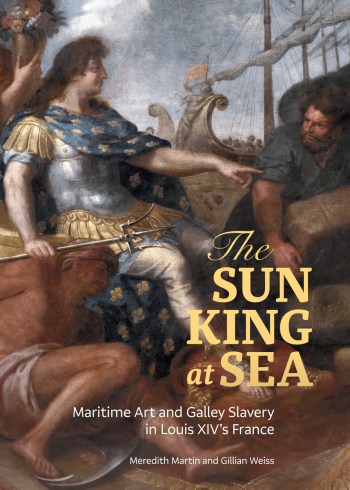 This richly illustrated volume, the first devoted to maritime art and galley slavery in early modern France, shows how royal propagandists used the image and labor of enslaved Muslims to glorify Louis XIV.
Mediterranean maritime art and the forced labor on which it depended were fundamental to the politics and propaganda of France’s King Louis XIV (r. 1643–1715). Yet most studies of French art in this period focus on Paris and Versailles, overlooking the presence or portrayal of galley slaves on the kingdom’s coasts. By examining a wide range of artistic productions—ship design, artillery sculpture, medals, paintings, and prints—Meredith Martin and Gillian Weiss uncover a vital aspect of royal representation and unsettle a standard picture of art and power in early modern France.
With an abundant selection of startling images, many never before published, The Sun King at Sea emphasizes the role of esclaves turcs (enslaved Turks)—rowers who were captured or purchased from Islamic lands—in building and decorating ships and other art objects that circulated on land and by sea to glorify the Crown. Challenging the notion that human bondage vanished from continental France, this cross-disciplinary volume invites a reassessment of servitude as a visible condition, mode of representation, and symbol of sovereignty during Louis XIV’s reign.
Meredith Martin is associate professor at New York University. She is an art historian specializing in French art, architecture, empire, and intercultural exchange from the late seventeenth to early nineteenth centuries. Gillian Weiss is professor at Case Western Reserve University. She is a historian specializing in early modern France, its relations with the Islamic world, and Mediterranean slavery.
C O N T E N T S
Acknowledgments
Author’s Note
Abbreviations
Introduction
1 Turks at Work: Building the Marseille Arsenal
2 Port to Palace: Mediterranean Dominance at Paris and Versailles
3 Civility and Barbarism: Enslaved Turks in Maritime Ceremonies and Manuals
4 Spectacles of Suffering: Galley Slaves and Plague
Epilogue
Illustration Credits
About the Authors
Index
New Book | Who’s Black and Why?
Forthcoming from Harvard UP:
Henry Louis Gates, Jr. and Andrew Curran, eds., Who’s Black and Why? A Hidden Chapter from the Eighteenth-Century Invention of Race (Cambridge: Belknap Press, 2022), 320 pages, ISBN: 978-0674244269, $30 / £24 / €27.
 The first translation and publication of sixteen submissions to the notorious eighteenth-century Bordeaux essay contest on the cause of ‘black’ skin—an indispensable chronicle of the rise of scientifically based, anti-Black racism.
In 1739 Bordeaux’s Royal Academy of Sciences announced a contest for the best essay on the sources of ‘blackness’. What is the physical cause of blackness and African hair, and what is the cause of Black degeneration, the contest announcement asked. Sixteen essays, written in French and Latin, were ultimately dispatched from all over Europe. The authors ranged from naturalists to physicians, theologians to amateur savants. Documented on each page are European ideas about who is Black and why.
Looming behind these essays is the fact that some four million Africans had been kidnapped and shipped across the Atlantic by the time the contest was announced. The essays themselves represent a broad range of opinions. Some affirm that Africans had fallen from God’s grace; others that blackness had resulted from a brutal climate; still others emphasized the anatomical specificity of Africans. All the submissions nonetheless circulate around a common theme: the search for a scientific understanding of the new concept of race. More important, they provide an indispensable record of the Enlightenment-era thinking that normalized the sale and enslavement of Black human beings.
These never previously published documents survived the centuries tucked away in Bordeaux’s municipal library. Translated into English and accompanied by a detailed introduction and headnotes written by Henry Louis Gates, Jr., and Andrew Curran, each essay included in this volume lays bare the origins of anti-Black racism and colorism in the West.
Henry Louis Gates, Jr., is the author of numerous books and has written extensively on the history of race and anti-Black racism in the Enlightenment. His most recent works include Stony the Road and The Black Church. He is the Alphonse Fletcher University Professor and Director of the Hutchins Center for African and African American Research at Harvard University.
Andrew S. Curran is a leading specialist of the Enlightenment era and the author of The Anatomy of Blackness and Diderot and the Art of Thinking Freely. He is the William Armstrong Professor of the Humanities at Wesleyan University.
C O N T E N T S
Preface: Who’s Black and Why?
Note on the Translations
I. The 1741 Contest on the ‘Degeneration’ of Black Skin and Hair
Introduction
1 Blackness through the Power of God
2 Blackness through the Soul of the Father
3 Blackness through the Maternal Imagination
4 Blackness as a Moral Defect
5 Blackness as a Result of the Torrid Zone
6 Blackness as a Result of Divine Providence
7 Blackness as a Result of Heat and Humidity
8 Blackness as a Reversible Accident
9 Blackness as a Result of Hot Air and Darkened Blood
10 Blackness as a Result of a Darkened Humor
11 Blackness as a Result of Blood Flow
12 Blackness as an Extension of Optical Theory
13 Blackness as a Result of an Original Sickness
14 Blackness Degenerated
15 Blackness Classified
16 Blackness Dissected
II. The 1772 Contest on ‘Preserving’ Negroes
Introduction
1 A Slave Ship Surgeon on the Crossing
2 A Parisian Humanitarian on the Slave Trade
3 Louis Alphonse, Bordeaux Apothecary, on the Crossing
Select Chronology of the Representation of Africans and Race
Notes
Acknowledgments
Credits
Index
New Book | Born in Blackness
From Norton:
Howard French, Born in Blackness: Africa, Africans, and the Making of the Modern World, 1471 to the Second World War (New York: Liveright: 2021), 512 pages, ISBN: 978-1631495823, $35.
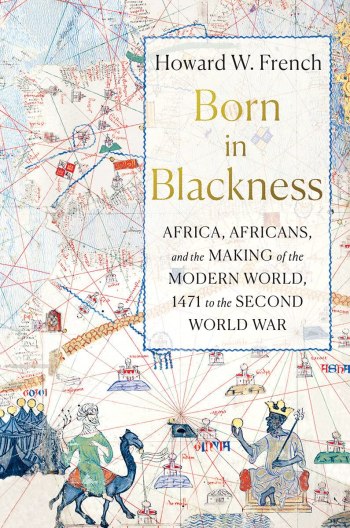 Traditional accounts of the making of the modern world afford a place of primacy to European history. Some credit the fifteenth-century Age of Discovery and the maritime connection it established between West and East; others the accidental unearthing of the ‘New World’. Still others point to the development of the scientific method, or the spread of Judeo-Christian beliefs; and so on, ad infinitum. The history of Africa, by contrast, has long been relegated to the remote outskirts of our global story. What if, instead, we put Africa and Africans at the very center of our thinking about the origins of modernity?
In a sweeping narrative spanning more than six centuries, Howard W. French does just that, for Born in Blackness vitally reframes the story of medieval and emerging Africa, demonstrating how the economic ascendancy of Europe, the anchoring of democracy in the West, and the fulfillment of so-called Enlightenment ideals all grew out of Europe’s dehumanizing engagement with the ‘dark’ continent. In fact, French reveals, the first impetus for the Age of Discovery was not―as we are so often told, even today―Europe’s yearning for ties with Asia, but rather its centuries-old desire to forge a trade in gold with legendarily rich Black societies sequestered away in the heart of West Africa.
Creating a historical narrative that begins with the commencement of commercial relations between Portugal and Africa in the fifteenth century and ends with the onset of World War II, Born in Blackness interweaves precise historical detail with poignant, personal reportage. In so doing, it dramatically retrieves the lives of major African historical figures, from the unimaginably rich medieval emperors who traded with the Near East and beyond, to the Kongo sovereigns who heroically battled seventeenth-century European powers, to the ex-slaves who liberated Haitians from bondage and profoundly altered the course of American history.
While French cogently demonstrates the centrality of Africa to the rise of the modern world, Born in Blackness becomes, at the same time, a far more significant narrative, one that reveals a long-concealed history of trivialization and, more often, elision in depictions of African history throughout the last five hundred years. As French shows, the achievements of sovereign African nations and their now-far-flung peoples have time and again been etiolated and deliberately erased from modern history. As the West ascended, their stories―siloed and piecemeal―were swept into secluded corners, thus setting the stage for the hagiographic ‘rise of the West’ theories that have endured to this day.
“Capacious and compelling” (Laurent Dubois), Born in Blackness is epic history on the grand scale. In the lofty tradition of bold, revisionist narratives, it reframes the story of gold and tobacco, sugar and cotton―and of the greatest ‘commodity’ of them all, the twelve million people who were brought in chains from Africa to the ‘New World’, whose reclaimed lives shed a harsh light on our present world.
Howard W. French is a professor at the Columbia University Graduate School of Journalism. Prior to joining the Columbia faculty, in 2008, he was a reporter and senior writer for The New York Times, where he worked as a foreign correspondent for more than two decades. During this time, French served as the paper’s bureau chief in Shanghai, Tokyo, Abidjan and Miami (covering Central America and the Caribbean).
New Book | Narrative, Catastrophe, and Historicity
From Liverpool UP:
Jessica Stacey, Narrative, Catastrophe, and Historicity in Eighteenth-Century French Literature (Oxford: Oxford University Studies in the Enlightenment, 2022), 384 pages, ISBN: 978-1800856004, £65 / $100.
 Voltaire Foundation in association with Liverpool University Press
How do communities tell and retell stories of catastrophe to explain their own origins, imagine their future, and work for their survival? This book contends that such stories are central to how communities claim a position within history. It explores this question, so vital for our present moment, through narratives produced in eighteenth-century France: a tumultuous period when a new understanding of a properly ‘modern’ national history was being elaborated. Who gets to belong to the modern era? And who or what is relegated to a gothic, barbarous or medieval past? Is an enlightened future assured, or is a return to a Dark Age inevitable? Following barbarians, bastards, usurpers, prophets and Revolutionary martyrs through stories of catastrophes real and imagined, the book traces how narrative temporalities become historicities: visions of the laws which govern the past, present and future. Ultimately it argues that the complex temporality of catastrophe offers a privileged insight into how a modern French historical consciousness was formed out of the multiple pasts and possible futures that coexisted alongside the age of Enlightenment. Further, examining the tension between a desire to place the imagined community definitively beyond catastrophic times, and a fascination with catastrophe in its revelatory or regenerative aspect, it offers an important historical perspective on the presence of this same tension in the stories of catastrophe that we tell in our own multiple, tumultuous present.
Jessica Stacey is a Career Development Fellow in French at The Queen’s College, Oxford and has a PhD from King’s College London. Her research interests include catastrophe and time, civilisation and barbarism, story and community; she has also published on Antillean volcanoes and queer readings of Rousseau.
C O N T E N T S
List of Illustrations
Preface and Acknowledgements
A Note on Translations
Introduction: Authors of Catastrophe
• A brief history of catastrophe
• Orders of time, regimes of historicity
• Chapter outlines
1 Bringing Catastrophe: Barbare (br)others, in and around the Encyclopédie
• Civilisation and its barbare catastrophes: from Deluge to Babel
• The barbare speaks: from scholastic Latin to French
• Seeking a constant referent: can language be fixed?
• Génie, énergie, poésie: grounds for a positive barbare
• Conclusion
2 Suffering Catastrophe: Legitimate and illegitimate lines in Baculard d’Arnaud’s medievalist works
• The usurper’s world: ‘Everything tends directly to the catastrophe’
• Genres of catastrophe, or drames nationaux
• The crisis of ‘Salisbury’ and the catastrophe of ‘Varbeck’
• ‘The crusades are assuredly one of the most important revolutions of the human spirit’: ‘Le sire de Créqui’
• Medieval aesthetics as site of resistance and source of anxiety
• Conclusion
3 Prophesying Catastrophe, Predicting Utopia: The time travellers of Mercier’s prose tableaux
• Temporal belonging and exclusion in the tableau
• Ruination and destruction
• Conclusion
4 Witnessing Catastrophe as Revelation: Doing time with Latude and Sade, modern martyrs
• Narrative contested: ‘a single day has carried us into a new age’
• A troubling martyr: the body and the book
• The libertine body, Sade’s book: temporality to historicity?
• Conclusion
Conclusion
Works Cited
Pre-1900 works
Paintings
Post-1900 works
Index
New Book | Domestic Space in Britain, 1750–1840
From Bloomsbury:
Freya Gowrley, Domestic Space in Britain, 1750–1840: Materiality, Sociability, and Emotion (London: Bloomsbury Publishing, 2022), 272 pages, ISBN: 978-1501343360, £80.
 Between 1750 and 1840, the home took on unprecedented social and emotional significance. Focusing on the design, decoration, and reception of a range of elite and middling class homes from this period, Domestic Space in Britain, 1750–1840 demonstrates that the material culture of domestic life was central to how this function of the home was experienced, expressed, and understood at this time. Examining craft production and collection, gift exchange and written description, inheritance and loss, it carefully unpacks the material processes that made the home a focus for contemporaries’ social and emotional lives.
The first book on its subject, Domestic Space in Britain, 1750-1840 employs methodologies from both art history and material culture studies to examine previously unpublished interiors, spaces, texts, images, and objects. Utilising extensive archival research; visual, material, and textual analysis; and histories of emotion, sociability, and materiality, it sheds light on the decoration and reception of a broad array of domestic spaces. In so doing, it writes a new history of late 18th- and early 19th-century domestic space, establishing the materiality of the home as a crucial site for identity formation, social interaction, and emotional expression.
Freya Gowrley is Lecturer in History of Art and Liberal Arts at the University of Bristol.
C O N T E N T S
List of Plates
List of Figures
Acknowledgements
Introduction
Part I: Representation
1 ‘My Anecdotes of This Social Neighbourhood’: The Thick Description of Caroline Lybbe Powys
2 Publishing John Wilkes’s ‘Villakin’: Reception and Reputation at Sandham Cottage
Part II: Movement
3 Material Translations, Biographical Objects: Craft(ing) Narratives at A la Ronde
4 ‘A Little Temple, Consecrate to Friendship and the Muses’: Romantic Friendship and Gift-Exchange at Plas Newydd, Llangollen
Part III: Ownership
5 ‘I Love Her as My Own Child’: Inheritance, Extra-Illustration, and Queer Familial Intimacies at Strawberry Hill
Conclusion: Materialising Loss
Bibliography
Index
New Book | Pictorial Silks: Chinese Textiles
Distributed by The University of Chicago Press:
Kikki Lam, ed., Pictorial Silks: Chinese Textiles from the UMAG Collection (Hong Kong: HKU Museum and Art Gallery, 2021), 96 pages, ISBN: 978-9887470717, $25.
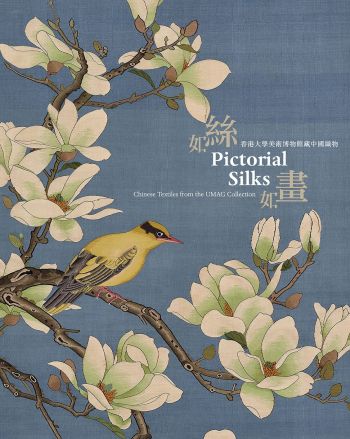 A showcase of silks from the Qing dynasty to the mid-twentieth century.
Prized by Chinese and foreign merchants as an essential commodity along a vast trade network, silk served multiple roles throughout the ancient world: as fabric for garments, as a form of currency and method of tax payment, and as a medium and subject matter for artists and the literati. Over the centuries, silk fabrics have remained synonymous with beauty and are still intertwined throughout Chinese art and literature. As showcased in this highly illustrated book, the Hong Kong University Museum and Art Gallery’s silk textile collection encompasses a diverse range of subjects and formats that include hanging scrolls, framed panels, banners, and robes from the Qing dynasty to the mid-twentieth century. Each artwork exemplifies the sophisticated craftsmanship of the artisan, as well as the collective stories of the Qing dynasty’s textile industry.
Kikki Lam is a research assistant at the University Museum and Art Gallery at the University of Hong Kong.
C O N T E N T S
Foreword
Threading Colour: Chinese Silk Textiles from the UMAG Collection
Kesi Silk Tapestry
Cixiu Embroidery
Glossary
Bibliography
Exhibition | From Afar: Travelling Materials and Objects

Now on view at the Louvre, a wide-ranging exhibition (geographically and temporally) that includes eighteenth-century objects:
From Afar: Travelling Materials and Objects
Musée du Louvre, Paris, 22 September 2021 — 4 July 2022
Organized by Philippe Malgouyres and Jean-Luc Martinez

Ivory Statuette of a Peddler, German, 1702–03, elephant tusk, diamond, silver gilt, and enamel, 8.4 cm high (Paris: Musée du Louvre). More information, with additional views, can be found here.
For its sixth season, the Petite Galerie offers a journey through time and around the world with the exhibition From Afar: Traveling Materials and Objects—complementing a cycle of exhibitions at the museum dedicated to discoveries and explorations of lands near and far: Paris–Athens: The Birth of Modern Greece, 1675–1919 in September and Pharaoh of the Two Lands: The African Story of the Kings of Napata in the spring.
Through materials and objects, the exhibition describes exchanges between distant worlds—including ancient exchanges often more extensive than explorations in the 16th century. From deepest antiquity, carnelian, lapis lazuli, ebony, and ivory circulated along trade routes, and these materials were even more precious because they came from afar. Their value was enriched by the myths surrounding their origins. Not only stones, shells and plants travelled between continents; so did live animals, often for political ends. The populace as well as artists discovered ostriches, giraffes, and elephants. Man-made objects followed the same routes. Beyond Europeans’ well-known yen for the exotic, the exhibition shows that these multiple round trips wove a more complex history: forms, techniques, and themes intertwined to create new objects, reflecting all the complexity of our world as it could be perceived in Europe from the late Middle Ages on.
The exhibition was organized by Philippe Malgouyres, curator at the Department of Decorative Arts, Musée du Louvre, and Jean-Luc Martinez, honorary president of the Musée du Louvre.
Philippe Malgouyres and Jean-Luc Martinez, with Florence Dinet, Venus d’ailleurs: Matériaux et objets voyageurs (Paris: Musée du Louvre / Éditions du Seuil, 2021), 192 pages, ISBN: 978-2021456264, €32.
New Book | Danish Silver, 1600–2000
Distributed by The University of Chicago Press:
Lise Funder, Danish Silver, 1600–2000 (Copenhagen: Museum Tusculanum Press, 2021), 292 pages, ISBN: 978-8763545853, $60.
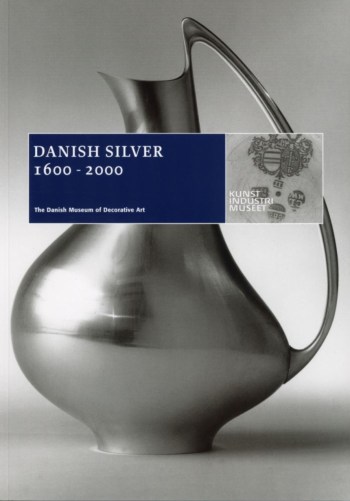 An illustrated catalog of Denmark’s cutlery through the ages. Replete with nearly four hundred images, Danish Silver 1600–2000 is the first international collection to showcase the rich artistry of Danish cutlery.
C O N T E N T S
Preface
About the Catalogue
Danish Silver: 17th, 18, and 19th Centuries
Silver Marking
Catalogue
17th Century
18th Century
19th Century
Danish Silver: 20th Century
Catalogue
20th Century
Select Bibliography
Exhibitions of Danish Silver in the Danish Museum of Decorative Art
Index of Names










 Enfilade
leave a comment