Digital Tools for Better Understanding Jean-Henri Riesener
From Art Daily (17 October 2021) . . .

Jean-Henri Riesener, Fall-front desk with trellis marquetry and gilt-bronze mounts, 1783 (London: The Wallace Collection, F302).
Jean-Henri Riesener (1734–1806)—the German cabinetmaker who emigrated to Paris in the mid-eighteenth century and became supplier of furniture to Louis XVI, Marie Antoinette, and their court—has been the subject of an extensive research project undertaken by the Wallace Collection, Waddesdon Manor, and the Royal Collection. Over the past six years, the Project has investigated Riesener’s career, craft, and legacy, which has helped develop a greater understanding of his cabinetmaking materials and techniques, as well as his innovations in furniture design. Many of the Project’s discoveries were incorporated into cutting-edge 3D furniture models, the first monograph on Riesener, and a display at the Wallace Collection. This display focused on the furniture that Riesener made for Marie-Antoinette as well as his lasting influence on later cabinetmakers.
Although this display at the Wallace Collection has now drawn to a close, much of the Project’s work, as well as the pieces of furniture themselves, can still be explored through a comprehensive microsite dedicated to Riesener, in addition to the book. The detailed technical examination of the materials, structure, and condition of the objects that took place during the Project, along with scientific analysis, allowed accurate digital models to be created in SketchUp. These are hosted on Sketchfab for a fully interactive experience that allows users to gain an appreciation of the complexity of Riesener’s work and his virtuosity as a craftsman and designer. These models on the microsite are enriched by isometric drawings and catalogue entries that examine the history of the furniture and the characteristics of their production, along with essays that explore Riesener’s life, craft, patrons, and collectors.
A Riesener trail has also been created on the Royal Collection’s website. This draws together all the Riesener furniture from the three collections, along with their digital models, short catalogue entries, and an interactive timeline of Riesener’s life and key commissions, interspersed with events in French national history.
Many aspects of the Riesener Project were pioneering, from its focus on the materiality of Riesener’s furniture to his workshop processes and the business of furniture-making. However, perhaps the Project’s most ground-breaking achievement was sharing its research results with as wide an audience as possible, through multiple media, on an open-access online platform.
New Book | Nicolas Party: Pastel
The catalogue for the exhibition is now available:
Nicolas Party, ed., Pastel (New York: The FLAG Art Foundation, 2021), 216 pages, ISBN: 978-1949172522, $50. Contributions by Nicolas Party and Dodie Kazanjian; conversation with artists Louis Fratino, Loie Hollowell, Billy Sullivan, Robin F. Williams, moderated by FLAG Founder Glenn Fuhrman; essay by Melissa Hyde, “‘Dust From a Butterfly’s Wing’: The Gentle Art of Pastel, A Short History.”
 In 2019, Nicolas Party transformed The FLAG Art Foundation in New York into a rose-colored stage set for a suite of soft pastel, Rococo-inspired murals that serve as a foil to, and occasional backdrop for, a selection of pastels from the 18th century to the present. Pastel commemorates the exhibition, its celebration of the pastel medium, and the range of contemporary artists who are giving new energy to this uniquely fragile medium. Artists in the exhibition included Rosalba Carriera, Mary Cassatt, Edgar Degas, Louis Fratino, Marsden Hartley, Loie Hollowell, Julian Martin, Toyin Ojih Odutola, Chris Ofili, Jean-Baptiste Perronneau, Billy Sullivan, Wayne Thiebaud, and Robin F. Williams.
Nicolas Party (b. 1980, Lausanne, Switzerland) is an artist living and working in Brussels and New York. He earned a BA in Fine Art at the Lausanne School of Art in 2004 and an MA at The Glasgow School of Art in 2009. More information is available here.
New Book | Iconotypes: A Compendium of Butterflies and Moths
From the University of California Press:
William Jones, with an introduction by Richard Vane-Wright, Iconotypes: A Compendium of Butterflies & Moths, Jones’ Icones Complete (Berkeley: University of California Press, 2021), 688 pages, ISBN: 978-0520386501, $85.
 William Jones’s Icones is one of the most scientifically important and visually stunning works on butterflies and moths ever created. Icones contains finely delineated paintings of more than 760 species of Lepidoptera, many of which it described for the first time, marking a critical moment in the study of natural history. Yet until now, it has never been published—the only existing manuscript copy is housed in the archives of the Oxford University Museum of Natural History. With Iconotypes, Jones’s work is published for the first time, accompanied by expert commentary and contextual essays, and featuring annotated maps showing where each specimen was discovered.
Between the early 1780s and 1810, Jones, a wine merchant, painted in painstaking detail hundreds of species of Lepidoptera, drawing from his own collection and the collections of prominent amateur naturalists. For every specimen, Jones included the known species name, the collection, and the geographical location in which it was found. In this enhanced facsimile, Jones’s historical references are clarified and modern taxonomic names are provided together with notes on which paintings serve as iconotypes. Contextual commentary by specialist entomologist Richard Vane-Wright gives an account of Jones’s life, his motivation for collecting butterflies and creating the Icones, and evaluates the significance of Jones’s work. This lavish volume intersperses contemporary maps showing the locations of each specimen, expert essays on the study of lepidoptery since ancient Egyptian times, the development of taxonomy after Linnaeus, the roles of collectors and natural history artists during the late 1700s to mid-1800s, and the steep decline of butterflies and moths over the last fifty years. Iconotypes is a beautiful collector’s object for fans of natural history and illustrations of butterflies and moths, as well as artists, designers, and bibliophiles.
Richard I. Vane-Wright is an entomologist and taxonomist who has been associated with London’s Natural History Museum for nearly sixty years. A specialist on butterflies, he retired from the museum in 2004 as Keeper of the Department of Entomology. He is the author of three books, most recently Butterflies: A Complete Guide to Their Biology and Behavior. He is also involved with biodiversity conservation and local entomological projects.
New Book | Conchophilia
From Princeton UP:
Marisa Anne Bass, Anne Goldgar, Hanneke Grootenboer, and Claudia Swan, with contributions by Stephanie Dickey, Anna Grasskamp, and Róisín Watson, Conchophilia: Shells, Art, and Curiosity in Early Modern Europe (Princeton: Princeton University Press, 2021), 224 pages, ISBN: 978-0691215761, £40 / $50.
 Among nature’s most artful creations, shells have long inspired the curiosity and passion of artisans, artists, collectors, and thinkers. Conchophilia delves into the intimate relationship between shells and people, offering an unprecedented account of the early modern era, when the influx of exotic shells to Europe fueled their study and representation as never before. From elaborate nautilus cups and shell-encrusted grottoes to delicate miniatures, this richly illustrated book reveals how the love of shells intersected not only with the rise of natural history and global trade but also with philosophical inquiry, issues of race and gender, and the ascent of art-historical connoisseurship.
Shells circulated at the nexus of commerce and intellectual pursuit, suggesting new ways of thinking about relationships between Europe and the rest of the world. The authors focus on northern Europe, where the interest and trade in shells had its greatest impact on the visual arts. They consider how shells were perceived as exotic objects, the role of shells in courtly collections, their place in still-life tableaus, and the connections between their forms and those of the human body. They examine how artists gilded, carved, etched, and inked shells to evoke the permeable boundary between art and nature. These interactions with shells shaped the ways that early modern individuals perceived their relation to the natural world, and their endeavors in art and the acquisition of knowledge. Spanning painting and print to architecture and the decorative arts, Conchophilia uncovers the fascinating ways that shells were circulated, depicted, collected, and valued during a time of remarkable global change.
Marisa Anne Bass is Professor of Northern European Art, 1400–1700 at Yale University. Her books include Insect Artifice and Jan Gossart and the Invention of Netherlandish Antiquity. Anne Goldgar is the Garrett and Anne Van Hunnick Professor of European History at the University of Southern California. Her books include Tulipmania and Impolite Learning. Hanneke Grootenboer is Professor of the History of Art and Chair of the department at Radboud University Nijmegen. Her books include Treasuring the Gaze and The Pensive Image. Claudia Swan is the Mark S. Weil Professor of Art History and Archaeology at Washington University in St. Louis. Her books include Art, Science, and Witchcraft in Early Modern Holland and Rarities of These Lands.
C O N T E N T S
Anne Goldgar — Introduction: For the Love of Shells
Part I: Surface Matters
1 Claudia Swan — The Nature of Exotic Shells
2 Anna Grasskamp — Shells, Bodies, and the Collector’s Cabinet
Part II: Microworlds of Thought
3 Marisa Anne Bass — Shell Life, or the Unstill Life of Shells
4 Hanneke Grootenboer — Thinking with Shells in Petronella Oortman’s Dollhouse
Part III: The Multiple Experienced
5 Róisín Watson — Shells and Grottoes in Early Modern Germany
6 Stephanie S. Dickey — Shells, Prints, and the Discerning Eye
Acknowledgments
Notes
Bibliography
Contributors
Index
Illustration Credits
Print Market | Mad about Mezzotint at the Court of George III
From Isaac and Ede:
Mad about Mezzotint at the Court of George III
Reindeer Antiques, London, 6 October — 5 November 2021
 This exhibition organized by David Isaac of Isaac and Ede celebrates the bicentenary of the 60-year reign of King George III (1738–1820) through one mezzotint portrait for each year of his reign. Meet the movers and shakers, the courtiers and courtesans, the duchesses and dandies of the period. Each mezzotint was printed in the year it represents, so there are 61 prints to cover the years 1760–1820 with a couple of extras thrown in for good measure. Royalty and aristocracy dominate throughout the opening decades, but as the country finds itself increasingly at war with America, France, Spain (and practically everyone else), we see a predominance of naval and military heroes taking centre stage. Towards the end of our period, we begin to see the emergence of the self-made man, and the entrepreneurial spirit of that would come to symbolize the Victorian era. To be held at Reindeer Antiques, 81, Kensington Church Street, London W8 4BG.
Printed catalogues are available: UK £30 including P&P / USA £47 including P&P. View a PDF of the catalogue on Issuu. The catalogue is also distributed by Paul Holberton Publishing:
David Isaac, Mad about Mezzotint at the Court of George III (London: Isaac and Ede, 2022), 148 pages, ISBN 978-1913645359, £30.
◊ ◊ ◊ ◊ ◊
Note (added 6 July 2022) — The original posting did not include catalogue details from PHP.
Exhibition | Aquatint: From Its Origins to Goya
From the NGA:
Aquatint: From Its Origins to Goya
National Gallery of Art, Washington, D.C., 24 October 2021 — 21 February 2022
Curated by Rena Hoisington
 A new printmaking technique—aquatint—swept through 18th-century Europe, yielding an extraordinary range of works, from images of erupting volcanoes, amorous couples, and mysterious tombs, to Russian exotica, biting caricatures, and moonlit vistas. The first American exhibition to survey the medium’s development in France, England, Italy, Germany, the Netherlands, and Spain, Aquatint: From Its Origins to Goya presents some 100 early and exceptional impressions, many of which have recently been acquired by the National Gallery of Art. By supplementing the line work of etching, aquatint offered an exciting method for multiplying ink-and-wash drawings that render tone in subtle ways.
Aquatint flourished outside the official circles of European art academies in the hands of three kinds of artists—professional printmakers, amateurs (art lovers), and peintre-graveurs (painter-printmakers). Each played a distinctive and significant role in publicizing, disseminating, and advancing the aquatint medium. Professional printmakers combined it with other intaglio printmaking techniques to reproduce highly prized drawings by old master and contemporary artists. Amateurs, an elite group of like-minded collectors, embraced drawing, etching, and aquatint to not only expand their art-historical and connoisseurial knowledge, but also cultivate relationships with artists. Peintre-graveurs revisited, re-created, and circulated their designs through aquatint to build their reputations and broaden their audiences, dramatically expanding the formal vocabulary and expressive potential of the medium.
Rena Hoisington, Aquatint: From Its Origins to Goya (Princeton: Princeton University Press, 2021), 288 pages, ISBN: 978-0691229799, $60.
Supported by the Eugene V. and Clare E. Thaw Charitable Trust and written by Rena M. Hoisington, curator and head of old master prints at the National Gallery of Art, a book illustrated with rare works from the National Gallery’s collection of early aquatints accompanies the exhibition. It provides an engaging narrative about the medium’s flourishing as a cross-cultural and cosmopolitan phenomenon that contributed to the rise of art publishing, connoisseurship, leisure travel, and drawing instruction as well as the spread of neoclassicism.
Exhibition | Goya

Francisco de Goya, Still Life with Golden Bream (Besugos), 1808–12, oil on canvas, 45 × 63 cm
(The Museum of Fine Arts, Houston, 94.245)
◊ ◊ ◊ ◊ ◊
Press release (via Art Daily) for the exhibition:
Goya
Fondation Beyeler, Basel, 10 October 2021 — 23 January 2022
Curated by Martin Schwander and developed by Isabela Mora and Sam Keller
275 years after his birth, the Fondation Beyeler presents one of the most significant exhibitions ever devoted to Francisco de Goya—one of modern art’s major trailblazers. For the first time, rarely displayed paintings from Spanish private collections will be shown alongside key works from distinguished European and American museums and private collections. The exhibition brings together around 70 paintings and more than 100 masterful drawings and prints. Today, as during the artist’s lifetime, Goya’s works present viewers with a unique sensory and intellectual experience. For the past two centuries, his complex and ambiguous oeuvre has acted as a beacon and a landmark for many artists. The exhibition is organised by the Fondation Beyeler in collaboration with the Museo Nacional del Prado in Madrid.
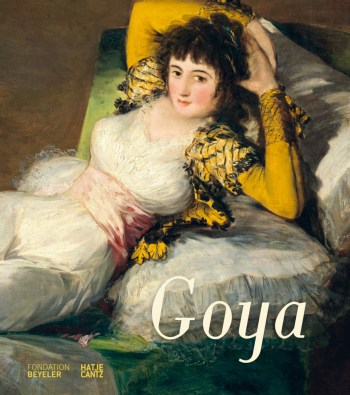 Francisco de Goya y Lucientes (1746–1828) occupies a paradoxical position in European art history as one of the last great court painters and a forerunner of the figure of the modern artist. In order to convey the uniqueness of Goya’s work, which spans a period ranging from Late Rococo to Romanticism, and do justice to the formal and thematic wealth of his painted, drawn, and printed oeuvre, the exhibition presents the full spectrum of genres and recurring motifs. Arranged chronologically, it features large-scale stately paintings as well as sketchbook pages, focussing on Goya’s late work.
The exhibition at the Fondation Beyeler presents both the established court painter and the inventor of enigmatic and disturbing pictorial worlds, his religious and his secular images, his depictions of Christ and of witches, portraits and history paintings, still lifes and genre scenes. Next to paintings commissioned by the royal family, the aristocracy and the bourgeoisie, the show features works created by Goya within a self-conquered space of artistic freedom, among them cabinet paintings often intended only for highly private display. With rebellious resolve, Goya was one of the first artists in the history of European art to push back against the rules and dogmas that constrained artistic creation, instead making a stand for artists’ impulse and inventiveness (‘capricho’ and ‘invención’). Highlights of the exhibition include the portrait of the Duchess of Alba (1795) and the iconic Clothed Maja (La maja vestida, 1800–07), as well as the rarely displayed Maja and Celestina on a Balcony and Majas on a Balcony (1808–12), the latter two on loan from European private collections.

Francisco Goya y Lucientes, María Amalia de Aguirre y Acedo, marquesa de Montehermoso, 1810, oil on canvas, 170 × 103 cm (Private Collection).
The exhibition will further feature small-format genre scenes, held for the most part in Spanish private collections and hitherto only rarely shown outside Spain. In these paintings—as in his drawings and prints—Goya gave free rein to his innermost inspiration. For the first time since their only display to date at the Museo Nacional del Prado, the Fondation Beyeler will thus show the full series of eight remaining history and genre pictures from the Madrid collection of the Marqués de la Romana. They will be joined by the four celebrated, rarely loaned panels with genre scenes from the Real Academia de Bellas Artes de San Fernando in Madrid.
In his genre scenes and history paintings, Goya depicts events from everyday life in Spain around 1800—socially, politically, and religiously troubled times. Recurring settings include markets and bullrings, prisons and ecclesiastical institutions, lunatic asylums, and the courts of the Inquisition. Depictions of witches are another key motif, used by Goya to expose the superstition of his time. Next to a group of etchings from The Disasters of War (Los desastres de la guerra, 1811–14), the exhibition will also feature a selection of prints from the 1799 Caprichos series, among them the celebrated plate no. 43, programmatically titled The Sleep of Reason Produces Monsters, which displays Goya’s resigned and melancholy realisation that neither reason nor irony and sarcasm can fight off irrationality. Goya’s enigmatic and unfathomable pictorial worlds have been held in high regard ever since the age of early 19th-century French Romanticism. Among modern artists, Pablo Picasso and Joan Miró, Francis Bacon and the Surrealists viewed Goya as a kindred spirit. And he remains a major reference for many contemporary artists, among them Marlene Dumas and Philippe Parreno.
Commissioned by the Fondation Beyeler, renowned French artist Philippe Parreno (b. 1964) has created a film based on Goya’s iconic Black Paintings series (Pinturas negras, 1819–24), which will premiere at the exhibition. The 14 murals were originally painted in Goya’s residence on the outskirts of Madrid and were most likely not intended for public viewing. Now in the collection of the Museo Nacional del Prado in Madrid, the paintings are so fragile that they cannot leave the museum.
For the first time, seldom seen paintings from Spanish private collections, some of which have not changed hands since the artist’s lifetime, are shown alongside key works from the most prestigious European and American museums and private collections. Works will be on loan from major museums such as the Museo Nacional del Prado, the Museo Thyssen-Bornemisza, the Fundación Lázaro Galdiano and the Fundación Casa de Alba, all in Madrid, the Musée du Louvre in Paris, the Metropolitan Museum of Art in New York, the National Gallery in London, the Gallerie degli Uffizi in Florence, the National Gallery of Ireland in Dublin, the Sammlung Oskar Reinhart ‘Am Römerholz’ in Winterthur, the Minneapolis Institute of Art, and the Museum of Fine Arts in Houston.
Martin Schwander, ed., with text by Andreas Beyer, Helmut C. Jacobs, Ioana Jimborean, José Manuel Matilla, Gudrun Maurer, Manuela B. Mena Marqués, Colm Tóibín, Bodo Vischer, Francisco de Goya (Stuttgart: Hatje Cantz, 2021), 288 pages, ISBN: 978-3775746571 (English edition), $90. Also available in German.
New Book | Quakers and Their Meeting Houses
Distributed by Oxford UP:
Chris Skidmore, Quakers and Their Meeting Houses (Liverpool: Liverpool University Press, 2021), 240 pages, ISBN: 978-1800857209, £40 / $75.
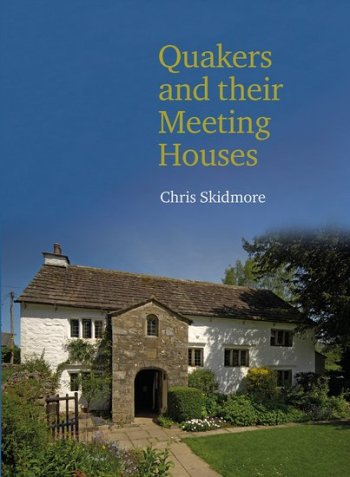 This book provides a fascinating account of the architecture and historical development of the Quaker meeting house from the foundation of the movement to the twenty-first century. The Quaker meeting house is a distinctive building type used as a place of worship by members of the Society of Friends (Quakers). Starting with buildings of the late-seventeenth century, the book maps how the changing beliefs and practices of Quakers over the last 350 years have affected the architecture of the meeting house. The buildings considered are illustrated, predominantly in colour, and are from England, Scotland, and Wales, with some consideration of colonial American examples. The book commences with an introduction that provides an accessible account of the early history of Quakerism, and it concludes with a consideration of whether there is a Quaker architectural style and of what it might consist.
New Book | Follies in America
From Cornell UP:
Kerry Dean Carso, Follies in America: A History of Garden and Park Architecture (Ithaca: Cornell University Press, 2021), 216 pages, ISBN: 978-1501755934, $30.
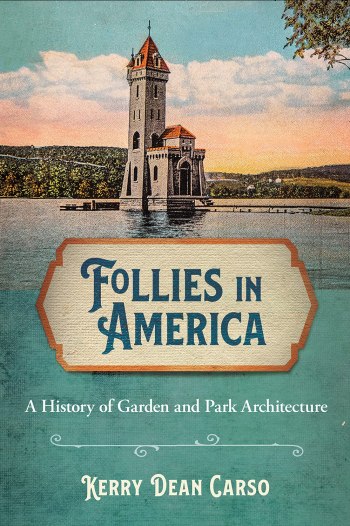 Follies in America examines historicized garden buildings, known as ‘follies’, from the nation’s founding through the American centennial celebration in 1876. In a period of increasing nationalism, follies—such as temples, summerhouses, towers, and ruins—brought a range of European architectural styles to the United States. By imprinting the land with symbols of European culture, landscape gardeners brought their idea of civilization to the American wilderness.
Kerry Dean Carso’s interdisciplinary approach in Follies in America examines both buildings and their counterparts in literature and art, demonstrating that follies provide a window into major themes in nineteenth-century American culture, including tensions between Jeffersonian agrarianism and urban life, the ascendancy of middle-class tourism, and gentility and social class aspirations.
Kerry Dean Carso is Professor of Art History at the State University of New York at New Paltz. She is the author of American Gothic Art and Architecture in the Age of Romantic Literature.
C O N T E N T S
List of Illustrations
Acknowledgments
Introduction
1 The English Landscape Garden in America
2 Temples
3 Summerhouses
4 Towers
5 Ruins
Conclusion
Notes
Bibliography
Index
New Book | The Built Environment Transformed
Distributed by Oxford UP:
Geoffrey Timmins, The Built Environment Transformed: Textile Lancashire during the Industrial Revolution (Liverpool: Liverpool University Press, 2021), 240 pages, ISBN: 978-1800856530, £40 / $75.
 This book is concerned with the remarkable changes made to the built environment in Lancashire’s main textile district—essentially the eastern and central parts of the county—during the Industrial Revolution (c1780–c1850). A case-study approach is taken, with findings from investigations at six different types of site being presented. The sites included are water-powered mill remains in the Cheesden valley, near Rochdale; Barrow Bridge factory village, near Bolton; the former handloom weavers’ colony at Club Houses, Horwich; Preston’s Winckley Square; Eanam wharf at Blackburn; and, to the north of Bolton, the road between Bromley Cross and Edgworth. The case studies show how, in rural and urban areas alike, developments in industry, housing, and transport greatly extended the built environment and brought striking new features to it. Emphasis is placed on interpreting the physical evidence the sites provide, linking it with that taken from various types of documentary source, especially historical maps. By making comparisons with developments occurring at similar types of site elsewhere in Britain, as well as in Europe and North America, the forms the changes took are explained and their significance assessed. Additionally, insights are provided into the economic and social impact the changes brought, especially on the everyday lives that people led.
Geoffrey Timmins is Emeritus Professor in the School of Humanities, Language, and Global Studies at the University of Central Lancashire.










 Enfilade
1 comment