The Decorative Arts Trust Announces Failey Grant Recipients
From the press release (1 December 2021) . . .
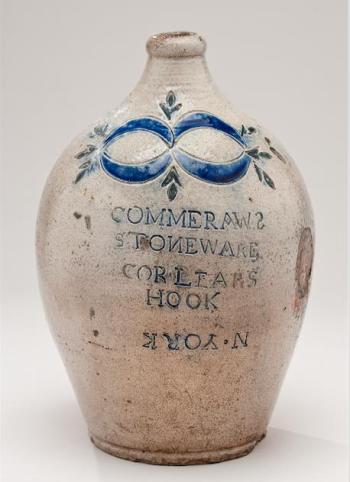
Thomas W. Commeraw, Jug, ca. 1796–1819, stoneware and cobalt oxide. Impressed on front: “COMMERAW’S/STONEWARE / CORLEARS / HOOK / N. YORK” (New-York Historical Society, 1937.820).
The Decorative Arts Trust congratulates author Caitlin Meehye Beach, Historic Rock Ford, and the New-York Historical Society on receiving Failey Grants. The Failey Grant program provides $25,000 in support for noteworthy research, exhibition, publication, and conservation projects through the Dean F. Failey Fund, named in honor of the Trust’s late Governor. Preference is given to projects that employ or are led by emerging professionals in the museum field.
Caitlin Meehye Beach, an assistant professor in the Department of Art History and affiliated faculty in the Department of African and African American Studies at Fordham University, will utilize grant funds for her forthcoming book Sculpture at the Ends of Slavery, which will be published by the University of California Press in 2022. The text will examine how a wide range of works of sculpture and decorative art—from antislavery medallions to statues of bondspeople bearing broken chains—gave visual form to narratives about abolition in the 18th and 19th centuries.
Historic Rock Ford in Lancaster, Pennsylvania, will use grant funding for further research and interpretation of the over 200 objects in their John J. Snyder, Jr. Gallery of Early Lancaster County Decorative Arts. Their goal is to uncover more about the shops, apprentices, laborers, indentured laborers, and enslaved workers who contributed to the Gallery’s collection of furniture, silver, clocks, and paintings from the mid-1700s to the early 1800s.
The New-York Historical Society receives grant funding for the groundbreaking exhibition Crafting Freedom: Uncovering the Life and Legacy of Free Black Potter Thomas Commeraw, to be presented January to June 2023 in their Pam & Scott Schafler Gallery. Crafting Freedom will be the first exhibition focused solely on Commeraw, a free Black craftsman descended from enslaved people, who was active as a master potter from the 1790s through 1819.
The Decorative Arts Trust is a non-profit membership organization that promotes and fosters the appreciation and study of the decorative arts through exchanging information through domestic and international programming; collaborating and partnering with museums and preservation organizations; and underwriting internships, research grants, and scholarships for graduate students and young professionals.
New Book | Gateways to the Book: Frontispieces and Title Pages
From Brill:
Gitta Bertram, Nils Büttner, and Claus Zittel, eds., Gateways to the Book: Frontispieces and Title Pages in Early Modern Europe (Leiden: Brill, 2021), 602 pages, ISBN: 978-9004459328, €166 / $199.
 Gateways to the Book investigates the complex image–text relationships between frontispieces and illustrated title pages on the one hand and texts on the other, in European books published between 1500 and 1800. Although interest in this broad field of research has increased in the past decades, many varieties of title pages and a great deal of printers and books remain as yet unstudied. The fifteen essays collected in this volume tackle this field with a great variety of academic approaches, asking how the images can be interpreted, how the texts and contexts shape their interpretation, and how they in turn shape the understanding of the text.
Gitta Bertram teaches art history at the State Academy of Fine Arts Stuttgart. She has published a monograph, translations and articles on early modern title pages, including Peter Paul Rubens as a Designer of Title Pages (2018).
Nils Büttner teaches art history at the State Academy of Arts Stuttgart and specialises in the visual culture of Germany and the Netherlands from the fifteenth to the seventeenth centuries. He has published monographs and articles on Hieronymus Bosch, Pieter Bruegel, Rubens, Rembrandt, and Vermeer, as well as the history of landscape painting and the history of drawings and prints. He has also written numerous catalogue essays, and has served as a curator for several museum exhibitions.
Claus Zittel teaches German literature and philosophy at the Universities of Stuttgart and Venice. He is Deputy Director of the Stuttgart Research Center for Text Studies and of the Bembo Laboratory at Ca’ Foscari University of Venice, and has published monographs, translations, and articles pertaining to early modern culture, including Theatrum Philosophicum: Descartes und die Rolle ästhetischer Formen in der Wissenschaft (Akademie 2009).
C O N T E N T S
List of Illustrations
Notes on the Editors
Notes on the Contributors
1 Gateways to the Books: Early Modern Frontispieces — Gitta Bertram, Nils Büttner, and Claus Zittel
Part 1: The Culture of the Frontispiece
2 Considerations on the History and the Analysis of Illustrated Title Pages — Gitta Bertram
3 Minerva in the Printshop: Publisher’s Advertising in Frontispieces and the Media Presence of Early Modern Printer-Publishers — Lea Hagedorn
4 The Frontispiece Portrait and Its Critics: Visual and Verbal Tactics for Undermining the Social Productivity of Printed Portraits in Early Modern Scholarly Culture — Hole Rößler
Part 2: The Frontispiece between Art and Science
5 The Poetological Frontispiece in 17th-Century German Poetry — Claus Zittel
6 Lady Music, Pythagoras, Apollo & Co.: Frontispieces and Title Woodcuts in Music Theory Prints and Musical Textbooks around 1500 — Fabian Kolb
7 Visualising the Constitution of Art: Frontispieces in ‘Kunstliteratur’ in the Early Modern Period — Constanze Keilholz
8 When Mars Meets Euclid: The Relationship between War and Mathematical Sciences in Frontispieces of Fortification Treatises — Delphine Schreuder
9 Travels towards Humankind’s Salvation, Travels through Nature Enlightened by Science: Frontispieces on Africa and the Levant, 17th–18th Centuries — Cornel Zwierlein
Part 3: Case Studies
10 A Moralistic Journey: The Tabula Cebes as an Architectural and Spatial Allegory in 16th-Century Basel — Miranda L. Elston
11 Rubens’s Legacy in Book Design — Nils Büttner
12 The Title Page of Jacob van der Gracht’s Anatomie and 17th-Century Dutch Artists’ Education in Anatomy — Alice Zamboni
13 The Role of Multiple Frontispieces in the Cultus Sancti Francisci Xaverii — Alison C. Fleming
14 Juan Ricci de Guevara’s Introduction of Wise Painting — Martijn van Beek
15 The Architectural Folios of Jeremias Wolff — Daniel Fulco
16 Monumental Elements in Early 18th-Century Book Illustration: Jacob Tonson the Younger, George Vertue, and the Illustrated Editions of the Works of Edmund Waller — Malcolm Baker
Index Nominum
New Book | François Boucher and the Art of Collecting
From Routledge (and today priced at $105 for the hardcover). . .
Jessica Priebe, François Boucher and the Art of Collecting in Eighteenth-Century France (Routledge, 2021), 270 pages, ISBN: 978-1472435835 (hardcover), $150 / ISBN 978-1003224730 (ebook), $35.
 While earlier studies have focused predominantly on artist François Boucher’s artistic style and identity, this book presents the first full-length interdisciplinary study of Boucher’s prolific collection of around 13,500 objects including paintings, sculpture, prints, drawings, porcelain, shells, minerals, and other imported curios. It discusses the types of objects he collected, the networks through which he acquired them, and their spectacular display in his custom-designed studio at the Louvre, where he lived and worked for nearly two decades. This book explores the role his collection played in the development of his art, his studio, his friendships, and the burgeoning market for luxury goods in mid-eighteenth-century France. In doing so, it sheds new light on the relationship between Boucher’s artistic and collecting practices, which attracted both praise and criticism from period observers.
Jessica Priebe is a Lecturer in the Department of Art History and Theory at the National Art School, Australia.
C O N T E N T S
List of Figures
Acknowledgments
Introduction: In Pursuit of Pleasure
Part 1: The Artist as Agent
1 Modernizing Watteau: Marketing Luxury in France and Sweden
2 Boucher and the Art of Conchyliomanie
Part 2: The Artist as Collector
3 Trading Places: Boucher as a Collector of Fine Art
4 The Business of Collecting
Part 3: The Collector as Artist
5 A New Address: Boucher at the Louvre
6 Boucher’s Cabinet of Natural History
7 The Artist Inspired: Representing Genius and the Art of Emulation
Bibliography
Index
Exhibition | Antoine Watteau: Art — Market — Trade
Now on view at Schloss Charlottenburg:
Antoine Watteau: Art — Market — Trade
Schloss Charlottenburg, Berlin, 9 October 2021 — 1 January 2022
Curated by Christoph Martin Vogtherr
 2021 marks the 300th anniversary of the death of the French painter Antoine Watteau (1684—1721). The fame of the artist, who was already celebrated during his lifetime, continues to have an effect today, and his works are coveted collector’s items. After the Louvre in Paris, the Prussian Palaces and Gardens Foundation Berlin-Brandenburg owns the most important collection of paintings by this artist. Under the motto ‘Art—Market—Trade’, a special exhibition at Charlottenburg Palace pays tribute to this outstanding painter of the 18th century. The focus of the show is one of Watteau’s major works: the Shop Sign of the Art Dealer Gersaint (L’enseigne du marchand d’art Gersaint). Acquired by Frederick the Great (1712—1786) in 1746, the painting has been considered a masterpiece ever since it was painted. Originally created as a medium of business advertising and as a ‘figurehead’ of the Parisian art trade, the painting continues to stimulate contemporary questions concerning marketing, trade, but also collecting and intellectual engagement with art.
Two protagonists of Parisian art life are presented: Edme-François Gersaint (1694—1750) and Jean de Jullienne (1686—1766). Gersaint, a young up-and-coming art dealer, used his shop on the Pont Notre Dame in Paris to market the artist’s works throughout Europe through new advertising media and formats after Watteau’s death. Together with Jullienne, a collector and patron of Watteau, they realized the idea of reproducing all of the painter’s drawings and paintings in print. This edition, the Recueil Jullienne, was the prototype of a modern illustrated collection of works, which in its aftermath was to trigger a veritable fashion wave: throughout Europe, collectors, manufactory owners, and tradesmen acquired the prints created after Watteau’s works. Watteau’s imagery also inspired court painting and arts and crafts in Prussia. Motifs á la Watteau can be found not only in painting, but also on screens, wallpaper, fans, porcelain, and tapestries of the Frederician period.
As a source of inspiration, Watteau continues to have an impact right up to the modern age. Contemporary artists such as the Swiss painter Thomas Huber (b.1955) and the British fashion designer Vivienne Westwood (b.1941) are represented in the exhibition with one work each. Their artistic positions show that Watteau is still perceived today as an innovative artist and that his work stimulates creative debate. The exhibition, under the patronage of the French ambassador Anne-Marie Descôtes, paints a multifaceted picture of Watteau as an artist and style icon, whose posthumous fame was established with the shop of the art dealer Gersaint on Notre Dame in Paris.
C. Alff, S. Evers, P. Fuhring, A. Moulinier, D. Ranftl, C. Vogtherr, F. Windt, E. Wollschläger, Antoine Watteau: Kunst — Markt — Gewerbe / Art — Marché — Commerce (Munich: Hirmer Verlag, 2021), 272 pages, ISBN: 978-3777437866 (German edition) / ISBN: 978-3777437842 (French edition), 40€.
New Book | Nature’s Favourite Child: Thomas Robins
Available from John Sandoe Books:
Cathryn Spence, Nature’s Favourite Child: Thomas Robins and the Art of the Georgian Garden (Bradford-on-Avon: Stephen Morris, 2021), 312 pages, ISBN: 978-1838472634, £40.
 Thomas Robins the Elder (1716–1770) recorded the country estates of the Georgian gentry—their orchards, Rococo gardens, and potagers—like no other, with both topographical accuracy and delightful artistry, often bordering his gouaches with entrancing tendrils, shells, leaves, and birds. His skill was honed by the delicacy required for his early career as a fan painter and is shown too in his exquisite paintings of butterflies, flowers, and birds. This ravishing and scholarly study emerges from many years’ research by Dr Cathryn Spence, the curator and archivist at Bowood House who has also worked for the V&A, the American Museum, the Bath Preservation Trust, and the National Trust. This is the first full study of Thomas Robins since John Harris’s Gardens of Delight, published in two volumes in 1978; Harris, in fact, made over all his research notes to Spence in 2005 when she embarked on her work. Chinoiserie is everywhere—a wooden bridge over the Thames, delicious kiosks in a garden, a view of Bath with sampans, and Chinese fishermen on the river. There are also fascinating views of Sudeley Castle and other great houses that incorporated more or less ruined monastic structures, destroyed in the Dissolution of the Monasteries. Spence has tracked down many previously unknown paintings by Robins and sets his elusive life and work in the framework of his patrons.
New Book | The Country Houses of Shropshire
From Boydell & Brewer (with 50% off most print books until 10 December; use code BB050) . . .
Gareth Williams, The Country Houses of Shropshire (London: Boydell Press, 2021), 760 pages, ISBN: 978-1783275397, £95 / $150.
 A gazetteer of the many fine Shropshire country houses, covering the architecture, the owners’ family history, and the social and economic circumstances that affected them.
Shropshire is the largest English inland county and has a wide variety of important landed country houses, with owners from diverse social groups, with links to trade in Liverpool, Manchester, and London as well as the local gentry. This book is not simply about the houses they built, but also about the people who lived in them and the context in which the houses are set. The architecture is, of course, fully covered. What is distinctive about the author’s approach is that he treats the histories of the families, their artistic tastes, and their estates, as an integral part of the character of each house. Country houses can serve as a barometer of national tastes and of the social and economic times in which they were built. The work includes reference to the important sporting associations, fine, and decorative art collections, and to important guests and social networks. Unlike most architectural guides, this aims at a wider readership, and will be an important resource for social historians, genealogists, and local historians. The Country Houses of Shropshire considers the history of 347 identified houses of varying importance; those with a significant or influential history are given a main entry of up to 6000 words whilst lesser houses are treated with an entry of less than 1000 words. All houses have footnoted entries, enabling the reader to refer directly to source and to undertake further research themselves.
Gareth Williams has been a regional director of Sotheby’s and a curator for the National Trust at Nostell Park. He is now Curator & Head of Learning at Weston Park, one of the major British country house collections, and coordinates residential cultural tours based at the historic house.
Exhibition | Studies in Irish Georgian Silver
From Four Courts Press:
Alison FitzGerald, ed., Studies in Irish Georgian Silver (Dublin: Four Courts Press, 2020), 208 pages, ISBN: 978-1846827990, €50.
 Irish silver, for long renowned among collectors and connoisseurs, is increasingly being considered as an aspect of the material world of the past. Its making, acquisition and use tells much about past attitudes and behaviour. At the same time, careful examination of surviving articles not only adds to appreciation of the design and craftsmanship but also to Ireland’s participation in international fashions. This volume, with new research by established and emerging scholars from Ireland and the UK, advances the study across a broad range. The contributions examine the circumstances in which silver objects were made, sold, valued, and dispersed in Georgian Ireland. It considers specialized branches of the trade including the production of freedom boxes and jewellery, the sourcing of metals and materials, the value of inventories as evidence, and regional patterns and preferences. This book builds on recent literature on the history of silver, second-hand markets, guilds, and luxury goods, to recover and reconsider Ireland’s silversmithing.
Alison FitzGerald is associate professor in history, Maynooth University. She has published widely on the history of Irish silver, including a monograph, Silver in Georgian Dublin: Making, Selling, Consuming (London, 2016), and an essay in the catalogue Ireland: Crossroads of Art and Design, 1690–1840 (New Haven, 2015).
C O N T E N T S
• Toby Barnard, Silver: Mined and in Mind
• Damian Collins, The Production and Supply of Gold and Silver Boxes in Late Stuart and Georgian Dublin
• Tessa Murdoch, Elite Gift Exchange: A Royal Christening Gift for Lady Emily Lennox in the Rosalinde and Arthur Gilbert Collection and Christening Gifts in the V&A Collections
• Thomas Sinsteden, The Dukes of Ormondes’ Silver Inventories, 1674–1715
• Jessica Cunningham, ‘Taken or Destroy’d’: The Silver at Castlecomer House and the Irish Rebellion of 1798
• Breda Scott, Jewellery in Georgian Dublin, 1770 to 1830
• Zara Power, Jewellery in Eighteenth-Century Ireland: From the Staple to the Sublime to the Sentimental
• John R. Bowen, Irish Provincial Silver in the Georgian Period
• Alison FitzGerald, Plate, Plated Wares, Plotting, and Proposals: Matthew Boulton’s Irish Correspondence
Exhibition | In American Waters

Unknown artist in New England, Contemplation by the Sea, 1790, oil on board 37 × 59 inches
(Salem, MA: Peabody Essex Museum, Museum purchase with funds from anonymous donor, 1994 137681)
◊ ◊ ◊ ◊ ◊
Now on view at Crystal Bridges:
In American Waters: The Sea in American Painting
Peabody Essex Museum, Salem, Massachusetts, 29 May — 3 October 2021
Crystal Bridges Museum of American Art, Bentonville, Arkansas, 6 November 2021 — 31 January 2022
Curated by Austen Bailly and Daniel Finamore
 For over 200 years, artists have been inspired to capture the beauty, violence, poetry, and transformative power of the sea in American life. Oceans play a key role in American society no matter where we live, and still today, the sea continues to inspire painters to capture its mystery and power. Be transported across time and water on the wave of a diverse range of modern and historical artists including Georgia O’Keeffe, Amy Sherald, Kay WalkingStick, Norman Rockwell, Hale Woodruff, Paul Cadmus, Thomas Hart Benton, Jacob Lawrence, Valerie Hegarty, Stuart Davis, and others.
highlights American art historical and cultural traditions associated with the sea, deepening our understanding of it as a symbol of American ambition, opportunity, and invention. While histories of American art have long privileged ways of imagining American culture that tell only a partial story and that overlook marine narratives of national and individual experience past and present, this ambitious exhibition reveals the sea as an expansive way to reflect on American culture and environment and to question what it means to be “in American waters.”
The exhibition is co-created by Austen Bailly, chief curator, Crystal Bridges Museum of American Art, and Daniel Finamore, The Russell W. Knight Curator of Maritime Art and History, Peabody Essex Museum in Salem, Massachusetts.
Daniel Finamore and Austen Barron Bailly, eds., with additional contributions by Mindy N. Besaw, Sarah N. Chasse, and George H. Schwartz, In American Waters: The Sea in American Painting (Fayetteville: University of Arkansas Press, 2021), 240 pages, ISBN: 978-1682261705, $60.
New Book | Art, Science, and the Body in Early Romanticism
From Cambridge UP:
Stephanie O’Rourke, Art, Science, and the Body in Early Romanticism (New York: Cambridge University Press, 2021), 205 pages, ISBN: 978-1316519028, £75 / $100. Part of the Cambridge Studies in Romanticism series.
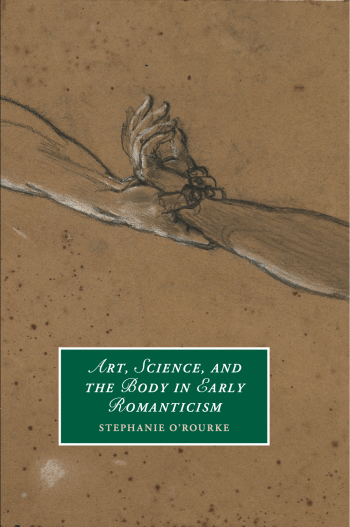 Can we really trust the things our bodies tell us about the world? This work reveals how deeply intertwined cultural practices of art and science questioned the authority of the human body in the late eighteenth and early nineteenth centuries. Focusing on Henry Fuseli, Anne-Louis Girodet, and Philippe de Loutherbourg, it argues that romantic artworks participated in a widespread crisis concerning the body as a source of reliable scientific knowledge. Rarely discussed sources and new archival material illuminate how artists drew upon contemporary sciences and inverted them, undermining their founding empiricist principles. The result is an alternative history of romantic visual culture that is deeply embroiled in controversies around electricity, mesmerism, physiognomy, and other popular sciences. This volume reorients conventional accounts of romanticism and some of its most important artworks, while also putting forward a new model for the kinds of questions that we can ask about them.
Stephanie O’Rourke is a lecturer in Art History at the University of St Andrews.
C O N T E N T S
List of Figures
Acknowledgments
Introduction: Bodies of Knowledge
1 De Loutherbourg’s Mesmeric Effects
2 Fuseli’s Physiognomic Impressions
3 Girodet’s Electric Shocks
4 Self Evidence on the Scaffold
Notes
Bibliography
Index
The Burlington Magazine, October 2021
The eighteenth century in October’s issue of The Burlington . . . Rado’s article is not an eighteenth-century essay, but she is a HECAA member (!), and she briefly frames the material in terms of a longer history; the theme for the October issue is ‘art in twentieth-century China’. –CH
The Burlington Magazine 163 (November 2021)
 E D I T O R I A L
• “Art History in the Anthropocene” p. 883.
A R T I C L E S
• Mei Mei Rado, “The Empress Dowager Cixi’s Japanese Screen and Late Qing Imperial Cosmopolitanism,” pp. 886–97.
R E V I E W S
• Arthur Bijl, Review of the exhibition catalogue Kjeld von Folsach, Joachim Meyer, and Peter Wandel, Fighting, Hunting, Impressing: Arms and Armour from the Islamic World, 1500–1850 (Copenhagen: David Collection / Strandberg Publishing, 2021), pp. 946–47.
• Kee Il Jr Choi, Review of John Finlay, Henri Bertin and the Representation of China in Eighteenth-Century France (Routledge, 2020), pp. 966–67.
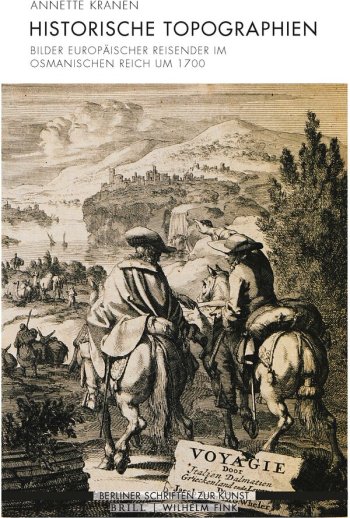
• Mirjam Hähnle, Review of Annette Kranen, Historische Topographien: Bilder europäischer Reisender im Osmanischen Reich um 1700 (Brill, 2020), pp. 971–72.










leave a comment