Call for Papers | Art Manufactories in the 17th and 18th Centuries
From the posting at ArtHist.net, which includes the French Appel à communication:
Crafting Everyday Life: Art Manufactories in the 17th and 18th Centuries
La fabrique du quotidien: Les manufactures d’art aux XVIIe–XVIIIe siècles
Université Paris 1 Panthéon-Sorbonne / INHA, 11–12 June 2026
Proposals due by 26 March 2026
Following the merger of the Cité de la Céramique – Sèvres & Limoges and the Mobilier national under the title Manufactures nationales – Mobilier national & Sèvres on 1 January 2025, the Groupe de Recherche en Histoire de l’Art Moderne (GRHAM) has chosen to dedicate its annual symposium to the art manufactories of the 17th and 18th centuries. This institutional reorganization serves as an invitation to re-examine the history of manufactories—not as a static ‘golden age’, but as a fluid history marked by internal ruptures and the constant redefining of the links between the State, artists, and workers.
While a segment of historiography has focused on the role of Jean Baptiste Colbert in the development of manufactories from the 1660s (Minard, 1998), the concept of the ‘manufactory’—plural and evolving—must be understood in its broadest sense. It cannot be reduced to Colbert alone, nor even to royal initiatives such as Louis XIII’s creation of the Savonnerie tapestry manufactory in 1628. From the early 17th century, the term ‘manufactory’ referred simultaneously to a site gathering specialized workers, an economic structure, and a production space (Bély, 1996). Some, like the Gobelins, Saint-Gobain, or Sèvres, were established or controlled by the State ; others simply benefited from privileges. Although the 1790s marked a major break in the organization of corporate labor (the Le Chapelier Law and the Allarde Decree, 1791) as well as in the relationship with the academies (1793), manufacturing activity continued and adapted to the new powers in place. On a European scale, terms such as Manufaktur, fabbrica, or fábrica reflect a diversity of models, practices, and organizations that invite a comparative approach, oscillating between craftsmanship, proto-industry, and political stakes. One of the major objectives of this symposium lies in the comparative, non-hierarchical study of different manufactories across France and Europe. It will jointly examine works, motifs, and labor systems, starting from the material and technical conditions of fabrication as well as the modes of collaboration between artists and artisans within the European sphere.
Understanding the 17th- and 18th-century manufactory means studying the links—sometimes harmonious, sometimes conflicting—between mechanical arts and liberal arts, between art and craft, and between the figure of the artist and that of the worker. From Furetière’s Dictionnaire (1690) to the Encyclopédie méthodique (1784), the manufactory appears inseparable from manual labor and the fabrication of utilitarian objects, some of which constitute true works of art. This symposium will specifically explore the shifts between the ‘art object’ and the ‘object of use’. Furthermore, a distinction between different production actors emerged within these establishments. This deepened starting in the Grand Siècle, notably with the rise of academies (Michel, 2012; Guilois, 2018; Guichard, 2002-2003), which institutionalized the separation between the artisan (the possessor of mechanical savoir-faire) and the artist (valued for intellectual creativity and membership in the liberal arts). This hierarchy of status sheds new light on the organization of manufacturing labor and the underlying social, artistic, and economic stakes.
Recent research and exhibitions has shown the extent to which manufactories were sites of collaborative creation. Whether in tapestry—Mortlake, Gobelins, Beauvais—or ceramics—Sèvres, Meissen, Chantilly, or Doccia—monographic studies have demonstrated how artists nurtured, guided, or transformed manufacturing practices. Works dedicated to Le Brun, Coypel, De Troy, or Oudry, along with exhibitions such as Poussin et Moïse (Mobilier national 2011), La fabrique de l’extravagance (Chantilly, 2021), or L’Amour en scène! (Tours, 2022), have highlighted how artists participated in inventing models, adapting to technical constraints, and constructing aesthetics specific to each establishment. By moving beyond the monographic framework to question the modalities of collaboration—continuities, adjustments, discordances, reappropriations, copies—this symposium will illuminate how a ‘multi-handed’ work is forged and better define the role of manufactories in the circulation of styles, models, and expertise in the early modern period.
In this perspective, the study of manufactories can no longer ignore an approach expanded to include savoir-faire, materials, and technical innovations. Manufactories were sites of experimentation where new pastes, enamels, and improvements in weaving or dyeing were developed at the intersection of empirical skill and scholarly knowledge. The ‘material turn’ (Roche, 1997 ; Guichard, 2015 ; Nègre, 2016) has brought art history closer to the history of technology and economics, revealing the importance of transfers: the migration of specialized workers, exchanges between the provinces and the capital, and European—or even global—circulations, as shown by research on indiennes and printed cottons. Following the of Liliane Hilaire-Pérez, Fabien Simon, or Marie Thébaud-Sorger (2018), techniques are no longer viewed as simple ‘applied sciences’, but as knowledge in their own right. The concept of ‘open technique’ (Foray & Hilaire-Pérez, 2006) invites us to consider manufactories as network hubs where workshop practices, State policies, and market dynamics intersect. This symposium will study the nature of these transmissions: imitation, adaptation, innovation, or appropriation.
The question of the motif constitutes another fundamental field of exploration. Studying the ‘journey’ of motifs—from their invention to their technical adaptation—allows us to address the close relationship between the creative and productive processes and to measure the popularity of forms across different materials and establishments. Toiles de Jouy have revealed the crucial role of designers like Lagrenée or Huet; recent research on textile design (Gril-Mariotte, 2023) recalls the long tradition of collaboration between academic artists and manufacturing workshops. The study of the diffusion of models—from the importation of a ‘French taste’ at Meissen to the mutual adaptations between Sèvres and Wedgwood, or the role of intermediaries like Nicodemus Tessin the Younger—invites us to question the existence of motifs specific to certain types of production, as well as the methods of their displacement or transformation. This symposium proposes to examine how motifs travel and reinvent themselves across materials and workshops, and to evaluate whether artists working for multiple manufactories adapted their methods or transported the same formal vocabulary from one medium to another.
Finally, the sociological approach to royal manufactories reveals a structured professional environment that varied greatly by institution. Far from the traditional guild system (Bonnet 2015 & 2017), royal manufactories formed centralized, hierarchical production spaces where workers, artists, and administrative staff worked under a director appointed by the Crown. Research by Isabelle Gensollen highlights this organization : the decisive role of the director-general, the strict control of finances, and the political role of manufactories as instruments of monarchical prestige. Simultaneously, other studies—from Maës to Coural—sketch the internal social realities, from life within the Gobelins enclosure to the mobility of entire families, revealing logics of networks, lineages, and technical specialization. Together, these works describe a complex sociology where the manufactory appears not only as a site of production but also as a living environment and a political tool. Using a comparative logic, this symposium aims to take stock of the various manufacturing modalities in France and Europe from the early 17th century to the Revolutionary period.
Proposals for papers should focus on the following three axes:
Axis 1 | Living the Manufactory: Organizations, Crafts, and Economies
This first axis proposes to explore life within the manufactories, with an emphasis on social, economic, and organizational dimensions. The objective is to analyze the diversity of crafts and the division of labor, the training of workers and apprentices, as well as the interactions between artists and artisans—which were often hierarchical yet always interdependent. By studying administrations and economic models—whether royal, privileged, or private manufactories—we can better understand the roles of the State and directors in structuring production, circulating models, and bringing objects to market.
Axis 2 | Making, Copying, Translating: Creative Processes in the Manufactory
This second axis focuses on the production practices and expertise developed within the manufactories. It proposes to study technical gestures, the materials employed, and the innovations implemented to meet both artistic demands and material constraints. Themes such as motifs—their reproduction, adaptation, or translation from one medium to another—as well as multiple production and copying, allow for a deeper grasp of the interactions between creation and fabrication. Intermediality—the transition from a drawing to a tapestry, a print to a textile, or a model to porcelain—opens a rich field of investigation into the internal circulation of forms and shared invention. Contributions may also question how technical experimentation and the manipulation of materials contribute to the construction of specific manufacturing aesthetics. Finally, the question of rights over motifs and inventions opens a reflection on intellectual property and the recognition of creators within these collective workspaces.
Axis 3 | Manufactories in Networks: Mobility, Partnerships, and Inspirations
This final axis explores the interactions between manufactories and the ways in which actors—artists, artisans, and intermediaries such as merchants—shape the production and dissemination of forms and savoir-faire. The aim is to analyze the horizontal and vertical mobility of artists and artisans, whether within a single manufactory or between different workshops, as well as the role of merchants in creating, adapting, and transmitting models. Contributions may examine how these interactions structure manufacturing practices, influence stylistic and technical choices, and participate in the emergence of artistic and productive networks on both a national and European scale. The modalities of joint commercialization by manufactories and merchants will also be analyzed.
Proposals may address one or more of these themes, as the axes are intended to be indicative rather than restrictive.
The symposium will focus on art and armament manufactories, as well as specific textiles (indiennes, toile de Jouy), in France and across Europe. Priority will be given to approaches focusing on production, practices, and the relationships between artists and artisans, as well as the translation from one medium to another.
Consequently, non-artistic industries—such as tobacco manufactories or other strictly utilitarian productions like broadcloth (draps)—are excluded. Likewise, the mere study of exchanges between Paris and the provinces, or between France and abroad, which has been extensively covered by traditional historiography, is not the primary focus of this meeting.
The emphasis will be placed on the internal dynamics of the manufactories: the horizontal and vertical mobility of artists and artisans, the technical and iconographical transfers between materials and media, and the role of merchants in the creation and dissemination of forms. The objective is to move beyond classical institutional approaches to offer a ‘bottom-up’ reading of manufacturing practices, while facilitating comparisons between different national and European traditions, and between royal and private manufactories.
Proposals for papers—whether individual or collaborative—may be submitted in either French or English. They should be approximately 300 words in length and may take the form of general overviews or specific case studies. Applicants are also requested to attach a curriculum vitae.
• Submission deadline: 29 March 2026
• Submission and contact email: asso.grham@gmail.com
A selective bibliography is available here»
Annual Symposium of the Groupe de Recherche en Histoire de l’Art Moderne
The GRHAM (Groupe de Recherche en Histoire de l’Art Moderne) is an association of earlycareer researchers specializing in 17th- and 18th-century art history. Its mission is to bring together the various actors within the discipline, whether or not they are members of the academic community. The GRHAM contributes to the field’s influence by covering the latest research developments (scientific meetings, publications, exhibitions, etc.) and by hosting monthly lectures, an annual symposium, and occasional visits.
Organizing Committee
Élisa Bérard (PhD candidate, Sorbonne Université), Maxime Bray (PhD candidate, Sorbonne Université), Justine Cardoletti (PhD candidate, Université Paris 1 Panthéon-Sorbonne), Romane de Chastellux (PhD candidate, Sorbonne Université), Défendin Détard (PhD candidate, Sorbonne Université), Maxime-Georges Métraux (expert, Galerie H. Duchemin), Maël Tauziède-Espariat (Associate Professor, Université Paris-Nanterre), all members of the Board of the Groupe de Recherche en Histoire de l’Art Moderne (GRHAM).
Call for Papers | Love’s Matter: The Material Culture and Art of Affection
From the Call for Papers:
Love’s Matter: The Material Culture and Art of Affection, 1700–1900
9th Edition of the Entretiens de la Fondation Maison Borel
University of Neuchâtel and Maison Borel, Switzerland, 12–13 November 2026
Organized by Henriette Marsden and Lara Pitteloud
Proposals due by 20 March 2026
International Workshop for PhD Students and Early Career Researchers
From the early 18th century onwards, the material qualities of love were explored as a cultural technique and an artistic practice transformed by the onset of modernity. Young lovers courted their sweethearts by sending mass-produced valentine cards, friends filled each other’s albums with carte de visite photographs and industrially made paper scraps, husbands romanced their wives through the gifting of colonial luxuries, and sisters used embroidery patterns circulated through the periodical press to stitch presents with and for one another. Evidently, love, as a practice of affection between family members, romantic partners and friends, became deeply embroiled in the material conditions of global trade, colonial expansion, nation-building, and the advance of industrialised commerce.
This workshop will explore how the affective properties of love shaped and were shaped by the material conditions of modernity from the early 18th to the end of the 19th century. It takes as a starting point the claim that modernity is characterised by a shift away from older understandings of transcendental love and toward a notion of love that is qualified by immanent, sensorial, and interpersonal experiences (Hanley, 4–5). Building on the conceptual framework of the “co-constitutive nature of things and emotions,” as demonstrated in recent scholarship (Downes/Holloway/Randles, 9), we invite doctoral and postdoctoral researchers to examine not only the use of objects and artworks in the performance of love but also how their materiality (size, shape, material construction, other sensorial qualities) impacted the experience of love. By investigating how love’s affective potential was navigated in the particular aesthetic constitution of objects, this workshop will explore different facets of love, such as the feeling of romantic desire, a wish for amicable companionship, a charitable responsibility, etc.
We invite papers by doctoral students and early career researchers that examine this diversity of love in the breadth of its aesthetic functioning as material culture, as art, and as cultural performance. The workshop also encourages comparative and cross-cultural perspectives, looking beyond Western Europe to consider how love was materially performed in the modern contexts of empire, global trade, and colonialism. The workshop is committed to fostering an open discussion between researchers at any stage of their project. We welcome submissions for papers covering both early-stage work and substantive original research on the art and material culture of love, as well as theoretical and methodological discussions problematising the state of love studies within art history.
Topics might include, but are not confined to
• personal gifts as expressions of hetero- and homo-romantic, familial, and amicable love
• material culture of heartbreak, loss, and/or separation
• commercialisation of love tokens; affection and consumer culture
• collaborative artistic production amongst friends
• material bonds between parents and children
• sexual self-identification and pictorial self-representation
• art as an affective instrument for nation-building and colonial expansion
• materiality of divine love in ecclesiastical, missionary, and charitable contexts
The workshop is organised in the context of the 9th edition of the Entretiens de la Fondation Maison Borel, held by the Institute of Art History and Museology at the University of Neuchâtel. These study days aim to foster the exchange of ideas and perspectives on methodological issues across the various disciplines of the Humanities and Social Sciences. As in previous editions, the workshop will take place in the historic 17th-century Maison Borel near Neuchâtel (Auvernier), a setting that offers an informal yet stimulating environment for scholarly exchange. The workshop may result in a publication. Accommodation, and, where possible, full coverage of travel costs will be provided by the organisers.
Please send a 300-word abstract, in English for 20-minute presentations, as well as a 100-word CV to Henriette Marsden (hm772@cam.ac.uk) and Lara Pitteloud (lara.pitteloud@unine.ch) by 20 March 2026. We look forward to reading your proposals.
–Henriette Marsden (University of Cambridge) and Lara Pitteloud (University of Neuchâtel)
s e l e c t i v e b i b l i o g r a p h y
Barclay, Katie and Sally Holloway, eds. A Cultural History of Love in the Age of Enlightenment. Bloomsbury Academic, 2025.
Dolan, Alice and Sally Holloway. “Emotional Textiles: An Introduction.” Textile: Cloth and Culture 14.2 (2016): 152–59.
Downes, Stephanie, Sally Holloway, and Sarah Randles, eds. Feelings Things: Objects and Emotions through History. Oxford University Press, 2018.
Hanley, Ryan Patrick, ed. Love: A History. Oxford University Press, 2024.
Holloway Sally, ed. The Game of Love in Georgian England: Courtship, Emotions, and Material Culture. Oxford University Press, 2019.
Labanyi, Jo. “Doing Things: Emotion, Affect, and Materiality.” Journal of Spanish Cultural Studies 11 (2010): 223–44.
Lipsett-Rivera, Sonya. A Cultural History of Love in the Age of Empire. Bloomsbury Academic, 2025.
Moran, Anna and Sorcha O’Brien, eds. Love Objects: Emotion, Design, and Material Culture. Bloomsbury, 2014.
Pellegry, Florence, Sandra Saayman, and Françoise Sylvos, eds. Gages d’affection, culture matérielle et domaine de l’intime dans les sociétés d’Europe et de l’océan Indien. Presses Universitaires
Indianocéaniques, 2020.
Staremberg, Nicole, ed. Et plus si affinités … Amour et sexualité au XVIIIe siècle. Musée national suisse, Antipodes, 2020.
Sheer, Monique, “Are Emotions a Kind of Practice (and Is That What Makes Them Have a History)? A Bourdieuian Approach to Understanding Emotion.” History and Theory 51 (2010): 193–220.
Call for Papers | Views of their Own: The Work of Women Artists
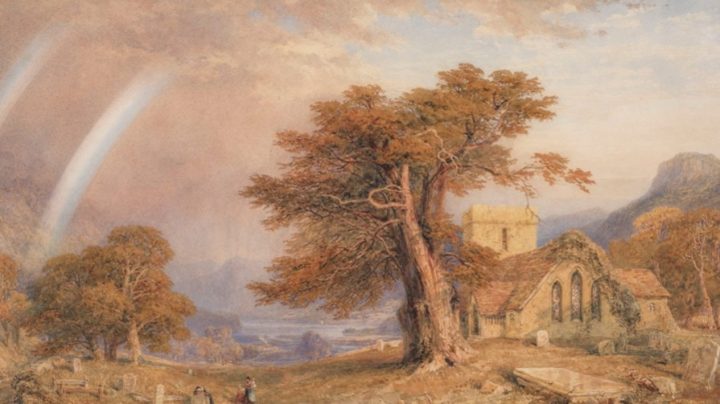
Fanny Blake, A Rainbow over Patterdale Churchyard, Cumbria, 1849, watercolour and opaque watercolour over graphite, with scratching out, on wove paper (Jointly owned by the Samuel Courtauld Trust and The Wordsworth Trust, Gift from a private collection in memory of W. W. Spooner, 2025).
◊ ◊ ◊ ◊ ◊
From The Courtauld:
Views of Their Own: Rediscovering and Re-presenting the Work of Women Artists
The Courtauld Institute of Art, London, 13 March 2026
Organized by Rachel Sloan
Proposals due by 6 February 2026
Timed to coincide with the Courtauld Gallery’s current exhibition, A View of One’s Own: Landscapes by British Women Artists, 1760–1860, this conference aims to investigate the challenges and opportunities presented by the recovery and re-presentation of historic women artists whose work and reputations have fallen out of art historical narratives.
Bringing together art historians and curators, this conference will explore various approaches to the complexities of bringing to light artists long overlooked by art history, whether via exhibition (permanent or temporary) or through the written word. Although the exhibition focuses on British artists, working both at home and abroad, from the mid-18th to the mid-19th centuries, we welcome papers that move beyond these chronological and geographical boundaries. The conference seeks to examine how attitudes and approaches to restoring to view the lives and work of women lost to art history have evolved, and continue to evolve, over recent decades, and the complexities, discoveries and rewards of charting overlooked artists and their work.
We would particularly welcome submissions in the following areas:
• Negotiating the grey area between the categories of ‘amateur’ and ‘professional’ in women artists’ careers
• The presentation of women artists’ work in settings other than temporary exhibitions
• Institutions and networks that fostered and supported the work of women artists
• Women artists’ strategies for publicising their work
Please submit an abstract of 300–500 words for a 20-minute paper, with a title, your affiliation (if any), and a short biographical summary to Rachel.Sloan@courtauld.ac.uk by 6 February 2026. Selected papers will be confirmed by 10 February.
Organised by The Manton Centre for British Art, The Courtauld Institute of Art.
Call for Papers | Women Conservators in Europe, 1750–1970
From ArtHist.net:
Women Conservators between Europe and Italy, 1750–1970
Sapienza University of Rome, 14–15 May 2026
Proposals due by 15 February 2026
In recent years, gender studies have profoundly reshaped the historiography of art and heritage preservation, bringing renewed attention to the role of women as key protagonists in the culture of heritage and expanding scholarly perspectives beyond the limits imposed by traditional narratives. The contribution of women to the history of conservation and restoration, however, remains largely understudied and only fragmentarily documented.
The earliest women active in collecting, museum, and private contexts can be traced back to the eighteenth century in Italy and across Europe. Figures now better known, such as Margherita Bernini, documented in Rome in the service of major aristocratic families, or Marie-Éléonore Godefroid, involved in the restoration of paintings for the collections of the Musée du Louvre and other Parisian institutions, stand alongside many other professionals whose work is only now being brought to light by recent research. In many cases, their activity emerges in connection with that of their husbands, whom they often succeeded in the management of workshops and restoration sites, assuming significant technical and administrative responsibilities that nevertheless remained largely invisible in historical sources. During the twentieth century, women’s presence became increasingly established within public institutions responsible for heritage protection, contributing substantially to the definition of the professional identity of the conservator at a time of profound transformation in the discipline. In this period, restoration gradually developed into a critically structured practice, grounded in technical, methodological, and historical expertise and embedded within an increasingly complex institutional framework, in which women played a far from marginal role.
This conference aims to offer a first systematic survey of women active in the field of heritage conservation and restoration between the mid-eighteenth century and the second half of the twentieth century, not only from the perspective of gender studies, but more broadly within the history of preservation and conservation in Italy and Europe.
The conference will explore the relationships between:
• restoration practices and techniques in different European contexts
• institutional transformations (museums, heritage authorities, conservation bodies)
• individual and collective careers, professional networks, and regional contexts
• diverse geographies and chronologies of restoration
• relationships between theory, practice, and training
• phenomena of family continuity and ‘professional inheritance’
• material, documentary, and photographic sources relevant to reconstructing women’s professional profiles
We invite proposals addressing, but not limited to, the following topics:
• studies on women conservators active in Italy or Europe between 1750 and 1970
• workshops, laboratories, restoration sites, museums, or archival institutions where women conservators worked
• restoration of paintings, works on paper, textiles, decorative arts, frescoes, sculpture, and architectural heritage
• patronage networks, professional collaborations, and working relationships with senior figures within state heritage institutions
• conservation methodologies, diagnostic practices, and operational protocols
• family-based transmission of skills and professional knowledge, continuity of practice, and workshop inheritance
• comparative and transnational perspectives.
Submission Guidelines
Abstract: maximum of 300 words
Short bio: maximum of 150 words
Languages: Italian and English
Submission address: convegnorestauratrici@gmail.com
Deadline: 15 February 2026
Notification of acceptance: 10 March 2026
Conference dates: 14–15 May 2026
Conference papers will be published. Further information regarding editorial arrangements and publication timelines will be provided in due course. Speakers selected through the call are kindly asked to note that the conference organization will not be able to cover travel and accommodation expenses.
Scientific Committee
Eliana Billi (Sapienza University of Rome)
Giuseppina Perusini (formerly University of Udine)
Simona Rinaldi (University of Tuscia)
Martina Visentin (University of Udine)
Organising Secretariat
Laura D’Angelo (University of Arkansas, Rome Center)
Call for Papers | Revolutions, Art, and the Market
From ArtHist.net:
Revolutions, Art, and the Market
Sotheby’s Institute of Art, London, 4–5 June 2026
Proposals due by 1 March 2026
Art market trends and practices, whether historical or contemporary, are affected by networks of complex and often competing forces. As moments of political, economic, intellectual or technological rupture, revolutions have significantly shaped art market systems and fortunes, refracting and redirecting collecting ambitions, displacing existing markets and creating new ones, and promoting novel modes of commercialisation of art.
Embracing wide chronological and geographical spans, this conference will consider how revolutions have inflected the circulation and consumption of art and facilitated the emergence of new art market practices and collecting paradigms. The conference is deliberately adopting a broad definition of the term Revolution, intending to encompass its political, cultural, intellectual, economic, and technological incarnations.
Interdisciplinary proposals and methodological approaches including empirical evaluations, economic analyses, and studies from the digital humanities are welcome. The conference is intended to foster rich discussions at the intersection of academic scholarship and professional practices, and contributions from both academics and art market professionals are actively sought. Papers addressing contemporary perspectives and practices, as well as under-represented regions of the art market and the Global South are particularly encouraged.
Proposals offering critical perspectives may consider (but are not limited to) the following themes:
• Political revolutions and shifting art market geographies
• The dispersal and looting of collections
• Revolutions and markets for luxury goods
• Political revolutions and artistic migrations
• The markets for revolutionary art
• The American Revolutionary War and transatlantic artistic exchanges
• The Russian Revolutions
• The aftermath of PCR’s Cultural Revolution
• Iran’s White and Islamic Revolutions and the national and international markets for Iranian art.
• The artistic expressions of the Arab Springs
• The Scientific Revolution and its new collecting paradigms
• The Printing Revolution and the markets for prints
• The digital revolution and the emergence of new art market commercial platforms
• Technological revolutions and innovations: NFTs, Blockchain, AR, VR, AI-generated art
Please submit an abstract of no more than 300 words for a 25-minute paper, along with a brief biography to Barbara Lasic, b.lasic@sia.edu, by 1 March 2026. Successful papers will be notified by 15 March.
Call for Articles | Spring 2027 Issue of J18: Untitled
From the Call for Papers:
Journal18, Issue #23 (Spring 2027) — Untitled
Issue edited by Catherine Girard, Sylvia Houghteling, Meredith Martin, and Hannah Williams
Proposals due by 3 April 2026; finished articles will be due by 1 September 2026
In 2026, Journal18 celebrates a decade of publishing cutting-edge scholarship on the art, material culture, and social life of the eighteenth century. To mark this tenth anniversary, for the first time since launching Journal18, we will take an open call approach. Unlike our usual tightly themed issues, this “Untitled” issue invites contributions from scholars working on any aspect of visual and material culture of the long 18th century from around the globe, drawing on diverse methodologies, perspectives, and global contexts.
Our “Untitled” issue of Journal18 offers an opportunity for open reflection and critical intervention in the field of eighteenth-century studies. What assumptions, canonical narratives, or disciplinary boundaries merit reconsideration today? What methods, sources, or frameworks might illuminate eighteenth-century art in new and unexpected ways? Which objects, artists, or practices remain unexplored, and why? Can we rethink the role of audiences—past or present—in shaping our understanding of the eighteenth century? How can our field speak to contemporary debates, challenges, or experiences affecting the world today?
We welcome contributions that explore, but are not limited to:
• Transnational and cross-cultural approaches to eighteenth-century art.
• New theoretical, methodological, or archival interventions.
• Reconsiderations of canonical objects, artists, or movements.
• Reflections on the evolving field of eighteenth-century art history and cultural studies.
• We are especially interested in work that offers fresh perspectives from underrepresented regions, traditions, or voices within the global eighteenth-century art world.
We anticipate an issue comprised of relatively short texts (max 4000 words). We also welcome contributions that do not follow the standard scholarly essay format, including pieces that are co-authored or take the form of an interview, data visualization, short film, audio recording, virtual exhibition, creative collaboration, or something that has yet to be dreamed up.
Proposals for issue #23 Untitled are now being accepted. The deadline for proposals is 3 April 2026. To submit a proposal, send an abstract (250 words) and a brief biography to editor@journal18.org. Articles should not exceed 4000 words (including footnotes) and will be due for submission by 1 September 2026. For further details on submission and Journal18 house style, see Information for Authors.
Issue Editors
Catherine Girard, St. Francis Xavier University, Nova Scotia
Sylvia Houghteling, Bryn Mawr College
Meredith Martin, NYU and Institute of Fine Arts, New York
Hannah Williams, Queen Mary University of London
Call for Papers | Building Identities: Character in Architecture
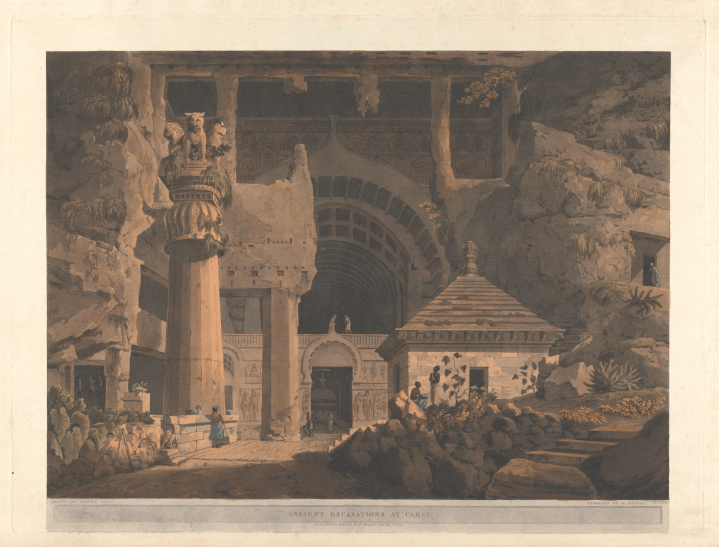
Henry Salt, Ancient Excavations at Carli, from Twenty-four Views in St. Helena, the Cape, India, Ceylon, the Red Sea, Abyssinia, and Egypt, London: Published by William Miller, Albemarle-Street, 1809 (New Haven: Yale Center for British Art, Paul Mellon Collection).
◊ ◊ ◊ ◊ ◊
From the Call for Papers:
Building Identities: Character in Architecture and Beyond, 1700–1900
Zurich, 2–4 September 2026
Organized by Sigrid de Jong, Maarten Delbeke, Nikos Magouliotis, and Dominik Müller
Proposals due by 1 March 2026
The term ‘character’ is part of today’s vocabulary of architecture: we casually refer to the ‘character’ of specific buildings or landscapes, and the ‘characteristics’ of projects or historical city centres, to emphasize their uniqueness, or the qualities attributed to them. We seem to resort to the term whenever more figurative terms fail to describe a certain formal or material je-ne-sais-quoi, which may also be associated with a distinct atmosphere or ethos. ‘Character’ often allows us to personify a building—to apply human empathy to inanimate matter.
‘Character’ emerged as a critical concept in the eighteenth century and developed into a key notion within architectural discourse of that period. It became ubiquitous in public debates concerning buildings, cities and landscapes between 1750 and 1850. Writers on architecture employed this notion to indicate how a building expressed the personality of its patron, its architect, a style or genre, how its form related to its use, or how it represented a culture or a nation; in short, a building’s character was synonymous with its identity. Borrowing from literary theory, architects such as Germain Boffrand, Jacques-François Blondel, William Chambers, Étienne-Louis Boullée, and Quatremère de Quincy elaborated on the notion of character in their writings. They used the term to articulate principles that ensured buildings properly express their function, or would be read and experienced appropriately by their audiences.
‘Character’ became especially versatile when the discovery of non-classical architectures rendered the Vitruvian orders insufficient to describe the different building cultures of the world, and when the stylistic repertoire of Western architecture broadened in all directions to include the gothic, the rural vernacular and various forms of non-European architecture. With questions of meaning and appropriateness becoming increasingly urgent, writers turned to the term ‘character’ when discussing landscapes, cities, buildings, and interiors in architectural theory, philosophy, travel literature, as well as literary fiction. Furthermore, as discussions regarding architectural proportions shifted from ideal systems and norms to the emotional effects of proportional modulation, ‘character’ came to encapsulate the affective dimensions of architecture and landscape. Our project Building Identity: Character in Architectural Debate and Design, 1750–1850 explores how such discussions were related to broader uses of the term ‘character’, rooted in its origins outside the discipline of architecture. A convenient vehicle for various metaphors and metonymies, ‘character’ often signifies both the means and instruments of classification and their intended effect.
While scholars usually studied the uses of the concept focusing on Western-Europe and on designers and architectural critics (Szambien, Forty, Grignon and Maxim), our conference ‘Building Identities’ is interested in examining character in a broader manner, across various disciplines and geographies. We aim to investigate the complexity, variety and contradictions surrounding its centrality in discourse. By foregrounding aspects that have long been undervalued, the conference Building Identities invites participants to collaborate in writing a critical history of ‘character’ tracing:
• How ‘character’ connects and relates to different fields (art history, landscape, urban history, travel, literature, the performing arts, philosophy, religion, cultural history, anthropology, nascent natural sciences).
• What ‘character’ presupposes in terms of ideologies, also in connection to notions such as identity, custom, mœurs, civilisation, etc.
• How and why ‘character’ operates in specific contexts (classification, subordination, naturalisation).
We invite proposals that
• Examine the notion of ‘character’ and its intellectual history in a variety of sources, within a diversity of disciplines and geographies.
• Question texts or practices that rely on ‘character’ in relation to architecture, landscape, and territory.
• Explore descriptions of the built environment that rely on ‘character’ to bridge the specific with the universal.
• Interrogate the notion in artistic practices, in building, urban, and landscape designs.
• Exemplify the problems, paradoxes, flaws, and possibilities of the notion.
We are interested in paper proposals treating and complicating ‘character’ as a historical concept, addressing specific uses of the term ‘character’ in sources from the period 1700–1900. Papers are welcomed that venture beyond the canonical sources of architectural theory, and engage with one or more of the following topics:
• The gender of architecture (buildings and interiors), cities and landscapes: usages of ‘character’ to gender the built environment, its relation to patrons, clients, and the public.
• The emotions of architecture, cities and landscapes: authors for whom ‘character’ served as a synonym for empathy, affect, or the emotional impact on the human mind and soul.
• The cultural or national identity of architecture, cities and landscapes: texts in which the term ‘character’ is employed to articulate cultural specificity and difference, or to construct ideas such as race, ethnicity and nation.
We particularly welcome papers that examine how the term migrated between different fields, semiotics, and epistemes, as well as how it was translated from one language to another.
Abstracts of max. 300 words should be submitted to buildingidentities@gmail.com by 1 March 2026, along with the applicant’s name, email address, professional affiliation, address, telephone number and a short curriculum vitae (maximum one page). Please combine both abstract and CV in one PDF file. Selected speakers will be notified by April.
The conference is part of the project Building Identity: Character in Architectural Debate and Design, 1750–1850, funded by the Swiss National Science Foundation, and based at the Chair for the History and Theory of Architecture, gta Institute, ETH Zurich.
Call for Papers | The Quest for Beginnings, 1750–1850
From the Call for Papers:
Origins and Evolution: The Quest for Beginnings, 1750–1850
Ursprung und Entwicklung: Sehnsucht und Suche nach den Anfängen, 1750–1850
Second Wellhöfer Colloquium, Martin von Wagner Museum, Universität Würzburg, 4–5 December 2026
Organized by Damian Dombrowski and Ulrich Pfisterer
Proposals due by 28 February 2026
The recourse to earlier stages of culture belongs to the basic inventory of every civilization. Since the mid-eighteenth century, however, profound transformations have taken place in the modes of such engagement. No longer were scholars, writers, and artists concerned solely with presumed or actual high points within their own pasts; instead, increasing attention was directed toward early forms of social and artistic formation. This ‘originist desire’ constitutes the central theme of this year’s Wellhöfer Colloquium, which every two years addresses research questions in the history of art and culture between 1750 and 1850 from an interdisciplinary perspective.
Across diverse regions of Europe, anthropology and early civilizational history emerged as central fields of scholarly inquiry. The normative authority of classical antiquity began to erode: in Italy, the Etruscans came into focus; in England, the Celts; and within the interior of the classicist Walhalla, the principal ornament was a monumental frieze depicting the history of the Germans from their migration from Asia to the baptism of Widukind. The Homeric epics were translated, revered, and illustrated on an unprecedented scale as the earliest monuments of literature, believed to embody a simplicity subsequently lost—corresponding to a broader revaluation of Mediterranean antiquity, for which Friedrich Schiller’s depiction of a prehistoric idyll in The Gods of Greece is emblematic. In archaeology, early idealism gave way to relativism, teleology to aetiology, and enthusiasm for the classical to an interest in the archaic. Johann Wolfgang von Goethe and Wilhelm von Humboldt pursued the idea of a primal language; Jean-Jacques Rousseau and Marc-Antoine Laugier anchored the ‘primitive hut’ in architectural theory.
Alongside this shift of beginnings into more remote historical strata, the thematic scope of the conference also encompasses the simultaneous reception of the Middle Ages. This reception found concrete expression, for example, in the illustrated volumes of J. B. L. G. Seroux d’Agincourt or in the collection assembled by Sulpiz Boisserée, as well as in visual culture through the style troubadour or the Nazarene movement. In light of a shared preoccupation with origins and authenticity, the traditional opposition between classicist and romantic tendencies loses much of its sharpness, while points of convergence in artistic practice come to the fore. Accordingly, contributions addressing formal archaisms, stylizations, and abstractions are particularly welcome—phenomena that, especially in nineteenth-century France (Ingres), appear to arise from the discourse on origins as a productive counterpoint to late classicist Salon painting.
It would also be worth discussing whether the outline style derived from Greek vase painting (Flaxman) should be situated within the same archaistic framework—and whether the concrete confrontation with archaic works, such as the Aegina pediment sculptures, may have posed excessive challenges to a productive reception. To what extent did the persistence of classicist aesthetics affect artistic and critical encounters with newly uncovered early epochs? And how did the growing knowledge of these periods, in turn, transform prevailing notions of normativity and exemplarity? The range of examples illustrating the new longing for beginnings could be extended almost indefinitely and in every conceivable direction; even the so-called ‘discovery of childhood’ belongs within this conceptual horizon.
Participation is sought not only from image-based disciplines—most notably art history and, in particular, classical archaeology—but the discussion would ideally be enriched by contributions from philological fields and the history of science. The invitation to the conference includes coverage of travel and accommodation costs. The organizers invite proposals for 20-minute papers in English or German. Please submit an abstract (maximum 2000 characters including spaces) and a short CV (maximum 1500 characters including spaces) by 28 February 2026 to Ulrich.Pfisterer@lrz.uni-muenchen.de and damian.dombrowski@uni-wuerzburg.de. Notification of participation will be given by 15 March 2026.
Organizers
• Damian Dombrowski (Martin von Wagner Museum der Universität Würzburg)
• Ulrich Pfisterer (Zentralinstitut für Kunstgeschichte, München)
Call for Papers | Temporal Ecologies in Art and Nature, ca. 1800
From ArtHist.net:
Sympoiesis: Temporal Ecologies in Art and Nature, ca. 1800
Sympoiesis: Zeit-Ökologien in Kunst und Natur um 1800
Erbacher Hof, Mainz, 30 September — 2 October 2026
Proposals due by 15 March 2026
Second annual conference of the Mini-Graduate College Die ästhetischen Erfindungen der Ökologie um 1800, Johannes Gutenberg University Mainz.
Between geological deep time and the fleetingness of a single breath, between the slow erosion of coastlines and the periodic return of day and night, between vegetative growth, heartbeat, pulse, and meter, concepts of the natural unfold as constellations of heterogeneous temporal horizons. In works of art, these heterogeneous temporalities can be synchronized: the artwork then becomes a site of sympoiesis (Donna Haraway). This delineates a becoming-with in which biological growth processes, cyclical repetitions, and linear processes of decay are not merely represented but amalgamated into a new aesthetic temporality of the artwork itself. Mary Delaney serves as one example here. In her Paper Mosaiks, she makes collages out of real plant parts put together with colored paper. She presents bud and fruiting body, which are distinct developmental stages, simultaneously, thus transgressing the natural temporal order and creating a synchronicity of diachronic events.
The conference seeks to explore how artworks around 1800 work as cross-sections through heterogeneous temporal layers of the natural. The guiding concept of sympoiesis marks a shift in perspective. It does not pitch nature against art, nor does it denote environments as mere background. Instead, it highlights the cooperative production of vitality across different forms of knowledge and practice. At the center is thus a making-with, in which matter and materials, media, bodies, discourses, and practices enter into relation with one another. The chosen timeframe of around 1800—during which the interplay of natural philosophy, early biology, geology, aesthetics, poetics, and new musical temporal orders is especially prominent—lends itself to discussions of how vitality is both understood in the context of ecological relations and conceived as a temporally structured process of becoming.
A range of disciplinary approaches is welcome, including:
• Temporal ecologies in poetics and aesthetics, descriptions of nature, history of metaphors; meter, rhythm, repetition; temporal semantics of growth, transformation, threshold, crisis.
• Image-time and material time; montage/collage, series, study; landscape as a medium of deep time; visualizations of cycles, change, erosion; practices of collecting and classification as temporal orders.
• Beat, pulse, period, tempo as models of the living; bodily and affective temporalities; rhythmization, synchronization, and their disruptions; form as a temporal ecology (recurrence, variation, transition).
More broadly, the conference invites reflections on:
• Aesthetics and orders of temporality
• Temporal concepts within individual disciplines
• Knowledge and history, tense and development
• Phenomenologies of movement and transformation: how can growth and metamorphosis be narrated or visualized without freezing them in static representation?
• Rhythm and meter: where does “striated time” (meter, beat, measured time) encounter the ‘smooth time’ of organic flow? How do heartbeat, pulse, and breath relate to the musical period or poetic meter around 1800?
• Cycles and thresholds: how do art, literature, and music stage the transition from day to night, the change of seasons, or the stages of life? Do these works assert a harmonious synchronicity of the natural, or do they instead make visible the asynchronies and fractures within the temporal fabric?
The workshop will take place from 30 September to 2 October 2026 at the Erbacher Hof in Mainz. We invite interested scholars to submit abstracts in either German or English (maximum 300 words) for a 30-minute presentation, along with a short CV, to gregor.wedekind@uni-mainz.de and ctheisin@uni-mainz.de by 15 March 2026.
b i b l i o g r a p h y
• Bender, Niklas und Gisèle Séginger (Hg.): Biological Time, Historical Time: Transfers and Transformations in 19th-Century Literature, Leiden: Brill | Rodopi, 2018 (Faux Titre, 431).
• Gamper, Michael und Helmut Hühn (Hg.): Zeit der Darstellung. Ästhetische Eigenzeiten in Kunst, Literatur und Wissenschaft, Hannover: Wehrhahn, 2014.
• Geulen, Eva: „Zur Idee eines ‚innern geistigen Rhythmus‘ bei A.W. Schlegel“, in: Zeitschrift für deutsche Philologie, Bd. 137, 2018, Sonderheft: August Wilhelm Schlegel und die Philologie, S. 211–224.
• Groves, Jason: »Goethe’s petrofiction. Reading the ›Wanderjahre‹ in the Anthropocene«, in: Goethe yearbook 22 (2015), p. 95–113.
• Gould, Stephen Jay: Time’s Arrow, Time’s Cycle: Myth and Metaphor in the Discovery of Geological Time, Cambridge, MA: Harvard University Press, 1987.
• Haraway, Donna: Staying With the Trouble: Making Kin in the Chthulucene, Durham: Duke University Press, 2016.
• Heringman, Noah: Romantic Rocks, Aesthetic Geology, Ithaca: Cornell University Press, 2004.
• Honold, Alexander: Hölderlins Kalender. Astronomie und Revolution um 1800, Berlin: Vorwerk 8, 2005.
• Kisser, Thomas (Hg.): Bild und Zeit. Temporalität in Kunst und Kunsttheorie seit 1800, München: Fink, 2011.
• Kling, Alexander und Jana Schuster (Hg.): Zeiten der Materie. Verflechtungen temporaler Existenzweisen in Wissenschaft und Literatur, 1770–1900, Hannover: Wehrhahn, 2021.
• Kugler, Lena: Die (Tiefen-)Zeit der Tiere. Zur Biodiversität modernen Zeitwissens, Göttingen: Wallstein, 2021.
• Mitchell, Timothy F.: Art and Science in German Landscape Painting, 1770–1840, Oxford: Clarendon Press, 1993 (Clarendon Studies in the History of Art, 11)
• Naumann, Barbara: Musikalisches Ideen-Instrument. Das Musikalische in Poetik und Sprachtheorie der Frühromantik, Stuttgart: Metzler, 1990.
• Oesterle, Ingrid: „‚Es ist an der Zeit!‘. Zur kulturellen Konstruktionsveränderung von Zeit gegen 1800“, in: Goethe und das Zeitalter der Romantik, hg. von Walter Hinderer, Würzburg: Königshausen & Neumann, 2002, S. 91–119.
• Pause, Johannes und Tanja Prokić (Hg.): Zeiten der Natur: Konzeptionen der Tiefenzeit in der literarischen Moderne, Berlin und Heidelberg: Metzler, 2023.
• Ronzheimer, Elisa: Poetologien des Rhythmus um 1800. Metrum und Versform bei Klopstock, Hölderlin, Novalis, Tieck und Goethe, Berlin und Boston: De Gruyter, 2020.
• Rudwick, Martin J. S.: Bursting the Limits of Time: The Reconstruction of Geohistory in the Age of Revolution, Chicago: The University of Chicago Press, 2005.
• Schnyder, Peter: Erdgeschichten: Literatur und Geologie im langen 19. Jahrhundert, Würzburg: Königshausen & Neumann, 2020.
• Völker, Oliver: Langsame Katastrophen. Eine Poetik der Erdgeschichte. Göttingen: Wallstein, 2021.
• Voßkamp, Friederike: Im Wandel der Zeit. Die Darstellung der Vier Jahreszeiten in der Bildenden Kunst des 18. und 19. Jahrhunderts, München und Berlin: Deutscher Kunstverlag, 2023.
Call for Papers | Rethinking Familial Ties in the Visual Arts
From ArtHist.net:
(Re)alignment: Rethinking Familial Ties in the Visual Arts
National Gallery, London, 28 May 2026
Proposals due by 26 January 2026
Expanding our understanding of family, community, and what binds us together requires us to look beyond conventional definitions and documented histories. While official records like birth certificates offer us names, dates, and biological ties, they often fail to capture the emotional, cultural, and chosen connections that shape our identities and our sense of belonging. In a world where families are built not only by blood but by shared experience, mutual care, and collective memory, we must turn to other forms of expression to grasp the full picture.
Visual art—through painting, sculpture, photography, and other media— has long served as a powerful tool for representing and reimagining lineage and connection. These works can embody intimacy, inheritance, loss, and continuity in ways that resist formal categorisation. A family portrait may reveal who is physically present, but also who is emotionally central. A sculpture might abstractly represent generations, resilience, or migration. A photograph can capture unspoken dynamics: the touch of a hand, the distance between bodies, a gesture of affection or estrangement. Such representations invite us to ask: What does family look like when it isn’t constrained by official records? How do artists convey relationships rooted in mentorship, solidarity, or shared struggle? What visual metaphors such as threads, branches, shadows, echoes might they use to trace the invisible ties that bind?
Art can fill in the silences left by documentation. It allows us to see what a birth certificate cannot: the emotional textures of a relationship; the complexities of chosen family; and the legacies passed through gesture, tradition and story rather than DNA. By engaging with these visual representations, we expand our understanding of lineage not as a fixed biological chain, but as a living, evolving network of connection and meaning.
With this in mind, we welcome proposals for 20-minute papers from researchers, museum professionals, independent scholars, artist-practitioners, and postgraduate students. A potential outcome of the Colloquium will be the publication of selected papers in a special journal issue or edited volume. Papers may cover any period, geographic location, or medium of art.
Proposals will relate to the following themes:
• Ancestry: How are family lines and the dynamics of succession visually rendered in the arts? From large-scale family portraits to ornate illuminations of family trees, papers may focus on any one of the myriad ways in which ancestral ties have been made legible for public and private audiences. This may include shields, crests, trees and other symbols of family.
• Familial relationships: In what way are intimate family bonds portrayed in the visual arts? From siblings to parents, grandparents, and children, artists have long been drawn to depicting their own family members as well as undertaking commissions from patrons.
• Marriage: Portraits of betrothed or newly married couples may be a visual contract born of financial and social arrangements, romantic keepsake, or even a symbol of resistance. ‘Mystic marriages’ and mythical subjects further diversify the types of marriage we may see rendered in art.
• Inheritance and legacy: ‘Passing it on’ is a major part of family dynasties, particularly when it comes to hereditary titles and businesses. Visual art can be one means of not just establishing a line of inheritance but justifying and even fictionalising it.
• Blended and extended families: With the concept of a ‘nuclear’ family being a modern invention, family groups have long included members from outside the immediate or even blood related spheres. Step-relations, in-laws, wards, and charges have been integrated socially, legally, and visually into familial groups.
• Chosen family: Whether spiritual, such as in confraternities, convents, and other religious orders, or social, as is often found in the LGBTQ+ communities, depictions of chosen family might emphasise elements of support, belonging, or diversity.
Abstracts of no more than 300 words, along with a short biography (maximum 150 words), should be sent to maryanne.saunders@nationalgallery.org.uk by Monday, 26 January 2026. Please include your name, institutional affiliation (if applicable), preferred email, contact details, and any accessibility requirements. The conference organisers aim to let contributors know the outcome by mid-February. For further information, please view the colloquium website page.










 Enfilade
leave a comment