Call for Papers | Privacy at Early Modern Courts
Next year at the University of Giessen (as noted at ArtHist.net):
„Privatheit“ in der höfischen Kultur der Frühen Neuzeit
Justus-Liebig-Universität Gießen, 28–30 September 2020
Proposals due by 25 August 2019
Veranstaltet vom Institut für Kunstgeschichte der Justus-Liebig-Universität Gießen, dem Institut für Kunstgeschichte der Westfälischen Wilhelms-Universität Münster und dem Historischen Institut der Philipps-Universität Marburg
Leitung: Dr. Kristina Deutsch (Münster), Prof. Dr. Eva-Bettina Krems (Münster), Prof. Dr. Sigrid Ruby (Gießen), Prof. Dr. Inken Schmidt-Voges (Marburg)
Das gesellschaftliche Leben an den Höfen der Frühen Neuzeit habe ein „Doppelgesicht“, schrieb einst Norbert Elias: Da ein „Berufsleben“ nicht existierte, gab es noch keine Trennung zwischen privatem und öffentlichem Dasein im modernen Verständnis. Heute sind wir, so scheint es, erneut konfrontiert mit einer Aufweichung der Grenzen zwischen diesen beiden Sphären, die mit dem Wandel der sozialen Medien und einer Neudefinition des Raumes (spatial turn) einhergeht.
Angesichts dieser hochaktuellen Problematik lohnt es, das Thema aus der historischen Perspektive zu beleuchten. Was bisher in der Forschung unter „Privatheit“ diskutiert wurde, adressiert ganz unterschiedliche Verständnisse und Konzepte, die wir kritisch vergleichen, hinterfragen und systematisieren wollen. Damit ist es möglich, jenseits problematischer Forschungsbegriffe zu einem frühneuzeitlichen Verständnis dessen zu gelangen, was wir unter Privatheit fassen (können). Insbesondere für die höfische Kultur besteht Nachholbedarf, da die Diskussion bislang geprägt war von der eingangs angesprochenen, grundsätzlichen Infragestellung der Existenz höfischer Privatheit. Demgegenüber steht die Annahme eines anthropologischen Grundbedürfnisses nach Rückzug und Muße. Denn der stets gespannte Bogen reißt auch zu Hofe irgendwann. So betonte bereits Baldassare Castiglione im frühen 16. Jahrhundert die Notwendigkeit fürstlicher Entspannung. Zahlreiche Rückzugsräume zeugen von dieser Komplementarität von otium und negotium, von Repräsentation und Intimität, von Öffentlichkeit und Privatheit.
Die interdisziplinär ausgerichtete Tagung nimmt den soziokulturellen Raum des frühneuzeitlichen Hofes in den Blick. Hier sind höchst ausdifferenzierte Formen der Sichtbarmachung und Instrumentalisierung von Nähe und Distanz zu beobachten, die es als sinnvoll erscheinen lassen, von einer lediglich graduellen Opposition von privat und öffentlich auszugehen und so die dialektische Qualität des Begriffspaars beizubehalten. Handlungen, Räume und Darstellungen richten sich an eine von Fall zu Fall zu definierende, mehr oder weniger eingeschränkte Öffentlichkeit, und sie gestalten den höfischen ‚Nahraum‘, um Herrschaftsstrukturen zu stabilisieren, politische Ambitionen zu rechtfertigen etc. Diese Inszenierungen von Intimität, Nichtzugänglichkeit, Unverfügbarkeit, Exklusivität, Innerlichkeit, Luxus oder—im Gegenteil—Schlichtheit stehen im Zentrum der Tagung, die nach den individuellen (und zugleich strukturbildenden) Zielen, Adressierungen und Funktionsweisen von „Privatheit“ am Hofe fragt. Wer darf überhaupt (im oben erläuterten Sinne) privat sein, und wem nützt die Privatheit? Wen schließt sie wann und wie aus?
Einen Interessenschwerpunkt bildet die Performanz des Privaten, die sich innerhalb der Leerstellen des offiziellen Zeremoniells entfaltet. Sie verfestigt sich in Form von Räumen, Texten und Objekten (Miniaturporträts, abschließbare Möbel, Kleidung etc.), deren besondere Eigenschaften—Kleinheit, Verknappung, Enge, Verschachtelung—und Gebrauch sowie ihre Lage im innersten, geschützten Bereich zur körperlich-emotionalen Erfahrung höfischer Privatheit gehören. Gerade in der ambivalenten Sphäre höfischer Rückzugsorte entstehen schon im 16. Jahrhundert geistige und künstlerische Freiräume. „[S]olo in luoghi appartati e privati”, „nur in entlegenen und privaten Räumen“, so Gabriele Paleotti 1582, seien bestimmte Innovationen möglich. Ausgerechnet in der Enge und Abgeschiedenheit des Privaten wird in der mentalen Konzentration die intellektuelle Öffnung möglich.
Hinterfragt werden soll das Verhältnis der „verspielten Privatheit“, die Jürgen Habermas für den französischen Adel in der zweiten Hälfte des 18. Jahrhunderts feststellte, zur „dauerhaften Intimität des neuen Familienlebens“. Denn Habermas’ auf die bürgerliche Öffentlichkeit bezogenes Konzept wurde zumindest im deutschsprachigen Raum längst von komplexeren Modellen abgelöst. Hypothetisch zu erwägen ist eine ‚Veradeligung‘ des Bürgertums, also die Übernahme adeliger Modelle durch das Bürgertum. Die gesellschaftlichen Umbrüche am Ende des Ancien Régime sollen deshalb noch mit in den Blick genommen, d.h. der Untersuchungszeitraum bis zum Ende des 18. Jahrhunderts gefasst werden. Den Anfang bildet das 16. Jahrhundert mit der Residenzenbildung und der Ausdifferenzierung von Innenraumfolgen im Schloss, die als Handlungsräume die zeremonielle Bedeutung von Nähe und Distanz erfahrbar machen.
Erwünscht sind Beiträge aus allen Bereichen der Hofforschung und allen historischen Disziplinen. Mögliche Themenfelder sind:
• Informalität und Individualität — Welche Gestaltungsweisen konstituieren den informellen Raum, welche Regeln herrschen in ihm, wie wird (vermeintliche) Privatheit organisiert? Warum und mit welchen Mitteln wird das Private instrumentalisiert? Inwiefern können sich jenseits des Zeremoniells Individualität und Kreativität ‚frei‘ entfalten? Oder gibt es vielmehr einen ‚Kanon‘ des Privaten?
• Schutz und Sicherheit — Die Kleinheit und hintere Lage des Kabinetts, die verrätselte Sprache und Vertraulichkeit eines Briefes, die Abschließbarkeit eines Möbels: Welche Medien erzeugen Sicherheit, welche Mittel stellen diese her bzw. inszenieren sie, und warum muss das Private geschützt werden? Hat höfische Privatheit eine Schutzfunktion, wer profitiert davon, und was wird geschützt?
• Männlichkeit und Weiblichkeit — Gibt es spezifisch männliche, spezifisch weibliche Privatheit, und wie manifestiert diese sich jeweils? Inwiefern ist das höfische Frauenzimmer ein „privater“ Bereich? Ist das Weibliche ein Mittel der Inszenierung von Privatheit? Wie sieht im Gegensatz dazu weibliche Öffentlichkeit aus?
• Begriffsgeschichten und Definitionen — Wie wurde der Terminus „privat“ in der Frühen Neuzeit definiert? Was verstand die Zeremonialwissenschaft des 18. Jahrhunderts unter „Campagne Ceremoniel“? Was galt als ein Lustschloss, und wer hatte dort Zutritt?
Geplant sind Vorträge zu je dreißig Minuten. Nachwuchswissenschaftler*innen (Promovierende und Postdocs) werden ausdrücklich zur Bewerbung ermutigt. Einzureichen sind ein tabellarischer Lebenslauf mit Publikationsliste und ein kurzes Exposé (max. 3000 Zeichen inkl. Leerzeichen), das den Vortragsvorschlag darlegt und einen vorläufigen Titel nennt. Wir bitten um die Einreichung Ihrer Bewerbung (ein einziges pdf-Dokument!) bis zum 25. August 2019 an das Sekretariat des Instituts für Kunstgeschichte der JLU: Barbara.Stommel@kunstgeschichte.uni-giessen.de. Fragen beantworten wir gerne via kristina.deutsch@uni-muenster.de.
Call for Articles | The Materiality of Festivity
From H-Material-Culture:
Special issue of the Journal of Festive Studies on “The Materiality of Festivity”
Articles due by 31 December 2019
In previous issues, the Journal of Festive Studies explored the emerging academic sub-field of festive studies (broadly defined) and the politics of carnival. For this issue, we follow Peter-Paul Verbeek’s advice and look at “the things themselves,” i.e. at the material culture in which carnivals and other festivities are rooted (Verbeek, 2005).
The 1996 inaugural editorial for the Journal of Material Culture defined Material Culture Studies as “interdisciplinary research in ways in which artifacts are implicated in the construction, maintenance and transformation of social identities” and as the “investigation of the relationship between people and things irrespective of time and place” (Editorial,1996). More recent studies have expanded the scope of the discipline to look at the agency of things (Latour, 2005), thus rejecting “any absolute ontological distinction between humans and things” (Roberts, 2017). The field has also seen a shift from the exclusive focus on consumption to an investigation of the production of objects and materials (Adamson, 2013 and 2018 and Smith, 2012). Other approaches include investigations of ways in which the exchange of objects shapes social life and experiences; how that process is negotiated intra-cultures (Appadurai, 1986); and the environmental impact of those objects and materials (Clarke-Hazlett, 1997, Ingold, 2012, and Morton, 2013). Furthermore, there has been a move to understand the materiality of things beyond finished manufactured products, or the raw matter of which these objects consist of, in all of its socio-historical and political implications (Lange-Berndt, 2015, Ingold, 2012, and Rosler et al., 2013). Scholars of festivities have also paid attention to the “things” that constitute the phenomena they investigate, whether by poetically capturing in photos and in text the embodiment of Caribbean history and identity in Trinidadian mas (Adonis Browne, 2018); by analyzing how banners and flags display identity through color in Belfast’s Orange Parade (Jarman, 2003); or by questioning why we consume (or abstain from consuming) certain foods during festivities (Avieli, 2009).
Building on such scholarship, and taking the material record of celebrations from all time periods and geographical areas as a starting point, this special issue of Journal of Festive Studies seeks to explore the following themes/questions:
• The things themselves: costumes, jewelry, makeup, musical instruments, the body itself, posters, flags and banners, float designs, paintings, sheet music, photographs, food, etc. What does the material record of festivities include?
• The preservation of that material culture: What are the politics of curating and what are the material constraints bearing on archival sites?
• Objects as part of a mise-en-scène of identity: How is identity created-recreated-negotiated through masking, costumes, makeup, etc.? How is gender and sexual normativity created/expressed/challenged through interactions with objects in celebrations?
• Imagining communities: What is the role of these objects/materials/artifacts in the creation of imagined communities during these celebrations? How do individuals and communities relive and reinvent traumatic pasts through rituals and the artifacts used to physically manifest them?
• The evolution and circulation of things: How does the material record of celebrations change over time, reflecting different socio-historical moments? How do geopolitical realities, global capitalism, and the flow of ideas and things affect the material record of celebrations?
• What role do these objects play in current debates on decoloniality and cultural appropriation?
• The environmental problems caused by the objects/materials used in festivities (such as the plastic pollution of Mardi Gras beads in the U.S. Gulf Coast) and the environmental solutions encountered by festival organizers and revelers (such as the ban on glitter in Sydney’s LGBTQ Mardi Gras.)
Contributors may also choose to focus on some of the methodological issues faced by scholars researching festivities across the globe and how does material culture feature in these processes. For instance, how does equipment affect the way the researcher interacts with their subject? What sorts of objects, outfits, and accouterments are used in the researcher’s “performance of self” during fieldwork and how might that affect their relation to the people and environment they are observing?
In line with the interdisciplinary nature of the Journal of Festive Studies, we welcome submissions of original research and analysis rooted in a variety of fields including (but not limited to): social and cultural history, anthropology, archeology, cultural geography, art history, architecture, decorative arts, technology, folklore, musicology, consumption studies, labor studies, museum studies, and design studies. In addition to traditional academic essays, we invite contributions that incorporate digital media such as visualizations, interactive timelines and maps, video and imagery.
Documents should be between 6,000 and 12,000 words and should be uploaded by December 31, 2019 to the journal’s website, along with the author’s bio and an abstract of c. 250 words. Please consult the author’s guidelines under “Submissions” on the website for further submission specifications, such as citation methods. Contact Isabel Machado (isabelmchd@gmail.com or machadoisabel) with any questions.
Works Cited
“Editorial.” Journal of Material Culture 1, no. 1 (March 1996): 5–14.
Adamson, Glenn. The Craft Reader. London: Bloomsbury Visual Arts, 2010.
Adamson, Glenn. The Invention of Craft. London: Bloomsbury Visual Arts, 2013.
Appadurai, Arjun. “Disjuncture and Difference in the Global Cultural Economy.” Theory, Culture & Society 7, no. 2–3 (June 1990): 295–310.
Avieli, Nir. “‘At Christmas We Don’t Like Pork, Just Like the MacCabees’: Festive Food and Religious Identity at the Protestant Christmas Picnic in Hoi An.” Journal of Material Culture 14, no. 2 (June 2009): 219–41
Bauer, Arnold J. Somos lo que compramos: historia de la cultura material en América Latina. México: Taurus, 2002.
Browne, Kevin Adonis. High Mas: Carnival and the Poetics of Caribbean Photography. Jackson: University Press of Mississippi, 2018.
Clarke-Hazlett, Christopher. “Interpreting Environmental History through Material Culture.” Material Culture Review / Revue de la culture matérielle, [S.l.], June 1997.
Csikszentmihalyi, Mihaly, and Eugene Rochberg-Halton. The Meaning of Things: Domestic Symbols and the Self. Cambridge: Cambridge University Press, 2002.
Ingold, Tim. “Toward an Ecology of Materials.” Annual Review of Anthropology 41 (2012): 427–42.
Jarman, Neil. “Material of Culture, Fabric of identity.” In Material Cultures: Why Some Things Matter, edited by Daniel Miller, 121–45. London: Routledge, 2003.
Lange-Berndt, Petra. Materiality. London: Whitechapel Gallery, 2015.
Latour, Bruno. Reassembling the Social: An Introduction to Actor-Network-Theory. Oxford: Oxford University Press, 2005.
Madison, D. Soyini. Critical Ethnography: Method, Ethics, and Performance. Los Angeles, CA: Sage, 2012.
Roberts, Jennifer L. “Things: Material Turn, Transnational Turn.” American Art 31, no. 2 (Summer 2017): 64–69.
Rosler, Martha, Caroline Walker Bynum, Natasha Eaton, Michael Ann Holly, Amelia Jones, Michael Kelly, Robin Kelsey, Alisa LaGamma, Monika Wagner, Oliver Watson, and Tristan Weddigen. “Notes from the Field: Materiality.” The Art Bulletin 95, no. 1 (2013): 10–37.
Smith, Pamela H. “In the Workshop of History: Making, Writing, and Meaning.” West 86th: A Journal of Decorative Arts, Design History, and Material Culture 19, no. 1 (2012): 4–31.
Verbeek, Peter-Paul. What Things Do: Philosophical Reflections on Technology, Agency, and Design. Penn State: Penn State University Press, 2005.
Call for Papers | RSA 2020, Philadelphia
Next year’s RSA meeting takes place in Philadelphia, with a handful of panels welcoming late seventeenth- and early eighteenth-century topics. I’ve noted a few of these below, and the larger list of sessions is available at the RSA blog. –CH
Renaissance Society of America
Philadelphia, 2–4 April 2020
Proposals due by July 2019 (specific dates vary)
Accommodations and meeting rooms have been booked at the Philadelphia Marriott Downtown and the nearby Courtyard Philadelphia Downtown, both of them a short walk from the famed Reading Terminal Market and City Hall. The Philadelphia Historic District, which was the first World Heritage city in the US, is also within walking distance or accessible by a short cab, bus, or subway ride. The Library Company of Philadelphia houses collections on American society and culture dating from the seventeenth century. The majestic Philadelphia Museum of Art, originally chartered for the Centennial Exposition in 1876, with its main building on Fairmont Hill completed in 1928, has pay-as-you-wish evening hours on Wednesdays and evening hours on Fridays as well.
◊ ◊ ◊ ◊ ◊
Exhausted with Antiquity: A Symptom of Early Modern Invention
Organizers: Marisa Bass (Yale University) and Carolyn Yerkes (Princeton University)
Where and when did early modern artists, architects, and writers begin to show signs of fatigue with the models of the classical past, and what kinds of creative experiments developed in response? Renaissance scholarship has long since moved beyond an understanding of its period as one defined first and foremost by a revival of antiquity. Although the significance of antiquarianism and classicism to manifold developments in early modern art and culture remains incontrovertible, both of those projects also met with productive resistance.
We invite papers addressing works of art or literature that reveal an exhaustion with antiquity and a conscious attempt to develop alternative modes, forms, and principles of invention. Especially welcome are proposals for papers that consider competing notions of the past, the distinction between ‘antique’ and ‘modern’, the political and cultural implications of the choice to forgo classical models, and the reasons why antiquity may have come to be perceived as an exhausted source in the context of certain moments and localities.
To submit a paper proposal please provide the following by email to Marisa Bass (marisa.bass@yale.edu) and Carolyn Yerkes (yerkes@princeton.edu) by 22 July 2019:
• your name and institutional affiliation
• paper title (15-word maximum)
• abstract (150-word maximum)
• keywords
• curriculum vitae (up to 5 pages)
• PhD completion date (past or future)
◊ ◊ ◊ ◊ ◊
The Miniature and the Monumental in Early Modern Art, 1500–1700
Organizers: Isabelle Lecocq (Royal Institute for Cultural Heritage, Brussels) and Elizabeth Rice Mattison (University of Toronto)
This panel aims to examine the role of scale and size in early modern art (ca. 1500–1700). This period witnessed increasingly ambitious projects: massive tomb complexes, immense palaces, and large programs of stained glass. Meanwhile, diminutive arts became increasingly popular: collectible statuettes, tiny prints, portrait miniatures, and small painted glass (commonly known as ’roundels’). Scale and size affected the production and reception of the arts across media in the face of shifts in patronage, organization of artists’ workshops, and dissemination of objects.
Questions this panel considers include: What is the difference between scale and size in early modern art? What is the relationship between scale and size and the circulation of objects, ideas, and materials? How does choice of medium affect the scale of a work? What happens to scale in translations of an iconography across media, and how does scale transform that iconography? How are the miniature and monumental connected, as in instances of microarchitectural projects such as sacrament houses, altarpiece cases, or reliquaries? How did artists working on simultaneously small and large scales adapt their style accordingly? What is the role of scale in new cultures of collecting and display?
This panel invites papers of any geographic focus that explore aspects of scale between 1500 and about 1700. Please send proposals including a paper title (15 words), abstract (150 words), keywords, PhD completion date (past or expected), and CV (max. 5 pages) to the organizers: Isabelle Lecocq (isabelle.lecocq@kikirpa.be) and Elizabeth Rice Mattison (elizabeth.mattison@mail.utoronto.ca) by 15 July 2019.
◊ ◊ ◊ ◊ ◊
Art Theory and Global Dissemination of Early Modern Spain and Colonial Spanish America
Organizers: Livia Stoenescu (Texas A&M University) and Luis Javier Cuesta Hernández (Universidad Iberoamericana)
Papers are sought for panel presentations on the impact of art theory and the global dissemination of works of art from Early Modern Spain and the Hispanic territories of the New World. Spain’s visual culture and literary arts thrived amid a time of political turmoil, instability, and economic crisis. The theoretical discourses generated by Spain, the Hispanic Kingdoms, and Viceroyalties prompted new conceptions of art and unprecedented claims to artistic originality while producing an intense circulation of artistic works around the world.
We invite papers that examine sacred allegories, historical painting, philosophical and literary texts from Golden Age Spain, as well as architectural settings, public processions, miraculous relics and the venerated saints that were held up as symbols of the city and/or the kingdom. The presentations comprising this panel will provide an in-depth perspective on the interrelated issues of Early Modern Spain and the Hispanic territories, and on understudied aspects of the interaction with the arts of Colonial Spanish America in a global context.
500–1,000-word abstracts are invited for consideration on topics including but not limited to the following:
• Spanish paintings distributed in Peru, New Spain, and the rest of the Americas and the impact of the imported art on the art of the colony from the late sixteenth century to mid-eighteenth century.
• the majolicas of Spanish America and global distribution
• early global trade and lavish consumption in the Spanish America
• art theory and the circulation of works of art at the Court, and in the cities of Valencia and Naples as independent art centers, as well as in other major regional centers such as Toledo, Seville, Madrid
• art theory and art dissemination in the main centers of Colonial Spanish America such as Mexico and Lima, and their interrelation with Early Modern Spain
• the status of painting as a liberal art and the painter as its noble practitioner on both the Spanish national art scene and in the Hispanic territories
• the large body of art theory in Early Modern and Baroque Spain: Carducho, Pacheco, Jusepe Martínez, Lázaro Díaz del Valle, and Antonio Palomino (1724).
• Italian Renaissance ideas and Palomino’s theory of 1715 that Spanish artists should attend the schools of Spain, rather than the osterie of Rome where they experience only bewilderment and disorientation
• art theoretical positions by major artists such as Diego de Velázquez, Alonso Cano, Francisco Ribalta, Jusepe de Ribera, Felipe Gómez de Valenica, Bartolomé Esteban Murillo, and others that mark the historical and political events of the Siglo de Oro
• Spanish Baroque artists engaging the Italian Renaissance art, culture, architecture, and art theoretical discourse
• materials and techniques of polychrome sculpture as well as the important centers, clientele, and art theorists associated with its production
• innovative art theoretical approaches to the integration of painting and carving that characterize the complex medium of polychrome sculpture as a devotional art form
• old practices of processional statues, altarpieces, stalls, and their reassessment by art theorists
• the true portrait, or the Veras Imagos, sculpted likeness that stood on the church altar
• the dissemination and circulation of drawings in Colonial Spanish America
Abstracts, one-page CV (not in prose!), and keywords should be sent by 1 July 2019 to Dr. Livia Stoenescu livias@tamu.edu and to Dr. Luis Javier Cuesta Hernández luis.cuesta@ibero.mx.
Call for Papers | Lithography in Asia
From The University of Chicago, Delhi:
Global Technology in Local Contexts: Lithography in Asia
The University of Chicago Center in Delhi, 16–17 March 2020
Proposals due by 15 August 2019
Organized by Ulrike Stark, Thibaut d’Hubert, and Abhijit Gupta
The year 2022 will mark the bicentenary of the arrival of lithography in India, a watershed moment in the history of printing in South Asia. In anticipation of this anniversary, the University of Chicago Center in Delhi will host a two-day workshop on 16–17 March 2020. We invite scholars working on various aspects of lithography in Asia to submit proposals for papers. We especially welcome proposals from scholars based in South Asia and from early career researchers.
The upcoming anniversary provides a timely moment to review the history of lithography in its technological, sociocultural, economic, and aesthetic dimensions, and from both local and transregional perspectives. Rather than focusing on India alone, the workshop aims to look at the rise of lithography across Asia, from Teheran to Shanghai, and to address the impact of a global technology that bridged traditional and modern practices of textual production from a variety of disciplinary lenses, languages, and local contexts. The workshop will bring together junior and senior scholars from the US, Europe, India and other Asian countries to discuss approaches to the study of lithography in light of recent interest in material cultures, entangled histories, and the circulation of knowledge and technologies. We will explore new lines of inquiry into the relationship between manuscript and print production and the competition between lithography and typography. Possible topics of discussion may include: the social history of lithography; lithography’s trajectory from the sphere of artistic book production to commercial mass printing, lithography as a religious technology, lithography as an art form, the democratizing effect of lithography, lithography and community formation, lithography and the rise of vernacular journalism, global flows of technology and expertise, missionary uses of lithography, lithography in graphic design and advertising.
The workshop will be free and open to invited guest participants. We are unable to cover travel costs for international presenting participants from outside South Asia, but will cover two nights of accommodation in Delhi as well as refreshments and meals for the duration of the workshop. For speakers based in South Asia, we will cover two nights of accommodation and travel expenses (domestic economy round-trip travel).
We invite proposals for papers of 30-minute duration. Proposals should be submitted no later than 15 August 2019 and must include:
1 An abstract of no more than 350 words outlining your research presentation
2 A current CV
3 A completed contact information form, available here.
Please email these materials to Shruti Brar at shrutibrar@uchicago.edu. Proposals may also be sent via mail to the following address:
University of Chicago Center
Attn: Shruti Brar
DLF Capitol Point
Baba Kharak Singh Marg
New Delhi, India 110001
Workshop Conveners
Professor Ulrike Stark, Department of South Asian Languages and Civilizations, University of Chicago
Professor Thibaut d’Hubert, Department of South Asian Languages and Civilizations, University of Chicago
Professor Abhijit Gupta, Department of English, Jadavpur University, Kolkata
Call for Papers | Visualizing Sound and Silence
From Case Western:
Visualizing Sound and Silence in Art and Architecture
45th Annual Cleveland Symposium for Current and Recent Graduate Students
Case Western Reserve University and the Cleveland Museum of Art, 25 October 2019
Proposals due by 28 June 2019
When we examine visual images, we often concentrate solely on the sense of sight. In contrast, art and architecture, whether employing musical, ritual, or acoustic components, have a long history of incorporating aural elements that engage with the sense of hearing. Whether audible or silent, art, in any form, is not a ‘mute’ medium. The question of who speaks, who is silent, and who is listening echoes within the chambers of power in any society.
How do artists throughout history visualize sound and silence? How does performance alter the experience of an object or space? How does the ephemeral nature of a melody or of a cacophony change our experiences of art and architecture over time? How does conversation or contemplation reshape our understanding of an image?
The Art History Department at Case Western Reserve University invites graduate students to submit abstracts for its 2019 Annual Symposium: Visualizing Sound & Silence in Art & Architecture. We welcome innovative research papers that engage with acoustics, music, sounds, and silence in and around art.
With keynote speaker: Vincent Debiais, L’École des Hautes Études en Sciences Sociales
Presentations may explore aspects of this theme as it applies in any medium and from any historical period, geographical location, or methodological perspective. Papers that engage with the art or architecture of the Cleveland Museum of Art are encouraged, but are not required.

Leaf from a Gradual, circle of Girolamo dai Libri (Italian, 1474–1555), Verona (?), ink, tempera, and gold on parchment (The Cleveland Museum of Art, 1921.140.1.a).
Potential topics may include, but are not limited to:
• Depictions of sound
• Discussion of who is given a voice
• Music in art
• Liturgy and recitation
• Conversation pieces
• Internalization of drama
• Acoustics in architecture
• Silent films
• Performance art
• Sound installations
• The augmentation of other senses
• The role of labels and audio guides in museums
• Resonance with political environment
For consideration, current and recent graduate students in art history, musicology, and related disciplines are invited to submit a 350-word abstract, alongside a CV to clevelandsymposium@gmail.com by June 28, 2019. Selected participants will be notified by the end of July. Paper presentations will be 20 minutes in length. Please direct all questions to Reed O’Mara and Rebecca Woodruff at clevelandsymposium@gmail.com. Three papers will be awarded prizes.
Call for Papers | Work on Furniture and Interiors from Emerging Scholars
From ArtHist.net:
British, Continental, and American Furniture and Interiors
The Wallace Collection, London, 22 November 2019
Proposals due by 1 July 2019
Call for papers from PhD/Post-Doc students, junior museum/heritage curators and professionals
As part of the Furniture History Society’s programme of supporting researchers at an early stage in their careers, the Society organises a dedicated study day for emerging scholars to present on a variety of topics connected to the history, construction, design, conservation of furniture, and historical interiors. For our fifth of these conferences we particularly welcome papers on the transmission of design and manufacture as a result of immigration and emigration to and from, or within different countries. We thus invite investigation into the connections made between craftsmen, patrons and clients as well as networks of manufacture and retailing at any period. We hope to explore the rich and varied history of furniture that emerges from such an approach and develop a better understanding of how design, taste and fashion were created in the evolving modern world.
Interested speakers are requested to send an abstract of about 300 words outlining their proposed topic, research methodologies, and sources. They should also send a current Curriculum Vitae and arrange for one reference to be sent to the Jill Bace, FHS Grants Secretary, grants@furniturehistorysociety.org by 1 July 2019.
Some limited assistance with travel expenses may be available, and any requests should be included, with justification, with the applicant’s abstract. The Society is also happy to provide further details, outlining the aims and objectives of the seminar, to enable participants to apply to their own institution for funding.
Call for Submissions | Metropolitan Museum Journal
Metropolitan Museum Journal 55 (2020)
Submissions due by 15 September 2019
The Editorial Board of the peer-reviewed Metropolitan Museum Journal invites submissions of original research on works of art in the Museum’s collection. There are two sections: Articles and Research Notes. Articles contribute extensive and thoroughly argued scholarship. Research Notes typically present a concise, neatly bounded aspect of ongoing investigation, such as a new acquisition or attribution, or a specific, resonant finding from technical analysis. All texts must take works of art in the Museum’s collection as the point of departure.
As of 2019, the process of peer review is double-blind. Manuscripts are reviewed by the Journal Editorial Board, composed of members of the curatorial, conservation, and scientific departments, as well as scholars from the broader academic community. Articles and Research Notes in the Journal appear both in print and online, and are accessible via MetPublications and the Journal’s home page on the University of Chicago Press website.
The deadline for submissions for volume 55 (2020) is September 15, 2019. Submission guidelines are available here. Please send materials to journalsubmissions@metmuseum.org.
Call for Papers | 2020 Wallace Seminars on Collections and Collecting
From the Call for Papers:
2020 Wallace Collection Seminars on the History of Collections and Collecting
The Wallace Collection, London, last Monday of the Month
Proposals due by 6 September 2019
The seminar series was established as part of the Wallace Collection’s commitment to the research and study of the history of collections and collecting, especially in the eighteenth and nineteenth centuries in Paris and London. We are keen to encourage contributions covering all aspects of the history of collecting, including:
• Formation and dispersal of collections
• Dealers, auctioneers and the art market
• Collectors
• Museums
• Inventory work
• Research resources
The seminars, which are normally held on the last Monday of every month during the calendar year, excluding August and December, act as a forum for the presentation and discussion of new research into the history of collecting. Seminars are open to curators, academics, historians, archivists and all those with an interest in the subject. Papers are generally 45–60 minutes long, and all the seminars take place at the Wallace Collection between 5.30 and 7pm.
If interested, please send a short text (500–750 words) and a brief CV, indicating any months when you would not be available to speak, by Friday 6 September 2019. For more information and to submit a proposal, please contact collection@wallacecollection.org. Please note that we are able to contribute up to the following sums towards speakers’ travelling expenses on submission of receipts:
• Speakers within the UK – £80
• Speakers from Continental Europe – £160
• Speakers from outside Europe – £250
Call for Articles | Ars Judaica
From ArtHist.net:
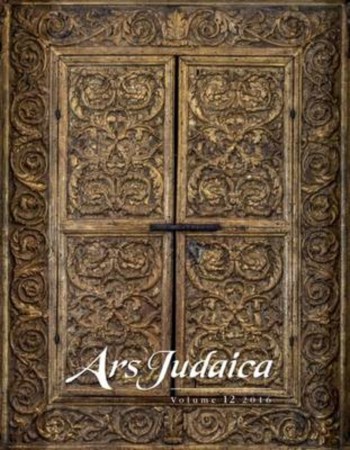 Ars Judaica: The Bar-Ilan Journal of Jewish Art calls for papers for its prospective volumes. Ars Judaica is delighted to announce it has made an agreement with Liverpool University Press to co-publish the journal from 2019. Liverpool University Press is an innovative academic publisher who combines a distinguished 120-year history and scholarly expertise with the forward-thinking mindset of the post-Gutenberg age.
Ars Judaica is an annual peer-reviewed publication of the Department of Jewish Art at Bar-Ilan University. It showcases the Jewish contribution to the visual arts and architecture from antiquity to the present from a variety of perspectives, including history, iconography, semiotics, psychology, sociology, and folklore. As such it is a valuable resource for art historians, collectors, curators, and all those interested in the visual arts. The ever-growing international community of Ars Judaica authors range from world-renown scholars to young, promising researchers. Ilia Rodov, the journal’s Editor-in-chief stressed: “It is our pleasure to be collaborating with Liverpool University Press to expand the activity of Ars Judaica, established in 2005 as the Michael J. Floersheim Memorial under its founding editor Bracha Yaniv. I am sure that our joint work with Liverpool University Press will be a significant contribution to the excellence of scholarly research and thought-provoking exchange of ideas regarding the visual dimensions of Jewish civilization”.
Clare Hooper, Head of Journals at Liverpool University Press said: “We are delighted to be working with the Department of Jewish Art at Bar-Ilan University to publish Ars Judaica. The journal is an extremely valuable resource to all scholars interested in the Jewish contribution to visual arts.”
The fifteenth volume of the journal and the first issue under the new publishing agreement will be published soon and will be fully available online. The Journal’s submission and style guidelines are available to download here. For more information, please see Ars Judaica’s website.
Call for Papers | UAAC/AAUC 2019, Québec
From UAAC/AAUC:
Universities Art Association of Canada / l’association d’art des universités du Canada
Hilton Hotel, Québec, 24–27 October 2019
Proposals due by 31 May 2019
Every fall UAAC hosts Canada’s professional conference for visual arts based research by art historians, professors, artists, curators and cultural workers. The conference is held at a different location each year, normally at a Canadian university or college, and the sessions and panels address issues and subjects in art history, theory and practice from a variety of methodological approaches. We’re pleased to announce that UAAC-AAUC’s next conference will be held in beautiful Quebec City at the Hilton Hotel from October 24 to 27, 2019.
A selection of sessions potentially related to the eighteenth century, including the HECAA panel, is provided below. A full list of panels is available as a PDF file here.
◊ ◊ ◊ ◊ ◊
HECAA Open Session (Historians of Eighteenth-Century Art and Architecture)
Chair: Joan Coutu (University of Waterloo), joan.coutu@uwaterloo.ca
HECAA works to stimulate, foster, and disseminate knowledge of all aspects of visual culture in the long eighteenth century. This open session welcomes papers that examine any aspect of art and visual culture from the 1680s to the 1830s. Special consideration will be given to proposals that demonstrate innovation in theoretical and/or methodological approaches.
◊ ◊ ◊ ◊ ◊
Au préalable : œuvre(s) préparatoire(s) et processus créatif aux temps médiévaux et modernes
Chair: Audrey Adamczak (Institut catholique de Paris), audrey.adamczak@videoton.ca
Nous proposons d’interroger l’œuvre préparatoire du Moyen-Age et de la première modernité quels que soient sa forme, sa destination ou le médium utilisé, en privilégiant les études qui aborderont les processus de création mis en jeu pour générer et fabriquer une œuvre d’art, qu’elle soit individuelle ou collective : pratiques d’atelier, changements/modifications de la première intention de l’artiste, reprise ou réemploi d’un modèle antérieur, etc. Nous accorderons une attention toute particulière aux propositions touchant aux domaines souvent peu étudiés tels que la gravure, l’illustration, l’enluminure, l’art du vitrail, la sculpture et les arts décoratifs, l’architecture et le décor.
◊ ◊ ◊ ◊ ◊
What Was History Painting and What Is It Now?
Chairs: Jordan Bear (University of Toronto), jordan.bear@utoronto.ca; and Mark Phillips (Carleton University), Mark.Phillips@carleton.ca
The dominant visual language of European painting from the Renaissance to the nineteenth century, history paintings were formidable in their monumental scale, ambitious moral lessons, and intricate narratives. With the rise of modernist avant-gardes, the genre receded from the forefront of artistic production into the realm of nostalgia. Yet history painting cast a shadow that would subtly colour even the works that sought to displace it.
This session invites presentations that explore the fortunes of this distinctive mode of visual representation. Papers might engage with any number of themes, including the creation of an audience attuned to the genre’s didactic aims, the entry of history painting into the marketplace of commercial art and attractions, or the reimagination of the mode in response to the edicts of modern and contemporary art and decolonization. We are eager to investigate the genre in its full range of geographical and chronological variety, and to consider both the tradition and the vibrant ways in which it resonates through the art of the present.
◊ ◊ ◊ ◊ ◊
Exhibiting Animals in the Long Nineteenth Century
Chair: Elizabeth Boone (University of Alberta), betsy.boone@ualberta.ca
Animals, both wild and domesticated, were regularly exhibited during the long nineteenth century. They appeared on canvas and as sculpture in fine art exhibitions; as public art works marking fair grounds, parks, and zoos; mounted through the art of taxidermy; and live in circus performances and at agricultural fairs. Some animals—usually those known for their performance abilities, noteworthy value, or bloodlines—appear in named portraits, while others functioned as type, to evoke particular emotions, or to communicate societal values and attitudes about these non-human beings. This session invites papers from scholars interested in exploring the current state of animal studies and the representation of animals in an exhibitionary context.
◊ ◊ ◊ ◊ ◊
Domestic Encodings through Craft Objects
Chairs: Ruth Chambers (University of Regina), Ruth.Chambers@uregina.ca; and Mireille Perron (Alberta University of the Arts, former ACAD University), Mireille.Perron@acad.ca
Desire, fear, pleasure, projection, and uncertainty loom large in concepts of home and domesticity. Craft objects in particular have sustaining connections with home and with the production of domestic space; how and what kind of space is produced through crafted objects is of renewed concern for many historians, curators, craft persons, and artists. Examples of recent scholarship and practice include, but are not limited to: Craft, Space and Interior Design 1855–2005, Sandra Alfody ed.; Breaking and Entering: The Contemporary House Cut, Spliced, and Haunted, Bridget Elliott ed.; and the works of Ann Low, Laura Vickerson, Shannon Bool, Carmen Laganse, Amy Malbeuf, Luanne Martinau, Judy Chartrand, and Lindsay Arnold, to name but a few Canadian artists. Following, but not restricted to investigations of these leads, we will offer Craft practice, theory, discourse, and history as ways to uncover, transform, validate, and better understand our production of domesticity. All historical, methodological and material approaches are welcome.
◊ ◊ ◊ ◊ ◊
Making Sense of the Senses: Evaluating the Sensorium in Visual Culture
Chair: Samantha Chang (University of Toronto), samantha.chang@mail.utoronto.ca
The classification, discrimination, and individuation of the senses have long been a topic of discussion among scholars in the natural sciences, social sciences, and humanities. Although the paradigm of the five senses can be found in philosophical texts from Ancient Greece and China, the sensory categories defined differed significantly between the two regions. This disparity of sense perception informed the interdisciplinary field of sensory studies and following the sensory turn of the 1990s, led to a profusion of sense-specific subfields, especially those related to visual culture. While the invention of visual culture collapsed the hierarchy of high/low art (Berger 1972; Baxandall 1972; Alpers 1983), the proliferation of visual culture studies further entrenches the hierarchical division of the senses (Howes 2018). This panel seeks to explore interpretations of the sensorium in visual culture and evaluate the cultural and social connections/implications of the senses in art.
◊ ◊ ◊ ◊ ◊
On Performance, Exhibitions, and Archives
Chairs: Barbara Clausen (Université du Québec à Montréal), clausen.barbara@uqam.ca; and Erin Silver (University of British Columbia), erin.silver@ubc.ca
This panel, which springboards from Clausen’s research on performance’s representational politics as a hybrid art form in the tension field of the live and mediated, and Silver’s research on the superimposition of embodied movement and political movements, examines how these practices find their various modes of existence within and beyond the framework of the institutional spaces they occupy. Bridging the recent fervour for dance’s representational and political potential within gallery spaces, to performance’s status as one of the most dominantly promoted art forms today, this panel asks: how do movement- and performance-based practices operating at the intersection of the exhibition and the archive contribute to and shape concepts of agency, site specificity, and immediacy in the cultural sphere? We invite submissions in French and English that explore notions of the performative in relation to the museum and new formats of curating, archiving, and digital mediation.
◊ ◊ ◊ ◊ ◊
Séance Ouverte (Réseau Art et Architecture du 19e siècle) / Open Session (Research on Art and Architecture of the 19th Century)
Chairs: Peggy Davis (Université du Québec à Montréal), davis.peggy@uqam.ca; and Ersy Contogouris (Université de Montréal), ersy.contogouris@umontreal.ca
L’objectif du Réseau Art et Architecture du 19e siècle (www.raa19.com) consiste à promouvoir le renouveau des recherches globales et interdisciplinaires sur le 19e siècle en histoire de l’art et de l’architecture. Cette session ouverte invite des propositions théoriques ou des études de cas qui couvrent des corpus issus du long 19e siècle, de 1789 à 1914. Une attention particulière sera donnée aux propositions qui font ressortir de nouvelles problématiques ou des méthodologies novatrices.
The aim of the RAA19 (Research on Art and Architecture of the 19th century; http://www.raa19.com) is to encourage innovative studies of nineteenth-century art and architecture. This open session welcomes papers that examine theoretical issues or case studies that focus on any aspect of the art and architecture of the long nineteenth century, from 1789 to 1914. Special consideration will be given to papers that propose innovative issues or methodologies.
◊ ◊ ◊ ◊ ◊
Perspectives on the Dutch Golden Age
Chairs: Stephanie Dickey(Queen’s University), stephanie.dickey@queensu.ca; and Amy Golahny (Lycoming College), golahny@lycoming.edu
We propose a session on the historiography and reception of Dutch art produced in the period c. 1575–1700, exploring how artists, admirers, and critics have responded to the art of the period known as the ‘Dutch Golden Age’ from the seventeenth century to the present. We welcome case studies that reflect on, for example, theoretical appraisals of Dutch art and artists; literary adaptations of artists’ lives for the popular audience; print reproductions of Dutch painting in the eighteenth and nineteenth centuries; emulation of Dutch artists in nineteenth century France; the rediscovery of Vermeer; poetic responses to Dutch art; the changing reception of Rembrandt and other artists; Dutch art through the lens of methodologies such as feminism or post-colonialism; the collecting and connoisseurship of Dutch art in Canada and elsewhere; and other topics.
◊ ◊ ◊ ◊ ◊
Interconnections in the Long Nineteenth Century
Chairs: Mitchell Frank (Carleton University), mitchell.frank@carleton.ca; and Alison McQueen (McMaster University), ajmcq@mcmaster.ca
This panel invites papers that examine the significant roles assigned to visual culture in understanding global connections in the long nineteenth century (c.1789–1914). Connections between places and power relations raise important questions, and transnational approaches offer a means of disrupting histories, including those centred on national identities. Papers may consider the following questions: What roles did visual culture play in communicating, reinforcing, enacting, complicating, and/or disrupting imperial power structures and settler- colonial narratives? What issues of agency, or factors inhibiting agency, faced imperial subjects and/or citizens as creators, patrons, or spectators? How did they traverse or negotiate between geopolitical realms, such as the metropole, provinces, or colonies? How can the social history of art raise new questions about interconnections in the long nineteenth century? How does a transnational approach enrich and expand current conceptions of nineteenth-century art and reconceptualize its parameters? What does it promise and are there drawbacks?
◊ ◊ ◊ ◊ ◊
The Art of Camouflage
Chairs: Claudette Lauzon (Simon Fraser University), lauzon@sfu.ca; and T’ai Smith (University of British Columbia), tai.smith@ubc.ca
Camouflage is a technique of obfuscation that operates in the realm of visibility. Mimicking the patterns of its environment, an animal becomes at once transparent and opaque. A product of branding, the fashionista is constantly adapting, continuously changing and exchanging her appearance for another to fit the mode of her surroundings. The hoodie is at once a target, an icon of protest, and a method of hiding. Terrorists, sports fans, politicians, and bank robbers all wear baseball caps. Meanwhile, drones are disguised as hummingbirds. This panel will consider the art and politics of camouflage in material and online environments. We invite contributions that address camouflage from historical, theoretical, and/or artistic perspectives. Topics may include counter-surveillance and camouflage; the politics of race and opacity; camouflage in/and animal studies; visual cultures of war and conflict; costume and fashion; biometrics; and feminist strategies of invisibility.
◊ ◊ ◊ ◊ ◊
À la croisée des chemins : réflexions sur les relations interespèces en art
Chairs: Anne-Sophie Miclo (Université du Québec à Montréal), miclo.anne-sophie@courrier.uqam.ca; and Valérie Bienvenue (Université de Montréal), valerie.bienvenue@umontreal.ca
Si la part de l’animal non humain est considérable au sein du processus artistique, elle est cependant assez peu questionnée. Qu’il s’agisse de sa représentation, de sa présentation (vivant ou taxidermisé) ou encore de la composition même des œuvres (par le biais des colles, pinceaux et pigments), force est de constater que cet « autre » a maintes fois pris part à la création. Pourtant, son impact sur la relation humain/animal en art reste à reconnaître : comment les rapports interespèces sont-ils réfléchis par cette présence non humaine dans les œuvres? Par ailleurs, l’artiste qui « utilise » les animaux peut-il être vecteur de revendication ou de changement dans les façons d’interagir avec eux historiquement et maintenant? Ce panel, souhaitant ouvrir la question de l’animal en art à des angles d’approches des plus variés, invite à la réflexion à partir de n’importe quelles périodes historiques ou contextes culturels et géographiques.
◊ ◊ ◊ ◊ ◊
Environnements artificiels au 19e siècle (Séance du Réseau Art et Architecture du 19e siècle : RAA19)
Chairs: Étienne Morasse-Choquette (Université du Québec à Montréal), morasse-choquette.etienne@courrier.uqam.ca; and Christina Contandriopoulos (Université du Québec à Montréal), contandriopoulos.christina@uqam.ca
Le 19e siècle est marqué par l’instrumentalisation grandissante de la nature. Face à un monde devenu abstrait, l’art du paysage naturalise l’emprise sur le territoire en produisant des images fantasmatiques, sauvages ou primitivistes, alors que l’architecture émule les mécanismes de la nature par des moyens artificiels (jardins d’hiver, atmosphères contrôlées, éclairage artificiel, illusions spatiales). Si certaines tentatives relèvent d’intentions spirituelles ou purement poétiques, d’autres s’inscrivent dans une démarche rationaliste ou instrumentale. Dans tous les cas, l’expérience esthétique et l’imagination sont appelées à jouer un rôle de première importance. Cette séance invite les propositions d’études de cas variées et d’approches théoriques qui nous permettent de réfléchir à l’esthétisation de la nature durant le long 19e siècle. Qu’il s’agisse d’espaces ou d’images, comment les arts participent-ils à la création de « paradis terrestres » ou d’autres environnements artificiels ?
◊ ◊ ◊ ◊ ◊
The Art of Visualizing Others: Early Modern Cultural Encounters
Heather Muckart (Columbia College), muckart@mail.ubc.ca
The early modern period marks a moment of accelerated cultural contact, exchange, and trade. Despite this essential feature of the period, art historical studies that examine such encounters and the ways they were represented, negotiated, and understood though art and visual culture are only recently gaining traction. This session proposes to examine the representations that such encounters generated, as well as any preexisting works that informed such moments of contact. Papers are invited that examine one or more facets of this global network of early modern encounters and their related artworks and objects. Sites of contact can include, but are not limited to: the British Empire (including British America), First Nations, Ming or Qing China, Mughal or Maratha India, Safavid Persia, the Spanish Empire (including Spanish America), or the Venetian Republic. Papers that interrogate or challenge academic notions such as acculturation, appropriation, hybridity, and liminality are particularly encouraged.
◊ ◊ ◊ ◊ ◊
Artifacts and the Digital Archive
Barbara Rauch (OCAD University), brauch@faculty.ocadu.ca
This panel invites papers that address issues within the field of critical digital humanities. We will attend to contradictions and criticism in the field of digital humanities to further address the impact and politics of digital technologies on our diverse practices, i.e. art, design, craft, and media. While we have announced the era of the post-material, the post-digital, and the post-studio, contemporary practitioners find themselves returning to their studio, negotiating materiality, physical and digital that is, as we have declared data as material. Visualizing and/or materializing data, results in products; our objects demand exposure, documenting, and finally, storage. The boundary object, the hyper object, the emotive object all declare specific material research including the tacit knowledges that the maker inserts in the object. In particular, with digital objects and algorithmic work, the code that is embedded in the object is also an object, yet, how do we archive and narrate these distinct materials; we question further, does the digital archive provide for much diversity?
◊ ◊ ◊ ◊ ◊
Open Session: National Network for the Study and Promotion of Latino Canadian Art and Latin American Art in Canada
Chairs: Alena Robin (Western University), arobin82@uwo.ca; and Analays Hernandez (University of Ottawa), analays.alvarez@gmail.com
This open session welcomes proposals that seek to foster and disseminate knowledge in Canada of all aspects of Latino Canadian art and Latin American art, from pre-Columbian and colonial periods to modern and contemporary art. The objective of this session is to bring together collaborators and proposals for the creation of a national network for the study and promotion of Latino Canadian art and Latin American art in Canada. We accept proposals in French and English/Nous acceptons les propositions en français et en anglais.
◊ ◊ ◊ ◊ ◊
Museums and Celebrity Culture: Historical and Critical Perspectives
Chairs: Maria Silina (Université du Québec à Montréal), silina.maria@gmail.com; and Lynda Jessup (Queen’s University), lynda.jessup@queensu.ca
This session is a reflection on museums and the phenomenon of celebrity culture. Museums are institutions that channel celebrity culture as a part of the global creative industry and mass culture. Today, it is evidenced in the boom in blockbuster exhibitions and large-scale collaborations of museums with film and fashion industry. In history, too, exhibitions and artworks on display had already served as an attraction to the enlightened public. Museums are also celebrity institutions in their own right. There is an ongoing mutual interest between museum curators and celebrities from other cultural domains (Wes Anderson in Vienna, Beyoncé and Jay-Z at the Louvre). Finally, this evolution of museums raises new concerns for the strategic management (acquisition, public criticism) of artistic celebrities in museum collections in the time of the #MeToo movement, increasing calls to decolonize cultural institutions, and the vital importance of actively engaging underrepresented artists and communities into museums.
◊ ◊ ◊ ◊ ◊
Locating Textiles in Global Art Histories
Julia Skelly (Independent Scholar), julia.skelly232@gmail.com
In the introduction to Art History in the Wake of the Global Turn (2014), Aruna D’Souza writes that the book is meant to address some of the ways “that a global art history troubles, even explodes, the very concepts on which the discipline is based by forcing us to see differently, to recognize the unrecognizable, to authorize the formerly unacknowledged” (xxi). D’Souza’s words strike me as particularly resonant for the study of textiles. This session will highlight new scholarship on ‘global’ textiles, with ‘global’ signifying any location in the world not typically identified as an ‘art centre’. The objective of the session will be to demonstrate anew how we as art historians can ‘explode’ the very discipline of art history by rigorously studying textiles as well as makers from a range of global contexts. Papers may discuss textiles produced during any time period.










leave a comment